Saturday, June 13, 2026
Home Blog Page 1019

Wayne E. Heimer: On Biden’s Build Back Better plan, a no vote is what’s best for Alaska

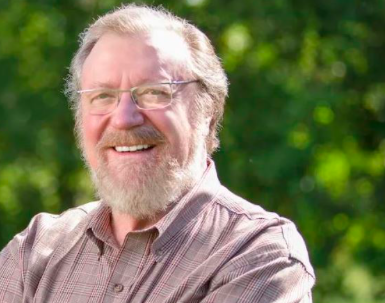
By WAYNE E. HEIMER

Years ago the late Kathleen “Mike” Dalton gave me custody of a pair of cufflinks allegedly commissioned by then-freshman U.S. Sen. Ted Stevens.  

The inscription on the cufflinks was, “TO HELL WITH THE POLITICS! JUST DO WHAT’S RIGHT FOR ALASKA!”  In those days, doing what was “right” for Alaska meant bringing home as much federal cash as possible.  

Ted “Did what was right for Alaska,” with a vengeance, selling off “pieces of Alaska” to the Feds for cash in dozens of ways.  In fact, Sen. Stevens was so good at “bringing home the bacon,” he eventually earned the sobriquet, “The King of Pork.”  

I no longer have custody of those cufflinks. When it became clear I’d never wear a formal cufflink-requiring shirt again, I donated that small piece of Alaska’s history to a fundraiser for the Alaska Outdoor Council. I figured “Mike,” a strong supporter of the Alaska lifestyle through the Alaska Outdoor Council, would approve.

Of course, Lisa Murkowski, eventually “became” Alaska’s other senator, and she initially appeared to faithfully follow Ted’s cufflink motto. Lisa hasn’t exactly earned the title, “The Queen of Pork,” but she’s sold pieces of Alaska’s future for cheap cash in many ways as well.  

Charity compels me to think Ted’s obsolete ethic of “doing what’s right” for Alaska keeps Lisa loyally bringing bacon home to her supporters. This could account for a lot of fascinating cooperation with the “woke” Democrats. After all, some Democrat votes wouldn’t have hurt when she was campaigning for chair the Senate Appropriations Committee. 

Chasing that chair-ship might account for much of her dithering over confirmation of Supreme Court justices, impeachment votes, environmental sell-outs, and other “apparently-woke” things that didn’t make sense to most of Alaska.  

That chance evaporated with that interesting election in Georgia. When the Democrats got control of the Senate, Lisa’s courtship of Democrats came to nothing.  She was left out in the cold as Alaska’s “lame duck” senator. 

Where she hasn’t done so well following Ted’s recipe is acting as a U.S. senator the way Ted did.  When the national interest was at stake, Ted proclaimed himself a ‘United States’ senator, and sometimes set aside Alaska’s special interests to just do what was critical for the Nation.”  I’ve not seen Lisa following in these footsteps.  I understand compromises must be made to “bring home the bacon,” but Lisa doesn’t explain, and I’m left to guess at what she’s up to.

Both Lisa Murkowski and Dan Sullivan apparently “did what looked right for Alaska” by voting for the first “infrastructure” bill. In a joint statement, they said they voted for it because it contained funding for actual infrastructure projects that Alaska needed.  I might not approve, but I understand.  

However, it now looks like there might have been some strings attached to the pork in that bill. Having shown willingness to dip their toes in the federal infrastructure water, there’s pressure to to vote for the scaled down “human infrastructure” (now “Build Back Better”) reconciliation bill as well.  

That’s the $3.5 trillion one that’s now down to two trillion, but still contains all the Alaska-harmful climate control stuff, and would fund the USA as a globally functional socialist society. 

Now, we’re told funding this socialist utopia won’t cost anything, and will be on the books for only three three years.  To get started, we’ll just print $2 trillion in paper money, which I gather is kind of like borrowing it. Here, I have admit that following this sort of economic hocus pocus has not been my life’s work.

My perspective is that simply doing what’s right for Alaska presently calls for killing the “human infrastructure” bill and maybe the tricky first one with it.  

Senator Sullivan has been plain that he’s not for the second one (among other clear positions that make him look like a United States as well as an Alaskan Senator).  

Lisa has been curiously quiet on this, besides confirming the anti-petroleum Secretary of the Interior for Biden.  

To her credit, she did finally vote with the minority against confirming that very strange, “Earth First” Tracy Stone-Manning for BLM Director.  

Now that the Democrats “aren’t showing Lisa any love,” it would appear she remains a quaint caricature of “McCain maverick-ness” along with her lady pals from New England. I wonder what’s in it for Alaska.

I suggest it’s time for Alaska’s congressional delegation to stand up like U. S. Senators from Alaska, maybe by “biting the bullet” and opposing the administration’s infrastructure agenda that seems likely to harm Alaska’s economy. 

Wayne Heimer is a 54-year resident of Alaska whom “Mike” Dalton apparently thought was “Alaska-aware enough” of to give him Ted’s cufflinks.

Open container citation dismissed against lawmaker, after Trooper could not appear in court due to his own arrest for sex crimes

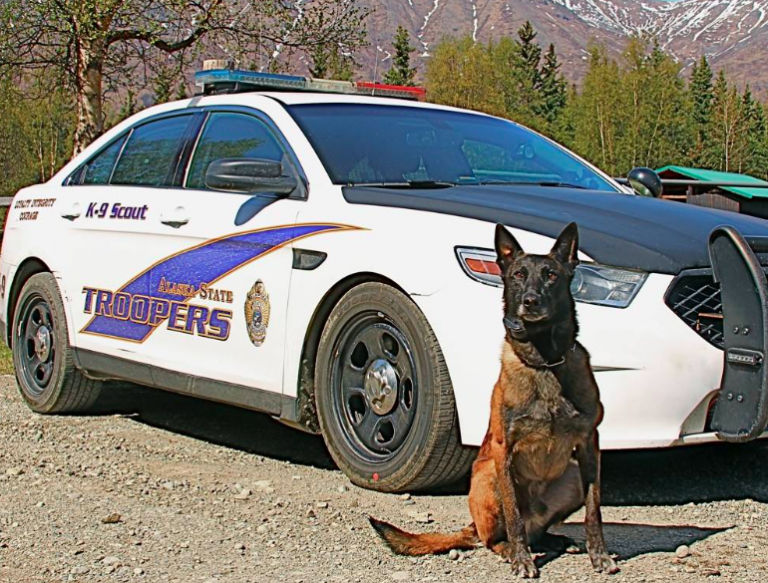
Sen. Josh Revak, who gave Sen. Scott Kawasaki a ride to the Kenai Classic in August, won’t have to face the charge of open container — the container of beer that Kawasaki brought along with him — because the Alaska State Trooper who stopped Revak for speeding is now in jail.

“The trooper that issued the citation and had the reasonable suspicion for the traffic stop will be unable to attend the scheduled hearing. While the circumstances surrounding this citation dismissal are not standard, it is standard practice for the Troopers to request the dismissal of a citation when the trooper with the reasonable suspicion for the stop cannot attend the hearing and rescheduling is impossible,” the Department of Public Safety said in a statement.

What makes it impossible for Trooper Benjamin Strachan to reschedule his appearance is that on Oct. 13 he was arrested for sexual abuse of a minor.

Troopers’ investigation found probable cause that Strachan sexually abused multiple victims within the last year. In consultation with the Alaska Department of Law’s Office of Special Prosecutions, Strachan was arrested on one count of Sexual Abuse of a Minor in the 1st Degree, and six counts of Sexual Abuse of a Minor in the 2nd Degree. Strachan was remanded to Wildwood Pretrial.

Strachan had been an Alaska State Trooper since June 2020 and has been assigned to Soldotna Patrol during his entire career. Per policy, Strachan was immediately placed on leave pending the outcome of his case.

Daily Covid count: 351 cases yesterday

After a daily count of more than 800 cases of Covid-19 diagnosed in Alaska last Thursday, the Sunday new Covid count was down to 351 on the state Covid data dashboard. The decrease in new cases is 18 percent from last week.

But the number of people in the hospital with Covid crept up to 34, and the number on ventilators is also high — 34. Some 22 percent of the patients in Alaska hospitals have Covid. For comparison, 31 people were hospitalized with Covid on Oct. 21.

19,207 doses of Covid vaccine were administered in Alaska during the week of Oct. 11-24, an increase of 5 percent over the previous week.

There are 16 ICU beds available in the state and 279 non-ICU beds available.

The number of deaths attributed to Covid held at 678 since Covid first arrived in the state in March of 2020.

Judge Burgess retires from U.S. District bench

Timothy Mark Burgess, the chief judge of the U.S. District Court for the District of Alaska, is retiring. He was nominated to the court by President George W. Bush, and has served as the chief judge since 2015.

The U.S. District Court has three judges. Judge Sharon Gleason is a President Barack Obama appointee, and Judge Joshua Kincaid was appointed by President Donald Trump. Burgess was appointed by President George W. Bush. With his departure and an appointment to be made by President Biden, Alaska’s federal court will tilt left. Already, the senior member, Judge Gleason, is responsible for multiple decisions that have decimated Alaska’s energy-based economy in favor of the anti-development industry.

Burgess was born in California and graduated from Canada College with an associate’s degree in 1976. Later he earned a bachelor’s degree from the University of Alaska in Fairbanks, and a master’s in business administration, before pursuing his law degree at Northeastern University Law School.

He was in private practice from 1987 to 1989, and then was named Assistant U.S. Attorney for the District of Alaska from 1989 to 2001.

He was appointed to the court in 2005 by President Bush upon the recommendation of the late Sen. Ted Stevens and then-Sen. Frank Murkowski, and was confirmed in 2006.

Also on the court, on senior status as semi-retired, are Judges H. Russel Holland, James K. Singleton,  John W. Sedwick, and Ralph R. Beistline.

Recall is underway for officers of Retired Public Employees of Alaska association

An effort is underway to remove Stephanie Rhoades, the executive board secretary of the Retired Public Employees of Alaska, who is accused of staging an illegal coup against the former board president.

A separate recall is being launched for the current board president, Randall Burns.

The group of retirees seeing the recall say that Rhoades, a retired judge, “knowingly, willfully, and deceitfully (a) acted in violation of RPEA Bylaws and Policies and Procedures; (b) violated provisions of the APEA-AFL Constitution under which RPEA is chartered as Local 4900R; (c) failed to acknowledge her conflict of interest and refrain from voting or participating in Executive Board decisions regarding a recall petition in which Ms. Rhoades was a subject of recall; (d) violated federal and state laws and RPEA Policies and Procedures relating to Age Discrimination; and (e) engaged in disruptive, negative, vindictive behavior toward other Executive Board members and RPEA staff thereby creating a toxic, hostile working environment that prevented RPEA from conducting business in an orderly manner. Her actions led to the mass resignation of three Executive Board members and RPEA’s administrative staff. Ms. Rhoades’ actions significantly weakened RPEA during current ongoing litigation with the State of Alaska to preserve member benefits.”

That litigation is an active court case fighting to retain medical benefits for retirees.

The group’s previous president, Sharon Hoffbeck, quit abruptly this summer under pressure, and wrote a letter that made it clear that Rhoades had created a hostile environment. Hoffbeck had worked as the volunteer president for nine years; essentially, she had been forced out by a board coup that she and others say involved illegal meetings.

Hoffbeck also filed a misconduct complaint against Rhoades in September.

The group of retirees seeing to remove Rhoades say that: “Rhoades knowingly, willfully, and deceitfully acted in violation of RPEA Bylaws and Alaska law on multiple occasions as she coordinated and participated in the ouster of RPEA leadership and administrative staff. Her covert activities include illegally assuming the “mantle” of leadership granted solely to the President and the Executive Vice-President; conducting “secret” meetings without notification to all Executive Board members and the membership at large; calendaring RPEA Executive Board meetings and setting meeting agendas without legal authority; failing to provide legal notice of such meetings to the membership in a timely manner as required by law and RPEA Bylaws, thereby depriving both general RPEA members and some Executive Board members the opportunity to participate; and executing final personnel and financial actions during such illegal meetings.”

Further, the group wrote, “Prior to July 27, Rhoades instigated and led a ‘secret’ meeting of six Executive Board members (Stephanie Rhoades, Randall Burns, Judi Slajer, Wendy Woolf, Brenda Knapp, and Cindy Spanyers). The purpose of the “secret” meeting was to plan the immediate removal of President Sharon Hoffbeck, the ouster of administrative staff and other future actions. Notice of the ‘secret’ meeting was not provided to President Hoffbeck, Executive Vice President Brad Owens, nor Communications Membership Director Bob Grove. The ‘secret’ meeting was conducted for RPEA business and required proper notice to all Executive Board and RPEA general membership as required by RPEA Bylaws Article VII, Section 5.”

Rhoades subsequently “planned, orchestrated, and set the agenda for a Special Executive Board meeting. These actions were taken without authority under RPEA Bylaws or under the applicable procedures outlined in Robert’s Rules of Order, as specified for small boards, which control actions not specifically addressed in RPEA’s Bylaws. The Special Executive Board meeting apparently was originally planned for July 20, 2021, but for unknown reasons was postponed until July 27, 2021.”

For the meeting scheduled by Rhoades, Hoffbeck wasn’t notified until late in the evening on the day before the meeting; thus she didn’t know that a meeting had been called, and did not have the ability to attend.

Hoffbeck emailed Rhoades on July 27, stating: “Stephanie, Any other meeting must be held with the knowledge of the full E-Board, scheduled in accordance with the RPEA bylaws and state laws, and noticed per the RPEA bylaws and state law. Your proposed meeting – to have begun 15 minutes ago – is 100% illegal.”

Also on July 27, Executive Vice President Owens emailed Ms. Rhoades, stating: “Stephanie, It is my understanding that you and five other E Board members met today, despite my objection, and transacted business on behalf of RPEA…Please provide to me immediately any resolutions adopted or motions passed by the six E Bd members who attended the meeting today and the votes cast by each member on each resolution or motion…I believe this conduct by the six E Board members may constitute a serious violation of RPEA Bylaws and Alaska law…”

The group claims that Rhoades illegally assumed the authority reserved to then-President Hoffbeck, and in concert with the five other attending board members (Burns, Slajer, Woolf, Knapp, and Spanyers) illegally accelerated the resignation date of Hoffbeck to be effective immediately, and stripped then-Executive Vice-President Owens of his legal authority under the bylaws to step up as interim president. The mutineers appointed Burns as president for the duration of Hoffbeck’s term, and authorized “the expenditure of $5,000 of membership dues to hire outside legal counsel, fearing legal action for violating RPEA Bylaws and/or creating a hostile work environment for the administrative staff.”

The RPEA is a watchdog and advocacy group for thousands of retirees of the State of Alaska, ensuring that the benefits they were promised are not eroded through time.

Mark Hamilton: You can go fishing in a modern tailings pond

By MARK HAMILTON / PEBBLED SERIES

Hopefully, in reading this series, your understanding of the mining process will allow you to be aware of the predictable fear mongering of any mining project in the future.  

Nothing is portrayed to be more sinister than the failure of the tailings facility. This message of doom is usually accompanied by references to historic catastrophes that did, in fact, occur. As part of your awareness, check the dates and the location of these very real events. Did they occur in the United States? Did they occur prior to commercial jet travel? If so, be a little skeptical, not if they did occur, but wonder a bit about whether current regulations would allow such a construction.

Avery powerful image is associated with the breaking of a dam. It is also very misleading. I have no concern about the use of the term “dam”, since the agency responsible for the safe construction is called “The Alaska Dam Safety Program.”  I warn about the image of a dam, usually envisioned as a huge, tall concrete structure.  

Yet the “dam” associated with mining is much better described as a buttress. The buttress can ultimately be very tall as well, but to us it would look like half a mountain, terraced for more stability. Another misdirection of the image of a dam is that it holds back huge amounts of water. As an extra panic excitement, the water is often described as toxic.

This invites two terrifying dreads, a massive outpouring of poisoned water. Delay reaching for the panic button.  One, there is very little water held in the main tailings facility in the design put forth by Pebble Mine. The “tailings pond” that does exist is thousands of feet from the buttress, and even this pond could be drained if it became necessary. The buttress actually holds back damp sand. It’s so nearly water-free that the design calls for a sprinkler system to guard against wind carrying the dust away.  

As part of the NEPA process, a simulation of the failure of the buttress was investigated. The release of huge amounts of damp sand did not even reach the Koktoli river. No water was released.  Note: The simulation of failure of the tailings facility was a required part of the permitting process, not to investigate concerns about construction.

One more thought: The water in the tailings facility is not toxic. How do we know that? There is a test, written and conducted by EPA. They have done that test. If you have your awareness instinct working now, you might ask, “how can you know that, since the mine isn’t yet constructed?  I am very happy that such a question occurred to you.  That is exactly the kind of probe you will need to wade your way through the rhetoric you will find regarding proposed mine construction. So, let’s answer the question.

In exploring the claim, a huge number of drillings will take place to assess the deposits depth and breadth. By amassing these core samples, the developer can get a pretty accurate three-dimensional assessment of the deposit.  

It is not unusual to have many hundred drillings; Pebble mine had upwards of a thousand. These drillings yield core samples; Pebble mine compiled more than a million linear feet of core samples. Throughout the process these core samples are sent to independent assayers to determine amount of minerals in the deposit. Knowing these amounts allows the developer to calculate, and with sufficient sampling (there is a required number of independent assays needed to be able to advertise, the richness of the deposit, hence, market value.)

Using these same core samples, the EPA test of the tailings ponds involves following the processes described earlier (crushing the samples to the same micron size as is planned, flotation etc) to arrive at exactly what the process will produce in terms of tailings. These pre-construction tailings are then put underwater in a tub at the laboratory to produce the best possible estimate of the resulting water in the tailings pond. Then two different types of live fish are put in the tank, sequentially, fat head minnows, then a second test with rainbow trout. The test is for acute toxicity, defined as fish die withing 3 days, and chronic toxicity, defined as fish showing some indication of stress after 7 days. 

EPA wrote the test protocols; an independent lab did the experiment; and the results were that no fish died or indicated stress.

The tailings pond water is not toxic. We can’t have an opinion on this because toxicity is not an opinion; it’s chemistry.

These results came as no surprise, in Canada a mine with similar mineralization has a fishing tournament annually in their tailings pond.

The “Pebbled” series at Must Read Alaska is authored by Mark Hamilton. After 31 years of service to this nation, Hamilton retired as a Major General with the U. S. Army in July of 1998. He served for 12 years as President of University of Alaska, and is now President Emeritus. He worked for the Pebble Partnership for three years before retiring. 

Pebbled 1: Virtue signaling won out over science in project of the century

Pebbled 2: Environmental industry has fear-mongering down to an art

Pebbled 3: The secret history of ANWR and the hand that shaped it

Pebbled 4: When government dictates an advance prohibition

Pebbled 5: EPA ‘just didn’t have time’ to actually go to Bristol Bay

Pebbled 6: The narrative of fear

Pebbled 7: The environmentalists who cried wolf

Pebbled 8: Build your media filter based on science, not narrative

Pebbled 9: The history of hysteria

Pebbled 10: Mining 101

White House ‘National Gender Strategy’ includes pushing taxpayer-funded abortion

The Biden Administration on Friday launched a so-called “National Gender Strategy,” saying that no nation has achieved gender equality or “equity” but the administration intends to correct that.

Equity is a term for giving some people an advantage in order to help them succeed. Equality means everyone is treated the same way. The White House plan uses the terms and definitions interchangeably.

“President Biden and Vice President Harris believe that advancing gender equity and equality is fundamental to every individual’s economic security, safety, health, and ability to exercise their most basic rights,” The White House wrote that advancing gender equity and equality is essential to economic growth and development, democracy, and political stability, and the security of nations across the globe.  

President Joe Biden, who abandoned the women and girls of Afghanistan to the terrors of the Taliban just eight weeks ago, says Covid-19 has amplified the challenges of women and girls, and especially women and girls of color. He said that the virus has “exacerbated a shadow pandemic of gender-based violence in the United States and around the world.”

He called repairing this condition a “moral and strategic imperative.”

The strategy from the Biden-Harris Administration reintroduces the concept of “intersectionality,” or how everything is connected to everything in terms of barriers that are faced by those experiencing discrimination. Intersectionality is a concept embraced and advanced by Marxists.

“The strategy also adopts an intersectional approach that considers the barriers and challenges faced by those who experience intersecting and compounding forms of discrimination and bias related to gender, race, and other factors, including sexual orientation, ethnicity, religion, disability, age, and socioeconomic status.  This includes addressing discrimination and bias faced by Black, Latino, and Indigenous and Native American people, Asian Americans, Native Hawaiians, and Pacific Islanders, and other people of color,” the White House announced in a statement.

The plan is purported to be threaded into the Biden “Build Back Better” agenda, a $7 trillion Covid-19 relief and infrastructure package proposed by President Biden. The gender portion of the Build Back Better plan would expand Obamacare, promote abortion, and even put money into climate change agendas, all in the name of gender equity.

The plan specifically says Biden will push for the repeal of the Hyde Amendment, which prohibits taxpayer-funded abortions.

It addresses challenges faced by LGBTQ+ persons and it says the U.S. has become the world leader for women and girls.

“To advance economic security for women and girls globally, we have established a Gender Equity and Equality Action Fund, which supports efforts to address the impact that COVID-19, climate change, conflict, and crisis have on the economic security of women and their families.  And we have restored America’s leadership on the rights of women and girls on the world stage,” the White House writes.

Read the summary of the plan at this link.

Read the gender report with further details at this White House link.

Jab or no job: Southcentral Foundation, after firing unvaccinated employees, is giving bonuses for referrals for replacements

This is the 16th in a series of stories of people being fired from their jobs because they have declined to take the required Covid-19 vaccination. Send your story to [email protected].

Southcentral Foundation and Alaska Native Medical Center, having fired dozens of employees who would not succumb to the pressure of taking a Covid-19 vaccine, is now offering referral payments of $1,000 to $5,000 for finding new people to fill those jobs.

According to Southcentral, the referral bonuses are available to existing Southcentral Foundation employees who refer people who end up being hired. The terms are as follows:

  • Administrative Support Training Program – $1,000
  • Dental Assistant Training Program – $1,000
  • Dental Assistant – $1,000
  • Certified Medical Assistant – $1,000
  • Registered Nurse Case Manager – $5,000
  • Dental Hygienists – $5,000
  • Behavioral Health Consultant – $5,000
  • Clinicians (Behavioral Services Division) – $5,000
  • Clinical Supervisors (Behavioral Services Division) – $5,000
  • Clinical Directors (Behavioral Services Division) – $5,000

To receive a referral bonus, you must:

  • Be a current SCF employee.
  • Refer an applicant to a position eligible for a referral bonus.
  • Be listed as the referred by on the candidate’s job application upon submission.
  • Submit an Employee Referral Request through UKG Pro portal for approval.

If the candidate is hired and all requirements are met outlined in the Employee Referral Bonus Procedure, you will receive the corresponding bonus, once the referred employee has been employed with SCF for a minimum of 6 months.

Read: Part 1: Nurse losing job, after her medical exemption refused

Read: Part II: Pharmacist losing job

Part III: Southcentral Foundation employee losing job Oct. 15 over shot refusal

Part IV: Dozens of Alaskans come forward to tell their stories of being fired for not getting the shot

Part V: Military man getting discharged in Alaska for not taking jab

Part VI: Nurse says she sees too many blood clotting cases associated with jab, so she’s not taking it

Part VII: Bethel police investigator gets put on leave, won’t be returning to the force

Part VIII: Alaska Native man says unvaccinated patients are getting the shaft

Part IX: Sophies choice, between Moderna vaccine or childbearing?

Part X: Respiratory therapist describes growing underground of workers

Part XI: Supervisor says employees facing few options

Part XII: Founder of medical underground speaks about workers

Part XIII: Covid positive patient says Alaska Native Medical Center treated her with indifference

Part XIV: Yupik-Athabaskan worker at Native medical center says goodbye to her job

Part XV: Grace fired from her Southcentral job, and only prays God opens another door

Part XVI: Southcentral, after firing workers, gives bonuses for referrals for replacements

Read: ICU Nurse: Let’s stop demeaning the unvaccinated

Read: Doctor says hospitals are not in crisis, not rationing care

Read: My doctor fired me because I won’t take the vaccine

Jim Crawford: Legislature is hiding money and then asking for more

By JIM CRAWFORD

The fourth Special Session of the Legislature sputters on. There are no discussions of the new facts, only repetitions of the hardened positions of conservatives who are advocates of a 50/50 formula like the one that served Alaska so well for 38 years vs the liberal opponents (whether they are called Democrats, Democrats disguised as Independents or RINOs (Republicans in name only).  

The pollsters tell me that 80% of those who intend to vote are pro dividend.  

The last time we Alaskans voted on this issue was 1999. As Permanent Fund Defenders, our job is to identify pro-dividend voters and anti-dividend legislators and prepare the troops for the upcoming battle and election to remove those who don’t work for the people.  

Legislative power brokers focus the public’s attention on continuing the budget shell game. Here’s reality: The only purpose of the initial budget is to be able to tell the constituents that you cut the budget. Then you’re free to decorate the Christmas Tree supplemental budget with enough cash to meet or exceed last year’s spending. That’s how incumbents say with a straight face, “I cut the budget.” They’re hiding the money and the blood trail exposes the game.  

Can we agree on facts?  

1. Audited financial statements of Alaska are prepared by independent accountants.  

2. Financial statements are the one true source of what was earned and what was spent.  

3. The Comprehensive Annual Financial Report is federal law that requires each state to report its audited income and expense for the prior year. That’s where the rubber meets the road.  

If you want reality in state spending, read and compare the budget with the CAFR.  If you screw up the CAFR report, the state loses all federal funding.  That’s a sledgehammer voters can use to smoke out the budget fabricators.  

Can we all agree that all dollars earned should be counted?  What is reported is the General Fund, a shrinking part of the overall financial income of Alaska.  And not all the earnings of the Permanent Fund.  Legislators’ favorite hidey hole is state agencies masquerading as dedicated funds.  

Alaska’s Constitution says you can’t have dedicated funds without a majority vote of the constituents. Legislative power brokers operate on a different theory.  If they’re not caught dedicating funds, they get away with it. Just ask former Gov. Bill Walker, who refused to transfer $199 million of royalty payments to the Alaska Permanent Fund Corporation.  

He also refused to transfer money owed to the Constitutional Budget Reserve according to Legislative Audit Director Kris Curtis: 

“State of Alaska’s General Fund rents and royalties are not reported in accordance with generally accepted accounting principles and management declined to correct the misstatements. Misstatements include an unreported General Fund prior period adjustment of $199.0 million for overstated General Fund royalty revenues of $99.8 million in (fiscal year 2018) and $99.2 million in (fiscal year 2019), and an understatement of $199.0 million due to other funds,” Curtis wrote in her Independent Auditor’s Report to committee members dated Feb. 22.

The root cause was the decision by Department of Natural Resources officials to transfer mineral royalty revenues owed to the Permanent Fund to the General Fund instead, according to the audit report. Additionally, the Constitutional Budget Reserve, the state’s primary — and dwindling — savings account “is materially misstated by $1.6 billion” and Revenue Department officials have also declined to correct the error”, she wrote.

But special interest groups continue to demand more money. I hope you caught the op-ed piece of the American Association of Retired Persons and Alaska Municipal League. The Alaska AARP Advocacy Director, Marge Stoneking and the Executive Director of the Alaska Municipal League, Nils Andreassen explained their advocacy to pour more money into the Alaska bureaucracy.  In their op ed, they identified Legislative leaders who cut the dividend and   agreed to tax increases.  

The private briefings were exclusively for Senator Jessie Kiehl, Peter Micciche and Natasha Von Imhoff.  The House briefings were for Representative Andy Josephson, Ivy Spohnholz, Bart LeBon and Adam Wool.  Thank you for identifying opponents of the dividend.  

The conversations were to identify the “broad based taxes as part of the broad-based revenue measures” (taxes), that would solve Alaska’s fiscal crises”. No discussion of future private sector economies or suggested cuts in Jabba the Hutt government.  For contrast, let’s look at the CAFR for Alaska. Audited financials bring reality. You can read them at: doa.alaska.gov/dof/reports/resource/2020acf.pdf.  

AARP and AML said they “were pleased to see the Fiscal Plan Working Group’s recommendation for adopting a broad-based revenue measure, in addition to other revenue measures, as part of a comprehensive solution. “Over the past five years, budget cuts have fallen heavily on local governments…”

According to the audited statements: “The total expenditures charged against General Fund appropriations during FY 18 amounted to $9.1 billion. There was a slight increase, $18.8 million, from FY 17.” 

“The total expenditures charged against General Fund appropriations during FY 19 amounted to $9.65 billion. There was a slight increase, $564.6 million, from FY 18.”

“The total expenditures charged against General Fund appropriations during FY 20 amounted to $9.83 billion. There was a slight increase, $178.2 million, from FY 19.”

For three of the five years, state expenses exceeded the budget and increased. Only in the Legislature would increasing the budget $762 million be a slight increase.

Neither the AARP nor the AML speak for the 75,000 seniors who had their dividends traded out for budget increases.  80% of Alaskans agree that the statute on the books should be honored.  Prior budget games resulted in a dividend less than half of what it should have been.  

No thanks.  Senior — and all Alaskans — can choose to spend our dividends without that help.    

Jim Crawford is a third-generation Alaskan entrepreneur who resides in Anchorage with Terri, his editor and bride of 38 years.  Jim is President of Capital Alaska LLC, a statewide commercial lender which analyses and may sponsor projects of sustained economic growth for the Alaskan economy.   Mr. Crawford, known as the Permanent Fund Defender, was a member of the Investment Advisory Committee, appointed by Governor Hammond to plan and execute the Alaska Permanent Fund Corporation.