Editor’s Note: This story was originally published on Friday, June 12, 2026, and used the most current available information on HB 381 at the time. However, substantial new information was uploaded to akleg.gov after the publishing of this article (and after the House vote on HB 381). The headline for this article was updated, but the article itself remains unchanged for transparency. SEE HB 381 Revenues Recalculated: Sharp Government Revenue Decrease, Lower Energy Costs for Alaskans FOR MOST UP-TO-DATE ANALYSIS OF HB 381 AS PASSED BY THE HOUSE.
Today, June 12, 2026, the House passed the Alaska LNG gasline bill, HB 381, with a vote of 34 yea, 4 nay, 1 excused.
Prior to the vote, representatives highlighted the bill’s price cap provision, Renewable Energy Grant Fund provision, and the importance of pushing the Alaska LNG project forward. Representatives also repeatedly attributed the urgency of passing gasline legislation to supposed natural gas shortage in Alaska’s Cook Inlet. However, Alaska-owned producer HEX, LLC stated in a press release, May 29, 2026: “According to U.S. Geological Survey, the Cook Inlet has 19 Trillion Cubic Feet (Tcf) of natural gas, which is about 244 years of consumption at today’s energy-use rates.1 The Cook Inlet basin has the critical energy infrastructure supplying the 100% of Railbelt natural gas demand.”

SEE HB 381 Revenues Recalculated: Sharp Government Revenue Decrease, Lower Energy Costs for Alaskans FOR MOST UP-TO-DATE ANALYSIS OF HB 381 AS PASSED BY THE HOUSE.
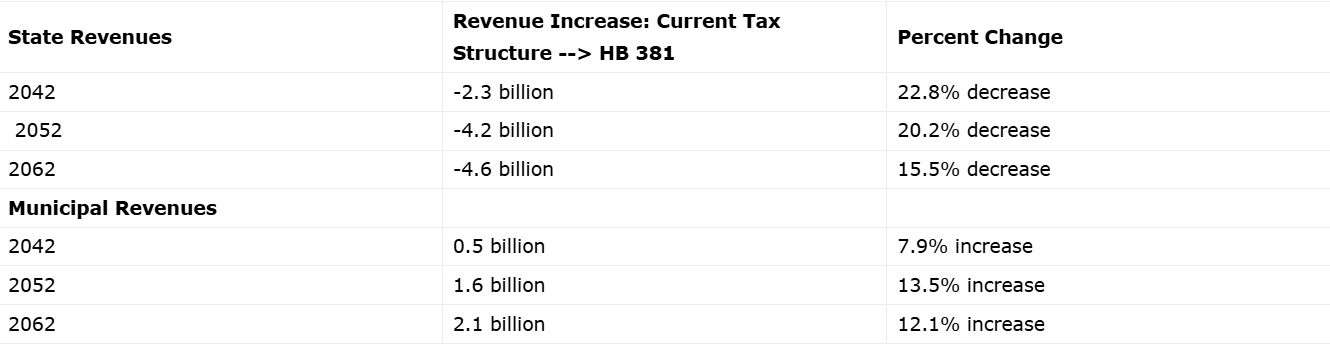
Despite claims perpetuated by Senators Bill Wielechoswki (D-Anchorage) and Scott Kawasaki (D-Fairbanks) that HB 381 gives producers a “90% tax break,” the actual analysis provided by the Department of Revenue’s Acting Tax Director Brandon Spanos and Chief Economist Dan Stickel reveals no more than a 22.8% State revenue decrease and up to a 13.5% revenue increase for municipalities under the version of HB 381 passed by the House.
Here is the math put simply:
| State Revenues | Revenue Increase: Current Tax Structure –> HB 381 | Percent Change |
| 2042 | -2.3 billion | 22.8% decrease |
| 2052 | -4.2 billion | 20.2% decrease |
| 2062 | -4.6 billion | 15.5% decrease |
| Municipal Revenues | ||
| 2042 | 0.5 billion | 7.9% increase |
| 2052 | 1.6 billion | 13.5% increase |
| 2062 | 2.1 billion | 12.1% increase |
Senator Kawasaki claims HB 381 gives a “90% tax cut for AKLNG and Glenfarne,” which is not true.
Senator Wielechowski sticks closer to the facts, claiming that HB 381 gives a “90% property tax break for 30 more years;” however, Wielechowski only tells half the story and fails to inform the public of the alternative volumetric tax provided in HB 381 that offsets the property tax break. This is not a tax abatement bill that simply gives corporate producers tax breaks, but a tax restructuring that replaces property tax burdens with an AVT.
The Senate will now consider HB 381.
SEE HB 381 Revenues Recalculated: Sharp Government Revenue Decrease, Lower Energy Costs for Alaskans FOR MOST UP-TO-DATE ANALYSIS OF HB 381 AS PASSED BY THE HOUSE.