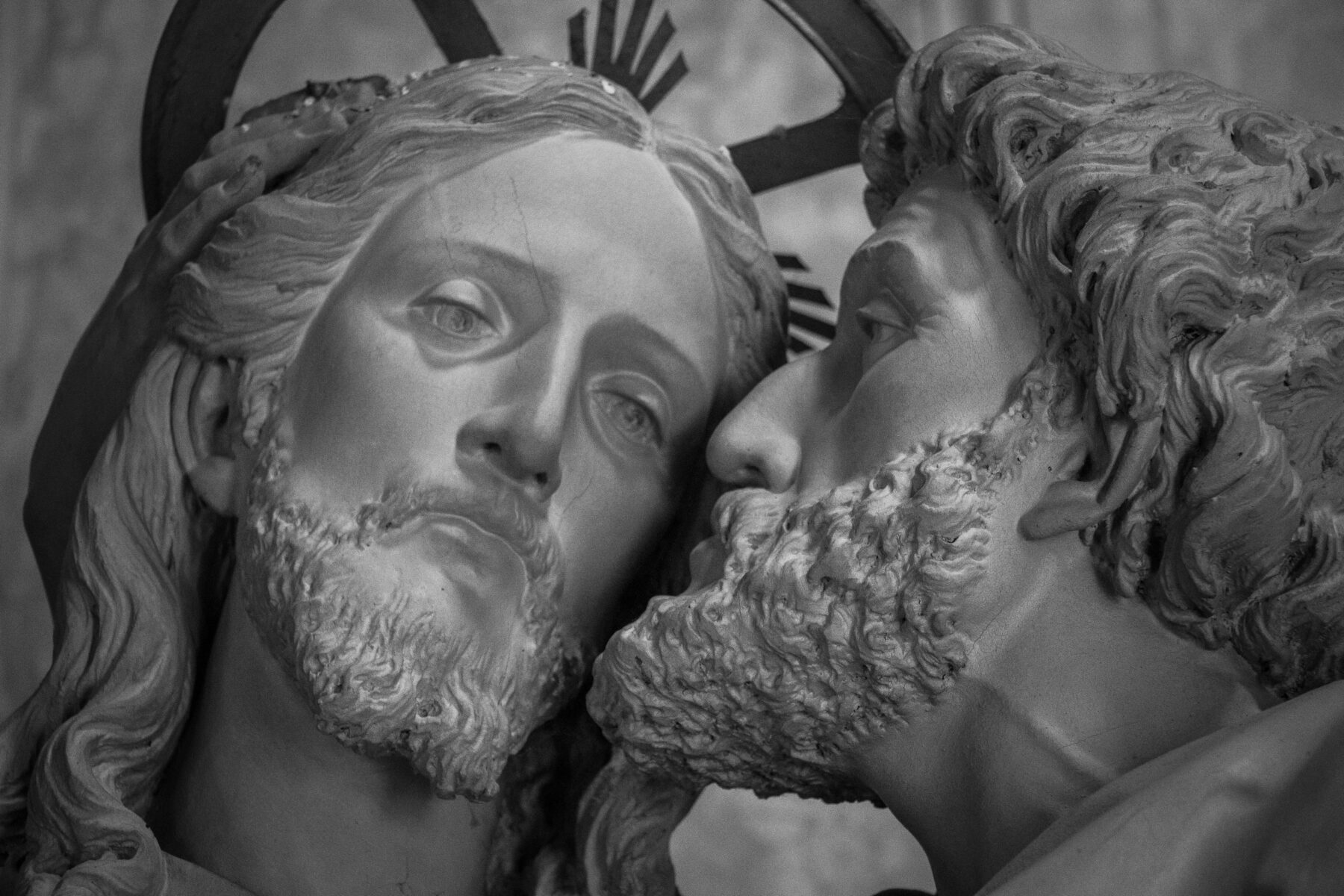
30 pieces of silver. What words come to mind? Betrayal and traitor. What images come to mind?
One image that immediately comes to mind is Benedict Arnold. And when I think of Benedict Arnold, I think of The Brady Bunch. I know—weird—but bear with me; I’ll connect the dots. There was an episode where Peter, the middle son, was auditioning for a school play. The part assigned to him was Benedict Arnold, the infamous traitor who earned his acclaim before his 1780 plot to surrender West Point to the British. His name endures in the U.S. as a synonym for “traitor.” So there you go… Benedict Arnold… Brady Bunch… dots connected.
Here is a list of a few infamous traitors in history: Vidkun Quisling, Aldrich Ames, Julius and Ethel Rosenberg—just to name a few. I will leave it to you to look up their histories.
But to pretty much every Christian—and then some—the most infamous traitor throughout all of history goes by the name of Judas Iscariot. His crime, his sin, his deed… his betrayal was so bad, so evil, that Jesus said of him, “It were better for that man if he had not been born” (Matt. 26:24).

This does not mean that God is saying Judas would have no existence, or that non-existence is an absolute “better” good. Rather, it is a judgment about the gravity of evil and its punishment, expressed in the common way of speaking in His day.
Jesus frames the decision as a choice of what is truly “more valuable” (Heaven), rather than what is merely useful for this life. Aquinas explains that the “better” refers to a comparison of lesser harm. To the point: Judas’ betrayal is so disastrous that it would have been less harmful had he not come to be what he became in that act and its consequences (St. Thomas, Commentary on Matthew).
The life of Judas is a warning to every one of us occupying this little blue planet.
We must take care and be watchful of ourselves, that we do not look down from our lofty and self-righteous thrones to condemn Judas for betraying Jesus for thirty pieces of silver, when we betray Him all the time… for free.
- Judas walked with Truth and did not obey Him.
- Judas walked side by side with Holiness and still was unable to change.
- Judas looked and acted like a disciple, and still he resisted surrendering his whole self.
- Judas appeared faithful on the outside, all the while resisting the very Truth that could save him.
Judas, by the grace of God, performed miracles, yet he was on the side of men, not God.
Judas was not lost because he was far from Jesus; he was lost because he would not fully give his heart to Him. He was stuck on the “things” of this world, not of heaven, where the soul has an eternal destiny.
“For what does it profit a man to gain the whole world and lose his soul?” (Mk. 8:36)
This is a case where we should learn from Judas’ sins, not mistakes. Mistakes are different. You will not offend God by putting too much salt in a recipe.
Judas’ sin is what is called a mortal sin. By definition, a sin is mortal when these three conditions are present:
- Grave Matter – the act is seriously contrary to God’s law.
- Full Knowledge – the person knows it is seriously wrong.
- Deliberate Consent – the person freely and willingly chooses it.
Judas fulfilled each one of these. Upon realizing that his actions were wrong, he immediately tried to give the “blood money” back. By his own admission, he acknowledged his betrayal of innocent blood. He then fell into another sin… the sin of despair. He believed that there was no way God could ever forgive him for what he had done. In his despair, Judas took his own life, therefore sealing his eternity.
St. Thomas says that if you lose your soul, there is “nothing” that can satisfy for it.
How can we learn from all this?
Well, first things first: we should never go against God’s laws. But when we do, we need to acknowledge and understand that we can come back from it. Our God is a just God, and He is also a merciful God.
If we approach Him with a contrite heart—meaning that we are heartily sorry for having offended Him—and we resolve to never do it again, God will forgive us. For you Catholics out there, this happens through the Sacrament of Reconciliation, the Tribunal of Grace.
“As far as the east is from the west, so far has He removed our transgressions from us” (Ps. 103:12).
Here is where Fear of the Lord comes in. It does not mean that you should fear Him in the sense that He is a tyrant, but rather as a Father you are afraid of disappointing. Because you love Him that much, you take extra care to avoid even the near occasions of sin. Sin is what you do when you are not satisfied with God.
Walk with Truth and obey Him. Walk side by side with Holiness and do not fear to change. Be a disciple and surrender your whole self to Him. Be faithful on the inside and out; never resist the very Truth that died to save you.
God knew all your sins—past, present, and future—and instead of using them as a reason to condemn you, He put them in the palm of His Son’s hand and nailed them to the cross.
Live your life worthy of His Sacrifice +
God bless you +
Deacon Dez