As the Anchorage School District searches for a new superintendent to replace retiring Superintendent Deena Bishop, it is asking for community input, even if that request is buried on its website.
This “superintendent search” is the kind of item that would normally be found on the home page of the district’s website, so all can easily find it. Instead, it takes three computer clicks to find the “superintendent search” page, and another click to find the “community survey.” It’s difficult, even for those who visit the school district website often.
Most Anchorage citizens have probably not heard of the community survey that is being done by the district, but survey construct is similar to a “push poll” structured to get the desired answers.
The survey is divided into categories of respondents. Teachers are listed first, followed by administrators and then all other district support staff. One would think all the ASD employees would be a single category. Why were these employees divided into three categories if the answers are not to be weighted?
Then parents (of students) are listed, followed by students and lastly, “non-parent community member.” Indeed, the majority of Anchorage citizens fall in the last category. Are these groups’ answers also to be weighted with the majority counting the least? It’s impossible to tell from the survey.
The survey itself lists 31 qualities/characteristics that a superintendent should possess. The respondent is to choose 10 of those qualities that are of greatest value to the person taking the survey.
One superintendent quality is: “Has a strong moral compass that is rooted in justice and equality.”
Another quality is: “Is able to lead district diversity, equity, and inclusion efforts,” which is a dog whistle for those who understand how Critical Race Theory is being actively pushed in the district.
Most of the remaining qualities are commonly found in a school district leader, such as an emphasis on student achievement/performance would be at the top of anyone’s list. Accountability of staff is not found in the survey.
Those who want to help influence the choice of the next superintendent can complete the survey at: https://www.asdk12.org/Page/18773.
The survey closes on Feb. 2, 2022.
David Boyle is Must Read Alaska’s education writer.
It’s the Super Bowl for the Democrats, the day to score touchdowns and field goals against Republicans and the former President Donald J. Trump. A day to show “Democrats-good, Republicans-bad.”
Jan. 6 is a day the D.C. media, leftist pundits, and Beltway insiders have been looking forward to for months. It’s a year to the day when an unruly mob of Trump supporters surged into the U.S. Capitol, when one of the protesters was killed by Capitol Police, and when numerous people, including law enforcement personnel, were injured. What makes it different from other moments in history is that it was all filmed in real time, and the footage is disturbing.
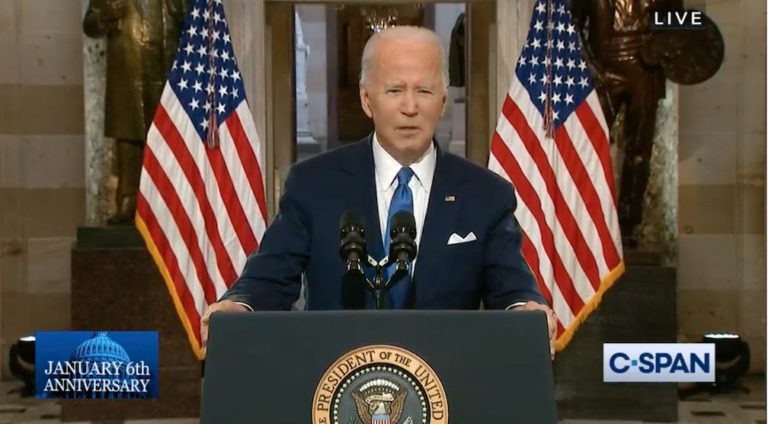
President Joe Biden, in a fully produced speech in Statuary Hall in Congress, squarely blamed the mob’s actions on former President Trump. He said Trump could not accept that he had lost or that 81 million Americans had voted for Biden, whose approval ratings have since slipped from 51 percent last April to 44 percent in December.
Protesters at the Capitol a year ago were objecting to the certification of the Electoral College vote that awarded the win of the presidential election to Joe Biden. The decisive final vote had Biden winning more votes than any other presidential candidate in history.
It’s a matter that still divides Americans. Many Republicans still believe the election was not held fairly. An NPRpoll in November showed that just 58 percent of Americans think the nation’s elections are fair. The breakdown of that poll was 90 percent of Democrats trust U.S. elections, while 60 percent of independents and just 33 percent of Republicans do.
In today’s speech, Biden called Trump a liar and a sore loser. Vice President Kamala Harris and Biden used the cameo moment to push their legislative agendas. Harris compared the uprising to mass casualty events Pearl Harbour and the Sept. 11, 2001 terrorist attacks, unfazed by the fact that at Pearl Harbor, in 1941, at least 2,390 Americans lost their lives; on Sept. 11, 2001, 2,974 were slaughtered by terrorists, while on Jan. 6, 2021, only one person — protester Ashli Babbitt — was shot and killed by Capitol Police.
Today, U.S. Senator Lisa Murkowski issued the following statement,reflecting the trauma she experienced that day:
“Today marks one year since the U.S. Capitol was stormed by a mob incited by our former president. Those of us who were there to fulfill our constitutional responsibilities can never erase what we saw and heard, nor will we ever forget the desecration and violence that took place.
“A year later, the sadness and anger of knowing that it was Americans who breached the center of our democracy, to thwart certification of a lawful election, remains with me. There is not a day that goes by that I am not thankful to our Capitol Police officers, who attempted to hold the line on that awful day to protect Congress and those of us who serve as part of it. I mourn for the individuals we lost and for those who continue to stand watch with injuries, both visible and invisible. My heart is also heavy knowing that American institutions and ideals remain tarnished by this terrible event.
“We cannot ignore the riots of January 6th nor what led up to the insurrection at our Capitol. We must understand so that it is never repeated. Our nation – and especially those who would lead it – must also focus on healing our divisions instead of deepening them. That is the only way we will remain a country committed to civil discourse, the right to peaceably assemble, and, so importantly, the peaceful transition of power.”
Kelly Tshibaka, Murkowski’s opponent in the upcoming election, also issued a statement:
“The people who committed crimes and acts of violence are being held responsible for their actions by the judicial system, which is what is appropriate and constitutional. The January 6th Committee is a partisan witch hunt which is essentially the third attempt to impeach President Trump. It is nothing more than a rehashing of the second sham impeachment. If that committee wanted to be useful, it would examine ways to better protect the Capitol, which would actually be within its authority. The Senate has already acquitted President Trump on the question of January 6th, despite Lisa Murkowski’s vote to remove him from office after he was already gone. Democrats are trying to keep the issue alive in their desperation to hold onto power in Congress, and they have Murkowski as an ally.“
U.S. Sen. Dan Sullivan was measured in the statement released by his office today:
My statement from January 6, 2021 remains relevant today. The violence that transpired that day in the U.S. Capitol building was a disgrace and will go down as one of the sadder and more dispiriting days in our country’s history. Those who perpetrated that violence should be brought to justice. The world witnessed our Capitol under siege during the day, but by the evening, members of Congress fulfilled their constitutional duties, thus demonstrating the resiliency of American Democracy,” Sullivan said.
“It is important to point out that the vast majority of those who came to D.C. that day, including many Alaskans, did not commit violence or break the law. They were doing what we all have the right to do in America—exercising their First Amendment rights and peacefully protesting. This is a critical distinction that has not been fairly portrayed in media reports on that day. Further, when federal law enforcement makes mistakes, as they have in some instances during their investigation into those responsible, they need to acknowledge such mistakes and apologize.
“Finally, I am deeply troubled that some, including Majority Leader Chuck Schumer, are using the events of January 6 as a political springboard to fundamentally alter the very American institutions, like the U.S. Senate, that safeguard our Democracy. I will continue to vigorously fight against such attempts, as I believe most Americans and Alaskans want me to do,” Sullivan concluded.
During the year since Jan. 6, 2021, many Americans have seen their civil liberties trampled, including Alaskans Marilyn and Paul Hueper. The Huepers were in the nation’s capital to hear Trump speak that day, but did not enter the Capitol building. They remained outside, even while others went through the ultimately unguarded doors.
But on April 28, 2021, the door to their Homer, Alaska home was broken through by FBI, Capitol Police, and U.S. Marshalls, who handcuffed them and held them hostage for hours, while searching their home without producing a search warrant until near the end of their search. The lawmen said they were convinced the Huepers were in possession of House Speaker Nancy Pelosi’s laptop, which was apparently stolen when protesters took over her office. The laptop, if it has been stolen, has not been announced as recovered to this day.
It wasn’t until months later that the FBI arrested the actual subject of their search — a Pennsylvania woman.
A similar event happened to 69-year-old Joseph Bolanos of New York. Bolanos, a pillar in his Upper West Side community association and Red Cross volunteer after the 9/11 attacks, has his home raided and ransacked by the FBI.
“Yes, he attended then-President Donald Trump’s rally in Washington, DC, on Jan. 6, but he never entered the Capitol. He was in a friend’s room at the JW Marriott a 30-minute walk away when the Capitol breach occurred,” the New York Post reported.
“Nonetheless, he was raided in February by the FBI anti-terrorism task force, handcuffed, paraded and detained for three hours while his apartment was ransacked and all his devices confiscated. Four months later, he hasn’t been charged and doesn’t have his devices back, but his neighbors are shunning him, and he’s had two strokes from the stress,” the Post reported. His neighbors all think he is a domestic terrorist.
“It’s destroyed my reputation,” he told the reporter. “I’m not a violent invader … I do not condone the criminality and violence on [Jan. 6] whatsoever.”
The FBI told Bolanos, who is a registered Democrat, that a tipster in the neighborhood told the FBI hotline said he had boasted about being at the Capitol.
Back in Alaska, an Anchorage resident who never went to the Capitol that day, got a call from the FBI because of a tip that he was the kind of person who would have gone.
On Wednesday, the “eve of Jan. 6,” U.S. Attorney General Merrick Garland said the Department of Justice will be relentless in its pursuit of all people associated with the entry into the Capitol, to hold them accountable.
“The actions we have taken thus far will not be our last,” Garland said Wednesday in his speech at the Justice Department’s Great Hall. “The Justice Department remains committed to holding all January 6th perpetrators, at any level, accountable under law — whether they were present that day or were otherwise criminally responsible for the assault on our democracy. We will follow the facts wherever they lead.”
Garland continued, “We build investigations by laying a foundation. We resolve more straightforward cases first because they provide the evidentiary foundation for more complex cases … “There cannot be different rules for the powerful and the powerless.”
Merrick made no mention of pursuit of the pipe bomber from Jan. 5, 2021, setting bombs at both Democratic National Committee and Republican National Committee headquarters in Washington, D.C. Nor did he apologize to those who, such as Paul and Marilyn Hueper, who had been wrongly detained and who have been put on TSA extra-scrutiny lists simply because they went to D.C. to hear a speech.
Liberal commentators repeated expected condemnation of what they called a violent insurrection and terrorist attack. Newspapers widely reflect that characterization.
Conservative commentators had varying remarks about the day:
“I wonder if history will view January 6, in retrospect, as America’s Tiananmen Square. Desperate protesters seeking to have their voices heard. Vicious government crackdown and prosecution. No-dissent policy enforced across society via mass censorship and one-party media,” wrote author and filmmaker Dinesh D’Souza in October.
“Today is the first anniversary of January 6, a riot predicated on a falsehood pushed by President Trump — a riot which did not prevent the certification of the 2020 election by Vice President Mike Pence and Senate Majority Leader Mitch McConnell,” wrote conservative commentator Ben Shapiro.
Tucker Carlson, in an essay on Fox News, said, “It’s about feelings — how the survivors feel, especially the reporters who survived. The feelings of reporters in Washington matter a great deal in America. They certainly matter a lot more than how you feel at the moment. How you feel, as you’ve probably realized by now, is totally irrelevant to anyone. No one cares. But the journalists of Capitol Hill? They do care. And they’re upset. Many still haven’t recovered from what they saw that day. As they lie down to sleep at night, the horrible images replay on a loop on the back their eyelids: The deafening thunder of cannon volleys. The smoke from the remorseless artillery fire, blotting out the sun. The screams of the mortally wounded calling out for their loved ones, echoing like some demonic soundtrack against the walls of the speaker’s lobby. Hell in a very small place,” he said.
“Unless you were there, you cannot possibly understand what it was like. Imagine the Tet Offensive, plus Fallujah, plus the night before Thanksgiving at Whole Foods. On Jan. 6th, you couldn’t tell who the enemy was, unless you looked down and saw they’d bought their shoes at Walmart. Then you knew. But otherwise, it was the fog of war, my friends,” Carlson said, mocking the overreaction of the Left.
“Kasie Hunt was there that day. Hunt is now something called the ‘chief national affairs analyst’ over at CNN. As a veteran of the siege of the Capitol, Hunt took to Twitter today to give hope to her fellow survivors. ‘Tomorrow is going to be a tough one for those of us who were there or had loved ones in the building. Thinking of all of you and finding strength knowing I’m not alone in this….#January6th'” Carlson continued, sarcastically.
“That was just a tweet. But, someday, you’ve got to believe, because this is a hopeful country, Hunt and her fellow survivors of the insurrection massacre of Jan. 6 will come together in some more formal way: Annual reunions, held in the shadow of Washington’s certain-to-be-built Jan. 6 memorial, the one they’ll have to bulldoze the Washington Monument to construct. Hunt and graying grizzled veterans of the Washington Post and Bloomberg News, and Politico, and The Daily Beast and the Atlantic Magazine will raise their White Claws as one, and remember how they cheated death that terrible day,” he said, continuing in the vein of mocking the media.
“Ok, we’ll stop. It’s way too embarrassing. We’re feeling shame even making fun of it. And in fact, as a political matter, the anniversary of Jan. 6th is not a joke. It’s a very serious thing. Pretending that a protest was actually a failed coup is the Democratic Party’s entire strategy to win this year’s midterm elections. At this point, it’s all they’ve got. Governing didn’t work. That’s why today, the attorney general of the United States, one of the most political men in Washington, announced the Department of Justice will continue to harass and arrest people voted for Donald Trump,” Carlson said.
“Be sure to check the FBI website,” Carlson advised, as the FBI continues to post photos — but not of its own agents who were in the crowd that day.
“They’re not only posting photos, they’re taking them off the site, including the most wanted list. Remember Ray Epps? He’s on video several times encouraging crimes, riots, breaches of the Capitol on January 6th. He was on the FBI website. Now he’s gone. Hasn’t been charged with anything, apparently. Why is that? That’s a real question. No one in Congress seems to care, even supposedly conservative Republican senators,” Carlson said.
On Dec. 21, Dr. Leana Wen, CNN Medical Analyst stated, “Don’t wear a cloth mask. Cloth masks are little more than facial decoration. There is no place for them in light of Omicron.”
Maybe she finally got around to reading the cover of the surgical mask box. Right there on the box, for all to see, it says, “Not intended for medical use or to prevent any disease or illness.”
A few days later, Dr. Anthony Fauci admitted on MSNBC that hospitals are “over counting” Covid-19 cases in children.
“If you look at the children who are hospitalized, many of them are hospitalized with Covid as opposed to because of Covid. If a child goes in the hospital they automatically get tested for Covid and they get counted as a Covid-hospitalized individual when in fact they may go in for a broken leg or appendicitis or something like that. So it’s over counting the number of children who are hospitalized with Covid as opposed to because of Covid,” Fauci said on Dec. 31.
Do you suppose this applies to hospitalized adults as well? Obviously it does.
The numbers lie.
In fact, this has been discussed long before Fauci’s less-than-remarkable revelation. If you have been paying attention, you have known this for some time. Can we really rely on any information put forth by government health agencies at this point? The distrust of our government health syndicate may be a permanent condition incapable of being repaired.
On Jan. 4, Anchorage School Superintendent Deena Bishop wrote: “The latest COVID-19 data from State of Alaska (SOA) shows an uptick for ASD and SOA. As of this time, there are no changes to our mitigation plan. More specifically, the mask requirement remains, along with testing and other mitigation procedures that were in place prior to winter break. A decision about extending the mask requirement past January 15th will be made by January 14th. We continue to closely monitor emerging developments concerning COVID-19. We remain in constant contact with our local, state, and federal partners.”
Uptick? It appears ASD is basing decisions on case numbers, which are at best tainted with over counting.
Covid cases are not necessarily hospitalizations. Covid cases are not necessarily deaths. Cases of the new Omicron Covid variant are increasingly symptom free or similar to a cold that we used to treat with Nyquil.
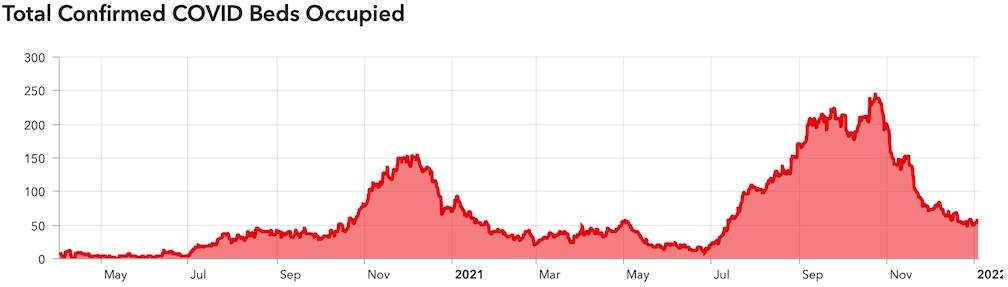
A quick look at the State of Alaska’s Covid dashboard shows that hospitalizations are flat. Hospitals are not overwhelmed and have plenty of capacity. There is no crisis. Hospitalizations and deaths are the only real upticks we should be looking for.
Superintendent Bishop went on: “The priority is keeping our schools open and safe with in-person learning. Our students belong in the classroom. Nevertheless, things could change depending on how this recent variant continues, and I want to provide some insight into what may occur if our staffing levels fall,” Bishop wrote.
“Similar to the one-week closure following the 2018 earthquake, we may need to take some time off school to build our staffing if employee absences are too great to carry out our mission. We want to keep our staff healthy. This learning time would be made up with quality instructional days throughout the spring semester, consequently adjusting the school calendar for presently scheduled non-instructional days. Virtual learning would only occur as a last resort as our students’ learning and mental health were shown to be negatively impacted last year during this time,” Bishop continued.
I’m glad to hear Superintendent Bishop has her priorities straight when it comes keeping schools open. Schools should never be closed again for this safety charade. The safety-for-liberty trade is a very old and tired justification for revocation of rights and freedoms.
If staffing is an issue, could we recruit more substitute teachers? I hear that recruitment efforts are in the works. If this is the driving force behind another potential shut down, finding substitutes should be the number one priority. The policy of a forced 5- or 10-day absence for staff due to contraction of a cold virus should receive serious reconsideration.
Unfortunately, the superintendent’s message is muddied by comparison to the earthquake. The earthquake damaged school buildings and made them uninhabitable due to structural, mechanical, and electrical damage.
The virus does not make a building unsafe. It is the reaction to the virus and the choice of our school board majority to close facilities down or require teachers and staff to stay home that creates the damage. If we continue to measure the extent of a problem by an insignificant and corrupted data point like case counts, we will never see the end of bad decision making. Covid-19 is now endemic just like influenza. We never upended our entire education system for the flu season. We never required asymptomatic people to stay home because the flu was in schools or the community. In fact, the only way to end the ASD mask mandates and shut downs may be to stop testing altogether. There is no emergency. Stop testing and it all goes away.
If Bishop desires to further her political career or even be remembered favorably, she must stand up to her employers — the majority of the school board.
Bishop expressed her view on masks when she relinquished the mandate and favored parental choice for the last half of this year. Bishop now needs to own her prior decision to let our children breathe freely. If schools are closed again and if this miserable mask malarkey continues to persist, she will most likely be viewed as having a weak moral compass. Bishop needs to address the school board majority and educate them about the damage they continue to cause with masks and could potentially cause with another school shut down. Bishop should view this as an opportunity.
I have no idea what Bishop wants to do in the future. I do know that bending like a willow, with each political wind that blows through, has never been a characteristic of a principled conservative. There is a real opportunity for Bishop to establish some conservative street credentials and stand by her earlier decision in favor of liberty and freedom. Rolling over and succumbing to another school shut down or a continued mask mandate is a step in the wrong direction for her and for Anchorage.
What can the school board do, fire her? That could be a badge of honor at this point. If the school board majority insists on continued masking, it is really a case of willful ignorance. The information necessary to make a solid decision in favor of our kids is out there, if they choose to take off the blinders.
Dan Smith is a lifelong Alaskan and Anchorage residentwho writes for Must Read Alaska.
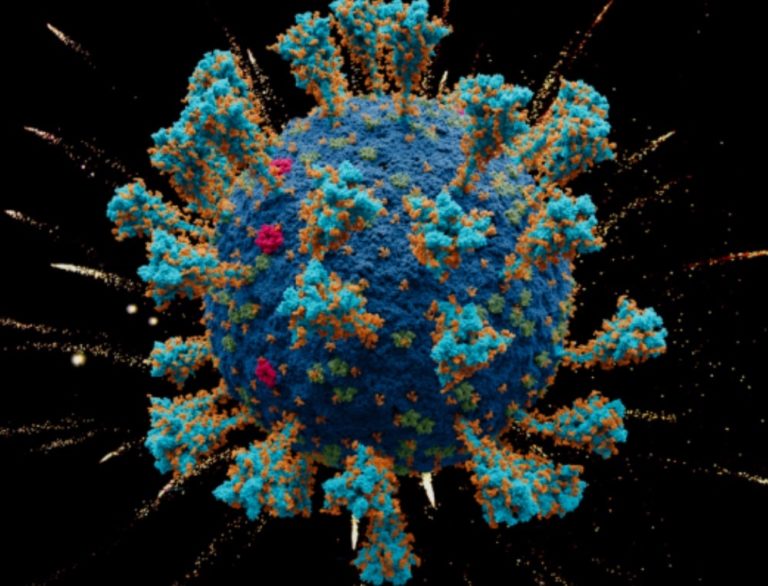
A French scientist at the institute IHU Mediterranee Infection has isolated a new variant of Covid-19, which has been named IHU, or the B.1.640.2 variant.
The variant has been detected in just 12 patients near Marseille, France, but it is said to contain 46 mutations, which may make it more resistant to vaccines. Some of the mutations in the variant are also found in Omicron, indicating it may be another fast-spreading version. Omicron has about 50 genetic mutations.
But so far, little is widely known except that it was identified in November and apparently hasn’t spread much. The World Health Organization said during a Tuesday press briefing that the variant hasn’t seemed like much of a threat and that it had “a lot of chances to pick up.”
The first patient to have been identified with the IHU variant had just returned to France from the African nation of the Republic of Cameroon.
The French scientist who discovered the mutation, Didier Raoult, was previously roundly criticized by the medical establishment for recommending the use of hydroxychloroquine and another anti-malarial drug to treat Covid.
Raoult is most known on the Covid scene since his proposed treatment for Covid-19was touted as a miracle cure by President Trump. According to a story in the New York Times, Raoult believes that his colleagues fail to see that their ideas are the products of mere intellectual fashions — that they are hypnotized by methodology into believing that they understand what they do not and that they lack the discipline of mind that would permit them to comprehend their error.
“Raoult, who founded and directs the research hospital known as the Institut Hospitalo-Universitaire Méditerranée Infection, or IHU, has made a great career assailing orthodoxy, in both word and practice. ‘There’s nothing I like more than blowing up a theory that’s been so nicely established,’ he once said. He has a reputation for bluster but also for a certain creativity. He looks where no one else cares to, with methods no one else is using, and finds things. In just the past 10 years, he has helped identify nearly 500 novel species of human-borne bacteria, about one-fifth of all those named and described. Until recently, he was perhaps best known as the discoverer of the first giant virus, a microbe that, in his opinion, suggests that viruses ought to be considered a fourth and separate domain of living things. The discovery helped win him the Grand Prix Inserm, one of France’s top scientific prizes. It also led him to believe that the tree of life suggested by Darwinian evolution is ‘entirely false,’ he told me, and that Darwin himself ‘wrote nothing but inanities.’ He detests consensus and comity; he believes that science, and life, ought to be a fight,” ,” wroteScott Sayare in the New York Times last year.
“It is in this spirit that, over the objections of his peers, and no doubt because of them, too, he has promoted a combination of hydroxychloroquine, an antimalarial drug, and azithromycin, a common antibiotic, as a remedy for Covid-19,” Sayare wrote. The article about Raoult is at this link.
Alaska State Troopers’ Alaska Bureau of Investigation Fairbanks Major Crimes Unit have identified and located the mother of the infant who had been abandoned at the intersection of Dolphin Way and Chena Point Avenue in Fairbanks on New Year’s Eve in bitter cold temperatures. The mother is a juvenile and has been taken to a Fairbanks hospital for evaluation and medical care.
The investigation into the circumstances surrounding how the the newborn baby boy came to be abandoned in a cardboard box along the side of the road is ongoing, and no criminal charges have been filed yet, the Department of Public Safety said.
“The Alaska State Troopers would like to thank our partners at Interior Alaska center for Non-Violent Living (IAC), Stevie’s Place, and FMH Forensic Nursing for the critical resources they provide, as well as the countless Alaskans that submitted tips in an effort to resolve this case and protect the wellbeing of the baby and mother,” DPS wrote.
On Tuesday, DPS said the child known as Teshawn, so named in a note that was in the cardboard box with him, continues to be in good health and is in the care of the Office of Children’s Services. Troopers were following leads leads based on the statement in the note that said the mother lived on Cormorant Street.
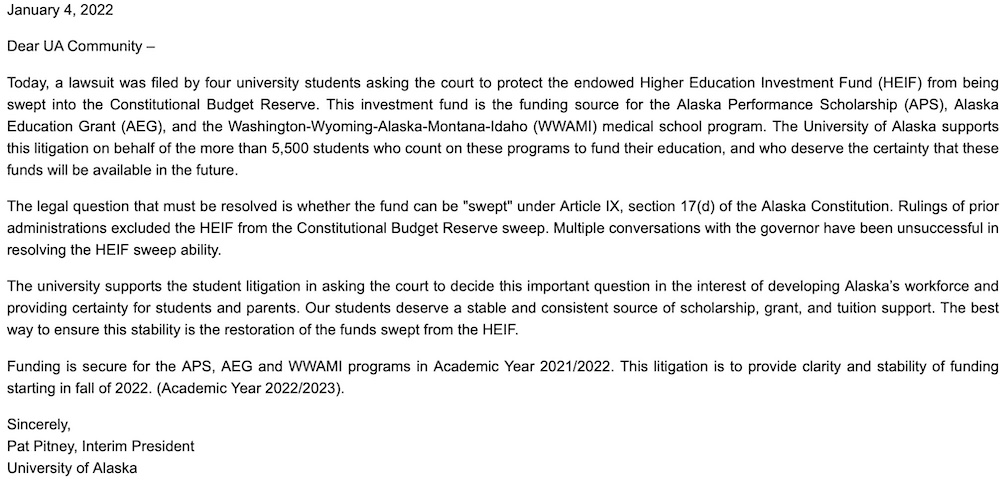
If the special Alaska budget sub-fund called the Power Cost Equalization Fund cannot be “swept” into the Constitutional Budget Reserve, then maybe the Higher Education Investment Fund can’t either.
Some University of Alaska students are testing that theory. They want the HEIF treated like the PCE fund and are asking the courts to decide the question.
It may not actually be students who are forcing the question. In fact, the attorneys handling the lawsuit are former Gov. Bill Walker appointees and Recall Dunleavy attorneys Scott Kendall and Jahna Lindemuth. They are regular litigants against the Dunleavy Administration.
In a message from University Interim President Pat Pitney, also a former Bill Walker functionary, it appears the University of Alaska may be behind the “student” lawsuit:
Gov. Mike Dunleavy asked the Alaska Department of Law to request an expedited ruling for yesterday’s lawsuit filed by the students. The funds at issue are the balance of the fund that was not used or needed to fund student scholarships in the current fiscal year. Those leftover funds were automatically, per the Alaska Constitution, placed in the State’s savings account, the Constitutional Budget Reserve.
Last year, the Supreme Court said the Power Cost Equalization Fund, used to help lower power costs for residents in rural Alaska, could not be swept in such a manner, creating a new legal standard for the Legislature that appears in conflict with the Constitution, but that must stand for now, due to the court order.
The issue in the case is fundamental to how Alaska’s public finances work and how the budget process is structured, the Governor’s Office said.
“The Alaska Constitution says after the Legislature borrows money from the Constitutional Budget Reserve, which is the main State savings account, this account is automatically paid back from other accounts, like the HEIF, to repay the fund at the end of each fiscal year. Billions have been borrowed from the CBR. Under art. IX, sec. 17(d), replenishment of the CBR is mandatory and not subject to control by the Governor, or the Legislature (absent three quarters vote to return the funds to the original accounts),” said Attorney General Treg Taylor. “If a state account qualifies for the repayment obligation, and the transfer has not been reversed by the Legislature, there is nothing anyone can do to stop the transfer to the CBR. The transfer is compelled by the constitution.”
Governor Dunleavy said thatthe Legislature, the University, the Executive Branch, and Alaskans deserve a quick answer from the Court System – the only branch of government that interprets the Alaska Constitution. “I have asked my Attorney General to seek expedited consideration of this issue,” Dunleavy said.
“I have supported scholarship funding every year I have been in office and will continue to do so. Alaska’s students can be assured their scholarships will continue to be funded regardless of this lawsuit,” Dunleavy said.
This story will be updated once Must Read Alaska gets a copy of the actual lawsuit.
A who’s-who list of politicos is hosting a fundraiser on Jan. 12 to support the American Red Cross of Alaska and its efforts to aid families and businesses in the Matanuska-Susitna Borough and other parts of the state who have suffered damage and harm from the New Year’s storms of 2022.
The fundraiser will be held at Saint Coyote on Dimond Blvd. By using the QR code in the graphic above, you will ensure your donation stays in Alaska. Checks can be made out to “Red Cross of Alaska” and donors are asked to note “disaster relief on their checks.
Gov. Mike Dunleavy, along with several mayors, former mayors, and numerous legislators are co-hosts and sponsors associated with the fundraiser. RSVP to 907-841-1634
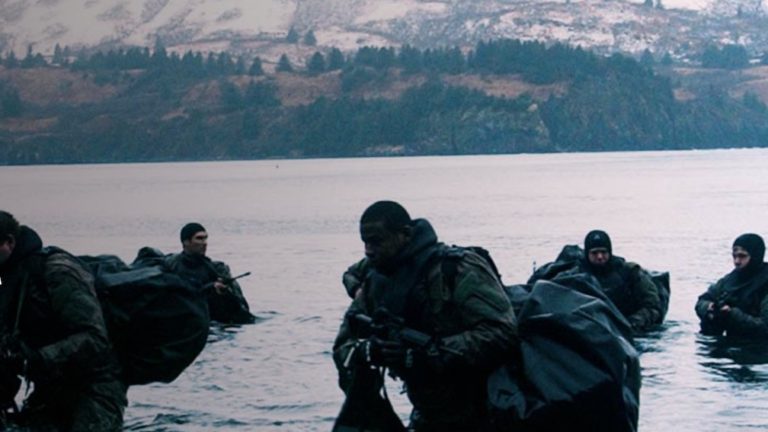
The United States District Court for the Northern District of Texas on Monday issued a preliminary injunction against President Joe Biden’s federal Covid-19 vaccine mandate, as it pertains to certain Navy SEALs who were seeking religious exemptions.
“Our nation asks the men and women in our military to serve, suffer, and sacrifice. But we do not ask them to lay aside their citizenry and give up the very rights they have sworn to protect. Every president since the signing of the Religious Freedom Restoration Act has praised the men and women of the military for their bravery and service in protecting the freedoms this country guarantees,” wrote Judge Reed O’Connor, in the opinion that prevents the Navy from discharging men and women declaring religious exemptions from the Covid-19 vaccine mandate put in place through Secretary of Defense Lloyd Austin III.
“In this case, members of the military seek protection under those very freedoms. Thirty-five Navy Special Warfare servicemembers allege that the military’s mandatory vaccination policy violates their religious freedoms under the First Amendment and Religious Freedom Restoration Act. The Navy provides a religious accommodation process, but by all accounts, it is theater. The Navy has not granted a religious exemption to any vaccine in recent memory. It merely rubber stamps each denial. The Navy servicemembers in this case seek to vindicate the very freedoms they have sacrificed so much to protect. The COVID-19 pandemic provides the government no license to abrogate those freedoms. There is no COVID-19 exemption to the First Amendment… and there is no military exclusion from our Constitution,” said O’Connor.
By early November, 99.4% of active-duty Navy servicemembers had been fully vaccinated against Covid-19. The plaintiffs in this case represent about .6% of the Navy and are of Catholic, Eastern Orthodox, and Protestant branches of Christianity. They object to the vaccine because of the use of aborted fetal cell lines in the development of the shot, the belief that modifying one’s body is an afront to the Creator; receiving direct, divine instruction not to receive the vaccine; and/or opposition to injecting trace amounts of animal cells into their bodies.
“Plaintiffs’ beliefs about the vaccine are undisputedly sincere, and it is not the role of this Court to determine their truthfulness or accuracy,” the judge wrote.
“The opinion issued in this case is a victory for our Constitution, our active-duty military members, and our institutions. It is our responsibility to protect our servicemen and women from this outrageous mandate that was set in place by their own Commander in Chief. No American, especially our service members, should be required to choose between violating their religious beliefs and serving our country,” said Pam Bondi, counsel at America First Policy Institute, who represent the Navy SEALs in this case.
Nine U.S. senators, including Ted Cruz (R-Texas), Rick Scott (R-Fla.), Mike Lee (R-Utah), Jim Inhofe (R-Okla.), James Lankford (R-Okla.), Steve Daines (R-Mont.), Roger Wicker (R-Miss.), Mike Braun (R-Ind.), and Roger Marshall (R-Kan.), along with 38 members of the House of Representatives, filed an amicus brief in U.S. Navy Seals v. Biden.
The 38 House Republicans were led by Mike Johnson of Louisiana, the House Republican Conference chair.
Defense Secretary Austin made Covid vaccines mandatory, allowing for religious exemptions. But non of the thousands of religious exemption request have been granted. Judge O’Connor noted that the exemption is in name only, and does not exist in reality. He said the preliminary injunction is an extraordinary measure, and that the Department of Defense is likely to lose in court.
The ruling is historic in that it allows military members to defy a direct order given by their commander-in-chief.
An elderly Delta Junction man pleaded guilty in U.S. District Court to two counts of threatening to murder a U.S. official, specifically Alaska’s two U.S. senators. Sentencing will occur at a later date.
Jay Allen Johnson, 65, left a voice mail message on Sept. 2, 2021, at the Washington D.C. office of Sen. Lisa Murkowski containing several threats, including a threat to “burn” the senator’s properties.
“I will find out … where you’re at. I will find out all of your properties. And I will burn everything you hope to have,” he said in the message.
On Sept. 29, Johnson left another voice mail threatening to hire an assassin to kill the senator. Johnson also left threatening voicemail messages for Sen. Dan Sullivan between April 2021 and September 2021, including one in which he threatened to get his “.50 caliber out,” hold a “GoFundMe page for the …shells,” and to come “with a vengeance mother*cker.”
“Resign or get the f— gone, or die,” he said on Murkowski’s office voice mail.
The document says Senator Dan Sullivan got 13 phone calls over a six-month period last year from the same phone number. In several of those message, the caller identified himself as Jay Johnson, and even left his Delta Junction post office box address.
The investigation found the call originated in Delta Junction from a cell number linked to Johnson.
Johnson admitted to leaving 17 threatening voice mails for the two senators over a five-month period and said that the messages were intended to retaliate against the senators for performing their official duties.
As part of the plea agreement, Johnson has agreed to the issuance of a three-year federal protective order following his release from federal prison. The protective order will prohibit Johnson from contacting either U.S. senator, their family or staff members. Johnson faces a maximum penalty of 10 years in federal prison for each charge as well as forfeiture of seven firearms, which the FBI discovered in Johnson’s residence during execution of a search warrant. A federal district court judge will determine any sentence after considering the sentencing guidelines and other statutory factors.
“Threatening public officials in an attempt to interfere with the performance of their duties is antithetical to our democratic system of governance,” said U.S. Attorney John E. Kuhn, Jr. of the District of Alaska. “To protect the functions of our government institutions and our public officials themselves, the Department of Justice will work to ensure our elected officials can serve without fear of harm.
“The FBI remains steadfast in addressing threats in our communities, including violent threats made against those who are performing their official duties,” said Assistant Special Agent in Charge Shawn Peters of the FBI Anchorage Field Office. “This case underscores the swift efforts by the FBI, the U.S. Attorney’s Office and our law enforcement partners as we worked together to address these threats before any potential acts of violence occurred.”
The Federal Bureau of Investigation and the United States Capitol Police investigated, and Assistant U.S. Attorney Ryan Tansey prosecuted the case.