Tuesday, May 5, 2026
Home Blog Page 1012

Recall Zaletel group challenges hundreds of ballots that were mailed to registered voters also registered on out-of-state voter rolls

The group trying to recall Anchorage Assemblywoman Meg Zaletel has preemptively challenged about 200 Anchorage District 4 voters, who are being sent ballots to out-of-state addresses.

“These voters appear to be dually registered to vote in those out of state locations as well, which is illegal under Alaska law.  I am placing a preemptive, ongoing challenge on any of these ballots returned in the Special Election Recall of Meg Zaletel,” wrote Russell Biggs in a letter to Anchorage Assembly Clerk Barbara Jones.

Presumably, these same dually registered voters received ballots for the Recall Felix Rivera effort, which failed in April. 11,929 of the District 4 votes were counted in that election. The Clerk uses the state voter rolls, which are known to be outdated.

“This represents a small fraction of the number of ballots being mailed out of state. We didn’t make it through the entire list, but best guess is there’s close to a 1000 people with dual state voting registration getting a ballot in this election. 200 voters isn’t much, but remember one 2021 school board race was decided by this thin a margin, and Dave Bronson only won the mayor’s race by 1200 votes,” the group wrote on Facebook.

The recall of Zaletel is underway, with all ballots due Oct. 26. The Clerk’s office sent 36,209 ballots out in this mail-in election to voters in the district, which encompasses large portions of Midtown Anchorage.

As of Oct. 13, Anchorage’s Elections Office, run by the Clerk, had received 4,110 ballot envelopes back.

Jab or no job XIV: Young Native worker at Alaska Native Medical Center says goodbye

This is the 14th in a series of stories of people being fired from their jobs because they have declined to take the required Covid-19 vaccination. The identities of these workers are being kept confidential because they fear reprisal. Previous interviews in this series are listed and linked at the bottom of this story. Send your story to [email protected].

Candace is a soft-spoken Yupik-Athabaskan who, up until Friday, was employed in record-keeping at the Alaska Native Medical Center, where she has worked for many months. It was a good job for her, and a fit for her skills and her educational degree.

She didn’t want to get the Covid-19 vaccine and had known for a few weeks that Friday would be her last day. But the news still hit her hard and has caused her to become depressed.

About an hour before her shift ended on Friday, she found she was locked out of her computer. She needed to input some patient information, and so called the IT department, thinking that she had accidentally hit the wrong keys. But IT told her that the Human Resources department had locked her out.

Candace asked a coworker to input the information under her coworker’s own log-in permissions. And then Candace said her goodbyes to her coworkers and left work for the last time. Many of her coworkers didn’t want the vaccine, but took it to keep their jobs, per the mandate from ANMC.

Candace has received no letter of termination from ANMC Human Resources. But a couple of weeks earlier, knowing she would be fired, Candace submitted her letter of resignation. She felt that wasn’t right — she knew she was being fired, and so she rescinded her letter and made ANMC fire her instead.

Candace is one of an unknown number of ANMC, Southcentral Foundation, and Alaska Native Tribal Health Consortium workers whose last day was Friday. They are the unvaccinated and now unemployed. Must Read Alaska is keeping their identities secret because they face existential threats to their livelihoods.

For Candace, it’s a religious reason, grounded in her Christian faith. ANTHC has told workers that due to the tribal nature of ANTHC and its entities, no religious exemptions would be accepted.

“What if it was part of a Native religion?” Candace wondered, finding it strange that a Native hospital would not honor religious exemptions.

Read: Tribal Health Group CEO says no religious exemptions allowed

Candace also worries about the unknowns relating to the vaccine. Both her father and brother received it and she said they got extremely sick. She doesn’t know if she should take that chance.

Although her work didn’t involve caring for patients directly, she and other non-nursing staff did have times when they were required to go into patients’ rooms. And while nurses and doctors were fully protected, she said she only had a mask and a face shield when she went into rooms of those who were “symptomatic.”

One of her coworkers got sick, and she thinks it’s because she was not well protected. “If they really cared about our health, why did we not have the protection?” Candace said.

Candace has had Covid, recovered from it, and understands the seriousness of the sickness. But she is trying to find her voice to stand up for what she thinks is right: “If they are for Native people at ANTHC and ANMC, then why are they doing this to our people?”

Without question, Candace is mourning the loss of her job at a place where she was happy to work up until the mandates came down. Now, she’s filling out applications to see if there is another spot for her in the world.

They [ANMC] do have the code of ethics online in the Wellness acrostic, saying how important respect and honor is. I don’t feel respected or honored,” Candace said.

Read: Part 1: Nurse losing job, after her medical exemption refused

Read: Part II: Pharmacist losing job

Part III: Southcentral Foundation employee losing job Oct. 15 over shot refusal

Part IV: Dozens of Alaskans come forward to tell their stories of being fired for not getting the shot

Part V: Military man getting discharged in Alaska for not taking jab

Part VI: Nurse says she sees too many blood clotting cases associated with jab, so she’s not taking it

Part VII: Bethel police investigator gets put on leave, won’t be returning to the force

Part VIII: Alaska Native man says unvaccinated patients are getting the shaft

Part IX: Sophies choice, between Moderna vaccine or childbearing?

Part X: Respiratory therapist describes growing underground of workers

Part XI: Supervisor says employees facing few options

Part XII: Founder of medical underground speaks about workers

Part XIII: Covid positive patient says Alaska Native Medical Center treated her with indifference

Part XIV: Yupik-Athabaskan worker at Native medical center says goodbye to her job

Read: ICU Nurse: Let’s stop demeaning the unvaccinated

Read: Doctor says hospitals are not in crisis, not rationing care

Read: My doctor fired me because I won’t take the vaccine

Mandates for kids ahead? Pediatricians being advised to prepare to vaccinate ages 5-11 for Covid

The American Academy of Pediatricians is advising its members that they will be able to vaccinate children ages 5-11 for Covid soon, and it’s time for them get get prepared.

According to the doctors’ trade group, pediatricians will not use the Comirnaty vaccine vials that are approved for use on adolescents and adults.

Younger children will get a different Pfizer-BioNTech vaccine, and will be receiving 10 micrograms of the substance that evidently to helps ward off the Covid-19 virus.

The group says pediatricians will be able to order the pediatric version soon and will know next week the timeline for their particular state.

“We really think vaccinating in the medical home is going to be the best way to get this age group vaccinated,” Amanda Cohn, M.D., FAAP, deputy incidence manager for vaccines for the Centers for Disease Control and Prevention’s (CDC’s) Covid-19 emergency response, said in a call with AAP leaders Wednesday, as reported by https://www.aappublications.org. “This includes pediatric clinics, federally qualified health centers, rural health centers.”

The vaccine advisory committee of the Food and Drug Administration will meet on Oct. 26 to discuss and advise on emergency use authorization (EUA) of the vaccine for children, and a decision by FDA acting commissioner Dr. Janet Woodcock is expected to follow.

If authorized, states and territories could immediately begin ordering and vaccines, and they will be delivered to thousands of sites on a pro-rata basis, the organization reports.

But for pediatricians to actually administer the vaccine to children takes a separate decision by the CDC’s vaccine committee, which meets Nov. 2-3.

According to the group, during the first week after FDA authorization, the minimum pediatric vaccine order will be 300 doses, which will then drop to 100 doses in subsequent weeks.

“The pediatric vaccines will have an orange cap and label to distinguish them from the adolescent/adult formulation,” the group said. “The pediatric vaccines will require diluent that will be provided with other supplies for use in children. The vaccines can be stored for 10 weeks in a refrigerator at 2-8 degrees Celsius.”

More than 6 million children have tested positive for COVID-19, according to the AAP. In the week ending Oct. 7, there were more than 148,000 new pediatric cases and children made up about one quarter of all new cases.

Meanwhile, the doctors’ association reports that about 46% of 12- to 17-year-olds in the U.S. are fully and the number being vaccinated each week is declining. The AAP is encouraging pediatricians to pressure parents and guardians into getting their children vaccinated.

“We know from all of our research … that a person’s health care provider, pediatricians, are a parent’s most trusted source of health care information,” Dr. Cohn said in the AAP story. “And a strong recommendation by a pediatrician for their child to get a COVID vaccine is directly related to uptake in that person.”

Read the complete story at this link.

Whether students will eventually be mandated to show proof of a Covid vaccine to attend school is not at all certain. A year ago, governments promised there would be no mandate for adults, but President Joe Biden has since declared that all federal workers, contractors and employers of over 100 workers must either require a shot of all workers or test them weekly for Covid, at the businesses’ own expense. OSHA has been issuing regulations to support Biden’s mandate. Local schools in Alaska have mandated shots for their staff members and even the University of Alaska Anchorage is mandating the shots for any student who is living on campus.

The pediatricians group has not said whether it thinks there should be mandates for children to get the vaccine, but this past week in Anchorage, the local AAP chapter came out strongly in favor of masking children and adults in the city, saying that masks slow down the spread of Covid and that those who oppose mandating them are anti-science.

Michael Tavoliero: Time to repeal the POMV, and go back to original statutory formula

By MICHAEL TAVOLIERO

Our Alaska government has a scotoma, a blind spot.  It can’t see the forest for the trees.

The scotoma I’m speaking about is the Percentage of Market Value of the Alaska Permanent Fund Dividend. This is the formula now used to calculate how much of the Permanent Fund Earnings Reserve Account will be spend on government.

Angela Rodell, Chief Executive Officer of the Alaska Permanent Fund Corporation, on Jan. 29, 2018, in Must Read Alaska, wrote: “A POMV draw has a number of benefits which include protecting the entire Fund from overspending, providing a certainty of liability the Fund can manage for, as well as providing a structured, long-term source of revenue for beneficiaries of the draw. This endowment-style payout method would provide more stable and predictable payout amounts from year to year, even in down market years, and is compatible with the board’s current investment strategy.”

Sorry, Ms. Rodell. While the Alaska Permanent Fund is doing great under your leadership, you are totally wrong on all counts. The POMV has done none of that.

If anything, it has demoted the true “beneficiaries” during the greatest economic debacle the Alaska has ever experienced, in favor of the Alaska Deep State.  

This includes the unions, the education industry, the health care industry, and the welfare industry.  Whenever laws are written by politicians to benefit one class and do not equally represent and protect the people of the state, this is corruption.  

The POMV is a corruption of the original intent of the dividend. The POMV is designed to create errors in the dividend’s proper use to gain access to more money for the state government and the Alaska Deep State.

Does anyone want to guess who are the true and original beneficiaries of the original law, which is still in statute are?

You betcha.

The Alaskan people. 

Are they benefiting?

Nope.

The POMV is the political football designed to confuse the real purpose of the Permanent Fund Dividend which was simply to allow the people of Alaska to have a direct and equitable share of their collective oil wealth — a concept Jay Hammond called “Alaska, Inc.”.  It has also stymied all other progress in state growth just by its presence in the room opposing sound public policy.

We who were living in Alaska at the time of the PFD inception know it is not some Marxist “basic income” concept which continues to be perpetuated by the Marxist indoctrinated newbies in the state.

Hammond points out that a proposal to cap dividends to allow more Alaska Permanent Fund money to be used for government spending “equates with imposing a head tax on every Alaskan and only Alaskans—regardless of income…. it never makes more sense to cap dividends than to simply ratchet up taxes to raise the same amount.”

Our state has yet to tap into the full potential of Alaska’s natural resources, while the Alaska Deep State has flourished.  That’s a very long list not read in a very long time, because the Alaska Deep State has its collective eye on the billions of dollars generated by the Alaska Permanent Fund.

We as voters need to hold these villains responsible and accountable, yes, villains, because they are not heroes.  

For almost 40 years we have seen our government mired by its own stupidity, thinking if they just talk around the subject, we won’t notice they have intellects the size of a peanut.  They are leading the way into fiscal disaster upon fiscal disaster, instead of the cornucopia of wealth we all know Alaska is capable of.

Hammond speculated that “were every Alaskan annually granted his full per capita share of the wealth we could eliminate or vastly curtail all welfare programs, unemployment insurance and subsidies”.

Here we are in 2021, the Alaska Permanent Fund market value of principal and earnings reserve is almost $82 billion.  With good financial management, it is potentially on track to being over $100 billion before the end of this decade, if not sooner.

We’ve all heard the idiom, “If it ain’t broke, don’t fix it!” 

By enacting a statutory POMV system, the Alaska government instituted ignorance, stupidity, and real Marxism in our state government.  The psychology of attacking the producers is now being instilled in our children in grade school and following them through to college into their adult years.

The POMV did the exact opposite of what it was designed to do.  It created fiscal instability through rhetoric, uncertainty, and propaganda.  It neither stimulated the state economy nor did it address the needs of Alaskans, especially its most underrepresented citizens in rural Alaska. Those people depend on the dividend to help them buy oil and other supplies to survive through the winter. The reduction of the PFD has created and will continue to create greater and greater hardship. 

On Aug. 20, 2021, State Representatives David Eastman and Chris Kurka introduced HB 3002.  It was sent to the House Special Committee on Ways and Means under the leadership of Chair Ivy Sponholz, the House Committee on State Affairs under the leadership of Co-Chairs Jonathan Kreiss-Tomkins and Matt Claman, and the House Committee on Finance, under the leadership of Co-Chairs Neal Foster and Kelly Merrick. In all three committees, HB 3002 died.

The intent of this bill was to repeal the POMV and return the State of Alaska to the original Permanent Fund dividend formula found in Alaska Statutes Title 43.  Simple and straightforward.

Under current statute in Title 43, the Alaska Permanent Fund’s principal gets invested. Earnings are automatically transferred by this statute and held in the Earnings Reserve Account. 

By statute and not legislative action, the earnings are first used to inflation proof the principal, then 50% of the earnings go to the annual dividend (PFD), and the rest of the balance accrues annually for government spending. Notice the order. Government spending is last.

Inflation proofing returns earnings to the principal. The dividend fund is part of the Permanent Fund like the Earnings Reserve Account, and the annual dividend amount is transferred automatically by statute.  No appropriation is required by law.  

Again, it was never broke, why fix it?

With the repeal of the POMV, the PFD will return the dividends due under the original intent of the Alaska Permanent Dividend Program.  For those of you counting, that would mean payment for the past 2016 to 2022 to each eligible applicant of the PFD program of $13,600.  

An Alaskan family of four would be entitled to $54,000.

Given the corruption behind the POMV, I suggest that the state also pay any federal income tax owed by this distribution through the interest made by the Alaska Permanent Fund since 2016.

It’s time to repeal the POMV.

Michael Tavoliero is a realtor in Eagle River, is active in the Alaska Republican Party, and chairs Eaglexit.

Foodie summit? Guy Fieri spotted at Tequila 61 in Anchorage, so Congressman Young invites him to ‘diner, drive-in, or dive’

He co-owns three restaurants in California. He licenses his name to restaurants in New York City and Las Vegas. On Friday, he was spotted filming in front of a downtown Anchorage restaurant, Tequila 61, on 4th Avenue.

Guy Fieri, who has done numerous television programs on the Food Network, caught the attention of someone from the Brown Jug liquor store, who posted a photo on social media, and that caught the eye of Congressman Don Young.

Young wrote: “The Congressman for All Alaska & the Mayor of Flavortown are overdue for a summit. @GuyFieri, let’s meet at a diner, drive-in, or dive. Alaska is home to plenty of small businesses — happy to offer recommendations. BTW, I also have a very tasty recipe for moose stew.”

Fieri is perhaps the best-known personality on the Food Network since Rachel Ray. He won the second season of “The Next Food Network Star” in 2006 and has had a soaring celebrity chef and television show career ever since, attracting more men to the network than ever.

On Yelp, Tequila 61 is described as “Building a bridge between traditional Mexican cuisine and the personality of beautiful Anchorage, Tequila 61 embodies what it means to embrace the best of both worlds. Blending time-honored recipes with a modern twist, we fuse the perfect blend of spices with fresh ingredients like Alaskan seafood for entrées authentic in flavor and unique in presentation. Best of all, our mixologists behind the bar are at the ready to help you find the perfect pairing with our craft cocktails, and hand-picked varieties of tequila and mezcal. Using reclaimed materials and unmatched attention to detail, we’ve built a charmingly rustic atmosphere where good food and good times are always abound.”

Wading into politics, a group of Anchorage pediatricians go hard against Muni top doc

Medical science isn’t as complicated as political science, but on Friday, an association of Alaska pediatricians waded on into the political deep end of the Covid mask debate when they wrote a letter opposing Anchorage Chief Medical Officer Michael Savitt, MD.

Savitt was hired by Mayor Dave Bronson when he took office in July.

The letter was leaked to the mainstream by an unknown member of the Assembly.

In it, the group, which endorses the masking of children in schools, said that many children have lost their parents or guardians to Covid, and 65 percent of those were racial or ethnic minorities.

The pediatricians then went on to say that many people in the Assembly chambers who choose to go unmasked, and that the community at large is generally not masked, which is why a mandate is important.

“When ALL are wearing masks due to the source control provided to INFECTIOUS individuals. It is precisely this point that compelled the Assembly to take the action they did on the night you spoke; choosing to wear a mask is a courtesy to others, but does not fully protect the wearer.”

Dr. Savitt is a board-certified pediatrician who is licensed in 5 states — Alaska, New Mexico, Arizona, New Jersey, and New York. He has years of experience with infectious diseases and has a background in bioethics and patients rights, serving as chair of the Patient Rights and Bioethics at the Ocean Medical Center in New Jersey, medical staff president, and chairman of the credentials committee at Memorial Medical Center in Las Cruces, NM.

“Finally, we feel we must articulate our grave concerns about the objectivity of your testimony. You, in your official capacity as Chief Medical Officer of the Anchorage Health Department, provided the factually dubious statements summarized above at the behest of an assembly member, in essence testifying AGAINST one of the very public health health interventions that you have previously stated you support; masks as a bridge to high rates of vaccination in the community. Our understanding, having listened to your testimony, is that you now DO NOT think that all Anchorage residents should be masking in public spaces, despite contrary guidance from the Chief Medical Officer for the State of Alaska and the CDC,” the doctors wrote.

“As your colleagues and peers, as well as concerned citizens of this city, we no longer feel that you demonstrate the ability to accurately and objectively advocate for the public welfare of the residents of this community. The actions of this administration suggest that either your advice has been contrary to public health best practices, or that your advice has gone totally unheeded. Either way, we ask that you consider whether your role is truly adding to the fight against our common enemy: the COVID-19 pandemic.”

The doctors were responding to remarks made to the Assembly on Tuesday, when Savitt was asked his opinion of the state of the pandemic. He stated that many people already wear masks, and that it is not necessary to mandate them.

“The numbers have trended downward. The positivity rate of 12 percent is because less are being tested. When you test more and the denominator comes back up again, that positivity rate will drop,” Savitt said. Other relevant numbers have been trending downward, he said.

“We are not out of a pandemic but we are moving very close to that number of 1.0 which makes it an endemic,” he said. “The point is we have trended downward for a month now without a mask mandate.”

“I would remind you all that the Anchorage school district has a mask mandate for their students,” Savitt said, reminding the Assembly that several students had come before them to complain about the mandate. “However, their active case count was 448 as opposed to our 181.

“So I’m not quite sure the masks are actually helping, at least where the school is concerned,” Savitt said. He also reminded the Assembly that their cloth masks were doing nothing to combat this virus, and that only a medically fitted N95 mask would be considered somewhat protective.

That’s when Assemblyman Kameron Perez-Verdia told Savitt to stick to “solely his medical advice, not his political advice.”

The pediatricians’ letter complained at length about Savitt’s remarks pertaining to the schools and compulsory masking of Anchorage, and said he was either incompetent or spreading disinformation.

The American Association of Pediatricians is no stranger to controversy and is known for supporting the liberal side of cultural questions. It has come out against separate girls and boys bathrooms, specifically the South Carolina bathroom bill that prevented boys from using girls’ bathrooms and vice versa. The group believes children should use the bathroom of the gender they identify with.

As for Savitt, he has never been in favor of mandates. Before he was confirmed by the Assembly, he made it known he would not be recommending mandates. They confirmed him anyway.

Savitt responded to the attack on Friday afternoon:

“I am disappointed in the AAP’s attack on my character and ability to perform my duties as the Chief Medical Officer for the Municipality of Anchorage. They are upset with me for not supporting a mask mandate as they previously requested. My responses when asked by Anchorage Assembly members were factual and based on State of Alaska data. I have gone on record numerous times supporting vaccinations and CDC recommendations which includes proper use of masks, hand hygiene, hand washing, social distancing, and proper room ventilation. I am also personally vaccinated and I am  awaiting the Moderna booster. Of the four non-pharmacological mitigation strategies,  I am on record numerous times saying that you can’t just pick one. You must use all four,” Savitt said.

“When asked about the numbers trending downward, by the Anchorage Assembly, my response was factual and based on the same numbers that I report to them weekly. I informed them that the 14 day rolling average and reproduction number were trending downward and I was cautiously optimistic. I further stated that COVID appears to be on a two month cycle in some places in  lower 48 and other countries and we may be following that or we may be following the UK that has seen peaks and troughs to their curve rather than their downward trend. I said our reported numbers will appear to be better than they were. The DHSS has said that their numbers are problematic due to the way they are reported. I referred to the Anchorage School District with their mask mandate and their active and total case numbers. I did not comment on the effectiveness and their mask mandate. I would simply add that their 14 day rolling average was 125.4 per 100,000 compared to the Municipality of Anchorage average of 114.8 per 100,000,” Savitt said.

The pediatricians who signed the letter attacking Savitt were:

Former Legislative Finance director Teal named co-chair of Walker campaign, but Knowles, Fischer endorse Gara for governor

David Teal, who was the director of the Legislative Finance Division until 2019, has signed on to support the campaign of former Gov. Bill Walker as one of his newest campaign co-chairs, as Walker makes another run for governor. Campaign co-chairs typically help raise funds for the candidate.

Conservatives found Teal to lean toward promoting taxes during his final year as the Legislature’s chief budget analyst. He had been in that role since 1997.

In addition to Teal, Walker announced a number of other well-known politicos as co-chairs, including Marilyn Stewart of Anchorage, who was once a supporter and appointee of Gov. Mike Dunleavy. Co-chairs also include Mike Navarre, who had been interested in throwing his name in the hat for governor. Navarre is a Democrat and former Kenai Borough mayor and House representative.

Former Gov. Bill Walker shakes hands with China President Xi Jinping in 2017.

Also on the Walker team are Rep. Dan Ortiz of Ketchikan, former Democrat Sen. Beth Kerttula of Juneau, Dr. Jack Hickel of Anchorage, former AFL-CIO President Vince Beltrami of Cooper Landing, former Walker staffer Barbara Blake of Juneau, Chris Dimond of Anchorage (formerly of Juneau), former Democrat Sen. Berta Gardner of Anchorage, Robert Gottstein of Anchorage, Denise Michels of Nome, Hugh Short of Girdwood, Lee Ryan of Anchorage, former Lt. Gov. Fran Ulmer of Anchorage, Bryan Zak of Homer, Tiffany Zulkosy of Bethel, and Charlie Cole of Fairbanks.

Others named in a flyer were Blain Gilman of Kenai, Randall Kowalke of Wasilla, Alyssa McDonald of Unalaska, Megan Alvanna-Stimpfle of Nome, Stosh Anderson of Kodiak, and Rico Work of Juneau.

Les Gara

Bringing support for Democrat and former Anchorage House Rep. Les Gara for governor is former Gov. Tony Knowles. Also supporting Gara is the last surviving delegate of the pre-statehood Constitutional Convention, Vic Fischer. Fischer was one of the backers of the Recall Dunleavy Committee.

As co-hosts to the Gara kickoff fundraiser earlier this month, many Democrats came together in support, including Native rights attorneys Heather Kendall-Miller and Lloyd Miller, Jane Angvik, Mike Williams, Robin Samuelson, Eleanor Andrews, Debra Call, April Ferguson, AlexAnna Salmon, former Sen. Hollis French, former Rep. Woodie Salmon, former Sen. Suzanne Little, Juneau Assemblywoman Carole Triem, Anchorage Assemblywomen Meg Zaletel and Suzanne LaFrance, Fairbanks Assemblywoman Mindy O’Neall, Juneau Assemblywoman Alicia Hughes Skandi, April Ferguson, Al Kookesh, Jr., Anchorage School Board members Kelly Lessens and Carol Jacobs, Alaska Democratic Party former national committeewoman Kim Metcalfe, Alaska Democratic Party Chairwoman Casey Steinau, Lorie Harden, former Alaska Democratic Party Finance Chair Rocky Plotnick, retired judge Peter and Jo Michalski.

The 2022 primary ends on Aug. 16, 2022. The top four vote-getters on that ballot go to the General Election ranked choice voting system, which will be a new method for Alaska voters, who are going to be asked to rank their preferences from 1-4 from those who make the General Election ballot.

Bob Maier: Chugach Electric, now owning ML&P, is in trouble with revenue shortfall

By BOB MAIER

That did not take long: 253 days after closing the sale for the purchase of Municipal Light and Power by Chugach Electric Association, Chugach has filed with the Regulatory Commission of Alaska for a … well … I am just not sure what they have filed for.

In Chugach’s July 1, 2021 submittal with the RCA – (Docket U-21-059) – Chugach requested to reopen the stipulated purchase and sales agreement with ML&P.  

Chugach’s reason was not for a rate increase but for assistance to help them address a deficiency in their ‘margin performance’. 

The only two reasons given were “(1) an economic downturn in the local economy caused, in part, by the Covid 19 pandemic and (2) customer efforts to manage energy usage more efficiently” with ‘the primary impact being seen in the North District (former ML&P service area territory)’.

During the pandemic those darn old ML&P ratepayers have not been using their toasters and washing machines as much as the ratepayers in Chugach Electric’s South District, which is the historic Chugach territory.  

On July 30, the RCA denied Chugach Electric’s request to reopen the ML&P purchase and sales agreement and instead opened a separate Docket – (U-21-059) – to address Chugach’s projected 2021 margin shortfall.

Anchorage Ordinance 2018-1(S) placed Proposition 10 on the April 3, 2018 Municipal ballot, which presented the sale of ML&P to voters.  Prop 10 passed by a 65% to 35% margin. 

Included in the Prop 10 Ballot language was the provision “No Increase in Base Rates.  Base rates for existing ML&P and Chugach Electric ratepayers would not increase as a result of the transaction.” 

So let us take a look at a few excerpts from the final 152-page RCA decision concerning the sale of ML&P to Chugach Electric dated May 28, 2020 which is attached. (Dockets U-19-020, U-19-021 and U-18-102).

Page 2 – “The transaction as conceived by ML&P and Chugach was not straightforward.”

Page 10 – “Chugach will have only 13% equity after closing the transaction”

Page 41 – “One basic premise of the transaction is that base rates for ML&P and Chugach ratepayers will not increase as a direct result of Chugach’s acquisition of most ML&P assets.  For the reasons discussed below we cannot, and do not, accept that premise as limiting our rate setting authority or obligations under law.” 

Page 44 – “We note that this transaction was approved by the MOA Assembly and voters based in part on a public representation by Chugach that base rates for ML&P and Chugach ratepayers would not increase as a result of Chugach’s acquisition of most ML&P assets.  That public representation is not expressly included in any of the documents that we have been asked to approve …”

Page 48 – “We inform Chugach, the MOA, and ML&P, that closing this transaction under the terms and conditions we require in this order is an express waiver of any claims for remedies under the language of Ballot Measure 10 or any municipal ordinances if Chugach’s base rates are increased by us as a result of the costs incurred buy Chugach to acquire most of ML&P’s assets.” 

Page 106 – “To be clear, we declare under our authority in AS 42.05.141(a)(3) that any covenant by Chugach to comply with the rate provisions of Ordinance No. 2018-1(S) or Proposition 10 quoted above is an unreasonable practice that is void and unenforceable.”

What we see here is the RCA deeming itself a higher authority over ballot language and a vote of the people. 

With their hands tied by State statute, the RCA should have sent the sale of ML&P back to Chugach, the Municipality and the Anchorage Assembly with instructions to fix the ballot language and hold another vote of the people.  For reasons only the commissioners know they decided to approve the sale instead.

Clearly many were aware that due to Chugach’s fiscal situation, Chugach would inevitably need rate increases in order to purchase ML&P.  By utilizing Covid as an excuse is Chugach utilizing the adage ‘never let a crisis go to waste’?    

Which all brings us back to Chugach’s July 1 filing, where it claimed Covid and energy efficiencies are responsible for their ‘margin performance’.  Clearly this is not the whole story.  

Is Chugach Electric being honest with all of us? Are they not aware of their 13% equity rating since closing on the sale of ML&P as documented by the RCA?  Again, this was discussed numerous times during the 14-month process which, by the way, was pre-Covid.

Where does this leave the Chugach Electric ratepayers?  As members of a ‘membership owned cooperative,’ perhaps everyone should ask a few questions. A good place to start would be for the member owners to ask both Chugach and the RCA, in the spirit of fiscal transparency, for the release of an itemized listing of all vendors and costs incurred by Chugach concerning the purchase of ML&P.  This should include a copy of former Anchorage Mayor Mark Begich’s contract concerning the sale of ML&P to Chugach Electric. He was the one who brokered the deal, after all.

Since the start in 2017 of this advertised $1,000,000,000.00 sale of ML&P, the truth about this whole mess is beginning to emerge.  I encourage all to review the attached 152-page RCA decision allowing the sale of ML&P to Chugach Electric for further perspective on Chugach’s current request.

The Regulatory Commission’s Mission Statement mandates that they are to assure viable utility and pipeline service is provided at just and reasonable rates to consumers in Alaska.  For the RCA to have approved the sale of ML&P to an entity that will result in a 13% equity rating is neither just or reasonable.  

We should be asking if the RCA is assuring just and reasonable rates because of their actions and decisions in Dockets U-19-020, U-19-021 and U-18-102. 

These Dockets, dealing with the sale of ML&P, were decided by a three Commissioner seating rather than the full body.  Why the decision to approve the sale was made, only those three know.  Chugach’s current request is being held before all five currently seated Commissioners.  

With the final RCA decision on this due no later than July 29, 2022 this will certainly be an interesting Docket to follow.

Bob Maier is an Anchorage utility ratepayer.

Read: April fools joke is on the ratepayers

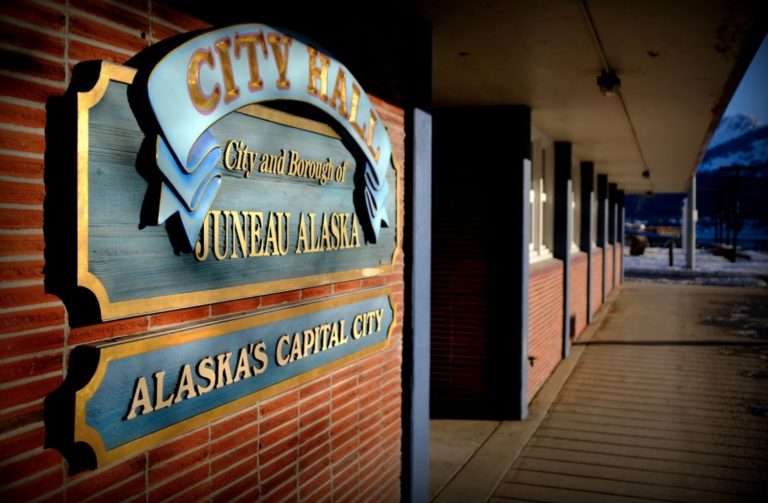
Win Gruening: Vote-by-mail voter’s remorse, buyer’s remorse, or perhaps both

By WIN GRUENING

A curious thing happened leading up to the recent Juneau vote-by-mail municipal election. City Clerk Beth McEwen reported that many people who mailed in a ballot contacted the city wanting to change their vote. She didn’t speculate on the cause, but a KTOO news story attributed this to late-breaking developments after ballots were sent to voters. 

I think it’s likely that this explains the anomaly and underscores one of the unintended consequences of mail-in voting.

Under Juneau’s new municipal vote-by-mail system, ballots were sent to 27,684 registered Juneau voters on Sept. 14. Assuming voters returned ballots as early as they did in 2020, about 3,000 ballots would have been mailed back in the first week or so. This means many voters submitted their ballot a full two weeks early, well ahead of the official “election day” deadline of October 5.

Yet, during that same week, Will Muldoon launched a write-in campaign for school board. His candidacy was heavily supported as evidenced by a well-orchestrated letters-to-the-editor campaign.

Additionally, several news stories surfaced about two other school board candidates – both of whom had protective orders filed against them and one whose record included significant tax liens and foreclosures. 

The 3,000 plus voters who had already voted didn’t have the benefit of this vital information. Some regretted their choices and wanted a do-over. Voters, however, are not allowed to change their ballot once submitted. 

Paul Gronke , director of the Early Voting Information Center, believes early voting is not a panacea. If used, he says, “The period for casting ballots should not be too long.” Why? Campaigns don’t really ramp up until the final two weeks and voters rarely pay serious attention until the days just  prior to the election. 

With a “rolling election” that began three weeks early, it’s important to ask if the process is fair to the candidates, fair to the electorate, or actually beneficial to democracy.

There are other reasons to question the wisdom of vote-by-mail.

Voter fraud is a serious subject and, while it has been used too often to justify electoral losses in other states (by both political parties), it should not be dismissed out of hand. There is little documented election fraud in this country, but the irregularities that do exist are often associated with unsolicited mail-in ballots.

In Juneau this year, anecdotal evidence suggests numerous voters received multiple ballots for other people. It’s clear that voter rolls are full of names of people who have moved or are deceased.

Even with an uptick in voter turnout, fewer than half of Juneau’s vote-by-mail ballots will be returned in any election year. That leaves over 14,000 ballots floating around Juneau post office lobbies and waste baskets and residential garbage cans. 

Presumably, voter verification processes are in place. But after Alaska’s Online Voter Registration System was hacked last December, allowing personal information for 100,000 voters to be exposed, how difficult would it be to defeat that system?

At a time when elections can be decided by a few votes and election integrity is critical, why tinker with our voting procedures? Especially when doing so makes it easier to send in fraudulent ballots or for special interests to “harvest ballots,” thereby giving voters even less reason to trust the results.

By the city’s own estimates, the first-year costs for vote-by-mail (including new equipment and renovation costs) could approach $1 million. The ongoing operational costs of conducting the election could exceed $200,000 per year, triple the cost of a conventional election where voters can choose to vote in person or request an absentee ballot.

When Juneau’s elected leaders decreed that local elections would forevermore be conducted via “vote by mail” instead of in-person at local precinct locations, the electorate was denied a complete informed discussion. Copycatting the vote-by-mail plan adopted in Anchorage was easier than engaging the public in a full debate that evaluated the merits and pitfalls of vote-by-mail.

The Juneau Assembly, it seems, has no problem busting the budget once more on a questionable expenditure. Now, whether Juneau’s taxpayers want it or not, they will be stuck with the extra costs of vote-by-mail. 

After retiring as the senior vice president in charge of business banking for Key Bank in Alaska, Win Gruening began writing op-eds for local and statewide media. He was born and raised in Juneau and graduated from the U.S. Air Force Academy in 1970. He is involved in various local and statewide organizations and currently serves on the board of the Alaska Policy Forum.

Read: Ranked choice voting is not that simple

Read: Population, population, population

Read: What will it take to get reliable ferry service?