Edward Bernard Rasmuson died on Jan. 4, 2022, at his home in Anchorage, the Rasmuson Foundation announced on Tuesday. At 81, the banker, philanthropist, and civic activist had incurable brain cancer and had been in hospice care during recent weeks.
“One of Alaska’s tallest trees has fallen,” said Rasmuson Foundation President and CEO Diane Kaplan, who was hired by Ed as the Foundation’s first employee in 1995. “Ed’s intense love of Alaska inspired a generation of board members and staff. He was a mentor in all matters Alaska and modeled how effective leaders balance work with a full and satisfying life. With Ed, you always knew where you stood. He gave the Rasmuson staff the encouragement and resources to pursue our passions so long as the aim was to benefit Alaskans.”
Rasmuson was born Aug. 27, 1940, in Houston, Texas, to Elmer E. Rasmuson and Lile Vivian (Bernard) Rasmuson. Raised in pre-statehood Alaska, he joined the family business, National Bank of Alaska, starting out as teller and eventually becoming chairman of the board.
In July 2000, the family sold the bank to Wells Fargo. When his father died that year, most of the estate was bequeathed to the the family foundation created by his father and grandmother in 1955.
The gift quickly made the Rasmuson Foundation the largest private funder in Alaska, and was key to the development and expansion of many nonprofit organizations, the Anchorage Museum, Pick.Click.Give., the Alaska Community Foundation and community foundation in several communities across the state.
Since 1955, Rasmuson Foundation has provided more than $475 million in charitable donations.
The Rasmuson Foundation also got involved in politics, notably with the creation of Plan for Alaska, which promoted restructuring the Permanent Fund to the current management of the fund under an endowment model, with a “percent of market value” used to help fund government. The foundation also promoted creating new sources of revenue, budget cuts, and revision to the state’s oil and gas tax credit system. The foundation launched the Plan for Alaska to move the needle in public perception to reduce the Permanent Fund dividend and diversify income for the state.
“Data shows that our efforts had an impact. Across the board, there has been an increase in the percentage of Alaskans who support the implementation of a state income and sales tax, a combination of cuts and new revenue, and a permanent reduction of the PFD as a means of balancing the state’s budget. We shared these findings with Governor Walker and Alaska legislators as well, giving them unbiased feedback on the pulse of Alaskans that can help guide them in their decision-making this session,” the foundation wrote in 2017.
Ed’s community service included the University of Alaska Board of Regents, the Anchorage Museum Foundation board, Atwood Foundation board, Rotary Club of Anchorage (three decades of perfect attendance), Elks Club, Pioneers of Alaska, Explorer’s Club, UAF Fisheries Research Center advisory board, United Way of Anchorage, and The Foraker Group.
Rasmuson is survived by his wife Cathy, and daughters Laura Emerson and State Sen. Natasha von Imhof. He was preceded in death by sons David and Bruce.
Wednesday, Jan. 5, marks the day when the annual migration of legislators and their staff begins to Alaska’s capital. The Kennicott ferry leaves Whittier with cars, pets, possessions for the 90- 120-day session that begins on Jan. 18. Several legislators are planning to be on board the ferry, which is scheduled to leave at 9 am.
The Whittier tunnel is not open until about 7 am, making it likely that most legislative travelers will be at the ferry terminal later than the three hours advance requested by the ferry system. The trip across the Gulf to Juneau takes about 34 hours.
The Kennicott will make just one trip across the Gulf before going into service at the Ketchikan shipyard for overhaul on Jan. 14. Alaska Marine Highway System says the overhaul will take longer than originally scheduled due to the extent of work needed, vendor delays, and supply chain issues. The estimate is for 98 days, with a return to service on April 21.
How other legislators and staff not traveling Wednesday will get their vehicles to Juneau is a question. Some may drive to Haines to pick up the Kennicott on its last trip to that northern Lynn Canal community. From Haines, the ferry goes back to Juneau, then on to the shipyards in Ketchikan.
Built in 1998, the M/V Kennicott is one of the younger vessels in the AMHS system. It has the capacity of up to 499 passengers, up to 78 vehicles and has cabins for overnight sailings. The vessel can be transformed into a command center for emergency teams responding to a marine disaster. AMHS says the Kennicott has had little time in the shipyard over the past two years and has an extensive checklist of maintenance items.
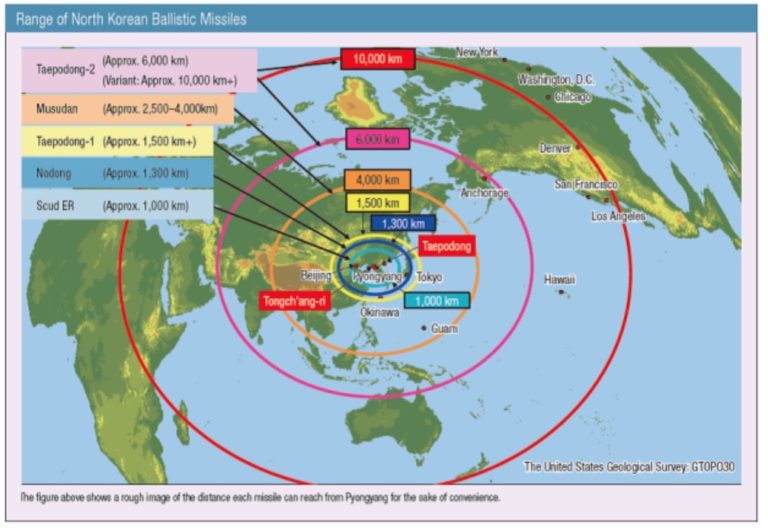
North Korea fired what is believed to be a missile into the waters of the Pacific Ocean on Wednesday morning, according to the Japanese government.
In response, Fort Greely, Alaska personnel were ordered to find shelter immediately during what was still Tuesday afternoon in Alaska.
It’s unknown what kind of projectile it was, but the Japanese Defense Ministry said it was probably a missile. Other MRAK sources said it was a hypersonic missile launched from a submarine.
The last missile Pyongyang launched was in October. In 2017, an intercontinental ballistic missile was launched in North Korea that had a range of 8,100 miles, and could have reached the U.S. mainland in less than 30 minutes. Anchorage and Joint Base Elmendorf Richardson are the closest major population centers to North Korea.
North Korean leader Kim Jong Un has recently said he would step up missile testing, and it’s believed he is trying to have North Korea become accepted as a nuclear power. Diplomatic relations with the United States have been strained.
At a press briefing on Tuesday, Department of State spokesman Ned Price said the U.S. is committed to achieving lasting peace on the Korean Peninsula through dialogue and diplomacy with the DPRK.
“To that end, we’ll continue to seek engagement with the DPRK, part of a calibrated, practical approach in order to more – to make tangible progress that increases the security of the United States, our allies, and our deployed forces. That is our ultimate objective. That was the result of the policy review that this administration conducted in the first few months of our time in office. Again – and we’ve made this point repeatedly – but we have no hostile intent towards the DPRK. We are prepared to meet without preconditions. We hope the DPRK will respond positively to our outreach, but all the while, we’re continuing to consult closely with our allies and partners, and that includes, of course, the Republic of Korea, Japan, and other allies and partners about how we might best engage the DPRK towards this end and this shared objective,” he said. That was before the missile was launched.
Fort Greely, 100 miles southeast of Fairbanks, is part of the critical national missile defense system for the country and has the capability to launch a defense missile in the event of an actual attack. Located a the fort is the Ground-Based Midcourse Defense, 49th Missile Defense Battalion, 59th Signal Battalion, Cold Regions Test Center, Army and Air Force Exchange Service, Defense Commissary Agency, Logistics Readiness Center,
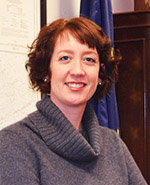
Leila Kimbrell has been named the new executive director of the Resource Development Council.
“Leila is a proven leader and ideal for this role,” said Lori Nelson, RDC board president and manager of public affairs at Hilcorp Alaska. “She understands policy and politics and how they impact resource development in Alaska. Leila is also well versed in Alaska’s incredible resource potential, and the benefits it offers not only to RDC’s members, but all Alaskans. We look forward to her leadership and advocacy.”
Kimbrell served as Sen. Lisa Murkowski’s state director, a job she held for more than four years. She worked as an attorney in private practice for a variety of clients before joining Murkowski’s team in 2017. She is a graduate of the University of Alaska Anchorage, and holds a law degree from Willamette University’s College of Law.
Her career has provided her many opportunities to work on issues touching every industry RDC represents. She has advised clients on environmental and compliance issues, such as the Clean Water Act, and laws unique to Alaska, such as ANILCA. Kimbrell has also participated in numerous public meetings and hearings at all levels of government, on both sides of the table.
Kimbrell has worked on high-profile issues like ANWR, Willow, the Ambler project, fisheries management, and timber, including fighting the repeal of the Roadless Rule Exemption for the Tongass National Forest.
Kimbrell is a lifelong Alaskan, born and raised in the Soldotna area. Her experience with resource development spans generations, with her father and uncle having worked in Cook Inlet’s oil industry.
She will assume her new role at RDC on Jan. 24, 2022, replacing Marleanna Hall, who has left the organization in November after several years.
RDC is an Alaskan trade association with members in fishing, forestry, mining, oil and gas, and tourism, as well as the 12 regional Native corporations, labor, individuals, and others supporting the responsible development of Alaska’s natural resources. More information is available at akrdc.org.
Juneau, one of the most Covid-vaccinated cities in Alaska, has reinstated its indoor mask mandate just in time for the 2022 Alaska Legislature, which convenes Jan. 18.
The city reported last week that there are around 156 active Covid-19 cases in Juneau. The number does not include people who’ve tested positive through a rapid self-test. There are currently no individuals with Covid-19 hospitalized at Bartlett Regional Hospital.
“Due to high case count activity and associated high number of close contacts, the City and Borough of Juneau Emergency Operations Center (EOC) is elevating the overall community risk to modified Level 3 High. At modified High, masking is required in all indoor public areas regardless of a person’s vaccination status, but all other COVID-19 Community Mitigation Strategies remain at Level 2 Moderate. Through this change, the EOC hopes to keep businesses open, government services running, and the hospital staffed; masking remains an effective tool at limiting the spread of COVID,” the city announced.
In addition to indoor masking, masks must be worn in public outdoor areas where six feet of distancing cannot be maintained.
Over 25,000 of the 32,000 Juneau residents have had one dose of a Covid vaccine, or about 83 percent of Juneauites over the age of 5. More than 22,000 residents have had two doses of the shot. Juneau’s vaccination rate is second only to Aleutians East Borough, which is at 95 percent.
Juneau has reported 4,320 Covid infections since the beginning of the pandemic in Alaska in March of 2020, and 14 Juneauites have died from the illness.
Sitka also maintains a mask mandate through March, 2022. Anchorage’s Assembly removed the city’s mask mandate on Dec. 8, 2021.
U.S. Attorney General Merrick Garland has named John Kuhn as the U.S. Attorney for the District of Alaska, effective Dec. 26, 2021.
Kuhn recently served with the Executive Office for United States Attorneys since 2018 in various roles, including National Heroin and Opioid Coordinator, National Controlled Substances Coordinator, and Acting Assistant Director in the Office of Legal Programs.
He had served as United States Attorney for the Western District of Kentucky for nearly three years, from December 2014 to September 2017. During his tenure, Kuhn was engaged in combatting the opioid crisis, developing a number of effective initiatives and programs. Before he became U.S. Attorney, Kuhn served for more than four years as First Assistant U.S. Attorney, supervising the Criminal, Civil, Appellate, and Administrative Divisions of the Office.
The Trump Administration replaced Kuhn as U.S. Attorney for the Western District of Kentucky in 2017. The positions are politically appointed and usually change with each president.
Kuhn has more than 31 years of legal experience and 24 years with the Department of Justice. He served as an Assistant U.S. Attorney in both the Civil and Criminal Divisions of the Western District of Kentucky U.S. Attorney’s Office, where he prosecuted narcotics, violent crime, and white-collar offenses. In addition to his extensive trial work, Kuhn argued appeals before the Sixth Circuit Court of Appeals and served as a hearing officer in Washington, D.C. and New York City for the Sept. 11 Victims Compensation Fund, a federal program established for victims of the September 11, 2001 terrorist attacks.
Mr. Kuhn graduated cum laude from the University of Louisville School of Law and earned his undergraduate degree from the University of Kentucky.
Kuhn was quoted as saying, “I’m honored to serve as the United States Attorney in the great state of Alaska. The dedicated prosecutors and staff in the United States Attorney’s Office for the District of Alaska are some of the best in the nation, and together we will continue to fulfill our mission, protecting the people of Alaska and the interests of the United States.”
He replaces former Acting U.S. Attorney Bryan Wilson, who served in that role since March 1, 2021, when Biden accepted the resignation of former U.S. District of Alaska Attorney Bryan Douglas Schroder in the early weeks of Biden’s Administration. Wilson has returned to his role as the First Assistant U.S. Attorney, where he has served since November 2017.
Gov. Mike Dunleavy declared a disaster emergency in the following boroughs and areas of the state impacted by severe winter storms, extreme winds, and extreme cold temperatures:
Delta/Greely REAA, and Copper River REAA
Fairbanks North Star Borough, including Nenana
Denali Borough
Matanuska-Susitna Borough
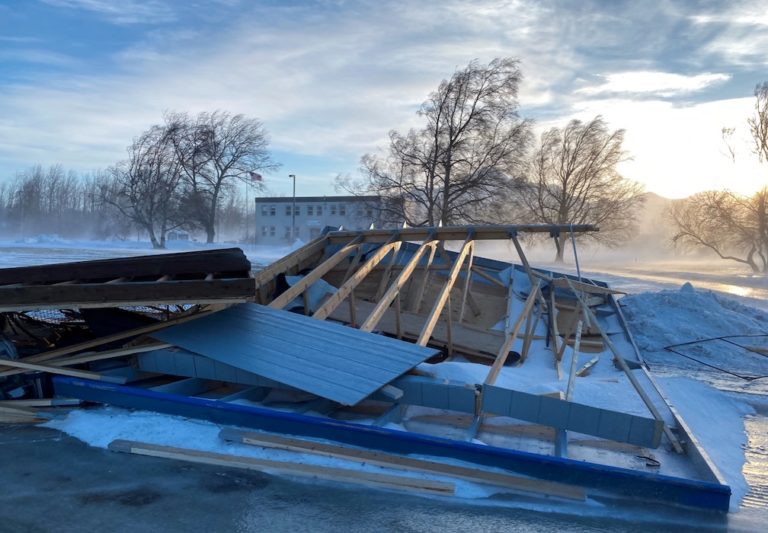
“At one point over the weekend, some 20,000 households in the Mat-Su lost power and were in the dark. Severe wind gusts have torn apart buildings, flipped semis on highways, and left thousands of homeowners concerned over freezing pipes,” Dunleavy said in a statement. “We declared a disaster emergency in the Boroughs and areas that are impacted by the wind storm. Alaskans, now is the time to check in with your neighbors and try to stay off the roads if possible. We have received reports that there are still layers of ice on the roads in Fairbanks, debris is flying across highways in the Valley, and the wind has blown roofs off. I am always impressed with the ability Alaskans have to step up and help one another. We are devoting State resources to helping our vulnerable communities.”
The declaration activates the State Public Assistance and Individual Assistance program, which provides timely assistance to individuals or families to meet disaster-related necessary expenses and serious needs. More information on how to apply for the disaster assistance will be posted soon.
The Mat-Su Borough and American Red Cross have established shelters at the Menard Sports Center in Wasilla and the Mat-Su Senior Services Center in Palmer. The State Emergency Operations Center is activated and coordinating with affected jurisdictions. At this time, no emergency assistance has been requested in Mat-Su, and in Fairbanks, a contingent of National Guard soldiers and airmen are activated to assist the Borough with any transportation needs.
If individuals or families have an emergency, the governor advised them to call 9-1-1. Visit the Mat-Su Borough website at https://ready.matsugov.us/pages/severe-weather to view where they are posting information about the storm, shelter locations and other updates.
The Matanuska Electric Association website at https://www.mea.coop/power-outages has a real-time power outage map and details on reporting an outage.
Women have long struggled to be equal members of society with men. For over 100 years, American women advocated for, and successfully secured legal protections for an equal opportunity to compete in what was a male dominated world.
Women now face a direct threat to their hard-fought achievements by the current politically vogue movement to establish transgenders as equals to men and women.
Let me be clear, this elevation of transgender protections constructs a new barrier for women and creates an environment where biological women will be denied opportunities.
Some reading this piece will vehemently disagree with my analysis and resort to an intellectually lazy name-calling behavior. Let’s get that out of the way up front: I’ll be called a homophobe, misogynist, sexist, transphobic, racist, terrorist, white supremacists, and God-knows what other politically nasty terms they can find.
Of course, they are wrong. I will present a fact-based, science-supported position that is contrary to their political objective. Oh well, be that as it may, here is the ugly truth about transgender “equity.”
There is an absolute difference between biological men and women. When a person is born, their chromosome make-up establishes their sex. XY is male. XX is female. That’s a fact.
Society has generally agreed that gender, defined as “an internal or external expression of the way a person feels,” is also part of our make-up. Most of the time a person’s biological sex is the same as the person’s gender. Sometimes it is not. Some people can be born anatomically as one sex and identify more with the opposite sex. It’s called gender dysphoria.
Today, the great debate is whether the law should protect a person based on their biological sex or their gender identity. The trend in the U.S. is toward trying to equally protect both. That can’t be done and conflicts arise which has proven harmful to protecting a biological women’s right to equal opportunity. In the end, making gender identity a protected class emasculates women’s attainments towards true equality.
This is not about who uses a bathroom, or what a person may do with their willing partner in private. It’s about recognizing the difference between feelings and physical characteristics, protecting the achievements in women’s rights, and creating a society where women have every opportunity to succeed.
There are plenty of recent examples where transgender women have blown away biological women in sports competition. Transgender Rachael McKinnon recently won the Master Track Cycling World Championship in the female 35-39 category; transgender Lia Thomas from the University of Pennsylvania is smashing female swimming records in almost every category; and New Zealand’s Laurel Hubbard became the first transgender woman to compete in the Olympics.
Explaining why this is happening isn’t rocket science.
There are physical differences that give males a distinct strength advantage over females. Men have larger lungs and hearts, which provide greater physical strength and endurance. A jogging man uses about 50% lung capacity, while a woman uses about 70% lung capacity. Men have greater upper body muscular strength and are typically around 30% physically stronger than women. Men generally have a leaner body fat percentage than women.
Need I go on?
Despite transgender women taking female hormone estrogen and testosterone-blockers, it does not change lung capacity, heart size, upper body strength, endurance, or other physical features that give men the advantage. How does this provide a fair competitive environment for females when men have a physical advantage over women in competitive sports?
But the issue is deeper than simply body strength in sports. Is a transgender woman actually a woman? Taking away the political agendas and emotional arguments, a transgender woman is still a man. Despite estrogen induced breast enhancements, long hair, make-up, shaving all body hair, and other actions to change a person’s appearance, the physical person is still either a XX or XY. Estrogen and testosterone-blocker treatments only block and/or alter the composition of the person. In many cases transgender women retain the male genitalia and do not undergo sex reassignment surgery.
A 2015 study found that nearly two-thirds of transgender women remained sexually attracted to women after their transition. These would not be lesbian feelings because a majority of transgender women sexually perform as men. Research has discovered that many transgenders retain their biological sex drive. Are you confused yet? That said, it does not dimmish the fact that some people have very distinct emotional feelings which are opposite from their biological sex.
The inequality against women also extends into the historically male dominated business world. Over the past few decades advancements have been made to open executive business leadership and director positions to qualified women. If women are competing for senior level business positions against transgender women and a transgender woman is selected, was a woman really elevated in the male dominated business world? I’ll leave that for you to ponder.
Both women and transgender women may join the military but the U.S. has never required women to register for the draft. If women do not have to register for the draft, does that exempt transgender women from registering? I grew up during the Vietnam War era, where draft dodging was a national sport. Yeah, I had friends that went to Canada to avoid being drafted. I guess now a male who wants to dodge the draft, simply can identify as a transgender woman to avoid registering for the Selective Service. This is the Pandora’s box that is opened when common sense is thrown out the window and society tries to accommodate every persons desire, even for groups that account for less than one percent of our nation’s population.
There is currently strong public resistance to recognizing gender identity as a protected class equal to a person’s biological sex. Yet our elected officials are hell-bent on forcing a societal change that is not science based but is based on “feelings.” The Biden Administration intends to expand Title IX protections to cover transgender students in schools that accept federal funding. If successful, the intent is to expand this requirement to other programs that accept federal funding.
Congress is considering the “Fairness for All Act” to codify gender identity as a protected class. This is bad, really bad. The glass ceiling restricted women from achieving equality with men. Actions like the “Fairness for All Act” will make it harder for women to break through the glass ceiling. We should remind our congressional delegation that portion of the bill is not something Alaskans expect them to support.
It’s time to bring back some sanity. Women have every right to expect their elected officials to provide opportunities for advancement equal to that provided to men. Instead, they are now getting politicians who are hardening the glass ceiling, presenting another obstacle to equal opportunities.
Transgenders should be treated with respect, but the determining factor in equal rights must be made on a biological basis. You are either a man or women, as determined at birth, and that is what our laws should use to provide women greater opportunities to excel in the future. Period!
Craig Campbell is the former lieutenant governor and former Anchorage Assemblyman who has recently returned to assisting the Alaska Aerospace Program, where he was CEO from 2012 through 2019.
A book displayed in the children’s library at the Loussac Library in Anchorage supports the gender-confusion agenda now being pushed by the far Left.
“Jack (not Jackie)” is the story of a little girl who likes bugs, not fairytales, and therefore wants to be “Jack.”
In this heartwarming picture book, a big sister realizes that her little sister, Jackie, doesn’t like dresses or fairies-she likes ties and bugs! Will she and her family be able to accept that Jackie identifies more as “Jack.”
From the pages of the children’s book, “Jack (not Jackie)”
“…as Jackie grows, she doesn’t want to play those games. She wants to play with mud and be a super bug! Jackie also doesn’t like dresses or her long hair, and she would rather be called Jack,” says the Amazon review, which notes that “Readers will love this sweet story about change and acceptance. This book is published in partnership with GLAAD to accelerate LGBTQ inclusivity and acceptance.
The book is also listed as a quality book for children by the Feminist Books for Kids website, which has a list of “15 Trans and Non-Binary Books for Kids.”
The book is rated Kindergarten through Grade 3 by a review in School Library Journal, which writes, “Told in clear prose with no hint of sentimentality, this timely picture book addresses gender identity in a way that allows children to understand the differences on the outside while remembering what is on the inside is what counts. Vividly illustrated pages with astute details will capture the audience’s attention and invite closer appreciation of their wordless support of the narration. The author includes a note in the back as well as an appendix of further resources, including books, articles, online resources, and picture books on the subject of children’s gender identity. VERDICT A can’t-miss addition to any collection that is looking to offer more inclusive resources.”