A basketball tournament with some of the greatest longevity in Alaska is the Juneau Lions Club Gold Medal Tournament, which will hold its 74th adult basketball tournament this weekend at Juneau-Douglas High School, after spending three years on the bench due to Covid.
Thousands of people from around Southeast Alaska come to Juneau for tournament, shopping, and socializing during spring break, with teams that include Metlakatla, Hoonah, Kake, and as far north as Yakutat. The age brackets includes a masters’ bracket for those 42 and older, a C bracket for those 32 and older, and a B bracket for younger adults. There is also a women’s bracket.
The proceeds from the tournament go to nonprofits and scholarships around Southeast Alaska.
It was just last June that New York City Mayor Eric Adams made face mask wearing optional for 2- to 4-year-olds. Times have changed. Now, the mayor is telling people to not wear masks when they enter stores and banks.
As it turns out, the masks have led to a crime spree in the Big Apple.
“We are putting out a clear call to all of our shops, do not allow people to enter the store without taking off their face mask,” Adams said in an interview with a local radio station. “Once they’re inside, they can continue to wear it if they so desire to do so.”
Lowering masks also allows security cameras to get a good look at you, the mayor said.
Of course, in New York City, where people were ready to mask up as soon as the Covid-19 virus hit, many stores still have posted reminders and orders to people to wear masks inside their establishments.
“When you see these mask-wearing people, oftentimes it’s not about being fearful of the pandemic, it’s fearful of the police catching them for their deeds,” Adams was quoted as saying on the radio.
In February, New York dropped the mask requirement for health care facilities.
Some liberals are unhappy with the mayor over his policy and say that it amounts to discrimination.
According to NPR, robberies in New York City spiked in 2022 to 17,411, compared with 13,831 in 2021.
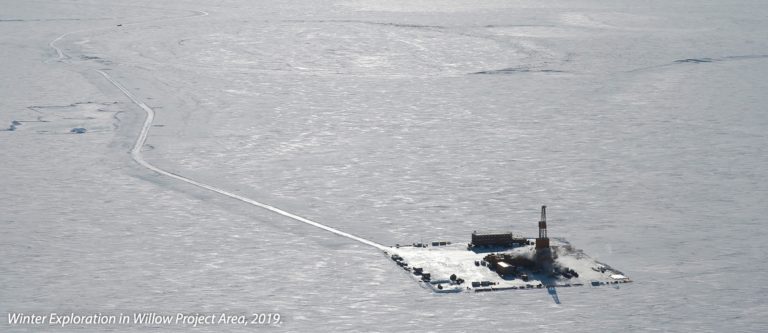
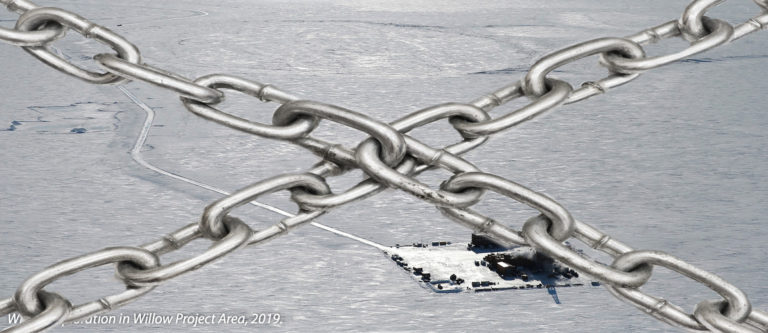
As expected, the Biden Administration issued a decision to reapprove ConocoPhillips’ Willow Project at the edge of Alaska’s National Petroleum Reserve. The administration also said on Sunday it will put strict limits on what cannot be done further in Alaska’s oilfields.
“The Interior Department also announced that it is preparing new rules to provide maximum protection to millions of acres of lands in the western Arctic, inducing the area around Teshekpuk Lake, a vital home to caribou and other wildlife that are central to Alaska Native communities’ traditional way of life. The actions announced today build on the president’s record of having conserved more lands and water in his first two years than any president since John F. Kennedy,” the news release says from the Department of Interior.
The decision on Willow was leaked to Bloomberg News on Friday. The White House lied to the public later on Friday and said a decision had not been made, but by Sunday all the reporters had their own sources confirming that the project indeed had a go-ahead with three drilling pads.
By Monday, Willow was not even on the front pages of any major news website. The world had moved on from train derailments, to Willow, and now to a chaos around the banking system. Willow was old news, a perfectly executed rollout of news that the White House wanted to avoid.
No longer in control of the narrative, environmentalists still decried the decision, saying that Willow will be catastrophic for the environment because the petroleum from the field will emit 284 million metric tons of carbon dioxide over its 30-year lifetime. That is 9.45 million tons per year.
To put it in perspective, the world’s volcanoes and fissures emit up to 540 million metric tons per year and while global energy-related CO2 emissions exceed 33 billion metric tons per year, according to the International Energy Agency. Willow represents a tiny fraction of the CO2 emissions from human and other sources, such as decaying old-growth forests.
But Willow was, for months, the poster-child climate-change cause for environmentalists who needed something to fight after having been successful in shutting down the Pebble Mine.
“Biden approved Willow knowing full well that it’ll cause massive and irreversible destruction, which is appalling,” said Kristen Monsell, a senior attorney at the Center for Biological Diversity. “People and wildlife will suffer, and extracting and burning more fossil fuel will warm the climate even faster. Biden has no excuse for letting this project go forward in any form. New Arctic drilling makes no sense, and we’ll fight hard to keep ConocoPhillips from breaking ground.”
At its peak production, Willow may provide 180,000 barrels per day of product. In 2019, Texas produced 5,070,450 barrels per day, more than twice the entire Gulf of Mexico production. New Mexico produced 1.4 million barrels per day. Alaska now only produces less than 500,000 barrels per day, primarily due to the war on Alaska by environmentalists.
ConocoPhillips Alaska said it has completed extensive preparations with key contractors and expects to immediately initiate gravel road construction activities. The company continues to review the record of decision and will advance internal approval processes towards a final investment decision.
“This was the right decision for Alaska and our nation,” said Ryan Lance, ConocoPhillips chairman and chief executive officer. “Willow fits within the Biden Administration’s priorities on environmental and social justice, facilitating the energy transition and enhancing our energy security, all while creating good union jobs and providing benefits to Alaska Native communities.”
Willow is designed to support and coexist with subsistence activities with many mitigation measures built into the project design, the company said.
“We are truly grateful for the steadfast support from Alaska’s Congressional Delegation – Senators Lisa Murkowski and Dan Sullivan and Representative Mary Peltola – Alaska Native communities, the state legislature and organized labor groups,” Lance said. “We also thank our employees and the contractor community, who dedicated years to designing a project that will provide reliable energy while adhering to the highest environmental standards.”
Located in the National Petroleum Reserve in Alaska, the project is expected to deliver between $8 billion to $17 billion in new revenue for the federal government, the state of Alaska and North Slope Borough communities. Willow will be built using materials primarily made and sourced in the U.S. and has the potential to create over 2,500 construction jobs and approximately 300 long-term jobs.
Alaska’s delegation issued statements:
“Today’s Record of Decision (ROD) on the Willow Project is critically important for Alaska’s economy, good-paying jobs for our families, and the future prosperity of our state,” Sen. Dan Sullivan said. “This decision is also crucial for our national security and environment. Producing much-needed American energy in Alaska with the world’s highest environmental standards and lowest emissions enhances the global environment. I can’t thank enough all of the Alaskans who got involved in this fight, including our state legislators, union leaders, industry, university and business officials, and thousands of others from diverse backgrounds who came together to promote a brighter future for Alaska. In particular, I’d like to commend the Alaskans who live on the North Slope, whose ancestors have inhabited the lands closest to this project for thousands of years, and who bravely spoke out—even as far-left, Lower 48, eco-colonialist NGOs continued their efforts to silence Alaska Native voices.”
“We finally did it, Willow is finally reapproved, and we can almost literally feel Alaska’s future brightening because of it. After years of relentless advocacy, we are now on the cusp of creating thousands of new jobs, generating billions of dollars in new revenues, improving quality of life on the North Slope and across our state, and adding vital energy to TAPS to fuel the nation and the world,” said Sen. Lisa Murkowski. “This was Alaska at its very best, with ConocoPhillips, Alaska Native leaders, labor leaders, our unanimous State Legislature, and so many more joining with the delegation to do everything we could to make this happen. I thank the administration for listening to Alaskans, rejecting false claims meant to sink this project, and having the courage to make the right decision on Willow.”
“Today, the people of Alaska were heard,” said Rep. Mary Peltola. “After years of consistent, determined advocacy for this project, from people all across the state and from every walk of life, the Willow Project is finally moving forward. I would like to thank the President and his administration for listening to the voices of Alaskans when it mattered most. I would also like to thank Senators Murkowski and Sullivan, and most importantly, our entire movement of Alaska Natives, laborers, state legislators, and everyday Alaskans who never gave up on this goal. Now, it’s on us here in Alaska to make sure that we make the best of this opportunity—that we use the revenues and jobs and economic opportunity from this project to make investments in the future of Alaska. We need to build up our schools, our housing stock, our rural Internet and electric grids, and more, in order to make this a truly 21st-century economy. We can make Alaska a national and global example of what an energy bridge to the future truly looks like, and I am looking forward to meeting this challenge.”
The Department of the Interior’s Record of Decision for the Willow Project is here.
Fox News, The New York Times, and The Washington Post are all in agreement on Sunday — the Biden Administration will approve the ConocoPhillips Willow project on Monday, but there is a trick: It could be the last oil development allowed in Alaska’s Arctic.
The new groups cite sources in the Biden Administration who say the president will take away the rest of the National Petroleum Reserve-Alaska, which has 13 million acres that was set aside by the federal government for oil and gas development.
News of the decision was leaked to Bloomberg on Friday, setting off a wave of speculation, environmentalist protest, and cautious optimism.
But on Friday, Biden’s Press Secretary Karine Jean-Pierre apparently lied to the press, when she responded to a question about Willow and said the decision had not yet been made. “Anyone who says there has been a final decision is wrong,” she said.
Willow, which could during its peak production provide 180,000 barrels per day to the Trans Alaska Pipeline System, will be the last in the Arctic, according to these sources, as the Administration puts up a “firewall” to block future leases on the North Slope and other rules for the NPR-A, where Willow is located.
Soft announcements like this one, which come with a Friday evening news leak, an official denial, and then further corroboration over the weekend with more detail, are standard practice for softening a decision that has consequences either way.
But while environmentalists are sure to be upset with the decision — and they are — Alaska is likely to take a hard economic hit from the Biden Administration as he says “no more oil” to the richest oil fields in America.
“It’s insulting that Biden thinks this will change our minds about the Willow project,” said Kristen Monsell, a senior attorney at the Center for Biological Diversity. “Protecting one area of the Arctic so you can destroy another doesn’t make sense, and it won’t help the people and wildlife who will be upended by the Willow project. We need to protect the entire Arctic and stop building massive oil and gas developments that will contribute to greenhouse gas emissions for years to come.”
On Friday, TikToks posts with #StopWillow hashtags rose to the the Chinese-owned social media site’s top 10 trending topics, as environmentalists made one last push.
In Alaska, the news was met with caution.
“If this is true, it’s short-term gain for longterm pain for Alaska,” said Rick Whitbeck, Alaska director for Power the Future, a pro-energy group.
Congressional Republicans are drawing a line in the sand on what appears to be another audacious attack on the religious freedom of Americans by President Joe Biden.
Twenty-Six Republican Senators and House members sent a letter to Xavier Becerra after the Health and Human Services Secretary announced a policy change that weakens religious freedom protections for some health care professionals.
Under the HHS change, health care professionals could lose their jobs or licenses if they refuse to perform abortions or sex change operations for religious reasons.
Becerra announced earlier this year his department will partially rescind the “Safeguarding the Rights of Conscience as Protected by Federal Statutes” rule put into place by former Republican President Donald Trump.
The lawmakers say this change flies in the face of congressional intent of the safeguarding law:
The letter was signed by Republican Senators, James Lankford of Oklahoma, Ted Cruz of Texas, Josh Hawley of Missouri, Marco Rubio of Florida, Marsha Blackburn of Tennessee, John Kennedy of Louisiana, Joni Ernst of Iowa, Cindy Hyde Smith of Mississippi, Thom Tillis of North Carolina, Kevin Cramer of North Dakota, Roger Marshall M.D. of Kansas, James Rich of Idaho, Mike Braun of Indiana, Steve Daines of Montana, John Thune of South Dakota, Deb Fischer of Nebraska, John Boozman of Arkansas, Mike Crapo of Idaho, and Representatives, Andy Harris M.D. of Maryland, Jim Banks of Indiana, Christopher Smith of New Jersey, Diana Harshbarger of Tennessee, Brad Wenstrup of Ohio, Paul Gosar of Arizona, Robert Aderholt of Alabama, and Mariannette Miller-Meeks M.D. of West Virginia.
“Religious diversity adds to the strength of our society and medical field and no doctor should have to choose between giving up his or her faith or moral convictions and abandoning a vital medical mission,” the lawmakers said.
Congress passed legislation protecting the religious freedom of health care workers. Republicans who signed the letters say Becerra is refusing to follow the law with his rule change.
“Federal dollars should be spent and programs should be executed consistent with laws established by Congress. HHS should borrow additional provisions from the 2019 rule to ensure that conscience rights are adequately protected. We urge HHS to update the proposed regulations as we detail above to robustly enforce health care conscience rights in accord with federal law and Congressional intent,” the lawmakers warned Becerra.
“Without sufficient enforcement by Health and Human services, doctors and nurses lack a crucial tool to ensure that the protections that Congress enacted are implemented and enforced,” said medical doctor Rep. Andy Harris, R-Maryland.
“The Biden administration has deliberately ignored the rights of workers over the desires of employers even if employers demanded their employees violate their own conscience or faith,” said Sen. James Lankford R-Oklahoma. “People have the right to live their own values, not the values of administration officials.”
Another example of Biden trampling on the religious liberty of Americans comes with his twisting of a law passed in 1986.
The Emergency Medical Treatment and Labor Act prohibited hospitals from refusing to treat a patient if they lack the ability to pay.
The federal agency, the Centers for Medicare and Medicaid Services, last year, under Biden, created new guidelines for hospitals that had not previously existed in federal law.
They effectively forced doctors to perform elective abortions in a variety of circumstances even when both the mother and the unborn child could be saved.
Biden also diminished religious freedom with his executive order last year tracking federal workers refusing the Covid vaccine for religious reasons. Biden’s vaccine mandate for federal employees was stopped after federal workers sued.
Biden also tried to force all 80 million plus private sector workers to get the Covid vaccine even if they objected for religious reasons.
The U.S. Supreme Court struck down that order but kept in place the mandate for health care workers.
Congress recently abolished the vaccine mandate for military personnel as a part of the National Defense Authorization Act.
In yet another attack on religious liberty, Biden’s “Build Back Better” legislation blocked faith-based facilities from using federal infrastructure funds.
Biden also rescinded a Trump-era rule protecting the religious liberty of faith-based organizations contracting with the federal government.
Another attack on religious freedom came with the Respect for Marriage Act signed by Biden, enshrining gay marriage at the federal level. The legislation also strengthens the Department of Justice’s ability to legally harass businesses refusing to condone and embrace transgenderism or homosexuality.
But conservatives say Biden’s most consequential assault on religious freedom will come if the so-called Equality Act passes.
“The Equality Act will diminish conscience protections for medical professionals, many doctors, nurses, pharmacists, and other health care providers. They could be forced to participate in abortions under penalty of law,” says the American College of Pediatricians, a pro-life group.
Critics of The Equality Act also say the law would require doctors, against their will, to perform sex sterilization surgeries on healthy people for the purpose of gender transitioning.
Conservatives believe America’s founding was based on religious freedom. At least 26 members of Congress are willing to stand up to Biden and his war on the fundamental freedom that birthed this nation.
Dan Fagan is a reporter for Must Read Alaska. His email is [email protected]
All of the banks appeared to have been hiring managers for their “identity,” rather than for skill, and were investing heavily in the environmental, social, and governance priorities known as ESG and in the diversity, equity, inclusion priorities known as DEI.
They are now being rescued by a federal government that, if regulated by the Federal Deposit Insurance Corporation, would be shut down itself for being too strung out financially. After all, the U.S. Treasury is also taking extraordinary steps just to keep the United States from defaulting on its own debts.
According to FDIC, there will be no actual bailout of Silicon Valley Bank or Signature Bank of New York, and taxpayers will not bear any of the costs of the rescue. Regulators said depositors at both SVB and Signature Bank, which was also closed by New York regulators on Sunday, will have access to their money.
“Today we are taking decisive actions to protect the U.S. economy by strengthening public confidence in our banking system,” said the joint statement from Fed Chair Jerome Powell, Treasury Secretary Janet Yellen and FDIC Chair Martin Gruenberg on Sunday afternoon.
The failure of Silicon Valley Bank on Friday has some banking customers on edge. It is the 18th largest bank in the nation, with tens of billions on its books as liabilities. It was one of the banks that had been subpoenaed by the Attorney General of the Virgin Islands, looking for where American sex offender and financier Jeffrey Epstein’s funds were located.
The Alaska Permanent Fund Corporation has limited exposure to the SVB institution; Executive Director Deven Mitchell said more would be known on Monday by APFC.
Signature had $88.59 billion in deposits as of Dec. 31. The New York Department of Financial Services took possession of the bank on Sunday.
A third bank, Silvergate, which was heavily involved with crypto currency, collapsed on March 8. At one point, it had $10 billion in deposits, but by December, it was down to $6.3 billion, having lost half its value in just three months.
SVB, Silvergate,and Signature Bank of New York are financial institutions that bought into the climate change narrative, woke investing policies, and LGBTQ-equity politics.
While all banking institutions appear to be buying into climate change theology and diversity-equity ideology, SVB, Signature Bank, Silvergate, and First Republic Bank are some of worst for focusing on social and environmental issues instead of banking basics.
The head of risk management for SVB identifies “As a queer person of color and a first-generation immigrant from a working-class background.”
Jay Ersapah, head of Financial Risk Management for the United Kingdom branch the bank,spent time building up the LGBTQ programs for the work place, including creating a “safe space” for people to tell their stories about coming out as LGBTQ+.
The bank also held month-long Pride celebrations and a website for LGBTQ+ youth.
Ersapah, a poster child for quota-not-merit promotions, has since taken down her LinkedIn profile that showed her to be the recipient of the company’s LBGTQ award, “outstanding LGBT+ Role Model Lists 2022.”
GOP presidential candidate Vivek Ramswamy told Breitbart News this weekend that SVP is “one of the biggest evangelists of DEI (Diversity, Equity, Inclusion)” and that he would not bail the bank out if it were up to him.
SVP was taken over by FDIC on Friday and regulators spent the weekend coming up with plans for Monday’s bank opening. The financial experts on the Sunday news shows were all over the map about what will happen next.
The bank collapses come at a time when the Biden Administration is putting into place rules that allow retirement fund investors to follow the “Environmental, Social, and Governance” (ESG) investment strategies, rather than invest on behalf of American workers and try to ensure they have enough money to retire on.
The joint statement from FDIC and the Federal Reserve in full
The following statement was released by Secretary of the Treasury Janet L. Yellen, Federal Reserve Board Chair Jerome H. Powell, and FDIC Chairman Martin J. Gruenberg:
Today we are taking decisive actions to protect the U.S. economy by strengthening public confidence in our banking system. This step will ensure that the U.S. banking system continues to perform its vital roles of protecting deposits and providing access to credit to households and businesses in a manner that promotes strong and sustainable economic growth.
After receiving a recommendation from the boards of the FDIC and the Federal Reserve, and consulting with the President, Secretary Yellen approved actions enabling the FDIC to complete its resolution of Silicon Valley Bank, Santa Clara, California, in a manner that fully protects all depositors. Depositors will have access to all of their money starting Monday, March 13. No losses associated with the resolution of Silicon Valley Bank will be borne by the taxpayer.
We are also announcing a similar systemic risk exception for Signature Bank, New York, New York, which was closed today by its state chartering authority. All depositors of this institution will be made whole. As with the resolution of Silicon Valley Bank, no losses will be borne by the taxpayer.
Shareholders and certain unsecured debtholders will not be protected. Senior management has also been removed. Any losses to the Deposit Insurance Fund to support uninsured depositors will be recovered by a special assessment on banks, as required by law.
Finally, the Federal Reserve Board on Sunday announced it will make available additional funding to eligible depository institutions to help assure banks have the ability to meet the needs of all their depositors.
The U.S. banking system remains resilient and on a solid foundation, in large part due to reforms that were made after the financial crisis that ensured better safeguards for the banking industry. Those reforms combined with today’s actions demonstrate our commitment to take the necessary steps to ensure that depositors’ savings remain safe.
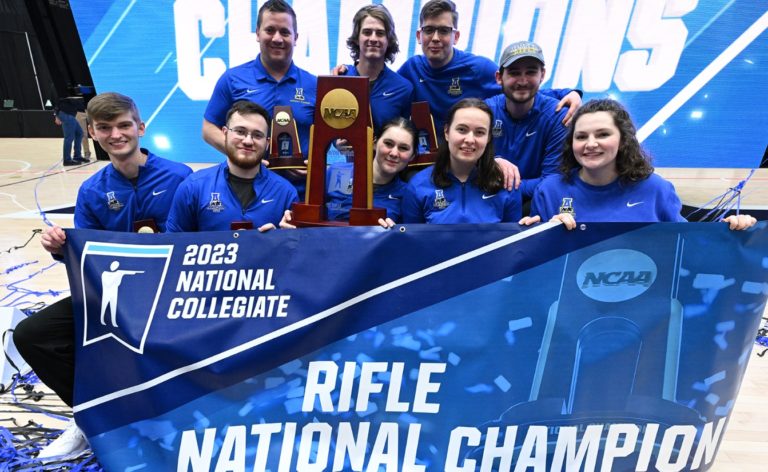
The University of Alaska-Fairbanks rifle team has won its 11th NCAA rifle title at the NCA rifle championship at Ohio’s University of Akron Rhodes Arena on Saturday.
Sophomore Rylan Kissell fired a perfect 600 in air rifle. The UAF rifle team ended up with a 4729 aggregate score — 2380 for air rifle and 2349 in small bore.
The last time the Nanooks placed first was in 2008.
According to the NCAA, the UAF team entered the 2023 NCAA rifle championship as the third-ranked team, behind No. 1 Texas Christian University and No. 2 West Virginia University.
Taking second place in the overall championship was Texas Christian University with a 4717 team aggregate, NCAA reported. Finishing third place was the 2021 and 2022 back-to-back champion Kentucky Wildcats, who posted a 4713 team aggregate score—2373 in air rifle and 2340 for smallbore.
Will Anti is the Alaska-Fairbanks rifle team head coach. Anti was a member of the National Junior Team and was a Junior Olympic champion with Team USA.
See the 2023 NCAA rifle championship scorecard is available at this link.
Team Fairbanks members who competed included Peter Fiori, Rachael Charles, Tobias Bernhoft-Osa, Kellen McAferty, Rylan Kissell, Marina Gonzalez Mazo, and Gavin Barnick.
The spring of 2020 came in like a monster in Alaska. And it wasn’t the snow or cold — there had only been about 22 inches of snow that winter. What happened after March 12 that year could encompass an entire book on pandemics, policy, and public panic.
Three years ago today, the first case of Covid in Alaska was announced — a pilot of a cargo jet had tested positive. Anchorage is the nation’s leading cargo airport, with flights coming from China and South Korea on an hourly basis, stopping for fuel in Anchorage before heading to distribution facilities in places like Memphis, Tenn. and Louisville, Ken.
The pilot was treated at a hospital and was quarantining in a hotel. But officials knew that Covid had arrived and was probably elsewhere in the population, undiagnosed and spreading.
One day earlier, President Donald Trump, already in Covid battle mode, had announced a travel ban from Europe. In January, he had banned travel from China for non-American travelers.
By the time the pandemic was under control, Alaska had been seen as a model for balancing the need for a stabilizing health policy and the constitutionally set personal freedoms:
Second lowest death numbers of any state
Highest survivability of any state
First state to vote to get rid of emergency
Economy was opened in early May of 2020
No statewide mask mandate
No statewide vaccine mandate
Led with other states with court actions to stop federal vaccine mandates under Biden.
But on March 12, 2020, panic was already setting in in Alaska, where medical facilities were not equipped for the expected pandemic, where not enough personal protective gear was available for medical workers, or enough ventilators for the seriously ill. The epicenter of the virus was in Seattle, Alaska’s hub city for travel.
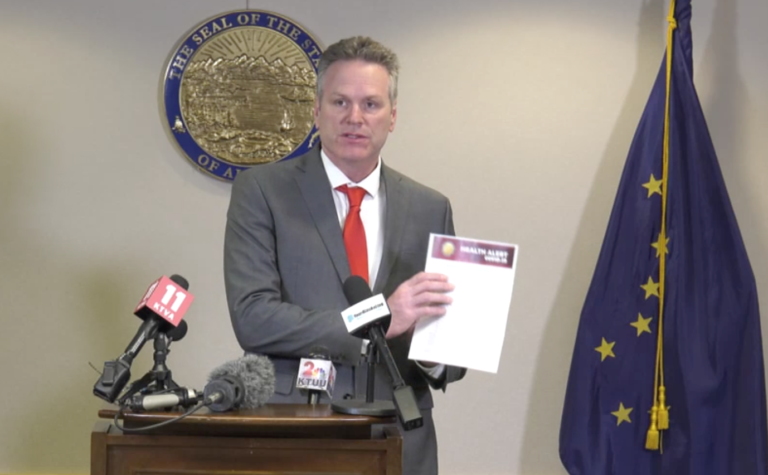
Two days before Alaska’s first case, Gov. Mike Dunleavy had declared a state emergency in anticipation of Covid’s arrival, so that resources could be mobilized for the unknown needs that would soon arise.
Gov. Dunleavy, Chief Medical Officer Dr. Anne Zink, and Alaska Department of Health and Social Service Commissioner Adam Crum had just announced sets of recommendations to help prevent or slow the spread of cases of the illness, the origins of which are still debated today, but which many believe began in a bioweapons project at a laboratory in China.
The Alaska state recommendations were for people to mask up if they were in public. While the governor never mandated masks, most municipal leaders eventually did, including then-Mayor Ethan Berkowitz, who issued a mask mandate in June of 2020.
The first Alaska resident to have died from Covid was a resident of Petersburg, who passed on March 16 at a health care facility in King County, Washington, where he had been admitted for care for a different, but serious medical condition.
On March 27, the first in-state death from Covid was announced. It was a 63-year-old person who was in an Anchorage hospital for treatment for another illness, and who had tested positive for Covid on March 25.
By March 29, the Legislature had given the governor the authority to do what needed to be done to keep the state from going into a Covid crisis, by addressing public health and economic problems that would arise, and to move funds from one area of the budget to others, in order ensure the government was nimble in its response.
The recommendations for Alaskans on this day in 2020 were:
Wash your hands often or use hand sanitizer if soap or water are not available, before going and out of rooms or buildings, using restrooms, and before eating. Avoid touching eyes, nose, and face, cover coughs or sneezes, stop shaking hands, and regularly clean and disinfect frequently touched surfaces and items.
Recommendations for higher risk Alaskans
On this day in 2020, the advice for people who are over 60, and anyone who has serious chronic health conditions was to stay home as much as possible, ask family or friends to bring in supplies and food, avoid crowds and mass gatherings where exposure risk is greater, stay at least six feet away from others who are sick, limit close contact and wash your hands often and telecommute for work.
Leftists and Democrats began clambering for the governor to do more — to enact a statewide mask mandate and order business to close. The Legislature, which was run by progressives, still had a mask mandate in the Alaska Capitol during the 2022 legislative session, and required testing to enter the building. Accusations that the governor was not doing enough came from Democrats in the Legislature and Democrat activists around the state.
By later that year, the Democrats were hammering Dunleavy for not enacting more mandates.
“Public health officials have repeatedly urged statewide policies to slow the spread of the disease, most recently during a House Health and Social Services Committee on October 21,” the Democrat-controlled Alaska House Majority stated in a news release later that fall.“The Dunleavy Administration, however, has failed to enact basic statewide protective measures that we know are effective, like a temporary mask mandate in places where social distancing is difficult, implementing capacity limits in public places, and issuing workplace safety standards.”
The critiquing of the governor was largely from partisan Democrats, showing the ideological differences between their authoritarian style and Dunleavy’s attention to the imperative of civil rights. They said he was killing Alaskans.
Dunleavy said all along he would avoid infringing on the rights of Alaskans.
“I certainly don’t want to infringe on the rights of folks,” he said on July 13, 2020. “We don’t need to take draconian actions here in Alaska.”
Some also criticized him from the right side of the spectrum, saying that he was too quickly led into liberty-infringing policies by his Chief Medical Officer, Dr. Zink.
The governor did order a temporary “shelter in place” mandate in at a news conference, where he required Alaskans to “remain at their place of residence and practice social distancing.” People could go outside and get exercise but were to remain six feet from anyone who was not inter household.
That spring was the first time Alaskans had heard of such a thing called “social distancing.” By that time, many city leaders had already ordered their own “hunker down” mandates.
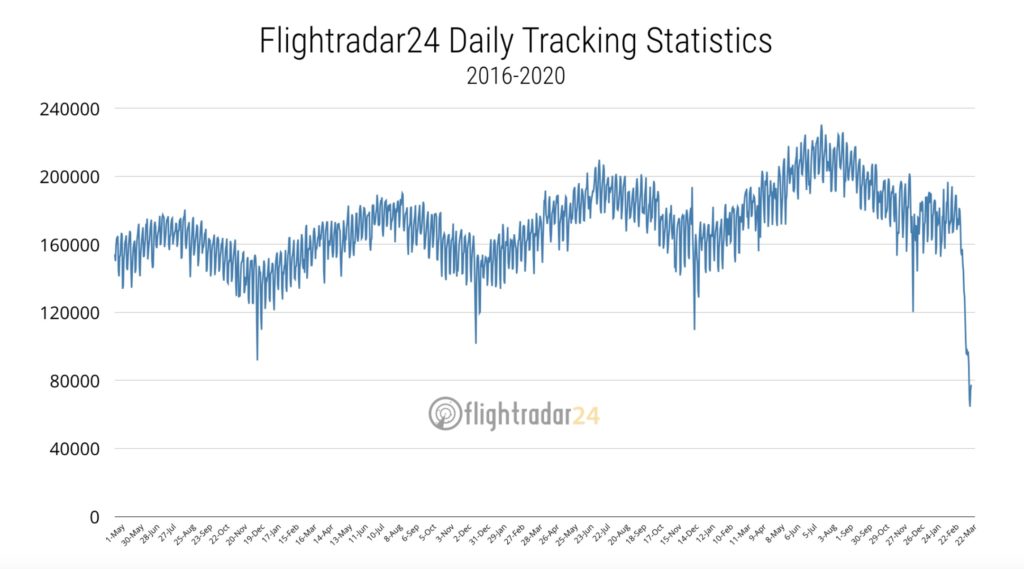
Three years ago this month, the skies became suddenly quiet as most Americans stopped flying. FlightRadar24.com tracked a 21% drop in air traffic. Airports were empty, reflecting the general panic that had taken hold of the country as the still little-understood virus was spreading and killing its way across the nation.
Although Dunleavy used a relatively light touch, only shutting the economy down for a few weeks, draconian shutdowns ordered by Mayor Berkowitz extended even after he quickly left office in October of that year, under scandalous circumstances. His unelected successor, Austin Quinn-Davidson, continued his policies with mask mandates and bans on gatherings.
By May of 2020, nine Alaskans had died either from or with Covid, and the economy began to suffer from the effects of not only the pandemic, but the reactions to the pandemic.
By June, the state had enacted a traveler testing program. Incoming persons to the state needed to test within 24 hours of arrival or could quarantine for 14 days without testing.
Testing on arrival in Alaska airports identified 951 Covid infections, or one per 406 arriving travelers, according to a report from the CDC from last year “and might have contributed to Alaska’s low incidence during the summer by reducing opportunities for community transmission at travelers’ destination locations.”
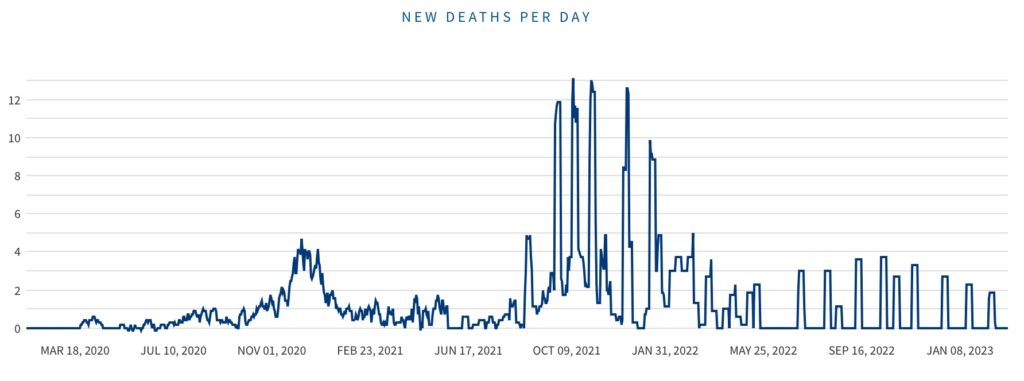
Today, three years after the first case of Covid, there have been 282,000 cases of Covid reported in Alaska, with many other cases unreported. The number of Alaskans who have died from or with the disease stands at 1,422 as of March 5. About 64% of Alaskans are vaccinated.
Chart of Alaska Covid deaths since beginning of pandemic. Source: USA Facts.org.
The coronavirus pandemic was a test for the nation and its leaders. Some leaders, such as Alaska Gov. Mike Dunleavy and Florida Gov. Ron DeSantis, survived politically, and were reelected two years after the pandemic hit. So did some of the draconian governors such as Gov. Gavin Newsom of California, who also won reelection even after a major recall attempt in 2021, which failed. The president at the time, Donald Trump, did not survive politically, as Covid became politicized and the government responses became part of the election debate that year, and after some states went to an all-mail-in election to stem the spread of the virus.
Have an opinion on this topic? Have memories of that year? Share in the comment section below.
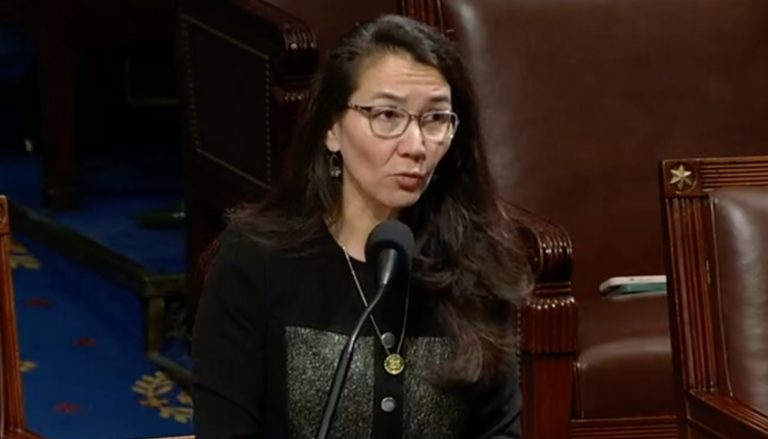
Rep. Mary Peltola last week voted against a resolution that would bar federal employees from using their official power or influence to promote censorship or to advocate for a third party, such as Twitter or Facebook, to censor Americans or suppress their points of view. Federal employees found to violate the prohibition would be subject to civil penalties. Peltola was on the wrong side of the bill, which passed without Democrat support
The Protecting Speech from Government Interference Act was sponsored by Rep. James Comer of Kentucky. It was supported by the Republican majority in the House, and opposed by Democrats. Peltola and the Democrats also voted on a motion to recommit the bill back to the committee it came from, the House Oversight Committee, but the motion was opposed by the majority.
“Today the House of Representatives took action to protect our constitutional right to free speech from government censorship. The Biden Administration has eroded Americans’ First Amendment rights by bullying social media companies to censor certain views and news on their platforms. Biden Administration officials are quick to label inconvenient facts as disinformation and then pressure social media companies to suppress content on their platforms. To protect the First Amendment, the Protect Speech from Government Interference Act stops federal employees from pressuring social media companies to silence Americans expressing views online. The Senate must take up this legislation to get this bill to the finish line,” Comer said.
However, if the Democrat-controlled Senate does pass the bill, the president must sign the bill in order for it to become law.
The Act expands on the Hatch Act, the law banning federal employees from engaging in political activities in their official capacity. The bill expressly prohibits federal employees from trying to censor free speech.
Rather than defending the Americans so they do not have their First Amendment rights interfered with by the government, Peltola gave a three-minute floor speech on the need to expand Social Security.
The bill prohibits federal workers from using official positions, resources, or powers to coerce a private platform into removing, suppressing, restricting, censoring, or adding disclaimers or disparaging alerts to speech. It provides an exception for legitimate law enforcement activities involving specific crimes.
Heritage Action said it is a good first step: “From the censorship of the NYPost and the Hunter Biden laptop story days before an election to the quelling of COVID-19 evidence contrary to the elite’s established viewpoint, social media firms have been censoring American’s viewpoints and their right to associate – apparently at the direction of government agents. Heritage Action commends House Republicans for advancing H.R. 140, the Protecting Speech from Government Interference Act, and looks forward to further action against Big Tech’s corrosive impact on society.”
Chad Wolf of America First Policy Institute said, “Our First Amendment rights are at stake. Time and time again, we’ve seen the current Administration betray the trust of the American people by pressuring, encouraging, and colluding with Big Tech giants to censor ideology they disagree with. This simply cannot go unchallenged, and we applaud Chairman Comer and the House Oversight Committee for proactively fighting this blatant violation of our most cherished and fundamental right.”
The American Consumer Institute also applauded the passage of HB 140:“The Protecting Speech from Government Interference Act is a step in the right direction when it comes to consumers’ freedom of speech on the platforms they use to express themselves. By preventing the government from unduly restraining protected speech, this bill would ensure that consumers’ taxpayer dollars don’t go toward the suppression of speech. Unlike other legislation that would regulate the moderation decisions of private entities, H.R. 140 focuses on the key issue of keeping the government from tipping the scale in public discourse. It’s encouraging to see offices like Chairman Comer’s working to defend a free and open speech environment.”