Thursday, June 18, 2026
Home Blog Page 503

Breaking: Anchorage residents, businesses asked to conserve energy, bundle up during cold snap, as Cook Inlet gas is challenged

69

Anchorage, in a deep freeze spell, is still in the “green” zone for energy availability, but the warning lights are blinking after key wells in Cook Inlet that provide natural gas have been heavily tapped in recent cold weather. Those lights are blinking enough to have the mayor of Anchorage and local utilities call a last-minute press conference on Thursday to caution residents, while trying not to scare them.

Enstar Natural Gas Company, the largest utility in Southcentral Alaska, is asking people to conserve energy as the below zero temperatures persist through Friday.

Enstar President John Sims said in the nine years he has been with the utility, he has never seen demand so high. Enstar anticipates peak load demand Thursday night.

In the joint press conference with Mayor Dave Bronson and Matanuska Electric Association, Sims said that conservation is always a good idea, and the natural gas supply is stable, for now, but there is at least one well in Cook Line that will need some repairs, after heavy use has caused “sanding,” which can ultimately shut down a well. Fixing it during cold, dark days has significant challenges.

In the Mat-Su Valley, a widespread power outage occurred at the Eklutna Generation Station overnight on Wednesday, when one of the engines at the power plant developed a gas leak in a flange that connects pipes. The leak triggered safety measures to shut down a majority of the engines at the plant. All power was restored within 25 minutes after the system was switched over to diesel. Temperatures in the Valley reached as low as -25 on Wednesday night, -36 in Talkeetna.

The MEA outage was not related to a gas supply issue, but some 12,400 Chugach Electric Association customers also lost power because of a “load shedding event” that is occurring in the Railbelt, Chugach Electric said on Facebook. Load shedding is done to protect the overall system and prevent blackouts and involves rotating power outages, or reducing power consumption from primary sources until demand decreases or capacity increases.

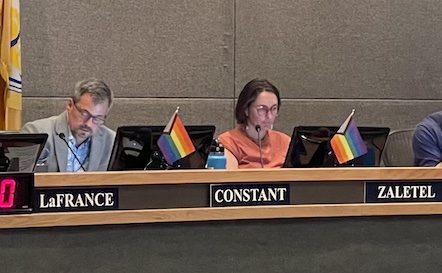
Meanwhile, some members of the Assembly are having second thoughts about their resolution that supports dismantling the Eklutna dam. This afternoon, a hasty press conference was called by Assembly Chairman Chris Constant to call for a two-year extension on any changes to Eklutna hydropower, which is a steady supply of power to Anchorage.

“Sponsored by Assembly Members Constant, Kevin Cross and Meg Zaletel, the resolution outlines concerns regarding the development and implications of the Draft Fish and Wildlife Program as proposed and calls for a two-year extension to reevaluate project alternatives and rectify the process,” the trio said of their new resolution, which will evidently replace a prior resolution.

This week the Municipality also sent notices to commercial building owners who have buildings that may experience roof collapses due to the more than 104 inches of snow received so far this year. Building officials say they analyzed properties using Google Earth satellite imagery to determine which buildings have flat roofs that may be at risk. Over 1,000 property owners received the letters because they have roofs with wooden trusses fastened with metal gang nail plates.

Golden Lion Hotel devolves into homeless shelter

The midtown Anchorage neighbors fought it for years. The Jewish preschool nearby protested against having street people so close to the children.

But the Golden Lion Hotel on 36th Ave. was purchased anyway by former Mayor Ethan Berkowitz for use as a drug treatment center.

Mayor Dave Bronson promised to close if elected, but instead it became a low-rent housing solution with 84 rooms after the Bronson Administration capitulated to the liberal majority on the Assembly last summer.

Now, it’s the latest 24-hour homeless shelter that neighbors always feared it would become.

Mayor Dave Bronson declared an emergency due to the cold snap, with temperatures below zero. On Wednesday, he opened up the Golden Lion Hotel for anyone who needs shelter from what has been a tough winter, even by Anchorage standards, with a record amount of snowfall, collapsing roofs, and now plunging temperatures. Although Anchorage has 40% of the state population, it is a magnet for down-and-out Alaskans and has over 60% of the state’s homeless.

Bronson has also expanded the city’s contract with the Aviator Hotel on Fourth Ave., for overnight warming — 8 pm to 8 am. Earlier, his office had indicated that the Aviator would be a 24-hour warming shelter, but now those using it will need to find shelter during the daytime. While the nearby Anchorage Museum had last month guaranteed free admission to all Alaska Natives, it has since paused that policy. Alaska Natives make up 43% of the Anchorage homeless population. The Fifth Avenue Mall may end up becoming that daytime warming place, if others fill up.

In addition to the two hotels, the mayor already established a cold-weather shelter facility at the old Solid Waste Services facility at 1111 E. 56th Ave., also open 24 hours a day.

When he became mayor, Bronson attempted to build a navigation center that would process each person who checked in and get them to the help they need, whether it is drug addiction treatment, job referrals, or housing vouchers. But the Assembly blocked that proposal in a long and drawn-out fight with Bronson, hoping to make him unsuccessful at his signature project. They succeeded.

Then Bronson said the city would buy people one-way tickets back to their hometowns, to places where their families could help figure out solutions for them. But the Assembly also blocked that.

Last year, Bronson reclaimed the Sullivan Arena, which had become a hotbed of drugs and violence, after former Mayor Berkowitz had seized the arena for mass sheltering during the Covid pandemic. In the near future, the Sullivan Arena will return to be an event venue. The cost of repairs to the facility after the street people had their way with it has not been fully quantified by the city, but for now it’s no longer available for nighttime shelter.

Family sues Mat-Su schools because gender-confused child can’t use boys’ bathrooms and won’t use gender-neutral bathroom either

The American Civil Liberties Union of Alaska sued the Matanuska-Susitna Borough School District on Wednesday, alleging that a girl in the district who identifies as a boy and is called a “transgender boy” in the lawsuit, is being prevented from using boys bathrooms and locker rooms at school.

The ACLU of Alaska represents a “set of parents bringing the case on behalf of their transgender son. Under this policy, every day, their child faces mental and physical challenges because he is denied access to the boys’ bathrooms, even though he is a boy.”

The ACLU is arguing that if a child says he or she is something, the world must agree and accommodate.

The ACLU says that the child’s right to privacy has been violated because the policy “violates his fundamental right to make his own choices about his body, his name, his gender identity, and the appropriate bathroom for him to use. This policy also violates the Equal Protection Clause of the Alaska constitution because it treats transgender students differently than other students.”

The case was filed in Palmer District Superior Court.

“The MSBSD has forgotten its obligation to protect young people, as well as the constitutional rights that all students – regardless of their gender identity – are entitled to,” said Ruth Botstein, Legal Director for the ACLU of Alaska, in a statement. “The student just wants to be able to go to school like any other kid, to focus on learning and socializing with his peers, and not have constant stress and anxiety about where and when he is going to be able to use the bathroom.”

The lawsuit refers to the child as “X.A.” The child attends an elementary school in the Mat-Su Borough School District.

“X.A. is a transgender boy. This means that he was incorrectly assigned “female” at birth, although he is and identifies as male. X.A. knows that he is a boy and presents to the world as a boy. People who meet him know him as a boy,” the lawsuit reads.

“Gender dysphoria is a serious medical condition recognized in the American Psychiatric Association’s Diagnostic and Statistical Manual of Mental Disorders, Fifth Ed. (2013) (‘DSM-V’), and by the other leading medical and mental health professional groups, including the American Medical Association and the American Psychological Association. Gender dysphoria refers to clinically significant distress that can result when a person’s gender identity differs from the person’s sex assigned at birth. If left untreated, gender dysphoria may result in psychological distress, anxiety, depression, and even suicidal ideation or self-harm,” the lawsuit continues.

According to the ACLU, X.A. always thought of herself as a boy, cut off all of her hair when she was age 3, and renamed herself to a masculine name when she was 7 years old. She “threw fits if anyone tried to get him to wear anything stereotypically girly: pink, rainbows, sparkles, and the like,” according to the ACLU.

X.A.’s parents moved her to a school that they thought was more progressive in the district and would bend to her demands to be treated as a boy, but in 2022, a district policy was put into place to protect both boys and girls in the district from having opposite-sex intrusions into their private spaces.

From the narrative in the lawsuit, it appears that X.A. is biologically a girl who has a boyish personality.

The lawsuit complains that providing a gender-neutral bathroom is not good enough, and that once a school nurse asked X.A. if she was a boy or a girl, making the child uncomfortable once again.

“X.A. was distraught from this interaction. The harmful question revealed that even the ‘gender- neutral’ option was not a safe or private one for X.A.,” the lawsuit contends.

“This incident also revealed that the nurse’s office bathroom accommodation is not sufficient to protect X.A.’s privacy, since using it singles him out, causing both other children and school employees to question his gender identity and to ask him uncomfortable personal questions about his bathroom use and gender identity,” according to the ACLU.

Obsessive habits have been identified with those who have gender confusion, but the lawsuit makes no effort to describe any other health or mental health factors that may be present, such as narcissistic personality disorder.

According to one study, narcissistic personality disorders are common among transgender individuals seeking gender surgery. “The frequency of personality disorders was 81.4%. The most frequent personality disorder was narcissistic personality disorder (57.1%) and the least was borderline personality disorder. The average number of diagnoses was 3.00 per patient,” according to the study published by the National Institutes of Health.

Read the entire ACLU lawsuit below:

The district has not issued a statement in response to the lawsuit.

Senate passes a pension plan for government workers, Bjorkman says it will be ‘cost neutral’

Senate Bill 88 is the dream legislation of the government unions. It would restore a defined pension plan for state, local, and public education employees. But no one knows how much it will really cost, because there is no complete fiscal note on the bill.

SB 88 will now go to the House, where it will likely be referred to at least three committees for vetting, since it is inadequately understood by its Senate sponsors.

Usually, the saying goes in the Legislature, “If you have the votes, then vote. If you don’t have the votes, then talk.” But with the Senate gallery filled with government union representatives, pro-pension senators took up over two hours, mostly justifying why the bill should get approved.

Bill sponsor Sen. Cathy Giessel spoke at length and claimed it is not a gold-plated plan, and she promised, without evidence, that it would “turn the tide on our workforce recruitment and retention issues. We must take significant action now if we want to turn around our economy and attract the brightest in best in all industries, public and private.”

The bill only applies to public employees, however.

The 11 SB 88 sponsors believe that they can turn around the outmigration of people in Alaska by luring them into government jobs with good pension plans. The problem described by the Senate — not enough workers — is being experienced across the country.

“One primary reason that has been cited for recruitment and retention issues is the lack of a quality retirement system that public servants can depend on once they retire,” the Senate majority said in a press release.

In 2006, the state of Alaska transitioned into a defined contribution plan, similar to a 401(k)-retirement plan, as the pension plan began to show signs of crippling costs to the state.

Sen. Bert Stedman, who was one of the senators around in 2006 who pushed to get the pension plan retired and replaced with a contribution plan similar to a 401K, pointed out that there is an incomplete fiscal note with the SB 88, so he was going to be a “no” vote.

“I’m concerned about the cost neutralness of this bill. I don’t think it is cost neutral,” he said. “The normal cost is higher than some of of that calculated over at Leg. Finance.”

Stedman said that the individual retirement account has become a portable item that is used as a pooling mechanism for workers as they change employers. It’s the model across the country now. He noted that on the last pension plan, which he helped end in 2006, the state still owes $6 billion.

But Sen. Jesse Bjorkman of North Kenai, who served as a union representative for his school district, spoke at length about the benefits of pension plans, and said it was “likely cost neutral” and that the matter had been “vetted over a decade ago.”

Americans for Prosperity-Alaska, a grassroots group active in political life in Alaska, will be trying to stop the Legislature from approving this bill.

AFP-AK State Director Bethany Marcum said, “Returning to a defined benefit pension plan would be disastrous to the state’s budget and would cost Alaska upwards of $9 billion in avoidable expenses. Simply put – Alaskans can’t afford this misguided legislation.”

Win Gruening: Juneau School District’s financial challenges require deliberate, thoughtful response

By WIN GRUENING

As the extent of the financial difficulties facing the Juneau School District unfolds, it’s clear that their situation did not develop overnight. For years, previous school administrators and Board of Education leadership ignored their own demographic projections and painted an unrealistic picture of future student populations.

Flat funding compounded the problem, but accounting mistakes, poor oversight and lack of planning is what got us here. Wasting time impugning the Legislature is counter-productive and blame-shifting.

Regardless, the current board is left to grapple with multi-million-dollar deficits and further declining school enrollments.  

During the January 23 the Juneau Board of Education work session, Superintendent Frank Hauser revealed that revisions to the budget reduced the total FY23 and FY24 deficit of $9.5 million to about $8 million. This still leaves the district with a combined shortfall exceeding 10% of their annual operating budget with future deficits projected at over $5 million per year.

The board is now considering a number of options:

  • – Asking the City and Borough of Juneau for a loan to zero out the current deficit and balance its budget by June 30.
  • – Asking the City and Borough of Juneau to subsidize some “shared services” in the future such as building maintenance, utilities, property insurance that presumably are not attributable to classroom instruction 
  • – Making school instructional changes that including a higher pupil-teacher ratio or a 4-day school week
  • – Implementing various school consolidation models by combining and closing schools

School instructional changes were only discussed briefly but must be considered in conjunction with whatever other short-term and long-term actions are taken. With almost 90% of the school district expenses comprised of salaries and benefits, this will need to be addressed.

The school consolidation models represent changes that would be the most impactful to students.

The principal elements of each of the models are:

  • Model 1: 7th and 8th grade students at Floyd Dryden Middle School and Dzantik’i Heeni Middle School would be combined at DHMS. Floyd Dryden could be re-purposed. 6th grade students would be kept at existing neighborhood elementary schools (K-6).
  • Model 2: Implement Model 1, plus pairing elementary schools into Grade K-3 and Grade 4-6 student bodies. 
  • Model 3: Above changes but combining high school students in grades 10-12 at Juneau-Douglas High School and grades 7, 8 & 9 at Thunder Mountain High School. Both middle schools would be repurposed.
  • Two additional models under consideration not yet finalized are variations on the above. Additional changes could be forthcoming based on community input.

Superintendent Hauser correctly stated the obvious: “Time is not on our side.” But making irreversible decisions to reduce expenses now won’t be beneficial in the long term. Therefore, Hauser initially recommended the board consider the “middle ground” Model #2 proposal. This concentrates grades K-3 into three separate elementary schools, allowing for a focused and efficient implementation of the Alaska Reads Act.

Furthermore, postponing the disposition of the high schools until after reorganization of the elementary and middle schools provides for a phased and orderly transition and perhaps nudges city leaders to consider more realistic options for their desired combined performing arts/civic center as well as a new city hall and new city museum.

There are many moving parts to this discussion. But the financial and demographic numbers mean we cannot maintain the status quo. School and city officials should be looking at the big picture on how proposed changes fit into community needs (and wants) and how school facilities owned by the city can be re-purposed to everyone’s benefit.

In a Jan. 10 Juneau Empire column, School Board President Deedie Sorensen summed up the community dilemma quite succinctly: “There can be no more invisible budget tweaks that no one notices. Student enrollment continues to decline. The city needs more real estate, the district needs less.”

She further commented that JSD has been researching ways to improve educational delivery and student outcomes for more than a year, but they must be affordable.

The current budget crisis provides that opportunity, at least for our elementary and 6th grade students.

Students, parents, and teachers will adapt if changes are planned and communicated in a timely manner.

Community members can help our school board and city leaders by supporting and engaging in the process.

After retiring as the senior vice president in charge of business banking for Key Bank in Alaska, Win Gruening became a regular opinion page columnist for the Juneau Empire. He was born and raised in Juneau and graduated from the U.S. Air Force Academy in 1970. He is involved in various local and statewide organizations.

Alexander Dolitsky: In a church in Rome, an angel appeared and conveyed a message of peace

11

By ALEXANDER DOLITSKY

One day in the spring of 1977, shortly after my departure from the former Soviet Union as a political refugee to the West, I was browsing in the streets of Rome in the vicinity of the Pantheon church (the Pantheon is a former Roman temple and, since AD 609, a Catholic church).

Suddenly, during my random walk, I found myself facing a large wooden medieval door of a small and noticeably aged Gothic-style church. With some effort, I opened the thick door and slowly walked into the church. There was no one in the sanctuary; it was dark, a slight scent of burnt candles was present in the air. I did not realize I was about to experience something that would inspire and captivate me for the rest of my days.

Just a short moment after I entered the church, the large door slowly opened behind me and a petite young woman dressed in a light gray sweat-shirt hoodie and slim-fit pants of the same color walked in. She was wearing the hoodie over her head and I could only glimpse the tip of her nose. She passed by me gracefully, like a ballerina, not turning her head in my direction. She leaned on one knee on the floor, crossed herself, lowered her head and silently prayed holding her hands tightly to her chest. It was an inspiring scene.

As she prayed, a gentle light shone through the Gothic-style rose windows of the Church. I felt lightness, peace and love in the air, penetrating every cell of my physical being. “She is an angel, a paragon of virtue,” I thought to myself.  She silently prayed for a few minutes, then stood and walked out as gracefully as she had entered. The light in the church slowly vanished; I was in darkness once again. I stood alone in an empty place of worship.

Throughout the 47 years after this mystifying event, I have wanted to believe that the appearance of this petite woman in a small church in Rome was perhaps an angel of peace. She was my angel; she descended to Earth and appeared to me as a messenger of God. In this little church, she was silently conveying to me, “You are at the beginning of an uncertain and difficult journey in search of freedom, liberty and happiness; you will be fine, you will persevere in the face of difficulties, believe in yourself.” And I did.

In their book War and Anti-War (1993), authors Alvin and Heidi Toffler observed:

“… between 1945 and 1990, the earth enjoyed a grand total of only three weeks that were truly war-free.” From 1990 to present day, revenge, anger, hatred and endless wars have continued to plague the world. To stop the progression, humanity must believe and strive toward goodness, peace, tranquility, compassion and a sense of purpose. Our leaders must unite to stop the turmoil and tumultuous events occurring throughout the world. Doing otherwise results only in a future of continued hatred, war, devastation and death.”

Indeed, living in a new compassionate way with each other and in a new peaceful reality is difficult and challenging. But living in the past of hatred toward each other is even more difficult and destructive for human existence.

Alexander B. Dolitsky was born and raised in Kiev in the former Soviet Union. He received an M.A. in history from Kiev Pedagogical Institute, Ukraine, in 1976; an M.A. in anthropology and archaeology from Brown University in 1983; and was enroled in the Ph.D. program in Anthropology at Bryn Mawr College from 1983 to 1985, where he was also a lecturer in the Russian Center. In the U.S.S.R., he was a social studies teacher for three years, and an archaeologist for five years for the Ukranian Academy of Sciences. In 1978, he settled in the United States. Dolitsky visited Alaska for the first time in 1981, while conducting field research for graduate school at Brown. He lived first in Sitka in 1985 and then settled in Juneau in 1986. From 1985 to 1987, he was a U.S. Forest Service archaeologist and social scientist. He was an Adjunct Assistant Professor of Russian Studies at the University of Alaska Southeast from 1985 to 1999; Social Studies Instructor at the Alyeska Central School, Alaska Department of Education from 1988 to 2006; and has been the Director of the Alaska-Siberia Research Center (see www.aksrc.homestead.com) from 1990 to present. He has conducted about 30 field studies in various areas of the former Soviet Union (including Siberia), Central Asia, South America, Eastern Europe and the United States (including Alaska). Dolitsky has been a lecturer on the World Discoverer, Spirit of Oceanus, andClipper Odyssey vessels in the Arctic and sub-Arctic regions. He was the Project Manager for the WWII Alaska-Siberia Lend Lease Memorial, which was erected in Fairbanks in 2006. He has published extensively in the fields of anthropology, history, archaeology, and ethnography. His more recent publications include Fairy Tales and Myths of the Bering Strait Chukchi, Ancient Tales of Kamchatka; Tales and Legends of the Yupik Eskimos of Siberia; Old Russia in Modern America: Russian Old Believers in Alaska; Allies in Wartime: The Alaska-Siberia Airway During WWII; Spirit of the Siberian Tiger: Folktales of the Russian Far East; Living Wisdom of the Far North: Tales and Legends from Chukotka and Alaska; Pipeline to Russia; The Alaska-Siberia Air Route in WWII; and Old Russia in Modern America: Living Traditions of the Russian Old Believers; Ancient Tales of Chukotka, and Ancient Tales of Kamchatka.

A few more of Dolitsky’s past MRAK columns:

Read: Russian Old Believers in Alaska live lives reflecting bygone centuries

Read: Russian saying: Beat your friends so your enemies fear you

Read: Neo-Marxism and utopian Socialism in America

Read: Old believers preserving faith in the New World

Read: Duke Ellington and the effects of Cold War in Soviet Union on intellectual curiosity

Read: United we stand, divided we fall with race, ethnicity in America

Read: For American schools to succeed, they need this ingredient

Read: Nationalism in America, Alaska, around the world

Read: The case of the ‘delicious salad’

Read: White privilege is a troubling perspective

Read: Beware of activists who manipulate history for their own agenda

Read: Alaska Day remembrance of Russian transfer

Read: American leftism is true picture of true hypocrisy

Read: History does not repeat itself

Read: The only Ford Mustang in Kiev

Read: What is greed? Depends on the generation

Read the poll: Trump is bringing back voters from swing states, according to Morning Consult

The latest Morning Consult poll shows Donald Trump leading in swing states of Wisconsin, Nevada, Michigan, Georgia, North Carolina, Arizona, and Pennsylvania, in a general election contest that compared views of Donald Trump, Joe Biden, Robert F. Kennedy Jr. Jill Stein and Cornel West as the candidates on the ballot:

WISCONSIN

Trump 43% (+8)

Biden 35%

RFK Jr. 10%

Stein 2%

NEVADA

Trump 43% (+12)

Biden 31%

RFK Jr. 12%

Stein 2%

West 1%

MICHIGAN

Trump 43% (+6)

Biden 37%

RFK Jr. 8%

West 1%

Stein 1%

GEORGIA

Trump 44% (+7)

Biden 37%

RFK Jr: 8%

West 1%

Stein 1%

NORTH CAROLINA

Trump 45% (+13)

Biden 32%

RFK Jr. 9%

West 1%

Stein 1%

ARIZONA

Trump 43% (+8)

Biden 35%

RFK Jr. 10%

West 1%

Stein 1%

PENNSYLVANIA

Trump 43% (+3)

Biden 40%

RFK Jr. 7%

West 1%

Stein 1%

The poll shows that Arizona, Georgia, Pennsylvania, Michigan and Wisconsin, which went for Trump in 2016, Biden in 2020, are returning to Trump in 2024.

The survey was conducted with nearly 4,956 likely voters. Of note, registered independents are trending toward Trump, but only 5% of Democrat-registered women would vote for Trump, while 33% of independent-registered women would vote for Trump, and 24% would vote for Biden. Swing voters will be the key demographic in this general election, and now represent the largest voting bloc.

Rise in congenital syphilis concerns Alaska officials

The incidence of syphilis in Alaska and the United States has seen an increase in recent years, with a notable change in who is affected in Alaska — more babies are being born with the sexually transmitted disease.

A report from the State Department of Health reveals that the syphilis epidemiology in Alaska is changing, and that women now account for a substantial portion of new cases. This change has resulted in a concerning rise in congenital syphilis cases in the state.

According to the data presented by the Division of Epidemiology, in 2018, 88% of syphilis cases in Alaska were reported in men, primarily among men who have sex with men.

However, by 2022, there has been a change, with women representing 47% of all reported cases. Some 89% of these women were of reproductive age.

This shift in the affected population has been accompanied by an increase in the incidence of congenital syphilis. In 2019, Alaska reported zero cases of congenital syphilis, but by 2022, that number had risen to 12 cases.

In addition, the incidence of CS in Alaska increased from 53 cases per 100,000 births in 2021 to a staggering 128 cases per 100,000 births in 2022. For comparison, the United States reported an incidence of 78 cases per 100,000 births in 2021.

Congenital syphilis is a condition caused by inadequately treated syphilis during pregnancy. It can lead to fetal death or disabilities in newborns, making it a significant public health concern.

Read the latest Alaska syphilis report at this link.

Rick Whitbeck: Red states should run far, far away from Renewable Portfolio Standards

21

By RICK WHITBECK | REAL CLEAR ENERGY

Think of something politicians could impose that is blatantly anti-free-market, would nearly guarantee increased rates for consumers and decrease reliability.

Now, do it in a state that sees snow and below-zero temps for months on end. It’s a recipe for disaster, yet my home state of Alaska is considering legislation that would implement a program called “Renewable Portfolio Standards” (RPS) on four electric utilities that cover the state’s largest business and residential areas.

RPS, to put it simply, is a mandate pushed by environmentalists to make sure electricity is generated only from the sources they want, no matter the impact to family budgets. Alaska’s RPS would be mandated in a vast area from Fairbanks in the north to the Kenai Peninsula in the south. Utilities covering these areas provide power to nearly 75% of the state’s population.

Alaska is far from the first northern state to consider RPS. In fact, a number of New England-area states have enacted RPS goals, as have New York, Minnesota and Wisconsin. With the exception of Republican-led New Hampshire, which has a RPS goal of 25% of its power coming from renewables by 2025, the formula used to pass RPS in those states is the same: legislatures with a majority of elected Democrats vote on the bill, and a Democrat Governor signs for final approval. Those states’ RPS are as partisan as it gets.

Alaska is different – and much like New Hampshire – with Republicans in the numerical majority in both legislative bodies and a second-term Republican Governor in office.  While one would hope the free-market principle of markets over mandates would lead to RPS legislation failing miserably, that’s not what has happened to date.  If the eco-left organizations pushing for RPS in Alaska can succeed here, other red states should take notice and prepare for their own RPS battles.

Unlike New Hampshire’s 25% renewable percentage, our legislation would create an aggressive timeline to move on from the Railbelt’s legacy energy sources of coal and natural gas. The bill would mandate 80% renewable power by 2040, which would increase the total renewable production by more than 500% from today’s wind, solar and hydro output.

Alaska’s proposed RPS also will impose significant penalties on the utilities if they fail to meet RPS objectives. Of course, the utilities won’t ultimately pay any of those directly; they’ll just pass them onto ratepayers. Keep in mind, Alaska’s families already struggle with per-Kilowatt-hour costs higher than the national average. That number is kept low because of the tremendous amounts of coal and natural gas responsibly developed for decades and brought to market at reasonable prices. 

Today, however, producers in Cook Inlet – who are responsible for most of Southcentral Alaska’s supplies of reliable energy – have sounded alarms about running out of economic-to-extract gas supplies. Utilities are looking at importing natural gas as a short-term fix, which could double ratepayers’ bills until other firm (always-on) sources are brought to market.

Backers of RPS legislation have touted their wind and solar solutions as the ultimate fix, but a quick glance at wind and solar reliability factors paint a different picture.  Because of a lack of sunlight during the winter months and long periods of low-wind, high-pressure weather patterns, the largest solar arrays in the Railbelt produce power less than 25% of the time, and wind solutions come in even worse, at less than 15% output-versus-capacity. 

The fact that RPS backers refuse to consider hydro and micro-nuclear solutions – and, in fact, want a current hydro project removed because of its supposed impacts to a minor fishery – shows their true intent, which is to drive less-reliable, higher-cost power onto the Railbelt’s grid under any means possible.

So, red state consumers, here’s a warning. Unless you want to pay more for power than you do today, with less reliable power potentially available when you need it most, fight against any attempts by your state’s governmental leaders to impose RPS mandates on you.

We’ll keep fighting it here in Alaska. Our economic future – and potentially, our very lives and ongoing health – depend on us doing so.

Rick Whitbeck is the Alaska State Director for Power The Future, a national nonprofit organization that advocates for American energy jobs. Contact him at [email protected] and follow him on X (formerly Twitter) @PTFAlaska.

This column fist appeared in Real Clear Energy.