Friday, August 14, 2026
Home Blog Page 502

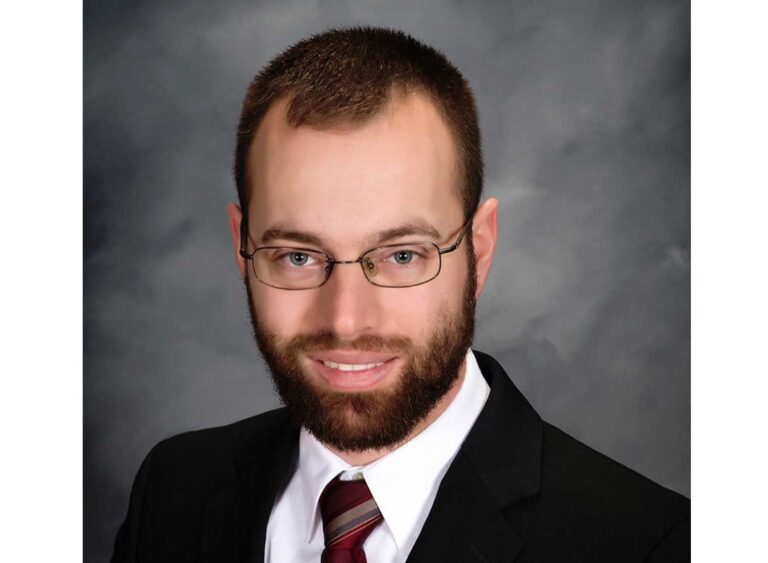
Aaron Lojewski: Don’t let Fairbanks politicians overturn a popular tax cap

By AARON LOJEWSKI

After a series of special meetings of the Fairbanks North Star Borough Assembly seeking to break the decades-popular “tax cap” via a special election proposition, the Assembly voted 7-2 to advance the $10 million tax increase question to the voters in a special election on May 7, 2024.

Voters will need to vote “No” to protect the tax cap and prevent a large $10 million tax hike. 

The Assembly chose to put it to a special election in May rather than the October election, even though they just “found” an extra $13 million over the last couple of weeks that one Assembly member referred to as “magic money.” They know local voters have overwhelmingly renewed the tax cap for decades. They are hoping to suppress the voice of the voters who typically participate in the regular October local election and skew the electorate in favor of special interest groups by spending $125,000 to hold this special election in May.

If the grassroots turnout at the meeting is any indication, it won’t work.

Scores of citizens turned out to testify against the special election to break the Tax Cap. Based on the looks of contempt on many of the assembly members’ faces during the meeting, which started at 5:30 p.m. and lasted beyond midnight, the assembly had little respect for the will of the voters. They appeared to be caught completely off guard. Still, they pressed on with their plan even though testimony was about 3 to 1 against the proposal.

The ordinance claims the proposed increase in taxes is for education. In Alaska, it is unconstitutional for funds to be dedicated and bind future elected bodies. The state has a constitutional duty to fund education to the basic need. This means that even if all of the proposed $10 million in new borough taxes went to education this coming year, the extra $10 million in subsequent years can and will be spent on any valid expense, such as labor agreements, at the whims of future assemblies. 

At the same time as politicians on the Assembly are trying to trick local voters into raising taxes on themselves, the borough is in labor negotiations with three bargaining units. Negotiations typically wrap up in the fall of a mayoral election year, as this year is, and the contracts are valid for three years. There is no question that a large influx of new tax dollars in the middle of negotiations will invigorate the unions to successfully negotiate better compensation packages for themselves, helping themselves to the new influx of cash.

For this reason, massively increasing taxes in the middle of labor negotiations would put the borough at a strategic disadvantage at the negotiation table and in the end would unnecessarily drive up long-term labor costs. This also means that in the long run, much of these new tax dollars wouldn’t make it to fund education but rather drive up labor costs.

The tax cap has worked well over time by keeping government growth in check. It limits the total tax revenue the borough can raise but it also allows the revenue to grow with inflation and population growth. This lets the government maintain its scale over time even as the borough changes. It has frequently gained the ire of those who want to raise taxes and waste public resources. 

Official special election information is available here.

Business owner Aaron Lojewski served on the Fairbanks North Star Borough Assembly and was term-limited from serving after October, 2023. He is a candidate for borough mayor.
Governor seems unimpressed with education spending bill, plans press conference Tuesday

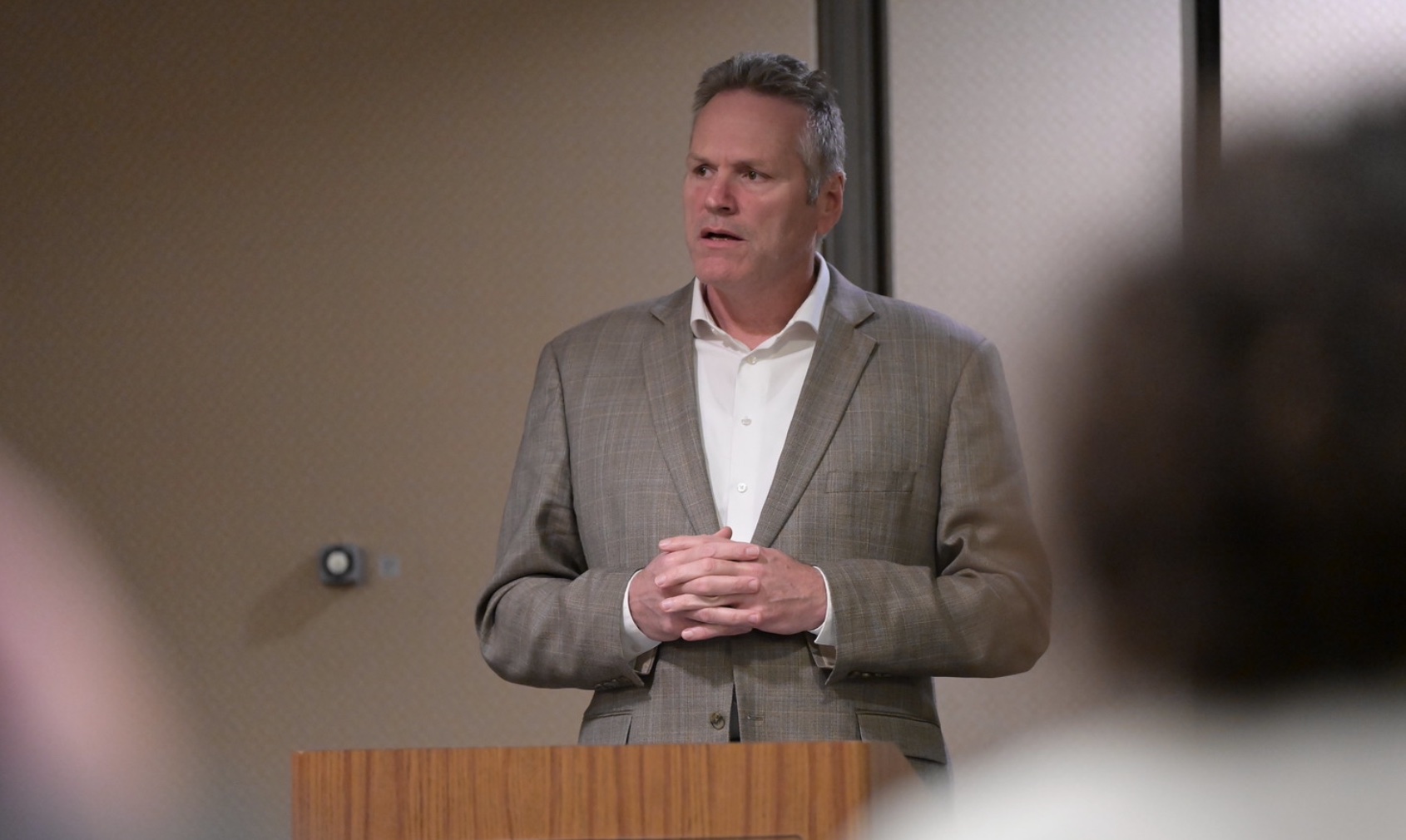
Gov. Mike Dunleavy put out a message on X/Twitter on Monday that indicates he’s not entirely thrilled with the massive spending package for education sent to him by the Senate and House.

“My initial review of the education bill is that it falls far short of improving outcomes for students. It appears to do the same thing we have done for decades – just spend more money. It doesn’t support the Reads Act, it fails to improve access to public charter schools, and it does nothing to recruit and retain teachers. We can’t do the same thing over and over again and expect different results,” he wrote.

SB 140 has a quarter billion dollars of new education spending every year going forward in the $680 base student allocation, the largest boost to the spending formula in at least a decade.

That BSA spending is essentially a blank check, with no accountability measures in it to ensure better outcomes in Alaska’s failing schools. With some of the highest spending in the nation, students in Alaska still score at the bottom in almost every measure, except for charter schools, which are performing well in Alaska.

The governor is planning a press conference on Tuesday at 12:45 p.m., sources said, and SB 140 is going to be the topic. Whether he decides to sign or veto the bill in whole or in part, or whether he wants something from the Legislature in order to sign the bill will certainly be the top question reporters have for him.

The Senate put out a statement saying it is happy with the bill, but the announcement from the supermajority makes no mention of revenue sources. The only place to get the money is from Alaskans’ Permanent Fund dividends, which were cut by three-quarters by last year’s Senate.

SB 140 stripped out language to help charter schools thrive, and eliminated the governor’s priority, which was a retention bonus for teachers in Alaska. The teachers’ union did not want that bonus, possibly because it is outside the union’s ability to assess for union dues.

Some analysts say the bill’s funding for the Reads Act, which is to help students learn to read at grade level, is structured in such a way that it doesn’t really help, as it just goes into a district’s general funding pot.

Peltola takes credit for FTC lawsuit against Albertsons-Kroger merger, and supports Jones Act

15

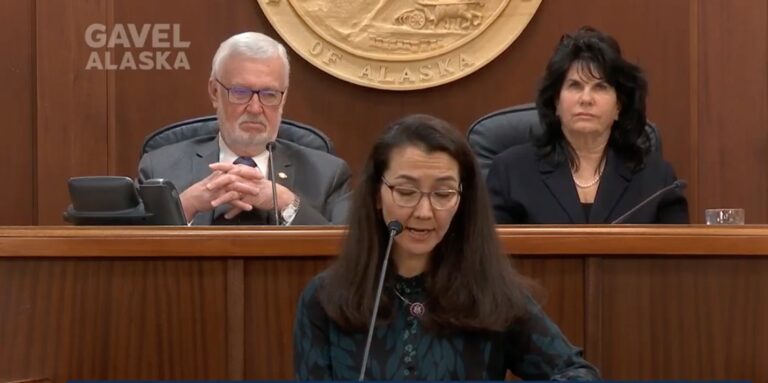
In a short speech that she read to a joint session of the Alaska Legislature on Monday, Alaska Rep. Mary Peltola led with the news that the Federal Trade Commission had filed a lawsuit to stop the merger of Albertsons and Kroger grocery stores. She did that, she said.

Albertsons and Kroger announced months ago that they would be selling off at least 14 Albertsons stores (Safeway) in Alaska, in order to assuage the concerns that they would drive prices higher for Alaska if their stores were under one parent company. Peltola failed to mention that aspect of the merger, and focused on higher prices.

Peltola said it was her efforts, and the listening sessions she held to get Alaskans’ voices heard about the merger that resulted in the lawsuit against the two private sector companies. She said breaking up monopolies is the way to go, just like the government did in the old days. She contrasted the grocery store merger to the break up of the American Telephone & Telegraph Company (AT&T) monopoly in the 1980s.

Peltola did not mention that she is following the directions of major unions, which oppose the merger.

In fact, the FTC lawsuit has not much to say about prices and a lot to say about collective bargaining as an antitrust decision point..

The lawsuit says that if the two companies combined, then unions would not be able to pit one store against another during bargaining negotiations.

“In some regions, such as in Denver, the combined Kroger/Albertsons would be the only employer of union grocery labor,” the FTC said. “Union grocery workers’ ability to leverage the threat of a boycott or strike to negotiate better CBA terms would also be weakened.”

Defending union bargaining position is a new frontier for the Federal Trade Commission.

Later in her remarks to the Legislature, Peltola took questions. Asked by Rep. Jamie Allard of Eagle River to comment on the Jones Act, which drives prices higher in Alaska and makes Alaskan goods, such as fish and oil, more expensive to ship south, Peltola said she supports the Jones Act.

Alaska is disproportionately and negatively affected by the Jones Act because of its dependence on waterborne shipping. The Jones Act affects both supplies shipped north to Alaska and crude oil and fish products shipped south.

The Cato Institute, a Libertarian think tank, says “This is not only a direct assault on Alaskan’s freedoms, but their pocketbooks as well. Besides reducing competition, the law forces carriers who ply routes between Alaska and other domestic locales to buy U.S.-built ships that cost as much as eight times more than those from Asian shipyards. In addition, these ships are, on average, estimated to be 2.7 times more expensive to operate than their foreign counterparts.”

In fact, a 1982 analysis conducted for the Alaska Statehood Commission calculated that every Alaskan paid $267 more per year for goods, or more than $1,000 annually for a family of four, because of the Jones Act.

“The state’s oil industry, meanwhile, was found to suffer an additional $600 million inflation‐​adjusted hit. A separate study published by the U.S. Government Accountability Office in 1988 said that the U.S. build requirement alone imposed a cost equal to 2 percent of Alaska’s total personal income,” the Cato Institute says.

The Jones Act requires that domestic cargoes be transported only on U.S.-built, U.S.-flagged, U.S.-owned, and U.S.-crewed ships. Oil cannot be exported from the North Slope without first stopping at a domestic port.

The Act has had a monopolistic effect on shipping to and from Alaska and Hawaii.

“Because the Jones Act severely limits the supply of shipping to and from our communities, it has allowed a very few companies to control our very lifeline to the outside world and as a result command shipping rates way higher than the rest of the world,” said Democrat Rep. Ed Case of Hawaii, another state that suffers from high shipping costs because of its reliance on maritime shipping. Case has worked on legislation to amend the Jones Act.

“Because Jones Act shipping has shrunken and international shipping has increased dramatically, especially in the last quarter-century, the Jones Act results in a very few carriers serving all domestic shipping needs,” Case said.

But Peltola said that in spite of whatever issues it may have, the Jones Act was good for unions, so she supports it.

It turns out, Peltola thinks monopolies are fine, as long as they are run by unions.

The Allard question about the Jones Act was the only question of policy substance from the Legislature. Other questions came from Democrats in the room and focused on things like Peltola’s grieving over the loss of her husband. House Minority Leader Calvin Schrage asked her to expound on why Alaskans should return a Democrat to Congress, allowing Peltola a few more minutes to campaign at the speaker’s podium.

FTC sues to stop Albertsons and Kroger merger, and gets a reaction

8

The Biden Administration’s Federal Trade Commission has sued over the merger of two of the nation’s large grocery retailers — Albertsons, which owns Safeway; and Kroger, which owns Fred Meyer stores.

The proposed deal is the largest supermarket merger in U.S. history.

“This supermarket mega-merger comes as American consumers have seen the cost of groceries rise steadily over the past few years,” the FTC Bureau of Competition said in a statement. “Kroger’s acquisition of Albertsons would lead to additional grocery price hikes for everyday goods, further exacerbating the financial strain consumers across the country face today.”

Joining the lawsuit were attorneys general from Arizona, California, Illinois, Maryland, Nevada, New Mexico, Oregon, Wyoming, and the District of Columbia.

An Albertsons spokesperson said that by trying to block the merger, the FTC is giving more power to Amazon, Walmart, and Costco.

“Albertsons Cos. merging with Kroger will expand competition, lower prices, increase associate wages, protect union jobs, and enhance customers’ shopping experience. If the Federal Trade Commission is successful in blocking this merger, it would be hurting customers and helping strengthen larger, multi-channel retailers such as Amazon, Walmart and Costco – the very companies the FTC claims to be reining in – by allowing them to continue increasing their growing dominance of the grocery industry,” the spokesperson said. “In contrast, Albertsons Cos.’ merger with Kroger will ensure our neighborhood supermarkets can better compete with these mega retailers, all while benefitting our customers, associates, and communities. We are disappointed that the FTC continues to use the same outdated view of the U.S. grocery industry it used 20 years ago, and we look forward to presenting our arguments in Court.”

Win Gruening: Juneau School District edges closer to a balanced budget, but what’s next?

By WIN GRUENING

After a marathon public hearing last week, the Juneau School District Board of Education voted 5-2 to combine and close several schools. The preliminary plan envisions consolidating high school grades 9-12 at Juneau-Douglas High School and middle school grades 7-8 at Thunder Mountain High School. 6th graders will be housed in neighborhood elementary schools.

Floyd Dryden Middle School, Marie Drake, and the district office building would be closed and released back to the city. Optional and alternative programs would be located in remaining facilities.

This was an important and long overdue first step to resolving the school district’s financial challenges. The five courageous board members approving the plan deserve credit for their refusal to kick the can down the road any longer.

With projected savings and a possible increase in state funding, the district has whittled down their structural deficit considerably, at least for next year.

But the district is not out of the woods yet.

The FY25 school district deficit, originally estimated to be over $11 million, could theoretically fall to $1.5 million, if an increase in state funding and all projected changes occur as planned.

That’s not guaranteed.

Baked into the numbers is a pending $680 increase in the Base Student Allocation for state funding awaiting passage in the Legislature and requiring the Governor’s signature. That alone accounts for $5.2 million of the district’s deficit reduction.

It also includes $1.65 million contributed by the city to subsidize non-instructional costs (building utilities and maintenance) for next year. After scheduled public hearings, that appropriation awaits adoption at the city’s regular Assembly meeting on March 4.

Even if all this comes to pass, additional revenue and/or cuts in future years will be necessary beyond those needed to eliminate the remaining $1.5 million shortfall.

The city will also need to commit to continue paying some district non-instructional costs since the current subsidy is for next year only.

The district budget is not static. Regular merit and step salary increases for personnel can amount to millions of dollars. Inflation will increase other costs as well.

But the elephant in the room is the continued projected decline in Juneau’s student population. This will lead directly to lower state funding every year. 

Based on current enrollment in grades 5-8 and adjusting for attrition, total high school enrollment for grades 9-12 in four years will be reduced by hundreds of students and will be well below building  capacity for either Juneau-Douglas High School or Thunder Mountain High School.

The district’s 2022 demographic study estimated that Juneau would lose another 1,200 students in the school system by 2032.

This overriding fact dictates that school board decisions must be based on the long term, not just what public pressure demands today.

Much of the testimony at the public hearing centered around Career and Technical Education classroom space. If Juneau is serious about attracting and retaining students and providing them with tools to earn a living, it’s incumbent on elected officials to explore how this capacity can be expanded.

A recent national study tracking more than ten million people who entered the job market over the past decade suggests that 52% of graduates are underemployed – in jobs where their credentials are not needed or underutilized. Providing and retaining students with Career and Technical Education training and skills needed for a wide variety of careers that don’t require a traditional college degree should be a priority for our community.

The vision to accomplish that involves more than shop classes and other courses now offered at the downtown high school. It may mean, in fact, investing in a 21st century state-of-the-art facility in the Mendenhall Valley that could become a regional hub for Career and Technical Education curricula. This facility could offer programs in aviation, culinary arts, veterinary assisting, cosmetology, hospitality, healthcare technology or any of a myriad of fields that are needed today, especially in Juneau.

I’m betting Juneau voters would look kindly on approving a bond issue for a facility this essential instead of flashy arts and culture facilities or new city offices.

It’s easier to cling to the old ways but where has that gotten us?

It’s past time to do things differently in the future.

After retiring as the senior vice president in charge of business banking for Key Bank in Alaska, Win Gruening became a regular opinion page columnist for the Juneau Empire. He was born and raised in Juneau and graduated from the U.S. Air Force Academy in 1970. He is involved in various local and statewide organizations.

Explainer: Alaska’s March 5 Republican Presidential Preference Poll happens Super Tuesday

On Tuesday, March 5, Republicans in Alaska will head to the “polls” to cast a vote for their preference for president. They won’t be the regular Division of Election polls, staffed by state workers or paid volunteers working with state employee oversight. They won’t even be in the usual polling locations.

Instead, this is a privately run “caucus by ballot”systems that helps the party determine who its delegates will represent when they attend the Republican Nominating Convention in Milwaukee in July. This is grassroots caucusing, without having to stand in a gymnasium all day.

There will be three names on the March 5 Presidential Preference Poll ballot. They are the names of the three candidates who paid a fee to the party to be included, a fee that helps defray the cost of the statewide operation.

Those candidates are Donald Trump, Nikki Haley, and Vivek Ramaswamy, who announced Jan. 15 ago that he is no longer a candidate. The Republican Party has given no explanation for why Ramaswamy’s name will still appear on the PPP ballot, now that he has endorsed Trump.

Participating in a PPP takes a bit more effort than voting in a regular government-run election. There are not as many places to cast a preference ballot. This is the reality of being a grassroots organization and a function of how many volunteers the party was able to muster and train over the past several months. Also, the volunteers will be doing this for the first time since 2016, and the technologies have changed since that PPP.

Republicans can vote in this caucus-by-ballot exercise. You can register as a Republican on the spot to participate in the PPP. You’ll be asked to show identification, given a simple ballot, and you mark your preference, drop it in the ballot box, and be on your way.

Depending on weather and enthusiasm, lines may be long and may stretch outside the buildings where these PPPs are taking place.

Find your House district at the Alaska Division of Elections map page.

Here are the House districts where PPP voting locations are located:

District 1: 

3/5/2024 3PM-8PM 

2417 Tongass Ave. Ketchikan, AK

District 3:  

3/5/2024 3PM-8PM 

Nugget Mall – 8745 Glacier Hwy. Juneau, AK

District 4:  

3/5/2024 3PM-8PM 

Nugget Mall – 8745 Glacier Hwy. Juneau, AK

District 5: 

3/5/2024 3PM-8PM 403 

West Marine Hwy. Kodiak, AK

District 6:

Site 1: 3/5/2024 3PM-8PM 91

Sterling Hwy. Homer, AK

Site 2: 3/5/2024 3PM-8PM 51540

Mercantile Ave. Kasilof, AK

District 7:

Site 1: 3/5/2024 3PM-8PM

209 Princess Ln. Kenai, AK

Site 2: 3/5/2024 3PM-8PM 

161 Farnsworth Ave. Soldotna, AK

District 8: 

3/5/2024 3PM-8PM 

52075 Marie Ave. Nikiski, AK

District 9:

3/5/2024 3PM-8PM 

Anchorage Grace Church – 12407 Pintail St Anchorage, AK

District 10: 

3/5/2024 3PM-8PM

Anchorage Grace Church – 12407 Pintail St Anchorage, AK

District 11: 

3/5/2024 3PM-8PM 

Anchorage Grace Church – 12407 Pintail St Anchorage, AK

District 12: 

3/5/2024 3PM-8PM

Anchorage Grace Church – 12407 Pintail St 4025 W 88th Ave. Anchorage, AK

District 13: 

3/5/2024 3PM-8PM

Jewel Lake Community Church of the Nazarene – 4025 W 88th Ave. Anchorage, AK

District 14: 

3/5/2024 3PM-8PM 

Jewel Lake Community Church of the Nazarene – 4025 W 88th Ave. Anchorage, AK

District 15: 

3/5/2024 3PM-8PM 

Jewel Lake Community Church of the Nazarene – 4025 W 88th Ave. Anchorage, AK

District 16: 

3/5/2024 3PM-8PM

Jewel Lake Community Church of the Nazarene – 4025 W 88th Ave. Anchorage, AK

District 17:

3/5/2024 3PM-8PM

Jewel Lake Community Church of the Nazarene – 4025 W 88th Ave. Anchorage, AK

District 18:

3/5/2024 3PM-8PM

Mountain City Church – 6401 E Northern Lights Blvd. Anchorage, AK

District 19:

3/5/2024 3PM-8PM

Jewel Lake Community Church of the Nazarene – 4025 W 88th Ave, Anchorage, AK

District 20:

3/5/2024 3PM-8PM

Mountain City Church – 6401 E Northern Lights Blvd, Anchorage, AK

District 21:

3/5/2024 3PM-8PM

Mountain City Church – 6401 E Northern Lights Blvd, Anchorage, AK

District 22:

3/5/2024 3PM-8PM

Mountain City Church – 6401 E Northern Lights Blvd, Anchorage, AK

District 23:

3/5/2024 3PM-8PM

12001 Business Blvd, Eagle River, AK

District 24:

3/5/2024 3PM-8PM

12001 Business Blvd, Eagle River, AK

District 25:    

3/5/2024 3PM-8PM

655 South Valley Way, Palmer, AK

District 26:    

3/5/2024 3PM-8PM

655 South Valley Way, Palmer, AK

District 27:

3/5/2024 3PM-8PM

Wasilla Senior Center – 1301 S. Century Cir, Wasilla, AK

District 28:

Site 1: 3/5/2024 3PM-8PM

655 South Valley Way, Palmer, AK

Site 2: 3/5/2024 3PM-8PM

Wasilla Senior Center – 1301 S. Century Cir, Wasilla, AK

District 29:

Site 1: 3/5/2024 3PM-8PM        

Valdez Convention and Civic Center – 314 Clifton Ct, Valdez, AK

Site 2: 3/5/2024 3PM-8PM        

Wasilla Senior Center – 1301 S Century Cir, Wasilla, AK

District 30:

3/5/2024 3PM-8PM

Wasilla Senior Center – 1301 S Century Cir, Wasilla, AK

District 31:

3/5/2024 3PM-8PM

Carlson Center – 2010 2nd Ave, Fairbanks, AK

District 32:

3/5/2024 3PM-8PM

Carlson Center – 2010 2nd Ave, Fairbanks, AK

District 33:

3/5/2024 3PM-8PM

Carlson Center – 2010 2nd Ave, Fairbanks, AK

District 34:

3/5/2024 3PM-8PM

Carlson Center – 2010 2nd Ave, Fairbanks, AK

District 35:

3/5/2024 3PM-8PM

Carlson Center – 2010 2nd Ave, Fairbanks, AK

District 36:

Site 1: 3/5/2024 3PM-8PM

Carlson Center – 2010 2nd Ave, Fairbanks, AK

Site 2: 3/5/2024 3PM-8PM

Delta Junction Community Center – 2287 Deborah St, Delta Junction, AK

Ronna McDaniel gives her two-week notice

The chair of the National Republican Committee has given her two-week notice. Ronna McDaniel, 50, made the announcement in the New York Times, saying she plans to resign on March 8.

“Some of my proudest accomplishments include firing Nancy Pelosi, winning the popular vote in 2022, creating an Election Integrity Department, building the committee’s first small dollar grassroots donor program, strengthening our state parties through our Growing Republican Organizations to Win program, expanding the Party through minority outreach at our community centers, and launching Bank Your Vote to get Republicans to commit to voting early,” she told the New York Times. “I have decided to step aside at our Spring Training on March 8 in Houston to allow our nominee to select a Chair of their choosing. The RNC has historically undergone change once we have a nominee and it has always been my intention to honor that tradition.”

Trump, who is the apparent GOP nominee, made it clear at CPAC, the conservative conference in Washington, D.C. over the weekend, that as far as he was concerned, McDaniel could leave today. He spoke to the pro-Trump crowd for an hour and 42 minutes without notes, mostly bashing President Joe Biden.

Rumors swirled a few weeks ago that McDaniel would resign after the South Carolina primary on Feb. 24. But now, it appears she will wait until after Super Tuesday.

Over the weekend, Americans For Prosperity Action said it will no longer put time or money into supporting Nikki Haley for president, after her poor showing in the South Carolina primary, where she lost to Trump, 60-40. AFP Action is a conservative group that is active in 35 states, including Alaska.

Tshibaka named chair of Trump campaign in Alaska

Kelly Tshibaka, former candidate for U.S. Senate and now host of the podcast, TV, and radio show STAND, has been named Alaska state chair for Donald Trump’s 2024 presidential campaign.

Trump has received endorsements from other Alaska leaders, including Sen. Dan Sullivan, Gov. Mike Dunleavy, Lt. Gov. Nancy Dahlstrom, as well as congressional candidate Nick Begich.

Rep. Mary Peltola, on the other hand, has endorsed President Joe Biden, and Sen. Lisa Murkowski said she is not endorsing either Biden or Trump. She told reporters earlier this month that she was holding out hope for Nikki Haley, who has just lost her home state South Carolina’s primary.

Tshibaka ran as the Republican nominee for U.S. Senate in 2022 against Murkowski. She co-hosts STAND with husband Niki Tshibaka. The show is dedicated to making courage contagious.

“President Trump boldly stands for freedom, truth, and government led by the people of America,” she said. “He alone inspires confidence that we can restore hope, unity, and prosperity after the destruction caused by Joe Biden and the Left over these past four years.”

Trump recently called into the Republican Women of Fairbanks’ Lincoln Day Dinner and spoke to the crowd via the cell phone of Gov. Mike Dunleavy, who was in attendance at the Westmark Hotel gala.

Alaska Republicans will have the opportunity to state their preference among the candidates participating in the March 5th Presidential Preference Poll, which is a type of caucus that is by ballot. It is run by volunteers of the Republican Party of Alaska, and those who want to participate who are not Republicans can change their voter registration at the door. The locations are at this link. The Alaska Republican Party has not announced who will be on its March 5 caucus ballot, but Trump and Haley are believed to have signed up, and Haley shows no signs of pulling out.

Find your House district at the Division of Elections website

Anchorage Assembly to vote on resolution calling for cease fire in Gaza

72

The Anchorage Assembly, at its regular meeting on Tuesday will vote on a resolution calling on Alaska’s congressional delegation to support an “immediate bilateral ceasefire, the release of all hostages, the safe passage of food, water, medical supplies, and other life-saving humanitarian aid into Gaza, and ultimately long-term peace and security for the people of Israel and Palestine.”

In so many words, it is what the Anchorage Party for Socialism and Liberation has been calling for during recent assembly meetings.

The resolution is being sponsored by Assemblywoman Karen Bronga and Assemblymen George Martinez and Felix Rivera. The resolution does not condemn Hamas for starting the conflict, but takes a conciliatory approach. It also states the Anchorage School District student body has over 100 languages spoken in it and that Anchorage is a “welcoming city;” the addition of those Whereas items is unclear in the context of the war in Gaza and the funding of terrorism by Iran. Iran as an instigator and terrorism funder in the conflict is not mentioned anywhere in the resolution.

The Anchorage Assembly meetings start at 5 pm on the ground floor of the Loussac Library, at 36th Avenue and Denali Street.

Read the resolution at this link.