Wednesday, May 6, 2026
Home Blog Page 999

Breaking: AIDEA sues Biden Administration over oil lease violations, abuse of power


The Alaska Industrial Development and Export Authority on Thursday filed a lawsuit against President Joe Biden, Secretary of the Department of the Interior Deb Haaland, and other members of the Biden Administration.

The lawsuit is in response to unlawful actions to obstruct and delay the development of valid oil and gas leases in the non-wilderness Coastal Plain (Section 1002 Area) of the Arctic National Wildlife Refuge.

For more than 40 years, Alaskans — led by Native communities and Native corporations on the North Slope — have urged Congress to open the Section 1002 Area for resource exploration.

With the passage of the Tax Cuts and Jobs Act in 2017, Congress authorized the Department of the Interior to establish and administer a competitive oil and gas program in the Coastal Plain, which occurred in December 2020.

AIDEA is a stakeholder in ANWR after securing seven tracts totaling 365,775 acres for 10-year lease agreements during the auction last year.

“Responsibly developing oil and gas in this area specifically set aside for development is supported by
the majority of Alaskans, over 20 Alaska Native entities located in and around the 1002 Area, Alaska’s governor, Alaska’s congressional delegation, and the Alaska State Legislature,” sald AIDEA Board Chair
Dana Pruhs. “It was passed by US Congress in the Tax Cuts and Jobs Act and was officially signed into
law by a sitting US president. Then, on his first day in office, President Biden issued a moratorium on the whole thing through an executive order. I don’t like the idea of turning our nation’s energy security over
to Russia, Iran, and Venezuela.’

AIDEA has filed civil action against the following individuals: Biden, Haaland, Laura Daniel-Davis, Principal Deputy Assistant Secretary. Land and Minerals Management, Tracy Stone-Manning. Director of the Bureau of Land Management, and Thomas Heinlein, Director of the Bureau of Land Management Alaska Office.

The agency cites seven violations of AIDEA’s valid and enforceable leases.

“Alaska has been promised the legal right to responsibly detennine development of its natural resources. The continued delay and obstruction of these leases impacts Alaska’s economic future for generations,” said AIDEA Executive Director Alan Weitzner.

“The Biden Administration’s brazen attempt to try to strip away valid and legally-acquired oil and gas exploration leases in ANWR is just one more example of an administration with little to no regard for the rule of law, or any understanding of how the nation’s energy infrastructure actually works,” said Alaska Gov. Mike Dunleavy. “The 1002 Area was specifically set aside by the United States Congress for exploration and development. The benefits of environmentally safe development will be family-supporting jobs and a secure supply of domestically produced energy. AIDEA is well within its rights to take the President and his staff to court over their unlawful actions.”

The Alaska Industrial Development and Export Authority is a public corporation of the state, whose purpose is to promote, develop, and advance the general prosperity and economic welfare of the people of Alaska. Since 1967, AIDEA has been responsible for directing more than $3.5 billion in economic development in Alaska and has declared $439.7 million in dividends to Alaska since 1997.

Biden’s jab rule: Businesses with over 100 workers have until Jan. 4 to enact mandate

The Biden Administration today announced that businesses with more than 100 employees must have their workforce fully vaccinated for Covid-19 no later than Jan. 4.

Those who do not comply must enact weekly testing of their unvaccinated workers, and unvaccinated workers will be forced to wear masks, while vaccinated persons will not, according to the regulations released by the Occupational Safety and Health Administration on Thursday.

Also, by Dec. 5, any unvaccinated person working for one of the companies affected by the mandate will be required by federal regulation to wear a mask while on the job.

More than 80 million Americans are thought to be affected by the regulation, which also orders companies to give paid time off to employees who want to get vaccinated, as well as paid time off for any side effects, through Dec. 5.

Companies that do not comply may be fined up to $14,000 per violation. Any further or defiant noncompliance could draw even higher fines, OSHA said.

OSHA says this new rule will supersede any state or local laws that prevent such mandates. There are no exemptions for those with natural immunity to the Covid virus.

“OSHA determined that workers who have been infected with COVID-19 but have not been fully vaccinated still face a grave danger from workplace exposure to SARS-CoV-2,” according to OSHA.

It appears the agency is starting to work on widening the mandate for those employers with a workforce of less than 100.

“The agency is moving in a stepwise fashion on the short timeline necessitated by the danger presented by COVID-19 while soliciting stakeholder comment and additional information to determine whether to adjust the scope of the [emergency temporary standard] to address smaller employers in the future,” OSHA said, asking employers to offer their guidance on whether the Biden Administration should “impose a strict vaccination mandate (i.e., all employers required to implement mandatory vaccination policies as defined in this [emergency temporary standard]) with no alternative compliance option.”

Several lawsuits from Republican-run states are in the queue, which may lead to a court-ordered hold on the OSHA rule.

Don Young invites photographers to send photos of Alaska for ongoing virtual exhibit

Alaska Congressman Don Young announced, “Picturesque Alaska,” his initiative to showcase Alaskan photographers of all experience levels on the congressman’s official social media channels as part of a virtual photo exhibit.

Throughout the remainder of the year, Young will use his social media accounts to highlight original photos taken by photographers who call Alaska home.

Photos may be of nature, architecture, cultural and community events, or of any other subject matter that spotlights the unique beauty found in Alaska. Submission instructions can be found below.

“In Congress, I have been a steadfast supporter of the arts and humanities. As a medium, photography allows us to capture still images of daily life and preserve them for future generations to enjoy and learn from,” Young said in a press release.

Attach your photo (your original work) in an email and send it to [email protected]

In the email, please include the following:

  • The photographer’s name and where in Alaska they are from.
  • The subject(s) and location of the photo. If the photo’s subjects are people, ensure you have their permission to submit the photograph.
  • The date of the photo.
  • A short description (no more than 5-8 sentences) of the picture, how it was taken, and how it captures the spirit of Alaska.

By submitting a photograph, you agree to allow the Office of Congressman Don Young to use it on social media with attribution to the original photographer.

Young has represented Alaska in Congress since 1973. In March, he will have served for 50 years in Congress.

Nick Begich III draws in list of early endorsements in first week of campaign

Seven days ago, Nick Begich III announced in Wasilla his campaign to challenge Congressman Don Young. Nick is a Republican who served as Young’s campaign chair during the last election.

A businessman, he is the grandson of former Rep. Nick Begich, who died in a plane crash in October of 1972. Forty-nine years later, Rep. Begich’s grandson is in the race to upset Congressman Young, who has held the seat since 1973.

Today, Nick announced several key endorsements, including Mat-Su Assemblyman Jesse Sumner, Mat-Su School Board member-elect Jubilee Underwood, North Pole Mayor Michael Welch, Wasilla Mayor Glenda Ledford, and Alaska Outdoor Council and hunting enthusiast Carl Nelson, gunsmith and Valley political activist L.D. Howard, drone company founder Amber McDonald, and Republican activist Misty Steed, and former congressional candidate John Nelson.

Nelson, who ran twice against Young in the Republican primary, scraped off more than 18 percent of the Republican vote in his last run. In his endorsement letter he made it clear he won’t be running this time, but will support Nick instead.

Daniel Smith: The engine light is on, and the election system needs fixing now

By DANIEL SMITH

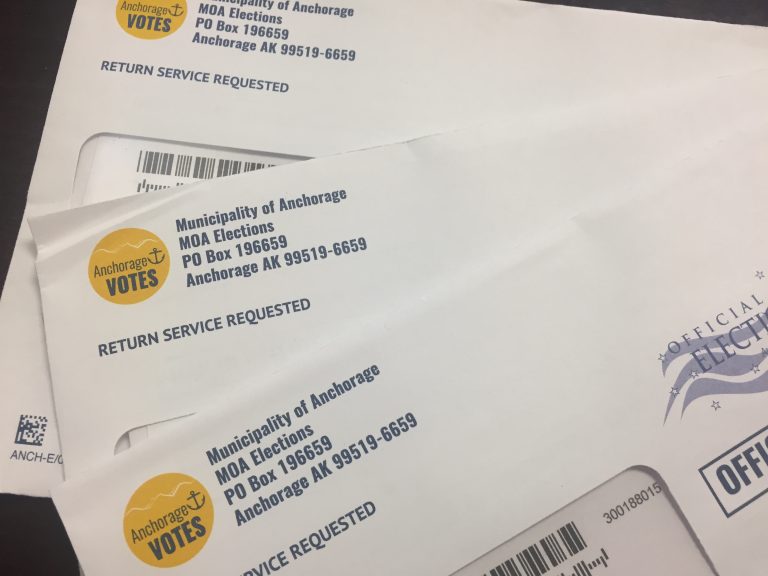
There has been too much tinkering with our election systems over the last few years. 

“If it’s not broken, don’t fix it.” For those of us who are mechanically inclined and especially those of us who are not, we can identify with that tried-and-true saying.

Our election system is supposed to be that reliable vehicle that get us from point A to point B and never lets us down. It is supposed to help us keep our elected officials in check and help us get the people that we feel represent us best into office.

The current election system in Anchorage and the state is, however no longer serviceable and most certainly requires fixing. We need to push it into the garage, run diagnostics, and get busy with repairs.

If we do not make the necessary repairs to our election system we will find our election vehicles broken down on the side of the road, out of service with no available parts to reestablish the republic.

Let’s run through a quick diagnostic and check for specific, obvious problems.

There appears to be an indicator light on the dash says “mail-in system is fouled.” A quick read of the trouble shooting chart in the service manual says “Check for stolen voter information. If positive voter identification cannot be guaranteed, return to in person, paper ballots with voter identification.” 

That seems simple enough.

We have had voter information hacked and stolen twice now (that we know of) from State systems, on a large scale. The Municipality of Anchorage gets its voter role information from the State. That could be one problem.

The Anchorage Assembly gave us the universal vote-by-mail system out of the kindness of their hearts. There was no problem with the previous voting system. We did not vote for the change-over. The assembly simply decided to fix something that was not broken. 

Remember we are cautioned against this. The repair manual says, “If questionable unwanted aftermarket parts have been installed, check for a bad universal mail in ballot system that has likely plugged the integrity filter.” It goes on to say, “In the event of the Covid-driven hysteria which can cause abuse of mail-in ballots, remove and replace with original parts. See also: Reinstate witness signature requirements, which may have been illegally altered by the judicial branch of government system. This only applies to for those limited absentee ballots that might be requested by voters.”

The next column of the trouble shooting chart is titled, “If election system starts but won’t run.”

We seem to still be able to cast ballots, but counting seems to take much longer now for some reason. There are a number of solutions offered here. The first one might be the easiest to try.

The election repair manual says, “Try decentralizing the vote counting mechanism.” It quotes an infamous vote repair technician Joseph Stalin who said, “It doesn’t matter how many people vote, only who counts the votes.” 

There could be a malfunction when trying to vote for an Assembly seat when the votes are counted by elections officials who are under the direct supervision of the Anchorage Assembly itself.

When paper ballots were counted by hand at a multitude of different precinct sites, and then reported to election central, this was never a large-scale problem. It was not broken. This part of the vehicle had lots of miles left on it and did not need to be replaced.

Still having trouble gaining faith in your rough-idling election system? Read the line under other possible causes. “Your election vehicle may not be compatible with modern digital components. Check for faulty vote counting machines.” This component is the proverbial black box. Only a very select few know how it works and what kind of computations go on inside this thing. Specialists with proprietary diagnostic tools are required to service this piece of the machine. We are making these repairs ourselves and do not want to be reliant on technicians of questionable character. As it turns out, the vehicle will run just fine without a Dominion vote counting machine or similar device. Simply remove it and dispose of in the hazardous waste bin.

If your election vehicle creates excessive smoke and mirrors, you may have a faulty Ranked Choice Voting muffler bearing. You cannot go down to the auto parts store and purchase a new replacement RCV. Just as with blinker fluid, it does not exist in a properly maintained voting vehicle. 

Ranked Choice Voting does not subscribe to the one-person, one-vote requirement of proper election system maintenance. It is convoluted and results in unwanted outcomes, even if somehow magically installed correctly. The election owners’ manual says, “You may have missed some scheduled maintenance, but in no case let your politician sell you a Ranked Choice Voting System.”

There are too many issues with the state of our current election system that lead some to believe their vote does not matter. Three minutes of public testimony at an Assembly meeting, for example will not change the course of events if Assembly persons have made up their mind and have an agenda. Elections are the only real time the public gets a say in the government and its affairs.

Unless we get our election system fixed, we will be thumbing a ride and hoping that some politician will give us a lift to our intended destination. This is not only dangerous but it could be a long cold wait by the side of the road and we may end up down a very dark Marxist path, that we never intended to travel.

We can each make a difference if we start to restore the integrity of our election system one component at a time and support Sen. Mike Showers in his efforts with Senate Bill 39 to give our election vehicle a major and well needed overhaul.

Dan Smith is a lifelong Alaskan and Anchorage resident. 

No, Superintendent Deena Bishop is not being considered for lt. gov. to Dunleavy

Leftist bloggers have been floating the rumor this week that Anchorage Superintendent of Schools Deena Bishop is in talks with Gov. Mike Dunleavy on the subject of her joining his team as his running mate in 2022.

Nothing is further from the truth, Dunleavy said in a conversation with Must Read Alaska today.

Bishop has been the superintendent for Anchorage for the past six years. Before that, she worked in the Mat-Su Borough School District, where Dunleavy was on the school board. That was, evidently, enough of a link for bloggers to float the theory.

But Bishop had announced she would remain with the District through the end of the school year in June, which would have made it impossible for her to campaign. After that, she said she’ll spend more time with family.

The bloggers may have forgotten that Bishop came out publicly against separate bathrooms and locker rooms for boys and girls, saying it was unenforceable and bad for kids. “I honestly don’t know how we would enforce something like that,” she said.

That question, called the bathroom bill, was put to Anchorage voters in 2018, and over 52.6 percent of Anchorage voters agreed with Bishop that boys who want to use girls’ bathrooms should be able to do so.

This year, a parent in Louden County, Virginia confronted a school board over that policy, claiming his daughter had been raped and sodomized by a boy dressed in a skirt who was using the girls’ bathroom because district policy allowed him to use the bathroom he chooses. Parents in Louden County are now demanding the superintendent’s resignation and the incident likely led to a defeat of the Democratic Gov. Terry McAuliffe by a Republican newcomer, Glenn Youngkin.

In this year of backlash against liberal policies, it’s doubtful that Bishop’s well-known stance on mixed-gender bathrooms in schools, or her ringing endorsement of “White Fragility” pedagogy would help Dunleavy win reelection.

Also not in the running for running mate is Democrat Rep. Geran Tarr, although she attended a bill signing this year, which certainly should be enough to fuel blogger speculation.

Rep. Vance: Early treatment saves lives

By SARAH VANCE

Life is precious. My heart goes out to so many of you who have lost family and friends to Covid-19. I want to do everything in my power to help you navigate through this difficult season; including giving you hope for the future. 

Many of you have been asking what we can do to beat this pandemic. One thing we know to be true about Covid-19 is that early treatment saves lives. Let me say that again; early treatment saves lives!

I have been speaking with Gov. Mike Dunleavy, Dept. of Health and Social Services Commissioner Adam Crum, and other health experts about the efficacy of early treatment for Alaskans. These conversations help guide me in making sound policy decisions to better defend your medical rights because your healthcare decisions should remain between you and your healthcare provider and not you and your politician.

It has been more than 20 months since the pandemic reached our borders. We have sought to understand this virus and how to treat it, yet we seem to be losing the battle here in Alaska, recently holding the worst case-count per capita in the nation. It is time we look to countries like India, who have successfully eradicated Covid-19 from regions of their population with the use of therapy packs.

Each home kit in India contained the following: Paracetamol tablets [tylenol], Vitamin C, Multivitamin, Zinc, Vitamin D3, Ivermectin 12 mg [quantity #10 tablets], Doxycycline 100 mg [quantity #10 tablets]. Other non-medication components included face masks, sanitizer, gloves and alcohol wipes, a digital thermometer, and a pulse oximeter. Many other countries have also seen success in reducing widespread hospitalization and death by distributing therapy packs, through their health department for early treatment of the virus for less than $3 per pack.

Early treatment has been a strong recommendation of many health professionals in the fight against Covid-19.

I have heard the arguments that certain therapies such as ivermectin, azithromycin “Z-Paks” and hydroxychloroquine are not FDA approved for treating Covid-19. But I would argue that as a sovereign state, we cannot afford to wait for the permission of a federal agency to save lives. It is our responsibility to make wise decisions for ourselves now, and for the sake of our own because no one cares about Alaskan lives like Alaskans do.

Our focus should be on treating those who are sick as early as possible, but instead, it seems we have remained solely reliant upon vaccination as the only viable means of defense. If we prioritize treating those who are sick by exercising early intervention, at the same level we are prioritizing encouragement of the healthy to get vaccinated, I believe we could see an immediate decrease in hospitalizations and death.

Just to be clear; I will defend your right to have access to the vaccines as much as I will defend your choice for early and alternative treatments. Alaskans have a right to informed consent and a right to try experimental drugs when terminally ill. 

Let’s set the politics aside and focus on saving lives.

Some of you may claim I am spreading false information. That’s OK. My challenge to you is to research the success of these countries and alternative treatment options and then decide for yourself.  I am simply interested in saving Alaskan lives.

Life is precious; do your research of available options and talk to your doctor.

Please feel free to reach out to me at [email protected] or 907-235-2921.

Rep. Sarah Vance represents portions of the Kenai Peninsula, including Homer and Anchor Point.

Anchorage School Board chair orders citizen to stop videotaping board meetings

Anchorage School Board Chairwoman Margo Bellamy told Anchorage citizen Nial Williams that he was not allowed to videotape the meeting on Monday because doing so was bothering a person who was testifying.

The person, Sarah Davies, a staff member of Bartlett High School had approached the public podium to address the body when she said Williams videotaping was “an incredible distraction.”

Bellamy replied, “And I apologize for that.”

Bellamy then instructed Williams to stop videotaping the meeting. He asserted his constitutional rights and the First Amendment, but then was approached by a security guard who told him to stop, while Davies said that his videotaping was making her nervous. The security guard escorted him from the room.

At that point School Board member Dave Donley asked Bellamy what rule Williams had broken by videotaping the proceedings. She said there was no rule, but that he had made a member of the public uncomfortable.

Donley proceeded to argue that making someone uncomfortable was not grounds for violating the Constitution. He said that Williams had not disrupted the proceedings in any way and vigorously defended the public’s right to record public meetings.

School Board member Kelly Lessens interrupted, saying that there were children in the room, and therefore filming the room is inappropriate.

However, the entire room is filmed during the meetings by school district cameras and, in fact, security cameras are all over the education center facilities.

A dispute broke out on among Bellamy and Donley, who challenged her ruling, which is a procedural motion that requires a vote of the body.

Bellamy denied she had had Williams removed from the meeting, and did not call for a vote on the ruling she had made. Instead, she called for a five-minute recess to sort it out in private, a violation of the Open Meetings Act. The leftists on the Anchorage School Board went along with the violation, except Donley.

People videotaping public meetings is commonplace in this era and Bellamy has not prevented others from videotaping the meetings. She singled out Williams. Without citizens videotaping the meetings, the public has little reasonable access because the school board has limited the number of people it allows in its meetings and asserts the public can watch the meetings on YouTube. The official tape of the meeting on YouTube makes it difficult to see what is going on in the meeting, because the set-up favors a still photo of the agenda and a very small, blurry screen of the room, with little of the proceedings actually shown.

Williams told Must Read Alaska that the woman testifying was not the subject of his video. He maintained a distance from her and was seated most of the time in one of the seats provided to the public. He was recording elected officials and the paid functionaries who work for them in the school district, who he believes will eventually require Covid vaccinations of children attending public schools.

He also occasionally pans the entire room with his camera so that later he can prove who was at a meeting who may have witnessed a constitutional violation.

Williams is on a mission to defend the U.S. Constitution and has been thrown out of school board and Anchorage Assembly meetings when he has become passionate about what he believes are illegal proceedings. But in this instance, Williams was not disrupting the meeting, and was just quietly recording it.

According to the Reporters Committee on Freedom of the Press, “Although audio and video recording and photographing of public meetings is customarily done, the state OMA [Open Meetings Act] does not address this issue. If this issue arises, the press should argue there is a legal right to photograph or record such meetings, either implicit in the OMA, or arising from the common law or constitution.”

The Municipal Research and Services Center, a nonprofit organization that helps local governments across Washington State better serve their communities by providing legal and policy guidance on any topic, classifies people like Williams as “auditors” of government. 

“If the behavior of an auditor interferes with the operation of government or the ability of other members of the public to use a public facility, an auditor may be removed from public property they would otherwise be entitled to be in. See State v. Blair, 65 Wash. App. 64 (1992),” the organization advises.

“Note that such a disruption would have to consist of more than the mere act of recording. In order to be lawfully removed the auditor’s actions must make it impossible for city business to continue in an orderly fashion. Profane or abusive language doesn’t create a sufficient disruption by itself, either—only if such language qualifies as a physical threat or “fighting words” (words that inflict injury themselves or tend to incite an immediate breach of the peace) or if the act (not just the content) of speaking itself  disrupts city business, is there cause for members of the public to be removed,” MRSC says.

“Ultimately, if an auditor doesn’t run afoul of these boundaries, the best advice for local government staff and elected officials is to ignore the auditors and not engage with them except to conduct business. Otherwise, a confrontation with an auditor may lead to a public allegation of a “violation” of their constitutional rights, both in the press and online, and perhaps even to a court challenge that the jurisdiction has attempted to violate the public’s constitutional rights,” the group says.

Murkowski joins Democrats in support of federal control over Alaska voting

A bill that would inject more federal control over state-run elections in Alaska was blocked by Republican senators, with the exception of Sen. Lisa Murkowski, who voted with the all of the Senate Democrats to advance the bill.

Since taking the trifecta of power — House, Senate and presidency — Democrats have pushed three bills to weaken the security of elections.

This bill is not HR 1, which was the Democrats’ Number 1 priority when they took over in January. That bill was also known as the The For the People Act, and would have vastly changed the rules around elections, inserting the federal government into what is a states’ rights issue.

The bill under consideration now is the John Lewis Voting Rights Advancement Act, also known more commonly as the Voting Rights Act. With Republicans working in cooperation, even with Murkowski defecting, the Democrats came up one vote short of advancing the bill to debate.

Republicans in general have been calling for a trust-but-verify approach to voting to ensure that cheating doesn’t take place. Democrats and the mainstream media call the Republicans’ efforts an attempt at “restricting ballot access” and link it to what they call “false claims by former President Donald Trump” and his supporters about the somewhat incredible 2020 election results.

In 2013, the U.S. Supreme Court, in Shelby County vs. Holder, struck down various provisions of the 1965 Voting Rights Act, a law that forced Alaska, nine other states, and portions of six other states, to submit their election plans and redistricting plans to the U.S. Justice Department for review.

The Supreme Court, in a 5-4 decision in 2013, recognized that because pre-clearance so forcefully usurps State sovereignty over elections, Congress would have to show that there was still “blatantly discriminatory evasions of federal decrees,” “voting discrimination on a pervasive scale,” or “flagrant” or “rampant” voting discrimination. None of that has been evident in Alaska, and the only reason it came under that section of the Voting Rights Act is because, at the time, so many Natives in Alaska had a language other than English as their first language and, for years there was an English test that prevented many Natives from voting. But that provision has been gone for decades.

If Democrats and Murkowski have their way, Alaska could once again be colonized by the Justice Department, treated as a state that cannot manage its own redistricting and voting without federal controls.

Tuckerman Babcock, former chairman of the Alaska Republican Party said, “I think we have enough supervision from the federal government. Why would we need more?”

The legislation Murkowski is promoting would flip the 2013 Supreme Court decision, reinstating the DOJ-required pre-clearance of any changes in state voting laws and practices. It would put Alaska’s elections under the control of the same Justice Department that railroaded former U.S. Sen. Ted Stevens.

The Voting Rights Act of 1965 is still the law of the land, and state laws can still be challenged under it.

When the U.S. Supreme Court struck down the provisions that had Alaska’s elections under the boot of the Justice Department, then-Gov. Sean Parnell welcomed the decision. Alaska translates ballots into numerous languages and hires language interpreters to help voters each year.