Gov. Mike Dunleavy selected Jen Winkelman to be commissioner for the Alaska Department of Corrections. Winkelman was named acting commissioner last year when Nancy Dahlstrom left the department to run for lieutenant governor.
“Commissioner Winkelman has demonstrated sound judgment and leadership these past few months,” Dunleavy said. “She brings both experience and knowledge to the commissioner’s office and Alaskans can be assured the department is in good hands.”
Winkelman started with the Department of Corrections in 2001. She served as a probation and parole officer in various capacities with the Division of Pretrial, Probation and Parole and the Division of Institutions, in Fairbanks, Palmer and Juneau, most recently as the director of the division. Born and raised in Fairbanks, she has a degree in justice from the University of Alaska-Fairbanks and served on both the Fairbanks and Juneau reentry coalitions and the Interstate Commission for Adult Offender Supervision. She serves on the Governor’s Council for Homelessness and the Alaska Police Standards Council.
“I am deeply humbled by the confidence placed in me by Governor Dunleavy and am honored to have the opportunity to serve Alaskans as the Commissioner of the Department of Corrections,” Winkleman said. “Having dedicated over 20 years of state service to DOC, I feel strongly that Corrections is such an important part in the safety and security of all Alaskans. Our over 2,000 employees are the backbone of the work we do, and I am thankful for their dedication to serving the people of Alaska. I look forward to building upon the efforts our staff make, day in and day out, to prepare those in our care and custody for success after release. Fostering positive relationships with other Departments and community leadership, as well as with leadership across different branches of government is a priority of mine as I know this is critical to making a difference in the lives of those in our charge. It is a privilege to be trusted with this responsibility for Alaskans.”
Winkelman’s name will be forwarded to the Alaska Legislature for confirmation.
Alaska Democrat Rep. Mary Peltola voted against a resolution that condemns the rash of recent attacks on pro-life facilities groups, and churches. The resolution passed 222-209in the Republican-majority House of Representatives, with just three Democrats supporting the measure.
The resolution says that the House appreciates the good work that happens at these centers, where women who are in crisis with a pregnancy can get help and so the unborn child can experience life.
But Democrats said that abortion clinics have been under attack for years. Democrat women wore white in protest of the bill. Rep. Rosa DeLauro of Connecticut and others said that the resolution wasn’t good enough because it didn’t also condemn violence against abortion clinics and providers. She and many of the Democrat women who opposed the resolution wore white on the floor of the House in protest of the bill and another bill that would protect the life of a born-alive baby. Rep. Mary Peltola joined those wearing white.
Over 100 attacks on crisis pregnancy clinics and churches were documented following the leak of the Supreme Court draft opinion last year before the overturning of Roe v. Wade. The resolution that passed on Wednesday listed a number of those attacks, including pro-life centers that were torched by vandals.
“There have been now nearly 100 recorded acts of violence and intimidation against pro-life individuals and organizations by radical, pro-abortion activists since the initial leak of the draft Supreme Court Dobbs opinion,” said Missouri Republican Rep. Ann Wagner. “Following the leak and issuance of the Supreme Court’s decision in Dobbs vs. Jackson Women’s Health Organization, anti-life fanatics have targeted, destroyed, or vandalized, as I said, over 100 pro-life facilities, groups, and churches to further their radical cause.”
Some of those attacks as described in the resolution were in the Northwest, but they occurred around the country:
May 3, 2022, individuals vandalized the Care Net Pregnancy Center in Frederick, Maryland, with pro-abortion graffiti, including the messages, “not real clinic,” “end forced motherhood,” and “go to [Planned Parenthood] instead”
May 5, 2022, in Portland, Oregon, vandals smashed numerous windows and spray-painted graffiti on the Southeast Portland Pregnancy Resource Center
May 7, 2022, activists vandalized a crisis pregnancy center in Denton, Texas, with the radical pro-abortion messages “not a clinic” and “forced birth is murder”
May 7, 2022, in Fort Collins, Colorado, activists painted “my body my choice” on the doors of a Catholic parish
May 8, 2022, Mother’s Day, individuals attempted to break into the Oregon Right to Life office in Keizer, Oregon, reportedly igniting and throwing two Molotov cocktails at the building
May 8, 2022, vandals spray-painted pro-abortion messages such as “Abortion is a right,” “Fake clinic,” and “Liars” on the side of a pro-life pregnancy center in Manassas, Virginia
May 8, 2022, a pro-life nonprofit center in Madison, Wisconsin, was set ablaze and vandalized with the words, “If abortions aren’t safe, then you aren’t either”
May 13, 2022, activists left “threatening messages” on the front of the Alpha Pregnancy Center in Reisterstown, Maryland, including the messages, “if abortions’ aren’t safe, neither are you,” “you’re anti choice not pro life,” “not a clinic,” and were signed “Jane’s revenge”
May 18, 2022, vandals targeted a “women’s faith-based medical clinic” in Auburn, Alabama, defacing the clinic’s sign and staff members’ vehicles
May 25, 2022, in Lynnwood, Washington, anti-life activists smashed windows and vandalized the Next Step Pregnancy Center with the threat, “if abortion isn’t safe, you aren’t either”
June 2, 2022, Jane’s Revenge claimed credit for an attack in which its members broke windows and scrawled messages including “God loves abortion” and “fake clinic” at Agape Pregnancy Resource Center in Des Moines, Iowa
June 3, 2022, the Capitol Hill Crisis Pregnancy Center in Washington, DC, was the target of left-wing abortion extremists who threw red paint on the door, threw eggs at the window, and spray-painted the building with “Jane Says Revenge”
June 6, 2022, in Asheville, North Carolina, vandals broke windows and left graffiti on the Mountain Area Pregnancy Services building
The resolution lists dozens of other actions against pregnancy centers and churches.
“This resolution is straightforward,” said Republican Rep. Jim Jordan of Ohio. “This is a resolution that says we appreciate the good work that happens at crisis pregnancy centers where they take in women, where they help them and help that unborn child so that unborn child gets to experience the gift of life.”
Three Democrats voted in favor of the bill: Reps. Vicente Gonzalez of Texas, Chrissy Houlahan of Pennsylvania, and Marie Gluesenkamp Perez of Washington.
Democrat Rep. Mary Peltola of Alaska voted with Democrats on Wednesday on a bill that would protect the lives of infants who are born alive during or after an abortion.
The bill passed the Republican-majority House on a vote of 220 to 210 and now goes to the Democrat-controlled Senate, where it is expected to die.
The bill requires health providers to treat a surviving infant of an abortion as a patient whose life is worth attempting to save, just as any other child’s life. A doctor would be required to exercise the same degree of care as a “reasonably diligent and conscientious health care practitioner would render to any other child born alive,” the bill states. The instances of a baby surviving abortion are rare, but not unheard of. The Lozier Institute says that about 1% of all U.S. abortions are carried out at or after 21 weeks of gestation, which is approximately 10,000 a year.
Penalties for violating the proposed law include a fine and up to five years in prison or both.
A person who intentionally kills or attempts to kill a baby born alive after an abortion would be subject to charges of murder. But the bill bars criminal prosecution of the mother of the child born alive.
The bill places no further restrictions on abortions, which is a matter that is left up to the states since Roe v. Wade was overturned by the U.S. Supreme Court last year.
Peltola, an ardent abortion supporter who ran for office on the topic of preserving abortion rights, voted against the Born-Alive Abortion Survivors Protection Act. One Democrat, Rep. Henry Cuellar of Texas, voted in favor of the bill and another Democrat, Rep. Vicente Gonzalez of Texas, voted “present.”
Former House Speaker Nancy Pelosi took to Twitter to criticize the bill: “Today, instead of joining Democrats to condemn all political violence, @HouseGOP chose to push their extreme anti-choice agenda. Democrats believe everyone deserves the freedom to access reproductive health services – without fear of violence, intimidation or harassment.”
The Alaska Supreme Court will hear the appeal to the Vazquez v. Armstrong on Jan. 13 at 12:30 pm at the Boney Courthouse.
The case involves whether Rep.-elect Jennie Armstrong has lived in Anchorage legislative District 16 long enough to qualify as a legislator. Armstrong, from Louisiana, adventured her way to Alaska at some point in the summer of 2019, but whether she moved to Anchorage in time to meet the legal deadline for becoming a candidate in the district is under dispute. She ran for House and won in November. The matter includes the Division of Elections, which certified Armstrong as a candidate.
The group challenging Armstrong’s residency is raising funds for the appeal and have set up an account for donations. Contributors should note “ Liz Vazquez -Anchorage Residency Challenge,” on their contribution.
The group’s goal is to raise $40,000 for the challenge of Judge Herman Walker’s decision that Armstrong said she moved to the district in time, and he was essentially going to accept her word, rather than the words of her social media track record, which indicate otherwise.
Walker delayed releasing his decision by nearly three weeks over the holidays while he left the country on vacation. Legislators are being sworn in on Jan. 17 in Juneau. The Jan. 13 hearing by the Supreme Court will necessitate a speedy decision before that swearing-in.
If sworn into office, Armstrong will be the legislator who has lived in Alaska for barely three and a half years before being seated as one of 40 House members, and will be the legislator with arguably the least time in Alaska in legislative history, deciding everything from funding for schools to whether state taxes should be enacted, and the amount of Alaskans’ Permanent Fund dividends.
Amy Demboski, former municipal manager for Anchorage, has retained attorney Scott Kendall and appears to be pursuing a settlement for what she says was a retaliatory and wrongful firing by Mayor Dave Bronson.
Demboski was fired on Dec. 19, after which she said that the mayor’s staff leaked information to certain people in the media in an attempt to destroy her reputation. Demboski is currently the interim host of the morning drive-time show on 650 KENI.
Demboski said that Bronson fired her because she had brought to his attention unlawful and unethical activities and uses of municipal resources involving lobbyist contracts, sole source contracts, and the hiring of Larry Baker as a consultant.
Demboski and Kendall said that firing her for using vulgar language in the office is a “fig leaf” to cover up for the real reason, which is retaliation.
The letter, which was sent to the various news agencies by various actors, makes numerous claims about governmental malpractice in the Bronson Administration’s purchasing department, and serves as a warning that Demboski will be seeking a financial settlement and a promise from the mayor that further disparagements of her, which have been made to the media, will cease.
Kendall is the well-known political attorney who usually represents Democrat interests and the choice of him as an attorney shows that Demboski is going to the mat. Kendall was the chief of staff to former Gov. Bill Walker and was a leader in several well-known political movements, including an attempt to recall Gov Mike Dunleavy. He is the architect of Ballot Measure 2, ranked choice voting.
In the race for Anchorage Assembly Seat 6 scheduled to end this April 4, 2023, there appear to be two Republican candidates now: Rachel Ries and Carmela Warfield.
Rachel Ries declared her intentions to run last summer. Carmela Warfield has just announced her intentions at the last minute by filing with the Alaska Public Offices Commission.
The question needs to be asked: Has Carmela Warfield’s ego clouded her good judgment or is she intentionally trying to ground a preferred conservative Republican candidate?
Politicians and pilots need healthy egos. Strong egos need to be tempered with clear judgment and common sense for best effect in both professions.
Having a healthy ego is not a bad thing. Problems arise when egos interfere with good judgment and limits are exceeded. Pilots understand their responsibility to passengers, family, people on the ground and the logistics necessary to complete each mission. Good pilots know the limits of their skills and the limits of their aircraft. Excellent pilots never exceed these limits. Politicians would be wise to do the same.
To be a politician a healthy ego seems necessary to endure the slings and arrows of daily public life as a candidate. If elected, the ego needs to be strong enough to withstand withering pressure from lobbyists attempting to force their perspectives and agendas on you. Good politicians need to remember they represent the people who elected them to office and not the people trying to buy their vote.
With Warfield’s late entry it begs the question, why? What does she hope to gain and does she genuinely hope to win or simply be a spoiler. What is her motive?
Whatever her motive might be, Carmela Warfield has perhaps let her ego affect her otherwise good judgment by entering the race for Anchorage Assembly seat 6. Warfield may have exceeded the limits of her aircraft. Her “aircraft type” is the Republican Party. By filing as a Republican candidate for Anchorage Assembly seat 6 at this late date, Warfield is flying the party into instrument flight conditions with VFR pilot skills. The results of this behavior are rarely positive. Splitting the Republican vote will likely result in disaster as she is risking uncontrolled flight into dangerous divided Republican terrain, as well as squashing the desires of the fine people in District 6 like a bug on the windshield.
Perhaps Warfield does not understand her responsibility to her potential constituents. If conservative values are what Warfield wants in seat 6, she should consider endorsing Rachel Ries who has been a declared Republican candidate since last May. If Warfield wants a continuation of the communist tyranny brought by our Assembly majority, then her late entry is precisely the sabotage needed and Democrat incumbent Suzanne LaFrance will likely win.
Perhaps Warfield is one who does not possess the ability to learn from history, very recent history. Alaska just elected a Democrat to our only U.S. congressional seat due to division of the Republican vote in November 2022. With Sarah Palin’s last minute entry into the race, Nick Begich was denied a head-to-head competition against the Democrat candidate. The results of Palin’s efforts were contrary to Republican goals of holding that office.
At least with Palin there was a built-in following. She was a known candidate, for better or worse, with an endorsement from Donald Trump. It could be argued by some, that she had skills and most certainly had the ego. But Palin forgot her responsibility to her passengers. Those that were onboard Palin Flight 2022 never made it to their destination because of Palin’s unregulated ego and clouded judgment. Now we all suffer the consequences and lasting reality of that predictable disaster, with no Republican holding that office.
Rachel Ries has made her desire to give back to the community known for a long time. Running for Anchorage School District Board member last year, she made her conservative and compassionate values know. Winning District 6 with 63% of the votes in that race, makes her the clear Republican choice. Rachel has won the endorsement of many prominent local Republicans including Mayor Dave Bronson, Assemblywoman Jamie Allard, Assemblyman Kevin Cross, Assemblyman Randy Sulte, State Representative Tom McKay and US Senate Candidate Nick Begich (The good Begich). Rachel is the balance that our current assembly requires.
The late-comer Carmela may have done good works in the community. This does not qualify her to be anything but a destabilizing force in the Republican Party if she chooses to remain as a candidate. To be honest, it is this kind of internal Republican division that contributes to doubt in the conservative mission of the party. Carmela’s late entry is probably a divergence of philosophy between candidates. It is certainly evidence of a disjointed and confused Republican operation.
The question remains, why is Warfield planning to run for Seat 6? With her husband being the Republican Party’s Finance chair, surely she understands the implications of splitting the Republican vote, and it’s not good. It’s not good for either Republican candidate. It’s not good for the Republican Party. It is certainly not good for the constituents of District 6 who clearly have a strong preference for Rachel Ries and her solid conservative character.
Rachel Ries proudly served our nation in Afghanistan as a combat MEDEVAC helicopter pilot. If elected, she will no doubt serve Anchorage with equal or greater distinction. Rachel wants to help make Anchorage an even better place to live than it already is.
Warfield Flight 2023 is parked at the gate but still has time to cancel allowing constituents to board another more capable plane. That alternate flight has a much more qualified pilot named Rachel Ries.
Ries understands the mission. The late entry candidate does not.
Dan Smith is a lifelong Alaskan and Anchorage residentwho writes for Must Read Alaska.
My days of driving my enemies before me are behind me, but I do still enjoy hearing the lamentations of their bubble-headed bleach blondes and pencil-necked weenies in the presstitute corps. My goodness what an uproar the presstitutes made about the election of a Republican Speaker of the House. It was a ”clown show,” chaos, pandemonium, and of course, their standby, a threat to “our” democracy.
Sorry, I don’t share their “democracy” and what I saw was my democracy, a republican democracy, in action.
One of the little-noted features of Rep. Newt Gingrich’s “Contract With America” congressional reforms was a significant democratization of the workings of the House of Representatives. Gingrich’s reforms gave Republicans control of the House for the first time in 40 years in 1994 but did not enamor him with the “old boys” of the House, even on the Republican side of the aisle, and he was dogged by controversy and ultimately forced out of leadership in 1998 and out of the House altogether in 1999. Those who have power and position really don’t like anyone disturbing their situation.
Gingrich’s successors lost power to the Democrats and found it easy to go along with Speaker Pelosi’s increasingly dictatorial control of the House. The regular order of the House hasn’t been seen in twenty years. Once upon a time, each department of the federal government sent its budget request to the House, where all appropriations are supposed to originate, and hearings were held first by the cognizant committee for that department and then by the Appropriations Committee.
So-called reconciliation bills were unheard of. Only after full House hearings was an appropriation bill for that department sent to the full House. That hasn’t happened in 20 years.
Appropriation bills are bundled into either continuing resolutions under threat of a government shutdown or bundled into “omnibus” appropriation bills written by leadership, staffers, and lobbyists and thrown on the floor with 24 hours or less notice before a vote on a 4,000-page bill.
What you saw over last weekend was a revolt by 20 brave members of the Republican conference to stop the abuse of power by House leadership. The seemingly anointed Speaker Kevin McCarthy, had pretty good “get along, go along” credentials; he was a pretty solid “old boy” that the House establishment and Mitch McConnell’s Senate could “do business with.” McCarthy’s election as Speaker should have been pro forma. It wasn’t.
McCarthy may have wanted the speakership too much. He had to withdraw himself from consideration in 2015 for lack of a handful of votes. In the recent election he was as many as 21 votes short and made the necessary deals to get himself down to what seemed an insurmountable 4 votes after 14 ballots.
Tempers were short in the House after midnight on a Saturday, not normal working hours for the House, and voices were loud and fisticuffs threatened. Despite the representations of some writers, it didn’t nearly approach the drama of Preston Brooks breaking his cane over Sen. Sumner’s head, but it was far more dramatic than the usual fare in the U.S. House.
Sometime between the 14th and 15th ballots something changed. Some say President Trump intervened, some say McCarthy gave the holdouts what they wanted. McCarthy never actually got the votes of the insurmountable four, but they were somehow induced to vote “present” rather than to name a candidate, which changed the math and allowed McCarthy a majority making him the Speaker on the 15th ballot.
What caused the consternation and rage was that the holdouts were not playing by the rules. In academia, diplomacy, government generally, at least in the West, bargaining is supposed to be based on interests. In the world of interest-based bargaining it would have been in the interest of the holdouts to take some plum committee assignment and give McCarthy their vote.
They didn’t play by the rules; their goals were positional, not interest based. They wanted policies not perks and would not relent unless they got them.
They forced McCarthy to bargain interest, and his interest was becoming Speaker. He gave them the positions they wanted so he could meet his interest of becoming Speaker. He gave them everything they asked for.
Now let’s see if he can lead.
Art Chance is a retired Director of Labor Relations for the State of Alaska, formerly of Juneau and now living in Anchorage. He is the author of the book, “Red on Blue, Establishing a Republican Governance,” available at Amazon.
Lisa Levang, a frequent observer of the Anchorage Assembly meetings who became an activist during the Covid lockdowns of 2020 and 2021, died on Tuesday night at about 9:30 pm, after falling ill during the Assembly meeting and being taken to Alaska Regional Hospital by ambulance.
Assemblywoman Jamie Allard heard about it from members of the audience that Levang was having a medical issue, and asked if the Assembly could take a moment to pray for her. Assembly chairwoman Suzanne LaFrance turned to Assemblyman Chris Constant, who shook his head. LaFrance allowed a short recess.
Levang’s husband, John Yurman, later wrote on Facebook: “At around 9:30 Tuesday night Lisa Levang my lovely wife, the most wonderful person I have ever known went home to our Wonderful Savior. All I can say now is that she was with friends and it was peaceful. I will be in touch…..”
Levang started attending meetings of the Assembly after watching the degeneration of local government under Mayor Ethan Berkowitz. She was also a frequent commenter here at Must Read Alaska. She was always cheerful and upbeat, maintaining a good sense of humor, even when things were going in a disagreeable direction on the Assembly.
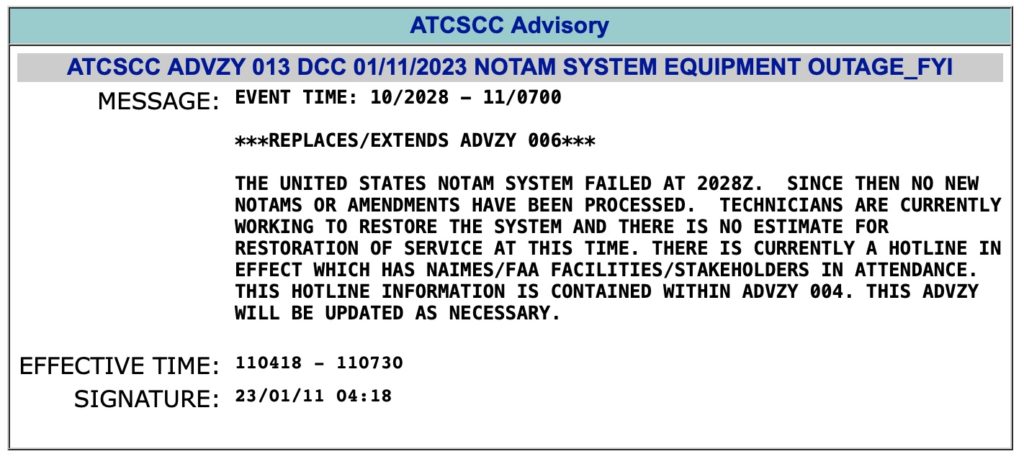
The Federal Aviation Administration issued an advisory at 4:18 am Eastern Time, saying the Notice to Air Missions (NOTAM) system had failed. All flight departures were temporarily halted. By 9 am, flights were slowly getting back on track, the agency said later this morning.
“Normal air traffic operations are resuming gradually across the United States following an overnight outage to the FAA’s Notice to Air Missions (NOTAM) system that provides safety information to flight crews. The ground stop has been lifted. The agency continues to look into the cause of the initial problem.”
This was the first time all domestic flights were grounded since Sept. 11, 2001, after the terrorist attack on the United States. Critics are laying the blame at the feet of Secretary of Transportation Pete Buttigieg.
“Biden’s FAA set ‘racial equity,’ ‘inclusion,’ and ‘environmental justice’ as its top priorities. Now, it can’t keep our planes in the air. Wokeness is always a weapon for making everyone’s lives worse,” wrote conservative Charlie Kirk, referencing the FAA’s new top priorities, which are inclusiveness.