The group of citizens in District 16, West Anchorage, have chosen to appeal a Superior Court judge ruling that says Rep.-elect Jennifer Armstrong met the residency requirements when she filed for office in June of 2022.
Anchorage Superior Court Judge Herman Walker issued his ruling Monday, which gives the plaintiffs little time to get a ruling from the Alaska Supreme Court on the matter before legislators are sworn on Jan. 17 in Juneau.
Armstrong has given various accounts of when her actual residency in Alaska started, and Judge Walker appeared to be moved by her young-and-restless story of falling in love online with a man from Anchorage, and hooking up with him on a whirlwind trip, then eventually, after coming and going for a while, settled down, married, and had children with him. The question is: Did she move to Anchorage in May of 2019 or in June? Or was it July?
Briefs from the parties are due at midnight Wednesday. A schedule for hearing has not yet been published by the court.
Secretary of Defense Lloyd Austin has, under pressure from Congress, finally rescinded his Aug. 24, 2021 memorandum mandating that members of the Armed Forces under Department of Defense authority be vaccinated against COVID-19. He also rescinded the memorandum of Nov. 30, 2021, which attempted to force the vaccination of National Guard and Reserve personnel. That matter is in litigation as Republican governors have pushed back on Austin’s authority over National Guard and Reserves.
Austin is acting due to the requirement established by the National Defense Authorization Act for Fiscal Year 2023, signed by President Joe Biden on Dec. 23.
“The health and readiness of the Force are crucial to the Department’s ability to defend our nation. Secretary Austin continues to encourage all Service members, civilian employees, and contractor personnel to get vaccinated and boosted against COVID-19 to ensure Total Force readiness,” his press release said.
The memo gives commanders discretion about whether to deploy military personnel who are not vaccinated for Covid.
Mandates for other vaccines are unchanged, he said, as is “the ability of commanders to consider, as appropriate, the individual immunization status of personnel in making deployment, assignment, and other operational decisions, including when vaccination is required for travel to, or entry into, a foreign nation.”
Already, the military has lost more than 8,400 men and women who refused the Covid vaccination since Austin gave the order in August of 2021 to require all under his command to take the experimental vaccine. Many were separated for refusing to obey his order.
Those who were released have reportedly received honorable discharges or general discharges under honorable conditions.
Austin wrote that those who were discharged can petition their military service branch to ask for a change in the “characterization of their discharge” in their records, but he didn’t indicate what changes would be made.
Austin is the 28th secretary of Defense and serves on the National Security Council.
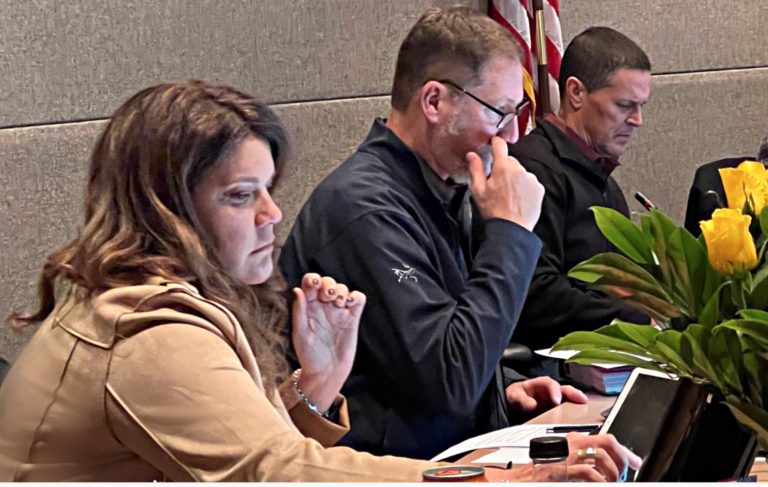
Chugiak-Eagle River Assemblywoman Jamie Allard was greeted at the Assembly Chambers on Tuesday with a vase of yellow roses, some red, white, and blue bunting, and people holding laminated signs with photo of her on them. It would be her last full Assembly meeting since she was elected to the body in in 2020.
Her supporters were there by the dozens to wish her well, and she took a moment of personal privilege to say goodbye to the Assembly as she launches into being a State representative for her conservative district in the Alaska Legislature. She noted that while she has disagreed with the Assembly liberal majority on many occasions, her work on the Assembly has helped her gain a better understanding of opposing points of view. And she expressed her love and appreciation to the community that has shown her such strong support during the numerous attacks on her by the Left over the past three years.
Allard read her resignation letter aloud:
“Thank you for being here this evening.
“As I begin serving my community in the Alaska Legislature in my upcoming role as a state representative for Eagle River, I must tender my resignation to this body, effective Jan. 17, 2023.
“It has been a great honor and privilege to serve the people of our community and to be the voice of Chugiak-Eagle River on the Assembly. I have learned much about the public process, and have grown as a lawmaker. Being a minority voice on the Assembly has been challenging, yet has expanded my ability to understand opposing points of view. This has been a wonderful honor and experience.
“I especially want to thank the community of Eagle River, Anchorage for their participation at Assembly meetings during the past many years. The public comment has been productive, informative, and earnest.
“Anchorage can be proud that the public cares so much about the future of this community that so many have given hundreds of hours of their time either attending meetings in person or watching them online. I understand it can be discouraging, especially when people’s opinions are unfairly cut short, called out as irrelevant, or when the clock runs out before they have had allotted time.
“I was proud to have stood for the values of individual liberty and responsibility, and to support the U.S. Constitution, even through the criticism I received at times for defending people’s constitutional rights, regardless of their political views.
“I have not always agreed with the direction the Assembly has taken, but I will continue to pray the Assembly becomes a more balanced body. I hope the Assembly will hear and listen to the residents of our great communities. The Assembly needs to get back to being a body in which we are respected and not disappointed in by so many.
“Most of all, I want to thank the people of Chugiak-Eagle River for their confidence in me, their support for me during tough debates or when I’ve been attacked, and how deeply they care about this community, all the way from Girdwood to the Knik River Bridge. I am devoted to listening to their concerns and making the best decisions that represent the people of my district.
“As I leave to take the oath of office in Juneau, I hope to continue to work with the Assembly to further what is good, what is responsible, and what is productive for our community and our great state. To my Assembly colleagues who will continue on, I wish for the wisdom, compassion, and common sense, in all the right portions to do this very difficult job.
“And to my beloved community, I want to say this: Government is where the disputes in our republic get sorted out so we can all live in peace and freedom, under the rule of law. We must remain engaged and informed. We must insist on transparency and limits on government.
“For in the words of Thomas Jefferson in his letter to Richard Price on Jan. 8, 1789: “‘Whenever the people are well informed, they can be trusted with their own government; that whenever things get so far wrong as to attract their notice, they may be relied on to set them to rights.'”
Carmela Warfield, the wife of the Alaska Republican Party’s Finance chair, Jason Warfield, has filed her letter of intent with Alaska Public Offices Commission, which is one way of saying she will file for a seat on the Anchorage Assembly. The filing period for the municipal election opens this Friday and the election will be held in mid-March, ending April 4.
Warfield’s candidacy may make it awkward for several major Republican leaders in Anchorage, including Mayor Dave Bronson, Assemblywoman Jamie Allard, Assemblyman Kevin Cross, and Assemblyman Randy Sulte, several legislators and others who have already endorsed Rachel Ries for the South Assembly District 6 seat.
Ries, an Afghanistan war helicopter pilot, has been a declared candidate in the race since May. She won 63% of the precincts in District 6 for her school board race last year.
Carmela is described in her bio as “a longtime Alaskan resident, local business owner and real estate investor. Prior to starting her company, Carmela was an executive with a career in the Banking and Finance industry for more than fifteen years. Carmela and her family are involved and passionate community members, with many years of service and support of Alaskan philanthropic and non-profit organizations. She is current Chair of the Board of Trustees of Special Olympics Alaska, and past Chair of the Board of Directors of Special Olympics Alaska. She is also a two-time Covenant House Alaska Executive Sleep Out champion.”
If past races are any indicator, having two Republicans vying for the South Anchorage Assembly seat now held by a liberal will almost certainly split the vote and hand the election to the incumbent, Democrat Suzanne LaFrance.
Mayor Dave Bronson announced that the former Golden Lion Hotel will be used as a rooming house to provide housing options for low-income residents and those experiencing homelessness in Anchorage.
“As we work together to make sure no one sleeps in the cold, I have directed my team to implement a plan that allows the former Golden Lion Hotel to be used in an efficient manner that helps as many people as possible,” Bronson said. “I am committed to working with community partners and the Anchorage Assembly to quickly bring this resource online.”
The former Golden Lion Hotel, located on the corner of 36th Ave. and the New Seward Highway, was purchased by the prior Administration following the sale of ML&P. The Assembly passed AR 2022-33 requesting the Golden Lion be used as a rooming house, that would serve as a place to house those experiencing homelessness.
The Administration has conducted a site evaluation of the building. Initial cost estimates to bring the building into compliance and suitable for housing, are around $700,000, but could potentially go higher because the fire suppression system is not fully operational.
The Administration is committed to working with the Assembly to identify a funding source to support the project.
The timeline to have the facility open is 4-6 months.
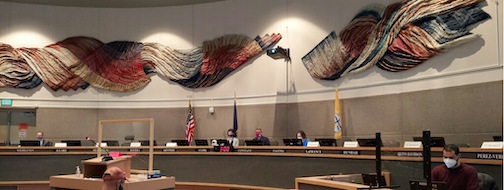
The Assembly of the Municipality of Anchorage will hold a public hearing on legislation at its regular meeting of Jan. 10, 2023. The Assembly holds its meetings at the Loussac Library in the Assembly Chambers at 36th and Denali.
Tonight’s meeting will also be the final meeting for Assemblywoman Jamie Allard, who is leaving to take up a position as representative in the Alaska Legislature. She will likely submit her resignation between now and Jan. 17th, when she is sworn in as a state representative.
Ordinance No. AO 2022-110, an ordinance of the Anchorage Municipal Assembly adopting the public naming panel’s unanimous recommendation to dedicate Tract A, Block 30, Third Addition (Plat 85-41) for permanent or long-term park or recreational purposes, to name the park “Johnny Ellis Rainbow Bridge Park”, to name the 15th Avenue/A Street Bridge “Johnny Ellis Rainbow Bridge”, and to waive the one-time present name use limitation in AMC 3.97.025A7., an ordinance offered by Assembly Vice-Chair Chris Constant and Assembly Members Forrest Dunbar and Daniel Volland.
The “Rainbow Bridge” name does not refer to anything about dogs that “went to heaven,” but instead refers to the fact that former Sen. Johnny Ellis, Democrat leader of the Senate, was gay, although not openly so. He died last year. Already the once-red fishing pole art on the bridge are now painted in different colors of the rainbow.
Constant originally wanted to name the Port of Alaska after Ellis, but has evidently settled for a rainbow bridge.
Ordinance No. AO 2022-116, an ordinance submitting to the qualified voters of the Municipality of Anchorage at the next Regular Election a ballot proposition to amend Anchorage Municipal Charter Section 13.11 to change management authority for the Municipality of Anchorage (MOA) Trust Fundfrom the Treasurer to a fiduciary board and establishing primary fiduciary duties and responsibilities associated with board management of the MOA Trust Fund, Department of Law and Finance Department/Treasury Division.
Ordinance No. AO 2022-117, an ordinance of the Anchorage Municipal Assembly amending Anchorage Municipal Code Sections 2.10.015 and 2.20.060 related to Assembly Offices and Staff, adding new Sections 2.20.045 and 2.20.075 regarding the Assembly Offices and corresponding Organizational Chart, and adjusting the range for Assembly Positions and making conforming amendments in Section 3.30.172, Assembly Chair LaFrance and Assembly Vice-Chair Constant.
Ordinance No. AO 2022-117(S), an ordinance of the Anchorage Municipal Assembly amending Anchorage Municipal Code Sections 2.10.015 and 2.20.060 related to Assembly Offices and Staff, adding new Sections 2.20.045 and 2.20.075 regarding the Assembly Offices and corresponding Organizational Chart, and adjusting the range for Assembly Positions and making conforming amendments in Section 3.30.172, Assembly Chair LaFrance and Assembly Vice-Chair Constant.
Ordinance No. AO 2022-118, an ordinance of the Anchorage Municipal Assembly submitting to the qualified voters residing in the Girdwood Valley Service Area (GVSA) at the Regular Election on April 4, 2023, a ballot proposition to add to the GVSA’s existing powers the power to provide services in support of policies that promote local housing and economic stability; and amending Anchorage Municipal Code Sections 27.20.110 and 27.30.020 upon voter approval of the ballot proposition, Assembly Chair LaFrance and Assembly Member Sulte.
Resolution No. AR 2022-400, a resolution adopting recommendations to be forwarded to the Anchorage Metropolitan Area Transportation Solutions (AMATS) Policy Committee regarding an amendment to the FFY 2023-2026 Transportation Improvement Program (TIP), Planning Department.
Resolution No. AR 2022-405, a resolution of the Municipality of Anchorage adopting the Municipality of Anchorage Public Transportation Agency Safety Plan.
Resolution No. AR 2022-413, a resolution of the Anchorage Municipal Assembly amending the 2023 General Government Capital Improvement Budget to include New Project – Mulcahy Stadium Improvements, Assembly Member Petersen.
Resolution No. AR 2022-414, a resolution of the Anchorage Municipal Assembly amending the 2023 General Government Capital Improvement Budget to includeadditional Parks & Recreation Projects, Assembly Vice-Chair Constant.
This ordinance means they’ll be able to tax people more.
The public may participate in person, through written comments, or by phone. There is no sign-up for in-person testimony – the Chair will invite the public to speak on a first come basis during the Assembly Meeting. Don’t sign up to provide phone testimony if you plan to attend in person.
The above-referenced document is available for examination at the Municipal Clerk’s Office, City Hall, 632 W. 6th Avenue, Room 250, Anchorage, Alaska and online by the Friday prior to Regular Assembly Meetings on the Assembly’s Meetings page, http://www.muni.org/Residents/Pages/MuniMeetings.aspx. To find the document, click on the agenda link for the meeting date on which the public hearing will be held.
Forty years ago I was in my political prime. I was a 37-year-old lawyer with a beautiful wife and three fine looking little boys. For services rendered in his 1978 reelection campaign, Gov. Jay Hammond had designed a seat in the State Senate especially for me, and I was ready to start my legislative career.
I had come back to Alaska in 1974 after law school with the intention of taking out Democratic U. S. Sen. Mike Gravel, a liberal and a whack job. But Frank Murkowski beat me to it, so now I had my sights on liberal Republican Sen. Ted Stevens. I couldn’t run against Congressman Don Young because Don was a good conservative and there would be no point to it.
I made no secret of my intentions, and I had my political game plan all worked out. In 1980, was chairman of Reagan for President, Alaska. In 1990, I would run in the Republican Senate primary hard to Stevens’ right, and attack his liberalism as being out of touch with the majority of Alaska’s Reagan Republicans.
A few months after I was sworn in to the State Senate, Justice Jay Rabinowitz handed down his opinion in Carpenter v. Hammond, 667 P. 2d 1204. It threw out Hammond’s 1980 reapportionment, and gave Democratic Gov. Bill Sheffield a free rein in reapportioning the whole state. Sheffield hated my guts, so my career in the State Senate would end in 1984.
To this day legal scholars have a hard time figuring out Carpenter v. Hammond. Legally, it’s nonsensical. But it wasn’t really a legal opinion. It was purely political.
My political momentum was stopped cold. I was never able to regain it, and I never ran against Ted Stevens.
For 40 years, Alaska’s Supreme Court has been faithfully fulfilling the Rabinowitz legacy of left-wing political activism and judicial imperialism. Republican Governors have attempted to appoint conservatives, but have been stymied by the lawyer-dominated Alaska Judicial Council, which refuses to nominate them.
They’re trying it again right now, giving Gov. Mike Dunleavy a list of exclusively leftist activist nominees, all in the mold of Jay Rabinowitz.
But this year there’s a difference. Dunleavy is the first two-term Republican governor in 44 years, so he doesn’t have to worry about reelection. The leftist lawyers and media can hold their breath, roll on the floor, and turn purple, but he doesn’t have to pay any attention. It’s an historic opportunity, which let’s hope he takes advantage of.
He doesn’t have to appoint any of these people. He can just say no.
Fritz Pettyjohn served in the Alaska Legislature in the 1980s and writes the blog ReaganProject.com.
Recently several decisions made by Republicans in the Republican Party, Alaska State Senate and U.S. Congress have led me to this question. Who are we?
As many of you are aware, I have known Craig Campbell for many years and respect him greatly. I just don’t agree on his recent assumption about why we should remove and pause the party censure.
I have served on the Republican State Central Committee since 2003, first as chair of two different districts and since 2008 as president of the Anchorage Republican Women’s Club.
I was out of state for the December meeting and therefore wish to address Craig Campbell’s large assumption in Must Read Alaska, where he stated that since both Sen. Lisa Murkowski and Sen.-elect Kelly Merrick won their seats, and other Republicans lost theirs, the censures passed earlier were ineffective. (The censure against Murkowski had been overwhelmingly approved by the SCC with Craig’s vote in support).
Craig Campbell is respected by many in the party, myself, included. So, when he makes these statements, he has much influence. To say I was shocked would be an understatement. Believing this to be a rather large assumption, I would like to see Craig’s data supporting his statement.
After discussion with some very good data people in and out of Alaska, they would say the censures had very little effect either way. People further stated most of what the SCC does is really only noticed by a small “informed” group of Republicans. They assured me that such a small group would not affect whether Lisa Murkowski or Kelly Merrick won or lost.
As I remember, the camel that broke most everyone’s back in the Republican leadership of the4 party was Lisa Murkowski’s voteto not confirm Supreme Court Justice Brett Kavanaugh, and then voting to impeach Donald Trump, a sitting Republican president.
Then, in the November 2022 election, she endorsed the democrat in the U.S. congressional race. No one believes her censure would have changed that. It seems she just needed those rural votes because of a Democrat in her own race.
Kelly Merrick’s censure came from within her own district, when during last session she joined a coalition with Democrats and left many of her fellow Republicans in the minority.
So, below are my assumptions of why Lisa Murkowski and Kelly Merrick won and why other Republicans may have lost. I have tried to base my assumptions on facts and data when possible.
#1 Ranked Choice Voting
Everyone knows that Sen. Lisa Murkowski was behind the ranked choice voting initiative. She knew there was no way she would make it through a Republican primary again, when for the first time since 2010 she had a strong candidate as an opponent. She knew she couldn’t do another write-in, so why not just change the whole voting system in Alaska? Legislating by petition is rather easy here if you have the money. It didn’t seem to matter to her what affect it might have on other Republican races.
So, with millions of outside dark-money, it passed. This would allow her a way to avoid a Republican primary and get all her Democrat votes to count. Big assumption? I’ll say it has better odds than the theory that being censured caused Republican losses.
#2 Redistricting
Every 10 years we go through redistricting. Once again, the Democrats beat the hell out of the Republican Party in getting people to testify. Yes, we had three Republicans on the board, but they were not always unified on votes. Several of us did everything we could to get people to testify. I alone testified five times. Day after day we sat and heard many Democrats testify about their chosen maps. Republicans usually had around 2-3 people. We thank those district chairs that did help and wonder where the rest were.
With Republicans not united on the Republican House Districts, the Democrat map won. In the Senate pairings, we did somewhat better, but once those pairings were passed out of committee, the Democrats sued. Of course, the Alaska courts sided with the Democrats and their Senate pairings were accepted. This left many of our strong Republican districts at risk for flipping.
It was rather obvious, some Republican candidates joined with the Democrats to win their Senate seats. Is it possible that Kelly Merrick being married to a union boss, and Cathy Giessel holding a fundraiser with Democrat Matt Claman had more to do with their winning with the help of Democrat money than one of them being censured?
#3 Get out the vote
If as was stated by Craig Campbell, this was the largest ever voter turn-out effort by the GOP, then it failed. This election was the lowest voter turnout ever in the state.
Maybe the Party needs to take a closer look at its efforts and analyze why it didn’t work. Exactly what efforts were made by the party on behalf of Senate Candidate Kelly Tshibaka? Could it be the dismal losses of the past six years under the current RNC Chair Ronna McDaniel? When she was elected, Republicans held the presidency, Senate and House. The results in the November election tell me we need to look at a new direction for our party.
#4 Outside Money
Conservative Republican candidates who lost were fighting huge amounts of outside money. In the Alaska Senate race, Kelly Tshibaka had $9 million spent against her by Senate Republican Minority Leader Mitch McConnell and the Senate leadership to ensure Sen. Lisa Murkowski won. His commercials against Tshibaka were relentless, and some of the dirtiest anyone has ever heard.
I wonder what would have happened had he spent $9 million to defeat Lisa Murkowski? Are we to believe actions like this do not make the average conservative voter disgusted with the party and maybe not show up to polls?
Many of us are proud of Kelly Tshibaka’s percentage of votes after millions were spent to defeat her. I have heard some say we lost money when we censured Murkowski. Exactly what money are they talking about? Puppet money?
In some of our state races the same was happening. Sen. Mia Costello had millions of outside monies spent against her to elect Democrat Matt Claman.
A large LGBT outside group sent funds to four LGBT candidates in Alaska, and three of them won. I am sure other national Democrat money was being put in many of our races to ensure Republican lost.
Since the censure “removal” several more disturbing things have happened in our party both in AK and nationally.
11 Republicans were elected to the AK Senate. That formed a Republican majority but instead eight of those 11 decided they didn’t really like conservative Republicans and instead formed with Democrats for a Democrat led coalition, with the most powerful committee chairs being held mostly by Democrats.
Recently Congress had 12 Republican senators, and a whopping 39 Republican congressmen, vote for the so-called Respect for Marriage Act. It was legislation not really needed, but pushed by the LGBT movement. This now puts all religious groups at risk for lengthy lawsuits. Both of our US Senators voted for it.
The US Senate, including 18 Republicans, just voted for the $1.7 trillion omnibus bill, one of which we just re-elected.
In closing, this leads me back to my original question in the headline: “Who are we?” Many of us believe we are our party platform. Is it wrong to expect the same from those we elect? Is not a censure letting an elected official know we don’t like their actions against our platform? Is it not a way to hold them accountable?
We, as a party, spend many hours writing our platform at state conventions. Should we not ask candidates to read and support them after the convention?
I am one that believes we stand for something, or we stand for nothing at all. Did many of our voters just stay home on Election Day because they don’t see Republicans standing for anything? Are we just words but not action? These would be my assumptions. I hope I have convinced you my assumptions are worth considering.
Judy Eledge is the chair of the Anchorage Republican Women’s Club and a longtime activist in the Republican Party of Alaska.
After three days and no action, the Anchorage Municipal Clerk has posted on YouTube the Anchorage Assembly’s interviews with the five candidates for the vacancy created by former Assemblyman Forrest Dunbar, who has gone on to become a state senator. The Clerk, who works for the Assembly, is supposed to make all meetings open to the public, even those who cannot attend them in person, by posting videos of the meetings on YouTube.
On Friday, the Assembly said the interviews would be posted, and yet they were not, leading Must Read Alaska readers to wonder why, over the weekend, they could not access those interviews, but instead could only access the final Friday vote that put Assemblyman Joey Sweet into office until April 25. The situation has since been rectified.