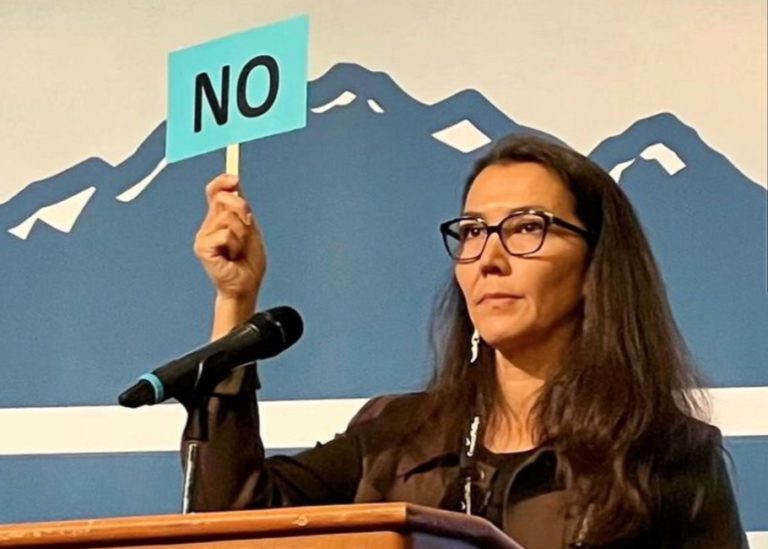
Scott Kendall, the lawyer and architect of the ranked choice voting method (Ballot Measure 2) Alaska now uses in its elections, is a well known supporter of Sen. Lisa Murkowski, Rep. Mary Peltola, and Kendall’s former boss, Bill Walker, the failed governor who left office in disgrace in 2018. Kendall represents all-things-Democratic Party. He supports all the Democrats on the ballot and actively works for their elections.
But Kendall didn’t do any of his candidates a favor by bullying a working-class Anchorage man who was simply participating in democracy and waving signs as a volunteer after work for the man’s preferred candidate, Nick Begich for Congress.
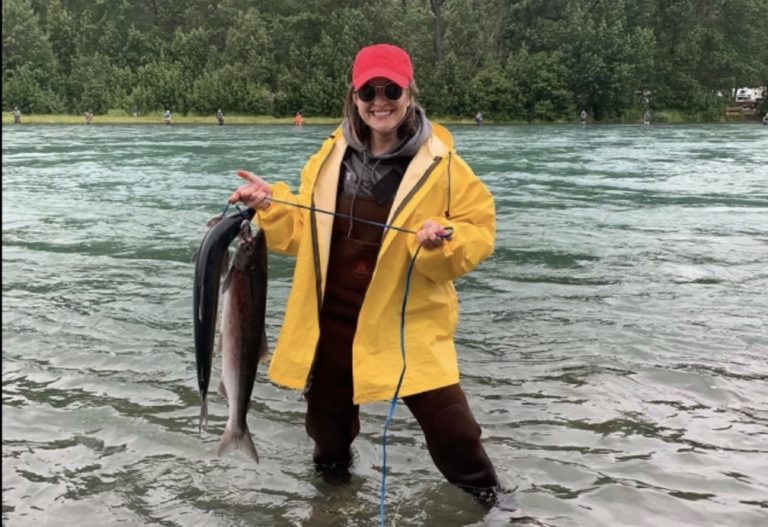
A member of the Young Republicans Club, the young man is 22 years old and works four jobs to help his family out, especially since his mother’s house burned down. He went straight from work with his warm “security” jacket on and waved signs for Begich at the corner of Northern Lights Blvd. and New Seward Highway with about a dozen other citizens.
The working man who was picked on by Scott Kendall for having a job.
Kendall commented on Twitter, “Good thing @NBegich has a security detail for his sign waving! Shades of Joe Miller…?” referring to former Senate candidate Joe Miller and his famous entourage of Drop Zone security personnel.
Ryan McKee, president of the Young Republicans, noted that the young man took it in stride, and after finding that he was attacked by Kendall, decided to go make get-out-the-vote phone calls all evening for Gov. Mike Dunleavy. The working man with four jobs said that with “the little time I have, I do what I want.”
“But Bill Walker it would be great if you kept your staff under control and refrain from these petty attacks on really great people,” McKee commented on social media.
In Alaska, Kendall represents the “elitist cabal” that former Democrat U.S. Rep. Tulsi Gabbard was referring to when she quit the Democrat party last month. Disdainful of working people who hold jobs and try to support themselves and their families, Kendall typifies the divide between the snarky, Twitter-obsessed lawyer class and the workers of America.
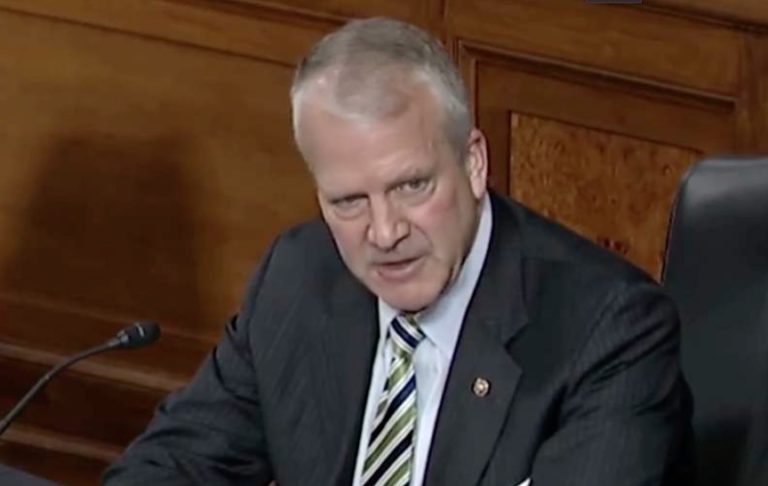
Kendall is behind a group that has been harassing the campaign of Gov. Mike Dunleavy with “law fare” legal complaints to try to tie up Dunleavy’s campaign in court and prevent them from being effective against Kendall’s favorite candidate, Walker.
As a legislator, I am frequently asked whether or not Alaskans should vote this week to hold a state constitutional convention here in Alaska. As with most questions that end up on the ballot at election time, there are strong proponents of the idea, and strong opponents as well. Owing to the great interest in the question from many of those I represent in the legislature, and primarily for their sake, I will do my best to explain how I see it.
I should note that what I am about to share is unlikely to be picked up and broadcast by either the “Convention YES” or the “NO on 1” camps because my purpose in writing is not to direct voters into either camp. In 2012, the last time the question was on the ballot, Alaskans voted 2 to 1 against calling a constitutional convention. In my district, the vote was even more lopsided at 2.5 to 1. Owing to the Convention YES campaign, I expect the Yes votes in my district to be higher this year, but there remains a great deal of confusion over what exactly it is that those who vote Yes are voting for.
On March 19th 1955, the Alaska Territorial Legislature issued a call for a constitutional convention to be held that same year. Elections were held, and 55 delegates were chosen. The convention was in session for 76 days and held public hearings over a 15-day period. After 220 hours of plenary sessions, 54 of the delegates voted in favor. One delegate, Ralph Robertson, refused to sign. On April 24th 1956, Alaskans voted overwhelmingly to ratify the Alaska Constitution.
It has continued, largely intact, since that time.
The desire for statehood was a driving force in the legislature’s decision to call a constitutional convention in 1955. I believe the best argument for a convention today, which I hear very few people actually making, are the many profound changes that Alaska has undergone over the last 67 years.
The constitutional convention in 1955 was hardly a partisan affair. It didn’t need to be. Alaska was a Democrat stronghold. When the Alaska State Legislature held its first meeting in 1959, there were 18 Democrats and two Republicans in the state senate. The Alaska Constitution largely reflected the thinking of Democrat voters at the time.
Fast-forward to 2022; the last time Alaskans elected a Democrat majority in the state house was three decades ago. The last time they elected a Democrat majority in the state senate was nearly 50 years ago. Today, Republican voters outnumber Democrat voters by nearly 2 to 1, Nonpartisans outnumber Democrats, and most Alaskans choose not to declare an affiliation with any of the parties.
A lot has changed in 67 years.
One thing that hasn’t changed is Democrat control of the Alaska Judiciary. Article IV, Section 8, of the Alaska Constitution guarantees that members of the Alaska Bar Association will always have a monopoly on who is eligible to serve as a superior court judge or a member of the Alaska Supreme Court. There are 12 members of the Alaska Bar Associations Board of Governors. Three members are non-attorneys appointed by the governor and confirmed by the legislature. These are the only three Republicans on the 12-member board.
Even if Alaska were to one day be the most Republican state in the country, absent a change to the Alaska Constitution, Republicans would never be in a position to choose new judges or who sits on the Alaska Supreme Court. Democrats put a lock on that in 1956.
Likewise, that same supreme court has also sought to put a lock on the constitutional amendment process through the legislature. The Alaska Constitution provides in Article XIII, Section 1, that the legislature may amend the constitution by a two-thirds vote of each house at any time. What this means is that at least 41 out of 60 legislators must vote to send a constitutional amendment to the people for ratification. Needless to say, it doesn’t happen very often. In the case Bess v. Ulmer, the Alaska Supreme Court opined that this hurdle was not high enough, and sought to establish a higher one.
In response to the legislature passing a constitutional amendment to limit the power of the court, the court discovered a new definition of the word “amendment” that would limit the legislature to passing only those amendments that the Court itself approved of. Henceforth, the Alaska Supreme Court opined that it could veto any amendments passed by the legislature that the court found to be either “quantitatively” or “qualitatively” (or a combination of both) a “revision”, and therefore no longer an “amendment”. In doing so, it struck down an amendment that would have added less than 65 words to the Constitution.
To this day, whenever a legislator proposes a constitutional amendment, on whatever topic, the legislature’s attorneys dutifully provide a warning label that the court may, for reasons unknown, deem that amendment to the constitution to be “unconstitutional”.
Even a cursory review of the constitutional convention debates shows that delegates understood that the legislature had the power to pass an amendment that would eliminate the judiciary branch in its entirety! (See the remarks of Delegate McLaughlin, Chairman of the Committee on the Judicial Branch appearing on page 3,425), and that the legislature would need the authority to determine how quickly such a wide sweeping amendment would go into effect.
Effectively, the supreme court has now assumed responsibility for passing amendments to the constitution unilaterally through court decisions. If the legislature desires to pass an amendment without obtaining the consent of the court, the court points to a constitutional convention as the only avenue still available to the people and the other branches of government. Meanwhile, the court has declared that it alone is “under a duty to develop additional constitutional rights and privileges under our Alaska Constitution…” (Valley Hosp. Ass’n v. Mat-Su Coalition).
As Alaska has moved further and further away from the Democrat stronghold it was in the 1950s, the court has responded by stripping more and more power from the other branches of government and from the people, turning on its head what convention delegates approved and the people ratified in 1956.
Some will say “now isn’t this exactly the sort of situation that calls for a constitutional convention.” Perhaps. But there’s a bit more to it. Many, perhaps even most of those advocating for a convention, point to some way or other one of the branches of government isn’t following the constitution; the courts are reinterpreting (rewriting) the constitution, the governor is misappropriating the PFD, legislators aren’t following state law dealing with limiting sessions to 90 days, etc.
Let us assume for a moment that these charges (or others like them) are true, and that violations of the constitution are taking place. If the constitution is being stretched or broken, how will rewriting the constitution at a convention solve for that? What will stop these same parties from stretching and breaking whatever changes are approved at the convention?
Somewhere along the way, many Alaskans came to find misplaced comfort in the myth that the constitution is a self-executing document; able to defend itself against those who would violate it. America’s founders were under no such illusion. The father of the Constitution, James Madison, was certainly not of that opinion. He referred to the Constitution as a parchment barrier. Unless the people are committed to its defense, its ability to stop government overreach is paper-thin.
The people can take steps to defend their Constitution at any time, but there is no certainty that they in fact will. In fact, so many of the proposals for how to fix government today; voting the bums out, supporting a particular political party, filing lawsuits, and yes, even the calling of constitutional conventions, all distract from the much more difficult work that must precede each of these things if they are to be effective.
To paraphrase Michael Boldin, founder of the Tenth Amendment Center, when individuals in government exceed their constitutional authority you aren’t supposed to wait some number of years to be able to elect someone else who will hopefully do better. You aren’t supposed to wait years until a friendly judge or justice finally agrees that they were out of line and its ok for you to be free again. Those are all passive approaches to government overreach, and passivity only invites more and further overreach. In a constitutional republic, all public officers and all naturalized citizens take an individual oath to support and defend the Constitution because they all have an active role to play in its defense.
It could be that the spirit that currently animates the Convention YES camp will develop into that type of resolve. I believe that is what many of us are hoping for, but it won’t simply happen by itself, even if Alaskans approve a convention on Tuesday. Here are some of the obstacles that Alaskans will need to be able to navigate if a convention is to be successful.
The first and most obvious challenge will be the election of delegates. Some today, rightly blame legislators for the current mess and hope to exclude them from participating in a convention. This is a historical and a practical non-starter. In 1955, 10 legislators were elected as delegates, several more ran and lost, and eight recent former legislators were also elected as delegates. The irony is that federal law at the time expressly prohibited current and many former legislators from being elected as delegates. Congress had to pass a law specifically exempting Alaska legislators from the prohibition, and it did.
The Alaska Constitution also now specifically exempts legislators from such prohibitions. In short, if they want to run, they can. But the idea of excluding legislators is also a non-starter for an entirely different reason. The people are the ones who elect legislators, and the people are the ones who elect delegates. If you are trying to devise a system that prevents the people from being able to elect the representatives and delegates they want, you aren’t just excluding legislators, you are actually excluding the people themselves from the process, and that’s a recipe that quickly departs from the notion of having a constitutional republic in the first place. For better and for worse, the people stay a part of the convention process, and so do at least some of the legislators.
I’ve heard some conservatives propose simply not voting to elect any legislators that run for delegate. That’s one approach. Just realize that if Democrat legislators run and no Republican legislators run, the only legislators elected to be delegates will be Democrats.
Legislators will also be involved in passing the law(s) that will determine how a convention will take place. Someone needs to decide how many delegates there will be. Someone needs to decide how those delegates will get elected and which parts of the state they will represent. In 1955, the delegate elected with the fewest votes was Michael Walsh, who was elected as a write-in candidate with only three votes following the death of another delegate. Someone will need to sort out what happens when delegates die and so forth, and the Alaska Constitution entrusts those decisions to the people’s elected representatives in the legislature.
Because of the First Amendment (see Citizens United), money will also be part of the process. The value of the Alaska Permanent Fund currently sits at more than $70 billion. The constitution is what determines how and when that money can be spent. I don’t know, but Chuck Schumer or George Soros or any number of other political figures in Washington may have some ideas on how they would like to see that money invested and spent. If so, they might be willing to spend a few million to try and help delegates get elected that align with their ideas.
Some have suggested that a novel approach to electing delegates can be chosen which will limit the influence of outside money and current political figures. Perhaps such an approach could be devised, but it would require convincing a majority of legislators to pass such an approach into law, and few politicians are keen on passing laws that limit their own power and influence.
And there’s the rub. Nothing about the project of curbing corruption in government is easy. There’s no silver bullet that will stop corruption in its tracks or halt government overreach, much less turn it back. Holding individuals in government accountable for their actions is the only way. It’s the path forward until there’s a convention, it’s the path forward during the convention process, and it’s the path forward after a convention has done its business.
But it’s also the least attractive option for those in Juneau and also many in the public who see pushing back against government dysfunction as a colossal waste of time. So the dysfunction worsens and the calls for relief grow ever louder. One day, Alaskans will pull the trigger on a convention. If I were a betting man, I would put my money on Alaskans calling a convention through their legislators. Something that neither camp talks about is that the constitution gives legislators the ability to call a constitutional convention at any time.
Of course, its easier for some legislators to downplay that option, blame their troubles on the constitution itself, and tell the public that the only path forward is for the people to solve their problem by voting for a constitutional convention. Of course, if the vote on Tuesday is NO, it would not surprise me at all if some of these same politicians spend the next 10 years talking about how “the people have spoken” and that they couldn’t possibly go against the will of the people and trigger a convention through the legislature.
Will these politicians be held accountable by the people? Only the people can decide that question, and don’t look for help from those connected to Juneau. Politicians, legislative employees and their family members have a vested stake in the status quo (even those of us who are fighting against it every day).
The legislature could be putting the breaks on things like judicial overreach through laws limiting the jurisdiction of the courts, cutting their budgets, and beginning impeachment proceedings against the worst offenders. Instead, legislators routinely ratify such abuses by voting to approve the money that permits them to continue. Some may try to blame the constitution for that, but it’s not the constitution’s job to make politicians follow it. It’s the politician’s job to keep their oath, and it is the responsibility of every Alaskan to call them to task when they do not.
David Eastman is a state representative for Wasilla, District 10.
There were things that were a lot more important than campaigning this fall for Alaska Gov. Mike Dunleavy.
In mid-September, Dunleavy made a decision, because there was only one right decision for him: The people of Western Alaska needed him to be focused on their major 100-year disaster. He needed to have a steady hand on the wheel, not going to meet-and-greets and fundraisers.
The storm that hit villages on the coast of Alaska on Sept. 17 knocked homes from foundations and peeled apart the breakwaters that protected tiny traditional communities. Typhoon Merbok, with its 50-foot waves in the Bering Sea, put communities like Nome, Stebbins, Hooper Bay, and Koyuk at extreme risk, coming just weeks before winter set in.
Dunleavy, running for his second term, set aside campaigning on the road system, where there are lots of voters to talk to, and during three different trips over more than a month, traveled to the remote western villages of a few hundred people, just to make sure repairs were being coordinated, completed, and that the people were going to be safe this winter.
In many ways, rural Alaska is where Dunleavy is most at home, and for him, it was a travel back through his long life in places that most Alaskans have never seen.
Dunleavy sat down with Must Read Alaska to talk about the way the campaign was changed by the disaster. He first pointed out that today, Nov. 7, is the 35th anniversary of his marriage to Rose, the young woman he met in Noorvik decades ago.
The two married in Nome and raised their family in the Arctic. Rural Alaska runs through his veins and during his first swearing in ceremony, he went to Noorvik and Kotzebue for the historic occasion.
In his trips to the coastal villages this fall, Dunleavy reconnected with many people he knows from the far-flung region — people he taught in school, people who now have children of their own. He got caught up on elders who had passed, and people who have married and settled down. Most of all, he reconnected with the abiding optimism of the people of Alaska, where no matter how full the glass is, “it’s always at least half full,” he said, explaining the hope and sense of community present in the villages that dot the big expanse of Alaska.
As the weather in Western Alaska hovers in the 30s, the rebuild continues. As of last week, FEMA had dispersed over $4.6 million in individual assistance to survivors of the storm, $3.1 million in other needs assistance, which is for essential personal property loss and subsistence gear, and $1.4 million in housing repair funding.
The state Division of Emergency Management continues to purchase building materials and transport them to communities throughout the region, as weather allows air cargo flights to land. Partners are assisting with home repairs, including Native nonprofits like the Association of Village Council Presidents, Kawerak, private contractors through DOT, and the communities. The faith-based and volunteer organizations such as Samaritan’s Purse have all brought in volunteer skilled labor to assist.
Most of the roads that were damaged by the typhoon have been cleaned up, and have temporary or permanent repairs. The same holds true for public buildings that were damaged. Most are usable.
At this point, it appears about $40 million in damage was done to infrastructure throughout the region and some repairs will take years to complete. But community protection structures such as seawalls and berms are either completed or under way, in the event that other storms hit, until the sea and river ice is fastened to the shore.
In addition, approximately 120,425 pounds of food and 220,900 pounds of water have been donated and delivered throughout the area by the State of Alaska, volunteer agencies, regional Native corporations, nonprofits, and health corporations.
All of this is what Dunleavy has been spending his energy and focus on during what has been an anything-but-normal the campaign season, popping back to events on the road system when he is able.
When asked what was one of the most memorable things for him during his trip, he said that landing in Koyuk and being able to hold a grandchild of one of his former students stands out as particularly moving.
“This is the next generation for Koyuk, and the next generation for Alaska,” Dunleavy said. He also remembered meeting with the mayors of the villages, and said that for so many of them, they expressed how resourceful their local people are, and how resilient they are, but how grateful they are for the State of Alaska’s assistance.
“If people have never lived in rural Alaska, it’s hard to describe it. It’s the heart of Alaska, it’s what makes us so different. Without rural Alaska, we’d still be a different kind of place, but it’s rural Alaska that makes us truly unique,” he said.
Maybe it’s grade inflation with the Democrats: The gap between how Democrats see the U.S. economy and how Republicans and independents grade may be one of the best clues to how Americans will vote on Tuesday.
According to Morning Consult polling, 70% of Democrats polled give the current U.S. economy an A, B, or C grade. Some 45% of Democrats award the economy a C grade, and only 11% of Democrats give it an F.
That compares to the grade that other voters give the economy — only 22% of Republicans give it a C or better, and only 34% of independents do. 45% of Republicans say the economy gets an F grade right now and another 34% give it a D.
Calculated as a whole, 56% of all voters give the economy a D or F grade.
When asked what influenced the grade, some 80% told the polling company that food prices were a major driving factor for their grade, followed by inflation (79%) and gas prices (75).
Morning Consult’s Consumer Confidence Index shows that consumer worries are up and sentiment down — even lower than it was during the Covid-19 lockdown policies of 2020, when the economy went into a tailspin with high unemployment, and an actual recession.
“In a survey conducted in the week leading up to the midterm elections, voters were most likely to give the current economy a bad grade, with 56% assigning a D or F, including about 4 in 5 Republicans, 2 in 3 independents and 3 in 10 Democrats,” Morning Consult reports.
“Though Democrats were the most generous group when it came to grading the economy, only 6% of Democrats awarded the economy an A, and those voters have expressed an increasingly dismal outlook in the past year,” Morning Consult reports.
On his campaign swing to help Democrats, President Joe Biden has said he will close down coal plants and that he has already put an end to drilling for oil on American land.
“No one is building new coal plants, because they can’t rely on it, even if they have all the coal guaranteed for the rest of their existence of the plant,” Biden said in a speech in California. “So it’s going to become a wind generation. We’re going to be shutting these plants down all across America and having wind and solar.”
On Saturday, White House Press Secretary Karine Jean-Pierre tried to walk the remarks back: “The president’s remarks yesterday have been twisted to suggest a meaning that was not intended; he regrets it if anyone hearing these remarks took offense.”
But that wasn’t the end of it. In New York, as he was stumping for Democrat Gov. Kathy Hochul, he made an impromptu comment to a climate protester at Sarah Lawrence College, when the president said he had ended drilling for oil.
“No more drilling,” he said. When the protestor persisted, he shot back, “There is no more drilling. I haven’t formed any new drilling.” And when the protester raised off-shore drilling in the Gulf of Mexico, he doubled down on shutting down off-shore fields: “That was before I was president. We’re trying to work on that to get that done.”
When Biden became president, the average price of gas was $2.37 per gallon, a price that has jumped to over $5 a gallon and is now down to $3.80 a gallon on average in the Lower 48. That lower price is due to the draining of the Strategic Petroleum Reserve by Biden over the past year. Biden has blamed the rise of gas on oil company greed, and Russia’s invasion of Ukraine. Last week he threatened to tax oil companies with a windfall profits tax if they don’t lower their prices. Oil is a commodity, the price of which is set by world markets in a free-market and highly volatile, highly regulated environment.
The Biden Administration has leased fewer acres for oil and gas drilling than at any time since World War II. Since he took office, Biden has also drained the National Petroleum Reserve, bringing it from 638 million barrels to 400 million barrels, a 37% decline and the lowest level since 1984.
Inventories of diesel are now below the accepted emergency levels, and the United States had just a 25 day supply of diesel three weeks ago, according to the Energy Information Agency, as reported by Business Insider. This is the lowest level of diesel supply since 2008, and the fuel is expected to be in short supply until at least summer, which may continue to put pressure on family budgets, as the cost of food and other goods will reflect higher shipping costs.
Rep. Liz Cheney, a Republican from Wyoming who was trounced in the primary election and will not return to Congress in January, is now campaigning for Democrats across various states, where she has been telling voters that Republicans are an existential threat to America.
Sen. Lisa Murkowski of Alaska has taken on a similar role, campaigning now with Rep. Mary Peltola, a far-left Democrat who believes in packing the Supreme Court, gun restrictions, a larger role for the federal government in abortions, and prioritizing fish for tribes.
Both Murkowski and Cheney are open about their disrespect for former President Donald J. Trump. Murkowski, in her efforts to get Peltola elected, would empower Speaker Nancy Pelosi, which many see is contrary to Alaska’s best interest.
Cheney has also endorsed Murkowski, who is challenged from the right by newcomer Kelly Tshibaka, and weakly from the Democrats by Pat Chesbro, who is running a campaign that is friendly to Murkowski.
Cheney was in central Michigan last week to campaign for Democrat Rep. Elissa Slotkin, who authored gun legislation that passed the U.S. House, which would require gun owners to keep their guns in safes if there are children in the home. This is legislation that Alaska Rep. Mary Peltola would support, as she advocates for mandatory gun safes. The late Rep. Don Young would not have supported such legislation, which holds parents criminally liable if a child uses a gun and harms someone.
Cheney has also publicly endorsed Ohio Democrat Rep. Tim Ryan, who is running against Republican J.D. Vance for the open seat for Senate left by retiring Republican Sen. Rob Portman. Cheney has also endorsed Virginia Democrat Rep. Abigail Spanberger.
Cheney has been a leading voice as vice chair of the House Jan. 6 special committee investigating the events of Jan. 6, 2021, when election protestors took over the Senate in an attempt to block the certification of the Electoral College vote that ushered in the Biden era.
Twitter will postpone the revamping of its “blue check” verification system until after Tuesday’s midterm elections. Twitter’s new owner, Elon Musk, announced he would end the current subjective system for awarding blue checks to accounts, amid scandalous reports now emerging that blue checks were being sold by Twitter’s workers under the table for as much as $15,000.
Blue checks indicate the account has been verified and is a status symbol that has been awarded to famous people. After Musk bought the social media platform, he announced that verified accounts would be charged $8 a month as a subscription to the verification service, and that new verification applications would be processed starting Monday, Nov. 7. But now, the switch to a subscriber model will start after the 2022 election is over.
“The blue Verified badge on Twitter lets people know that an account of public interest is authentic. To receive the blue badge, your account must be authentic, notable, and active,” Twitter’s help page still says, reflecting the old system.
Under the expiring rules, a Twitter account “must represent or otherwise be associated with a prominently recognized individual or brand, in line with the notability criteria described below. In addition to confirming the identity of the controller of the account, Twitter will Verify the following types of accounts based on the criteria described. In all categories, Twitter may independently confirm qualifying affiliation through business partnerships or direct outreach. For each category we may request the following type of information to confirm notability:
“News Coverage: Provide news articles that are about or reference yourself or your organization multiple times in the article. These articles must be from Verified news organizations and cannot be a blog or self-published content. Some categories may require you to submit articles that reference or link to your or your organization’s Twitter handle in addition to referring to you or your organization.
“Google Trends: Provide a link to a profile on Google Trends that depicts search history and is linked to the category in which you are applying.
Other industry specific references: Depending on the category, we may ask for more industry specific references such as a link to an IMDB page for entertainment.
“Follower or Mention Count: If your account is detected to be in the top .05% follower or mention count for your geographic location, it may count towards notability evidence for certain categories.”
Under the new system, people can ask for verification and go through a verification process even if they are not famous or “noteworthy.” But the new account will be a subscription rather than a caste system, Musk has said.
Some journalists who have been regulars at the back-alley fight club at Twitter are moving their social media accounts to a new site called Mastodon Social, a microblogging site where liberals have herded out of protest against the new owner of Twitter, who has ended the practice of banishing conservative voices. Anchorage Democrats have set up an account at Mastodon Social, as has Vicky Ho, the managing editor of the Anchorage Daily News, and reporter James Brooks of Alaska Beacon.
The world’s political leaders, including main actors such as Russia, Belarus, Ukraine, European Union, United Kingdom, United States and Canada, failed a trust giving to them by the world’s communities by allowing Russian/Ukrainian conflict to erupt quickly into a menacing threat of a global war with devastating consequences for all humanity.
As a result, we are witnessing a brutal hot war between Russia and Ukraine, a renewed cold war between the West and the East, and the emerging threat of World War III.
Indeed, the world’s political leaders and power elites have failed us with their lack of foresight, their ineffectiveness to compromise with opposing parties, and their truancy of an altruistic, cognitive wisdom (i.e., when we act to promote someone else’s welfare, even at a risk or cost to ourselves).
They should take a lesson on preserving peace from the ancient societies. One such lesson is found in the Siberian Yup’ik tale “The Two Strongmen and the Oldster.”
This tale falls into the genre of a magical tale about two strongmen weaned by animals. One of the men, Ettuvi, is from Kigi, Arakamchechen Island in the Senyavin Strait, Bering Sea. The second man, Kaynuvi, is from Yanrakinot, also in the Bering Sea, on the shore of the Senyavin Strait.
The tale was narrated in 1960 by A. Algalik, an inhabitant of Chaplino Village in the Chukchi Peninsula of the Russian Far East. It was recorded and translated into Russian by Gregoriy A. Menovshchikov and later translated into English and edited by Henry N. Michael and Alexander B. Dolitsky.
The Two Strongmen and the Oldster
“On the island of Kigi, there lived a man who had been suckled by a wolf. They called him Ettuvi—a Chukchi name meaning “of a dog.” And in Yanrakinot, there lived another man who had been suckled by a brown bear. They called him Kaynuvi—a Chukchi name meaning “of the wild deer.” From the milk of their animals they had derived enormous strength. They had never seen each other, but Ettuvi from Kigi had heard that Kaynuvi was very strong, and the people of Yanrakinot told Kaynuvi that there was nobody stronger in the world than Ettuvi. Through his people, each sent word to the other of his desire to compare their strengths in a great contest.
One day an old man from Yanrakinot was casting a fishing net into the lagoon. In the bottom of his baydara [an open skin boat with a light frame of driftwood and covered with split walrus hide, similar to Alaskan Yupik umiak] lay two hard poplavoks—hunting floats made of the skin of a variegated ringed seal. Suddenly, he caught sight of the two strongmen—Ettuvi and Kaynuvi—coming toward him.
“Watch us, old man,” they said, “as we compete in our strength. And tell us who is stronger!”
The old man replied, “Wait for me here while I place the net.”
Keeping his eyes on the strongmen, the old man spread the net slowly. While he worked, Ettuvi and Kaynuvi lay down on the sand, propped up their chins with their hands and talked peacefully to each other. From the sand, Kaynuvi picked up a bone from the joint of a walrus flipper and crumbled it into dust with his fingers. Ettuvi’s elbows rested on a float made of seal skin. He reached to pick it up to mend it, and had barely touched it when the float collapsed.
The little old man watched all of this out of the corner of his eye as he continued to work. When his net was spread, he said to them, “You have already competed. One of you has turned a bone into dust with his fingers, and the other, by just a light touch of his hand, has collapsed a float made of seal skin.
“Could you not, Ettuvi, say that your body is better at making dust of bones? And you, Kaynuvi, could you not say that your body is better at squashing floats of seal skin filled with air?
“Both of you are so strong that if you start competing you will kill each other. It will be better if you don’t fight! And you know you live in different villages!”
The strongmen listened to the old man from Yanrakinot. They did not fight. Each went his own way.
That is all. And that’s the way I heard it. The end.”
Clearly, a small minority consisting of members of the economic elite and policy-making networks, holds the most power — and this power is independent of democratic elections.
This power elite occupies the dominant positions in the three pillar institutions — state security, economic and political of the dominant and technologically advanced countries. Nevertheless, democratically elected officials must hold the power elite responsible for the atrocities we are witnessing today in Central Europe.
Indeed, I blame current world leaders for what is happening in Ukraine; for initially ignoring and now, actually, supporting all of it, regardless of its effects on the poor Ukrainian people and Russian conscripts used as simple political pawns.
World leaders cannot undo the devastation that has ransacked the people and communities affected by the Russian–Ukrainian war/conflict. However, with a concerted effort to focus to humanitarian values, an effort to compromise, and their determination to adhere to altruistic, cognitive wisdom, peace and stability can be restored.
Alexander B. Dolitsky was born and raised in Kiev in the former Soviet Union. He received an M.A. in history from Kiev Pedagogical Institute, Ukraine, in 1976; an M.A. in anthropology and archaeology from Brown University in 1983; and was enroled in the Ph.D. program in Anthropology at Bryn Mawr College from 1983 to 1985, where he was also a lecturer in the Russian Center. In the U.S.S.R., he was a social studies teacher for three years, and an archaeologist for five years for the Ukranian Academy of Sciences. In 1978, he settled in the United States. Dolitsky visited Alaska for the first time in 1981, while conducting field research for graduate school at Brown. He lived first in Sitka in 1985 and then settled in Juneau in 1986. From 1985 to 1987, he was a U.S. Forest Service archaeologist and social scientist. He was an Adjunct Assistant Professor of Russian Studies at the University of Alaska Southeast from 1985 to 1999; Social Studies Instructor at the Alyeska Central School, Alaska Department of Education from 1988 to 2006; and has been the Director of the Alaska-Siberia Research Center (see www.aksrc.homestead.com) from 1990 to present. He has conducted about 30 field studies in various areas of the former Soviet Union (including Siberia), Central Asia, South America, Eastern Europe and the United States (including Alaska). Dolitsky has been a lecturer on the World Discoverer, Spirit of Oceanus, andClipper Odyssey vessels in the Arctic and sub-Arctic regions. He was the Project Manager for the WWII Alaska-Siberia Lend Lease Memorial, which was erected in Fairbanks in 2006. He has published extensively in the fields of anthropology, history, archaeology, and ethnography. His more recent publications include Fairy Tales and Myths of the Bering Strait Chukchi, Ancient Tales of Kamchatka; Tales and Legends of the Yupik Eskimos of Siberia; Old Russia in Modern America: Russian Old Believers in Alaska; Allies in Wartime: The Alaska-Siberia Airway During WWII; Spirit of the Siberian Tiger: Folktales of the Russian Far East; Living Wisdom of the Far North: Tales and Legends from Chukotka and Alaska; Pipeline to Russia; The Alaska-Siberia Air Route in WWII; and Old Russia in Modern America: Living Traditions of the Russian Old Believers; Ancient Tales of Chukotka, and Ancient Tales of Kamchatka.
On Friday, the mid-afternoon line to vote at Anchorage’s Gambell Street polling location stretched out the door and into the sunny, chilly day. Voters had to wait a good half hour to get to a ballot.
As of Saturday, 62,847 Alaskans had already voted in the Nov. 8, 2022 midterm election, where a governor, a senator, and Alaska’s only congressional representative will be chosen, along with all seats for state House and Senate, except for Senate Seat T, the Nome-Kotz-North Slope area, which did not change substantially during redistricting.
That breaks down into 33,597 who have voted by absentee ballot, and 29,250 who have voted early in person. There are about 55,000 absentee ballots issued, which means another 19,000 or more have not yet been returned.
The number of total votes cast may be approximately 22% of the total expected by the time all the absentees must have arrived at the Division of Elections.
192,542 votes were cast in the Aug. 16 primary and special general election.
During the last comparable general election — 2018, a non-pandemic year and a midterm election — 285,009 Alaskans cast ballots for a 49.84% turnout.
If the turnout is comparable, then so far 22% of Alaska voters have already done their civic duty.
Rural Alaska, from Kaktovik to Adak, and all the villages in between, hasn’t shown up for the election yet, which is typical of those districts, where voters are not keen on early or absentee voting.
Bethel has the second worst turnout of any district in the state. That’s Congresswoman Mary Peltola’s hometown, although she actually lives in Goldenview, a south Anchorage area filled with luxury homes.
Turning out in higher numbers are voters on the road system. Homer District 6 has cast 2,818 votes, Kenai District 8 has cast 2,103, South Anchorage District 9 has cast 2,823, Eagle River District 23 has cast 2,349, House District 3 North Juneau-Skagway has cast 2,747 votes, while House District 4 Juneau Downtown has cast 2,608.
Unique on the road system is District 18, which is the area represented by Republican Rep. David Nelson. That strong military district that wraps around Joint Base Elmendorf Richardson has many soldiers and airmen living in it and often has a low turnout in the midterm elections; in fact, it nearly always one of the lowest turnout districts in the state. Only 639 have voted in that district, so far. Formerly known as District 15, it was once represented by former Rep. Gabrielle LeDoux, who now is in court for allegedly committing voter fraud. Only 3,600 people voted in that district in 2018. Nelson faces tough competition this year from two extreme leftists and turnout for Nelson will be critical, as the area now encompasses the more liberal-leaning Government Hill.