Sunday, August 16, 2026
Home Blog Page 546

Alaska’s minimum wage goes up to $11.73, Washington state’s will be $16.28

50

The Washington State minimum wage rate for nonexempt employees 16 years of age and older will increase 3.4 percent over the 2023 rate to $16.28 per hour in 2024.

Overtime exempt workers in Washington State must be paid at twice the annual minimum wage rate, regardless of employer size. McDonald’s restaurants in the Puget Sound area are recruiting entry level workers for $18 an hour.

Alaska’s minimum wage will increase from $10.85 to $11.73 an hour. Wages go up automatically after a 2014 citizen initiative passed. McDonald’s in Anchorage pays between $11 and $17 an hour.

The average annual pay for a “Livable in Seattle” is $64,489 a year, according to ZipRecruiter. That works out to be approximately $31 an hour or $1,240 a week.

According to ZipRecruiter, the average annual pay for a “Livable Salary in Alaska” is $69,341 a year, or about $33.34 an hour. This comes out to $1,333 a week.

Soldotna starts off year with drag queen ‘Ivanna Kishakock,’ drag queen story hour at library

87

The kids of Soldotna are not sheltered from the culture wars. Starting off 2024 with a bang, the drag queen community is returning to Soldotna, where the library will host a “drag queen story hour” and events will include several performances by men making themselves into grotesque representations of women.

The misogynistic-themed events include a trivia night and karaoke.

For parents who want to steer clear of the Soldotna Public Library on Jan. 6, there’s always the read-aloud with Mr. Wray at Nikiski Hardware Store on Saturday mornings, from 9-10 am.

Drag queens took over the public park in Soldotna during the summer and performed for children during Pride Month, much to the alarm of many parents in the area.

Standing room only: Soldotna residents come out in force against drag queen show for kids in park; new video emerges of drag queen going into ladies’ restroom

Soldotna permits drag queen shows for kids at outdoor stage next to park built for kids

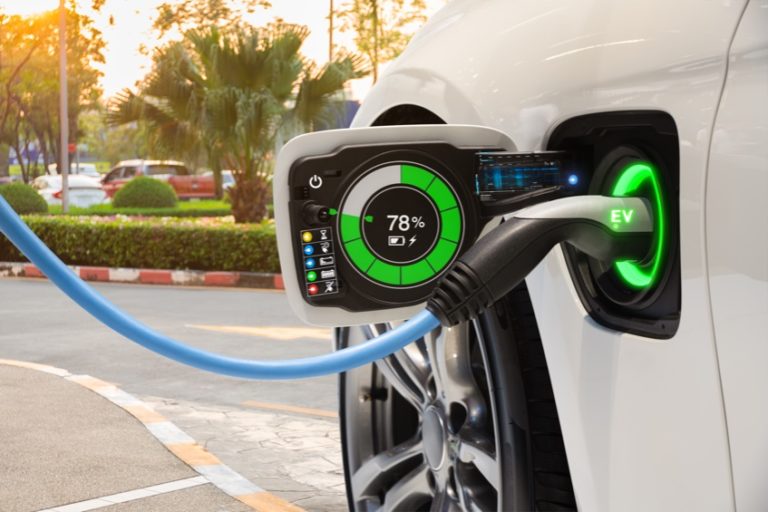
Range anxiety: Test shows EVs don’t meet EPA estimates

By BRETT ROWLAND |THE CENTER SQUARE

New testing shows that some popular electric vehicles fall short of their government-estimated driving ranges, underscoring anxiety Americans have about the range of electric vehicles.

The U.S. Environmental Protection Agency range estimates listed on electric vehicle window stickers and at fueleconomy.gov don’t have separate city and highway ranges, as they do with conventional cars and hybrids. Consumer Reports, the nonprofit research, testing, and consumer advocacy organization, put electric vehicles to the test.

To find out how much range EV models get in highway driving conditions, Consumer Reports put 22 of the most popular new EVs through a new highway-speed range test. The test involved driving fully-charged vehicles at a steady speed of 70 mph and only stopping when each vehicle’s battery was completely depleted and the vehicle was inoperable, according to the nonprofit.  

Nearly half of the 22 vehicles tested failed to reach their EPA-estimated ranges, but some exceeded those estimates. The highway range of the tested vehicles ranged from 202 miles up to 380 miles.

Most drivers travel relatively short distances on a daily basis and are highly unlikely to reach the range limits of most new EVs. But long road trips are a different story. We feel that consumers should have an idea of how far EVs can travel on a long highway-centric journey,” Alex Knizek, Consumer Report’s manager of auto testing and insights, said in a statement. “Range is much more important when you’re far from home and away from reliable charging.”

Vehicle range is a consideration for long-distance travel, as a man from the Chicago suburbs recently demonstrated on a Thanksgiving road trip to Detroit, as The Center Square previously reported.

Consumer Reports said going forward it will evaluate the highway range for every electric vehicle it tests. It also asked the EPA to add a highway-speed range test. Car and Driver and SAE International have made similar requests.

A 2022 Consumer Reports survey found range anxiety was a reason 54% of adults in a national-representative survey said would prevent them from buying an electric vehicle.

EVs have possible security vulnerabilities

By LAUREN JESSOP | THE CENTER SQUARE

The nation’s transition to electric vehicles must not only overcome power and charging station shortcomings, but novel security risks too.

Robert Charette, a longtime systems engineer, contributing editor for IEEE Spectrum, and author of “The EV Transition Explained,” told The Center Square recently that EV stations – of which Pennsylvania is spending hundreds of millions to build statewide – may be vulnerable to hackers. Software security issues will become more important as targets of opportunity increase. Concerns over connectivity exist as well. 

Charette notes that instances of EV charging stations being compromised are on the rise, and plugging your EV into one can expose it to cyberattacks. Cyberattacks on an EV station can also bleed into attacks on the electrical grid.

EVs contain software that controls their systems and establishes communication with charging stations via wireless networks – leaving them susceptible to a range of threats. 

Without proper security measures in place, charging station computer systems can be exploited by hackers who could gain unauthorized access, and potentially manipulate charging parameters or collect sensitive user data. 

Security breaches of EV chargers have already occurred and researchers have found critical flaws in many popular models of EV chargers. Cybersecurity experts at Sandia National Labs say if the EV charging security is not done properly, it poses a “catastrophic situation” for the US.

Most EV charging station authentication, customer payment processes, and locator apps are also reliant on the cellular network – posing challenges in areas with weak signal strength. 

“You can put in all the EV station reliability standards you want, but unless there is dependable cellular service by every carrier at every EV station across the United States, you’re out of luck somewhere,” Charette said. 

Advanced technology in the form of software for all things EV-related, and the electric grid itself, are required to make it all work. It is a “cyber-physical” system – one in which EVs dynamically interact with both energy and information systems to function, Charette says.

If you mess with information and energy, he said, “you are messing with huge segments of society.” 

Charette’s point about interconnectedness is proven out in the relationship between the increasing number of charging units and their impact on the electrical grid and local electrical infrastructures – which, by all accounts, need massive upgrades to support the extra energy required. 

“It doesn’t do any good if you have EVs in a neighborhood and your electric distribution company can’t support it,” he said. 

Reliability issues being experienced involve broken or malfunctioning charging ports, the lack of skilled technicians to repair them, and with no attendants on duty to watch over the equipment, cable theft is occurring. 

Much like catalytic converters being stolen for their rare metals, charging cables contain copper wire, and thieves are cashing in on them.

In a sort of a “chicken and egg” situation, without a reliable charging network, consumers may be reluctant to invest in EVs, while investors and businesses may be hesitant to commit resources to building stations without a substantial user base. 

Charette believes spring 2025 will be “where the rubber meets the road, or the bug is going to hit the windshield.” At that point, “we could be well on our path to EVs, or a new administration might change the EV policy direction completely,” he said.


California law mandating gender-neutral toy aisles goes into effect Jan. 1

By KENNETH SCHRUPP | THE CENTER SQUARE

California’s law requiring stores to include gender-neutral toy aisles goes into effect Jan. 1, with noncompliant stores to be fined $250 for their first violation and $500 for each subsequent violation, in addition to legal fees for the enforcing government attorney. 

AB 1084, passed in 2021, does not prohibit maintaining separate boys’ and girls’ sections, but does require that stores have a “gender neutral” section where toys traditionally marketed towards one gender or the other are placed together and provide a “reasonable selection.” The bill also does not specify what constitutes a “reasonable selection” or how the area is to be labeled at the “discretion of the retailer.” The law only applies to stores that are physically located in California, have a total of 500 or more employees across all California retail locations, and sell childcare items or toys. 

Stores that meet the above criteria and fail to comply can only be fined if the state attorney general or the local district or city attorney file a lawsuit against them, as there is no private right of action. Though the fines are low, the bill does authorize courts to make guilty parties pay for the government’s legal costs in pursuing the case. 

An analysis from the California Senate Judiciary Committee found the bill’s “open-ended language appears to be a deliberate choice” and noted that “well-draft [sic] legislation avoids language that is open to interpretation.” 

While the bill does not prohibit having boys’ and girls’ sections, a statement submitted by bill author Assemblymember Evan Low, D–Silicon Valley, suggests the intention of the bill was to encourage retailers to give up gendered toy sections. 

Combining boy’s and girl’s departments at retail stores with 500 or more employees into a “kids” department will most definitely make all kids feel welcomed,” wrote Low. 

Bill sponsor The Phluid Project, a business selling gender-neutral clothing and accessories, claims maintaining gendered toy sections “has the potential to cause emotional anxiety and gender dysphoria” among children, while supporting organization Equality California said, “Implying or stating that certain children’s products are only appropriate for certain genders stifles the ability of California’s youth to grow as their authentic selves, reinforces harmful gender stereotypes in the minds of people of all ages, and has measurable mental health implications.” 

Meanwhile, opposition from the Pacific Justice Institute claimed, “the author’s intent is to impose a de-gendered ideology and viewpoint on retailers” and that “parents do not need politicians’ help to pick out appropriate toys for their children.” 

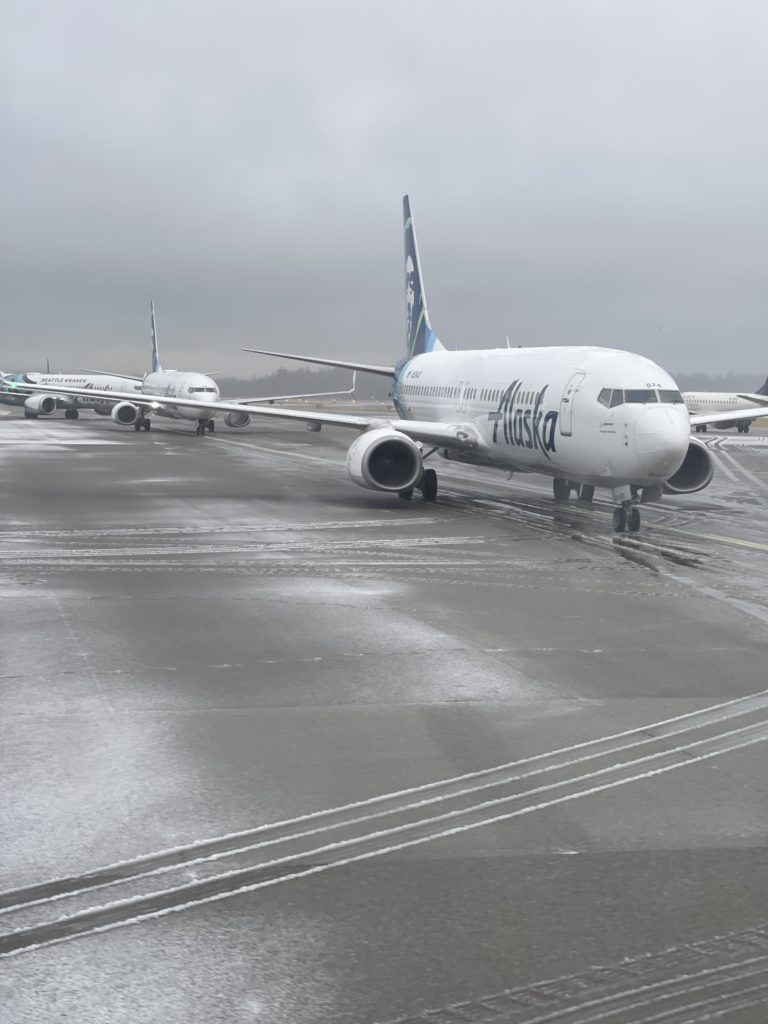
Alaska Airlines raises baggage fees next week

25

Inflation is in the air for 2024. Alaska Airlines will raise its baggage fees as of Jan. 2.

For passengers flying in coach who don’t have mileage status, the fee will go from $30 to $35. A second checked bag will go from $40 to $45. Bags in excess of that will be charged the same as they are now — $150.

Certain items, such as strollers, car seats, and mobility aids, are exempt from fees. Fees are also waived for Alaska Airlines credit card holders, Elite level Mileage Plan members, and US military personnel.

Merry Christmas and Happy New Year!

We’re giving politics a pause for a few days and hope all of the defenders of liberty and the Constitution will also take some time to celebrate the Savior’s birth and revisit the wonders of the world, as we share this rock that is spinning through space and time. Hold your family and friends close this week as we all close out the year and endeavor to do better in 2024.

As for this writer, I will be spending Christmas in a cathedral in Rome this year, as I am on a much-needed sabbatical. I’ll be back at my keyboard on Jan. 5, and will be ready to go as the legislative season gears up.

Thank you, all readers, commenters, critics, and friends, and especially financial supporters who make Must Read Alaska the lively, pithy, sometimes spicy and always the force for good that it is. While it is now under new ownership, it is going to come out of the gates strong in the new year with more writers and high-quality content that Alaskans crave and that you deserve from us.

Meanwhile, I hope you’re somewhere warm (but not too warm) and that you are as happy as a kid on Christmas morning, and that you connect with people who mean the world to you.

Merry Christmas to all!

— Suzanne Downing, founder and managing editor

America’s busiest northern border sector has had a 550% increase in illegal entries, mostly Mexican

By BETHANY BLANKLEY | THE CENTER SQUARE

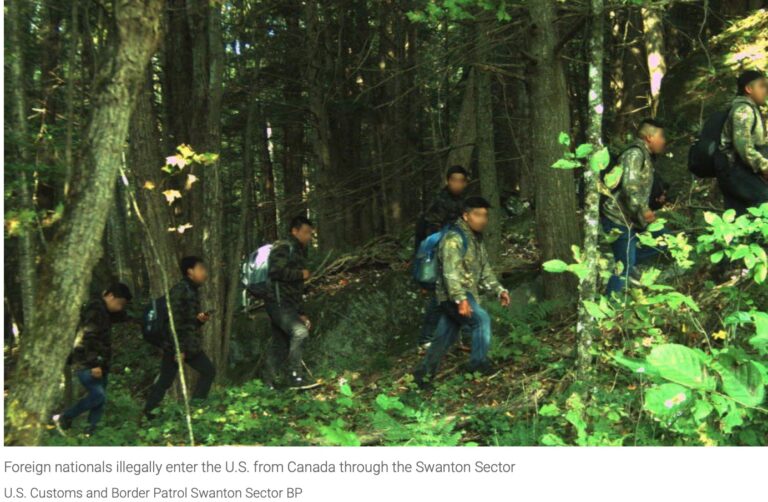
The busiest northern U.S. border area, called the Swanton Sector, saw a 550% increase in apprehensions in one fiscal year, according to new data.

Chief Border Patrol Agent Robert Garcia, who oversees the Swanton Sector, said Border Patrol agents saw “an astonishing 550% increase compared to last year by recording 6,925 apprehensions from 79 different countries between 10/01/2022 to 9/30/2023.”

This is consistent with data first reported by The Center Square of Swanton Sector Border Patrol agents apprehending more than 6,700 people from 76 countries and reporting at least 3,745 gotaways in fiscal 2023.

Gotaways is the official U.S. Customs and Border Protection term to define foreign nationals who illegally enter the U.S. and don’t turn back to Canada or Mexico. They illegally enter between ports of entry and seek to evade capture. Those in law enforcement have no idea how many there are in the U.S., or who or where they are. According to data previously published by The Center Square, they total an estimated 1.7 million since January 2021.

In a social media post, Garcia said the overwhelming majority of foreign nationals illegally entering his sector from Canada were primarily Mexican nationals (49%). The next greatest number of people came from countries from all over the world (18%), followed by Indians (14%), Venezuelans (10%), Haitians (5%), and Romanians (4%).

The majority coming through, as is the case nationwide, are single, military age men. The ones captured in person or on camera are mostly wearing camouflage, hoodies, and masks to hide their identity as they run through wooded forest to evade capture.

Garcia has long praised the relationship Border Patrol agents have with local residents, who he says have been instrumental in identifying suspicious activity.

Over the Thanksgiving weekend, residents in multiple communities reported suspicious activity, “which aided Swanton Sector agents in apprehending 71 subjects and confirming four illegal vehicle incursions,” he said, near ports of entry. These are record high numbers for a holiday weekend, according to Border Patrol data.

“If you see something, say something,” Garcia said. “Report suspicious border activity in Swanton Sector: 1-800-689-3362.”

Alaska and 20 other states sue Biden over unlawful climate rules for highways

25

Alaska Attorney General Treg Taylor and his counterparts in 20 other states are suing the Biden Administration over new highway emissions rules requiring state transportation departments to set and meet reduction targets for carbon dioxide — and to report their results to the federal government.

The Federal Highway Administration rule, effective Jan. 8, is part of President Joe Biden’s climate change regime.

Atmospheric CO2 is the primary carbon source and is a building block for life on the planet. An over abundance of it can act as a greenhouse by absorbing infrared radiation and holding warmth.

Congress has not given the federal government authority to regulate greenhouse gas emissions, the complaint says.

Although the new rule “certainly follows President Biden’s policy wishes … the Agencies simply do not have the authority to issue it. Congress has not given FHWA or U.S. DOT authority to regulate greenhouse gas emissions (‘GHG’). Nor can the Agencies compel the State to administer a federal regulatory program or mandate them to further Executive policy wishes absent some other authority to do so—which is lacking as to this rule. Furthermore, the Final Rule is arbitrary and capricious,” the complaint reads.

States suing Biden are Kentucky, South Dakota, Alabama, Alaska, Arkansas, Florida, Idaho, Indiana, Iowa, Kansas, Mississippi, Montana, Nebraska, North Dakota, Ohio, Oklahoma, South Carolina, Utah, Virginia, West Virginia, and Wyoming.

The complaint was filed in the U.S. District Court for the Western district of Kentucky, and asks the court to vacate the rule and bloc its enforcement.