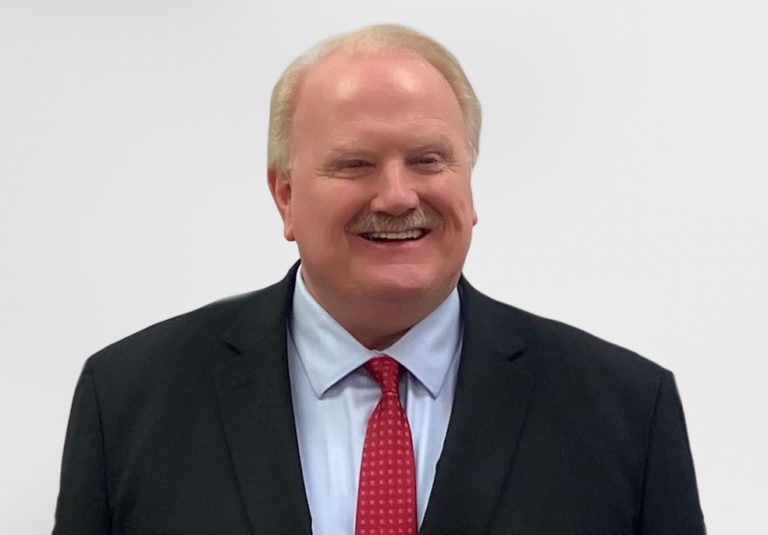
A brilliant brain surgeon. Former Secretary of Housing and Urban Development. Author, inspirational speaker, and a visitor to Alaska who was unceremoniously banned from speaking at an Anchorage public school.
Dr. Ben Carson is now reportedly on the short list for vice presidential nominee, should former President Donald Trump become the Republicans’ nominee, which appears likely.
Carson has a resume that puts him in the top one-tenth of one-percent, in terms of knowledge, skill, talent, and overcoming adversity. His life story started out in a single-parent home, where his mother raised him and helped him make the best of his early challenges.
When Carson was invited to Anchorage last year, Anchorage School Superintendent Dr. Jharett Bryantt canceled a school assembly that had been arranged for him at Mountain View Elementary School, a Title 1 school in Northeast Anchorage, where many children from lower-income families attend and where 91% of the students are minorities.
It was the beginning of the school year, Bryantt said, and Carson would be a distraction. Bryantt didn’t want to disrupt the pace of the first week of school.
Instead, organizers of the Carson visit — the Anchorage Republican Women’s Club — hastily put together a press conference with Gov. Mike Dunleavy and Dr. Carson was able to have an event for students at the local Boys and Girls Club after school.
That was in August. Today, Trump advisor Kellyanne Conway said on Fox News that Carson is the Trump insider favorite for vice president right now.
Charlie Kirk, of Turning Point USA, agreed.
“There are many good candidates for VP, but Dr. Ben Carson would be an amazing choice. He’s brilliant, he’s a devoted Christian, and he’s a man of honor and strong conservative principles. Dr. Carson is a great American,” said Kirk, who leads an organization that fosters conservative principles in public high schools and universities.
Carson has authored several books, including “Gifted Hands, The Ben Carson Story,” in which he describes how, as a boy, he did poorly in school and struggled with anger. He authored “You Have a Brain: A Teen’s Guide to T.H.I.N.K. B.I.G.” He recently authored a children’s book, “Why America Matters.”
He credits his mother, who worked three jobs and pushed her sons to do their best, for his successes in life.
In 1987, Carson, by then an established neurosurgeon, led a team of 70-member surgical professionals who separated the brains of conjoined twins Patrick and Benjamin Binder, who were joined at the back of the head. It was the first-ever surgery of its type.
Carson ran for president in 2016 and was the first presidential candidate to qualify for the Alaska Republican Party’s Presidential Preference Poll, a type of caucus-by-ballot that the Alaska GOP pioneered.
Immediately after taking office, the Biden administration pressured Amazon to not promote books that doubted the efficacy or safety of Covid-19 vaccines in early 2021.
The White House was concerned about books that contained “propaganda” or “misinformation,” according to Amazon company emails that were released by Ohio Rep. Jim Jordan, chair of the House Judiciary Committee and Subcommittee on the Weaponization of the Federal Government via subpoena.
On Monday, Jordan released ‘THE AMAZON FILES” on X/Twitter. They feature Andrew Slavic, the former Biden senior advisor for Covid-19, writing to the world’s largest seller of books that he found some of the books to be “concerning.”
“Who can we talk to about the high levels of propaganda and misinformation and disinformation of [sic] Amazon?” wrote Slavitt to Amazon on March 2, 2021. Later in the same day, he pestered the company: “If you search for ‘vaccines’ under books, I see what comes up. I haven’t looked beyond that but if that’s what’s on the surface, it’s concerning.”
An Amazon thread of emails shows that the company would then covertly take action.
“We will not be doing a manual intervention today,” says one email between Amazon executives. “The team/PR feels very strongly that it is too visible, and will further compound the Harry/Sally narrative (which is getting the Fox News treatment today apparently), and won’t fix the problem long-term … because of customer behavior associates.”
One Amazon official noted that another employee was given “very direct guidance to the teams to be boring and not do anything that is visible and will draw more attention.”
What Amazon did at the behest of the White House was to hide books, not promote books, and redirect customers to other books, or to the Centers for Disease Control and Prevention when they entered keywords in the search box.
Mike Robbins, currently the vice chairman of the Alaska Republican Party, has announced he is running to lead the party, as Chairwoman Ann Brown will not run for reelection. The party will hold its officer election in April at its state convention, April 19-21 in Anchorage.
Robbins’ campaign theme is “Vision, Values and Victory,” and he pledged to bring the party into the future, foster unity, and provide the leadership needed to win elections.
Robbins has volunteered in the Republican Party for many years, having been a registered Republican since age 18. He has served as as a district chair, regional representative, and alternate delegate to the 2016 National Convention. He also organized the Alaska GOP Trump inaugural party in Washington, D.C. in 2016. In 2022, he organized volunteers for the Anchorage Trump rally — recruiting, training, and assigning roles to 200 volunteers with less than two weeks notice.
As a longtime local businessman who ran for Anchorage mayor in 2021, Robbins was appointed by Mayor Dave Bronson as the executive director of the Anchorage Community Development Authority.
“Throughout my years of involvement, belief in our Party’s values has led me to serve the Alaska Republican Party in various capacities, most recently as your sitting Vice Chairman, as Chairman of the Freedom Club, and as co-creator of the Founders Club. I have accepted big projects such as the task of creating a stable base of donors. Money is the life blood of the Party, and I have demonstrated fundraising ability,” Robbins wrote in his letter to the party committee.
“I also did my part to ensure election Integrity for the Party in the 2022 general election by organizing and training our statewide poll watchers,” Robbins wrote. “I have worked toward Republican victories in numerous local, state, and national political campaigns, including serving as the Alaska Trump Talk Chairman for the 2016 Trump presidential campaign. In other words, I understand the view from the frontlines as well as from inside the Party.”
“These experiences working in the Party have afforded me an understanding of our organization’s inner workings, strengths and opportunities for growth and improvement. Throughout all my experiences, including taking on large, difficult jobs for the Party, I have never given anything less than 100% of myself in seeing a project through to a successful conclusion.”
His vision for the Alaska Republican Party includes fiscal responsibility, unity and teamwork, grassroots organizing and engagement, principled leadership, election success and attracting the next generation by recruiting, training, and supporting candidates.
Nikki Rose of Anchorage is also a candidate; she announced late last year. Others have been working to recruit someone to fill the top spot in Alaska’s GOP.
For 43 years, the Bayh-Dole Act has been driving American innovation. It provides the incentives needed to transform inventions from ideas in the laboratory into useful products, improving lives here and around the world. It allows universities and small companies to retain ownership of what they invent if they use federal funds to do it. The universities are expected to obtain patents, which they keep, and use any royalties to fund more research and reward their inventors.
Before 1980, few federally funded inventions were commercialized. They were mired in government micromanagement that destroyed the intended protections of our patent system, which are necessary to motivate companies to invest the time and money required for development.
The Bayh-Dole Act, spearheaded by former U.S. Sens. Birch Bayh of Indiana and Bob Dole of Kansas, cut that Gordian knot. It decentralized technology management, shifting it from the federal government to the universities that make discoveries with agency support. It provided the needed incentives for commercialization, launching an unprecedented era of American innovation that continues to this day.
But that changed in December, when the Biden administration issued its draft guidelines for implementing the law — guidelines that attempt to change its meaning. Now anyone accepting federal research and development funds does so at their peril.
When crafting the law, the authors wanted to ensure that good faith efforts were made to develop government-funded discoveries whenever possible. It was feared that big companies might license a university’s federally funded invention and keep it from being developed if it threatened an existing product. There were also concerns that since universities were new at technology transfer, they might include unreasonable terms in their licenses that discourage development. The law included “march-in” rights, meaning the government can force a university to license its technology to others in those cases, or do so itself if the school refuses.
Luckily, that tool has never been needed.
For the past 20 years, those opposed to the law, wanting us to return to the pre-Bayh-Dole days of D.C. micromanagement, have filed a series of petitions against successfully developed products, asking the funding agency to march in and impose price control. They claimed that if a product was commercialized but not sold “at a reasonable price,” the government could license others to make it more cheaply. Every filing was rejected under Democratic and Republican administrations. Most were rebuffed under the Obama-Biden administration.
In March 2023, the Biden administration issued one of the clearest rebukes to that argument to date. That makes it astonishing that nine months later, the current administration’s guidelines endorsed the “reasonable pricing” theory it had just rejected.
The White House claims that it is unleashing a potent new weapon to control drug costs, saying the government can affect prices by licensing copiers. But the proposed action will have little, if any, impact on drug prices. It will, however, have a major impact on the entrepreneurial small companies that drive American innovation.
Seventy percent of university patent licenses go to small businesses. Under Bayh-Dole, we form approximately three new startups around university inventions every day of the year. No other country comes close to that record.
These companies are highly dependent on attracting high-risk venture capital. But now investors will shy away, knowing that rival companies or foreign competitors can file march-in petitions alleging that a product’s price is too high. The possibility of a filing throws a cloud over the technology to hamstring our entrepreneurs when they are most vulnerable.
The vast majority of drugs have multiple patents protecting them, most of which were derived from the company’s own research. Those are not subject to march-in rights. A new study found that 99% of new drugs developed between 2011-20 would not be affected by march-in rights. But march-in rights don’t only apply to drugs — they apply to any invention made with federal funding.
Small companies licensing academic, environmental, energy and food production inventions are more likely to have key patents covered by Bayh-Dole. It’s now open season on them.
In 1980, I helped enact Bayh-Dole to free America’s research system from the crushing weight of government red tape and bureaucracy. In the decades since, this landmark law has reinvigorated U.S. innovation — which has delivered thousands of groundbreaking products to ordinary consumers and generated trillions of dollars in economic growth.
It’s imperative that the Biden administration abandon its destructive proposal, which risks undoing that enormous progress. The stakes couldn’t be higher.
Joseph P. Allen served on former U.S. Sen. Birch Bayh’s staff and helped enact the Bayh-Dole Act. He now serves as executive director of the Bayh-Dole Coalition. This column first appeared in the Seattle Times.
Nevada voters will head to the polls this week for their state’s Republican presidential primary, and in an unusual twist, their caucuses.
Having both a primary and caucuses is unusual and is a result of an intrastate battle over which electoral system to embrace.
The state of Nevada will hold its primary Tuesday, during which only former Ambassador Nikki Haley is on the ballot.
However, after a legal battle with the state of Nevada, the Nevada Republican party will not recognize the results of that primary and instead recognize the results of the Thursday caucuses. Haley chose to stay on the primary ballot, not the caucuses ballot, leaving Trump essentially the inevitable winner of the state’s 26 delegates.
The confusion comes after the state transitioned from the caucuses system to the primary system but Nevada Republicans rejected the effort, deciding to stick with the state’s tradition of caucuses.
On the ballot or not, polling suggests it wouldn’t matter in Nevada, where former President Donald Trump holds a nearly 60-point lead, according to Real Clear Politics‘ polling average last updated in January.
Notably, there is a “none of the above” option on the Tuesday primary ballot, which risks Haley losing to that nameless category, a potential embarrassment for her campaign.
Haley is holding onto hope in the overall race, though, despite Trump’s lead and his recent victories in Iowa and New Hampshire.
All of Trump’s other rivals have dropped out, most recently Florida Gov. Ron DeSantis, who was once considered his greatest challenger.
Others have endorsed Trump, including DeSantis, U.S. Sen. Tim Scott, R-S.C., and former billionaire Vivek Ramaswamy, who dropped out of the race after Iowa’s caucuses.
Scott’s endorsement is a particular blow to Haley since she appointed him to the Senate seat when she was governor of the state in 2012. South Carolina is the next major primary state, with a vote scheduled for Feb. 24.
The latest polling shows that even in her home state, Haley is trailing far behind Trump.
Real Clear Politics’ polling average for South Carolina has Trump currently leading Haley with 53.7% compared to Haley’s 26.7% support.
Nationally, RCP’s average has Trump beating Haley with about 73% support against Haley’s 19%.
Haley, though, has seen a rise in polling since entering the race. If she can reach her more moderate audience, her campaign hopes to make this race more competitive.
On top of that, she could be the only remaining candidate in the race if Trump is somehow removed or loses a wave of support because of his many legal issues, most notably the nearly 100 criminal charges across multiple states.
“We’re not taking any vote for granted – we’re going to work every day to earn South Carolina’s vote,” Haley wrote on X, formerly known as Twitter, on Friday.
Many Republicas, though, say the race is over and have called for their fellow Republicans to focus on taking down President Joe Biden.
Biden will be on the primary ballot Tuesday, and no one candidate has arisen as the clear Democratic alternative to the president.
National polling and battleground state polling shows that Trump, the clear frontrunner at the moment, has a real chance of defeating Biden.
Biden, meanwhile, has challengers with maybe even less chance than Trump’s opponents.
RealClearPolitics’ polling average has Trump polling nationally at 46.6% to Biden’s 44.8% support. Trump’s margin over Biden expands in some key battleground states.
Trump leads Biden by seven points in Georgia, 48.7% to 41.5%; and leads Biden by about the same gap in Nevada, with 49% support to Biden’s 42% support.
Trump leads by about nearly five points in Arizona, 47% to Biden’s 42.5% support. In Michigan, Trump does a bit better, besting Biden’s 41.7% support with his own support of 46.8% according to Real Clear Politics’ polling average.
In Wisconsin and Pennsylvania, the two candidates are nearly tied.
The Center Square’s Voter’s Voice poll released last month found similar trends. The survey found that among likely voters, Trump holds 45% support in a faceoff against Biden, who has 41% support.
As The Center Square previously reported, the same poll showed that 59% of likely voters disapprove of the job the president is doing. The survey showed 39% approve of Biden’s work as president.
Immerse yourself in the inspiring journey of Alissa Musto on this episode of The Must Read Alaska Show, hosted by John Quick. Discover how Alissa, initially guided by her father’s piano teachings, has emerged as a celebrated musician and source of inspiration. This podcast segment reveals her transformative path from her early musical experiences, her achievements as Miss Massachusetts, to her noteworthy participation in the Miss America pageant.
Highlighting her evolution, Alissa discusses her Harvard University background, emphasizing how her academic pursuits have shaped her music career and advocacy efforts.
The conversation then delves into Alissa’s current endeavors, where she captivates audiences worldwide, from cruise ships to luxury resorts. Here, Alissa offers an intimate look into her songwriting process, illustrating how each piece of music is carefully crafted from initial inspiration to the final composition.
She shares the challenges and triumphs of her musical journey, providing invaluable advice to those aspiring to make their mark in the arts. Her dedication to her craft and her belief in the power of perseverance resonate throughout her narrative.
Concluding with a moment of reflection, Alissa expresses gratitude for the ability to connect with people globally through her music. Her journey from piano lessons under her father’s wing to international stages is not only a testament to her exceptional talent but also an encouraging blueprint for pursuing one’s passion with hard work and dedication. Alissa’s story, enriched by her contributions to music education and environmental advocacy, underscores the harmony between following one’s dreams and making a meaningful impact.
Watch this interview at Facebook at this link or listen wherever you hear your podcast shows.
Gov. Mike Dunleavy has endorsed Lt. Gov. Nancy Dahlstrom for Congress, getting between Republicans and their candidates.
With ranked-choice voting, both Republicans — Dahlstrom and Nick Begich — are likely to be heading for the November ballot, since the top four voter-getters proceed from the primary in August. Polling shows Begich has 28% support and Dahlstrom is polling at 9%, but Dunleavy brings a powerful voice to the decision voters will be making.
“It’s my pleasure to express my support for Nancy in her congressional campaign,” said Dunleavy. “Nancy’s exceptional commitment and conservative values resonate with our state and we’ve achieved much for Alaska together. I’m confident Nancy will stand up against federal overreach in Congress and safeguard Alaskan values. Her candidacy represents my preferred choice to advance our state’s interests.”
Both Dahlstrom and Begich are taking on Democrat Rep. Mary Peltola, who was elected to replace Don Young after he died in 2021.
Credit Georgia Republicans for seeing the light: Ranked-choice voting is a trojan horse for flipping red states blue and must be banned immediately.
“Ranked-choice voting is designed to cause confusion and fatigue among voters,” Lt. Gov. Burt Jones recently observed, adding that “this type of voting system [is] pushed by dark money groups.” The Senate agrees, advancing a bill (SB 355) that would ban ranked-choice voting (RCV) in Georgia.
Jones is right on the money, indeed. RCV is pushed by a coalition of leftist groups, chief among them the Maryland-base FairVote, which also aims to abolish the Electoral College and lower the voting age to 16.
Not coincidentally, those policies are also supported by National Popular Vote—the leading anti-Electoral College group—and Rock the Vote, which juices the Democratic youth vote. In fact, both FairVote and Rock the Vote endorsed congressional Democrats’ bill lowering the voting age last year.
It’s no mystery why these sorts of terrible ideas have the same backers. Leftists view RCV as a weapon for conquering red states, which is why they work hard to keep RCV out of Democrat-run Washington, D.C. In May 2023, the D.C. Democratic Party voted against adopting RCV because they feared it would “undermine the strength of Democrats” in the district.
Contrast that with the Left’s support for RCV in Maine and Alaska. Republican candidates won more votes in Maine’s 2018 election and Alaska’s 2022 election—yet both red states sent Democrats to Congress under their ranked-choice voting laws.
That’s because RCV confuses voters, leading to thousands of ballots being trashed—8,000 in Maine and 15,000 in Alaska, respectively. Each one represents a disenfranchised voter. No wonder FairVote brags that its election “reforms” would clinch 2 more Democrat congressional seats in Georgia.
Instead of casting a ballot for a single candidate per office, as Americans have done for centuries, RCV tasks voters with voting for every candidate on the ballot, dramatically complicating a responsible voter’s pre-election research. That might mean stacking as many as 5 candidates on a 1–5 scale beginning with your top pick, many of whom will likely represent the same party and split the Republican vote—as happened in Alaska in 2022.
Tabulators take those results and run through a series of rounds, with each round dropping off the lowest vote-getter until the final candidate is declared the winner. Confused yet?
Understandably, many voters decline to fill in more than 1 or 2 bubbles, and so their ballots are trashed as more rounds continue. Is that fair? Only if you’re a Democrat operative trying to flip red states.
We’ve traced big grants to FairVote from George Soros’ Open Society Foundations, eBay founder Pierre Omidyar, hedge fund billionaire John Arnold, the Rockefeller Brothers Fund, and the Tides Foundation. These are the biggest “progressive” mega-donors in America; they only cut checks to political groups they believe will secure Democrat victories.
Alaska’s pro-RCV ballot measure in 2020 was overwhelmingly bankrolled by outside “dark money” interests, who outspent conservatives 3–1 yet won by fewer than 3,800 votes. One of the top donors was Unite America, which has supported RCV campaigns in Pennsylvania, Virginia, Nevada, Arizona, Maine, Oklahoma, and dozens of municipalities.
You can bet that this “dark money” machine will dig deep to fight Alaskans’ campaign to repeal RCV in November 2024.
Alaska may be fighting an uphill battle, but Georgia Republicans still have an opportunity to save their state when the RCV ban goes to the Senate floor. Republicans, do what’s right for Georgia and ban ranked-choice voting.
Commissioner Deena Bishop of the Department of Education and Early Development briefed the House Education Committee that Alaska will spend $2,696,944,300 on K-12 education in the current school year.
This was an eye-opening and startling factual presentation, unlike the “Raise the BSA” chants from the education industry that echo through the Capitol.
The revenue comes from four sources: State of Alaska, local taxes, federal taxes, and district unreserved fund balances. A much smaller amount of $73 million comes from private grants.
Here is the department’s pie chart showing the various percentages and total dollars from each revenue source:
Remember to add 3 zeroes to all the above numbers because the chart shows dollars in thousands.
Besides the total spending on Alaska K-12, the federal taxpayers send $363,141,300 to Alaska. Because of this, the federal government has control over our K12 education system. It can influence policy by threatening to withhold funds.
The federal government provides funding through 23 grant programs. Here are the major grants:
$68.8 million to Title 1, Part A for Title I, Part A for improving basic programs operated by local school districts
$28.9 million for Title I, Part C Education of Migratory Children
$458 thousand for Title 1, Improving Education for the Disadvantaged & Struggling Students
$14.3 million for Title II, Part A, Preparing, Training and Recruiting High-Quality Teachers, Principals, and Other School Leaders
$2.1 Million for Title III, Part A Language Instruction for English Language Learners, and Immigrant Students
$310 thousand for Migrant Literacy
$5.9 million for Title IV, Part B 21st Century Community Learning Centers
$15.1 million for Comprehensive Literacy State Development
$27.6 million for school lunch programs
Many in the education industry complain that the Alaska Reads Act is not funded enough. But notice that the federal government provides $15.1 million (item 8) for improving literacy. The State kicks in another $3 million to implement the Alaska Reads Act.
Where does all this literacy funding go? Does it go to the classroom? Is it making a difference in teaching our kids how to read? Or is this literacy funding fungible so it can be used for almost anything?
The federal government also kicks in $68.8 million for Title 1 schools (lower income) for “improving basic programs” which should include teaching reading and math. Yet still our kids are not learning to read and do basic math. Here are the latest NAEP (National Assessment of Educational Progress) and AKSTAR (Alaska System of Academic Readiness) statewide results:
The above percentages show that almost 3/4ths of our 4th grade students are not reading at grade level despite the more than $18 million specifically earmarked for literacy. Nearly 88% of our 8th grade students are not literate in basic math skills. The NAEP rankings compare Alaska students to the 50 states and the District of Columbia.
And there’s also the Covid-19 money the federal government has thrown at Alaska’s K-12 education system: An astounding $219,356,262.
What was the $219.3 million used for? Many school districts used this one-time Covid-19 money to pay salaries.
Let’s look at the State of Alaska funding for K-12 education. The State of Alaska spends more than $1.337 million on K12. Here are the major funding sources:
$70,840,000 for pupil transportation
$4,127,100 for “Quality Schools”
$87,443,000 for one-time funding from legislature
$1,150,514,500 for the Base Student Allocation
The education industry wants to increase the pupil transportation by another $209 per student. Note that not all students are transported by school districts. For example, the Anchorage School District does not transport its own charter school students even though it gets state funding for that purpose. ASD only transports about 14,000 students, but it receives funding to transport all 43,000 students.
Finally, there are local revenues that jack up the K-12 spending. Here are the sources of the local revenue:
$530,070,400 from local city/borough appropriation (usually property taxes)
$20,292,200 from in-kind services
$95,493,000 from E-Rate funding (more on this below)
$129,143,800 from more federal revenue
The E-Rate program is funded by all cell phone and landline customers. Look at your bill for the Universal Services Fund tax. The program is used by schools and libraries to fund broadband and other communications services.
The $95 million is a significant amount that most people are unaware they pay for, because it is a hidden tax on cell phones and landlines. It’s another tax by the federal government that sends your dollars to K-12 schools.
The “federal revenue” in item 4 is mostly federal impact funds that districts receive from the federal government for nontaxable federal property, such as JBER.
How much does all this funding equate to per student?
The projected number of students for this school year is 128,579 — statewide. But one must subtract the number of correspondence students out of the total funding because they only get 90% of the BSA — $5,364. There are 20,900 correspondence students. They cost $112,107,600.
Subtracting the $112,107,600 from the $2,696,944,300, leaves $2,584,836,700 for the remaining 109,100 students.
Thus, the per student cost for Alaska is $23,692. If there are 25 students in a classroom, the total cost for that classroom is $592,300, surely more than enough to teach a child how to read.
The education industry wants to raise the BSA by a massive $1,413 which increases the K-12 funding by $362.9 million. That equates to 276,600 Permanent Fund dividends, valued at last year’s PFD amount.
All the education industry members, local school districts, NEA (teachers union), Alaska Council of School Administrators, Alaska Association of School Boards, and the Coalition for Education Equity want to increase the BSA.
But what they don’t want is accountability for the spending of the funds.
So, the education industry folks chant, “Raise the BSA” in hopes of getting more money from the Legislature.
Meanwhile, student achievement has “flat-lined” since 2002. Here are the NAEP 4th grade reading scores from 2003 through 2022:
More money will not improve student outcomes. It will grow the K-12 bureaucracy and incentivize spending even more during an election year.