Home Blog Page 523

Lisa Dixon: Is ranked-choice voting friend or foe to minority representation?

By LISA DIXON | CENTER FOR ELECTION CONFIDENCE

As far-left progressives seek to fundamentally change America, including how we vote, their controversial and confusing voting scheme known as ranked-choice voting raises concerns about its impact on minority voters. Two recently-released studies trying to answer that question have come to wildly different conclusions. Which one is right?

First, a little background.

Under ranked-choice voting, voters rank candidates by preference on their ballots. While some voters find the concept appealing, the intricate process of eliminating candidates and reallocating votes can be confusing. This complexity, compounded by the sheer number of candidates in some races, poses a risk to the fundamental principles of fair and transparent elections.

Almost everywhere it’s been tried, black Americans have alleged that their ballots are discarded at a higher rate than those of non-minority voters. After losing his mayoral bid in a ranked-choice voting election in Oakland, Calif., Seneca Scott, a black candidate, said, “When we’re looking at the data, it looked like a lot of people, who clearly intended to vote a certain way, had their ballots tossed for overvotes because they made a mistake. And these mistakes trend in disenfranchised, marginalized communities.”

The head of the New York State chapter of the NAACP went so far as to call ranked-choice voting “voter suppression.”

While the anecdotal evidence was troubling, it wasn’t enough to hold up to legal scrutiny in the courts or make a definitive case in the court of public opinion. Hard evidence came last month when the Center for Election Confidence released a nonpartisan study by Princeton professor Nolan McCarty, “Minority Electorates and Ranked Choice Voting.”

Applying rigorous data analysis to recent ranked-choice voting elections, Prof. McCarty shows minority ballots are, in fact, discarded at a higher rate than those of non-minorities under ranked-choice voting.

“Across a variety of electoral contexts in New York City and Alaska, I find consistent correlations between the ethnic and racial composition of a precinct and the share of exhausted ballots,” McCarty concluded. “These correlations are especially large when there are large numbers of candidates and when there are not strong co-ethnic candidates in the race.”

Within days of McCarty’s study being released, a Soros-backed group championing ranked-choice voting posted a competing study claiming just the opposite. FairVote counters with claims of ranked-choice voting’s positive effects on minority and female candidates. However, a closer examination by CEC fact checkers reveals substantial methodological issues and conflicting evidence.

FairVote contends that the introduction of ranked-choice voting has led to historic wins for candidates of color and women. Yet, the evidence presented lacks conclusiveness. The three ranked-choice voting cities highlighted in FairVote’s report are not representative, introducing selection bias, and are not compared to similar non-ranked-choice voting cities.

Comparative analysis with non-ranked-choice voting cities challenges the notion that ranked-choice voting is a key driver of increased minority and female representation. Additionally, the study fails to consider trends that existed prior to the adoption of ranked-choice voting and fails to consider demographic changes in ranked-choice voting cities.

FairVote claims that candidates of color benefit from ranked-choice voting’s counting process, citing an increase in vote share for Black candidates. However, the lack of disclosure regarding the sample of ranked-choice voting elections and small differences across racial groups raises questions about statistical significance.

Furthermore, the argument that minority candidates benefit more from coalition-building opportunities is questionable, as racially polarized voting may actually hinder minority influence.

The FairVote report asserts that minority candidates face no penalty when running against candidates of the same race due to disproportionate transfers of votes to candidates of the same race in later voting rounds.

This finding, however, may be a reflection of persisting racially polarized voting under ranked-choice voting, presenting a negative effect rather than a positive one. The lack of transparency in how transfer percentages are computed further complicates the evaluation of actual vote gains for minority candidates.

FairVote uses data from the 2023 Oakland mayoral race to claim that voters of color tend to rank more candidates in ranked-choice voting elections, but the data does not support the conclusions drawn by the report. While FairVote suggests this demonstrates robust choice by minority voters, it may actually indicate racially polarized voting. A broader analysis across ethnic and racial groups reveals no consistent pattern in ballot usage, emphasizing the need for nuanced interpretations.

In short, FairVote’s methodology lacks the depth and breadth required for a comprehensive evaluation — it wouldn’t stand up to the scientific inquiry standards of a high school science fair project.

The need for scientifically rigorous scholarship, as in Dr. McCarty’s report released by CEC, remains crucial for navigating the complexities of ranked-choice voting’s effects on minority candidates and voters and understanding how ranked-choice voting weakens minority influence.

No state or local government should adopt ranked-choice voting. It is a flawed voting scheme at best, and a cynical attempt to manipulate outcomes at worst.

Lisa Dixon is the Executive Director of the Center for Election Confidence. This column first ran in The Center Square.

Weed wacker: NIH study links use of pot smoking with increased heart attacks and strokes

A new study funded by the National Institutes of Health has unveiled findings regarding a link between frequent cannabis smoking and greater risks of heart attack and stroke.

Published in the Journal of the American Heart Association, the research draws from data collected from nearly 435,000 American adults and is of the largest investigations into the relationship between cannabis use and cardiovascular events.

According to the findings, people who reported daily cannabis use exhibited a 25% increased likelihood of experiencing a heart attack and a 42% heightened risk of stroke compared to non-users.

Even less frequent use was associated with elevated cardiovascular risks, with weekly users facing a 3% higher chance of heart attack and a 5% higher likelihood of stroke.

Abra Jeffers, Ph.D., one of the authors of the study and a data analyst at Massachusetts General Hospital, highlighted the similarities between cannabis and tobacco smoke, as it relates to the release of toxins during combustion.

“Smoking cannabis appears to also be a risk factor for cardiovascular disease,” Jeffers said.

While the precise mechanisms linking cannabis to heart disease remain unclear and were not the focus of the current study, researchers speculate on various factors, such as numerous “endocannabinoid receptors” in the body’s cardiovascular tissues, which may interact with tetrahydrocannabinol (THC), the primary psychoactive compound in cannabis.

The study utilized data from the Behavioral Risk Factor Surveillance Survey conducted by the Centers for Disease Control and Prevention between 2016 and 2020. Researchers evaluated the association between cannabis smoking frequency and self-reported cardiovascular outcomes, adjusting for factors such as tobacco use, demographics, body mass index (BMI), diabetes, physical activity levels, and socioeconomic status.

David C. Goff, M.D., Ph.D., director of the National Health, Lung, and Blood Institute’s Division of Cardiovascular Sciences, emphasized the significance of these findings.

“Asking patients about their cannabis use during routine medical exams will help us learn more about the long-term effects of marijuana on the body,” he said.

As weed legalization continues to rise nationwide, the study points to the potential risks associated with its regular use. Heart disease remaining the leading cause of death in the United States. In Alaska, cancer is the leading cause of death, followed by heart disease. Stroke is the fifth-leading cause of death for Alaskans, according to the CDC.

The leading causes of death in Alaska in 2021, according to the CDC, include other conditions that are often related to drug use, such as accidental deaths and suicide. Here are the CDC’s top-10 causes of death in Alaska:

  1. Cancer
  2. Heart Disease
  3. Accidents
  4. Chronic Lower Respiratory Diseases
  5. Stroke
  6. Suicide
  7. Alzheimer’s Disease
  8. Diabetes
  9. Chronic Liver Disease/Cirrhosis
  10. Influenza/Pneumonia

Sen. Susan Collins joins Murkowski in Haley endorsement

The ranked-choice voting presidential primary in Maine is a messy affair. On Tuesday, March 5, it’s still unclear if the U.S. Supreme Court will allow former President Donald Trump on the Republican ballot in Maine. As of Friday, there are five names on the ballot, although three of them have suspended their campaigns, leaving only Trump and Nikki Haley.

Meanwhile, the Republican Party of Maine says it will ignore the results of the ranked-choice vote on Tuesday. Maine law says the party has that right, because it’s the parties that choose the delegates, not the overall voters.

In November, the Maine Republican Party officials said the only result that will matter to the party is whomever wins the most votes on the first count.

On Friday, Sen. Susan Collins of Maine said she had cast her ballot for Haley, becoming the second GOP senator, after Alaska Sen. Lisa Murkowski, to pick Haley. Murkowski slipped the announcement to select news agencies on Thursday. Like Murkowski, Collins was one of eight GOP senators who voted to convict Trump during his second impeachment, which took place after he left office in 2021.

Collins endorsement came after she received questions from the Bangor Daily News. She told the newspaper that Haley is “extremely well-qualified” to be the first female president. “She has the energy, intellect, and temperament that we need to lead our country in these very tumultuous times.”

Both Maine and Alaska have ranked-choice systems for statewide elections, although Alaska does not have an open primary or ranked-choice general election for president. The novel voting scheme is only for political seats down the ballot. That’s because it’s the parties themselves that get to decide how to divide up the delegates for the national conventions.

Maine is one of the 30 states where a challenge was made to prevent Trump from being on the ballot. A state court ruled against Trump, but he appealed that decision and the Supreme Court has not issued a decision.

The question is whether Trump’s effort to overturn his defeat in 2020 disqualify him from holding office based on a novel interpretation of the 14th Amendment, which was added after the Civil War to prohibit government officials who “engaged in insurrection or rebellion” from holding office.

The 14th Amendment argument was met with skepticism by the Supreme Court, but as Super Tuesday approaches, every state is, at this point, making it up as they go along, with no direction from the high court.

As for what to expect in Maine, it appears Collins is picking a loser. A University of New Hampshire Survey Poll shows Trump leading Haley among Republican voters in Maine by a large margin. In the Feb. 15-19 poll, Trump leads with 77% to Haley’s 19%, for a +58% margin.

New candidate for Alaska Republican Party chair: Jerry Ward

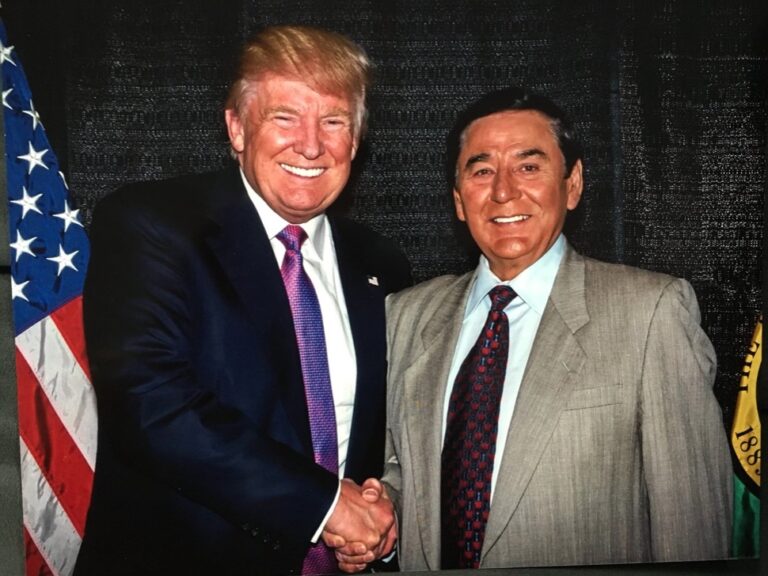
Former Sen. Jerry Ward has announced he is a candidate for Alaska Republican Party chairman. He joins a field of three others, including Nikki Rose, Mike Robbins, and Carmela Warfield.

The chairmanship opened up after Ann Brown announced she will not run for reelection to the seat. It is a volunteer role and requires the person chosen to pay all of his or her own expenses related to the role, including travel to major GOP meetings in the Lower 48.

Ward served in the U.S. Navy during the Vietnam War, was a state senator, a real estate professional, and as President Donald Trump’s Alaska campaign point person in 2016 and 2020. He was a delegate to the 2016 Republican National Convention from Alaska, as one of 11 delegates bound by state party rules to support Trump at the convention; during that cycle Sen. Ted Cruz had more delegates than Trump had in Alaska.

He was also a key part of the campaign of Sarah Palin for Congress in 2022.

Ward is a strong supporter of Trump in 2024 and says he will fight ranked-choice voting, the new system of voting in Alaska since 2022.

Ward set up a website to promote his candidacy for party chairman. The party state convention is where the election will take place, April 19-21 in Anchorage. The state convention also chooses 26 of 29 delegates from Alaska to the Republican National Convention.

Report: Over 134,000 cancer cases went undiagnosed during Covid pandemic’s peak

A new medical journal report says that over 134,000 U.S. cancer cases went undiagnosed during the peak of the Covid-19 pandemic. Further, the authors warn that there may be a lot more cancers diagnosed in coming years that will be at an advanced stage, due to missed screenings.

In Alaska, there were 414 lung cancer cases diagnosed in 2019, dropping to 372 cases diagnosed in 2020, the year that Covid shutdowns started.

For all types of cancers diagnosed in Alaska, the total was 3,131 cases in 2018, 3,379 cases in 2019, dropping to 3,110 in 2020, according to this Department of Health chart.

In the journal JAMA Oncology, the authors say cancers of the prostate led the pack among the missed diagnoses at 17%, followed by female breast cancer at 13%, and lung at 12%.

“Overall, screenable cancers saw a total rate reduction of nearly 14% during the time span between March and December 2020, compared to expected diagnosis rates,” the article states.

“The U.S. experienced significant differences between observed and expected cancer incidence rates during the COVID-19 pandemic in 2020, with an associated and substantial deficit in diagnosed cases,” said Todd Burus, of the Markey Cancer Center in Kentucky. “The extent of differences varied based on cancer site, stage at diagnosis, and patient age and sex. These findings offer crucial information for current cancer prevention and control initiatives.”

University of Kentucky researchers said they believe there may be more advanced cancers that radiology diagnosticians will encounter in coming years, as one of the unintended consequences of fewer screenings during the Covid shutdowns.

For the study, the researchers analyzed CDC cancer incidence data from 2018 to 2020. They used information from the time leading up to March 2020, when the pandemic first was declared in the U.S., to forecast how many cases could reasonably been expected the rest of the year.

The study included nearly 1.3 million cancer cases reported in the U.S. between March and December 2020.

“Observed rates of all-site cancer incidence were about 29% lower than expected during the height of the COVID-19 response,” the authors of the study note. This included a roughly 6% shortfall between June and December or 13% lower during the first 10 months of the pandemic. 

“These percentages produced an overall estimate of 134,395 potentially undiagnosed occurrences of the disease. This included 22,950 instances of prostate cancer, 16,870 breast diagnoses, and 16,333 relating to the lung. Breast cancer diagnoses showed evidence of returning to pre-COVID levels after the first three months of the pandemic. But colorectal, cervical and lung cancers still lagged historic levels,” the report says.

“Evidence of rate recovery for female breast cancer after the most restrictive pandemic response period suggests a resilience in mammography screening habits, likely borne from years of investment in public health messaging,” the authors noted. They urged the medical community to reengage with patients to get them back in the clinics to do screenings and follow-ups.

Read more of this report in JAMA Oncology at this link.

Murkowski is first GOP senator to endorse Haley

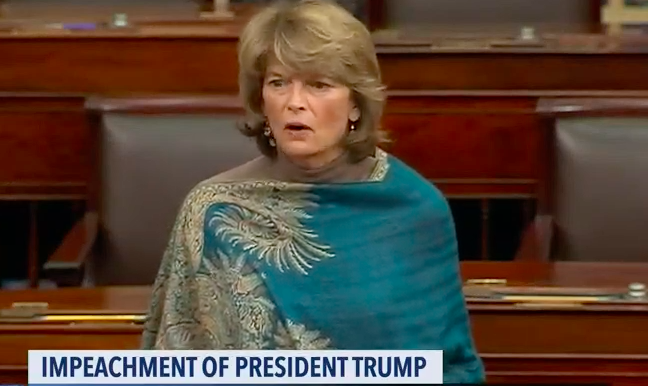
Sen. Lisa Murkowski, one of the most middle-of-the-road senators in Washington, has endorsed Nikki Haley for president. She made the announced Friday in a statement.

“I’m proud to endorse Gov. Nikki Haley,” Murkowski said in her statement. “America needs someone with the right values, vigor, and judgment to serve as our next President—and in this race, there is no one better than her. Nikki will be a strong leader and uphold the ideals of the Republican Party while serving as a President for all Americans.”

Murkowski was one of seven Republicans who voted in favor of impeachment of Trump, after he was no longer president. Trump was not convicted for the allegations against him, made by Democrats in the House, led by then-Speaker Nancy Pelosi and Rep. Adam Schiff, both of California. She said Trump has poisoned the country.

Unlike Murkowski, Alaska Sen. Dan Sullivan has endorsed Donald Trump, while Rep. Mary Peltola has endorsed President Joe Biden.

Haley wrote a statement thanking Murkowski: “Sen. Murkowski represents the best of Alaska … she is a trailblazer and a strong, independent voice who doesn’t bow down to the powers that be in Washington.”

Murkowski has been out of favor with the Alaska Republican Party for years. Her last dust-up with the party was when the party censured her in 2021 for voting to convict Trump. In 2022, she won reelection with the help of Democrats using the open primary system her surrogates worked to have passed in 2020 (with ranked choice voting), which helped her avoid a Republican primary.

Alaskan Republicans will be voting in the GOP Presidential Preference Poll on Tuesday, at locations across the state.

A poll run in the Must Read Alaska newsletter shows that 73% of readers think Haley should drop out now. She has not won any state in the primary and caucuses so far this year. Another 6% of participants said she should drop out after Super Tuesday, and 21% think she should not drop out. The poll was self-selecting and 330 readers of 34,000 subscribers took part.

Trump is still surging in national polls, in spite of his legal troubles and social media habits. Of the 1,215 delegates needed to become the GOP nominee, Trump has 122 delegates, or 10% and Haley has 24 delegates, or about 2%. Another 874 delegates will be decided by March 5. The Alaska Republican Party will have 29 delegates.

Before Super Tuesday, the Idaho Republican Presidential Preference Caucus and the Michigan Republican State Convention take place on Saturday, March 2, and on Monday, March 4, the North Dakota Republican Presidential Preference Caucus is scheduled.

Then on Tuesday, March 5, in addition to Alaska, the Alabama Republican Primary, Arkansas Republican Primary, California Republican Primary, Colorado Republican Primary, Massachusetts Republican Primary, Maine Republican Primary, Minnesota Republican Primary, North Carolina Republican Primary, Oklahoma Republican Primary, Tennessee Republican Primary, Texas Republican Primary, Utah Republican Precinct Caucuses, Virginia Republican Primary, and Vermont Republican Primary will be held, and it will largely end the primary contest between Haley and Trump.

Daniel Turner: Climate cultists will do anything to save the planet, except stay home

By DANIEL TURNER | POWER THE FUTURE

Under President Joe Biden, the U.S. has spent more money than ever before in fighting so-called “climate change.” But climate activists continue to call for more. One wonders if it is ever possible to satisfy their demands.

The climate agenda is flush with incongruities and inconsistencies, a nicer way of saying “lies.” Decades of unrealized doomsday predictions do not prevent more doomsday predictions. Manipulated data uncovered by leaked Climategate emails and NASA whistleblowers do not stop climate activists from pointing to their fabricated “science.”

But perhaps the greatest falsehood of the climate agenda is a failure in simple logical deduction. Climate activists’ entire raison d’etre is ending fossil fuels. They claim fossil fuels are driving climate change; ergo, we must eliminate them. Strangely, though, to reinforce that position, anti-fossil fuel hypocrites use more fossil fuels than your average person.

Use more fossil fuels while forcing others to use none. It’s a central tenant of the climate agenda.

Last November, 80,000 people gathered at the anti-fossil fuel U.N. Climate Conference “COP28” in Dubai. The 28th of such conferences, which grows in size and scope each year, lasted more than two weeks. That’s airfare, hotels, cars, wining, and dining, all for a reduced footprint. Two weeks’ worth of meetings and not a single panel to admit the hypocrisy of the anti-fossil fuel crowd as they use the very fuels they bemoan.

There are dozens, if not hundreds, of global climate conferences, and you can guarantee the anti-fossil fuel elite will attend as many as possible. If you make a career trying to ban fossil fuels, you’re never more than a couple of weeks away from the next elitist party.

This month alone, the “Second Nature Higher Education Climate Leadership Summit” is in Long Beach, California; the “Climate and Clean Air Conference” is in Nairobi, Kenya; and the “International Financial Reporting Center Sustainability Conference” is in New York City.

The Aspen Ideas Institute has a climate conference in March, but not in chilly Aspen. No, everyone will be traveling to Miami Beach because why not? And while we’re traveling to Florida, the “European Conference on Renewable Energy” is holding its March conference in Orlando. If the New York Jets and Giants can play in New Jersey, then Europeans can have a conference in Florida. Ponce de Leon was European, after all.

March will bring some of our fearless climate change activists to the “World Impact Summit” in Bordeaux, France, while others will attend the completely different but similarly titled “Climate Chance World Impact Summit” in Bogota, Colombia. If you’ve lost track of all the parties, you’re not alone. Yet there’s much more.

Many milestones in climate conferences are forthcoming: The “8th International Conference on Climate Change” is in Sri Lanka and then the “16th International Conference on Climate Change” in Pau, France, in April. The “World Conference on Climate Change and Global Warming” in Madrid in April is only in its fourth year, and a similarly named “Fourth International Conference on Climate Change and Sustainability” will be in Paris this July. Let us not confuse that July climate conference with another July one, the “Conference on Global Climate Change and Sustainable Development,” in London. Would you like to bet several hundred climate activists will attend both and take a plane between Paris and London rather than the train?

I’d bet the farm, and I literally have a farm to bet.

While the “World Conference on Climate Change and Sustainability” will be held in Barcelona this October, the “Global Summit on Climate Change and Environmental Sustainability” will be in Rome, also in October. Paella and carbonara in the same week!

There are summits in every nation every month from now until the end of time, which the climate activists tell us, thanks to fossil fuels, is pretty close. Imminent, but not before I get global status on United Airlines, not for the champagne at take-off, but for the Earth.

Not one of these is virtual. Not one of these conferences is a Zoom call. No one will be at their boring desks in their boring homes. Exotic, international travel is essential to the anti-fossil fuel mission. The planet depends on it.

During the Covid pandemic, people stayed home, houses of worship and workplaces were closed, and our children took classes remotely because “science” told us human contact and proximity was a risk we could not take. Climate science tells us human use of fossil fuels is driving the crisis and end of the world, yet climate science enthusiasts refuse to wear the metaphorical mask.

That should not surprise you. Anger you? Yes. Surprise you?  No.

Remember how our elite were exempt from Covid lockdowns? Whether it was then-Speaker of the House Nancy Pelosi getting her hair done, California Gov. Gavin Newsom dining at the French Laundry, New Mexico Gov. Michelle Lujan Grisham having jewelry stores open for her Christmas shopping, or former President Obama throwing a lavish birthday party, the ruling class did not have to follow the rules. Covid protocols are for the unwashed masses, as are gas stove bans and EV mandates.

“For someone like me, it is the only option,” said International Climate Envoy John Kerry when asked about his private jet travel to Reykjavik. Kerry could have easily flown commercial on one of the more than a dozen daily East Coast commercial flights to Reykjavik, but in his mind, Kerry is truly greater than the rules. So the protocols do not apply. 

Manmade climate change is an unproven theory, a hypothesis that merits scrutiny and rigorous academic investigation. We get hysteria and profiteering, a maddening display of deeply unscientific activism that cheapens science and sews tremendous doubt into the public discourse. These very same hysterics led to people no longer believing the government on Covid, and the manipulation of science for political and economic gain explains why few believe “climate change” is even real.

Tens of thousands of lucky climate activists will attend these events, almost all of whom are in luxury hotels in glamorous cities. Would an “International Climate Conference” ever be held in Juba, South Sudan, or Port-au-Prince, Haiti? Of course not. There is no Mandarin Oriental, and the wine is terrible.

So long as the climate crew jet set around the world to listen to Al Gore tell stories, we can all rest assured that, as a planet, we are doing just fine. The green movement has plenty of green to make, and the cynic in me knows that is the actual purpose.

Daniel Turner is the founder and executive director of Power The Future, a national nonprofit organization that advocates for American energy jobs. Contact him at [email protected] and follow him on Twitter @DanielTurnerPTF. This column first appeared at The Federalist.

Biden refers to illegal immigrants as ‘newcomers,’ as he and Trump have dueling events at border

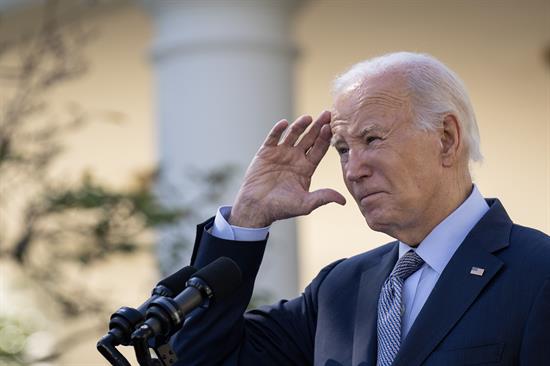
President Joe Biden is now referring to illegal immigrants as “newcomers.”

In a White House memo to Congress in which the president urged passage of a border bill that has, so far, been unacceptable to many border hawks in the U.S. House of Representatives, the White House said the bill “includes $1.4 billion for cities and states who are providing critical services to newcomers, and would expedite work permits for people who are in the country and qualify.”

Biden scheduled a visit to the border the same day that former president Donald Trump was at the border, where Biden trumpeted his border security accomplishments on Thursday.

His accomplishments are many, according to House GOP Chairwoman Elise Stefanik:

Since Joe Biden took office, 8.7 million illegal crossings have occurred nationwide, with over 7.2 million known illegal crossings at the southern border.

The total number of illegal immigrants who came through the border with Mexico is greater than the population of 36 states, including; Alabama, Alaska, Arkansas, Colorado, Connecticut, Delaware, Hawaii, Idaho, Indiana, Iowa, Kansas, Kentucky, Louisiana, Maine, Maryland, Massachusetts, Minnesota, Mississippi, Missouri, Montana, Nebraska, Nevada, New Hampshire, New Mexico, North Dakota, Oklahoma, Oregon, Rhode Island, South Carolina, South Dakota, Tennessee, Utah, Vermont, West Virginia, Wisconsin and Wyoming. 

Under Biden’s border policies, there have also been 1.8 million known gotaways — those who evaded U.S. Border Patrol.  

Since the start of Fiscal Year 2024 in October of 2023, there have been over one million illegal immigrant encounters.

In January of 2024, there were 176,205 illegal immigrants encountered at the Southern Border. January was also the 35th straight month where monthly illegal immigrant encounters have been higher than even the highest month seen under President Trump. 

Under Biden, over 340 of these illegal immigrants whose names appear on the terrorist watchlist were stopped trying to penetrate the Southern Border, exceeding all the encounters for fiscal years 2017 through 2022 combined. 

The White House claimed that the Southern Border was “secure” just days after the Venezuelan man charged with the murder of 22-year-old Laken Riley, had entered the United States illegally. But in 2022, Biden went on the record saying it was “not rational” to deport illegal immigrants from Venezuela.

Over 20,000 illegals from the People’s Republic of China have crossed the Southern Border since October. 

“Communist Chinese nationals are exploiting Joe Biden’s failed Far Left open border policies at “record-breaking figures,” becoming “the fastest-growing demographic entering the country illegally,” according to the House Republicans. “The surge in Communist Chinese nationals encountered at our Southern Border has raised serious concerns that the Chinese Communist Party (CCP) is exploiting the Biden border crisis for nefarious reasons.”

In August of 2022, Biden ended former President Donald Trump’s successful “Remain in Mexico” program.

And on May 10, 2023, Biden announced he would allow for the release of some migrants into the U.S. with no way to track them. 

Biden’s Department of Homeland Security has now admitted that 40% of catch-and-release migrants have disappeared into American communities, completely unaccounted for. 

Michael Tavoliero: Government education industry has led to mediocrity and bondage of our progeny

By MICHAEL TAVOLIERO

The Alaska education industry influenced the Alaska State Legislature to increase the Base Student Allocation by $680 per student. Fortunately they couldn’t influence Gov. Michael J. Dunleavy. The education industry used its own definition of education to work its magic on legislators.

Are we really going kick this can down the same road for Alaska education? Lift profit over humanity? Debt and decline over productivity and progress? Present over future?

This writer reminds the reader when he was a young whippersnapper in grammar school hearing for the first time that in the South during the days of slavery it was illegal to teach a slave to read; I was astonished.

That memory stuck with me as an ingenious evil designed to proffer the results of instruction and trample the potential for education. The comparison of instruction and education are the seminal differences between mediocrity and enlightenment as well as bondage and liberty.

It wasn’t hard to instruct a slave how to work in the fields or maintain livestock or even to keep up a household.

It was a practiced exercise. Once learned and embraced with body memory, it did not have to be re-instructed unless there was a technological change. Remember Ely Whitney. The introduction of this new technology in the South was responsible for the increase in slave population from 700,000 to over 3.2 million.

This ensured the least amount of thought and intellect as possible and provoked the maximum amount of exhaustion to produce a near zero amount of creativity. The brain is a muscle. Once exercised and stretched it does not return to its original size, however, instruction does not exercise the mind when compared to education.

The practice of instilling and maintaining illiteracy amongst slaves was the linchpin in keeping power and control. It was and still is the critical and integral component in establishing the sociological road map to curtail all other avenues of human endeavor other than obedience and monotony.

As of 2019, PEAKS (Performance Evaluation for Alaska’s Schools) was administered to students in Grades 3-9 (English language arts and mathematics) and grades 4, 8 and 10 (science) each spring during the state designated testing window. This state-required assessment provided students the opportunity to show their understanding of important skills in these content areas at their grade level.

It was designed to measure performance, productivity and outcome.

In 2020, I analyzed Alaska education performance through PEAKS analysis in both English Language Arts (ELA) and Math.

In the Anchorage School District, I found a lack of proficiency in ELA and math to be 41.79% and 40.30% respectively. The average math proficiency in the Organized Borough was 39.45 percent and in the Unorganized Borough it is 25.17 percent and an average English language arts (ELA) proficiency in the Organized Borough was 44.30 percent and in the Unorganized Borough it is 28.85 percent. 

This proved disturbing and tragic. The Last Frontier’s overly abundant financial capacity to build well educated men and women from scratch had produced no remarkable results outside a dismal low ranking when compared nationally to other states in performance per student and a very high ranking in cost per student.

My conclusion to these findings brings me full circle back to considering how our current government education industry must define education to remain profitable. And that definition is simple: The state shall not let education funding follow the student.

It is time Alaska embraced the direction Espinoza V Montana Dept. of Revenue’s decision. It is time to end the mini-Blaine amendment in our state constitution. It fails to serve the state’s future and in fact results in the mediocrity and bondage of our progeny. 

Michael Tavoliero is a writer at Must Read Alaska.