Saturday, June 13, 2026
Home Blog Page 1013

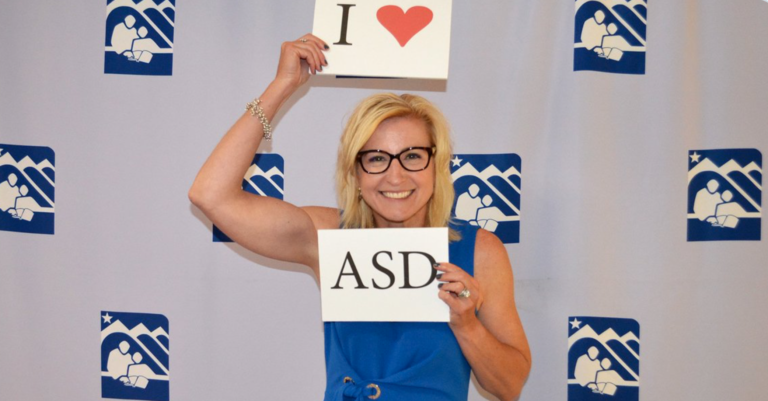
Superintendent Deena Bishop to retire

Anchorage School Superintendent Deena Bishop announced today she will retire from the school district effective June 30, 2022.

She wrote to staff in the district: “I am reaching out today, as I want you to hear from me first, that I have made the decision to finish my six-year tenure in ASD effective June 30, 2022. (Soon this might make the news.)”

She continued, “It truly has been a fantastic opportunity for me and a highlight of my educational career to work with the amazing people in ASD. Thank you all for welcoming me into your schools, classrooms, and offices! My best days have been spent in schools where I have said often, the “gimba” happens. Schools should be a district’s gimba as that is where the real work and value are added to our mission with children.

“Over the years, we have faced unexpected obstacles and tough decisions. A quote attributed to Theodore Roosevelt articulates our journey – ‘Do what you can, with what you have, where you are.’ Whether the conditions have presented us with good things or trying conditions, ASD, I am so proud of the work you have accomplished. We have moved through both the best and most taxing of times!,” she wrote.

I have truly loved watching student learning happen, listening to our outstanding musicians, cheering for our teams, observing your lessons, and hearing about the successes and quick wins you have shared in the work,” Bishop wrote.

Bishop was the superintendent of the Mat-Su Borough School District from 2011-2016, when she was named Anchorage superintendent. After college, she taught in the Copper River School District, taught middle school for the Mat-Su Borough School District in 1993, and was assistant principal of Colony High School. She became assistant superintendent of instruction in 2007 for the Mat-Su Borough School District. This year she applied to become the chancellor of University of Alaska Anchorage, a job that was subsequently awarded to former Gov. Sean Parnell by Interim University of Alaska President Pat Pitney.

“I look forward to finishing this school year strong and working with the School Board to transition a new superintendent. Thank you again for all you have done and continue to do for the young people in our community,” she wrote.


Final hurdle: CDC says go ahead and shoot the kids with Pfizer Covid vaccine

The head of the Centers for Disease Control and Prevention, the last hurdle to using the Covid vaccines on young children, has given its OK. As expected, CDC Director Rochelle Walensky on Tuesday gave her blessing to the Pfizer-BioNTech Covid-19 vaccine for children ages 5 to 11 years.

“As a mom, I encourage parents with questions to talk to their pediatrician, school nurse or local pharmacist to learn more about the vaccine and the importance of getting their children vaccinated,” Dr. Walensky said Tuesday.

Last week, another top health official in the Biden Administration referred to her trusted status as a mother in recommending the vaccine for children:

“As a mother and a physician, I know that parents, caregivers, school staff, and children have been waiting for today’s authorization. Vaccinating younger children against COVID-19 will bring us closer to returning to a sense of normalcy,” said Acting FDA Commissioner Janet Woodcock, M.D. “Our comprehensive and rigorous evaluation of the data pertaining to the vaccine’s safety and effectiveness should help assure parents and guardians that this vaccine meets our high standards.”

The approval process went exactly as planned, with the FDA giving its approval quickly last Friday after its advisory panel gave the agency the thumbs up.

There are 28 million children between the ages of 5 to 11. The vast majority of them who get Covid experience the mildest of symptoms, although future variants of the virus could effect them differently. According to the FDA, 146 deaths have occurred due to Covid in this age group.

The shot for kids is given in two doses, three weeks apart, and it is a lower dose than the adult versions. The dosage is based on age, not on size.

The state of Alaska has ordered 33,000 pediatric vaccine doses.

But not everyone is onboard. Last week, at a summit in Anchorage, leading doctors from around the country took the contrarian point of view and warned Alaskans to not use this vaccine on children — at least not now.

Covid daily count: 494 new cases

6

The number of new Covid cases on Monday in Alaska was 494. Six new Covid-related deaths were reported. The number of hospitalizations has dropped again, and is now 196. Overall, the trend is continuing toward, 17 percent lower than last week.

The cases by community are:

  • Anchorage (152)
  • Greater Wasilla Area (76)
  • Fairbanks (56)
  • Greater Palmer Area (29)
  • Nome Census Area (26 in 2 communities)
  • Kenai (18), Eagle River (16)
  • Soldotna (16), Utqiaġvik (13)
  • North Pole (12)
  • Juneau (10)
  • Kodiak ( 8 )
  • Chugiak (6)
  • Homer (6)
  • Petersburg (6)
  • Prince Of Wales-Hyder Census Area (6 in 3 communities)
  • Houston/Big Lake Area (3)
  • Kotzebue (3)
  • Nome (3)
  • Sitka (3)
  • Sutton-Alpine (3)
  • Anchor Point (2)
  • Dillingham Census Area (2)
  • Ketchikan (2)
  • NW Arctic Borough (2 in 2 communities)
  • Unalaska (2)
  • Willow (2)
  • One each in Bethel, Bethel Census Area, Bristol Bay/Lake and Peninsula, Copper River Census Area, Fritz Creek, Haines, Kenai Peninsula Borough-South, Kusilvak Census Area, Mat-Su Borough, Sterling, and Yukon-Koyukuk Census Area.

92 of the 117 staffed ICU beds across the state are full, leaving 24 ICU beds open.

318 of the 1,100 staffed non-ICU beds are available.

184 Alaskans are in the hospital with Covid, making up 18.8 percent of all Alaskans who are hospitalized right now. The number of Covid patients on ventilators has dropped to 27.

Rain hammers Girdwood, and the Washington Post says it’s climate change

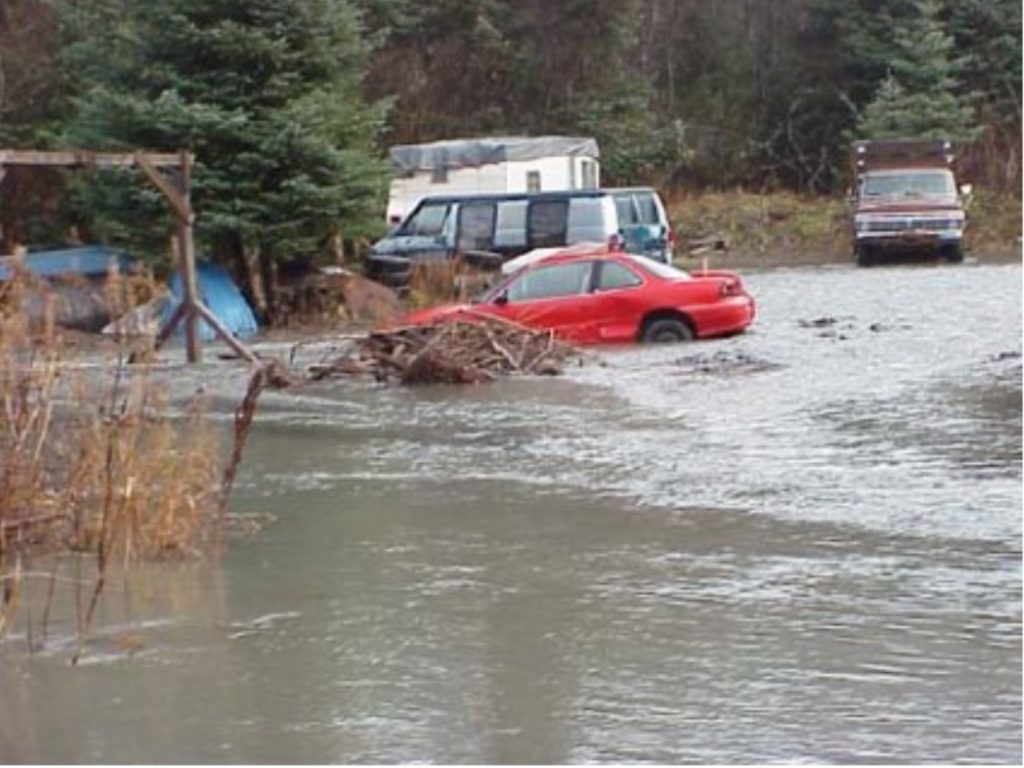
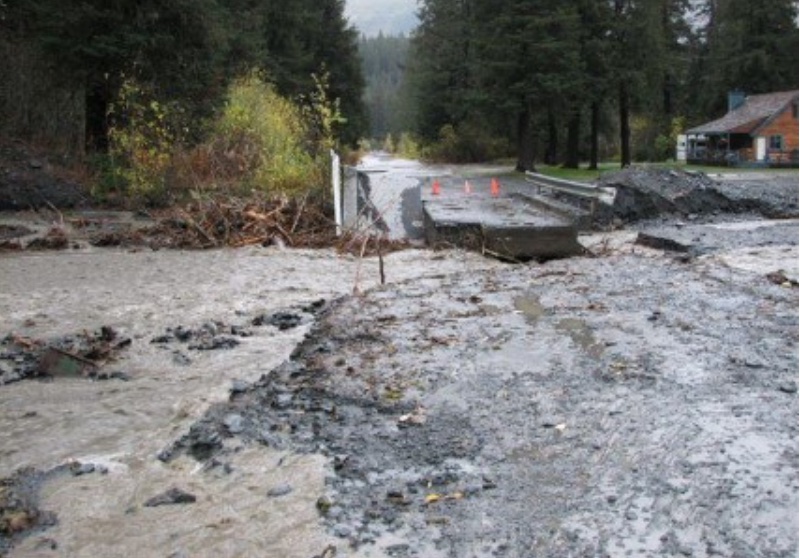
Heavy rain in Southcentral Alaska washed out roads from Girdwood, south of Anchorage, to the Sterling Highway on the Kenai Peninsula. Anchorage Mayor Dave Bronson went to Girdwood, the southernmost neighborhood of the Anchorage municipality, to survey the damage and express his appreciation to work crews working to restore the roads.

The Washington Post said the weather on the Kenai Peninsula was made worse by climate change.

“The deluge, intensified by climate change, has flooded communities south of Anchorage and transformed trickling waterways into raging rivers. Excessive amounts of snow, measured in feet, have buried the high terrain, and the long-lasting storm won’t fully relent until Wednesday,” the Post wrote, without evidence that the rainstorm had anything to do with climate change. But the climatologists said it it was so.

Girdwood is, of course, in a rainforest, as is much of the Chugach range, known as the most northern rainforest in the world.

The narrative is any change in the weather is climate change, but the Seward Highway and the Kenai Peninsula wash out in places on a regular basis.

The 1986 Kenai flood in October was easily as dramatic, but climate change was not the rage back in the day with the mainstream media:

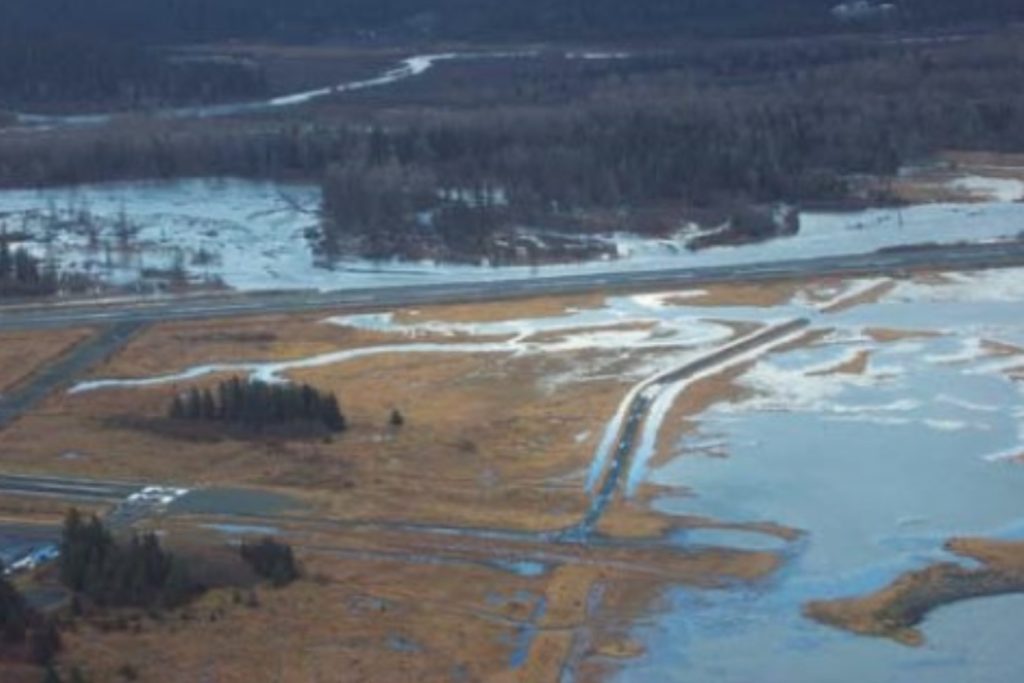
Then there was the Seward flood in September of 1995:

And the Kenai flood of October, 2002…

The Kenai 2006 flood was also in October …

View the Kenai Borough’s gallery of annual flood photos at this link. They go through 2012.

Hot air: Biden rolls out his plan to regulate methane, which could impact Alaska

President Joe Biden has announced at the United Nations climate change summit in Glasgow, Scotland that he will use his powers to regulate methane that comes from oil and natural gas development.

Biden said he will direct the Environmental Protection Agency to limit the methane coming from all existing oil and gas rigs in the U.S., reversing the relaxed regulations of the Trump Administration. Biden will also seek to end the exemptions for legacy oil fields.

For Alaska, it’s an unknown. Because Alaska has the Alaska Oil and Gas Conservation Commission, which seeks to maximize conservation, Alaska has not been a big emitter of methane. In fact, oil fields in Alaska re-inject natural gas into the oil fields to force out more oil, rather than flaring it, as is done in other states. The commission ensures that field operators prevent waste, protect correlative rights, improve ultimate recovery and protect underground freshwater. The Commission also administers the Underground Injection Control program for enhanced oil recovery and underground disposal of oil field waste in Alaska.

The announcement by Biden could put a chill on oil development in places like North Dakota and the Permian Basin.

Hilcorp, which operates much of the North Slope since British Petroleum exited the state, is one of the larger emitters of methane in the nation, primarily because it takes over aging fields in Alabama, Alaska, Colorado, Louisiana, New Mexico, Ohio, Pennsylvania, Texas, and Wyoming and improves them. Part of that improvement is making them more efficient, which includes repairing things like leaks. The Houston-based company doesn’t get credit for improving old fields so they lose less methane, but will probably find the new regulations punishing.

The 100 nations attending the United Nations climate change summit have vowed to cut global emissions of methane by 30 percent over the next eight years, a goal that is hard to imagine.

Biden said his new mandate will create jobs in the methane-detection field, as well as jobs capping abandoned oil wells and fixing leaks.

Although the announcement came as a surprise to some, it was not a surprise to oil producers. The president, immediately after taking office in January, directed federal agencies to prepare these regulations in advance of the expected United Nations summit, where some of the richest people on the planet flew in private jets to determine how the earth’s poorest people will be prevented from improving their lives.

Administrative order: Dunleavy steps up to protect Alaskans from federal overreach

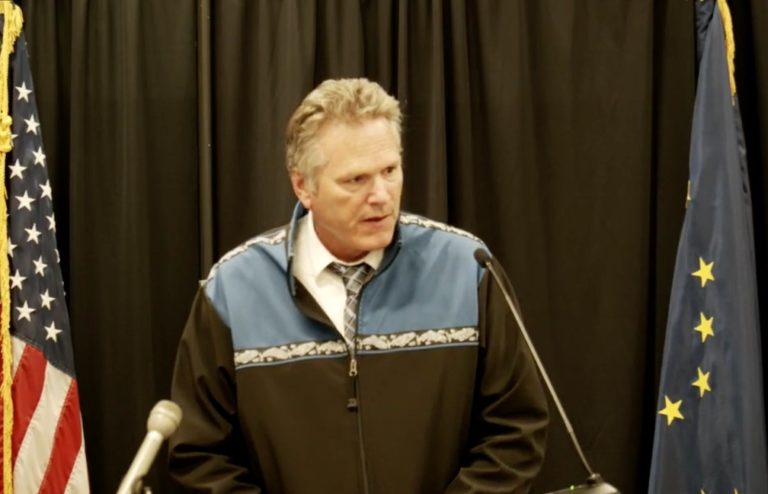
Alaska Gov. Mike Dunleavy took action against the efforts of President Joe Biden to undermine the sovereignty of the State of Alaska.

The governor issued Administrative Order No. 325, laying out the steps Alaska’s state government will take to protect its constitution and the rights of Alaskans from blatant federal overreach.

“The Biden Administration has imposed a long list of encroachments against the State of Alaska in attempts to control the health and welfare of Alaskans,” Dunleavy said. “The recent actions or attempts are threatening the State’s sovereign authority under the 10th Amendment. We will not let the federal government usurp our power. We will fight against these threats, enforce Alaska’s sovereignty and protect the rights and freedoms of all Alaskans.”

The Biden Administration, over 11 months has introduced many plans which jeopardize the constitutional rights of individual Alaskans.

The Biden Administration introduced a plan that would force banks and financial institutions to provide the Internal Revenue Service with personal information from private bank accounts when cumulative financial transactions of $600 or more occur in a year.

“After Americans expressed outrage, the IRS proposed increasing the financial threshold. The Biden IRS proposal would monitor the banking activities of Alaskans and store their financial information – violating existing protections for such records under the Federal Right to Financial Privacy Act,” the governor said in a statement.

He also addressed federal overreach on the Must Read Alaska Podcast on Tuesday, which can be heard at this link:

Must Read Alaska Podcast links.

The Department of Justice under President Biden plans to use Federal law enforcement personnel and resources to monitor, and potentially prosecute, parents as potential domestic terrorists, for protesting issues at local school board meetings (like mask mandates, curriculum choices, and other issues).

President Biden is also directing the Occupational and Safety Health Administration to implement regulations requiring that private employer, and certain public employers, with over 100 employees mandate their employees to be fully vaccinated or to submit to regular COVID-19 testing.

Lastly, last week the Biden Administration attempted to mandate that all federal contractors require their employees to be vaccinated without clear statutory authority. Earlier, they imposed vaccine mandates on military and National Guard members without adequate protections in place for individuals with religious objections.

To fight this federal government overreach, the Dunleavy Administration is ordering:

  1. The Attorney General to review any federal vaccine mandate issued by the Biden Administration and determine whether there are legal grounds to challenge such mandates in court. 
  2. To the extent allowable by law, no state agency shall participate in, or use state funds or personnel, to further a federal vaccine mandate for employers. 
  3. The AG will review and oppose efforts by the Federal Government to monitor and negatively affect the ability of Alaskan parents to exercise their constitutional rights by participating in school board meetings. 
  4. To the extent allowable by law, no state agency shall participate with a federal agency, or spend state funds to participate in, or further any action by a federal agency that infringes on the constitutional rights of Alaskans. Nor may a state agency take actions that would unconstitutionally chill free speech or infringe upon other constitutional rights exercised by citizens against or in support of local school district policies. State agencies shall continue to enforce the criminal code of the State of Alaska.
  5. If a federal agency proposes action to a state agency that would require a state agency to act in a manner that may violate the Alaska or U.S. Constitution, the agency’s commissioner shall immediately inform the Attorney General for the State of Alaska and seek legal advice as to how to proceed.

Read the full Administrative Order here.

UA president says vaccines will be required

In a reversal from two weeks ago, University of Alaska Interim President Pat Pitney says that Alaska’s higher education campuses, research sites, and contractors will need to be vaccinate for Covid-19.

“Without acting on this vaccine requirement, we could lose substantial federal contracts, and with them jobs that support more than 750 employees and their families,” said Pitney. “In addition, the ripple effect of the loss of these contracts would be widely felt as UAF’s research enterprise works with local contractors and suppliers across the state.”

The decision is in response to President Biden’s executive order (EO) 14042, Ensuring Adequate COVID Safety Protocols for Federal Contractors, which requires all employees paid by or supporting new or modified federal contracts to be vaccinated by early December. The order requires not only people directly paid by federal contracts, but also anyone who works to support them or works in the same facility to get a Covid vaccine.

UAF currently has $200 million in multi-year federal contracts impacted by the executive order, and expects close to $100 million more in the coming months. UAF competes nationally for many of these contracts. While neither the University of Alaska Anchorage nor University of Alaska Southeast face federal contract modifications at this time, UA continues to evaluate the situation and may have to extend the requirement to employees in other UA locations to comply with new contract modifications or other federal funding stipulations.

The university is also monitoring several legal challenges to the executive order. The Arizona and Florida attorneys general have both challenged the order in federal court and requested temporary restraining orders to halt implementation. Late last week, Alaska joined several other states in challenging the order. Pitney said she supports the State of Alaska’s efforts to challenge the scope of the executive order.

A court injunction on vaccine requirements resulting from any of the pending legal actions will not impact this vaccination requirement. The university will be bound to those conditions until the contracts are concluded or future modifications or executive orders are enacted.

Assembly agrees to homelessness strategy negotiated with mayor, but it’s too late for the plan to be enacted this winter

The Anchorage Assembly on Monday night unanimously agreed to a strategy that three of its members negotiated with the Bronson Administration over the past several months to address the issues surrounding chronically homeless and vagrant people in Anchorage.

The homelessness compromise was crafted over 22 meetings and more than 800 hours of negotiations between three members of the mayor’s team and three members of the Assembly, including Meg Zaletel, Chris Constant, and John Weddleton.

The resolution passed by the Assembly to agree to the policy will move along on an exit plan for returning the Sullivan Arena to its intended use. For more than a year and a half the Sullivan has been providing cots and toilets for homeless men and women, at a cost of $7,500 for each client per month, and more than a million dollars a month.

Mayor Bronson wanted to see that situation resolved before winter, but the Assembly bucked him on his plan for a temporary structure that would have sheltered 450 persons. Bronson suggested negotiations because the Assembly liberal majority was unwilling to appropriate the funds needed for his comprehensive “navigation center” that would be designed to help people break whatever cycle they are in that leads to them living dangerous lives on the streets and in the woods of Anchorage.

But it all comes too late for this winter. There is no way to build the shelter in time for the cold months.

The next step in the facilitation is to identify where the various properties are going to be for the agreed-on five-point plan: The navigation center; housing for those who are not chronically but who are acutely homeless; a facility for the medically fragile; a facility for women and children; and a facility to deal exclusively for alcohol and drug issues.

For example, about 40-50 people in the Sullivan Arena have jobs but just need housing; they could be assisted by the navigation center to find apartments and get them through the apartment rental application process.

The next step for the mayor’s team is to do a census to find out how many people fit into each of the categories. If there are 100 who need drug or alcohol rehabilitation, for example, then the Mayor’s Office wants to right-size that facility.

The key to the whole plan is to get a facility constructed or identified for the navigation center.

There are many more steps; the Assembly has just adopted the policy. The Assembly still holds the keys because the liberal majority of nine can block the appropriation for the policy if it wants to keep battling the mayor and delaying the process.

The Assembly also agreed to the mayor’s request to once again suspend the plastic bag ban, which was put in place not long after the bag ban was enacted in an effort to keep virus-ridden reusable bags from being brought into retail stores. Mayor Dave Bronson asked that the suspension of the plastic bag ban go through April, but the Assembly only agreed that it be in effect until January.

Muni attorney tells Assembly: Chief equity officer can be fired for cause — or for no cause — per charter and constitution

On Monday, the Anchorage Municipal Attorney sent a memo to the Assembly leadership in response to the Assembly’s October letter saying the mayor could not fire the city’s chief equity officer. Mayor Dave Bronson had fired Clifford Armstrong III in mid-October.

The attorney memo explains that the ordinance that created the position of chief equity officer violates the Charter and the separation of powers doctrine.

“The Chief Equity Officer serves at the pleasure of the mayor and, like other at will mayoral executive appointees, s/he can be dismissed for any reason or for no reason at all. The ordinance the Assembly passed is a clear violation of the Mayor’s authority established in Charter,” Municipal Attorney Patrick Bergt wrote.

The former equity officer had been hired by the unelected acting mayor Austin Quinn-Davidson during her last days of office; she served as the unelected mayor for eight months and it was one of her final acts, along with wrecking the municipality’s website.

The ordinance creating the position was passed by the Assembly and signed by former Mayor Ethan Berkowitz in 2020; it says that the mayor cannot fire the person who holds this job position without the permission of the Assembly.

That’s against the municipal charter and the Alaska Constitution, according to the Bronson Administration.

The Alaska Constitution vests “all local government powers” in boroughs and cities. It authorizes the voters of a first class city to adopt a home rule charter and provides that  “a home rule borough or city may exercise all legislative powers not prohibited by law or by charter,” the Office of the Municipal Attorney wrote.

Accordingly, “an ordinance is invalid if it conflicts with [our] charter.”

The Anchorage Charter states that the mayor shall appoint all heads of municipal departments, subject to confirmation by the assembly, on the basis of professional qualifications. Persons appointed by the mayor serve at the pleasure of the mayor.

“Our Charter is plain and unambiguous—executive mayoral appointees  serve at the pleasure of the mayor and therefore may be dismissed by the mayor without cause. The express language of our Charter clearly, unequivocally, and unconditionally vests in the mayor the authority to remove mayoral executive appointees for any reason or for no reason. It is also significant that our Charter explicitly limits the mayor’s executive appointment power by requiring Assembly confirmation of specific appointees; it places no such limitation on the mayor’s removal power, however,” the attorney wrote.

Municipal code further says that the Assembly has no authority to displace the mayor’s power to remove mayoral executive appointees, and that the mayor need not show cause for such removal: Executive employees are “at will” employees and serve at the pleasure of the mayor or the responsible official of the appointing authority.

“Employees occupying an executive position are appointed by and serve at the pleasure of the responsible official for the appointing authority. As such, the responsible official may dismiss, demote or suspend any employee occupying an executive position for any reason, or no reason, without right of grievance or appeal. The code acknowledges that the mayor, and only the mayor, may terminate executive mayoral appointees,” the memo said.

Therefore, the ordinance that created the chief equity officer position, AMC 3.20.140.A.1.b. and 1.c, “unlawfully infringe upon the powers granted to the mayor by Charter 13,” Bergt said.

“An ordinance creating “for cause” and durational term protections of an executive mayoral appointee usurps the mayor’s executive function. Separation of powers between and among the three branches of government is a long recognized, well-settled, and core doctrine of American jurisprudence. The doctrine is intended to preclude the exercise of arbitrary power and to safeguard the independence of each branch of government: “One branch’s threat to the independence of another . . . may therefore violate separation of powers,'” he wrote.

Last month, the Assembly authorized the hiring of an outside attorney for $50,000 to fight the firing of the former chief equity officer, and also sent a letter to the mayor saying they do not recognize that Armstrong III is indeed fired.