Saturday, June 13, 2026
Home Blog Page 1012

Rep. Vance: Early treatment saves lives

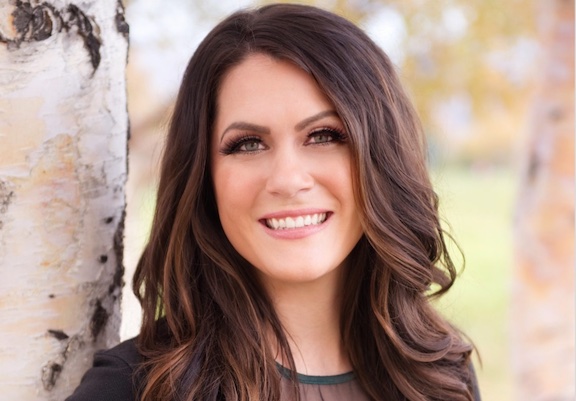
By SARAH VANCE

Life is precious. My heart goes out to so many of you who have lost family and friends to Covid-19. I want to do everything in my power to help you navigate through this difficult season; including giving you hope for the future. 

Many of you have been asking what we can do to beat this pandemic. One thing we know to be true about Covid-19 is that early treatment saves lives. Let me say that again; early treatment saves lives!

I have been speaking with Gov. Mike Dunleavy, Dept. of Health and Social Services Commissioner Adam Crum, and other health experts about the efficacy of early treatment for Alaskans. These conversations help guide me in making sound policy decisions to better defend your medical rights because your healthcare decisions should remain between you and your healthcare provider and not you and your politician.

It has been more than 20 months since the pandemic reached our borders. We have sought to understand this virus and how to treat it, yet we seem to be losing the battle here in Alaska, recently holding the worst case-count per capita in the nation. It is time we look to countries like India, who have successfully eradicated Covid-19 from regions of their population with the use of therapy packs.

Each home kit in India contained the following: Paracetamol tablets [tylenol], Vitamin C, Multivitamin, Zinc, Vitamin D3, Ivermectin 12 mg [quantity #10 tablets], Doxycycline 100 mg [quantity #10 tablets]. Other non-medication components included face masks, sanitizer, gloves and alcohol wipes, a digital thermometer, and a pulse oximeter. Many other countries have also seen success in reducing widespread hospitalization and death by distributing therapy packs, through their health department for early treatment of the virus for less than $3 per pack.

Early treatment has been a strong recommendation of many health professionals in the fight against Covid-19.

I have heard the arguments that certain therapies such as ivermectin, azithromycin “Z-Paks” and hydroxychloroquine are not FDA approved for treating Covid-19. But I would argue that as a sovereign state, we cannot afford to wait for the permission of a federal agency to save lives. It is our responsibility to make wise decisions for ourselves now, and for the sake of our own because no one cares about Alaskan lives like Alaskans do.

Our focus should be on treating those who are sick as early as possible, but instead, it seems we have remained solely reliant upon vaccination as the only viable means of defense. If we prioritize treating those who are sick by exercising early intervention, at the same level we are prioritizing encouragement of the healthy to get vaccinated, I believe we could see an immediate decrease in hospitalizations and death.

Just to be clear; I will defend your right to have access to the vaccines as much as I will defend your choice for early and alternative treatments. Alaskans have a right to informed consent and a right to try experimental drugs when terminally ill. 

Let’s set the politics aside and focus on saving lives.

Some of you may claim I am spreading false information. That’s OK. My challenge to you is to research the success of these countries and alternative treatment options and then decide for yourself.  I am simply interested in saving Alaskan lives.

Life is precious; do your research of available options and talk to your doctor.

Please feel free to reach out to me at [email protected] or 907-235-2921.

Rep. Sarah Vance represents portions of the Kenai Peninsula, including Homer and Anchor Point.
Anchorage School Board chair orders citizen to stop videotaping board meetings

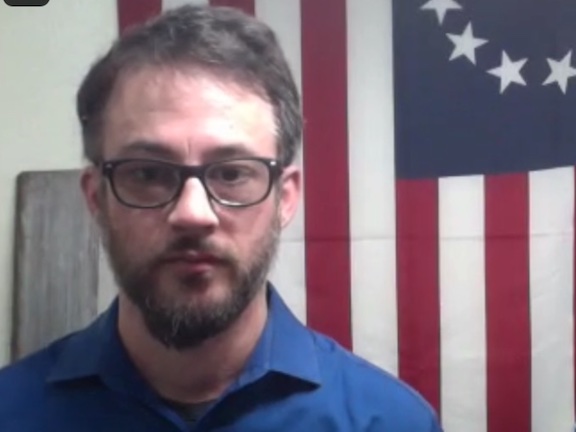
Anchorage School Board Chairwoman Margo Bellamy told Anchorage citizen Nial Williams that he was not allowed to videotape the meeting on Monday because doing so was bothering a person who was testifying.

The person, Sarah Davies, a staff member of Bartlett High School had approached the public podium to address the body when she said Williams videotaping was “an incredible distraction.”

Bellamy replied, “And I apologize for that.”

Bellamy then instructed Williams to stop videotaping the meeting. He asserted his constitutional rights and the First Amendment, but then was approached by a security guard who told him to stop, while Davies said that his videotaping was making her nervous. The security guard escorted him from the room.

At that point School Board member Dave Donley asked Bellamy what rule Williams had broken by videotaping the proceedings. She said there was no rule, but that he had made a member of the public uncomfortable.

Donley proceeded to argue that making someone uncomfortable was not grounds for violating the Constitution. He said that Williams had not disrupted the proceedings in any way and vigorously defended the public’s right to record public meetings.

School Board member Kelly Lessens interrupted, saying that there were children in the room, and therefore filming the room is inappropriate.

However, the entire room is filmed during the meetings by school district cameras and, in fact, security cameras are all over the education center facilities.

A dispute broke out on among Bellamy and Donley, who challenged her ruling, which is a procedural motion that requires a vote of the body.

Bellamy denied she had had Williams removed from the meeting, and did not call for a vote on the ruling she had made. Instead, she called for a five-minute recess to sort it out in private, a violation of the Open Meetings Act. The leftists on the Anchorage School Board went along with the violation, except Donley.

People videotaping public meetings is commonplace in this era and Bellamy has not prevented others from videotaping the meetings. She singled out Williams. Without citizens videotaping the meetings, the public has little reasonable access because the school board has limited the number of people it allows in its meetings and asserts the public can watch the meetings on YouTube. The official tape of the meeting on YouTube makes it difficult to see what is going on in the meeting, because the set-up favors a still photo of the agenda and a very small, blurry screen of the room, with little of the proceedings actually shown.

Williams told Must Read Alaska that the woman testifying was not the subject of his video. He maintained a distance from her and was seated most of the time in one of the seats provided to the public. He was recording elected officials and the paid functionaries who work for them in the school district, who he believes will eventually require Covid vaccinations of children attending public schools.

He also occasionally pans the entire room with his camera so that later he can prove who was at a meeting who may have witnessed a constitutional violation.

Williams is on a mission to defend the U.S. Constitution and has been thrown out of school board and Anchorage Assembly meetings when he has become passionate about what he believes are illegal proceedings. But in this instance, Williams was not disrupting the meeting, and was just quietly recording it.

According to the Reporters Committee on Freedom of the Press, “Although audio and video recording and photographing of public meetings is customarily done, the state OMA [Open Meetings Act] does not address this issue. If this issue arises, the press should argue there is a legal right to photograph or record such meetings, either implicit in the OMA, or arising from the common law or constitution.”

The Municipal Research and Services Center, a nonprofit organization that helps local governments across Washington State better serve their communities by providing legal and policy guidance on any topic, classifies people like Williams as “auditors” of government. 

“If the behavior of an auditor interferes with the operation of government or the ability of other members of the public to use a public facility, an auditor may be removed from public property they would otherwise be entitled to be in. See State v. Blair, 65 Wash. App. 64 (1992),” the organization advises.

“Note that such a disruption would have to consist of more than the mere act of recording. In order to be lawfully removed the auditor’s actions must make it impossible for city business to continue in an orderly fashion. Profane or abusive language doesn’t create a sufficient disruption by itself, either—only if such language qualifies as a physical threat or “fighting words” (words that inflict injury themselves or tend to incite an immediate breach of the peace) or if the act (not just the content) of speaking itself  disrupts city business, is there cause for members of the public to be removed,” MRSC says.

“Ultimately, if an auditor doesn’t run afoul of these boundaries, the best advice for local government staff and elected officials is to ignore the auditors and not engage with them except to conduct business. Otherwise, a confrontation with an auditor may lead to a public allegation of a “violation” of their constitutional rights, both in the press and online, and perhaps even to a court challenge that the jurisdiction has attempted to violate the public’s constitutional rights,” the group says.

Murkowski joins Democrats in support of federal control over Alaska voting

A bill that would inject more federal control over state-run elections in Alaska was blocked by Republican senators, with the exception of Sen. Lisa Murkowski, who voted with the all of the Senate Democrats to advance the bill.

Since taking the trifecta of power — House, Senate and presidency — Democrats have pushed three bills to weaken the security of elections.

This bill is not HR 1, which was the Democrats’ Number 1 priority when they took over in January. That bill was also known as the The For the People Act, and would have vastly changed the rules around elections, inserting the federal government into what is a states’ rights issue.

The bill under consideration now is the John Lewis Voting Rights Advancement Act, also known more commonly as the Voting Rights Act. With Republicans working in cooperation, even with Murkowski defecting, the Democrats came up one vote short of advancing the bill to debate.

Republicans in general have been calling for a trust-but-verify approach to voting to ensure that cheating doesn’t take place. Democrats and the mainstream media call the Republicans’ efforts an attempt at “restricting ballot access” and link it to what they call “false claims by former President Donald Trump” and his supporters about the somewhat incredible 2020 election results.

In 2013, the U.S. Supreme Court, in Shelby County vs. Holder, struck down various provisions of the 1965 Voting Rights Act, a law that forced Alaska, nine other states, and portions of six other states, to submit their election plans and redistricting plans to the U.S. Justice Department for review.

The Supreme Court, in a 5-4 decision in 2013, recognized that because pre-clearance so forcefully usurps State sovereignty over elections, Congress would have to show that there was still “blatantly discriminatory evasions of federal decrees,” “voting discrimination on a pervasive scale,” or “flagrant” or “rampant” voting discrimination. None of that has been evident in Alaska, and the only reason it came under that section of the Voting Rights Act is because, at the time, so many Natives in Alaska had a language other than English as their first language and, for years there was an English test that prevented many Natives from voting. But that provision has been gone for decades.

If Democrats and Murkowski have their way, Alaska could once again be colonized by the Justice Department, treated as a state that cannot manage its own redistricting and voting without federal controls.

Tuckerman Babcock, former chairman of the Alaska Republican Party said, “I think we have enough supervision from the federal government. Why would we need more?”

The legislation Murkowski is promoting would flip the 2013 Supreme Court decision, reinstating the DOJ-required pre-clearance of any changes in state voting laws and practices. It would put Alaska’s elections under the control of the same Justice Department that railroaded former U.S. Sen. Ted Stevens.

The Voting Rights Act of 1965 is still the law of the land, and state laws can still be challenged under it.

When the U.S. Supreme Court struck down the provisions that had Alaska’s elections under the boot of the Justice Department, then-Gov. Sean Parnell welcomed the decision. Alaska translates ballots into numerous languages and hires language interpreters to help voters each year.

Election commission staff sets new campaign contribution limits of $1,500, now that $500 limit thrown out by courts

The staff of the Alaska Public Offices Commission is set the campaign contribution limit at $1,500 from an individual to a candidate, now that the Ninth Circuit Court of Appeals has thrown out the previous $500 limit, which was in statute.

The Ninth Circuit and the Supreme Court said the $500 limit is unreasonable, and it severely disadvantaged non-incumbents, and also was not elastic to adapt to inflation.

The new limit will be in effect until the commission itself, which is different from the APOC staff, overturns it, which would take four of the five commissioners.

Also another limit was created by staff: The non-political party group-to-candidate; and non-political party group-to-non-political party limit is $3,000 per year.

The ruling removes ambiguity for campaigns that was created by the Supreme Court and Ninth Circuit ruling, which had removed all limitations to state and local candidate. Federal candidates are governed by Federal Election Commission contribution limits.

Trump to host Mar-a-Lago fundraiser for Kelly Tshibaka in her plans to unseat Lisa Murkowski

Former President Donald Trump will host a fundraiser for U.S. Senate candidate Kelly Tshibaka in February.

The high-dollar event will take place at the Mar-a-Lago Resort in Florida on Feb. 10, 2022, according to the invitation obtained by Must Read Alaska. The minimum contribution is $2,900, which is the maximum campaign contribution allowed by federal campaign laws. Those who can bring in $25,000 in donations from others will get to have their photo taken with Trump and Tshibaka.

Trump earlier this fall hosted a fundraiser at his Trump National Golf Club in Bedminster, N.J. for Gov. Mike Dunleavy’s reelection campaign.

Trump endorsed Tshibaka in June, less than three months after she announced her run against Sen. Lisa Murkowski, who has been representing Alaska in the U.S. Senate since 2002.

“It’s a great honor to have the endorsement and enthusiastic support of President Trump and I am thrilled that he will be hosting this event. His policies were the best for Alaska, which we can all see even more clearly now that the Biden administration has launched an all-out assault on Alaska workers and our entire resource economy. I will be a senator who represents Alaska to Washington, D.C. rather than one who represents D.C. insiders to Alaska, as Lisa Murkowski has done,” Tshibaka said.

Election results: Conservatives sweep Mat-Su Valley elections for a mandate

In what can only be described as a full refutation of a progressive agenda, Matanuska-Susitna Borough voters turned back a host of liberal candidates in the deep red heartland of Alaska. 

On Municipal-Borough Election night 2021, voters overwhelmingly supported well-known conservatives for borough Mayor, Assembly, and School Board. Conservative candidates are averaging  62.8% of ballots cast in those elections. 

In a battle for the Mat-Su mayor’s post, longtime politico, current Palmer mayor and former State Senator Edna Devries handily defeated former Wasilla Mayor Bert Cottle and and former Assemblyman Matt Beck.  In most precincts she garnered more votes than both her opponents combined. 

DeVries was a formidable candidate. She served on the Palmer Council and was chairman of the Planning and Zoning Committee. She is a former member and vice chair of the Alaska Commission of Aging, and former member and chairman of the Human Rights Commission. She also has 29 years of business experience, including as a real estate broker, owner of three Christian book stores, and a pizza restaurant. Along with her husband Noel, she ministers to abused women and the homeless, and runs a School of Government class for the public. She was previously mayor of Palmer, borough Assembly member, borough mayor, as well as a state senator.

The unofficial final count for mayor was Devries-7,623, Beck-3,577, and Cottle-2,000

DeVries was not the only big winner. First-time candidate Dolores McKee mopped the floor with her liberal union activist opponent. McKee is wife of current Assemblyman George McKee, mother of former Americans for Prosperity Director Ryan McKee, and sister of former Senate President Pete Kelly.

DeeDee, as she is known, was heavily outspent, nearly 2-1 in the race. At the conclusion of election night, she was winning the race approximately 65%/35%, a landslide.

Dolores McKee

The unofficial final count in Assembly District 3 was McKee-1,180, Bailey-427, and Kruger-198.

Incumbent Assemblyman Jesse Sumner turned back two challengers, garnering over 66% of the votes on election night. He is a young and growing political force in the state after jumping in to serve on the Assembly three years ago. The unofficial final count in Assembly District 6 was Sumner-1367, Short-563, and Clippard-133.

Jesse Sumner

Conservative school board Chairman Tom Bergey took nearly 63% of the vote. The final count was Bergey-1,592, Berrigan-940.

Tom Bergey

Newcomer to politics Jubilee Underwood claimed over 67% of the vote in her school board election. The final count was Underwood-846, Walther-413.

Jubilee Underwood

Ron Bernier, owner of JP Construction, won handily for Assembly District 7. The final count was Bernier-1,192, Boeve-737.

Ron Bernier

With the Mat-Su Borough being the second largest and fastest growing region of the state, these landslide election results must be deeply concerning for former Gov. Bill Walker, who seeks to return to that seat after being trounced by voters in 2018. 

The Mat-Su Borough is home to Gov. Mike Dunleavy and the most conservative legislative delegation in the state.  It counts House Minority Leader Cathy Tilton, Senate Majority Leader Sen. Shelley Hughes, and Sen. David Wilson on the Senate Finance Committee and Rep. DeLena Johnson on the House Finance Committee as delegation members.
This is not an area that can be lightly dismissed.  Any statewide election, including the U.S. Senate and House of Representatives seats, will depend on this region for a victory in November 2022.

Mat-Su voters changed their election date through a ballot measure in 2018 to line up with the national General Election; this is an off-year for a statewide election, and so the Mat-Su is the only borough or city in the state with election results.

The borough election appears to have been well run, with results coming in timely, unlike elections in communities that have moved to mail-in ballots, such and Anchorage and Juneau, where results are not known for many days and voters have grown wary of the chain of custody of ballots. In Juneau last month, hundreds of ballots were tossed because after they were mailed, the Post Office didn’t put a cancellation mark on them to indicate if they were mailed on time.

Edna DeVries holds lead for Mat-Su mayor, as conservatives sweep Valley races

Conservatives appear to be sweeping the vote in the Mat-Su Borough elections, which ended Tuesday.

Palmer Mayor Edna DeVries appears to be handily winning in the Mat-Su Borough mayoral race. She has a lead in nearly every precinct so far, except for Talkeetna and the early voted ballots in the Borough Building, which is mostly where government employees cast ballots.

In most precincts, DeVries has more votes by herself than her two opponents combined, which would put her in the landslide victory category.

Delores McKee appears to be winning for Assembly District 3.

Jesse Sumner appears to be winning by a landslide for Assembly District 6.

Ron Bernier appears to be winning for Assembly District 7, but by a smaller margin than others.

Tom Bergey appears to be winning his re-election to the borough school board.

Jubilee Underwood appears to be winning for school board.

The bond issue on the ballot also appears to be winning.

Not all precincts have reported as of 10:30 pm Tuesday. Absentees have not yet been tallied.

Precinct level results are posted at the borough website, with nearly all now available at this link.

Upset: Virginia pulls a ‘Bronson’ with new governor-elect Glenn Youngkin

The new governor of Virginia will be Republican Glenn Youngkin.

Youngkin is a political neophyte who describes himself on his Twitter account as, “Former dishwasher, basketball player, player & businessman. Not a politician. Republican running for governor to make Virginia the best place to live, work and raise a family.”

Actually, he is the former co-CEO of the Carlyle Group, a major investment company, and he has a graduate degree from Harvard Business School in 1994. 

With 2,505 of 2,855 precincts in, Youngkin is winning 51.6 to 47.7.

He’s new to politics, but Chugiak/Eagle River Assemblywoman Jamie Allard says it’s a repeat of what Anchorage saw in the spring election. Virginia, she said, seems has had enough of radical leftist politics, and a clear majority of them went with Youngkin.

“Virginia just pulled a Bronson,” Allard said, as she watched returns from her home. She was referring to Anchorage Mayor Dave Bronson, who upset the Democrat political establishment by winning the Anchorage mayoral race, when many thought he was too conservative to do so.

Youngkin defeated Democrat incumbent Gov. Terry McAuliffe, handing an embarrassing defeat to President Joe Biden and former President Barack Obama, both of whom campaigned for McAuliffe in recent weeks. During the last 60 hours of the campaign, the left-wing Lincoln Project pulled a stunt in which it paid men who were dressed as supposed white nationalists to pose in front of the Youngkin campaign bus with tiki torches. The stunt was an imitation of a supposed white nationalist rally in Charlottesville, Va., in 2017. The men declared “We’re all in for Glenn.”

The same kind of race-baiting tactics were used by mayoral candidate Forrest Dunbar’s camp in Anchorage, which tried to paint Mayor Bronson as a white nationalist.

Last week, the Lincoln Project claimed responsibility for the tiki torch white nationalist posers, and for paying the demonstrators to cast Youngkin in an ugly light. The Lincoln Project spent over $304,000 opposing Youngkin, who was endorsed by former President Donald Trump.

The shift in Virginia could signal a tidal change in America. Traditionally a blue state, seven of the last 10 governors of the state have been from the Democratic Party.

Tiana Lowe, a writer for the Washington Examiner, wrote that “Louden County voters voted like their daughters’ lives depended on it,” referring to the incident in Louden County where a high school girl was sodomized by a teenage boy who wore a dress and accessed the girls’ restroom under the school district’s “gender fluid” policy.

“Youngkin turned the traditionally blue state into a national bellwether by embracing what Barack Obama branded the ‘phony culture wars’ riling public school systems,” Lowe wrote.

“Youngkin managed to crush former Gov. Terry McAuliffe, a Democrat, in unprecedented time for a state that as recently as last November went for Joe Biden in the 2020 presidential race by 10 points. Despite McAuliffe’s best attempts to refocus the race on ex-President Donald Trump, Youngkin drew from parents’ fury not with partisan issues, but with academic curricula ridden with the racial essentialism of “critical race theory” and the school closures amid the pandemic,” she wrote.

“It was close, but then, in the weeks leading up to the election, something bigger happened — the horrific rape case in a Loudoun County public school and the school board’s brazen, transparently mendacious cover-up. While liberals tried to characterize the rape case, which culminated in two felony convictions against a “gender-fluid” teenage boy accused of sodomizing a teenage girl, as mere anti-trans activism, the school board’s decision to silence the victim’s father and allow the convicted rapist to attend another county school despite pending criminal proceedings likely influenced the county’s surge of support toward Youngkin,” Lowe wrote.

Virginia Republicans are set to win all three statewide races one year after Biden carried the state by 10 points.

Another odd tie between the campaign of Mayor Dave Bronson and Governor-elect Glenn Youngkin — they both used the same campaign consultant: Axiom Strategies.