The majority of the Anchorage Assembly is drunk with power. Like a chronic inebriate panhandling on the corner any given major Anchorage midtown intersection these days, they do not want to do the hard work. They do not want to do the honest work. They do not want to do the peoples work. The tyrants on the Assembly instead want to deny the citizens of Anchorage their right to choose their own mayor.
The sponsors of the latest ordinance to overthrow the mayor need another fix or another shot of the hard stuff or maybe both, to quench their thirst for power. It is not enough to have a veto-proof majority that can override Mayor Dave Bronson and his quest for freedom. The sponsors of AO 2022-60 and those who will vote for it are once again choosing force over the citizens of Anchorage.
These members of the Assembly are very aware of the power their majority gives them, but do not want to be restricted by the will of the people or the friction that another separate and equal branch of government may offer. The hard work of discussion and debate on an issue is too much for them. They want complete control and they will not stop until they gain it.
In spite of overwhelming public testimony against their drunken quest for power, they will push and exceed the limits of a sober-minded body. They will claim to have received many emails in support of their mayoral overthrow ordinance. These emails, if they exist, will not be verified as having come from actual Anchorage voters. The mere proclamation of a consenting view is good enough for them. They will claim their use of force is for the good of our city. They will claim a heavy hand is necessary to remedy the homeless, mental health and drug abuse issues that plague our city. They will make myriad excuses for their behavior, just as the alcoholic does before and after beating their children and spouse.
The eight socialists on the Anchorage Assembly are seemingly unaware of the damage they do. They will wake up the next day and have a vague recollection of a struggle that they believe was noble and necessary. In reality, the voice of Anchorage residents at the June 1 special Assembly meeting was an outcry from their constituents. Citizens pointed out the bad judgment by the Assembly tyrants and pleaded for them to stop before the damage is irreversible. The abusers on the Assembly will carry on with their abusive behavior until everything they have touched is broken. They are abusers in the most literal sense of the word. They abuse their power to the extent that they intend to ordain themselves with more power.
The honest work begins with admitting that all nearly of the Assembly-generated policies and programs have failed. The Covid lock downs were extremely destructive to our city. Only those people and business deemed essential by our Assembly emerged whole or in some cases better. Imagine being declared an “unessential business” or “unessential worker” by someone in elected office. No imagination is actually necessary — it happened and many suffered. If this was not a breach of public trust, what is?
The problems and attempted solutions associated with the homeless population continue to grow and require an honest assessment. The actions of our Assembly have only helped to enable and grow the homeless population as more and more individuals are attracted by the gifts our Assembly gives: Free housing, free food, and the freedom to deny contributing members of our community the use of our public spaces are the gifts our Assembly offers, all funded by those that actually work to pay the bill.
Anchorage does not have the luxury of waiting this out and hoping the eight remaining tyrants will free themselves from their addiction to power. After the Assembly votes to approve their own power grab, immediate legal action must be taken. The bond that protects them and their actions must be used as a method of self-defense by Anchorage residents. This Assembly has for many years broken and abused the power of their office. The Assembly is too powerful in its current form. They themselves are the ones that have breached the public trust, not the mayor.
With a hobbled executive branch of government that AO 2022-60 delivers, the reigning assembly tyrants will be free to award themselves an ever increasing amount of wealth through their homeless industrial complex businesses and other discretionary spending. They will buy favor from any group or individual that they can influence or for whom they can purchase another expensive house. They will continue to do this with our property tax dollars and federal income taxes monies collected and passed back to them.
The Anchorage Assembly needs an intervention. Where the assistance comes from is still uncertain. No doubt, the recipients of Assembly abuse will resolve to continue the push back but more will be necessary.
There are three branches of government for a reason, one of which is to avoid the consolidation of power in the hands of a few radicals or even the majority. AO 2022-60 allows the legislative branch to break through the intended barrier between the branches and seize control of the executive branch.
Specifically, language has been added by the author(s) of AO 2022-60 which allows removal of the Mayor from office for a list of 12 things but are “not limited” to those 12 things.
In other words, there is no limit to the list of things that could constitute a breach of trust. This is clear legal language and despite the opinion of Assembly’s legal counsel, translates simply to “any reason.” Any reason at all is a good one to remove the mayor, if you don’t agree with the mayor’s position, under this ordinance.
A very good question has been raised: Why now? Why not when the previous pants-free mayor or illegally appointed and unelected eight-month mayor held office? Better yet, why not when this issue was considered and yet not drafted in 1993? The answer to the last question is because the Assembly at that time knew that it was illegal and violated the city charter.
This proposed ordinance is not a simple clean-up of some old unfinished business from roughly 30 years ago. This is new stuff. This is a very transparent grab at complete political power. Voters of Anchorage did not want the other candidates for mayor. The majority of Anchorage voters like Mayor Bronson and the direction he is going. The thing that probably keeps eight of the Assembly members up at night is knowing that they are wrong. Yet they keep going down this dark totalitarian path anyway. They need to stop doing things that they know are illegal.
People who knowingly commit crimes are called criminals. Criminals get to live in a special place called jail.
The very act of an Assembly member voting in favor of this ordinance is probably a greater breach of public trust than failing to hold a special election when Berkowitz resigned in disgrace and left a vacancy in the mayor’s office. AO 2022-60 is a structural breach of trust and not a one-time willful act of negligence.
The people already have ways to remove elected officials from office if they choose. This is not the business of the Anchorage assembly. We have many more pressing issues to tackle.
Dan Smith is a lifelong Alaskan and Anchorage residentwho writes for Must Read Alaska.
Not only have gas prices broken records for the past several weeks, a good portion of the country is being told they should expect rolling blackouts, as the nation enters the hot summer months.
The North American Electric Reliability Corporation (NERC) officially released its summer reportshowing almost two-thirds of the country should prepare for a possible blackout.
The reason for these coming blackouts is clear: a mandated transition to “clean” energy. The Wall Street Journaleditorial board writes:
“Welcome to the “green energy transition.” We’ve been warning for years that climate policies would make the grid more vulnerable to vacillations in supply and demand. And here we are. Some of the mainstream press are belatedly catching on that blackouts are coming, but they still don’t grasp the real problem: The forced transition to green energy is distorting energy markets and destabilizing the grid.”
One of the chief proponents of forcing a transition to clean energy has been Richard Glick, the chairman of the Federal Energy Regulatory Commission (FERC). In February, he and the other Democrat commissioners at FERC tried to force through a policy that would have made building new natural gas pipelines and infrastructure almost impossible. Thankfully, the leadership of the Senate Energy and Natural Resources Committee blasted the move. Senators Joe Manchin and John Barrasso made clear they wouldn’t stand for it. FERC pulled back the rule, for now.
Glick has been renominated as the chair of FERC. The Journal editorial board continues: “His renomination is a clear and present danger to the U.S. electricity supply. The war in Ukraine and surging energy prices haven’t deterred Democrats from their anti-fossil fuels campaign. Will widespread power outages?”
The Biden administration’s policies are resulting in a hot, dark summer for millions of Americans. With the summer heat just getting started, there is no relief in sight.
This column first appeared in Power the Future, a pro-energy 501C4 nonprofit with the mission of offering truth, facts, and research that will enrich the national conversation on energy.
It’s hard to keep up with all the ways that President Joe Biden and the Democratic Party have worked to make energy harder to produce in America and more expensive for Americans to buy. Since Biden took office, his administration and Capitol Hill Democrats have taken over 100 actions showing intent to make energy scarce and unaffordable, according to a newly published list by the American Energy Alliance.
Twenty-two of these anti-energy proclamations were enacted after Russia’s invasion of Ukraine, which Biden regularly blames for rising gas prices.
“The Democratic plan for lower gas prices is simple: blame everyone else, buy an electric vehicle, and don’t be poor. The Biden administration has made it clear they value the support of the radical environmental lobby more than lowering prices at the pump,” the American Energy Alliance said.
President Biden restricted domestic production by issuing a moratorium on all oiland natural gas leasing activities in the Arctic National Wildlife Refuge.
Biden restored and expanded the use of the government-created social cost ofcarbon metric to artificially increase the regulatory costs of energy production of fossil fuels when performing analyses, as well as artificially increase the so-called “benefits” of decreasing production.
Biden revoked Trump administration executive orders, including those related to the Waters of the United States rule and the Antiquities Act. The Trump-era actions decreased regulations on Federal land and expanded the ability to produce energy domestically.
January 27, 2021:
Biden issued an executive order announcing a moratorium on new oil and gas leases on public lands or in offshore waters and reconsideration of Federal oil and gas permitting and leasing practices.
Biden directed his Interior Department to conduct a review of permitting and leasing policies.
Through his executive order, Biden directed agencies to eliminate federal fossil fuel“subsidies” wherever possible, disadvantaging oil and natural gas compared to other industries that receive similar Federal tax treatments or other energy sources which receive direct subsidies.
This Biden executive order attacked the energy industry by promoting “ending international financing of carbon-intensive fossil fuel-based energy while simultaneously advancing sustainable development and a green recovery.” In other words, the U.S. government would leverage its power to attack oil and gas producers while subsidizing favored industries.
Biden’s EO pushed for an increase in enforcement of “environmental justice” violations and support for such efforts, which typically are advanced by radical environmental organizations and slip-and-fall lawyers hoping to cash in on the backs of energy consumers.
February 2, 2021:
12. The EPA hired Marianne Engelman-Lado, a prominent environmental justice proponent, to advance its radical Green New Deal social justice agenda at the EPA, a signal to industry that it plans to continue its attack on American energy.
February 4, 2021:
13. At the behest of the Jan. 27 Climate Crisis Executive Order, the Department of Justice withdrew several Trump-era enforcement documents which had streamlined regulations to increase energy independence.
February 19, 2021:
14. Biden officially rejoined the Paris Climate Agreement, detrimental to Americans, while propping up oil production in Russia and OPEC and increasing the dependence of Europe on Russian oil and natural gas. It also benefits China, who dominates the supply chain for critical minerals that are needed for wind turbines, solar panels, and electric vehicle batteries.
February 23, 2021:
15. Biden administration issued a Statement of Administration Policy in support of H.R. 803 which curtailed energy production on over 1.5 million acres of federal lands.
March 11, 2021:
The President signed ARPA (American Rescue Plan Act), which included numerous provisions advancing Biden’s green priorities, such as a $50 million environmental slush fund directed towards “environmental justice” groups, including efforts advanced by Biden’s executive order.
ARPA also included $50 million in grant funding for Clean Air Act pollution-related activities aimed at advancing the green agenda at the expense of the fossil fuel industry.
March 15, 2021:
18. Biden’s Securities and Exchange Commission sought input regarding the possibility of a rule that would require hundreds of businesses to measure and disclose greenhouse gas emissions in a standardized way, hugely increasing the environmental costs of compliance and disincentivizing oil and gas production.
April 15, 2021:
19. The Federal Energy Regulatory Commission’s policy statement outlined — and effectively endorsed — how the agency would consider market rules proposed by regional grid operators that seek to incorporate a state-determined carbon price in organized wholesale electricity markets. This amounts to a de facto endorsement of a carbon tax that would be paid by everyday Americans in their utility bills.
April 16, 2021:
At Biden’s direction, Secretary of the Interior Deb Haaland revoked policies in Secretarial Order 3398 established by the Trump administration including rejecting “American Energy Independence” as a goal;
rejecting an “America-First Offshore Energy Strategy;”
rejecting “strengthening the Department of the Interior’s Energy Portfolio;”
and rejecting establishing the “Executive Committee for Expedited Permitting.”These actions set the stage for the unprecedented slowdown in energy activity by the Interior Department, steward of 2.46 billion acres of federal mineral estate and all its energy and mineral resources.
April 22, 2021:
24. Biden issued the U.S. International Climate Finance Plan to funnel international financing toward green industries and away from oil and gas.
April 27, 2021:
25. The Biden administration issued a Statement of Administration Policy in support of S.J. Res. 14 which rescinded a Trump-era rule that would have cut regulations on American energy production.
April 28, 2021:
26. Biden’s EPA issued a Notice of Reconsideration that would propose to revoke a Trump-era action that revoked California’s waiver for California’s Advanced Clean Car Program (Light-Duty Vehicle Greenhouse Gas Emission Standards and Zero Emission Vehicle Requirements).
May 5, 2021:
27. This proposed Fish and Wildlife Service Rule revokes a Trump administration rule and expands the definition of “incidental take” under the Migratory Bird Treaty Act (MBTA). The rule would impact energy production on federal lands, increasing regulatory burdens.
May 20, 2021:
28. Biden issued an executive order on Climate Related Financial Risk that would artificially increase regulatory burdens on the oil and gas industry by increasing the “risk” the federal government undertakes in doing business with them.
May 28, 2021:
29. Biden’s FY 2022 revenue proposals include nearly $150 billion in tax increases directly levied against the oil and gas energy producers.
This Department of Energy determination increases regulatory burdens on commercial building codes, requiring green energy codes to disincentivize natural gas and other energy sources. DOE readily admits they ignored efforts private industry is making on their own and utilized the questionable “social costs of carbon” to overstate the public benefit.
The Executive Order also kicked off development of more stringent long-term fuel efficiency and emissions standards, a backdoor way to compel electrification of vehicles.
August 11, 2021:
32. White House released a letter from Jake Sullivan begging OPEC+ (OPEC plus Russia) to produce more oil.
September 3, 2021:
33. Biden’s Department of Transportation issued a proposed rule that would update the Corporate Average Fuel Economy Standards for Model Years 2024–2026 Passenger Cars and Light Trucks to increase fuel economy regulations on passenger cars and light vehicles. The modeling calculated “fuel savings” by multiplying fuel price with ‘avoided fuel costs’ to disincentivize gasoline by making it more costly to afford ICE cars and trucks.
September 9, 2021:
NASA and the FAA launched a partnership to reduce “fuel use and harmful emissions” by strong-arming industry to adopt elements of their green agenda.
Department of Education’s Climate Adaptation Plan (CAP) includes efforts to incorporate the green agenda into as many guidance and policies as possible, effectively leveraging the department as an anti-fossil fuel propaganda tool.
October 4, 2021:
36. The FWS published its final rule revoking Trump-era actions which eased burdensome regulations on energy action.
October 7, 2021:
The Council on Environmental Quality revoked Trump administration NEPA reforms that reduced regulatory burdens by reinstating tangential environmental impacts of proposed projects.
Biden announced plans to designate the Northeast Canyons and Seamounts Marine National Monument, a move counter to Trump’s reversal of a similar Obama-era proclamation. Trump aimed to allow energy exploration in the area to increase energy independence.
The U.S. Department of Agriculture’s (USDA) CAP includes efforts to switch fuel away from oil and natural gas and subsidize more costly, less efficient fuel sources.
As part of its CAP, EPA intends to incorporate Biden’s Green New Deal agenda throughout its rulemaking process.
October 21, 2021:
41. This report paints climate change, and therefore oil and gas producers, as a “risk to financial stability.” The report recommended the “climate disclosures” later set forth by the Biden administration.
October 28, 2021:
42. Rep. Rho Khanna interrogated oil CEOs about why they were increasing production as their ‘European Counterparts’ were lowering their own.
October 29, 2021:
43. The Bureau of Land Management announced the use of social costs of carbon in decision making for approving permits for oil and gas drilling. This devalues the economic benefits of energy production on federal lands.
October 30, 2021:
44. The Department of Labor issued a final ESG Rule that would require fiduciaries to consider the economic effects of climate change and other so-called environmental, social and governance (ESG) factors when evaluating funds for retirement plans. The rule would strongly encourage fiduciaries to draw capital from domestic energy development in oil and natural gas to renewables.
November 2, 2021:
45. The Biden administration led a “Global Methane Pledge” to reduce global methane emissions by 30 percent by 2030. Neither Russia nor China signed the pledge, increasing the world’s reliance on these two countries for energy-related imports and disadvantaging the U.S. oil and natural gas industry, as well as large consumers of energy such as industrial manufacturing and agriculture.
November 4, 2021:
46. Biden committed to “ending fossil fuel financing abroad,” targeting the global fossil fuel industry, thereby disadvantaging them, which increases global oil and gas prices. Further, key countries, like China, did not sign the pledge, so the pledge harms signatories while empowering adversaries. This is another case of unilateral economic and energy disarmament.
November 5, 2021:
47. Biden Energy Sec. Granholm laughed at questions about boosting oil production.
48. New Source Review: These broad, overreaching regulations target new, modified, and reconstructed oil and natural gas sources, and would require states to reduce methane emissions from hundreds of thousands of existing sources nationwide for the first time. The Proposed Rule follows the President’s Day 1 Climate EO and the passage of the S.J. Res. 14, a CRA rescinding Trump-era energy independence policies. The proposed rule spends several paragraphs dismissing the effects of the rule on the oil and gas industry and misleadingly applies its effects on the industry to only the “140,000” (an underestimate of the over 220,000) employees directly involved in extraction. This means it ignores the nearly 10 million other people working in the oil and gas industry and the impacts to the oil and gas economy more broadly.
November 15, 2021:
Biden’s Interior Department announced plans to withdraw Chaco Canyon from oil and gas drilling for 20 years.
The Biden administration nominated Saule Omarova to serve as Comptroller of the Currency. Omarova’s past comments speak for themselves: “A lot of the smaller players in [the fossil fuel] industry are going to, probably, go bankrupt in short order—at least, we want them to go bankrupt if we want to tackle climate change,” she said.
November 17, 2021:
51. HUD’s CAP leverages the Community Development Block Grant to advance ‘environmental justice’ efforts.
52. Biden calls on FTC to probe “anti-consumer behavior” by energy companies.
November 19, 2021:
Biden endorsed several oil and gas provisions in the Build Back Better Bill, including a new tax on methane, of up to $1500 per ton;
prohibiting energy production in the Arctic and offshore leasing on the Outer Continental Shelf (OCS) in the Atlantic, Pacific and Eastern Gulf of Mexico Planning Areas;
increased fees and royalties for onshore and offshore oil and gas production;
a new $8 billion tax on companies that produce, process, transmit or store oil andnatural gas starting in 2023;
limited ability of energy producers to claim tax credits for upfront and royaltypayments in foreign countries – amounting to a tax increase on domestic energyproducers;
and a 16.4 cent tax on each barrel on crude oil – up from 9.7 cents – a $13 billion taxincrease on oil production.
November 26, 2021:
59. Biden’s Interior Department issued its report on the Federal Oil and Gas Leasing Program includes recommendations to raise rents and royalty rates on oil and gas producers, even though federal energy production already lags that from state and private lands.
December 14, 2021:
60. The EPA launched a revamp of its Office of Civil Rights to add so-called environmental justice enforcement as a key pillar in enforcing Title VI civil rights complaints. The agency’s announcements mean social justice claims against, among others, the oil and gas industry will increase costs and penalties that have specious connections to its environmental mission.
December 21, 2021:
61. Biden’s Department of Transportation issued its Final Rule revoking Trump-era actions which prevented California from arbitrarily becoming the national standard for fuel emissions. The rule set the stage for the administration to reinstate California’s waiver, and, since automakers do not make different cars for different states, the rule would allow California’s radical environmental policies to reach nationwide, forcing people nationwide to pay for vehicles meeting California’s standards.
December 30, 2021:
62. Biden’s EPA issued its Final Rule for increased “fuel efficiency standards.” According to the Final Rule, “These standards are the strongest vehicle emissions standards ever established for the light-duty vehicle sector. The rule, in responding to comments, claims “energy security benefits to the U.S. from decreased exposure to volatile world oil prices” suggesting that decreasing oil and gas production in the U.S. will result in less exposure to the international oil and gas market because they will be disincentivizing vehicles that use oil and gas. The rule also claims that it will result in “fuel savings” entirely due to less use of fuel.
January 13, 2022:
63. DOE announced an initiative to hire 1,000 staffers for their Clean Energy Corps, a group of staff dedicated to Biden’s promise to destroy fossil fuels.
January 14, 2022:
64. Biden nominated Sarah Raskin to serve as Vice Chair of the Federal Reserve. She was deemed so radical on her belief that fed policy should be dictated by environmental policy that she gained a bipartisan opposition and had to withdraw her nomination.
February 9, 2022:
65. A proposed rule on Coal and Oil Power Plant Mercury Standards would revoke a Trump-era rule that cut red tape on coal and oil-fired power generators and followed the Supreme Court’s rejection of an earlier Obama administration rule. This would effectively reinstate Obama-era regulations which sought to increase regulations on coal and oil-fired power plants.
February 18, 2022:
66. FERC updated a 23-year-old policy for assessing proposed natural gas pipelines, adding new considerations for landowners, environmental justice communities, and other factors. In a separate but related decision, the commission also laid out a framework for evaluating projects’ greenhouse gas emissions.
February 21, 2022:
67. The Biden administration paused working all new oil and gas leases on Federal land in response to a judge blocking their arbitrary use of social costs of carbon, unnecessarily hurting domestic oil and gas production.
February 28, 2022:
68. The Ozone Transport Proposed Rule would expand federal emissions regulations over a wider geographic region and over a wider array of sources, including the gathering, boosting and transmission segments of the oil and gas sector. Integral energy production states like Nevada, Utah and Wyoming would be required to jump through more red tape.
March 1, 2022:
Refusal To Appeal adverse leasing court decision: The Biden administration refused to appeal an unprecedented decision to vacate an offshore oil and gas leasing sale held in November 2021. This means under Biden, the U.S. has not held one successful lease sale offshore.
Certification of New Interstate Natural Gas Facilities: This policy statement increases climate change regulations for new interstate natural gas facilities.
March 8, 2022:
71. President Biden tried to deflect from his anti-energy record saying there are 9,000 issued leases on federal lands without current drilling. This is true and it’s also true that this is the lowest percentage of unused leases in at least 20 years — in other words, lease utilization is at a multi-decade high.
March 9, 2022:
72. EPA Reinstates California Emissions Waiver: The EPA reinstated California’s emissions waivers, allowing the state to set its own greenhouse gas emissions standards, standards which will likely be adopted nationwide and are sure to make vehicles more expensive. The practical effect is that California is setting policy for people in all the other states despite their terrible record of energy inflation.
March 11, 2022:
73. Natural Gas Infrastructure Project Reviews: This interim regulation will increase the regulatory burden on natural gas facilities by, among other things, requiring climate change impacts be considered when determining whether a project is in the public interest.
March 16, 2022:
74. Doubling Down on Social Costs of Carbon: The 5th Circuit Court of Appeals reinstated the dubious social costs of carbon metric which had been rejected by another court by issuing a stay on the lower court’s ruling. The ruling itself cast doubt on the lower court’s ruling. The Biden administration argued against the lower court’s ruling to reinstate the SCC metric. The Social Cost of Carbon is a “made-up” number designed to make any hydrocarbon project in the U.S. more expensive. It is an “end-around” the politically difficult carbon tax most of the Green Establishment supports.
March 21, 2022:
75. SEC Proposed Rule on Mandatory Climate Disclosures: The SEC’s proposed rule would require public companies to disclose greenhouse gas emissions
76. and their exposure to climate change. This rule would massively increase so-called environmental costs of compliance and, in tandem with so-called social costs of carbon, artificially disincentivizing oil and gas production.
March 28, 2022:
77. Army Corps of Engineers’ Review of its Nationwide Permit 12 for Oil or Natural Gas Pipeline Activities: The corps announced it would be reviewing NWP 12 late last month as part of Biden’s day-1 executive order on climate change mandating all federal agencies ensure their work is in line with its climate and environmental objectives. The review is part of a long list of actions that confuse and delay permitting for critical infrastructure. This makes pipelines harder to build and improve in the U.S.
March 30, 2022:
78. Environmental Justice Advisory Council Meeting: The WHEJAC will hold its first two meetings to, among other things, advance Green New Deal priorities including “environmental justice and pollution reduction, energy, climate change mitigation and resiliency, environmental health, and racial inequity.”
March 31, 2022:
Biden wants to penalize oil companies with unused leases: President Biden called on Congress to pass legislation enacting “use it or lose it” fines on wells that oil companies have leased from the federal government but have not used in years and “on acres of public lands that they are hoarding without producing… Companies that are producing from their leased acres and existing wells will not face higher fees.” The extra fees on federal leased land are on top of rents that the oil companies pay to hold the leases, “bonus bids” paid by the winning bidder at lease sales and the fact that 66 percent of federal leases are currently producing oil. This is simply a deflection from the Biden administration’s war on affordable North American energy supplies.
Biden’s Budget Contain More Anti-Oil Proposals: President Biden’s budget for fiscal year 2023 is $5.8 trillion. It contains large amounts of climate spending and anti-oil and gas policies that did not get passed in his Build Back Better bill last year.
Biden is seeking $50 billion for programs to address climate change,
including $18 billion to build the U.S. government’s resilience to climate change,
$3.3 billion in funding for clean energy projects and at least $20 million for a new“Civilian Climate Corps.”
To help pay for the increased climate spending, Biden is asking Congress toeliminate tax provisions that aid domestic energy production,
including tax deductions for intangible drilling costs and low-production wells thatenable small producers in the United States to produce oil. Removing these deductions will lower domestic output while further raising already high oil and gasoline prices.
April 5, 2022:
86. Biden’s Department of Energy Office of Fossil Energy and Carbon Management releases a “Strategic Vision” with no discussion of increasing domestic fossil energy production: The Department of Energy is statutorily required to carry out research and development with “the goal of improving the efficiency, effectiveness, and environmental performance of fossil energy production, upgrading, conversion, and consumption.” (42 USC 16291) However, the Biden Department of Energy has no interest in increasing fossil energy production. Despite the requirements of the law, the Strategic Vision is only about “Advancing Justice, Labor, and Engagement; Advancing Carbon Management Approaches toward Deep Decarbonization; and Advancing Technologies that Lead to Sustainable Energy Resources.”
April 12, 2022:
87. Biden extended the availability of higher biofuels-blended gasoline during the summer to lower gasoline costs and to reduce reliance on foreign energy sources. The measure will allow Americans to buy E15, a gasoline blend that contains 15 percent ethanol from June 1 to Sept. 15. Oil refiners are required to blend some ethanol into gasoline under a pair of laws, passed in 2005 and 2007, known as the Renewable Fuels Program, intended to lower the use of oil and greenhouse gas emissions and reduce dependency on foreign oil by mandating increased levels of ethanol in the nation’s fuel mix every year. However, since passage of the 2007 law, the mandate has been met with criticism that it has contributed to increased fuel prices and has done little to lower greenhouse gas emissions. With looming food shortages already acknowledged by Biden, turning his back on domestic energy production is not wise.
April 15, 2022:
88. Biden announced 144,000 acres of the federal mineral estate opened for oil and gas leasing — just 0.00589 percent of the 2.46 billion acres the American people own. White House Press Secretary Jen Psaki said, “Today’s action…was the result of a court injunction that we continue to appeal, and it’s not in line with the president’s policy, which is to ban additional leasing.”
89. The administration announced it would resume leasing, but with a royalty rate almost 50 percent higher.
Withdrawal of M-37046 and
reinstatement of M37039: “The Bureau of Land Management’s Authority to AddressImpacts of its Land Use Authorizations Through Mitigation” The Interior Department reversed a Trump administration decision which limited the scope of“compensatory mitigation” the Department could force upon projects on federal land as a condition of receiving a permit, which will hit energy and mining projects especially hard. Under the new guidance, opponents in the federal government could require mitigation located far from the project with little relevance, effectively giving bureaucrats a blank check to request whatever they wish of a permit seeker with little controls. This decision was made less than a week after the DOI Inspector General reported that there were no controls or apparent records justifying previous versions of this program, and warned they may have to review the overall program again. This is a “3rd world” approach giving government officials the latitude to effectively deny a project by assessing “compensatory mitigation” so expensive as to make it uneconomic, or to fund their pet projects by extorting additional funds from a permit-seeker.
April 19, 2022:
92. Biden Restores Climate to NEPA (National Environmental Policy Act): The Biden administration completed reforms on how agencies implement the National Environmental Policy Act, effectively undoing one of the Trump administration’s most important environmental regulatory rollbacks. This opens the door for officials to cook up whatever justification they desire to impede energy development under the guise of NEPA.
April 20, 2022:
93. White House Climate Advisor Gina McCarthy states on MSNBC that “President Biden remains absolutely committed to not moving forward with additional drilling on public lands.”
April 21, 2022:
94. U.S. Climate Envoy John Kerry said the world’s reliance on natural gas should be limited to a decade. He said, “We have to put the industry on notice: You’ve got six years, eight years, no more than 10 years or so, within which you’ve got to come up with a means by which you’re going to capture, and if you’re not capturing, then we have to deploy alternative sources of energy.” Repeated statements like this from administration officials tell investors not to sponsor energy investments in the U.S., since it implies the use of those energy sources will be limited by the government.
April 25, 2022:
95. Biden reverses Trump’s Alaska oil plan: The Biden administration released a management plan for the National Petroleum Reserve Alaska, an Indiana-sized area reserved for oil and gas leasing. The final decision reverses a Trump-era plan that had opened most of the reserve to oil and gas leasing and withdraws some of the most prospective oil and gas areas from consideration.
96. The Biden administration admitted to using faulty modeling which overestimated wildlife effects, delaying permitting on existing leases. On May 18, 2022,
97. The Biden administration announced they were cancelling a lease sale of over one million acres in the Cook Inlet in Alaska.
98. At the same time, the Biden administration announced they were cancelling a lease sale in the Gulf of Mexico.
May 19, 2022:
99. HR. 7688 is named the “Consumer Fuel Price Gouging Prevention Act,” and it would give the President vast powers to set price controls by executive fiat. If passed, this legislation will cause even more harm to American energy consumers. Price controls don’t work, and our experience during the gas lines of the 1970s should remind us that price controls will lead to shortages
100. S.4214 is a similar “price gouging” bill taken up in the Senate.
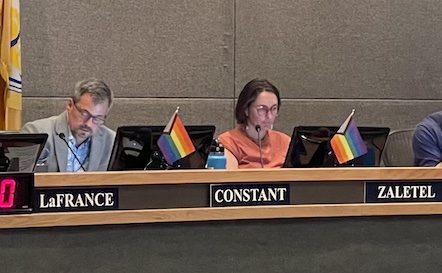
An Anchorage Assembly ordinance to give the Assembly ill-defined and unlimited powers to remove the mayor were the topic of a special meeting for the purpose of public testimony on Wednesday night. The room was hot, and the air conditioning seemed to have failed, and the public was even hotter about the presumption of powers by the Assembly to create a path that seemed obviously targeting Mayor Dave Bronson. Their patience wore thin as Assembly Chairwoman Suzanne LaFrance ordered them to stop clapping and ordered clappers removed from the room.
The public had started their testimony last week, after having waited for five and a half hours, only to be turned away after the room got too rowdy for Vice Chairman Chris Constant.
Tonight was even more rowdy. It appeared that only one person spoke in favor of the ordinance, and it was quickly pointed out to her by the Assembly members themselves that she was misunderstanding what was in law and what was being proposed. She approached and left the podium wearing a mask.
Later, a young girl approached the microphone and read her statement opposing the ordinance, and then stood in silence. The audience behind her then rose and began singing the National Anthem. Assembly Chairwoman LaFrance tried to stop them to no avail.
“Folks, please…refrain from singing and clapping,” LaFrance said, before everyone in the audience joined in, hands over hearts. One member of the audience could be heard yelling to the liberals on the Assembly, “Keep your seat, trash!”
Only three members of the Assembly rose out of respect for the National Anthem. — Jamie Allard, Randy Sulte, and Kevin Cross. The others — LaFrance, Chris Constant, Forrest Dunbar, Meg Zaletel, Kameron Perez-Verdia, and Pete Petersen sat.
At the end of the song, there was whistling and shouting all around. LaFrance then asked for the building security to come to the front, and she had a man removed from the room, as she does nearly every meeting.
A similar protest event took place in October, 2021, when Anchorage residents also broke into song to protest the forced masking of people in Anchorage, a measure passed in an ordinance by the liberal members of the Assembly. That time, the people sang “The Battle Hymn of the Republic.”
AO 2022-60 was drafted to give the Assembly a path that will allow them to remove the mayor for almost any reason. The parameters they have given themselves are broad. If the ordinance passes, and it appears likely to, it will be most likely contested in court as a breach of the separation of powers in the city charter.
Over 100 people attended the meeting on Wednesday. At the end of the meeting, Assemblyman Chris Constant stalled so the clock would run out. Assemblywoman Jamie Allard moved to postpone the ordinance indefinitely, but the liberal majority voted to postpone until July, when they will have the 12th member, who will be a downtown liberal.
Edited: The next meeting on this ordinance, and a likely vote, is scheduled for June 7.
(Pictured above, Andrew Gray and his family pose as he files for House.)
Alaska State Sen. Tom Begich, a Democrat for the liberal heart of Anchorage, pulled a fast one today, deciding to not file for the downtown Senate Seat I for a third term. He evidently told no one but his legislative aide, Loki Tobin, a registered Democrat. Tobin filed for the seat before today’s deadline in a deftly executed political move. Heather Herndon, a political undeclared, is in that race, too, so it’s Tobin and Herndon.
In other races of interest around the state:
Anchorage Senate Seat H: In last-minute maneuvers, Rep. Matt Claman of Anchorage decided to not fie for his seat and filed against Sen. Mia Costello.
Anchorage Senate Seat G: Sen. Elvi Gray-Jackson, Democrat, has just one Republican to worry about — candidate Marcus Sanders.
Eagle River Senate Seat L: Clayton Trotter jumped into the Senate race to run against Rep. Kelly Merrick, Joe Wright, and Rep. Ken McCarty, all Republicans running for Senate Seat L. No Democrats filed for the seat.
Wasilla Senate Seat M: Sen. Mike Shower, a Republican, picked up a Republican competitor in Doug Massie, former director of the Wildlife Division for the Department of Public Safety.
Fairbanks Senate Seat P: Fairbanks Mayor Jim Matherly, a Republican, had filed for Senate, and Sen. Scott Kawasaki made it official today that he is staying in the race. Kawasaki is a Democrat.
Fairbanks/Interior Senate Seat R: Sen. Click Bishop of Fairbanks, a Republican, picked up a competitor in Elijah Verhagen, who has served as an aide in the Legislature in the past and who is more conservative than Bishop. Verhagen is from Nenana and ran for House two years ago. Bert Williams of the Alaskan Independence Party is also in the mix for Seat R.
Bethel Senate Seat S: Willy Keppel filed against Democrat Sen. Lyman Hoffman. Keppel is with the Veterans Party, one of 1,372 registered members of that party in the whole state.
House seats of interest:
Ketchikan District 1: Shevaun Meggitt, nonpartisan, has filed to run against Rep. Daniel Ortiz, also a nonpartisan. Republican Jeremy Bynum has filed, too. Ketchikan is an enigma, as it is a red district that cannot seem to elect conservatives.
Sitka-Hoonah District 2: Rebecca Himschoot has filed for House. A Sitka nonpartisan, she’ll run against Kenny Skaflestad, a Hoonah Republican. This is the seat being vacated by Rep. Jonathan Kreiss-Tomkins.
Juneau District 3: Rep. Andi Story, Democrat, will skate to reelection without an opponent in this north Juneau seat.
Juneau District 4: Rep. Sara Hannan, a Democrat, will be challenged by Darrell Harmon, undeclared.
Kodiak District 5: Rep. Louise Stutes filed for reelection. A Republican, she is challenged by Republican Benjamin Vincent, also of Kodiak.
Homer District 6: Republican Rep. Sarah Vance has two challengers, Ginger Bryant, nonpartisan, and Louis Flora, nonpartisan.
Soldotna District 6: Republican Rep. Ron Gillham has a challenger in Republican Justin Ruffridge, who is considered considerably more moderate than Gillham.
Nikiski District 8: Republican Rep. Ben Carpenter has no opponents. He can harvest peonies at his farm.
South Anchorage District 9: Republican Rep. Laddie Shaw picked up an opponent from the Democrats, one David Schaff.
South Anchorage District 10: Former Rep. Craig Johnson, a Republican, has filed, along with libertarian Mikel Insalaco, Democrat Sue Levi, and Democrat Caroline Storm. It’s a red district.
South Anchorage District 11: Walter Featherly, a Democrat, made a surprise appearance at the Division of Elections to file for an already crowded seat. Republican Julie Coulombe, nonpartisan Jennifer Sonne, and Republican Ross Beiling were already registered. The Democrats have moved away from tire-slashing fantasizer candidates this cycle and it looks like Sonne is going to be without their support after her bizarre social media outbursts.
South Anchorage District 12: Jay McDonald had filed for the seat weeks ago, and on Wednesday, Rep. Cal Schrage made his campaign for reelection official. He caucuses with the liberals, and McDonald is going after his record.
Anchorage House District 13: This midtown Anchorage seat now has Republican Kathy Henslee in the race. Henslee had filed for Senate but has switched her race to go for the House seat. Current incumbent Democrats Rep. Andy Josephson and Chris Tuck are both running for the seat, as is Alaskan Independence Party candidate Tim Huit.
West Anchorage House 14: This liberal district has Republican Nicholas Danger running, as well as nonpartisan liberal Alyse Galvin.
Anchorage Bayshore House 15: Rep. Tom McKay, a Republican, is running for reelection, joined in the fray by Republican David Eibeck and Democrat Danny Wells.
Anchorage West House 16: Jennifer Armstrong, a Democrat, along with Rick Beckes of the Alaska Constitution Party, Joel McKinney of the Republican Party and Liz Vazquez, a Republican are vying for the seat.
Anchorage central House 17: Rep. Harriet Drummond and Rep. Zack Fields, both Democrats, are thrown together in this district and neither backed down, so may the best man or woman win.
Anchorage House 18: Lyn Franks, a Democrat, Cliff Groh, a Democrat, and Rep. David Nelson are filed.
Anchorage Downtown House 19: Genevieve Mina, a Democrat, and Russell Wyatt, also a Democrat, are the only candidates.
Anchorage House 20: Paul Bauer and Jordan Harary, both Republicans, will go up against Scott Kohlhaas, Libertarian, and Andrew Gray, Democrat who has been highly theatrical at the Anchorage Assembly on many occasions.
Anchorage East House 21: With Rep. Liz Snyder withdrawing, Peter Knox, a nonpartisan, Donna Mears, a Democrat, Patrick Harrock, a nonpartisan, and Forrest Wolfe, a Republican will duke it out.
Anchorage East House 22: Lisa (Vaught) Simpson, a Republican, and Stanley Wright, also Republican, were joined by Ted Eischeid, a Democrat.
Eagle River House 23: Republican Jamie Allard was joined in the race by Republican Roger Branson.
Eagle River House 24: Republicans Sharon Jackson and Dan Saddler are joined by Daryl Nelson, a Democrat, in this very red district.
Palmer/Valley House 25: Republican Rep. DeLena Johnson and Republican Lawrence Wood will be on the ballot.
Valley House 26: Republican Rep. Cathy Tilton has a competitor with Jessica Reimann, Republican and Daniels Stokes, Libertarian, in this deeply conservative district.
Valley House 27: Republican Rep. David Eastman has two Republican challengers: Brendan Carpenter and Stuart Graham.
Valley House 28: Open seat in the Valley attracted three Republicans: Jesse Sumner, Jessica Wright, and Rachel Allen.
Mat-Su House 29: Republican George Rauscher has a competitor from Valdez: Elijah Haase, registered nonpartisan.
Willow House 30: Rep. Kevin McCabe, a Republican, has Republican company on the ballot: Joe Griffin, Doyle Holmes, and Democrat Joy Mindiola.
Fairbanks House 31: Republican Rep. Bart LeBon is being challenged by Republican Kelly Nash, Democrat Maxine Dibert.
Fairbanks/North Pole House 32: Republicans Tim Givens and Will Stapp are on the ballot.
North Pole House 33: Only Republican Rep. Mike Prax will be on the ballot. That’s it.
Fairbanks House 34: Republicans Nate Demars and Frank Tomaszewski will take on incumbent Democrat Rep. Grier Hopkins in a district that Hopkins will have a tough time winning.
Fairbanks House 35: Republicans Kevin McKinley and Ruben McNeill will be on the ballot with Alaska Constitution Party member Kieran Brown, nonpartisan Tim Parker, and Ashley Carrick, a former legislative aide and a Democrat.
Interior House 36: Rep. Mike Cronk, a Republican, picked up a challenger in Angela “Fitch” Fowler, a Democrat from Fairbanks. Cronk is from Tok. It’s a wildly Republican district.
Dillingham House 37: No one filed against Rep. Bryce Edgmon, who is a Democrat running under the label of nonpartisan.
BethelHouse 38: Bob Herron, who once served as a state representative for the Bethel area, is not moving forward with his race for House. It was a family decision, he said. City Assistant Manager CJ McCormick, a Democrat, is running, having been recruited by Mayor Mark Springer, who is dropping out of the race. The seat is currently held by Democrat Rep. Tiffany Zulkosky, who is not running for reelection. McCormick is a shoo-in, with no one running against him.
Nome House 39: Rep. Neal Foster, a Democrat, is challenged again by Tyler Ivanoff of Shishmaref, who a member of the Alaskan Independence Party.
Barrow/Utqiagvik House 40: Nonpartisan Rep. Josiah Patkotak is the only candidate.
Edgar Blatchford, who was elected as mayor of Seward and also once served as commissioner of the Department of Community and and Regional Affairs in the 1990s, has filed for U.S. Senate as a Democrat.
Before 2016, Blatchford was a Republican, but he has been an active Democrat since 2016, when he first filed for the office of U.S. Senate, losing in the primary to Ray Metcalfe. In 2018, he filed to run for lieutenant governor in the 2018 Democratic primary, but dropped out of the race on June 8.
He has a bachelors degree from Alaska Pacific University, a law degree from University of Washington, a masters degree from Columbia University, and a masters of public administration from Harvard University. On top of that, he has a Ph.D. from the University of Alaska, where he has taught journalism.
Blatchford also served in the administration of Gov. Frank Murkowski as commissioner of Community and Economic Development. He was mayor of Seward from 1999 to 2003. An Inupiaq, Blatchford was born in Nome and now lives in Anchorage.
Back in the 1980s, Blatchford founded the publishing company Alaska Newspapers Inc. and has been a professor at the University of Alaska Anchorage since 1995.
Last month another Democrat filed for U.S. Senate: Pat Chesbro, an Alaska Democratic Party officer from Wasilla.
Blatchford would peel away votes from both Sen. Lisa Murkowski, and Chesbro, if he makes it past the open primary in August and into the final four in the general election.
So far, the two big campaign for U.S. Senate are Murkowski and Republican Kelly Tshibaka, who is more conservative than Murkowski. There are 21 people filed for the office, which comes up for election every six years.
A special meeting of the Anchorage Assembly was set for Wednesday, June 1 at 5 pm to continue taking testimony on an ordinance that is hostile to the mayor of Anchorage. Anchorage Ordinance 2022-60 would give the Anchorage Assembly the power to remove the mayor for almost any reason it deems sufficient.
The ordinance was written with help from the former City Manager and failed mayoral candidate Bill Falsey. It was introduced last month by Assembly Vice Chair Chris Constant, who has said on several occasions he believes the mayor has acted illegally. This ordinance would give Constant the power to begin proceedings to remove Mayor Dave Bronson, who was elected over opponent Falsey and Assemblyman Forrest Dunbar.
The Assembly will meet at 5 pm at the ground floor of the Loussac Library, and intends to continue taking public testimony on Thursday in Room 155 at City Hall at 10 am. The midday meeting on Thursday in a room too small for public involvement is a method the Assembly uses to end public testimony.
On Tuesday night, another small forest fire occurred in urban Anchorage, and it was only by luck that it was contained quickly. This one was in a homeless encampment behind the Monster Wash and Walgreens Drug Store on West Dimond Blvd. The Campbell Creek trail and greenbelt is on the other side of where the fire occurred.
An off-duty member of the mayor’s staff spotted the smoke, then saw flames, and called 911. Crews arrived within minutes and contained the blaze, preventing it form spreading to homes and businesses in the area.
“I cannot express my gratitude enough to the men and women at our fire department who are doing double times these days with the hot & dry weather. Folks, if you see smoke around town call 911 and alert authorities. If you see illegal camps, report those ASAP, so we can abate them and prevent further fires from starting,” the mayor said.
Anchorage is experiencing hot, dry weather that is expected to continue for several days. In the past week, there have been at least 40 fires reported in Anchorage. They have not all been in homeless camps, but the mayor’s office said several of them have been in illegal encampments.
It’s gone from “The Few. The Proud. The Marines.” to “Pride Month” rainbow celebrations. The U.S. Marine Corps celebrated the first day of June with a graphic that features a helmet adorned with rainbow bullets in honor of lesbians, gays, bixsexuals and other sex appetite preferences. More is surely to come from the other branches of military service.
“Throughout June, the USMC takes #Pride in recognizing and honoring the contributions of our LGBTQ service members,” the U.S. Marine Corps said on Facebook. “We remain committed to fostering an environment free from discrimination, and defend the values of treating all equally, with dignity and respect.”
President Joe Biden also got in on the action, proclaiming June as Lesbian, Gay, Bisexual, Transgender, Queer, And Intersex Pride Month.
“This month, we honor the resilience of LGBTQI+ people, who are fighting to live authentically and freely,” Biden wrote.