A standoff between Anchorage police and a wanted felon unfolded at an encampment on the 1700-block of A Street on Sunday, when 42-year-old T J Walker attempted to set an occupied tent on fire and then threatened officers with an ax.
The incident occurred late at night, when Anchorage Police Dispatch received a call reporting that Walker was trying to set a tent on fire and was threatening its occupant with an ax. The caller told Dispatch that Walker had an outstanding felony warrant and was making threatening statements.
K-9 units and patrol officers encountered Walker, who was armed with an ax and who advanced toward them. Officers, in a bid to de-escalate the situation, identified themselves and repeatedly ordered Walker to drop the ax.
After several tense moments, Walker finally relinquished the ax but continued to move aggressively toward officers, despite multiple warnings and commands. K-9 Ray was called into service after Walker appeared determined not to cooperate. The police dog engaged with Walker, biting him on the arm. Walker fought back, attempting to choke K-9 Ray with his other arm.
Officers then took Walker to the ground to subdue him. Despite more resistance, Walker was ultimately handcuffed and taken into custody. Following the incident, Walker was transported to a hospital for treatment of the dog bite. Once medically cleared, he was remanded to the Anchorage Jail on his existing felony warrant.
In addition to his prior charges, Walker now faces new charges, including Assault III, Harm to a Police Dog II, and Resisting arrest.
Neither K-9 Ray nor any of the other officers involved in the incident sustained injuries during the confrontation. The person inside the tent, who had reason to fear immediate physical harm, emerged unscathed. Authorities discovered that the victim and Walker were known to each other, though the motive behind Walker’s aggressive actions toward the victim remain under investigation.
Mike Barton, who served twice as the commissioner of the Department of Transportation during the administrations of Gov. Walter J. Hickel and Gov. Frank Murkowski, passed away Nov. 21 after a long illness. He was a longtime resident of Juneau.
Born in Lincoln, Neb., Barton’s professional career began in 1959 when he joined the U.S. Forest Service as a research technician, while pursuing his education at the University of Michigan.
In 1961, he earned a bachelor’s of science degree in forestry, followed by military service in the U.S. Army. His dedication to the field of forestry led him to complete a master’s in forest hydrology in 1965, also at the University of Michigan.
Barton’s career within the U.S. Forest Service included work as a watershed scientist on the Superior National Forest for three years before advancing to the role of chief of the Water Quality Section in the Eastern Region. From 1971 to 1974, he served as the Deputy Forest Supervisor of the Ottawa National Forest in Minnesota.
In 1974, Mike Barton moved to Washington, D.C., where he held various critical roles within the U.S. Forest Service. He served as a water rights and water quality specialist, a program evaluation and system development specialist, and eventually became the director of watershed management.
In 1979, Barton’s work took him to Juneau, where he served as the Deputy Regional Forester for the Alaska Region. He rose to the position of Regional Forester in 1984, overseeing the vast Tongass and Chugach National Forests, covering 22 million acres.
Throughout his career, Barton received numerous awards for his exceptional natural resource management skills. His role as team leader on the National Fisheries Task Force was instrumental in revitalizing and strengthening the Forest Service fisheries program.
Barton played a vital role in the restoration of Prince William Sound following the Exxon-Valdez oil spill. As a founding member of the Oil Spill Trustee Council, he represented the Secretary of Agriculture in efforts to mitigate environmental damage. He also served on the Federal Subsistence Board, which established the subsistence program for federal lands in Alaska.
Beyond his government roles, Barton was deeply involved in other organizations. He actively participated in the Society of American Foresters, the Soil and Water Conservation Society of America, the American Forestry Association, the American Fisheries Society, the National Woodland Owners Association, Ducks Unlimited, the Rotary Club, and the Little League Baseball Program.
He served on the Alaska Mental Health Trust Authority for five years and chaired the group from 2013 to 2015.
In 1994, Mike Barton retired from the U.S. Forest Service and was named by Gov. Hickel to be commissioner of the Department of Transportation and Public Facilities. Hickel did not run for reelection in 1994, and he was succeeded by Joe Perkins.
Barton was later named commissioner of DOT by Gov. Frank Murkowski. His guiding motto throughout his career was, “Never pass up an opportunity to take on more responsibility.”
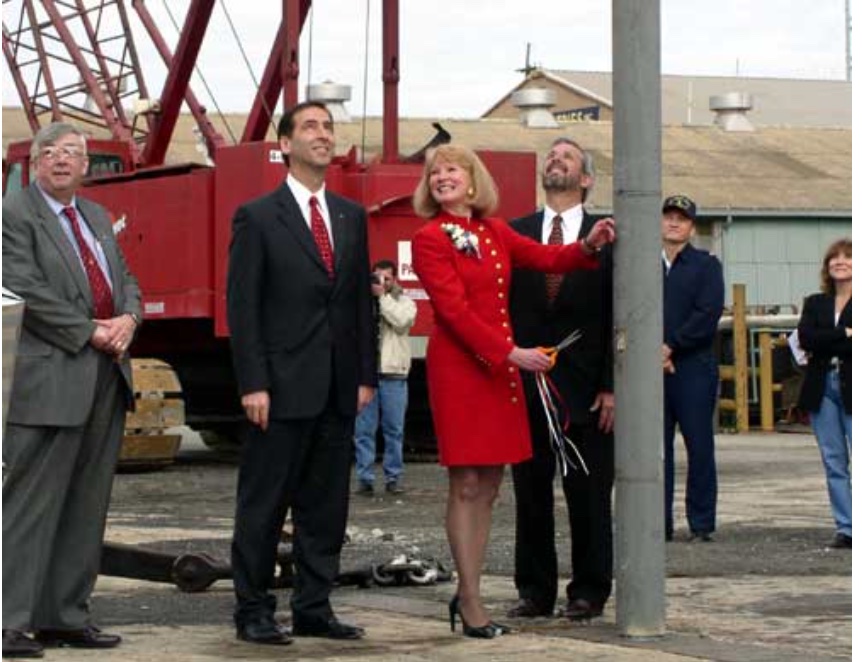
Lt. Gov. Loren Leman and his wife, Carolyn, at the dedication of the new Alaska Marine Highway vessel, the M/V Lituya in 2003. DOT&PF Commissioner Mike Barton is on the left. Photo credit: Sharon Gaiptman, Alaska Marine Highway System.
In addition to being a Rotarian, Barton was a longtime member of the Capital City Republicans. His widow is Sharon Barton, a longtime Juneau civic leader. More details will be added to this report, including the time and place of a memorial service, as they become available.
Sunday set a record for airline travel in America. The Transportation Security Administration reports that it screened the most people in a single day — 2,907,378 travelers went through security stations at airports.
“It was also an incredibly smooth day of travel with fewer than one-half of one percent of 51,332 scheduled flights canceled,” according to FlightRadar.com, a real-time flight tracking website.
In spite of a major snowstorm that moved across the nation’s heartland, only three flights through Chicago O’Hare International Airport were canceled, although more than 900 were delayed. Some 230,000 passengers passed through O’Hare on Sunday.
Seven of the top 10 busiest days in TSA history have been recorded in 2023. Before Sunday, June 30, 2023 was the busiest day for passenger screening, with 2.884 million passengers, the TSA said.
Democracy is not “heads I win, tails you lose,” but some left-leaning reformers want it that way. When they disagree with election outcomes, they demand wholesale changes to the process. Ranked-choice voting, or RCV, is the latest example.
Normal elections are “one person, one vote”— each voter casts one vote in each race, with a single, simple process for counting votes. But in RCV elections, voters can rank multiple candidates and there may be many rounds of counting, adjusting and recounting votes.
The mess this creates is not theoretical. This summer, Arlington County, Virginia, experimented with RCV in a primary election. The Washington Post noted “emerging pushback” before election day, with “frustration … focused on the wonky, hard-to-follow way that votes are counted.” Civil rights groups raised concerns about disenfranchisement. After the election, Arlington officials announced the county will go back to normal elections.
RCV has been historically rejected. The system was invented in Victorian England but failed to gain traction there. It was triedin various American cities early in the 20th century, but every one of them subsequently repealed it. More recently, Utah created a pilot program for local governments to use RCV. Half of those that tried it have already ended the experiment and returned to a normal process.
So who really wants RCV? And why? Most of the push comes from a network of advocacy organizations on the political left. They claim RCV will reduce partisanship, make campaigns less negative, and give voters more choices. None of that seems likely. In fact, the system has flipped two congressional seats — in Alaska and Maine — from Republican to Democrat.
The leading proponent of RCV is FairVote. The Maryland-based think tank identifies itself as “the driving force for RCV.” Founded in 1992, the group pushes RCV at the local and state levels. Supporters are a who’s who of far-left donors, including George Soros’s Open Society Foundations, other Soros-connected foundations, the Arnold Foundation, and the Tides Foundation.
Another group pushing RCV is Unite America. Despite claims to bipartisanship, its leadership leans way left. For example, its board has three former members of Congress — two Democrats and one Republican. The latter is former Rep. Carlos Curbelo, who was the most liberal Republican in Congress at the end of his time in office, according to American Conservative Union rankings.
The founder of Unite America, Charles Wheelan, ran unsuccessfully for Congress as a Democrat and has contributed to numerous Democratic Party causes. The co-chair of Unite America’s board, and one of its majorfunders, is Kathryn Murdoch. She also gives almost exclusively to Democratic candidates and campaign committees. In 2019, The New York Times reported that Murdoch and her husband had “already invested millions” in Unite America. Since then, Unite America has pushed RCV in at least 17 states.
Another major backer of RCV is Katherine Gehl, who advocates a more comprehensive — and radical — change to elections called “final-five voting.” She previously worked for Chicago Mayor Richard Daley and was an Obama appointee. She has served on the board of Unite America and runs her own national nonprofit, the Institute for Political Innovation.
Gehl’s final-five proposal incorporates RCV into a scheme that would also eliminate political parties from the nominating process. Instead, a preliminary election would include all candidates regardless of party. It would be open to all voters, with each casting a single vote, and then the five candidates with the most votes would advance to a final RCV election.
A version of this plan became law in Alaska in 2020. Voters in Nevada passed it as a state constitutional amendment in 2022, with supporters outspending opponents more than ten to one. Gehl, the top donor, gave more than $6 million. Kathryn Murdoch gave $2.5 million. Because Nevada requires amendments to pass in two successive general elections, it will only take effect if passed again next year.
RCV is often part of the larger agenda to reduce or eliminate the role of political parties. Gehl says the parties have “plagued and perverted” our politics and is hard at work bankrolling a shift to a system where major donors would have even more power.
Ranked-choice voting is a particularly dangerous proposal. By making elections more complicated and less transparent, RCV threatens to accelerate distrust in democratic processes. This can only drive down participation and feed suspicions—held by voters on both sides—that elites are rigging the game. And in the case of RCV, these suspicions may be close to the mark.
Trent England and Jason Snead are coauthors of The Case Against Ranked-Choice Voting, from which this article is adapted.This column first appeared in The Daily Caller.
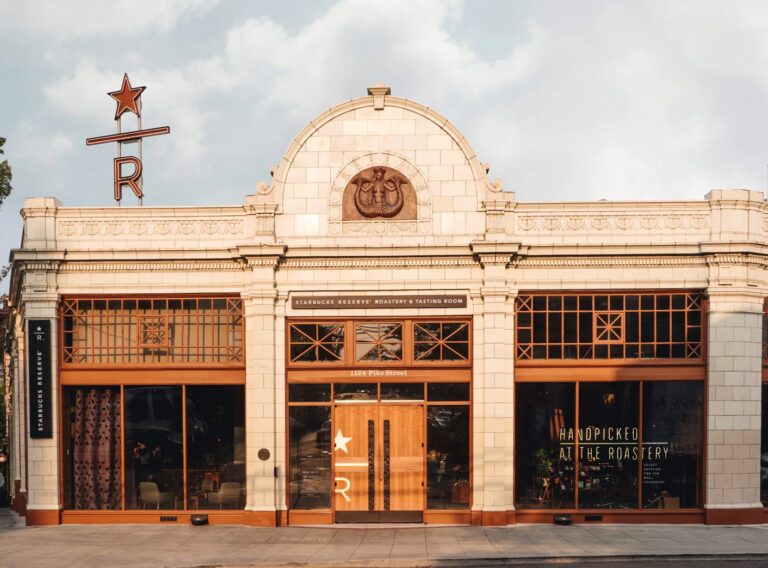
The Starbucks Reserve Roastery in the Capitol Hill neighborhood of Seattle was left vandalized after what employees said were pro-Hamas protestors spray-painting and breaking glass at the location, which was subsequently closed for repairs. Employees who were in the building at the time escaped through the back door. The vandals scrawled, “Starbucks supports genocide” and “Enter if you support genocide” in front of the store.
Earlier this fall, Starbucks Workers Union put out a statement in support of Hamas.
The Friday vandalism incident leading to the Saturday closure at the Starbucks store followed a pro-Hamas group of several dozen protesters who occupied the traditional tree-lighting ceremony at Westlake Center in downtown Seattle on Friday. The protesters took over the stage and children and their parents who were there for the festivities felt threatened, as police did not arrest the disrupters of the sanctioned event.
On Thursday, pro-Hamas protestors glued themselves to the pavement during the Macy’s Thanksgiving Day Parade in New York.
On Saturday night in Vermont, three men who were dressed in Palestinian-style scarves were shot by a man on foot. The three men, all college students, were on their way to a Thanksgiving Day dinner in Burlington. This violent crime has been labeled a hate crime by authorities, while the vandalism crime against the Starbucks and the fear caused at the Christmas tree ceremony in Seattle was not labeled a hate crime.
The Department of Justice has reported a strong uptick in threats against both Muslims and Jews since Hamas attacked Israel on Oct. 7, leading to a conflict that has become the deadliest war for Israel since the Yom Kippur War of 1973.
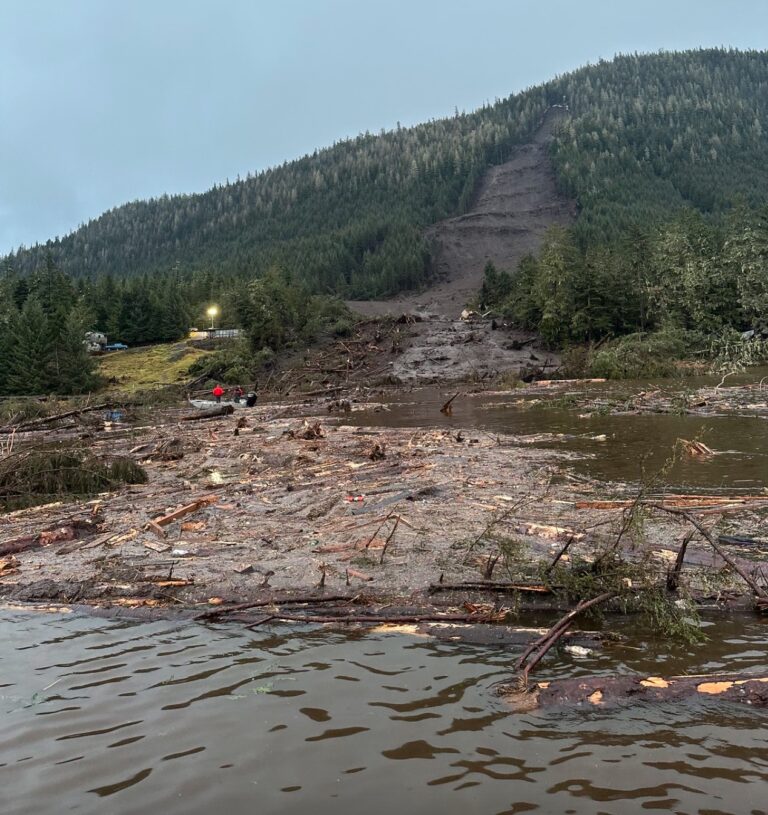
On Saturday evening, the body of 11-year-old Kara Heller was recovered from the landslide debris in Wrangell, the small town of 2,127 people on Wrangell Island in Southeast Alaska. A search has gone on for days since the Nov. 20 landslide across Zimovia Highway, and the discovery of Kara’s body leaves just two people known to be still missing, but presumed by most in the community to also be deceased: Otto Florschutz, 65; and Derek Heller, 12.
A scent detection dog signaled to searchers to look in an area of the debris and with the assistance of an excavator, led to Kara’s remains. Next of kin and the State Medical Examiners Office have been notified. A scent detection K9 team remains on standby and will resume searching if new information or evidence leads to a specific search area, the Department of Public Safety said.
The entire Heller family of five appears to have been taken by the disaster.
In 2004, Alaska introduced a regulatory measure known as the “80th Percentile Rule,” requiring health insurers to reimburse medical providers at least up to the 80th percentile of billed charges within the same geographical area. However, this rule is set to be repealed by the Alaska Division of Insurance on Jan. 1.
A consortium of medical providers, representing a significant portion of the healthcare community, has taken legal action against the state in an effort to preserve this rule. Their argument says that without it, insurers will refuse to negotiate with providers and could attempt to coerce providers into joining insurance networks.
“After months of attempting to communicate with the Alaska Division of Insurance on the dangers of repealing the 80th Percentile Rule without a replacement, we have reluctantly filed suit to protect the countless Alaska families, workers and patients impacted by this misguided regulatory repeal. Every downstream result of abolishing the 80th percentile rule and its consumer protections means less access to care, fewer doctors to see, bigger bills for patients, and the return of the predatory insurance practices that the rule successfully worked to eliminate,”said Dr. John Morris, Chair of the Coalition for Reliable Medical Access.
Premera Blue Cross, on the other hand, has vigorously advocated for the elimination of the 80th Percentile Rule. It asserts that the original intent of this regulation was to shield patients from balance billing (when a provider bills you for the difference between the provider’s charge and the allowed amount), but it has actually contributed to Alaska’s escalating healthcare costs. According to Premera Blue Cross, the rule allows providers to gradually raise charges with limited motivation to control expenses or join insurance networks.
The Division of Insurance has determined that the 80th Percentile Rule is a driving factor behind the rising medical costs in Alaska.
Medical professionals and providers argue that without adequate reimbursement, many doctors may opt to leave the state.
The coalition of healthcare entities filing suit contends that repealing the rule without implementing a suitable replacement would expose doctors and providers to unfair treatment by profit-driven insurance companies. The absence of this rule could grant insurance companies the power to dictate the winners and losers within the healthcare system, potentially leading to smaller provider networks and reduced access to medical care for certain individuals.
“Repealing the 80th Percentile Rule without a replacement turns back the clock on the significant progress Alaska has made in expanding our healthcare system over the last 20 years and hands complete control over to out-of-state insurance companies,” said Dr. Steven Compton, President of the Alaska State Medical Association. “This ill-conceived regulatory change only magnifies the control big, lower-48 insurance companies continue to hold over patients and their ability to choose the medical provider of their choice. Sadly, in their effort to quietly push this repeal forward, the Division of Insurance and their insurance industry allies continue to misinform Alaskans, misstate facts, and ignore the harm they’re doing to Alaska patients.”
The 80th Percentile Rule protects patients from balance billing and out-of-pocket costs for healthcare, and encourages insurers to work with providers in good faith, the Alaska doctors said. Further, according to the coalition, the federal No Surprises Act applies only to emergent care and does not replace patient protections in the 80th Percentile Rule.
The 80th Percentile Rule does not apply to Alaska Native and American Indian healthcare, which is covered by the federal government, nor to Veterans Administration patients. However, it does affect those covered by major insurers such as Premera Blue Cross and Moda, some of the the largest insurers in the state and in America
The lawsuit was filed in Anchorage Superior Court by the Coalition for Reliable Medical Access, made up of various organizations, including the Alaska State Medical Association, the Alaska Medical Group Management Association, the Alaska Podiatric Medical Association, the Alaska Physical Therapy Association, and the Alaska Chiropractic Society.
Early Saturday morning, Anchorage police and first responders raced to the 3400 block of Greenland Drive in the Spenard neighborhood, where one man was found dead of gunshot wounds, and another was taken to the hospital with life-threatening gunshot holes.
A third man went to the hospital on his own, where he was treated for a gunshot wound and is expected to live.
“The motive and any relationship between the parties involved is under investigation,” police said in a statement. “Detectives believe this is an isolated incident and not random.”
There have been four gun incidents, ending in four deaths, and at least two wounded by gunshot in one week in Anchorage.
On Nov. 22, an officer discharged his service weapon when an agitated man on 36th Avenue and Latouche Street was walking on the road waving a machete. The man brandished another weapon and pointed it at the officer. The man was taken into custody. Details on the weapon he brandished were not provided by police.
On Nov. 21, 29-year-old Saina Fa’atoafe fatally shot a woman in the South Anchorage Walmart parking lot and then took his own life.
On Nov. 19, police were called to the area of North Bragaw Street and Thompson Avenue regarding a shooting. An adult man victim, 33-year-old Matagiofa J. Sione, was taken to a hospital, where he died of a gunshot wound. Police have not released the suspect’s name, but he was reportedly detained.
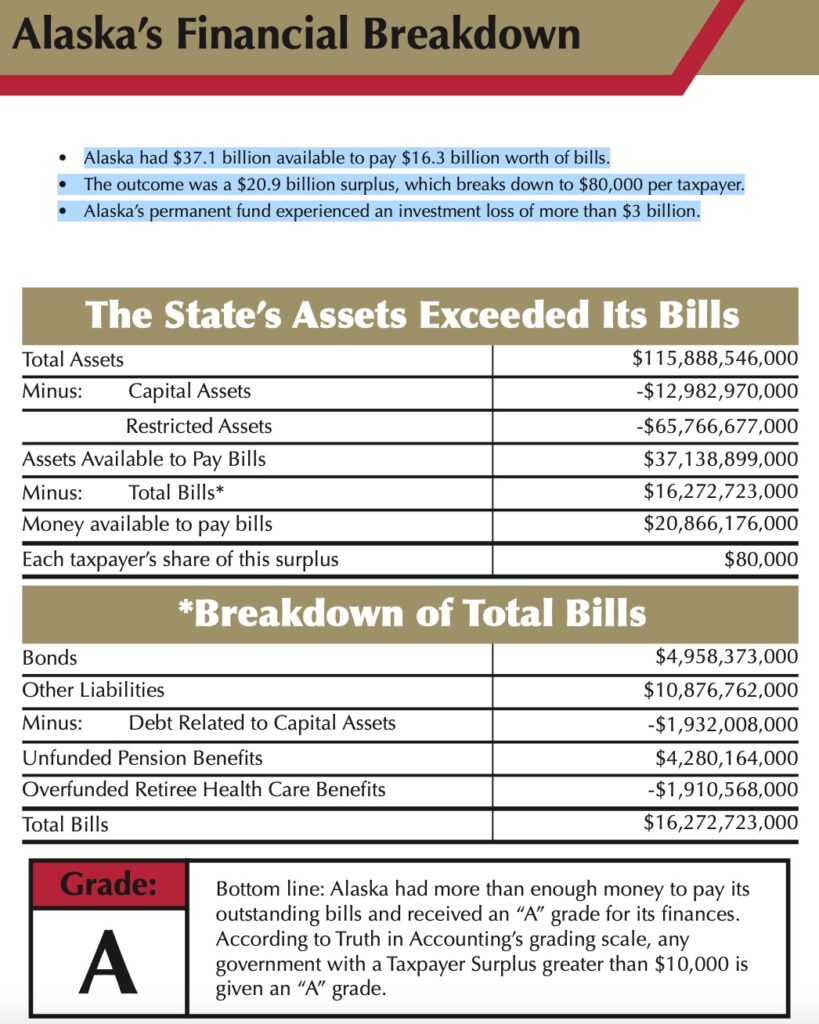
Alaska’s state budget condition was the strongest in the nation in 2022, with a surplus of $20.9 billion, according to the state’s latest audited financial report for fiscal year 2022.
The findings come from Truth in Accounting, a non-profit organization dedicated to providing citizens with clear, reliable, and transparent government financial information. The organization assigned Alaska an “A” grade for its financial performance.
The solid financial footing can be attributed to a combination of factors. Federal funding aimed at Covid-19 relief played a role, alongside an increase in economic activity linked to a growth in tourism.
Alaska had $37.1 billion available to pay $16.3 billion worth of bills, giving it a nearly $21billion surplus, coming out to $80,000 per taxpayer.
In comparison, California’s budget health received a D from Truth in Accounting. The Democrat-dominated state requires more than $18,000 from every taxpayer to pay its bills. Connecticut received an F, needing $50,700 from each of its taxpayers to pay all of its outstanding bills. Connecticut ranked #49, just behind the worst state — New Jersey, coming in at #50; New Jersey would need $53,600 from each of its taxpayers to pay all of its outstanding bills.
According to the organization, at the end of fiscal year 2022, 28 states did not have enough money to pay all of their bills. In total, debt among the states was $938.6 billion, down from $1.2 trillion at the end of fiscal year 2021.
State debt decreased mostly due to tax revenue increases due to the Covid lockdowns ending, and millions, if not billions, of dollars in federal Covid funds received by the states. That money added to the national debt, however, which is now over $33 trillion.
Every state except Vermont has a balanced budget requirement. This means that to balance the budget—as the law requires in 49 states—states should not carry any debt.
“However, we found that most states could not pay all of their bills. When states do not have enough money to pay their bills, TIA takes the money needed to pay bills and divides it by the estimated number of state taxpayers. The resulting number is a Taxpayer Burden™. Conversely, a Taxpayer Surplus™ is the amount of money left over after all of a state’s bills are paid, divided by the estimated number of taxpayers in the state,” said Truth in Accounting’s summary of the report.