Tuesday, August 18, 2026
Home Blog Page 589

Winter is coming: Will there be an OPEC oil embargo?

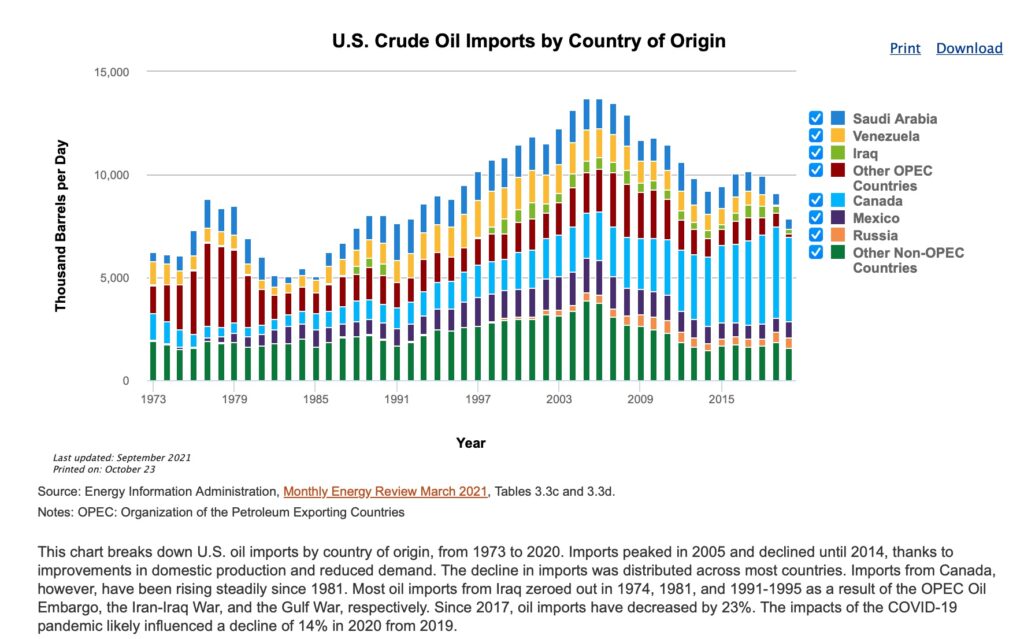
During the Yom Kippur War war between Arabs and Israel in 1973, the Organization of Petroleum Exporting Countries imposed an oil embargo against the United States in retaliation for the U.S. decision to supply the Israeli military.

It was 50 years ago this month, when President Richard Nixon asked Congress for $2.2 billion in emergency aid for Israel. The ensuing embargo ended U.S. oil imports from OPEC nations, and world oil prices began to destabilize.

The price of oil nearly quadrupled, going from $2.90 a barrel before the embargo to $11.65 by January 1974. The United States also had its first fuel shortage since World War II, and rationing was imposed by the federal government, along with lower speed limits to reduce consumption.

In an essay reflecting on the oil shortage of 1973, and the ensuing inflation, the Federal Reserve wrote, “Ultimately, the oil crisis of 1973 and the accompanying inflation was a result of many factors culminating in a perfect economic storm. The oil embargo of 1973 was just one of many complicating factors that led U.S. policymakers to overestimate our national potential and to underestimate their own role in the broad inflation that occurred throughout the 1970s.”

Arthur Burns, who was the chairman of the Federal Reserve at the time, said that the manipulation of oil prices and supplies by OPEC (then called OPEAC) came at a time when prices for industrial commodities were already rising at a rate of 10% annually, and many major industrial materials were scarce in the United States, which had gotten itself into a position of not being able to increase the amount of oil to the market in response to the oil embargo. Inflation skyrocketed.

OPEC had enormous power in the 1970s, which ended up being one of the most convincing reasons the Trans Alaska Pipeline System was approved by Congress.

That vote to allow the pipeline came in July 1973, with the Senate voting to end a three-year fight by environmentalists to stop the pipeline. That is when Vice President Spiro Agnew cast his first deciding vote — and the Trans Alaska Pipeline was approved.

On Nov. 7, Nixon announced Project Independence to promote domestic energy independence. There had to be a better path forward.

The embargo ended in March 1974, after some members of OPEC had decided enough was enough. But the higher prices created by the OPEC oil embargo remained.

The parallels between 1973 and 2023 — a 50-year timespan — are similar but different.

Today, as war between Israel and her enemies is once again threatening to destabilize markets, the energy policy that the Biden White House has enacted, and the Bidenomic economic policies that has driven inflation have left America in a tough position to quickly respond to changing markets.

Also, the Strategic Petroleum Reserve is now down to 351 million barrels, a drop of 14% since last year.

The SPR was established by President Gerald Ford two years after the embargo, when he signed the Energy Policy and Conservation Act on Dec. 22, 1975, setting for a U.S. policy to have a reserve of up to one billion barrels of petroleum.

The reserve, stable for generations, has been continually drained by the Biden Administration since 2021 to prop up the economy and keep fuel prices down. By the summer of 2022, however, the national average cost of gas was $5.02 per gallon, having increased over 132% since Biden took office in 2021, when it was $2.16 per gallon.

Although Hamas came on the scene later, in 1987, as a growth of the Muslim Brotherhood, it is committed to armed resistance against Israel and the creation of an Islamic Palestinian State where Israel now exists and has existed since first recognized as a country in 1948, as a place where Jews could live in peace. Hamas is now the point of the spear for what has been described as a war on the Jews.

Other global conditions have also changed in the 50 years since the OPEC oil embargo and the 75 years since Israel was first recognized as a country. China is a growing military power, and has just moved six warships into the Mediterranean Sea. Iran, once oppressed by the Soviet Union, is now an ally of Russia and is a sponsor of terrorism.

In addition, there’s a war that developed when Russia invaded Ukraine one year after Biden took office. The United States has spent over $75 billion defending Ukraine — all of the spending is borrowed money from primarily Japan, China, and other bond-holders.

Now, while the Biden Administration cuts off domestic production in Alaska, the United States is getting more of its oil from Canada than it did leading up to the oil embargo of 1973. The top five oil importers include:

  • Canada 52%
  • Mexico 10%
  • Saudi Arabia 7%
  • Iraq 4%
  • Colombia 3%

Read more about the oil embargo of 1973-74 at the State Department’s history page.

Soldotna reception for Nick Begich for Congress draws over 50

43

Congressional candidate Nick Begich spent time on the Kenai Peninsula last week, including attending a Soldotna fundraising even organized by his campaign’s regional chairwoman Cindy Glassmaker, and co-hosted by State House Reps. Ben Carpenter, Justin Ruffridge, and Sarah Vance, as well as Borough Mayor (and former Senate President) Peter Micciche.

Other co-hosts were Kristie and Tuckerman Babcock, Barb and Norm Blakely, Jill and Chad Schaefer, former House Speaker Mike Chenault, former Rep. Ron and Pam Gillham, and dozens others, including Kenai Peninsula Republican Women of Alaska.

Begich is making his second run for Congress. He is a Republican challenging incumbent Democrat Mary Peltola, who was in Washington, D.C. on Friday, voting for radical Rep. Hakeem Jeffries for House Speaker. Jeffries wants to lock up the 1002 Area of the Arctic National Wildlife Refuge, an area that had originally been set aside for oil development. Peltola returned on Saturday to attend and address the Alaska Federation of Natives convention in Anchorage, where she received multiple standing ovations.

Highest number of known, suspected terrorists apprehended at U.S. borders

14

By BETHANY BLANKLEY | THE CENTER SQUARE

There were 736 known or suspected terrorists (KSTs) apprehended at the northern and southern borders in fiscal 2023.

The Center Square initially reported 659 were apprehended for the fiscal year, as of Sept. 15, 2023. The fiscal year ended Sept. 30.

U.S. Customs and Border Protection published new data this weekend revealing that federal agents apprehended an additional 77 in the last two weeks of September.

The total of 736 is the greatest number of KSTs apprehended in recorded U.S. history.

A significant majority – 66% – were apprehended at the northern border, 487. By comparison, 249 were apprehended at the southwest border.

These numbers don’t include gotaways, which are believed to also include KSTs. “Gotaways” is the official U.S. Customs and Border Patrol term that refers to those who illegally enter the U.S. between ports of entry, don’t return to Mexico or Canada, and are not apprehended. They total at least nearly 1.7 million since January 2021. However, the number is believed to be much higher because not all gotaways are known and or reported.

With people illegally entering the U.S. from over 170 countries, former ICE Chief Tom Homan told The Center Square some of these countries they are coming from are sponsors of terrorism.

“If you don’t think a single one of the 1.7 million [gotaways] is coming from a country that sponsors terrorism, then you’re ignoring the data,” he said. “That’s what makes this a huge national security issue.”

KSTs are primarily apprehended two different ways by two different federal agents. Office of Field Operations (OFO) agents, who work at land ports of entry, are tasked with stopping “inadmissables,” or illegal foreign nationals, KSTs and a range of other people or contraband prior to entering the U.S.

Border Patrol agents work between ports of entry, patrolling the border to apprehend foreign nationals who’ve already illegally entered the U.S.

In addition to the majority of KSTs apprehended at the northern border, the majority were also caught attempting to enter through ports of entry.

OFO agents working at northern ports of entry have apprehended more than those at southwest ports of entry in four out of the last seven fiscal years.

In fiscal 2023, OFO agents apprehended 484 KSTs at northern border ports of entry and 80 KSTs at southwest border land ports of entry, totaling 564 at ports of entry at both borders.

Border Patrol agents apprehended 169 KSTs between ports of entry along the southwest border and three between ports of entry along the northern border, totaling 154.

The Terrorist Screening Dataset is the federal database that contains sensitive information on terrorist identities, CBP said. It originated as a consolidated terrorist watchlist “to house information on known or suspected terrorists but evolved over the last decade to include additional individuals who represent a potential threat to the United States, including known affiliates of watchlisted individuals.”

By comparison, OFO and Border Patrol agents combined apprehended a total of 478 KSTs in fiscal 2022, 173 in fiscal 2021, 199 in fiscal 2020, 541 in fiscal 2019, 357 in fiscal 2018, and 353 in fiscal 2017.

Alliances revealed: Mat-Su School Board candidate pulls child-grooming Trevor Project into campaign

Sydney Zuyus filed for school board in the heart of the conservative Mat-Su Valley, and then has proceeded to use social media to reveal her positions in what some see as a passive-aggressive way

It turns out, Zuyus is a big supporter of the Trevor Project, which is a transgender support nonprofit providing transgender services, secret counseling, and legal support to children — a lot of it without parental consent.

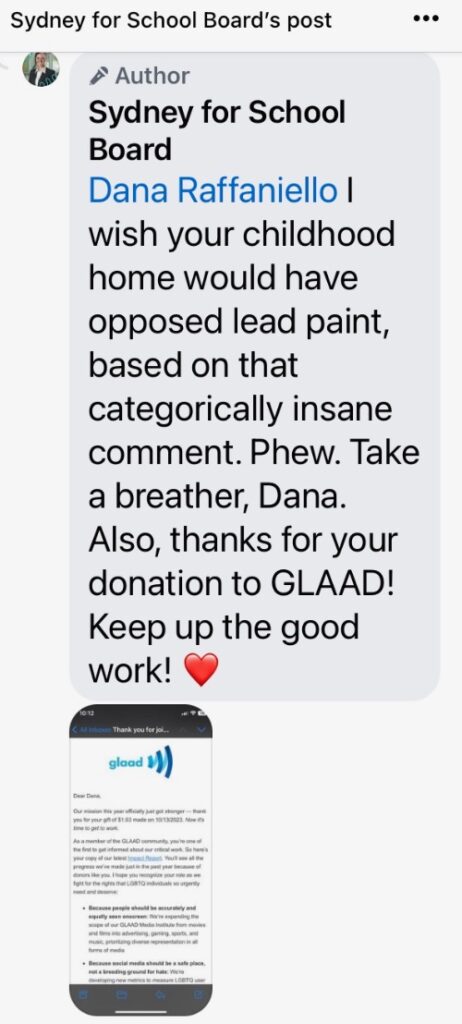
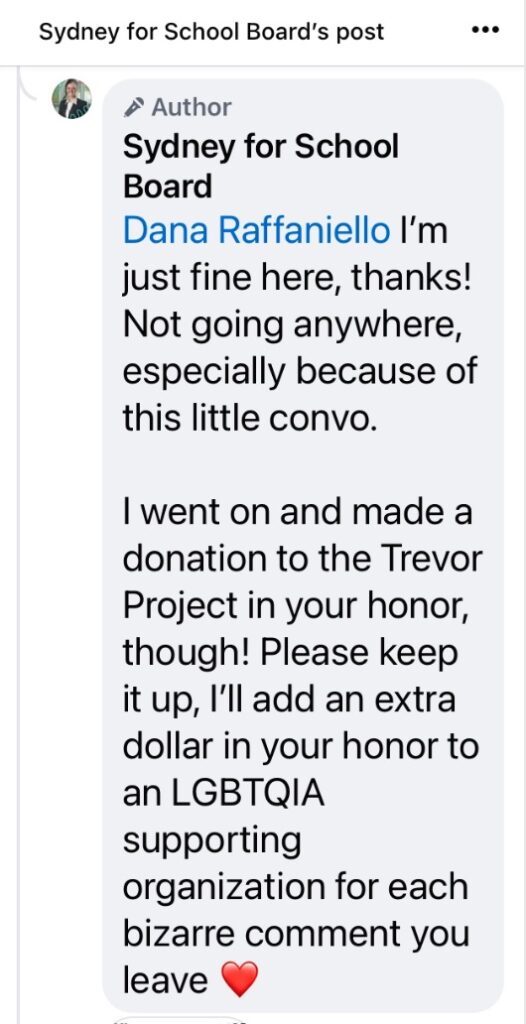
And anyone who opposes Zuyus — beware: She proceeded to make donations to the Trevor Project and GLAAD in honor of a constituent who dares to disagree with her positions. GLAAD is the Gay Lesbian Alliance Against Defamation, a media-monitoring nonprofit.

The Trevor Project was caught in a sting set up by a mother, who posed as a 15-year-old in order to see what kind of grooming was happening.

“A mother who is dealing with her own child’s gender dysphoria posed as a 15-year-old gender dysphoric biological female to access services online with the Trevor Project on Sunday. She found that every step of the way, she was guided further and further into affirmation of being trans, with no stop gaps along the way where a kid could be told that maybe they weren’t trans, and should take a moment to think about it,” according to the account documented at The Post Millennial.

“The mother, referred to here as Gloria though that’s not her real name, presented herself as confused about many things, but sure of being “not cishet,” and interested in knowing more about detransitioning.What emerged in the online chat with a representative from the Trevor Project was advocacy for transitioning, no information about detransitioning, and apparent certainty in the face of an uncertain teen who didn’t know where to go for help,” the website wrote. 

The Trevor Project guided Gloria to resources on hormones, including how to get them without parental awareness, chest binding, and an introduction into a community of teen transitioners.

“My child spent a lot of time on The Trevor Project website when she first asserted a ‘transboy’ gender identity around age 12,” Gloria told The Post Millennial. “She also spent a lot of time on Tumblr, Discord and other sites at the time. I had no idea they were actively grooming my child into trans ideology and a new belief system.”

Zuyus, who is running hard from the left on issues involving transgenders in the school setting, is trying to unseat conservative incumbent Kathy McCullom.

Zuyus is a communications professional at the Mat-Su Health Foundation, and yet has chosen to taunt voters who support parental rights.

While it’s uncommon for candidates to aggressively engage those who disagree with their positions by donating to causes simply as a way to badger and silence people, it’s not unheard of. In 2021, now-Sen. Forrest Dunbar made a donation in the name of Must Read Alaska’s publisher Suzanne Downing to “Choosing Our Roots,” another organization that assists children in choosing a gender alternative path by providing them shelter and other services.

Zuyus is supported by the teacher’s union, and the majority of her donations come from teachers.

Two years ago, Zuyus made a video of herself, proclaiming to be a Snake Queen:

Those who criticized Zuyus for it also received a dollop of her ire on social media:

“OOooOOoOoOoo, get ready, folks! They found me out!,” she wrote. “Via a time-lapse video of an illustration I did I don’t even know how many years ago, you all now know I am a Snake Queen! (See the aforementioned snake below).

Mat-Su Freedom Alliance, please, I beg of you, do NOT let your graphic designer quit their day job. However, I’ll give you points for comedic value. Not a ton of points but hey. Workshop it, you’ll get there. ??

It was apparently Zuyus’ way of deflecting the point that was being made by critics, who were taking interest in the candidate’s recent works of art and personal expression, and making sure voters were not being fooled by her attempt to appear conservative.

Also running from the Left for school board is Dianne Shibe, who is trying to unseat conservative incumbent Richard “Ole” Larson. Shibe is the former president of MSEA and has one of the largest campaign war chests in the state, with $38,227.59 reported in her 30-day report with Alaska Public Offices Commission. Most of her donations are from unions or from outside the Mat-Su, and outside the state.

Beyond Burisma: Joe Biden was paid $200K from a brother who was sent $200K from Americore on same day

By CASEY HARPER | THE CENTER SQUARE

 U.S. House Oversight Chair Rep. James Comer, R-Ky., released bank records Friday that he says show a $200,000 direct payment to President Joe Biden, the latest and possibly most significant piece of evidence in the ongoing investigation into the Biden family and associates’ business dealings and the president’s alleged role in them.

Biden has repeatedly denied benefiting from the overseas business dealings, which total well over $20 million in payments, according to IRS whistleblowers. He has not yet responded to this latest piece of evidence.

“A document that we’re releasing today raises new questions about how President Biden personally benefited from his family’s shady influence peddling of his name and their access to him,” Comer said in the announcement.

The document is a copy of a check apparently from James Biden, Joe Biden’s brother, to the president. Comer said there is significant evidence that the Biden family and associates received millions of dollars in payments from an array of overseas entities, but whether that money ever made it to the president has been in question.

Comer said this check could show it did.

​​”In 2018, James Biden received $600,000 in loans from Americore – a financially distressed and failing rural hospital operator,” Comer said. “According to bankruptcy court documents, James Biden received these loans ‘based upon representations that his last name, Biden, could open doors and that he could obtain a large investment from the Middle East based on his political connections.’”

Comer went on to say that money later went to James and Sara’s personal account.

“On March 1, 2018, Americore wired a $200,000 loan into James and Sara Biden’s personal bank account – not their business bank account,” Comer said. “And then on the very same day, James Biden wrote a $200,000 check from this same personal bank account to Joe Biden. James Biden wrote this check to Joe Biden as a ‘loan repayment,’” he added. “Americore – a distressed company – loaned money to James Biden who then sent it to Joe Biden.

“Even if this was a personal loan repayment, it’s still troubling that Joe Biden’s ability to be paid back by his brother depended on the success of his family’s shady financial dealings,” he added.

Now the committee is pressing for answers on the terms of this financial arrangement and if there were more like it.

“Does [Biden] have documents proving he lent such a large sum of money to his brother and what were the terms of such financial arrangement?” Comer said. “Did he have similar financial arrangements with other family members that led them to make similar large payments to him? Did he know that the same day James Biden wrote him a check for $200,000, James Biden had just received a loan for the exact same amount from business dealings with a company that was in financial distress and failing?”

As The Center Square previously reported, IRS whisteleblowers, previous bank records and FBI documents have been presented in recent months by the committee showing that the Biden family and associates received more than $20 million from entities in several countries, including China, Russia and Ukraine.

D.C. Democrats want Amazon to stop Alexa from using Rumble, Substack as sources of information

Two members of Congress both Democrats, have written to Jeff Bezos, the CEO of Amazon, expressing their concerns about the Alexa app. Alexa is a home smart device that acts as an information, news, and entertainment center and responds to voice commands.

Sen. Amy Klobuchar of Minnesota and Rep. Joe Morelle of New York are concerned that Alexa cites sources they don’t approve of — like the video site Rumble — and they worry about the spread of misinformation leading up to the 2024 election. Bezos is both the founder and CEO of Amazon, as well as the majority owner of the Washington Post.

The demands for answers come after a Washington Post story worried that Alexa sometimes refers to Rumble and Substack as sources when answering questions.

“Asked about fraud in the race — in which Joe Biden defeated President Donald Trump with 306 electoral college votes — the popular voice assistant said it was ‘stolen by a massive amount of election fraud,’ citing Rumble, a video-streaming service favored by conservatives,” the Washington Post wrote earlier this month.

“The 2020 races were ‘notorious for many incidents of irregularities and indications pointing to electoral fraud taking place in major metro centers,’ according to Alexa, referencing Substack, a subscription newsletter service. Alexa contended that Trump won Pennsylvania, citing ‘an Alexa answers contributor,'” the Post wrote.

The demand letter from Klobuchar and Morelle, dated Oct. 19, follows:

As we approach the 2024 elections, we write to express serious concern about recent reporting that Amazon Alexa – a virtual voice assistant tool relied upon by millions of Americans – is repeating false claims about the outcome of the 2020 elections and to request information about your efforts to combat this troubling content.

According to public reports, when asked about the 2020 presidential election Amazon Alexa cited unvetted sources to make false claims about election fraud. While Alexa relies on a variety of sources to answer questions, when asked about the 2020 presidential election it appears that some answers were provided by contributors instead of verified news sources.

This spreading of election-related misinformation and disinformation is particularly troubling given the emerging use of artificial intelligence to mislead voters. With some ballots for the 2024 election being sent out as early as this December, it is important that proactive measures are promptly taken so that voters can trust the information that is provided to them.

The two elected members then demanded answers to the following questions no later than Nov. 3:

  • What is Amazon’s existing policy to address the spread and amplification of election misinformation and disinformation by Alexa? What steps have been taken to improve the accuracy of information repeated by Alexa?
  • How is Amazon vetting responses from contributors, particularly responses pertaining to our elections?
  • In advance of the 2024 elections, what additional protections does Amazon intend to implement to prevent the spread of election misinformation and disinformation?
  • What procedures does Amazon make available for users or others to raise concerns or complaints of misinformation shared by Alexa?

Klobuchar is chairwoman of the Senate Committee on Rules and Administration and Morelle is the ranking member of the House Committee on House Administration.

Their letter came one day before the U.S. Supreme Court agreed to hear a case that concerns government agencies censoring conservative media:

State of Alaska issues measured point-by-point response to AFN’s accusatory subsistence resolution

The State Attorney General’s office has issued a statement regarding the Alaska Federation of Natives resolution on subsistence preference:

Fisheries management in Alaska is complex. The laws that govern it have created a patchwork State-federal system that unfortunately puts rural residents who need subsistence to survive in the middle of two management regimes. All sides agree the system needs adjusting to bring about more cohesive management and to allow the focus to be where it belongs—maintaining sustainable subsistence fisheries to feed Alaskans. 

In an effort to provide necessary background and context in the understanding of fisheries management and case law, the State is providing the following responses to a draft resolution that was introduced this week by the Alaska Federation of Natives. Resolution 23-01 addresses subsistence fishing by Alaska Native people in Alaska’s navigable waters.

“As State of Alaska commissioners, we recognize and respect the longstanding connection between Alaska Native people and the lands and waters of Alaska, and the history of Alaska Native stewardship of these resources. The State’s priority use of fish and wildlife resource has been and will remain subsistence,” jointly wrote the Alaska Attorney General Treg Taylor and the Alaska Commissioner of the Department of Fish & Game Doug Vincent-Lang.

“The State of Alaska fervently supports subsistence hunting and fishing rights for Alaskans and will continue to do so. The current problem is that the federal government’s implementation of subsistence favors a few rural subsistence users over all other rural subsistence users – favors a few Alaska Native subsistence users over all other Alaska Native subsistence users – and does so without regard for the health and sustainability of future returns and State sovereignty. The State of Alaska would support congressional fixes in Title VIII so long as those fixes respect the Alaska Constitution, State sovereignty, and the principle of sustained yield for the continued benefit of fish and game subsistence for all Alaskans, now and in the future,”  wrote Alaska Attorney General Treg Taylor.

“The State of Alaska takes its responsibility to provide a subsistence priority seriously. Our subsistence statute recognizes the customary and traditional uses of Alaska’s wild resources for subsistence and outlines provisions for the protection of those uses. We have closed or restricted other uses, such as sport or commercial, in times of shortage when subsistence uses would be impacted. We will continue to do so. Our involvement in United States v. Alaska is not an attack on subsistence; rather, we are asserting the rights of all subsistence users to sustainably managed fisheries and game resources, and defending our right to manage Alaska’s fish and game resources that were transferred to Alaska at statehood. We did not initiate this fight. Subsistence fishing is incredibly important for the economies and cultures of many families and communities in Alaska. Protecting fish for future generations of Alaskans is one of the State’s highest priorities. ADF&G has long been committed to providing the research needed for sound fisheries management from both the natural and social sciences in order to fully understand the biology and human dimensions of Alaska’s fish populations and fisheries. As a result, Alaska’s fisheries are recognized as some of the best managed and most sustainable in the world,” said Doug Vincent-Lang, Commissioner Alaska Department of Fish and Game

Today, the resolution was amended and passed. Among several edits, the words “hunting, trapping and gathering” were added with subsistence and the word “all” was added before Alaska Native during the Be It Resolved ending that asks for protection of all Native and aboriginal hunting and fishing rights by the federal government.

Below are the Whereas clauses followed by the State of Alaska’s responses to those clauses:

AFN Resolution 23-01

WHEREAS: throughout the 1980s and early 1990s, the State of Alaska proved itself repeatedly incapable of and unwilling to protect subsistence fishing rights across rural Alaska; and…

Alaska Department of Law and Department of Fish & Game response: State law is clear. Subsistence is our priority use when it comes to our fisheries both before and after the Alaska National Interest Lands Conservation Act, ANILCA, section VIII, was enacted. In the 1980s, the State implemented ANILCA’s Title VIII rural subsistence preference until the Alaska Supreme Court found it unconstitutional. The State maintains a robust public process as part of its regulation of fish and game. When discussing the mismanagement of fisheries, we could look back to the period when the federal government had jurisdiction over all fishing activities in Alaska, which had adverse consequences for all fisheries. This circumstance played a prominent role in Alaska’s quest for statehood. Giving control back to the federal government would take it out of the hands of those who are closest to the issue. The State is more nimble in making changes at the request of rural Alaskans and others and has a holistic view of how the various ecosystems impact one another. The State also has a constitutional mandate to provide for the subsistence needs of all Alaskans, not just those who engage in subsistence in federal areas.

WHEREAS: The State of Alaska has escalated its attacks in recent years and has undertaken a series of new, aggressive litigation aimed at actively undermining Alaska Natives’ right to subsistence; and

Law Department and ADFG response: We are disappointed by this characterization of the cases the State of Alaska is involved in. None of these cases seek to undermine the right to subsistence, quite the opposite—subsistence continues to be the first and highest priority for fish and game management. The State is required by the Alaska Constitution to manage for sustained yield, that is the conscious application of management principles intended to sustain the yield of the resource being managed. This is why State management will ensure for the future the principles of sustained yield and access for all subsistence users, whether they are connected to the specific federal areas where the federal government currently asserts management authority or not. If we do not uphold the sustained yield principle, then there will be no future runs, especially to those further upriver.

WHEREAS: In one of those cases, United States v. Alaska, the State of Alaska now attempts to rewrite longstanding law and erase the Katie John decisions; and

Law and ADFG response: The title of the case shows that the State of Alaska did not bring this lawsuit, the federal government did. The State had no interest in revisiting the Katie John case. In fact, when the Sturgeon case was before the U.S. Supreme Court, the State specifically asked the court not to disturb the Katie John decision. The United States initiated this lawsuit, and now the State is compelled to defend itself. And it is important to realize that the federal government’s objective is not limited to implementing the rural subsistence priority to favor some rural Alaskans to the detriment of other rural Alaskans; they also appear to assert total management authority over certain areas. Unfortunately, this case squarely raises the conflicting rulings in Katie John and Sturgeon, namely whether these rivers are public lands as that term is defined in ANILCA. This is a legal issue that can only be resolved by the courts.

WHEREAS: A decision from the United States Supreme Court could mean the elimination of all remaining federally-protected subsistence fishing rights for Alaska Native people at a time of immediate critical need for the rural subsistence priority in times of shortage; and

Law and ADFG response: Again, subsistence is the priority for the State, especially for its rural residents. Federal management, which currently only occurs in waters within and adjacent to federal public lands, currently disenfranchises two key Alaska Native groups.

The first Alaska Native group disenfranchised by federal management: People living upstream of federally managed areas. In 2022 rural residents, including Alaska Native people, on the northern part of the Kuskokwim River got significantly less king salmon (2 fish) than rural users on the southern part of the Kuskokwim (10 fish) because of federal openings on the southern portion of river in which the feds asserted management control. This federal order didn’t help all Alaska Natives or other rural subsistence users—only a select few. The State is the only entity with a view to protect all rural subsistence users. The second Alaska Native group disenfranchised by federal management: Alaska Native people who have left their home village for education, job opportunities or access to health care. Many Alaska Natives have cultural ties to rural fisheries but have been displaced to urban areas of the state. Today, 60 percent of Alaska Native people reside in the state’s urban cities, not its rural villages, and 87 percent live outside of tribal areas. State laws and regulations protecting subsistence fishing for all Alaskans ensure that Alaska Native people can return home to practice their culture and traditions through subsistence fishing. The current reality is that Alaskan Native people who have a historic connection to a rural federal subsistence fishery, like the Kuskokwim River but have been displaced or moved away, violate federal law if they fish during federal subsistence openings. 

WHEREAS: The State’s refusal to protect and honor subsistence fishing practices has created extreme hardship for families and Native communities and a need for congressional intervention to protect Alaska Native fishing rights.

Law and ADFG response: The State is defending this case to protect and honor subsistence fishing practices with the aim of alleviating hardship for families and Native communities. Handing over all management of fishing to the federal government is not the solution and ignores the prior history of federal mismanagement. We can all agree that the current patchwork management is suboptimal. It functioned well when the federal government viewed their role as a partner with the State—but that is no longer the case. We are open to exploring solutions together. But a solution that cuts out anyone living in rural Alaska who is not Alaska Native and cedes all authority to the federal government is a non-starter and is not in the best interest of Alaskans. We respect the Alaska Native connection with the land and waters of this Alaska, and we believe State management, using a holistic approach under the sustained yield principle, best ensures rural residents their right to subsistence for decades to come.

Read FAQs on the Kuskokwim case.

Read Commissioner Vincent-Lang’s sworn declaration.

Covid censorship on trial, as U.S. Supreme Court will hear case against federal agencies

By STEVE WILSON | THE CENTER SQUARE

The U.S. Supreme Court will hear a free speech case involving the federal government and social media censorship during the Covid-19 pandemic.

The court, which granted certiorari on Friday, could be poised to issue a landmark decision in the case, known as Louisiana and Missouri vs. Biden et al., to define the federal government’s ability to clamp down on speech from social media platforms.

“We are pleased to learn that the U.S. Supreme Court will hear this case, giving us yet another opportunity to defend the people from this assault on our First Amendment rights,” Solicitor General Liz Murrill said in a news release. “It brings us one step closer to reestablishing the protections guaranteed to us in the Constitution and under the First Amendment.

Murrill continued: “We hope that the Supreme Court will agree that this gross abuse of power must stop and never happen again.”

The May 2022 lawsuit was brought by Louisiana Attorney General Jeff Landry and Missouri Attorney General Eric Schmitt over what the two prosecutors say is the Biden administration’s censorship of conservative views on social media during the Covid-19 pandemic.

U.S. District Court Judge Terry Doughty’s order issued on July 4 prevents the Department of Health and Human Services, National Institute of Allergy and Infectious Diseases, Centers for Disease Control and Prevention, U.S. Census Bureau, FBI, U.S. Department of Justice and members of the president’s executive office from having any discussions with social media companies about “encouraging, pressuring, or inducing in any manner the removal, deletion, suppression, or reduction of content containing protected free speech.”

Doughty’s order was appealed by the federal government to the 5th U.S. Circuit Court of Appeals, which ruled in favor of the two states.

Anchorage School District makes applicants toe the line on Marxist ‘equity’ ideology

Applicants for jobs at the Anchorage School District are being asked to confess to the district their private thoughts about the Neo-Marxist “diversity, equity, and inclusion” agenda, in 500 words or less.

The application instructions tells prospective employees in advance what the correct answer will be:

“Anchorage School District values the diversity of our applicants, staff, and students and strives to be inclusive in our organization. Our district is among the largest and most diverse in the country. We understand the responsibility we have to teach and model both equity and inclusion to both students and staff. As a district we start by placing a caring and competent teacher in front of every student while honoring the diversity we share among staff and students. We seek to treat everyone with dignity and respect in our pursuit of both educational and occupational achievement for everyone,” the application states.

Then, the school district asks the applicants to expand on that statement by regurgitating its components in specific terms. It’s a way to weed out conservative values in advance of hiring:

“We would like to hear your thoughts on the following topics.

“What is your definition of diversity? How do you encourage people to honor the uniqueness of each individual? How do you challenge stereotypes and promote sensitivity and inclusion?”

The second question in this section of the application asks applicants to describe how much experience they have actually had working with diverse work environments:

“What opportunities have you had working and collaborating in diverse, multicultural, and inclusive settings?”

While innocuous enough, the district has already signaled to applicants that diversity doesn’t just mean racial or ethnic diversity. This is about the transgender and LGBTQ+ agenda, and about the use of bathrooms by all gender identities, but without actually saying so. Equity is Marxism sanitized and rebranded.

“Identity politics and its evolving concepts and tributaries (political correctness, intersectionality, systemic racism, unconscious bias, white fragility, etc.) can actually be traced back to efforts on the part of the ‘New Left’ in the 1960s and 1970s to preserve Marxist theory by disassociating it from Marxist practice in places like Russia, China, and Cuba,” wrote Bradley R. Gitz, who earned his Ph.D. in political science from the University of Illinois.

“Embarrassed by the show trials and the mounds of corpses in the killing fields of ‘people’s republics,’ Marxists shifted the focus away from Marx’s historical revolutionary class, the proletariat, to groups defined by race and ethnicity. Rather than the bourgeoisie oppressing the proletariat, we get white Christian males oppressing people of color, gays, and the transgendered,” Gitz wrote.

In the old Marxist framework, status was determined by your relationship to the means of production, while in the new Marxist framework, it’s all about skin color, gender identity, or sexual preference, he explained here.

“The terminology has changed, but the fundamental logic and theoretical relationships have not–politics still centers around conflict between oppressor and oppressed groups, ‘false consciousness’ still needs to be overcome by ‘revolutionary consciousness’ (the Great Awokening), and an abstract, cosmic sense of justice still requires that the expropriators be expropriated (that the ‘white supremacist patriarchy’ be dethroned as the capitalist bourgeoisie),” Gitz wrote.

“And at the heart of all this is an old term, ‘equity,’ that is now being used to deceptively market the new Marxism and which has been made the centerpiece of the Biden administration agenda.

Anchorage schools provide some of the lowest quality education in the country, with parents fleeing the district, which has drifted into Marxist training camps.

In the 2018-2019 school year, the Anchorage School District enrolled approximately 46,695 students. According to the latest figures available, the district now has 43,298 students, a loss of nearly 3,400 students over five years, representing a 7.27% drop in enrollment in five years.

In 2010, when today’s Anchorage 12th graders enrolled in kindergarten, Anchorage schools reported enrollment of 49,492. During their 13 years from K-12, the district has lost over 12.5% of its enrollment.

According to state test scores, only 37% of students in Anchorage are grade-proficient in math and 43% are proficient in reading.

The document itself is available here: