Home Blog Page 579

UPenn president resigns after troubling testimony before congressional committee

She didn’t resign when one of her school’s top male swimmers took away swimming trophies from female athletes earlier this year, but University of Pennsylvania President Liz Magill did resign Saturday, just days after her disastrous testimony at a Congressional hearing about campus antisemitism and the university’s tepid response.

Dozens of public officials, donors, and members of the university community had called for her resignation.

“It has been my privilege to serve as President of this remarkable institution. It has been an honor to work with our faculty, students, staff, alumni, and community members to advance Penn’s vital missions,” Magill said in a statement. Magill will remain a faculty member at the university’s law school.

Two days after Hamas attacked Israel on Oct. 7, Magill still failed to issue any statement condemning the atrocities, which included the killing of men, women, and children during a surprise attack. Instead, the university posted a note on Instagram honoring Native and Indigenous people “their culture, history, and importance as members of the Penn community.”

One of the university’s largest donors, Marc Rowan, chief of Apollo Global Management, said on CNBC,

โ€œSo this weekend, while 1,200 Israelis were being butchered and murdered and raped, we tweeted as a university aboutย Indigenous Peoplesโ€™ Day.” Rowan had given at least $50 million to the university, according to the New York Times.

Then came the campus protests, in which students and some faculty called for the genocide of Jews in repose to the war between Israel and Hamas terrorists.

During a congressional hearing on Wednesday, Rep. Elise Stefanik of New York asked the presidents of the Massachusetts Institute of Technology, the University of Pennsylvania and Harvard University whether calling for the genocide of Jews on their campuses violated institution’s bullying and harassment policies.

Answering Stefanik, Magill said that it was “context dependent,” as it pertains to the university code of conduct.

“If the speech turns into conduct, it can be harassment,”ย Magill said. “If it is directed and severe and pervasive, it is harassment.”

“So the answer is yes,” Stefanik said. Stefanik said, “It’s a context-dependent decision, that’s your testimony today, calling for the genocide of Jews is depending upon the context? That is not bullying or harassment? This is the easiest question to answer. ‘Yes,’ Ms. Magill.”

Magill replied, “It can be harassment.”

Her responses to the committee questions were less than satisfactory. In fact, they were so bad that Penn Trustee Board Chair Scott Bok also resigned over the weekend.

On Sunday, the president of Harvard University, also under pressure to resign for her lack of response to the Hamas terrorists and to the campus calls for genocide of Jews, was accused of plagiarizing her dissertation that earned her a PhD.

On Sunday, Secretary of State Antony Blinken reminded America of what had happened to initiate the current war: โ€œThe atrocities that we saw on Oct. 7 are almost beyond description or beyond our capacity to digest.”

Speaking to Jake Tapper on CNN, Blinken continued, โ€œAnd weโ€™ve talked about them before, but the sexual violence that we saw on Oct. 7 is beyond anything that Iโ€™ve ever seen, either.โ€

Watch the congressional hearing on CSPAN at this link.

Murkowski joins Democrat-led group attending COP 28 climate convention in Dubai

Alaska has a high-level representative at the United Nations climate change conference, known as COP 28, in Dubai. Sen. Lisa Murkowski joined a handful of Democrat senators in attending the conference.

The Senate delegation includes Democrat Senators Ed Markey, Sheldon Whitehouse, Tom Carper, Chris Coons, and Ben Cardin, and Republican Lisa Murkowski.

“Weโ€™re here because we know we need action. We’re very concerned about the fact that we have missed a lot of our targets. We are in crisis right now,โ€ Senate Foreign Relations Committee Chairman Ben Cardin told reporters during a conference call. โ€œWe have to mitigate as much as possible the damage.โ€

โ€œThe goals are to take stock of how close we are to the global commitments that were made in Paris, and to recognize that we’re going to need to adjust our climate targets in order to be able to save the planet,โ€ said Cardin, who began attending the annual conference eight years ago.

Murkowski is the only Republican senator attending. She said that world leaders need to be realistic and that while “it’s OK to be aggressive” there needs to be an energy transition from current energy sources.

โ€œI joke but it’s not a joke, it’s very serious โ€” I am the โ€˜biโ€™ in the bipartisan and Iโ€™m happy to be here,โ€ Murkowski, said on the call. โ€œI am genuinely happy to be here because these conversations are so significant to all of us around the country.โ€ 

โ€œTo me, coming from an Arctic state, Alaska, a state that is seeing warming at two and a half, three times faster than any other area in the country,โ€ Murkowski said. โ€œAnd the implications, the ramifications that that has, whether it is food crashes in our food supply, when it comes to return of the fisheries, what it means for our infrastructure on land where we see a more accelerated permafrost, climate change is a very real concern and a pressing issue.โ€

The conference began Nov. 30 and runs through Tuesday, Dec. 12. The main thrust of the conference is a push to hold the warming of the climate to 1.5 degrees celsius.

Sen. Markey wrote on his official Senate page, “Negotiators have been urged to narrow down their options so they can agree on how to save Earth from disastrous levels of warming and help vulnerable societies adapt to weather extremes as the clock runs down on United Nations climate talks.”

He told reporters there need to be guarantees “that we don’t add to the climate crisis with a nuclear nonproliferation crisis. Any steps forward … have to be accompanied by the very strongest, full-scope safeguards, or else we will see North Koreas, and Irans and Iraqs all across the planet.”

Markey grandstanded with anti-oil protesters, saying the protesters are right and the oil and gas industry is wrong.

“There are a lot of questions about the scale and the persistence of American investment in the global energy transition and in the fight against climate change,” Sen. Coons said. “That will be a sustained effort, regardless of the outcome of our next election.”

“COP 28 is an opportunity toย identify global solutions for limiting global temperature rise to 1.5 degrees, inform countries’ preparations for revised and more ambitious Nationally Determined Contributions (national climate plans) due by 2025, accelerate the green transition that is already happening,” the United Nations writes in its description of the event.

More than 70,000 delegates are attending COP 28, including the U.N. member states, business leaders, climate scientists, indigenous representatives, journalists, and various others.

Read all the news releases coming out of COP 28 at this link.

Alaska Democrat state senator thinks pro-Israel, pro-Jewish Americans are also anti-vaxxers. Turns out, he may be right

Alaska State Sen. Forrest Dunbar wondered out loud on X/Twitter if anti-vaxxers and pro-Israel Americans were one and the same. He was commenting on an Economist/YouGov poll that showed Americans’ views on Jews and Israel.

“I’d like to see cross-tabs between this and antivaxxers. I’d be willing to bet that there is a strong correlation, with a similar set of casual factors for both,” Dunbar said on X/Twitter.

Apparently, Dunbar, who is Jewish, didn’t actually look at the poll. Anchorage citizen activist Jay McDonald did, however, and noted that the Anchorage hard-Democrat lawmaker unknowingly “owns the libs with facts and logic!”

As it turns out, Democrats are not all that friendly toward Jews or Israel as a nation. Republicans are more so, and yes, Republicans lean more toward skepticism of government-forced Covid vaccines, according to other polls.

But first, the numbers on Jews and Israel, with a definitely trend of Democrats disapproving of both:

  • – Some 40% of Democrat poll respondents said that Israel is deliberately trying to wipe out the Palestinian population while fewer than 15% of Republicans agreed with that statement.
  • – When it comes to the Holocaust, 23% of Democrats said that Israel exploits its Holocaust victimhood for its own purposes, while under 15% of Republicans agreed with the statement.
  • – Fully one quarter of Democrats said Israel has too much control over global affairs, and 22% said that the interests of Israelis are at odds with the interest of the rest of the world. 19% of Democrats said Jews have too much power in America, compared to 12% of Republicans agreeing with the statement.
  • – Finally, 10% of Democrats said that the Holocaust is a myth, compared to less than 7% of Republicans.

One thing Democrats and Republicans agree on, according to the poll: When it comes to anti-Jewish hate crimes, 68% of Democrats and 68% of Republicans say hate crimes against Jewish people in the U.S. are a very serious or somewhat serious issue.

67% of Americans agreed with the statement that Holocaust denial is antisemitic, the poll shows. About one-third said boycotts of Israeli goods and universities antisemitic, and one in five said opposing Israeli treatment of Palestinians is antisemitic.

Republicans are more willing to say that boycotting Israeli products is antisemitic: 52% of Republicans say it is, compared to 24% of Democrats. One-third of Americans overall say that believing American Jews are more loyal to Israel than they are to the U.S. is antisemitic.

Read the rest of the poll summary at this link.

As for Covid vaccine skepticism (or “anti-vaxxers,” as Dunbar calls them), a Morning Consult poll revealed in September that since the Covid vaccine rollout and subsequent revelations, Republicans have become a lot more skeptical.

Before 2020, polls showed little overall difference along partisan lines on issues related to vaccination in general, such as whether students should be inoculated against measles to attend public schools.

But since Covid, Republican voters have diverged from everyone else, a report from POLITICO summarized.

“A new POLITICO | Morning Consult poll, conducted as part of POLITICOโ€™s ongoing series about the rising anti-vax movement, shows Republican voters are less likely than Democrats or independents to say vaccines are safe for children. It also shows that as many Republicans now say they care more about the risks of vaccines than they do about the health benefits,” the publication reported here.

Watch video: A winter tour of Little Diomede’s school, where Gov. Dunleavy has declared disaster

11

Alaska Gov. Mike Dunleavy declared a disaster for Little Diomede Island following the partial collapse of the city office building last month.

The Nov. 26 incident, in which the weather-worn building sagged and encroached onto the adjacent school, leaving some cracks, has left the remote island community in the Bering Strait grappling with an infrastructure challenge at a time of year when reaching the area is sometimes difficult due to weather and short daylight hours. The island is reached via helicopter.

Gov. Dunleavy activated the state’s Public Assistance program, designed to provide financial support to local governments and select non-profit organizations for the repair of critical infrastructure and emergency protective measures.

A team that includes a Department of Transportation and Public Facilities structural engineer and representatives from Kawerak, the region’s Tribal Health Consortium, visited Little Diomede to assess the situation. Preliminary findings indicate that ground settling and the age of the building contributed to its collapse.

Take a tour through Little Diomede on the way to school with Rob Michaud, who posted his tour on YouTube four years ago, when he was teaching at the school:

Efforts are now underway to remove essential equipment from the city building, including firefighting, and postal office equipment. To prevent further movement of the structure, cribbing has been strategically placed underneath portions of the building. An Alaska State Defense Force member was sent to the island to coordinate with the State Emergency Operation Center.

The building will need to be demolished to prevent further damage to the school, which has been placed into “remote learning” mode since Dec. 4, with plans to resume in-person education after Christmas break. The community’s post office, which was located in the partially collapsed building, has established a temporary location in Little Diomede’s old clinic. Residents can continue to receive packages, and once the community’s postmark equipment is retrieved from the damaged city building, regular mail services will resume.

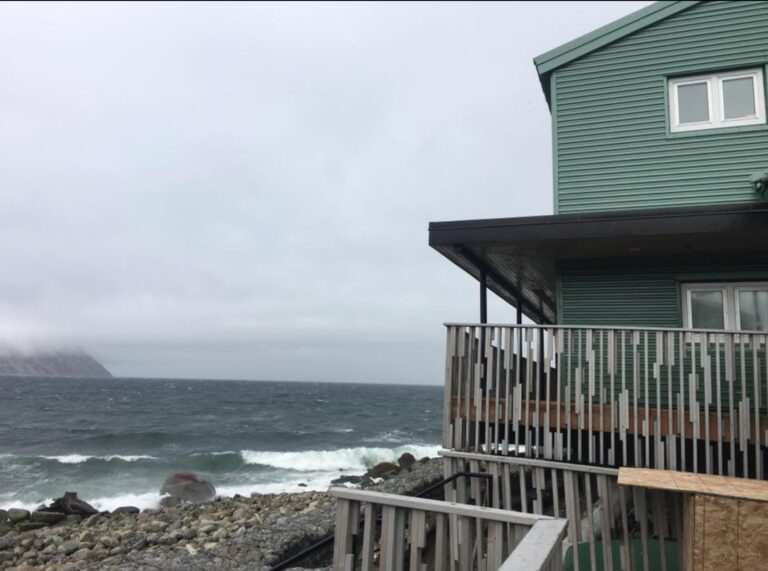
Little Diomede, home to fewer than 100 people, is the smaller of the two Diomede Islands that sit in the Bering Strait. Big Diomede, less than 2.4 miles to the west, is part of Russia and is west of the International Dateline. All of the people living on Little Diomede live within the small city perched between steep slopes and stormy seas. The island, about 2.8 square miles, is in the Nome Census Area.

He’s back: Alex Jones reinstated on X

Liberals on X/Twitter may be grabbing their preferred pronouns and heading for the exits at X in even greater numbers, now that Elon Musk has reinstated Alex Jones, the wildly unpredictable owner of the Infowars website.

Jones, when told of the news, said he had been banned for so long, he wasn’t even sure how to get back on X. The previous owner team of X/Twitter, under Jack Dorsey, permanently banned Jones in 2018, calling him a right-wing conspiracy theorist and accusing him of “abusive behavior.”

Back then, Twitter said Jones posted a video violating Twitter’s policy against โ€œabusive behavior.โ€ The video showed Jones berating CNN journalist Oliver Darcy for several minutes in between two congressional hearings on social media and its bias against conservative users. Dorsey had testified at both hearings.

Here is the 2018 video that was the final straw for “old” Twitter, which prompted the banishment of Jones:

Dorsey punished not only Jones, but said he would take action against any account that was even potentially associated with Jones or Infowars.

At the time that Twitter banned Jones, he had some 900,000 followers; Infowars had about 430,000.ย Today, even though his account had been frozen for five years, Jones has 946.9K followers. Last week, Musk ran a survey asking X users if they wanted Jones reinstated and approximately 70% of those who responded were in favor. By Sunday morning,ย Musk posted on his account, โ€œThe people have spoken and so it shall be.โ€

Jones declared bankruptcy recently after a court ordered that he must pay $1.1 billion in defamation damages stemming from his claims about the 2012 Sandy Hook elementary school shooting. A bankruptcy judge has since said he will have to pay that personally, and that his bankruptcy declaration won’t protect him. Courts in both Connecticut and Texas ruled that Jones intentionally defamed relatives of the children killed in the shooting when he accused them of being actors in a hoax.

The following video is classic Alex Jones, posted just before he was banned by Dorsey in 2018, where he rants about the globalist agenda. In it, he talks about how the federal government was conspiring with the media, which in 2023 is the subject of congressional hearings. It is the also type of discourse that had mainstream media calling Jones a conspiracy theorist:

Musk’s X platform has taken financial hits for providing a free speech rodeo, complete with skilled riders, political steer wrestlers, bucking broncos, cheering sections, rodeo queens, and commentary clowns, all provided as news and entertainment that has few sideboards. And X is also used by those who only follow nonpolitical accounts, such as sports, arts, books, and science. Many X users are not using the platform for debate, but for cooking tips and weather reports.

Musk has chosen to push back against the threats of advertisers against the platform, including the likes of Disney and Walmart, which have pulled their ads from X and moved their promotion money to Chinese-owned TikTok and to the Meta universe, which owns Facebook and Instagram. Musk responded to that threat by telling any advertiser who wanted to try to blackmail him with ad dollars to “Go f*ck yourself.”

One year ago, just after Musk took over majority ownership, X had 368 million monthly users. As of October, 2023, X has approximatelyย 556 millionย active monthly users, and receives 6.14 billion visits per month.

But liberals, including PBS/NPR, have been fleeing the platform for a smattering of alternatives, such as Threads, owned by leftwing propagandist Mark Zuckerberg, and Blue Sky, which looks very much like X, which is majority owned by Jack Dorsey. Mainstream media outlets have been publishing a slew of news stories about alternatives to X in an attempt to drain users from the X platform. Mastodon, started by a Russian-born programmer, is favored by liberal U.S. journalists.

Meet Anthony Pitcher, new school board member appointed in Mat-Su Borough School District

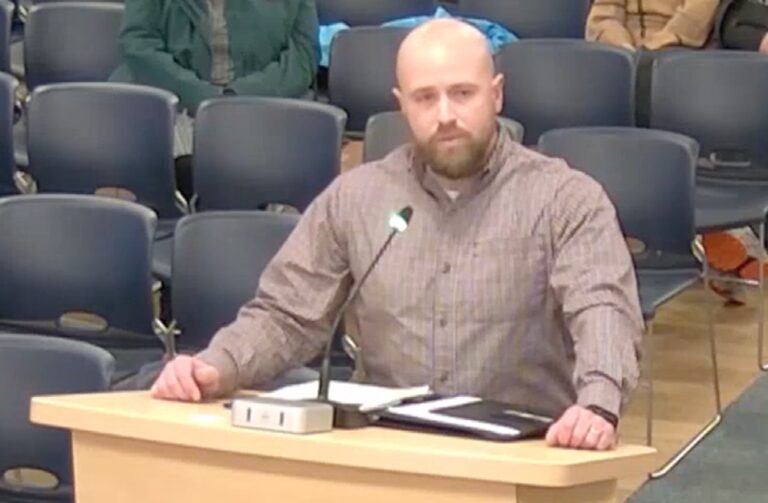
Filling out the remaining term of departing member Jacob Butcher, the Matanuska-Susitna Borough School District Board appointed Anthony Pitcher, a conservative and father of nine.

Pitcher has lived in Alaska for 21 years, having moved north to work on a dairy farm, and later getting involved in electrical work, he told the board during his introductory remarks. He has children who have graduated from high school, some who attend charter school, one who home schools, and two who are not yet school age. He has been a volunteer with Boy Scouts and in his church youth programs.

โ€œI was raised by a very patriotic father who instilled in me that education is very important, not just for career paths, but also for history,โ€ Pitcher said to the board, adding, “if we donโ€™t learn from history, then we are destined to go through some hard times.โ€

Pitcher attended Pasco High School in Eastern Washington and has been an electrician for over 20 years. Since 2007, he has run Pitcher Electric.

The school board held a special meeting to hear from each of the applicants for the seat, which will come up for reelection in November of 2025. After the vote was taken and Pitcher was chosen, Superintendent Randy Trani swore in the newest member and a regularly scheduled meeting began to take up normal business.

The board has retained its conservative character with the choice of Pitcher to replace Butcher in the District 5 vacancy. During the most recent election, conservative candidates prevailed. The board has one member considered liberal: Ted Swanson.

Boy, 14, wins girls’ division in regional Irish dance competition, heads to nationals

A boy who says he is a girl won an Irish dance competition for girl dancers under 14 in Dallas last weekend.

According toย The Daily Signal, the boy will represent girls under 14 on the world stage at the Irish Dancing World Championships after placing first in the 2023 Southern Region Oireachtas competitions.

The Daily Signal reported that the male dancer, which the publication would not name due to his age, competed as a male earlier this year. The boy โ€œplaced 11th in the world in the Coimisiรบn Le Rincรญ Gaelacha (CLRG) World Championships in April 2023.โ€

In a competition in March, the boy competed as a boy and won a trophy.

The boy who has now won in the girls’ division was first place in a regional dance competition in March — in the boys’ category. Now he wins as a girl. Photo credit: Facebook page of Carolina State Championships and Feis and Walsh Kelley School Feis.

Many of the youth who compete as Irish dancers practice more than 12 hours a week.

โ€œOh, my gosh. Itโ€™s going to make me cry,โ€ said one mother, whose daughter danced in the same competition as the trans-identifying boy in the Dallas, Texas, event, according to The Daily Signal, who interviewed her. โ€œI never thought I was going to have to deal with this. And my heart breaks for my daughter and the other girls that are having to deal with this. They are too young to have to deal with topics that are going on in society, that are adult topics, that they donโ€™t quite comprehend yet. They just look at it as unfair. And itโ€™s really hard to explain to them whatโ€™s going on and why they have to accept it. Thatโ€™s what societyโ€™s making them do. As a mom, I want to be an advocate for my daughter. But at the same time, I have to protect my family.โ€

Read the complete story at The Daily Signal.

One dead, one injured in small plane crash

0

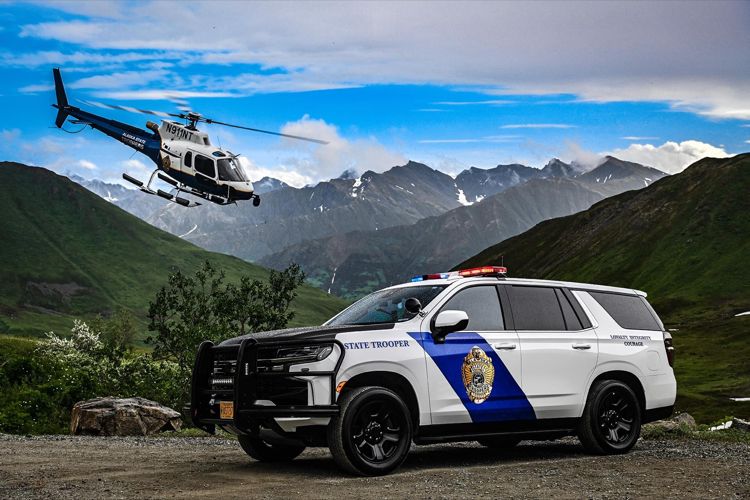
Kurt Joseph St. Jean of Homer, owner of a Piper Super Cub that crashed near Mile 154.5 of the Sterling Highway on Friday, was found deceased by Alaska State Troopers responding to the scene after a report of the crash at about 1:12 pm. An adult female passenger was extricated from the plane, which was lodged in a tree, and transported to a nearby hospital, in critical condition. The aircraft number is N1880P.

The National Transportation Safety Board has taken over the investigation into the crash, which was north of Anchor Point.

John Morris: Why Alaska healthcare community sued the state’s insurance division over 80th percentile rule

23

By JOHN MORRIS

A broad coalition including physicians, chiropractors, physical therapists, podiatrists and more — representing the vast majority of healthcare providers in Alaska — recently brought suit to stop the repeal of the longstanding consumer protection known as the 80th Percentile Rule. As a member of that coalition, and a concerned Alaskan, let me explain to Must Read Alaska readers why:

After months of attempting to communicate in good faith with the Alaska Division of Insurance about the dangers of repealing the 80th Percentile Rule without a workable replacement, our coalition reluctantly took legal action to protect the countless Alaska families, workers and patients who will be impacted by this misguided repeal. If the repeal is allowed to stand, the elimination of this rule will severely jeopardize Alaskansโ€™ ability to receive healthcare here at home, will return us to the days before the ruleโ€™s implementation in 2004 when Alaskans were saddled with surprise medical bills on top of their already high insurance premiums, and will result in little if any of the promised cost savings. 

Every Alaskan, regardless of their politics or background, should care about this lawsuit because repeal of the 80th Percentile Rule all but guarantees an Alaska where it will be even harder to find a doctor, where wait times will dramatically increase, and where patients will have to pay even more out of their own pocket for healthcare. 

Critics of the 80th Percentile Rule, led by Seattle-based insurance companies, have lobbied heavily to repeal this rule. Collectively, theyโ€™ve spent thousands of dollars spreading misleading messages such as Alaskaโ€™s doctors are getting paid too much, eliminating this rule is common sense and will lower healthcare costs, this is an outdated and unnecessary government regulation that raises costs and makes doctors more money.   

But when you stop and review the facts there is so much more to this story. For example, if Alaskaโ€™s healthcare providers are being paid so much, why does Alaska face the most significantย healthcare worker shortage of any stateย in the nation according to recent studies? One reason is that Alaskaโ€™s โ€œcompetitiveโ€ salaries are no longer competitive; theyโ€™re being matched or surpassed by Lower 48 states hoping to recruit and retain medical professionals. But letโ€™s use data, not anecdote.ย ย 

According toย Beckerโ€™sย andย Weatherby Healthcare, two reputable organizations that track physician compensation,ย ย Alaska doesnโ€™t make the top 5 states for highest physician pay and, if you factor in the cost of living, we donโ€™t even make the top 10. More than that, doctors in Alaska are getting paid less each year while insurance premiums have skyrocketed. Thatโ€™s right, we are paying more each year for insurance but those same insurance companies are paying less each year per service. There are exceptions to this, but they are a small minority.ย 

How do we know this? We did the work. We surveyed a broad spectrum of healthcare practices in Alaska and asked them to share how much insurance has paid them for a given service over the years. We thenย graphed those payment trends, together with how insurance premiums have risen, and got a striking picture. Again, despite each of us paying more in insurance every year insurers are, with few exceptions, paying less for the same care each year. Insurance pays less while premiums skyrocket.

If the Alaska Division of Insurance (DOI) knows that medical providers are receiving smaller reimbursements each year, why would they still push the repeal of the 80th Percentile Rule, which contains critical consumer protections and safeguards against insurance companies completely controlling the Alaska healthcare market?

We canโ€™t speak for the DOI but the DOIโ€™s Director, Lori Wing-Heier, told us that she based her decision making on data provided to her by an out of state company called FairHealth.  FairHealth collects claims information and other data from insurers and then, for a fee, provides aggregated data on healthcare costs to various consumers across the country.  Curious, we hired FairHealth too and paid them to give us the same data on how much insurance in Alaska has paid for a given service over the years โ€“ how much to deliver a baby or do a heart surgery, how much for a chiropractic treatment, and so on. 

One of the first things we noticed about the FairHealth data was that it listed values for payments and charges for procedures that have never taken place – such as dozens of prices and payments for heart surgeries in Kodiak, Juneau, Fairbanks, and Ketchikan. In case youโ€™re wondering, there are no heart surgeries in Kodiak, Juneau, Fairbanks, or Ketchikan. When we asked FairHealth about this they reported that they use mathematical methods to derive data when they donโ€™t have any to report. In other words, they make it up. So we asked them for another spreadsheet of data, with only real (not derived) data in it. That spreadsheet was much, much smaller and wouldnโ€™t have justified the DOIโ€™s position.

The DOI and Premera say repealing this rule will result in lower health insurance costs โ€“ often citing an outdated and incomplete study that blames the 80thย Percentile Rule for up to 24% of Alaskaโ€™s health care cost increases. But now that the rule has been repealed, we get a glimpse as to what the insurance companies and the Division of Insurance really think the 80thย Percentile Rule is โ€œworthโ€. The answer – not much. Despite the ruleโ€™s repeal insurance premiums are once again on the rise next year, just as they did last year, by about 17%, sometimes more. They are rising so much that they areย making headlines. Premera now says the repeal of the 80thย Percentile Rule will only amount to a savings of 2.5-4% (depending on who they speak to), despite previous claims that it would result in significant cost savings to policyholders.

While healthcare professionals and the 80thย Percentile Rule are often blamed for the rising costs of healthcare in Alaska the real reasons for rising costs are sometimes simpler, if not a bit more inconvenient. Before each year starts insurance companies have to receive approval from the DOI for how much they can charge for premiums the following year. Itโ€™s called rate review. There are two insurers currently on the individual marketplace, Moda and Premera. Premera holds a virtual monopoly in Alaska but Moda is a big company too, doing over a billion dollars a year in revenue across all the states they operate in. For the year 2023, according to publicly available documents, Moda asked the DOI to only raise their prices 3.97%. Itโ€™s safe to assume that Moda would like to grow their business in Alaska, taking some customers from Premera, and having lower prices is a great way to do that. But that lower price request was not approved, and instead the DOI required Moda to raise their rates further by 12.1%. Thatโ€™s 8% more than originally requested, hundreds of dollars per person more than what they asked for.ย In 2024 a similar story. Moda asked to raise prices 10.52% but instead was approved for 15.72%. For those interested, detailed information can be found atย https://ratereview.healthcare.gov, including insight on what Premeraโ€™s prices have done in the same period.ย 

In conclusion, despite insurance companies charging Alaskans more and providers being paid less for the same work, Alaska continues to grapple with massiveย shortages in healthcare workers. This shortage, which disproportionately affects vulnerable populations, such as seniors and veterans, continues to make receiving quality and timely medical care in Alaska a significant challenge. The Alaska DOI chose to use โ€˜derivedโ€™ data rather than real, locally sourced and timely data on insurance payments. The DOI decision-making has resulted in higher insurance costs by requiring Moda to charge more than their initial marketplace request โ€“ aligning their prices more closely with Premera’s rates. And lastly, all reforms and replacements proposed by the healthcare coalition to preserve the many consumer protections and safeguards found in the 80thย Percentile Rule have been rejected by the DOI.

Repealing the 80th Percentile Rule without a replacement will turn back the clock on the significant progress Alaska has made in expanding our healthcare system over the last 20 years and will hand complete control over to out-of-state insurance companies. We encourage you to look beyond slogans and bumper stickers and think about whether you want your insurance company to choose who provides your healthcare, what it will cost you out of pocket if you disagree with their choice, and whether there will be a provider available for you to see at all.  Please join us in working to make Alaska an even better, healthier place to live. 

Five Reasons Repealing the 80th Percentile Rule Is Bad for Alaska:

  • Fewer Consumer Protections: The 80th Percentile Rule provided Alaska patients with protections against predatory billing practices and surprise medical billing. Its repeal means fewer safeguards for policyholders, exposing them to greater risks without the safety net provided by the regulation. For example, recently several Providence based groups gave termination notices to Premera. With the 80th Percentile Rule these patients would be protected from big bills and could still see their regular doctor, no matter how the Providence and Premera fight plays out. Without it, theyโ€™re on their own. 
  • Shift in Power Away from Patients and Doctors: With the 80th Percentile Rule gone, access to reliable medical care in Alaska will be significantly impacted. Thatโ€™s because the 80th Percentile Rule prevents insurance companies from completely controlling Alaskaโ€™s healthcare system. Without the 80th Percentile Rule, insurance companies have all the bargaining power, deciding which doctors you see, when and where youโ€™ll see them, and arbitrarily deciding how much theyโ€™ll pay. Providers will be forced out-of-network by insurers who see no reason to contract with them and seek to narrow their networks.
  • Premiums Are on the Rise: Despite, big out of state insurance companies insisting that the repeal of the 80th Percentile Rule would result in lower rates, premiums for Alaskans are set to skyrocket in 2024 โ€“โ€“ with one insurer raising rates by 17.8%.
  • Decreased Access Competition: Without Alaska’s 80th Percentile Rule, insurance companies have ZERO incentive to negotiate with your doctor. The result โ€“ they get to pick the winners and losers in our healthcare system; shrinking our healthcare market, reducing access, and driving specialists out of Alaska. For vulnerable populations like seniors, veterans, and rural residents, this would be catastrophic and would result in less access to care at home. Providers will be forced to limit or stop seeing non-privately insured payers all together as their fees will be drastically cut by insurers.
  • Insurance Companies Continue to Reimburse Alaska Doctors Less, While Increasing Patient Premiums: Despite claiming doctors and medical providers are the primary driver of rising health insurance premiums, out-of-state insurance companies reimburse Alaska doctors less and less each year. How are local doctors the problem if 1) Alaska faces on the most significant healthcare worker shortage of any state in the nation and 2) insurance companies are paying providers less but charging you more?

For more information, please visit our website at www.reliablemedicalaccess.org.

John Morris is an Anchorage-based board-certified pediatric anesthesiologist and chair of the Coalition for Reliable Medical Access.