Sunday, August 16, 2026
Home Blog Page 551

Sullivan visits his alma mater Harvard, and comes away shocked at what he witnesses

52

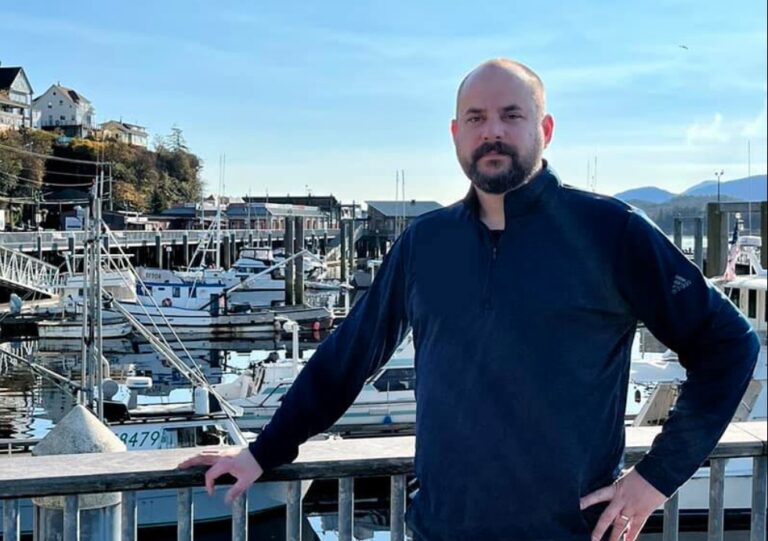
Sen. Dan Sullivan visited Harvard University last week, and came away stunned at what he saw. While he was there for the Army-Navy football game, he decided to walk the campus to see what had changed at Harvard, where he earned his undergraduate degree in 1987.

A lot had changed, evidently. Sullivan wrote up a debriefing of his visit in the Wall Street Journal on Saturday, focusing on his trip to the university’s library, where he was accosted and badgered by radicalized students.

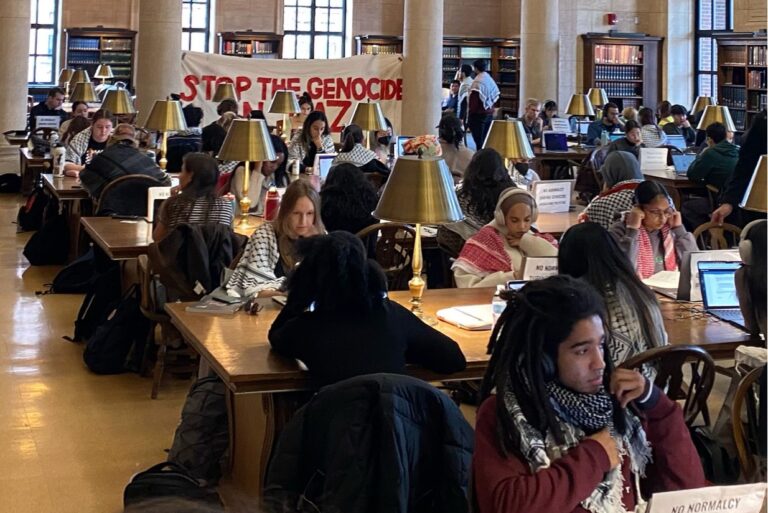
“When I walked upstairs to the famous Widener Reading Room, I couldn’t believe my eyes. Nearly every student in the packed room was wearing a kaffiyeh [Palestinian scarf]. Fliers attached to their individual laptops, as well as affixed to some of the lamps in the reading room, read: ‘No Normalcy During Genocide—Justice for Palestine.'”

He observed a woman handed the fliers to all who entered, and massive banner hung across one end of the room, which had, in red letters, “Stop the Genocide in Gaza.”

Curious about what was going on, he engaged in a discussion with two of the organizers of this anti-Israel protest inside of one the world’s great libraries—not outside in Harvard Yard, where such protests belong.

“They told me they were from Saudi Arabia and the West Bank. I told them I was a U.S. senator who had recently returned from a bipartisan Senate trip to Israel, Egypt and Saudi Arabia. I mentioned the meetings I had. I expressed my condolences when they told me their relatives had been killed by Israeli military action in Gaza,” he said.

“One then asked whether I supported a cease-fire in Gaza. I said I didn’t, because I strongly believe Israel had the right both to defend itself and to destroy Hamas given the horrendous attacks it perpetrated against Israeli civilians on Oct. 7,” Sullivan wrote.

That’s when things got ugly for him.

“You’re a murderer,” one said to him.

“You support genocide,” the other told him.

“Excuse me, what did you say?” Sen. Sullivan asked in disbelief.

The organizers repeated their charges.

“I tried to debate them, noting the Israel Defense Forces don’t target civilians, and that the only group attempting to carry out genocide is Hamas. But civil debate with these women was pointless. As I was leaving Widener Library, they pulled out their iPhones and continued taunting: ‘Do you support genocide? Do you support genocide?'”

The Harvard Palestine Solidarity Committee posted some of this exchange on Instagram, Sullivan wrote.

“As a U.S. senator who has been through two election campaigns, I’ve had plenty of iPhones aggressively shoved in my face by members of radical groups,” he wrote.

Indeed, during his 2020 campaign, a radical Native activist in Anchorage tried to shove a raw caribou heart at him during a campaign event. For Sullivan, a cell phone being shoved in his face is par for the course in Washington, D.C.

“Nevertheless, I was shocked and, again, ashamed of my alma mater. All of this—the anti-Israel protests, the big banner, the fliers, the iPhones, the taunting questions—took place inside the Widener Library, a revered place of quiet study for tens of thousands of Harvard students and alumni,” he wrote.

Would you feel welcome in Harvard’s most famous library, he asked, if you were an Israeli or a Jew facing the same situation? Or would you feel rattled, intimidated, and harassed by the anti-Israel banner screaming “Stop the Genocide in Gaza”?

“As Jason Riley has written, ‘If accusing Israel of genocide isn’t defamation of Jewish people, I don’t know what is,'” Sullivan wrote.

“If you were that 18-year-old student, would you believe the vacuous statement recently put out by the Harvard Corp., after it decided not to fire Ms. Gay, that “disruptions of the classroom experience will not be tolerated”?

“Is this what [Harvard President] Gay when she testified that ‘it depends on the context?”

Sullivan concluded his op-ed condemning the Ivy League institution: “Not all university leadership is so craven, morally bankrupt and afraid of the most vocal, radical sects of their own student bodies. I serve on the board of visitors for the U.S. Naval Academy, which is the No. 1 public university in America. The contrast couldn’t be starker between the service academies and the Ivy League on issues like civil discourse, so-called safe spaces, trigger warnings, American history and our unique and, yes, exceptional place in the world.

“America’s so-called elite universities used to be a positive source of our nation’s power, strength and influence. No longer. I believe over the past several weeks a bipartisan consensus has emerged: It is time for Congress to save these important and once-respected institutions from themselves and their weak leaders who have lost their moral compasses. I intend to work with my colleagues in the Senate to do so.”

I was in Boston last weekend for the Army-Navy game. The day after the game, five days after Harvard President Claudine Gay’s disastrous testimony before Congress, I decided to walk the campus to reminisce about my time at Harvard, where I earned my undergraduate degree in 1987, and reflect about what had gone wrong at this once-great university.

Fox, meet henhouse: Anchorage Assembly cutting Election Commission out of ballot challenges

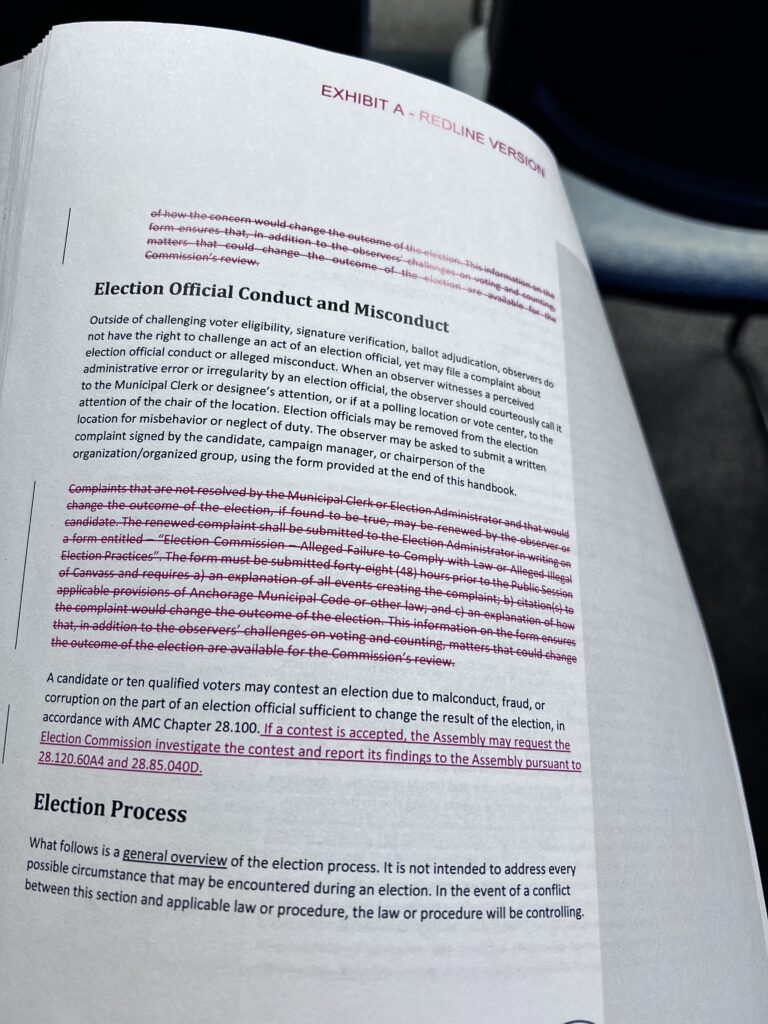
The Anchorage Assembly is preparing to approve a new process for election observers that cuts the Anchorage Election Commission out of the complaint process altogether.

The Election Com​mission is a five-member commission appointed by the mayor and approved by th​e Assembly. It is staffed by the Municipal Clerk’s office, which also conducts elections. The Election Commission adjudicates ballots that have been preliminarily rejected by election officials, reviews and reports on the election results to the Assembly, provides advice on the conduct of local elections, and recommends changes to local law relating to elections.​ 

But according to the new process being developed by the Assembly, there will be very little oversight by the commission on local elections in Anchorage. The fox, instead, be will be guarding the henhouse.

It’s about control of the election: The Assembly, whose members are also usually candidates, oversees the work of the Municipal Clerk, who is in charge of the elections. If someone has a challenge to a ballot or process, there will be no third party outside of the Assembly hierarchy to take that challenge to. Instead, complaints can be taken to the Ombudsman, who also happens to report to the Assembly.

The public at large cannot challenge parts of the election unless they are official election observers, which requires training. In the past, they could go up the chain and if they disagreed with the Clerk’s decision, they could appeal to the Election Commission.

The commission’s current membership includes two former lieutenant governors — Loren Leman and Mead Treadwell, who are both experienced in election matters. Lisa Torkelson is chair, and Glennis Ireland and Adam Trombley are also members.

During last week’s Assembly work session, Treadwell told the Assembly that they were removing one of the main roles of the Election Commission.

The Assembly has made similar moves to remove power from the mayoral-appointed Library Board, and the Assembly is also working on taking away the power from the Executive Branch when it comes to appointing the city’s Chief Medical Officer, which the Assembly wants to control. It’s a way to strip power from the mayor’s office, piece by piece.

The Assembly will be voting on its new election regulations during Tuesday’s regularly scheduled meeting, which starts at 5 pm at the Loussac Library’s ground floor meeting room.

More information at this link.

Related documents:

AR 2023-423_1_OBSERVER HANDBOOK EDITS_FINAL.DOCX.DOCX 

AR 2023-423_2_OBSERVER AMP X27 S HANDBOOK UPDATE V4_REDLINE_WITH FORMS.PDF.PDF 

AR 2023-423_3_ OBSERVER AMP X27 S HANDBOOK UPDATE V4_CLEAN_WITH FORMS.PDF.PDF 

AR 2023-423_4_AM FOR AR.DOCX.DOCX 

AR 2023-423_5_AIM_COMPILATION OF RESEARCH_CODES_CONTESTS AND JUDICIAL REVIEWS.DOC.DOC 

AR 2023-423_6_ORDINANCES FOR OTHER CITIES AND BOROUGHS – ELECTION CONTESTS AND JUDICAL REVIEW.DOCX 

Thomas Smith: On abortion, one size won’t fit all

By THOMAS SMITH

The Supreme Court’s Dobbs v. Jackson Women’s Health Organization decision did not outlaw abortion. The decision asserted that there does not exist a constitutional right to abortion and sent the issue back to the states to resolve with a limited role for the federal government (as was the case prior to 1973).

The Founding Fathers who met in Philadelphia to give life to a venerable Republic had great vision. Having chafed under monarchy, they shared a profound concern that a powerful central government could become increasingly intrusive, and knew that power tends to corrupt. As an antidote, the Constitution they created clearly states that any power not specifically allocated to the federal government remains with the states.

The problem, and it is not a new one, is that political partisans on each side tend to forget their civics when a political issue of great moment arises for which there is no consensus. On the issue of abortion, which is literally life and death,  the country is deeply divided. For many Americans, it is tantamount to murder. Even more Americans believe it is a matter of personal freedom.

Compromise between those two sides is not easy to find. It requires some to concede that it might not be murder, and others to concede that there can be limitations on personal freedom. There cannot be “half murder.” So, the two sides fight it out.

The outlines of a political compromise are not difficult to sketch out, although they seem morally unsatisfying. Does an abortion before 15 weeks not take a life? Does that mean one day before 15 weeks does not take a life? That one day after 15 weeks, it does take a life? Think about what took place in those first 15 weeks. Sperm and an egg come together and create an organism that grows into a human life form in 3 1/2 months. Does not abortion during those 15 weeks, like abortion after 15 weeks, end a potential life?

The polls show that most Americans are abortion moderates, not binary “pro-life” or “pro-choice” absolutists. In one scientific survey after another, it is clear that relatively few people believe abortion should always or never be legal. Nevertheless, and understandably, the abortion issue is viewed quite differently in different states. Abortion, in spite of those polls, is now banned or severely restricted at all stages of pregnancy in 15 states. Both sides should applaud the Supreme Court decision. It is clearly more “small-d” democratic than the rule of law that preceded Dobbs.

The abortion issue remains high-pitched. Emotional. Divisive. Counterproductive. It has enhanced disrespect for government. The Democratic Party sees the abortion issue as an opportunity to gain votes. The Democrats’ message is that Republican candidates want to diminish your freedoms, that the Supreme Court decision is flawed, that the abortion issue should remain with the federal government.

This is at a time when the rule of law is under a multifaceted attack. The rule of law is precious. It is vulnerable. It exists more because of compliance than enforcement. For compliance to be effective, to be as universal as possible requires respect for government. Unfortunately, respect for government today is, at least since it has been measured, at an all-time low.

Unfortunately, the heated debate over abortion has contributed to that alienation for half a century, and it’s only getting more partisan. Those who care about other issues other than reproductive rights can do something about it. Candidates for federal office, regardless of their political party, could state clearly what an overwhelming majority of Americans know to be true: that the moral dimensions of abortion are complex, and passionate people of good will are on both sides of the issue. Then they can state, as Nikki Haley has done, their own position on the issue, followed by a realistic assessment of the political realities. That means acknowledging that one law, in one jurisdiction, is not the answer.

Democrats, particularly those who claim to fear that our democracy is hanging by a thread, do their cause no favor by pretending that they have never heard of the doctrine of federalism. Democrats do damage to the country and their own cause when they demonize Republican political candidates with dishonest attack ads over this issue. Or when they claim they want to enshrine all the elements of Roe v. Wade into federal law while deceiving voters about the elements of that jagged jurisprudence they know are unpopular, such as parental consent.

For their part, Republicans campaigned for five decades to return this issue to the states. When legislative action and statewide referendums don’t go their way – and they haven’t been – it’s hypocritical to start pushing for a federal ban. And unpopular.

That this issue is now in the hands of the state could eventually help tone down the abortion issue. It should help all voters recognize the issue is complex, that one law does not fit all, that we are fortunate to have a constitutional government. That the issue properly rests with the states.

No matter what one believes with regard to abortion, one should also be concerned with preserving the rule of law, with preserving the greatest country in the history of humankind.

Thomas W. Smith is chairman of OpenTheBooks.com.

This article was originally published by RealClearPolitics and made available via RealClearWire.

Anchorage Assembly to ask Legislature to support dismantling Eklutna power supply to Anchorage

The Anchorage Assembly will ask the Alaska Legislature to support the restoration of the Eklutna River, which means dismantling part or all of the hydropower dam that provides electricity to Anchorage.

The Assembly supports removing 47 megawatts of electricity from the greater Anchorage bowl. According to municipal documents, Eklutna provides enough energy to power more than 24,600 residential homes for an entire year. Eklutna hydroelectric power is the lowest cost renewable energy in Southcentral Alaska.

“The Municipality concurs with the Native Village of Eklutna’s priority to restore salmon habitat,” the Assembly document reads. “The Native Village of Eklutna (NVE) and its partners have been working toward full restoration of the Eklutna River, which is a critical salmon habitat in Southcentral, for many years, and have identified potential cost savings and fund sources. Not only is full restoration of the river the right thing to do to respect the vision, subsistence needs and culture of the people who have stewarded this land long before the dams existed, it also has huge economic potential with recreation and tourism opportunities in the area.”

Yet after asking the Legislature to help get the dam removed, the Assembly continues on to discuss the dire need of Anchorage for electricity.

“Alaska’s Southcentral region faces a looming energy crisis that threatens to impact not only Anchorage residents but also its economy. At the heart of this crisis is the depletion of natural gas reserves in the Cook Inlet oil and gas basin, long the primary source of energy for the area,” the Assembly writes. “In the next eight years, Southcentral Alaska is expected to run out of available gas, making it imperative for state leaders and decision-makers to take immediate and strategic actions to prevent an energy crisis.”

The Assembly continues, “We strongly encourage the Legislature and the Governor to craft sound policy that ensures Anchorage can meet the gas and electrical needs of its citizens, businesses, and schools. These policy changes must prioritize energy reliability and affordability. Because there is no time to waste, we urge swift, bipartisan action during the 2024 legislative session.”

“The Left is confusing. They hate fossil fuels, and I guess they hate hydro too. You would think the cleanest, most sustainable energy source out there would be exactly what the radical green movement would champion, but not in this case,” said Rick Whitbeck, Alaska state director for Power the Future.

The Anchorage legislative priorities booklet is at this link.

For some reason, the mayor has attached his name to this legislative request program.

Other priorities of the Anchorage Assembly are having the governments in Alaska return to a defined benefits retirement program for all municipal, borough, and state employees. That pension program ended by legislation in 2006, after it was discovered that the state pension plan didn’t have enough money to even meet the needs of existing retirees. The state is still trying to fund it, and currently has about 72 cents for every dollar owed to existing members of that old plan. Public employees are now enrolled in individual retirement accounts, rather than defined pensions. Many defined benefits plans around the country have gone bankrupt after being underfunded.

The document also asks the Legislature to increase the formula for public schools, known as the Base Student Allocation. The governor has not increased the BSA since he has been in office because it ties the hands of future legislatures. But he has added one-time funding ever year.

The Assembly will also push the legislature to pass legislation that gives the municipality the authority to punish property owners who don’t maintain their properties to whatever regulatory standards are set locally. The “blighted property” legislation is the brainchild of Sen. Forrest Dunbar of Anchorage and has the support of some who are close to Mayor Dave Bronson. The plan would give municipalities the authority to enact a blight tax and to define the meaning of “blight,” as they wish. Something that seems blighted in Anchorage might not seem blighted in Bethel.

The legislative priorities document leads off with an ask for continued support for the Port of Alaska, which handles 75 percent of all non-petroleum, Alaska in-bound marine cargo, and more than 39 percent of all refined petroleum products used in Alaska. The Port directly serves 90 percent of the state’s population, and is a priority of Mayor Bronson.

The document also asks the Legislature for a $10 million capital appropriation for “Housing Alaskans,” a public-private partnership, and $4 million operating budget request to help pay for a year-round homeless shelter, “location pending.”

The legislative request document also asks the governor to update the “Alaska’s Plan to End Long Term Homelessness.”
The plan, which is described as the counterpart to Anchorage’s Anchored Home Plan, ended in 2019. Ownership of this plan currently lies with the Alaska Council on the Homeless and its last progress report was in 2018.

“As the state’s designee to carry out the day-to-day management of the Balance of State Continuum of Care program, the Alaska Coalition on Housing and Homelessness could be formally designated to oversee the plan, including conducting the plan update and providing ongoing progress reports on the plan,” the municipality’s document says.

As for the mental health needs of Anchorage, the municipality is asking for a grant of $650,000 to pay for integrated medical and behavioral health outreach services.

“The Municipality requests this funding to bring back holistic outreach services to include basic street outreach, medical services, and behavioral health services. No services currently exist for behavioral health outreach, which had been previously provided but was ended due to staffing and budgeting issues.”

The Assembly also wants a change in state labor laws to allow behavioral health staff to work 12-hour shifts, due to workforce shortages.

“Currently, behavioral health providers face significant workforce shortages, but unlike nurses who are able to work 12-hour shifts, other behavioral health staff must be paid overtime for 12-hour shifts, making it unaffordable for most providers. Behavioral health workers have requested this change in state law to assist them in better providing their services to the community. Could potentially be incorporated into HB 204 and SB 153 to exempt certain employees from overtime pay requirements,” the Assembly document says.

Republican Jeremy Bynum files for House rematch with Democrat-leaning Rep. Ortiz in Ketchikan

Republican Jeremy Bynum, who challenged Democrat-caucusing Rep. Dan Ortiz in 2022 is looking for a rematch in 2024.

Bynum, a member of the Ketchikan Gateway Borough Assembly, got 47.4% of the vote the first time he ran against Ortiz, who won with 52.6% in 2022.

Ortiz, a retired teacher, won his first term in 2014 election and has held off challengers ever since. He has been a loyal member of the House Democrat caucus, an ironic outcome for conservative Ketchikan, which voted 54.7% for Donald Trump for president in 2020.

But although Ortiz has incumbency and a history of winning five House races in a row, Bynum says he has given this a lot of thought, and he has one House race under his belt, as well as having won a seat on the Assembly.

“With much thought and consideration, I am excited to announce my decision to run once again for the Alaska State House. This decision comes with an overwhelming wave of support from community members, for which I am deeply grateful. I am eager to engage in meaningful conversations about our future. Running for District 1 is not just a campaign for me; it’s an opportunity to connect, discuss, and address the vital issues that impact us all. I am grateful for this chance to represent and serve in a different capacity, and I look forward to the journey ahead with optimism and determination,” Bynum said.

Bumped ugly: Democrat Senate staffer featured in graphic sex-tape ‘no longer employed’ by Cardin

Yesterday, Maryland Sen. Ben Cardin’s office refused to comment on what was allegedly one of his strapping young staff members starring in a graphic amateur porn video self-taped on the desk of the Senate Justice Committee hearing room and posted to a chat room for gay workers in the U.S. Capital.

Blurred out screen shot of the incident in Senate Judiciary.

But on Saturday, Cardin’s office said that staffer “Aidan Maese-Czeropski is no longer employed by the U.S. Senate.” That was the extent of Cardin’s admission that the young man had been caught not only with his pants down but with another man rogering him from behind.

As for the alleged self-made porn producer Maese-Czeropski, who once was featured in a Joe Biden commercial, the young man said on LinkedIn that he was being unfairly criticized for “who I love.”

“This has been a difficult time for me, as I have been attacked for who I love to pursue a political agenda. While some of my actions in the past have shown poor judgement, I love my job and would never disrespect my workplace. Any attempts to characterize my actions otherwise are fabricated and I will be exploring what legal options are available to me in these matters,” Maese-Czeropski wrote.

While Democrat commentators were notably quiet, others were not so charitable, pointing to his actions as just a part of the growing string of Democrat debauchery escapades in the Capital.

Rep. Mike Collins of Georgia commented, “Heck of a week for the Left. Gay porn in the Senate, swearing in ceremony on child porn in Virginia, tranny tap dancers in the White House, and Satanic statues in Iowa. What else am I missing?”

There’s no word yet from Capital Police about who the other man was in the video who was playing hide-the-salami with Maese-Czeropski, but he has been identified by Laura Loomer as a German man studying at the Elliott School of International Affairs in Washington D.C.

Howard Weaver practiced point-of-view journalism, despised Trump, supported Democrats, called for social death of anti-vaxxers

72

The former editor of the Anchorage Daily News, who helped shape politics in Alaska through his news coverage for many years, died Thursday in Sacramento, where he retired several years ago. He was 73; the cause of his death was reported as pancreatic cancer.

His former reporters and colleagues wrote glowing accolades about the writer and editor they admired. He was their journalistic hero and he shaped the way journalism is practiced in Alaska.

Maria Downey wrote at KTUU, “An honest, wise, old soul, along with a mentor, coach and outstanding journalist — these are some of the many words shared on Friday by friends and colleagues describing Howard Weaver.”

Weaver helped the paper take home two Pulitzer Prizes and shaped Alaska journalism at a formidable time from the 1970s through 1992, Downey wrote.

The memorials posted by his colleagues on X/Twitter were voluminous on Friday.

“He was a journalist’s journalist. Although he left the state years ago, he always kept a tab on what was happening here and how the news media was covering Alaska,” wrote the University of Alaska Anchorage Journalism and Public Communications Department.

But he was part of the journalism in Alaska that was decidedly anti-conservative, and he was not universally admired by the business community or Republicans.

For conservatives, Weaver was seen as a partisan operator who, after he retired, spent time on Twitter criticizing Republicans and people such as Elon Musk, while reposting content from people like Robert Reich, Labor secretary under President Bill Clinton. He supported the candidacy of Mary Peltola for Congress on social media.

On X/Twitter a year ago, he called Elon Musk, “A liar as well as a malicious narcissist.”

He called for the “social death” of those who would not submit their arms to the Covid-19 vaccination. In writing about public hangings in Medieval Europe not being a deterrent for pickpockets, he made the comparison: “That’s also true of rabid anti-vaxers, the people who refuse to be vaccinated despite the undeniable possibility of death from Covid 19. Meanwhile, they also endanger everybody else by their intransigence, serving as carriers for the virus and incubators for the mutations by which the bug becomes ever-more robust, contagious and deadly.

“The prospect of painful, gasping death doesn’t convince them, even when they’ve seen loved ones and beloved celebrities die from the disease. Incentives don’t work. Badgering them certainly won’t.

“What’s left? A different death penalty: Social Death,” Weaver wrote.

“Want to go to the ballgame? Show a vaccine certificate. Drink at a local bar? Same. Ride an airplane, work for the government or healthcare, attend a concert? Same answer,” he continued.

Of Biden’s victory over Donald Trump in 2020, Weaver wrote, “It is hard not to howl at the moon and cry for blood after four years of Trumpsters attacking America and its best ideals. I understand and share those impulses. But but not every attack on Trump is a victory; not every accommodation is betrayal. I’m prepared to help Joe Biden practice his style of governance by decency and consensus, to work our way up from the Trumpian mudbaths and wait to tackle some of the specific, necessary changes later, after we’ve restored a national sense of purpose  and continuity.”

In 1997, Weaver became editorial page editor for the Sacramento Bee, the first McClatchy publication. In 2001, he returned to Sacramento to become as vice president-news for McClatchy.

He wrote his memoirs of the newspaper war between the Anchorage Daily News and the Anchorage Times: Write Hard, Die Free.

Weaver, who continued working in newspapers after moving out of Alaska, launched a newsletter three years ago. That newsletter, Subversive Optimism can be read at Substack. In addition to Substack, he wrote a blog at Medium: “Facts are facts, goddammit, and Matt Drudge and Markos Moulitsas are partisans and amateurs worth little attention and certainly no worry,” he wrote in defense of legacy newspapers in 2013, and against the upstarts online who provided other points of view.

About the sale of the Anchorage Daily News to Alice Rogoff’s Alaska Dispatch, Weaver wrote on his own blog, HowardWeaver.com, (currently defunct) that no one could be more impacted by it than he was.

“The news that McClatchy is selling the Anchorage Daily News to Alice Rogoff’s Alaska Dispatch cannot have arrived with more impact on anybody that it did for me. I spent 45 years in Alaska, 30 years at McClatchy and 28 years at the Daily News. Altogether that’s 103 years, and I feel every one of them this morning.

“How do I feel about it? Most immediately, I’m saddened. I thought of Adlai Stevenson’s response when asked how he felt after losing a second race for the presidency. ‘It hurts too bad to laugh,’ he said, ‘but I’m too big to cry.’

“My affection for both ADN and McClatchy remains deep, and it pains me that they are no longer allied. When the Daily News signed a joint operating agreement with the late Anchorage Times in 1974 it felt like the end of the world. But I’m a big boy myself now and I know where babies come from, so this shock—though still intense—is different.

“That’s partly absence of naivety and partly due to a difference in the players. I saw any dealings with Robert Atwood & Co, as dancing with the devil. (Little did I know how much more intensely I’d feel that when the Times sold to Bill Allen). Now the cast is wholly different; Rogoff and the crew at the Dispatch generally represent a much more honorable and affirmative vision for journalism and Alaska. I will hope for the best and do whatever I can to help them,” Weaver wrote.

“There are many intriguing ways to slice this news. One looks mainly at personalities—a high-profile and sometimes volatile perspective but probably, in the end, not the most important. There’s a superficial business story about the feisty online startup buying an established mainstream leader, although interestingly the newspaper here makes money and the online service (so far as I know) doesn’t. A more substantive angle might involve questioning why rich individuals are deciding to get involved in mainstream news (see also Jeff Bezos, Warren Buffett, Pierre Omidyar).

“The most meaningful benchmark is to look at values and intentions. Bob Atwood’s values were historically transparent; Bill Allen’s were videotaped by the FBI in a sleazy Juneau hotel suite. McClatchy, love it or hate it, is a 157-year old media company with a clear track record. I’ve been a news guy, and nothing else, my whole adult life.

“Rogoff and the Dispatch, despite a vigorous online presence since about 2009, are more opaque to most of us. The only reasonable response, it seems to me, is to watch carefully and judge them on their performance. They will find that they operate under a far more powerful spotlight running the state’s largest news organization than they did before.

“I have deep and abiding respect for Pat Dougherty and staffers who have labored mightily through the financial bloodbath of the past five years. Where I once managed a newsroom of more than 100 people today’s ADN is produced by considerably less than half that many—and we didn’t even have to produce and serve a website in my day. I don’t know many staffers personally any more (I left in 1995) but people like David Hulen, Rich Mauer, Julia O’Malley and many others have sustained a deserved reputation for professionalism and high standards that any new organization must stretch to reach.

“They did not fail McClatchy or the Daily News. More people read their work today than saw the paper during my heyday, which is a portrait of growth, not decay. Indeed, despite the internet, the crumbling of its traditional business model and years of global recession, ADN remains a profitable business. Corporate revenues and debt financing are a more complex equation, but those are hardly newsroom failings. 

“Perhaps they’ll be getting much needed assistance—more staffers, better technology, an invigorated business model. Please, Ms. Rogoff, make it so.”

Rogoff, however, drove the new organization into bankruptcy protection in 2017, and it was subsequently purchased by the Binkley family and returned from the Alaska Dispatch name to the legacy Anchorage Daily News.

Although first and foremost a gifted writer, Weaver was part of the Democrat-run newsroom of the day in Alaska. He did, in fact, leave behind a legacy.

Tuesday: Anchorage Assembly to hear from Marxist denouncing aid to Israel, supporting terrorists

A member of the Anchorage Party for Socialism and Liberation has signed up to take the microphone at the beginning of the Anchorage Assembly meeting on Tuesday, Dec. 19, when he plans to give remarks critical of Israel.

Michael Patterson, according to his application asking for the privilege of the floor, plans to ask for a resolution calling for a cease fire between Hamas and Israel, and calling for an end of U.S. funding to Israel, which he calls an apartheid state.

On the Anchorage Party for Socialism and Liberation’s Facebook page, the group is asking people to write to Assembly Chair Chris Constant: “The people demand a cease fire resolution. The Anchorage Assembly has remained silent about the genocide in Gaza. We demand more from our elected leaders….email Assembly Chair, Chris Constant and demand that he introduce a Palestine solidarity resolution. In the subject of your email put, ‘Your Silence is Disturbing. Silence is complicity and the people demand that Anchorage stands on the right side of history.'”

Patterson has appeared on the podcast of Rep. Andrew Gray, who describes Patterson as “an outspoken communist, community organizer, and one of the founders of Anchorage’s ‘pre-branch’ of the Party for Socialism and Liberation, (PSL).  He discusses growing up in East Anchorage, his time in the army, his political awakening, and the socialist movement here in Alaska.”

Listen to the podcast with Gray and Patterson here (runs 46 minutes).

In 2018, Patterson was involved with the Democratic Socialists of America Electoral Committee, making his appearance at the Anchorage Assembly a partisan activity.

Signing up for public testimony gives members of the public priority during Assembly meetings, so they don’t have to wait until the end of the meetings, which can run as late as midnight.

The Assembly meeting will take place at 5 pm in meeting room on the ground floor of the Loussac Library, at the corner of 36th Avenue and Denali Street in Anchorage.

The Assembly will also consider a $700,000 grant to the Anchorage Coalition to End Homelessness, which is run by Assembly Vice Chair Meg Zaletel. The coalition has been given millions of dollars by the Assembly but has nothing to show for its work, other than political power.

House Republican PAC picks Dahlstrom

Lt. Gov. Nancy Dahlstrom’s name appears on a federal filing from the Grow the Majority political action committee, which is a GOP super PAC associated with U.S. House Republicans. The PAC didn’t make any contributions to federal candidates in the 2022 election cycle, according to OpenSecrets.org.

Dahlstrom was back in Washington, D.C. building support from national political fundraising entities; she announced as a candidate for Congress one month ago. A Republican, she decided she would have a better chance of beating Rep. Mary Peltola than Nick Begich, the Republican who had announced his run in June.

Begich was the third choice for voters in 2022, with 28% of the first ballot during the 2022 general election, after Peltola, a Democrat, and Sarah Palin, a Republican.

With open primaries in Alaska since 2022, and ranked-choice voting general elections, registered Republican voters of a party no longer decide who goes to from the primary to the general election on behalf of their party. That’s now up to everyone who votes in the primary, including Democrats, Socialists, Green Party members. The top four go to the general election, and in a Republican state like Alaska, it is likely there will be at least one more conservative to announce for Congress before the deadline, June 1, 2024.