Tuesday, April 7, 2026
Home Blog Page 1283

First Amendment rights? Only for the Left

By WIN GRUENING

Americans were horrified by the senseless killing of George Floyd, an unarmed black man, by a white Minneapolis police officer. 

Subsequently, Americans were horrified by the indiscriminate looting and vandalism that accompanied the demonstrations in scores of cities across our nation.

Sadly, the destruction, as well as the violence directed at police forces attempting to maintain order and protect lives and property, were dismissed by many in the media as an unfortunate by-product of frustration and anger of protesters.

To be fair, many peaceful demonstrators, black and white, decried the violence and attempted to prevent more destruction.  

There were reports that organized extremists instigated looting and participated in burning down stores, churches, and even a police station. 

Unable to distinguish between legitimate protesters and criminal vandals and looters, police were put in an impossible situation, and, in some cases, ordered to stand down while lawlessness prevailed, and cities burned.

In our country, peaceful protest is protected. All citizens have a right to be heard.  But the message of the protesters was undermined by the violence and mayhem that occurred.

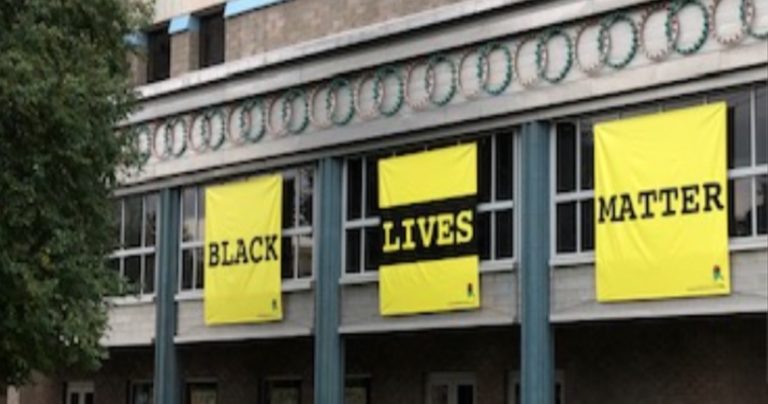
The media’s treatment of Black Lives Matter (BLM) protests, often describing them as mostly peaceful, while labeling nearby rioting mobs as “uprisings”, was clearly at odds with what America witnessed on their television screens.

Even more stark was the media’s selective reversal on Covid-19 mandates.  Aided by politicians and talking-heads, organized BLM protests were enthusiastically endorsed throughout the media.  In contrast, earlier public positions and protests by business-owners, churches, and organizations advocating for opening up the nation’s devastated economy were roundly condemned.

Both groups were exercising their 1st Amendment right to protest unwarranted or unlawful government authority. Yet, the reaction to them by the public, local authorities and the media was often diametrically opposed.

  • Amid nation-wide coronavirus fears, citizens were publicly shamed for not wearing masks or observing social-distancing guidelines.
  • After months of complying with hunker-down orders, financially strapped shop owners were arrested or cited for re-opening “non-essential” businesses.  Their crime: allowing employees to go back to work in order to support their families.  
  • NY Mayor de Blasio directed the NYPD to arrest violators in large groups. “This is about stopping this disease and saving lives,” he said.

Black Lives Matter protests were treated quite differently. 

  • In a nation where funerals, church services, and large gatherings were prohibited, the massive demonstrations of people across America were given a pass. Many demonstrators openly ignored health warnings to wear masks or exercise social-distancing. 
  • Hollywood, predictably, joined the chorus of protesters and contributed money for funds to bail lawbreakers out of jail.   There were few consequences for criminals – the few arrested were released within hours of their arrest.
  • Two newspaper editors were forced to resign for daring to publish op-eds deploring the destruction or suggesting that federal troops be used to curb violence.

As protests continued, along with public memorial services for George Floyd, it became abundantly clear that Covid-19 mandates weren’t meant to be applied to everyone – just those not demonstrating for an acceptable cause.  Governors and mayors across the country encouraged and joined the BLM protests – all the while insisting that other large gatherings remain strictly forbidden for health reasons.

Just weeks before, Alaska shop owners objecting to health mandates were widely criticized for “putting the lives of their fellow citizens at risk in the pursuit of profits.”

Anchorage Mayor Ethan Berkowitz, who joined peaceful protests, also thought lives were at risk, but not in the way you might think.  During a recent community radio address, he elevated Black Lives Matter protesters to hero status by saying “I see people who are risking their lives to protest…in spite of a pandemic”.

That comment diminishes the sacrifice of thousands of real heroes in our country’s history who risked and lost their lives defending the constitutional right of all Americans to protest.

The coronavirus doesn’t distinguish between conservative and liberal protests. According to some, apparently our 1st Amendment rights do.

The complex and deep-seated issues facing our country won’t be solved by quelling debate and limiting personal freedoms of those expressing opinions with which we disagree.

Win Gruening retired as the senior vice president in charge of business banking for Key Bank in 2012. He was born and raised in Juneau and graduated from the U.S. Air Force Academy in 1970. He is active in community affairs as a 30-plus year member of Juneau Downtown Rotary Club and has been involved in various local and statewide organizations.

Ratepayers need full disclosure on ML&P and Chugach Electric deal

8

WHAT THE RCA APPROVED IS NOT WHAT WE VOTED ON

By BOB MAIER

“The transaction as conceived by ML&P and Chugach was not straightforward.”

So states the Regulatory Commission of Alaska’s – 152-page decision released May 28 concerning the sale of Municipal Light and Power to Chugach Electric.  

There are myriad issues addressed in the order, including Beluga River natural gas, creation of a tight power pool with Matanuska Electric, economic regulation of the Anchorage Water and Wastewater Utility, the Eklutna Power Project, creation of a new Municipal Utility Municipal Hydro Power, the portion of the billion dollar purchase price known as the acquisition premium, the promise of “No Increase of Base Rates,” the environmental remediation of the ML&P campus, the dividend restriction placed upon ML&P, the “Payment in Lieu of Taxes,” and the Municipal Utility Services Assessment.

The issue I will focus on is the solemn promise of “No Increase on Base Rates,” along with the up-coming rate increases as mandated by the RCA decision.

Prior to the April 03, 2018 Anchorage Municipal election, Chugach and ML&P were involved in an extensive advertising and educational campaign leading up to the vote on Proposition 10, which is the sale of ML&P to Chugach Electric.  

Despite the ballot language and all of the public assurances, when Chugach filed their application with the RCA on April 1, 2019, Section IV titled “Approvals Requested” informs the RCA that the transaction cannot be completed unless the RCA authorizes in advance Chugach’s recovery of all costs of the transaction through future rates. 

The RCA, recognizing the promise made in Proposition 10 and the full retreat from that promise made one year later in Chugach’s application, has taken the issue even further.  On pages 106 and 107 of the decision the RCA states the following.

“No Increase in Base Rates. Base rates for existing ML&P and Chugach Electric ratepayers would not increase as a result of the transaction.”  Proposition 10 includes the following provision: “No Increase in Base Rates.  Base rates for existing ML&P and Chugach Electric ratepayers would not increase as a result of the transaction.”

For the reasons discussed above, these prohibitions of base rate increases as a result of the transaction are inconsistent with our obligations and Chugach’s obligations under AS 42.05.  

We are specifically mandated by AS 42.05.431(a) to ensure that Chugach’s rates are sufficient to meet its debt covenants.  

We cannot allow Chugach to be subject to legal claims under Section 6.21(b) for specific performance of the requirements of Ordinance No. 2018-1(S) or Proposition 10, when such performance may put Chugach’s financial health at risk.  

To be clear, we declare under our authority in AS  42.05.141(a)(3) that any covenant by Chugach to comply with the rate provisions of Ordinance No. 2018-1(S) or Proposition 10 quoted above is an unreasonable practice that is void and unenforceable.

The case has been made, indeed mandated, by the RCA that base rates must rise despite all of the promises and ballot language that no such thing would occur.  These higher rates will be uniform from downtown Anchorage to Hope.

Ratepayers now need to be presented modeling showing what the average $100 per month electric bill will look like if this $1,000,000,000 sale is completed.  

Chugach ratepayers need to be informed of the environmental liability risk they will be assuming by taking on the ML&P properties.   

Issues not discussed in the RCA decision, such as the expansion of the CIRI Fire Island Wind Farm and the amount of the surcharge current ML&P ratepayers will be charged, must also be presented. 

I began this piece with a list of the issues addressed in the RCA’s decision but have only discussed the solemn promise to not increase base rates.  Each other issue carries with it an impact on the ratepayers and the taxpayers.

What the RCA approved is not what we voted on.  

An explanation needs to be forthcoming from our elected officials as to just what is going on here.  

And then another vote needs to be held on the current terms of the sale of ML&P to Chugach Electric.  The voters need to take another look.

Bob Maier is an Anchorage utility ratepayer who has provided testimony to both the RCA and the Anchorage Assembly on the sale of ML&P.  

Permanent Fund check: $992

32

The Alaska Department of Revenue announced the amount of the 2020 Permanent Fund dividend is $992.

Beginning July 1, an estimated 580,000 Alaskans, representing nearly 90 percent of PFD applicants, will receive their dividend by direct deposit or check.

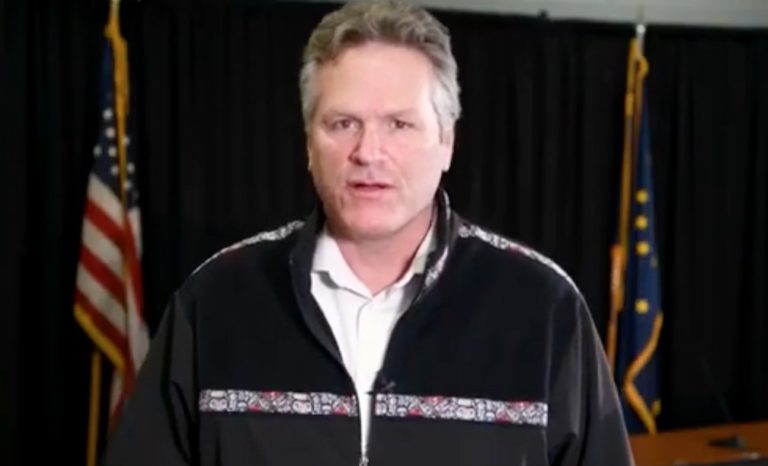
The decision to distribute the PFD three months early was made by Gov. Mike Dunleavy in response to the economic impacts of the COVID-19 pandemic.

Alaskans who are determined eligible by June 19, 2020 and chose direct deposit will see funds in their bank accounts on or shortly after July 1. Eligible applicants receiving a paper check will have their checks in the mail starting on July 1.

Dividend applications that have not been determined by June 19 will be paid out on a monthly basis by check or direct deposit beginning July 23. This year, the Permanent Fund Dividend Division saw a record number of Alaskans sign their application electronically, at 92 percent.

Alaskans are encouraged to use the state’s website MyPFD to check the status of their PFD application.

2020 marks the 39th year Alaskans have received their share of the state’s natural resource wealth. Following the 2020 dividend payment, the estimated total of all funds disbursed to Alaskans, including the one-time 2007 Resource Rebate, will exceed $25 billion dollars.

Supreme Court allows ‘jungle primary’ and ranked voting on general ballot

17

IF IT PASSES, SEN. LISA MURKOWSKI COULD BENEFIT IN 2022

As expected by most political observers, the Alaska Supreme Court upheld a ruling that, if voters approve in November, will take political party power away from Republicans during future primary elections, opening up primary ballots so all voters can vote the Republican ticket.

Currently, the Alaska Republican Party has a partially closed primary — people can vote the Republican ticket if they are not registered with another official party, such as Democrat, Alaska Independence, or Libertarian. Republicans do this so others cannot jump over onto their primary and vote in the weaker candidate. Other parties in Alaska have open primaries.

The ruling favors a radical group funded by Outside money, “Alaskans for Better Elections,” and it means in November, Alaska voters will be given the choice to vote yes or no on this question.

But it won’t be that simple. There are three distinct things that the ballot initiative would change about elections, but most voters won’t get past the first item: “Dark money.”

The ballot question, as approved by the Supreme Court, leads with a statement about “dark money” in campaigns, although the term “dark money” is not defined. The proponents likely hope that is enough to get them their real goal, which is to shatter the current election system and put in place a method that gives Democrats a better chance of winning elections, through the other two changes the initiative calls for: “Rank choice voting” and open “jungle primaries.”

Rank choice voting and jungle primaries means Sen. Lisa Murkowski would not face a serious challenge if she runs for office again. Currently, she would find it difficult to win a Republican primary. Scott Kendall, who is backing the Better Elections initiative, is thought to be advancing this ballot question to assist her.

The justices ruled that it’s up to the people to decide how voting will be done, and they agreed with the lower court’s ruling that people can change their election system and that the ballot language as presented is acceptable.

Now they’re coming for statue of William Seward

67

Christopher Columbus has lost his head in Boston, and his statue has been torn down in Minneapolis. But that’s just the start, it appears.

In Boston, protesters beheaded the statue of Christopher Columbus.

A list of people on the social media platform Change.org is demanding that the statue of William Seward be removed from the plaza in front of the Alaska Capitol in Juneau.

The statue honors the American credited with the 1867 purchase of Alaska from Russia.

“In 2016 a statue was raised in Juneau of William H. Seward, who was a colonizer who contributed to the disenfranchisement of Alaska Native peoples,” wrote the petition creator Jennifer LeRoe, of Juneau. Over 400 people have signed the petition, which was addressed to Rep. Sara Hannan and Sen. Jesse Kiehl, Juneau Democrats.

“In this current climate, where other monuments depicting racists and representatives of slavery are being taken down across the country, Juneau should honor our Indigenous hosts whose land we stand upon and remove William H. Seward from the capital courtyard,” the petition concludes.

Over 400 people have signed the petition online since it was created on June 10. The reasons they gave include that Seward was a bad man, that colonization was bad, and that indigenous people feel disrespected by the statue.

Seward was a leading abolitionist, who was President Abraham Lincoln’s Secretary of State, and served as New York’s 12th governor and then as a member of the U.S. Senate, where he was an ardent antislavery activist.

Republicans pick Jacksonville, Florida for nominating convention

0

The Republican National Committee has moved its convention from Charlotte, N.C. to Jacksonville, Fla., after N.C. Gov. Roy Cooper, a Democrat, was unwilling to flex on his state’s rules pertaining to crowd restrictions.

The final decision was made Thursday but had been rumored for several days.

Most of the legal business of the convention will take place in Charlotte because of contractural obligations, but with fewer than 400 people. The celebrations and speeches will take place in Jacksonville. The convention will begin Aug. 24. The RNC also decided to make no changes to its 2016 platform.

Between delegates and alternates, about 80 people plus spouses and guests will be attending from Alaska.

Six people from every state will go to Charlotte, including the delegate chairs, which in Alaska’s case is Ann Brown. In additional, Glenn Clary, Alaska GOP chair; Cynthia Henry, national committeewoman; and Peter Goldberg, national committeeman, will attend in Charlotte. They will arrive the week before to get the nomination vote accomplished, a vote that will be reconfirmed by the entire delegation in Jacksonville.

“We appreciate Florida’s hospitality and are excited the decision has been made so people can make adequate plan,” Clary said.

Jacksonville Mayor Lenny Curry, a Republican and the former chair of the Florida Republican Party, came forward as soon as Charlotte started looking like a no-go, and offered the Veterans Memorial Arena up for the convention. As many as 10 other cities were considered by the RNC.

Jacksonville is a 5.5-hour drive south of Charlotte on I-95, and a 2.5-hour drive from Orlando. In addition, it is served by several airlines, including American Airlines and American Eagle, Delta Air Lines and Delta Connection, JetBlue Airways, Southwest Airlines, United Airlines and United Express, and US Airways and US Airways Express.

District 6 House candidate finds out about ‘black face cancel culture’ the hard way

25

WHEN HALLOWEEN COMES BACK TO HAUNT

It’s OK for Tyler Perry to play the role of Madea, the southern, pistol-packing, pragmatic matriarch.

But in this day and age, if a white guy plays Madea, he’s going to have some explaining to do.

Madea character / Wikipedia

So discovered candidate for House District 6 Mike Cronk, who donned a dress, a wig, and some dark makeup to go to a Halloween party in Tok in 2012.

The theme of the costume party was, “come dressed as a fictional character you admire.” Cronk loves and admires the Madea character, and said the costume was a hit and no one knew who he was behind the wig and glasses.

But mainstream media was sent photos today by someone in the Democratic Party, and so there’s going to be a story.

But Cronk says that going to costume parties and admiring the character of black women is something he feels no need to explain. He said his daughters are Alaska Native and they don’t see a problem with costume play either, especially if you admire the person.

But the pictures are going to be splashed across the media soon, as KTUU has contacted him. Cronk, who was in national news as a hero after the Las Vegas mass shooting, knows the story will probably go national due to the national sensitivities about Black Lives Matter.

Whether the coming publicity hurts or helps him in District 6 is the question. The district is one of the most conservative and ruggedly independent districts in Alaska, and Cronk has friends far and wide through his reputation as a basketball coach. He was raised in the small town of Northway and taught school there for many years before moving to Tok.

Juneau police, under pressure, release their use-of-force policy

4

Juneau has released the Juneau Police Department’s Use of Force policy. Earlier this week, Police Chief Ed Mercer had refused to release it to the Assembly, but several people filed a public records request, and the policy was subsequently released (see link below).

The City and Borough of Juneau is hosting a listening session through Zoom on June 17 at 7 p.m. to hear citizen concerns related to local issues on policing, racism, and social justice; and to be a starting point of an ongoing community conversation.

Assembly members, Juneau Police Department leadership, and the Juneau School District superintendent are invited to listen.

Participate in the June 17 Listening Session at 7 p.m. by connecting directly to the Zoom Webinar https://juneau.zoom.us/j/99130137784 or calling 1-346-248-7799 with Webinar ID 991 3013 7784; the listening session will also be on Facebook Live.

The Juneau Assembly and JPD will continue its discussion on similar issues at its Committee of the Whole Meeting on June 22 at 6 p.m. All documents related to these issues will be posted in the Assembly packet. Thepublic can reach out to the Assembly by emailing [email protected].

Happy birthday; now here is your APOC complaint

8

Meda DeWitt, hired hand and high Poobah over at the Recall Dunleavy Committee, wants you to donate money in honor of her 40th birthday. It’s a generational thing, perhaps, one part activism mixed with one part narcissism in an Instagram frame.

“Turning 40 on Tuesday! For my fortieth birthday I am asking that you donate to the Recall Dunleavy movement! We have made history every step of the way and it has been hard navigating a world wide pandemic both as a Recall and as a state. We are so grateful that Dr. Zink has shared her grace and intelligence with us, but as the Governor opens the state fully we know his stance- profits over people,” DeWitt wrote on Facebook.

But DeWitt, who calls herself “APOC Chair” on her self-congratulatory birthday card, is not actually the chair of the Alaska Public Offices Commission, as the invitation leads readers to believe. That is the commission that monitors campaign activity to make sure it’s legal.

DeWitt is the paid person at the Recall Dunleavy campaign, and she is in charge specifically, of making sure the group is in compliance with APOC.

What’s more, her fundraising request did not come with the proper APOC disclaimer, saying who had paid for the message, sent by email to thousands of Alaskans.

That omission brought a complaint from Republican activist Randy Ruedrich, who pointed out to APOC that not only had the group misidentified her, but they failed in the compliance disclaimer.

APOC has yet to open a formal inquiry. The mistake will likely not cost the Recall Dunleavy group much, as DeWitt will say she is a newcomer to politics. She’ll get a slap on her hand and probably enough donations to pay the APOC fine and then some.

Those who want to celebrate Meda’s birthday but not give to the Recall Dunleavy campaign, can always direct their donations to Must Read Alaska, at the link below, to help this conservative news site stay afloat!