Once upon a time, dating from the late 1960s, the liquified natural gas plant at Nikiski was the world’s largest, built to serve the growing Asia-Pacific market.
Nearly all of the LNG produced there was sold to two Japanese utilities for the past 50 years. But in recent times, shipments have gone in fits and starts as supply and demand waxed and waned.
Nothing has been shipped from Nikiski in 2016, and only a few shipments were made last year.
Now, just as Gov. Bill Walker is attempting to build the largest gasline project in the world, which would include a massive new LNG plant at Nikiski, the “Little LNG Plant That Could” is up for sale. ConocoPhillips is ready to exit from much of its natural gas holdings around the country as a debt-reduction measure.
Is the governor interested in buying a small LNG facility that is strategically located to export Cook Inlet natural gas?
Perhaps. As we know, the governor is attracted to all things natural gas, and preferrably under a state ownership model. Purchasing the plant would fit squarely within policy structure, nevermind whether it pencils out.
During a board meeting of the Alaska Gasline Development Corporation earlier this month, AGDC President Keith Meyer announced that he had toured the ConocoPhillips LNG plant days earlier to look at its capacity and attributes. A few days later, ConocoPhillips announced the liquefaction plant was for sale. Coincidence?
More importantly, is the plant a good fit for the AK-LNG project, which would build an 800-mile gasline from Prudhoe Bay to Nikiski, where LNG would be shipped to Asian buyers?
As they say in Alaska, the odds are good but the goods are odd. It’s a small plant, a small dock, and it’s 50 years old. Conoco has kept it in operating condition but it’s not as efficient as more modern plants. Nor does it have nearly enough capacity to service the 3.5 billion cubic feet of gas per day that is expected from the North Slope and Point Thomson.
The plant operated for six months in 2015 but has not shipped product in 2016 because the market is flooded with natural gas. LNG is natural gas cooled to minus 256 degrees Fahrenheit, which shrinks the fuel to 1/600th of its original size, making overseas shipping more economical.
Although Gov. Walker may be interested in owning the historic plant at Nikiski as a tactic to advance the “bullet line,” a smaller gasline project that the state’s Alaska Gasline Development Corporation was formed to advance, the right buyer would likely not be the State of Alaska.
Government in general and Alaska government in particular has an extremely poor track record taking on projects that the private sector finds uneconomic. Does anyone remember the Alaska Seafood Center? The Delta Barley Project and the empty grain silos that stand in Walker’s hometown of Valdez to this very day?
A more direct case in point is the Point MacKenzie LNG project: In 2015, Governor Walker blocked the sale of the Titan LNG facility at Point MacKenzie in upper Cook Inlet. Hilcorp Energy had agreed to purchase that LNG plant, which supplies Fairbanks Natural Gas. Through his attorney general at the time, Craig Richards, the governor had the private sector Hilcorp purchase killed by the Regulatory Commission of Alaska. Richards said the State would not consent to the sale due to antitrust concerns.
Then, through the Alaska Industrial Development and Export Authority, the governor purchased the plant, as well as Fairbanks Natural Gas, and the trucks to ship the gas to Fairbanks. The state is now in the LNG and distribution business.
While Walker was assembling assets to form the Interior Energy Project, the price of oil had plummeted so low that Fairbanks residents balked at converting their homes and businesses to gas. The State is now stuck with a huge investment that only serves the original 1,100 customers of FNG.
The Interior Energy Project (IEP) costs continue to mount. AIDEA spent $54 million to acquire Titan, another $53 million to buy the Fairbanks Natural Gas utility, and bonded a $37.7 million construction loan for the Interior Gas Utility for build-out of the distribution system, a combined investment of $145 million, notwithstanding other administrative and overhead costs. First gas distribution was set for the end of 2016. The natural gas arriving would give the utility revenues to pay off the construction loan.
It hasn’t worked. Miles and miles of distribution pipe built throughout Fairbanks lie empty in the ground, unused. The IEP is well on its way to being as much a boondoggle as the aforementioned seafood center and barley project.
AIDEA always claimed that State ownership of the project was temporary, but as 2016 comes to a close, there appears to be little progress in completing the project.
The original business case for the State of Alaska elbowing its way into ownership of the Interior Energy Project was made by AIDEA in early 2015 with these projected scenarios:
$54 million dollar investment to purchase LLC membership interests
• Expected sale of Titan and AET assets for $15.15 million, Q3 2015
• Pass on elimination of corporate costs (taxes, return, etc.) to ratepayers and to build capital for expansion
• Develop and negotiate process to transition FNG to a Local Control Entity (LCE) as soon as possible
• Secure additional LNG /natural gas supplies
• Structure financing, using SETS, State Appropriation, Bonds to take out AIDEA investment and finance distribution system expansion.
• Exit investment in two years with estimated return of $2.91 million (5.06%)
None of this is likely to pay off anytime soon, and quite possibly never. The question now is, will Gov. Walker learn from his mistakes and approach State investments with more humility and less hubris? Or, will he double down on his boondoggle and propose State ownership of the ConocoPhillips plant at Nikiski at a time when the State can ill afford it?
Alaskans who are worried about being stuck with the bill for another state-owned business failure will want to keep a close eye on this one.

The State Central Committee of the Alaska Republican Party will consider a resolution at its Dec. 1o meeting to withdraw support from Reps. Gabrielle LeDoux, Paul Seaton and Louise Stutes for their violation of Article 9, Section f(5) of the party’s rules.
That section discusses the party’s possible actions to sanction incumbents who do things that are detrimental to Alaska Republicans or to Republican values and goals.
The three, who are known as the Musk Ox Coalition, have joined with House Democrats in the Alaska House to create a Democrat-run majority that plans to roll out an income tax on working Alaskans this year.
The Nov. 8 General Election saw 21 Republicans elected to the House, enough to hold onto a fragile majority. But when those three bolted to become part of a Democratic caucus, Alaska Republican Party Chairman Tuckerman Babcock issued a swift rebuke, inviting them to leave the Republican Party altogether.
In a note to party officers today, Babcock wrote regarding the “defection of three Republican State House members from their colleagues. The three defectors crossed over and put the Democrats in charge of the State House, for the first time in about 25 years. This despite the fact that Alaskans voted to elect 21 Republicans to the State House. Three of our Republican State House members abandoned their team, abandoned their party and abandoned their responsibility to serve.” The item has been placed on the agenda for review and determination.
One member of the Musk Ox Coalition was sanctioned earlier this year and lost his re-election bid as a result. Rep. Jim Colver, a freshman legislator from District 9, was voted out of office during the August primary, and George Rauscher, his Republican challenger, went on to an easy victory in November.
Will such sanctions apply to the remaining three members of the Musk Ox Coalition, who have now joined the Democrats? Babcock has shown no inclination to back down in enforcing party rules and preventing the party from being exploited as a path to office for those who do not share its values.
There is also the possibility of a fourth Musk Ox emerging. It is rumored that freshman Garry Knopp is being courted heavily by the Democrats in order to shore up their thin majority.
Babcock now considers the Musk Oxen to be defacto Democrats. Sanctions may well include finding Republicans to challenge them in the 2018 election.
SCOTT KENDALL IS NEW CHIEF OF STAFF
 The governor’s new chief of staff is a well-known Alaska political figure: Scott Kendall, formerly associated with the Black Rock Group, a political consulting firm out of Washington, D.C. with an extensive portfolio of work in Alaska.
Black Rock Group was most recently associated with Sen.Lisa Murkowski’s re-election campaign. Kendall, Alaska’s managing director for Black Rock, was embedded in the Murkowski campaign.
Jim Whitaker, who came in with the Walker Administration as chief of staff, will continue on in a project management role, according to a press release from the governor’s office.
The difference between the two men’s styles is worth noting: Whitaker, who has been an ally of Walker’s since the old Alaska Gasline Port Authority days, has few natural friends in either the liberal or conservative camp. Kendall, however, is respected by both sides.
“He has the right mindset, the right intelligence, and right open door policy to be successful in what is going to be a difficult road ahead for Governor Walker for the next two years,” said a source close to Kendall.
Kendall started work today and was trailing the governor as he entered the ballroom at the Dena’ina Center, where the governor spoke to the Resource Development Council.
Kendall said he took the job “for the good of the state,” he told Must Read Alaska. He is related through marriage to high-profile Democrat Luke Hopkins. Hopkins, former mayor of Fairbanks, just lost a bid for the Alaska Senate after running a bloody campaign against incumbent Sen. John Coghill.
An Anchorage attorney, Kendall also worked on the election campaign of Walker in 2014, helping Walker’s family monitor the vote count after the election. The Walker team had no legal counsel at the time, and Kendall filled in because he had vote counting experience from 2010. His relationship with Walker is almost familial, according to those who know him.
Kendall was formerly with the law offices of Holmes, Weddle & Barcott.

Republican Millett now leads Democrat Pat Higgins by 52 votes.
There are 520 absentees still uncounted, including 186 in-person votes cast on Nov. 7 and 8. They are mainly University of Alaska Anchorage ballots, our sources tell us. More absentee ballots continue to trickle into the Division of Elections. They had to be in the mail by Nov. 8.
The possession of those absentee ballots break toward Millett, as 169 of them were requested by Republicans, to the 88 Democrats who asked for ballots. The count continues later this week.
In the Rep. Lance Pruitt-Harry Crawford race in District 27, Republican Pruitt gained 14 in the questioned ballots and lost 6 in the early voting ballots, preserving his lead.
In the Senate N race between Sen. Cathy Giessel and AFL-CIO boss Vince Beltrami, Giessel gained 9 votes in questioned ballots and 4 in the early voting ballots. Her win looks solid, holding with more than 51 to 48 percent over Beltrami.
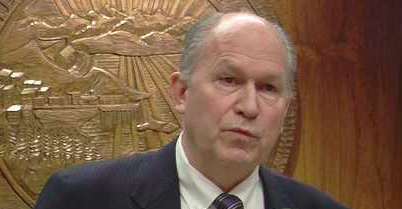
TICKETMASTER: Word is out that Lobbyist Jack Ferguson is burning up the phone lines looking for official presidential inauguration tickets for Gov. Bill Walker and First Lady Donna Walker. Politicos will remember this is the same Bill Walker who gushed about flying on Air Force One with President Barack Obama, whom he was courting during the past two years. Is this the same Walker who would not tell people who he supported for president? He’s on the Trump Train now.
CLOSE RACES: The Division of Elections will count remaining early vote and questioned ballots tomorrow (Tuesday). They reviewed questioned ballots today. Democrats did not show up to monitor the review of the questioned ballots in the Lance Pruitt-Harry Crawford (District 27) race, but did show up to try to toss legitimate ballots out of the Charisse Millett-Pat Higgins (District 25 ) race. There was a whole group for that one, with just 45 votes between Higgins and a flip of that district to the Democrats.
BILL WALKER TO JAPAN: Gov. Walker is said to be on his way to Japan in a few days to attend the Natural Gas Producer-Consumer Conference in Tokyo. The one-day meeting is Nov. 24, Thanksgiving Day. Japanese Ministry of Economy, Trade and Industry and the Asia Pacific Energy Research Centre are putting on the conference. The governor plans to meet with potential customers of his Alaska LNG Project. Walker was in Japan in September of 2015 to deliver an address at the 4th LNG Producer-Consumer Conference in Tokyo. Walker, Alaska Gasline Development Corporation President Keith Meyer, and other members of the administration met with Japan’s Ministry of Economy, Trade, & Industry , and the Japan Oil, Gas, and Metals National Corporation earlier this fall in Juneau.
DEMO-BLOGGER POUNDS THE PAVEMENT: Democratic blogger Casey Reynolds is looking for work, but there’s precious little of it to be had in the post-election economy. On Election Day he was spotted at Lucky Wishbone, hanging out with NEA lobbyists. Know of something for his skill set? Send your job leads to [email protected].
NORTH SLOPE, JUNEAU LOSE INFLUENCE: Democrat Dean Westlake took out Democrat Ben Nageak in the August primary to represent District 40. Nageak was chair of the powerful Natural Resources Committee. Westlake has been given a co-chairmanship of Community and Regional Affairs Committee, which he shares with another newcomer –Democrat Jason Parish of Juneau. Parish unseated Juneau’s only Republican, Rep. Cathy Munoz, who sat on the powerful Finance Committee. Juneau’s influence just waned a bit more, as Parish is a long way from being ready to serve on Finance. On the other hand, the new Democratic Majority has held one seat open on Finance, hoping for more defectors to join Representatives Gabrielle LeDoux, Louise Stutes, and Paul Season.
GRENN STILL SALUTING DEMS? Jason Grenn, who started as a Republican but somehow was convinced to become an independent in order to challenge Rep. Liz Vazquez, (District 22), is now chair of Military and Veterans Affairs Committee, where he will snooze the session away. His ability to impact legislation is weak.
How will Grenn explain to his conservative district that he has aligned himself with the Democrats who will be proposing income taxes and taking even more of your Permanent Fund dividend? Or, will he rediscover his conservative instincts and position himself for the long game?

As voted on by the Alaska Republican Party State Central Committee earlier this year, the electors for the 2016 General Election are:
What is next? Per federal law, on the Monday following the second Wednesday of December each state’s electors meet in their respective states and cast their electoral votes. That would mean Alaska’s electors will gather on Dec. 19 in Juneau, where hopefully all the aforementioned grief counseling is completed. Or not.
In Alaska, each elector must “pledge” that he or she will fulfill the duty of elector and cast his/her electoral vote for the candidate of the party. It’s not unusual that people try to pressure the electors to change their votes; in 2012, the Ron Paul people were mobilized in this regard.
There’s already been some pressure exerted in this cycle, according to at least one elector. Here’s a note one of them received from a Juneauite. (We’ve removed the author’s name to spare her the embarrassment):
“I am writing to you to ask you, in the name of humanity, to please cast your electoral vote in December for the candidate who the public voted for, Mrs. Hillary Clinton. Please, do the right thing and place what is right ahead of your party. Thank you.”
According to Kristie Babcock, who was an elector in 2012 along with Kathleen Miller and Chris Nelson, the process is somewhat ceremonial, complete with cake and punch and several observers in the audience. The electors sign six original sets of the official ballot, seal the envelopes, and sign the outside of them. One copy goes to the president of the Senate (Vice President Joe Biden), who opens it on Jan. 6 and reads it before both houses of Congress.
The other copies go to the lieutenant governor, the Archivist of the United States, and to the chief judge of the federal district court where the electors meet.

Alaskans interested in taking part in the events surrounding the swearing in of Donald Trump as president can follow this link to the home page of Sen. Lisa Murkowski. In the past, Alaska-specific galas have been held and that is likely to be the case for the 58th presidential inauguration, although plans haven’t been announced.
Fill out the form at Sen. Murkowski’s official web site and your name will be entered into a lottery. To request a ticket you must be an Alaska resident and be able to pick the tickets up in person on Jan. 18-19. Tickets cannot be mailed.
Must Read has learned that a couple of hundred people have already logged onto the site and filled out the form.
A complete list of inaugural events is at this link.
The Alaska Republican Party reports it is in planning stages for an inaugural gala in early January. The tentative date is Jan. 7 in Anchorage, although it’s expected that galas and balls will be held in other communities as well.
Are you a freshly minted college graduate looking for a step upin your professional career? Senator Dan Sullivan is taking applications for interns to join his Washington, D.C. office, starting in the spring. Learn more and beat the Nov. 30 deadline at: sullivan.senate.gov/services/internships
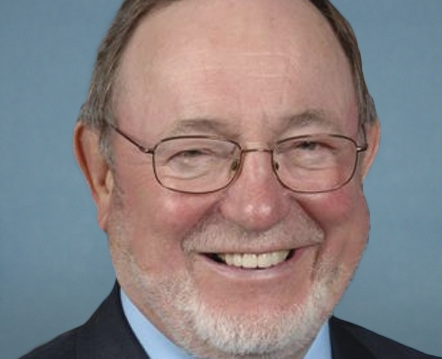

Don Young won his first full congressional term back in 1974, with 51,641 votes. Since then, it’s been nothing but net for the longest-serving Republican in Congress.
In fact, since 1974 Young has chaulked up 2,961,632 general election votes from Alaskans, averaging 59.4 percent of the votes across the 23 times he has competed for his seat.
The list of people Young has beat in general elections could populate a small Alaska town of also-ran, ultra-liberals: Emil Notti, Willie Hensley, Eben Hopson, Pat Rodey, Kevin Parnell, Dave Carlson, Pegge Begich, Peter Gruenstein, John Devens (twice), Tony Smith, Georgiana Lincoln, Jim Duncan, Clifford Mark Greene, Thomas Higgins, Diane Benson, Ethan Berkowitz, Harry Crawford, Forrest Dunbar, and Steve Lindbeck. Also, a couple of dozen third-party candidates made valiant efforts across many of those years.
In 1984 and 1986, Young defeated Pegge Begich, 113,582 to 86,052, and 101,799 to 74,053 respectively.
In 1988 he beat Peter Gruenstein with 120,595.
In 1990 and 1992, he defeated then-Mayor of Valdez John Devens, 99,003 to 91,677 and 111,849 to 102,378.
Fast forward to 2010, when he beat down Harry Crawford in the general election, 175,384 to 77,606.
In 2012, Young defeated State Rep. Sharon Cissna, 185,296 to 82,927.
In 2014, he cut down Forrest Dunbar, 142,572 to 114,602.
And in 2016 he had a four-way race, but 125,729 Alaskans stuck with him, for more than 50 percent of the vote, to Lindbeck’s 90,784.
Since 2002, Young has been the top-getting vote goliath for statewide races.
And although contenders keep saying he’s too old to serve, or from another era, we take the Mark Twain view: News of Don Young’s fading glory is greatly exaggerated.
Rather, he seems to have run one of the best campaigns of his career this year, hitting the stride just right and keeping it positive to the very end.
Some pollsters just could not shoot straight, however.
Just three weeks prior to Nov. 8’s General Election, the Democratic Congressional Campaign Committee (DCCC) had a poll that said Democratic challenger Steve Lindbeck was within two points of Rep. Young — 39 to 37 percent.
Lindbeck was on the attack with negative ads aimed at showing Young as not looking out for Alaskans and being calloused.
Pundits from the Alaska Left predicted that Lindback had a real shot at victory, but the tale of the tape went the other way: Young won 125,729 to Lindbeck’s 90,784, or 50 percent vs. 36 percent.
The Libertarian in the race, Jim McDermott, drained away 10 percent of Young’s likely voters, doubling his percentage points since he first ran for the seat in 2012.