Adding to his growing list of endorsements, Republican congressional candidate Nick Begich was unanimously endorsed by District 22 Republicans. Those are the Republicans in the newly renumbered House district in Eagle River. About 20 people attended the district meeting, including the officers of the district, Alaska Republican Party Chairman Craig Campbell, and Assemblywoman Jamie Allard.
Begich also received District 6 in Homer and the Kenai Peninsula Republican Women’s endorsement over the weekend. Monday’s endorsement is a sign that Republicans are beginning to coalesce around a candidate to support for the congressional seat made vacant when Congressman Don Young passed away on March 18. Begich has over 100 other endorsements from Alaskans from Ketchikan to Fairbanks and has been raising individual-donor funds to mount a serious statewide campaign.
Former Gov. Sarah Palin said today she would love to be the next congressional representative for Alaska — if asked.
Palin, who in 2008 joined the presidential ticket of Sen. John McCain, told Newsmax host Eric Bolling, “If I were asked to serve in the House and take his place I would be humbled and honored … In a heartbeat, I would. We will see how this process goes in filling that seat – it would be an honor.”
The lifelong Alaskan then criticized the Biden administration, focusing on surging in gas prices, “because of their lack of education or purposeful destruction of so many sectors of the economy,” Palin said on Newsmax.
“Some people, certainly not in the White House, are aware of what petroleum products are, what transportation costs affect when it comes to supply chain. (But) because of their lack of education or purposeful destruction of so many sectors of the economy – they certainly look to blame somebody else,” she said.
She has done this before, hinting last year that she might run against Sen. Lisa Murkowski.
Already in the congressional race is Nick Begich, the Republican from Chugiak; Chris Bye, a Libertarian from Fairbanks; Bob Lyons, a Republican from Houston (AK); Randy Purham, a Republican from Soldotna; and Shannon Scott Evans, a Republican from Alaska.
Several others are rumored to be considering running for the seat, including Sen. Josh Revak, who was co-chair of the Alaskans for Don Young campaign.
Anchorage School Board member Kelly Lessens has introduced a revised policy on school breakfast and lunch programs, a policy she says will make the Anchorage School District conform to both federal and state laws that are being rolled out later this year.
While state law only requires a district to provide health and physical education for students, federal law is more restrictive for districts wanting to receive federal funds. That federal dollar is what Lessens and the school board are after, and federal dollars come with regulations.
The ASD received $20.9 million for the breakfast/lunch program in 2020. Due to schools being closed in 2021, there was a dramatic decrease to $12.7 million in 2021 in federal taxpayer funding for the breakfast/lunch program.
One can see why adhering to federal limitations regarding feeding students is important — it’s about the money. Each student is funded depending on whether the student is on the free or reduced lunch program. The more free lunch students you have, the more federal funding you get.
In 2020, the district had 16,343 students in the free lunch program and 341 students in the reduced lunch program. More than 43 percent of all ASD students were enrolled in one or the other program.
To qualify for free/reduced price lunches, a household must meet the income eligibility guidelines, which is based on household size. To qualify for a free lunch, a household would have an income of less than $43,069 annually. That household would qualify for a reduced-price meal with an income of less than $61,291.
The federal government pays (through the State of Alaska) ASD $5.94 for each free lunch and $5.54 for each reduced-price lunch.
There is also a Community Eligibility Provision, which allows the district to receive the free lunch payments for all students in a specific school if more than 40% of its students qualify for a free lunch. So, if a household of four has an income of $100,000 or even more, those students also get a free lunch, if the school has 40 percent or more students on the free/reduced lunch programs.
If the district is certified to be in compliance with the “program” meal pattern, it receives another 6 cents per served lunch. This is a laborious process prescribed by the federal government that includes counting vegetable servings by the type, serving size, and how many were served. Here is a link to the requirements; they read like military specifications.
To ensure the the district gets maximum funding from the federal government, Kelly Lessens’ policy restricts food sale fundraising and “classroom incursions” in nutrition. An incursion is not something happens in Ukraine, in this instance. An incursion is a tray of cupcakes or cookies brought by a parent for a bake sale.
Under this policy, food sale fundraisers that happen during the day must adhere to federal SMART snack guidelines. “Fundraising groups offering SMART-Snack-compliant food must provide receipts and nutritional labels and/or product specifications for all foods offered for sale.”
A classroom incursion would also occur if a parent brought cupcakes to celebrate a student’s birthday. If a family does not want to participate in classroom food incursions, it must fill out an opt-out form at the beginning of the school year. Parents are able to opt-out of this program much more easily than they can opt- out of sex education.
However, to show compliance to the federal government, there is a burgeoning bureaucratic workload for school staff.
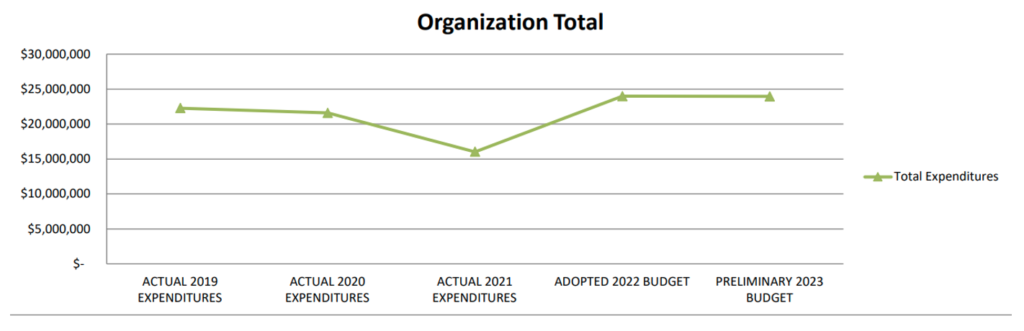
In 2020 the district spent $21,595,000 on student nutrition; in 2021 that dropped to $16,035,000. Note that in 2021 the district was closed to in-person learning and the district was only delivering lunches to neighborhoods. Here is a chart showing expenditures over the years:
The school nutrition program required 213 full-time equivalent positions in both 2020 and 2021.
If the Anchorage School District wants to continue receiving federal taxpayer funds for school lunches, it must follow the federal regulations, including the no-cupcake rules, or lose those dollars.
The federal government controls our K-12 education system through its school lunch/breakfast/snack program, just like it controls our health care system through its mandated hospital protocols via Medicare/Medicaid reimbursements.
If the federal government can control what our kids eat for snacks at school, will mask mandates be next? Will a national curriculum be the next chapter in the book of bureaucracy?
Anchorage Mayor Dave Bronson announced today that he is initiating Assembly approval for a citizen naming panel to convene and begin the process of officially renaming the Port of Alaska as the “Don Young Port of Alaska,” in remembrance of the late congressman.
Anchorage Municipal Code 3.97 permits the naming and renaming of municipal facilities in recognition of one who has “substantially contributed to the municipality, the state, or the nation.”
“As the longest serving U.S. Congressman and Dean of the House, Don was one of Alaska’s biggest champions. As Chair of the House Transportation and Infrastructure Committee he was instrumental in bringing federal dollars to the Port of Alaska,” Bronson said. “His tireless work for Alaska over the last 49 years has made a tremendous impact across generations for the Port of Alaska, which provides food and supplies for 90 percent of the state. He met with my administration multiple times to help expedite permitting, secure funding, and advance the Port Modernization Program. I am asking for the Anchorage Assembly to join me in honoring Congressman Young in recognition for all that he did for the Municipality.”
Once convened, the panel will hold public meetings, consider code requirements, and make a recommendation back to the assembly. The memorandum will be introduced at the special Assembly meeting March 22.
In an editorial filled with factual errors, the Anchorage Daily News has said that the administration of Mayor Dave Bronson is dishonest.
It’s the same editorial board that remained silent when former Mayor Ethan Berkowitz couldn’t keep his pants up. The editorial board that never said a word when Berkowitz spoke to the “Sea of revolutionaries, and it makes my heart glad.” The editorial board that gave former disgraced Gov. Bill Walker a pass after he folded his tent upon the publicity surrounding his rogue best friend and lieutenant governor.
This time, the editorial board spared no words. It wasn’t your normal 500-700 editorial, but instead ran over 1,100 words to explain just how dishonest the mayor’s office is, in their mind.
Only the proof is just not there. The entire string of emails that the Anchorage Assembly received in a public records request only shows that the early days of the Bronson campaign had some of the foibles one could expect from a guy who had never before held elected office and was learning the ropes. One thing Bronson learned is that no deed goes unpunished by the Assembly or the Anchorage Daily News.
Hilariously, three ads for Forrest Dunbar for Assembly popped up into the middle of the editorial. Dunbar was the Anchorage Daily News’ endorsed candidate for mayor in 2021; they lost and Dunbar lost. You cannot make this stuff up.
The ADN has jumped the shark, looking for a boogyman who doesn’t exist, and so it has made one up. There’s no reason in the world why the mayor or his representatives should bother returning calls from the newspaper at this point.
Here is what else the newspaper didn’t tell its readers: Moments after the Assembly Chair Suzanne LaFrance and Vice Chair Chris Constant received the copies of the internal emails from the mayor’s office, the phones started ringing. The reporters from the ADN wanted copies of those emails, too. They got the tip from LaFrance and Constant. It was all a set up by the leftists on the Assembly and the lapdog newspaper.
The emails showed nothing they had hoped for: The police chief left for a better job. So what? The fluoride was turned off briefly for evaluation. So what? The city manager has cracked down on leaks to the media. Good for her. The city manager did not, in fact, order the video monitor of a chaotic Assembly meeting to be cut.
The one thing the editorial got right was that it asked the mayor to fire City Manager Amy Demboski back in December. And the editorial board didn’t get its way. It’s now pitching a fit. But we all know that it’s trying to create so much blood in the water that the mayor will be damaged and unable to return the city to its formerly inhabitable condition. The newspaper has been after Demboski since before she ran for mayor.
This is why so many members of the public now consider the mainstream media the enemy. And the editorial board of the ADN has not learned a thing but has decided to dig an even deeper hole for itself.
First rule of hole-digging: Just stop.
The editorial board of the Anchorage Daily News showed on Sunday that its transition is complete: It has become the leading alternative press in Alaska. The Anchorage Press should be very upset with the well-funded competition for the left-leaning news consumers.
Alaska Governor Mike Dunleavy’s Executive Order 121, to divide the State’s largest and most bureaucratic department in two smaller departments, has become law with the Legislature offering no objection, and takes effect July 1.
The reorganization of the Department of Health and Social Services will create two more nimble departments focused on a more proactive approach to serving Alaskans.
“Reorganization will create an environment for innovation and greater responsiveness,” said Gov. Dunleavy today. “The two departments will be able to manage their programs more efficiently and more responsibly to the constituents they serve. And they’ll be able to work on long-term strategic goals such as focused stakeholder engagement, federal partner negotiations, and Alaska-specific solutions for health care.”
The budget of DHSS is bigger than 12 other state departments’, the Legislature, Court System and Governor’s Office combined, thanks to vast expansion of state government under Gov. Bill Walker, who adopted Obamacare. The department has a team of five who have to manage 3,200 employees.
Gov. Dunleavy’s Executive Order divides DHSS into two departments that are aligned by functionality:
Dept. of Health (DOH) will focus on payments, processes and programs
Dept. of Family and Community Services (DFCS) offers direct care to Alaskans 24/7 either in a facility or in the community
“The reorganization was designed to not disrupt services to beneficiaries or payments to providers,” said DHSS Commissioner Adam Crum. “These two departments allow for proper management and support to work on improving critical services delivered to and for Alaskans.”
Speaker Nancy Pelosi announced on Monday, that Congressman Don Young, the Dean of the House and longest-serving Republican representative in U.S. history, will lie in state in National Statuary Hall in the United States Capitol on Tuesday, March 29.
Lying in state is a tradition in which the remains of a deceased official is set inside a public building for a short period of time so that the public can pay their respects. Usually this means the body is in an open casket.
Congressman Don Young was re-elected to the 117th Congress in 2020 to serve his 25th term as Alaska’s only Member of the United States House of Representatives. First sworn in as a freshman to the 93rd Congress after winning a special election on March 6, 1973, Congressman Young became Dean of the House in 2017. As Speaker Pelosi said after his passing, “For five decades, he was an institution in the hallowed halls of Congress: a serious legislator always bringing people together to do the People’s work. The photographs of him with ten presidents of both parties who signed his bills into law that proudly cover the walls of his Rayburn office are a testament to his longevity and his legislative mastery.”
A formal ceremony will be held Tuesday morning with the Young family, which will be open to invited guests. Following the memorial service, there will be viewing open to Members of Congress. Additional details will be announced at a later date.
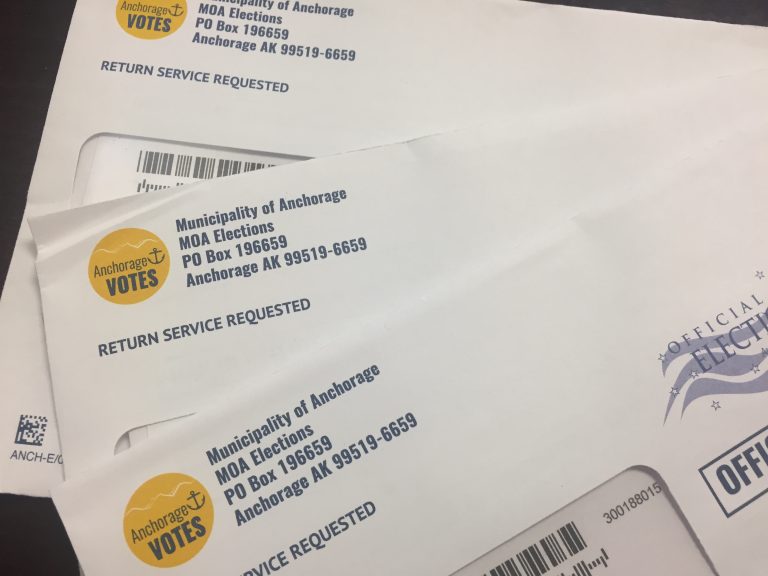
A week after ballots were put in the mail to Anchorage voters, the Anchorage Election Office reports on March 21 that only 19 people have cast their ballots in the March 15-April 5 Anchorage election. The ballots were delivered to a post office on March 15 from a printer in Washington state.
Multiple reports from over the weekend came in to Must Read Alaska from campaign volunteers who were door-knocking to remind people to vote. Voters they spoke with reported they have not seen any ballot yet.
Now, Must Read Alaska has learned that as many as 15,000 ballots are stuck in a post office in Everett, Washington.
35,000 ballots have left that post office in Washington, according to our source. As of Friday, only six ballots had been received by the Anchorage Election Office. This means an unknown number of people have simply not received a ballot.
All ballots in the Anchorage mail-in only election must be cast by April 5, the final day of the election.
In 2017, the Anchorage Assembly, without asking for a vote of the people, moved the voting process to mail-in only, adding millions of dollars to the annual election process. By the Assembly’s ordinance, the ballots had to be sent to voters by March 15 this year, but apparently are stuck in Washington, where they are printed.
This story is developing. Check back for more updates.
Scott Kendall, former 2016 campaign legal counsel for U.S. Sen. Lisa Murkowski and later chief of staff to former Gov. Bill Walker, has designed an election system nightmare that is going to force Alaskans to pay a very heavy price this year.
The election nightmare is a so-called “ranked choice” voting system designed by and pushed by Kendall. Narrowly adopted by Alaskans after a massive dark money campaign to get us to vote yes, Ballot Measure 2 passed by just a 1 percent margin.
Never mind that the whole rotten scheme was written to try and help Murkowski get reelected, because she has zero chance of ever winning a Republican Primary election. This was overturning an entire election process just to try and help one person stay in office.
So what are the consequences of Kendall’s scheming?
Less information available for voters. In our traditional system, the primary allowed Alaskans to choose the Democrat and Republican nominees. Now, no one will know whether a candidate is, or is not, really a Democrat or Republican. Alaskans lost the ability to nominate the party candidate. From now one, every candidate can choose whatever party of convenience they want at the moment – and nobody will be the wiser.
The election cannot be determined by humans counting ballots. The Scott Kendall scheme requires algorithms and computers to take charge of counting. When there is a problem — and there will be problems — judges will decide our election for us.
Scott Kendall promised his rank system would ensure every winner gets 50 percent. 50 percent of what? In every place around the country any sort of ranked choice has been tried, between 2-14 percent of the voters have their votes tossed aside before the final tally. What does that mean? Of the 100% of those that go to vote, the final tally only includes maybe 90 percent of them. So the winner wins with 50 percent of 90 percent…which is 45 percent. Does that make any sense at all?
Scott Kendall forgot to mention that everywhere ranked choice is imposed, turnout among the elderly and people of color has declined. That is just a miserable fact. He knew it, if he did any research, but that apparently did not matter as much as trying to rig the system for his former bosses.
Huge delays and exorbitant costs. Alaska, even under our traditional system, was the very last state to report our vote in the national election. Now, with the Scott Kendall ranked choice nightmare, we will be lucky to have a final vote count before the governor is required to be sworn in on Dec. 3. Best estimates are two to three weeks for a result at best.
Special election fiasco. Scott Kendall also changed our special election process. In the past, we had one election and quickly filled our congressional vacancy. Alaska would be deprived of representation in Congress for a couple of months. But Scott Kendall tossed that aside and created a two election process for special elections. What does that do? A: We spend an extra one or $2 million on an extra election. B: We are stopped from filling any vacancy for 4-5 months just to satisfy the weird process designed by Scott Kendall.
Why do we have two elections? If you use ranked choice, you only need to pay for and hold one election. The choices will all be ranked and the votes tabulated and re-tabulated until a candidate gets 50 percent. Done — no need for two elections.
Holding an election to nominate four candidates where each voter votes once and then holding a second election to elect one candidate where each voter gets to vote five times is the most ridiculous and absurd thing I have ever heard of.
The special election designed by Scott Kendall is a waste of time, waste of money, waste of votes. He has succeeded in turning Alaska’s elections into a wasteland of needless expense, confusion, and computerized mystery. No state uses the system Scott Kendall designed, and for good reason.
The unfortunate death of our longtime congressman has highlighted the nightmare that is Scott Kendall’s election system.
Unless the Legislature acts immediately, we will be deprived of a having our member of Congress for an extra three or four months because of the horrible and thoughtless redesign of our elections by Scott Kendall. Alaskans will be asked to hold and pay for four statewide elections between July and November, millions of dollars utterly wasted.
What can be done?
At least this: Eliminate the totally pointless special election “primary” election. We never had one before and we do not need one now. One special election, ranked choice (since we must for this year) and one candidate wins with 50 percent. It’s half the trouble and half the cost. Get an Alaskan back in Congress twice as fast.
This is not about helping Democrats or Republicans. This is just doing what is right for Alaska.
Tuckerman Babcock is a past president of the Alaska Republican Party and is a candidate for Alaska Senate, to represent the Kenai Peninsula.