Thursday, August 6, 2026
Home Blog Page 828

John Quick: From NFL to community leader, Junior Aumavae sets the bar high for other pro athletes

By JOHN QUICK

Junior Aumavae’s journey took him from the National Football League back to his home state of Alaska to light the beacon of hope for students. Aumavae created a road map for what all professional athletes could do after being in the pros.

Picture this: You are a kid, sitting in your bedroom looking at a wall filled with posters of people who inspire you to be something that changes the world, as you look out the window of your small Alaska town; you hope to be one of those people, some day. That was a journey similar to Uluao “Junior” Aumavae, who went from being that small-town kid in Palmer, with big dreams about being a starter the NFL, to becoming that pro player, to being named vice president for the Indianapolis chapter of the NFL Player’s Association, to working for the Drug Enforcement Agency in community outreach, to now being the chief equity officer for the Municipality of Anchorage. 

Aumavae had far from an easy upbringing. He admits that he struggled in school and often got into trouble to the point of being expelled. That was when his life changed; Aumavae found refuge in his football coaches and teachers, who saw potential in him as a student and an athlete. He eventually received an offer to play football at Western Washington University after pushing himself to succeed and having a positive attitude about life.

While Aumavae had achieved a significant milestone by playing football at Western Washington University, he faced another challenge, when he had trouble balancing his studies and football practice. After being put on academic probation, Aumavae managed to find a mentor to help guide him to success — Dr. Kunle Ojikutu, who worked in the university’s Equity Department. Through Ojikutu’s guidance, Aumavae was able to get his grades up and eventually transfer to Minnesota State University. After college, he played for the Dallas Cowboys and the New York Jets, before turning his journey back to his hometown to take on a new mission: Help create a support system for students throughout Anchorage.

Upon returning to his home state, Junior began searching for ways to help improve and build a stronger community. He saw an opportunity to do that by signing on with Mayor Dave Bronson’s Administration in Anchorage as chief equity officer to ensure the city offers fair opportunities for minority communities. Thrilled by the chance to use his position in the biggest city in Alaska, Aumave also took this as a way to get himself into the schools of Anchorage and speak to the future generations about the importance of trying to be the best version of yourself every day. 

Recently, he spoke to a group of students at Northwood Elementary School about having an education to achieve any dream that they have for themselves in the future. He spoke about the importance of focusing with your eyes and ears to learn and observe everything around you.

Aumavae emphasized how each teacher, principal, coach, mentor, and pastor was vital for him and is just as crucial for the students because of the infinite wisdom they have to offer them. He didn’t avoid talking about the mistakes he made along the way, openly sharing with the students that he would get in trouble and was suspended many times until he was kicked out of school.

“The one thing that I learned when I was young is that I not only had to be a good student, but I also had to be a good family member, a good brother, and now a good uncle and good father,” he said.

At the closing of the school event, Aumavae left the students with glimmers of hope for the future and unveiled his plan to help improve the school system. In his closing statements, he mentions how everyday community members have bits of their own wisdom to offer to a young, hungry mind. Through this, they can become whatever they set their minds to and give back in ways similar to himself. Junior didn’t leave his students hanging as he did a classic NFL team break for the kids as they looked forward to the future and gave everyone a “high five” as class began for the youngsters.

His plans for schools throughout the area have involved locals, ranging from students’ uncles and aunts to pastors they would see on Sundays to help in the hallways and ensure students stay on task and out of trouble. Aumavae sees it as an opportunity for the children to vocalize when they are struggling mentally, socially, or academically and speak with familiar faces.

Here is an example of one school where Aumavae’s impact has been felt: A dangerous environment developed in a school after a large fight among students. After Aumavae and his friends started walking the hallways,  violence disappeared, and students’ grades and mental health improved dramatically. The principal of the school went on to get the principal of the year award after turning that school around.

Community is a major factor that Aumavae attributes to his own success and wishes to pass down to future generations in Alaska. By having a solid support system for his educational career, he achieved his lifelong goals of getting a college degree, playing for the NFL, becoming a father, and now being a significant contributor to Anchorage. 

What if every NFL player returned to their hometown and did this? For the ones that do, thank you!

John Quick of Nikiski is vice president of Must Read Alaska and primary host of the Must Read Alaska Show.

Bizarre: Eagle River House District 23 race pits Assemblywoman Allard against self-described mentally ill man who lives among homeless, has long criminal record

They’re both registered Republicans, and they both are running to represent a deeply Republican area of the state, District 23 – Chugiak and Eagle River.

But one of the candidates is a member of the Anchorage Assembly, a military veteran, and a first-generation American of Chilean descent.

The other candidate has documented his decades-long struggles with mental illness, identifies with the struggles of the homeless in Anchorage, and has a long criminal record with the Alaska Court System.

Jamie Allard, who is on the Assembly, is the likely candidate to win the seat. She is well-respected in the conservative electorate and has a wide circle of people who have endorsed her, including Mayor Dave Bronson, Kenai Republican Women, Valley Republican Women, Alaska Republican Party, and Anchorage Republican Women’s Club, and District 23 Eagle River Republican Committee. She may be the only House candidate statewide that has been endorsed by all of those entities.

Roger Branson’s criminal recored cites numerous instances of violence, including domestic violence, in his Alaska Court System history:

Branson is open about his mental health challenges and has a web page dedicated to his mental journey, in which he revealed that a few years ago the people of Chugiak were worried that he could become a mass murderer.

“Eight years ago a series of events began unfolding which led to the good people of a couple churches near Chugiak to believe I was capable of becoming a mass murderer with (apparently) their selves as my imminent target,” he wrote on his web site.

Others have concerns about safety around Branson. At a recent Anchorage Chamber of Commerce forum, one of the organizers had to tell Branson to pipe down after a member of the audience from Chugiak-Eagle River had asked Branson questions regarding his lack of alignment with Republican principals. Branson visibly lost his temper, demanded that woman give him her name, which she would not do. A chamber of commerce representative told him to settle down, but he then demanded that the woman leave the room. The chamber — or someone in the building — brought in a security officer because of Branson’s behavior.

It’s unclear if ConocoPhillips will provide similar security during this Thursday’s candidate forum for its employees. Branson and Allard are both invited to give presentations to employees who live in District 23.

This summer, Branson set up his own camp at the homeless camp at Centennial Campground, where he said he provided services to homeless people at the camp. Sources say he had difficulty following the campground rules and that he was very selective about who he helped.

A few years ago Branson was removed from the board of the Chugiak Eagle River Senior Center and trespassed from the property. Branson, although registered as a Republican, always supports the most liberal candidates, and signed the recall petition against Gov. Mike Dunleavy in 2019.

The election is Nov. 8, with early voting starting two weeks prior to Election Day.

School buses running at 50% capacity in Anchorage, but school board works on land acknowledgement rule

According to the Anchorage School District, there are still not enough school bus drivers to provide transportation for half of the students in the district.

As of Friday 172 out of 228 routes are in full service, said Superintendent Jharrett Bryantt on Friday. This week, the district expects nine new routes to be added, and 30 drivers are in training.

That’s not the focus of the Anchorage School Board, which tonight will take up the proposed rule mandating a “land acknowledgement” at certain official events. Already, the school board recites a land acknowledgement at every meeting.

The superintendent said in his weekly memo that attendance is now at 91%, up from 87% last year.

The percentage of students who attend 90% of the time has increased from last year’s 54% to this school year’s 68%.

“On Monday, when we switch to cohort three, drivers should expect heavier traffic around Begich, Wendler, Goldenview, Romig, and Hanshew middle schools, along with Bartlett, Service, East, West, and South high schools. If possible, community members at large should avoid these areas during drop-off and pick-up times (7:30 a.m. to 8:15 a.m. and 2:30 p.m. to 2:45 p.m.),” Bryantt wrote on Friday.

“We were hopeful to be within arm’s reach of an end to the cohort system by October. There will unfortunately be a setback in this trajectory. This is a delay but not a defeat. We have a large training pool, we are still accepting applications for bus drivers, and hiring incentives are in place,” he wrote.

Deven Mitchell, acting commissioner of Revenue, named new president of Alaska Permanent Fund Corporation

The Alaska Permanent Fund Board of Trustees has chosen longtime Alaskan Deven Mitchell to lead the corporation as the new president. The Alaska Permanent Fund Corporation has been without a president since the trustees fired Angela Rodell last December.

With Mitchell, the trustees have found someone who has a remarkable record of good relationships throughout government, including the Alaska Legislature, where he has testified many times on the state’s various financial portfolios.

In September, Mitchell was named by Gov. Mike Dunleavy as the acting commissioner for the Department of Revenue, to fill in for Lucinda Mahoney, who retired for health reasons.

Mitchell brings a wealth of knowledge and experience to APFC, the trustees said. He has extensive experience with financial securities and working for the Alaska Department of Revenue since 1992. His service as Alaska’s debt manager as well as executive director and treasurer of the Alaska Municipal Bond Bank Authority, a public corporation of the State, provides a solid foundation of fiduciary duty.

As acting commissioner of Revenue and a serving trustee of the corporation, Deven declared his candidacy during the annual meeting and was excused from the board’s selection process. It is also important to note that he applied for this position in late July, well before being appointed the Acting Commissioner of Revenue.

The APFC Board of Trustees made the selection at a public meeting on Oct. 3 in Juneau and via teleconference. The selection is contingent on the successful negotiation of a salary and benefits package, and a start date is yet to be determined. Mitchell resides in Juneau, where he and his wife Erin raised their two sons.

Clown World: Anchorage Assembly surprise meeting melts down into ‘rage,’ accusations, chest-pounding

49

An emergency Anchorage Assembly meeting on homelessness concerns was scheduled, rescheduled, and rescheduled again by the Assembly leadership over the weekend. It finally took place midday Monday.

But Assembly leaders didn’t release the related documents — resolutions, lease agreements, operating agreements, and proposed ordinance changes — to the public until 20 minutes before the meeting began. With millions of dollars on the line, even the Assembly members and Mayor’s Office did not get the agenda and documents until the last minute.

It was an inauspicious start to a meeting that struggled to be serious, with most members calling into the meeting from their jobs rather than appearing in person for something that had been changed three times over three days.

Only Assembly President Suzanne LaFrance, and members Forrest Dunbar, Kevin Cross, and Pete Petersen were present in the room. The assemblyman who called for the meeting to be held in the first place — Felix Rivera — didn’t even show up at all. Instead, he sent in a statement that was read aloud by Chairwoman LaFrance.

LaFrance had no control of the meeting, and the motion to “lay on the table” all items under deliberation was postponed by hours of grandstanding by the progressive Assembly members who veered off topic. Assemblywoman Jamie Allard, who tried to call for an end to the out-of-order debating, was ignored by LaFrance.

Much of the Monday grandstanding was from members such as Dunbar, Constant, and Quinn Davidson, who badgered the mayor’s staff about whether the administration would ever use the Golden Lion Hotel, if the Assembly voted to make it legally possible.

Documents for the meeting can be found at this link.

Notably, Assemblyman Chris Constant had a meltdown, saying he was enraged at the mayor — and shaking — he was so mad. Yelling through the phone in a Shakespearean-like soliloquy, Constant said the mayor had not delivered a plan for dealing with the homeless. Assemblywoman Quinn Davidson, also calling in, said there was no plan.

Mayor Dave Bronson had, in fact, negotiated with the Assembly for a year and the Assembly has approved the negotiated plan, but has refused to fund it.

Subsequently, with delays created by the contrary Assembly, the mayor used Centennial Campground over the summer to provide camping spots for homeless people, get them out of the greenbelts and forested areas, where earlier in the summer a wildfire originated in a homeless encampment, raising concerns about public safety.

In the last couple of weeks, it appears the Assembly has spent over $30 million on homelessness response.

The mayor closed the Centennial Campground on Oct. 1 and helped over 100 people living there for free this summer move into the Sullivan Arena, where there are empty cots, blankets, and storage totes for them.

The remaining people at the campground are, so far, refusing to go to the Sullivan, but may change their minds as winter approaches. Nighttime temperatures in Anchorage are approaching 40 degrees.

The purpose of the meeting was to enter items into the agenda for Oct. 11 so the Assembly can rush through the legal process that involves paying for 50 or more homeless people to stay at the Alex Hotel on Spenard Blvd, the designation of the Golden Lion Hotel as an official emergency shelter, and some budget cleanup items related to using the Sullivan Arena as an emergency shelter. Millions of dollars are being discussed for this effort, which would only extend until the end of December.

Earlier, the Assembly was stymied in its efforts to push the Golden Lion, because the city lawyer pointed out that the Assembly had passed an ordinance in 2020 forbidding the use of the Golden Lion as a homeless shelter.

The issues will appear again on Oct. 11 at the Assembly’s regular meeting.

The Assembly is attempting a takeover of the homelessness response from the Mayor’s Office, and the meeting was one in a dozen meetings held lately to advance that agenda. The meeting went on for over two and a half hours but in the end nothing of substance was accomplished.

Crime in Alaska reaches lowest level since 1975

Alaska’s crime rate is the lowest it has been since 1975, according to the most recent edition of an annual state report.

The Department of Public Safety released the 2021 Crime in Alaska Report, its annual publication detailing crimes reported in Alaska, which reveals a 15.2% decrease in Alaska’s overall crime rate.

This continues the downward trend in Alaska crime that started in 2018, after former Gov. Bill Walker was removed from office by voters. Walker had ushered in a crime wave with SB 91, which was repealed after he left office by the Legislature and Gov. Mike Dunleavy.

Alaska’s reported violent crime rate decreased by 9.7% last year; this included fewer instances of murder, robbery, rape, and aggravated assault. Alaska’s property crime rate decreased by 17.3% in 2021, and the total number of reported property offenses was at its lowest level since 1974.

“Public safety has been job number one for my administration since I took office, and we have made historic investments in law enforcement across the state,” said Gov. Dunleavy. “With the repeal of the catch and release SB 91 legislation, and the other major steps my team has made over the last four years to make Alaska a safer place I know that we will continue making positive movement towards reducing the high rates of domestic violence and sexual assault that plague our state.” 

The Uniform Crime Reporting Program is a nationwide effort by federal, state, city, county, and tribal law enforcement agencies to report data on crimes reported in their jurisdiction. The report is a resource for measuring the trend and distribution of crime in Alaska. Under Alaska law, law enforcement agencies in Alaska are required to submit UCR data to the State of Alaska. In 2021, 31 agencies reported crime data to DPS. These agencies represent 99.5% of the state’s population.

2021 is also the first year that a significant number of agencies have participated in the federal National Incident Based Reporting System, or NIBRS, reporting model. This new reporting model captures additional details about the suspects and victims of crime to allow for additional data set tracking. Approximately 66% of Alaska’s law enforcement agencies reported using the NIBRS model.

“While the 2021 crime data continues to show decreasing crime rates, we must not become complacent as a state. Your Alaska Department of Public Safety will continue to work to improve public safety across the state in both urban and rural Alaska,” said Alaska Department of Public Safety Commissioner James Cockrell. “In 2020, crime rates began to increase across the lower 48, however in Alaska, our commonsense approach to public safety and the overwhelming support of Governor Dunleavy, the Alaska Legislature, and the citizens of our state continue to drive crime rates down and make our state a safer place to live, visit, work, and raise a family.”

Caution should be exercised when comparing data from year to year and making conclusions, as the report does not account for when an incident occurred; it accounts for when it was reported. For example, burglary or theft occurring in November of one year may not have been discovered and reported until February of the next year. The incident is not retroactively applied to a previous year’s data; it is counted in the year it was reported. Rape offenses are counted by victim, and each separation of time and place a rape occurs will also be counted. Sexual assaults spanning years will result in numerous counts of rape offenses being reported for a single victim.

The 2021 Crime in Alaska report was authored by the Alaska Department of Public Safety’s Division of Statewide Services. The Division of Statewide Services provides technical and specialized services to the Department of Public Safety and law enforcement agencies across the state. Past Crime in Alaska reports and felony-level sex offenses reports can be found online here.

The UCR and Crime in Alaska reports are based on the Federal Bureau of Investigation definitions of crimes, to ensure consistency and uniformity in reported offenses nationally. The definitions do not always echo state definitions; therefore, federal publications cannot accurately be compared to reports that use the state definitions for crimes as these are unique to each state. Additionally, the population counts for Crime in Alaska come from the US Census.

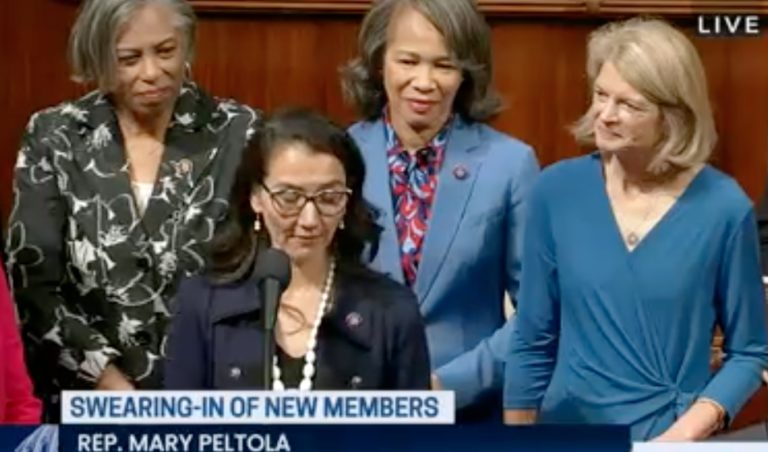
That should do it: Murkowski helps veterans by renaming Alaska VA Clinic after Col. Mary Louise Rasmuson

U.S. Sen. Lisa Murkowski announced two legislative efforts she says will support veterans and their families.

Sen. Murkowski introduced, with Sen. Dan Sullivan as a cosponsor, the Colonel Mary Louise Rasmuson Campus of the Alaska VA Healthcare System Act of 2022 to name the Alaska VA Clinic after the late Col. Mary Louise Rasmuson, the wife of the late banker Elmer Rasmuson and cofounder of the Rasmuson Foundation.

Mary Louise Rasmuson was a leader in the Women’s Army Corps who expanded opportunities for women serving in the military, including integrating women of African descent into the corps. 

“Sen. Murkowski also responded to Alaskan veteran’s concerns surrounding a lack of health long term care options for veterans by cosponsoring the Elizabeth Dole Home and Community Based Services for Veterans and Caregivers Act. This bill aims to delay the need to send veterans to long-term institutional care by expanding access to quality home and community-based programs and increasing coordination efforts,” the press release from Murkowski said.

“Colonel Mary Louise Rasmuson is a well-known name in Alaska. She spent her life advocating for women in the military and expanding their opportunities within the service. Following her twenty-year military career, Mary Louise continued that same level of service as a civic leader and philanthropist for the betterment of our Alaska communities. It’s fitting that we not only honor her legacy of service, but also the growing number of female veterans she fought on behalf of throughout her distinguished career. I’ve worked hard to ensure female veterans have equity to their male counterparts and access to the benefits they’ve earned. This bill builds on those efforts to ensure their service is explicitly recognized and well-represented in Alaska,” Murkowski said. 

Sen. Murkowski also cosponsored the Elizabeth Dole Home and Community Based Services for Veterans and Caregivers Act. This bill aims to delay the need to send veterans to long-term institutional care by expanding access to quality home and community-based programs and increasing coordination efforts.

“I’m also proud to cosponsor the Elizabeth Dole Home and Community Based Services for Veterans and Caregivers Act. In Alaska, we are proud to have the highest rate of veterans per capita, which also includes a large population of aging and older veterans. This bill addresses a real need and expands access to care and community-based programs, making it easier for veterans to maintain their independence and get the care they need at home. Supporting all veterans remains one of my top priorities,” she said.

Anchorage School Board to approve agreement with Eklutna Tribe to create district-wide performative ‘land acknowledgement’ for schools

At the Oct 4 meeting of the Anchorage School Board, members will be voting on a resolution that will require the schools to start using a performative land acknowledgement that recognizes that there were some people living on the land in the Anchorage area before other people from other places arrived to live on the land.

“Anchorage School Board resolves that the Superintendent shall promote the necessary collaboration between the Eydlughet (Eklutna) Tribe and the Anchorage School District to write a ‘living’ Land Acknowledgement statement and bring that statement to the Board for approval and ensure a required protocol for when and why to issue Land Acknowledgements at appropriate District-sponsored ceremonies and gatherings,” reads the resolution.

In 2020, the “land acknowledgement” became a fixed agenda item for the Anchorage Assembly under the chairmanship of Assemblyman Felix Rivera. It’s an official mea culpa of colonization and occupation, and the Assembly now has someone on the governing body recite the ritualistic self-shaming before each meeting.

These types of land acknowledgements started in Canada and often say erroneously that Native Americans have been in the region “since time immemorial,” as stated by Joe Biden’s Indigenous People’s Day proclamation of Oct. 8, 2021, and that the lands that people are living on now were considered sacred lands to people who lived on them prior. People such as Paleolithic people, or Stone Age people.

Anthropologists believe humans crossed the land bridge from what is now Russia to what is now North America some time between 15,000 and 40,000 years ago. The first people to arrive were thought to be Paleolithic, but later the area was populated by Inuits, and then other ethnic groups. Caucasians and those of African descent are more recent arrivals.

The Anchorage School Board, not to be outdone in “woke” ideology by the Anchorage Assembly, followed suit. Now, the board is planning to craft a recitation that will be required throughout the districts during specified events. At this point, it appears the Board is backing away from requiring it to be recited daily in classrooms, perhaps planning to introduce that aspect later. Currently, the schools are supposed to have the Pledge of Allegiance recited daily, but research shows that many teachers are not expecting that in their classrooms.

The next step for the schools to adopt a land acknowledgement is for the superintendent and the Eklutna tribe, which numbers 70 people, to come up with the acceptable wording.

The school board’s own land acknowledgement, performed at each meeting, follows:

(A Land Acknowledgement is a formal statement recognizing the Indigenous people of a place. It is a public gesture of appreciation for the past and present Indigenous stewardship of the lands that we now occupy.

Land Acknowledgement opens a space with gratefulness and respect for the contributions, innovations, and contemporary perspective of Indigenous peoples.)

“On behalf of the Anchorage School Board, I want to take a moment to recognize and offer gratitude for the sacred ancestral lands of the Dena’ina People.  

“We acknowledge and appreciate that our offices, facilities, and schools are on these sacred indigenous lands, and we honor the traditional care that has been given to this land throughout generations.  

“We are grateful for the opportunity to grow, learn, work, and create educational communities on this sacred land.  We extend continued respect for the many cultures, creativity, and resilience of its Indigenous Peoples”.  CHINAN”

Vermont high school bans girls from their own locker room because they don’t want to change clothes in front of boy

Randolph Union High School in Randolph, Vermont has banned girls on its volleyball team from using their own locker room after they objected to having to undress in front of a boy who is being allowed to use the girls’ locker room.

The teenage girls on the volleyball team said a male student claiming to be transgender “made an inappropriate comment while members of the volleyball team were getting changed,” according to news reports from Vermont.

Vermont state education policy says students can play sports and use the locker room corresponding to their gender.

“It is the policy of the State of Vermont that all Vermont educational institutions provide safe, orderly, civil, and positive learning environments. Harassment, hazing and bullying have no place and will not be tolerated in Vermont schools. No Vermont student should feel threatened or be discriminated against while enrolled in a Vermont school,” the state policy says. “An owner or operator of a place of public accommodation or an agent or employee of such owner or operator shall not, because of race, creed, color, national origin, marital status, sex, sexual orientation, or gender identity of any person, refuse, withhold from, or deny to that person any of the accommodations, advantages, facilities, and privileges of the place of public accommodation.” That means boys can use girls’ locker rooms in Vermont.

Read the Vermont state policy in full here.

Girl students in Alaska face some of the same pressures from their adult overseers, who insist that they undress in front of boys who are having gender identity confusion.

In Juneau, 9-year-old girls are being forced to undress in front of a boy who is being allowed to use the girls’ locker room at a local swimming pool, while the boy is apparently being groomed by his guardians to live as a girl. Some parents have pulled their children from the Juneau schools over the policy.