Great Britain several months ago ended Covid shots for young children, not offering the vaccinations to children under the age of 12 unless they are at high risk for complications from Covid.
The UK Health Security Agency joined Sweden, Finland, Norway, and Denmark, and other countries that no longer recommend mRNA shots to healthy children.
Yet according to the most recent recommendation by the Alaska Department of Health, the Centers for Disease Control and Prevention, and the American Academy of Pediatrics, babies as young as six months should get a Covid shot or two and continue getting boosters on whatever recommended schedule they are issued and approved by medical authorities. Alaska’s recommendation came out officially on Feb. 14.
“The updates to the 2023 Immunization Schedules reflect the schedule changes voted on and approved during the ACIP meeting that occurred in October 2022. The most cross-cutting change is the inclusion of the primary series and other details of authorized or approved COVID-19 vaccines for both children and adults in the Tables and Notes sections of the Schedules,” the Department of Health advised.
But, as Dr. Rochelle Walensky, head of the CDC, told a Senate panel last week, the only reason the Covid vaccination was added to the schedule of “required” childhood vaccinations is that the Advisory Committee on Immunization Practices determined “it was the only way it could be covered in our ‘Vaccines for Children’ program,” which pays for vaccinations for uninsured children. She emphasized the word “only.”
Dr. Rochelle Walensky on Why an Experimental Vaccine was Added to the Childhood Schedule
"The reason ACIP recommended…getting the COVID-19 vaccine on the pediatric schedule, it was ONLY because it was the only way it could be covered in our 'Vaccines for Children' program" pic.twitter.com/k1CVf4cv09
In June of 2022, the Denmark announced it was changing its recommendations for Covid vaccinations: “From 1 July, 2022, it will no longer be possible for children and youngsters under the age of 18 to receive the 1st jab, and from 1 September, 2022, it will no longer be possible to receive the 2nd jab,” the Danish Health Authority said. Fact-checkers from the AP and Reuters pushed back against news organizations that described this as a ban on the vaccinations for children under the age of 18, labeling that characterization as “false.”
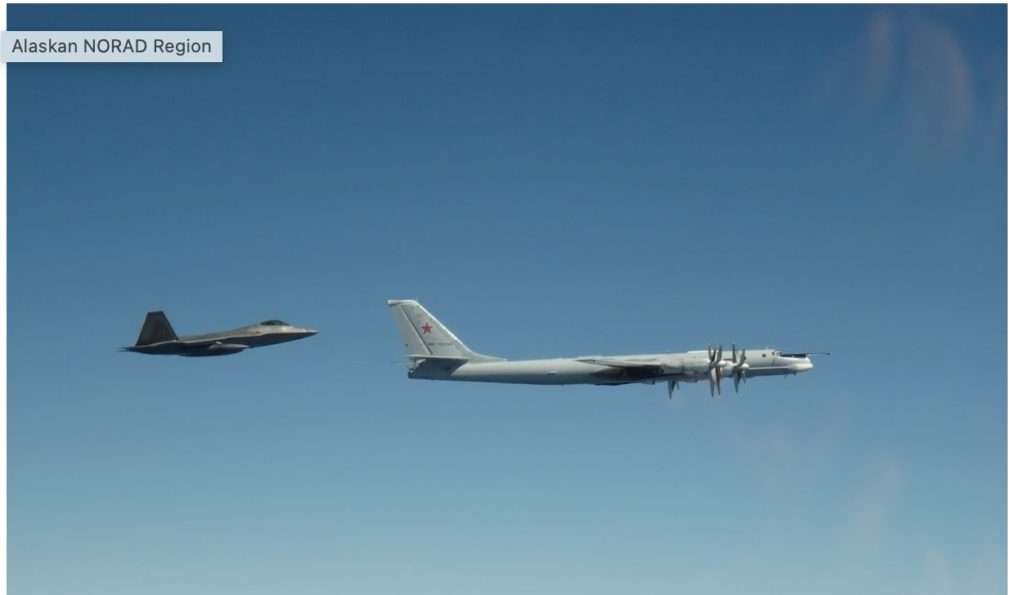
A British newspaper says it has footage released by the Kremlin in Moscow that shows Russian Tu-95MS missile bombers flying close to U.S. air space along the Bering Sea “in what appears to be a warning to the West amid Kremlin fury over supplies of weapons to Ukraine,” according to The Sun, which was the first to report the event.
Must Read Alaska reached out to the office of Sen. Dan Sullivan, who said U.S. pilots scrambled to intercept the Russian Tu–95 “Bear” bombers.
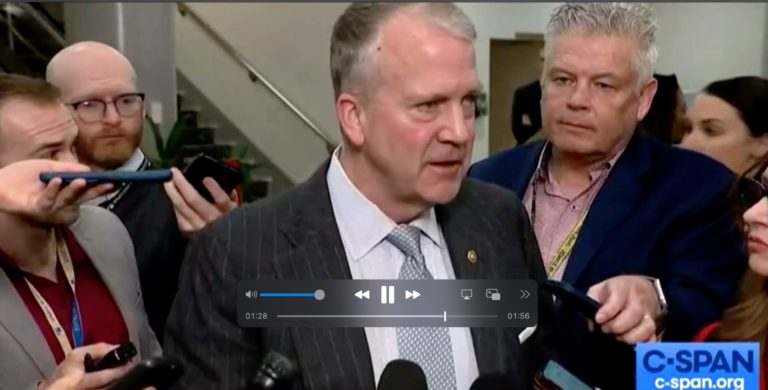
Sullivan himself was intercepted by reporters as he came out of a military briefing that was related to the recent unknown objects shot down over North America by U.S. fighter jets, and he mentioned the presence of Russian bombers close to Alaska:
Although the Russia sabre-rattling along American air space in Alaska may be related to the increase of U.S. military hardware to Ukraine, Russia has indeed increased its patrols near Alaska air space in recent years.
U.S. Air Force units stationed in Alaska said intercepts rose to 60 a year in 2020, up from just 10 in 2015, according to Air Force Times.
Sullivan complimented the Alaska-based forces for intercepting the bomber.
File photo by NORAD of the Russian bomber known as Tu–95 “Bear.”
“In Alaska, we went and intercepted those guys. So huge shout out, these are huge mission, these are not easy missions….the men and women who are serving Alaska are doing an amazing job, an exceptional job,” he said. Sullivan continued to call for greater transparency from the Biden Administration, and said that it is a view that is held by both parties in Congress.
Alaska U.S. Sen. Dan Sullivan confirms reports of Russian bomber patrolling Bering Sea. pic.twitter.com/fPsty2NwJk
Meanwhile, the U.S. Navy and Marine Corps are holding exercises in the South China Sea, including the USS Nimitz aircraft carrier strike group and the 13th Marine Expeditionary Unit.
China claims sovereignty over the South China Sea and has been building out islands in the reefs and atolls it occupies. Over recent years it has been “gaining effective control of the SCS, an area of strategic, political, and economic importance to the United States and its allies and partners, according to a new report released last week by the Congressional Research Service.
“Chinese domination of China’s near-seas region—meaning the SCS and ECS, along with the Yellow Sea—could substantially affect U.S. strategic, political, and economic interests in the Indo-Pacific region and elsewhere,” the Congressional Research Service report said.
Today’s homeland security news comes four days after an Air Force F-22 shot down an unknown object north of Deadhorse, Alaska on the ice-bound Arctic Ocean. Recovery work is in progress to bring in the pieces from that event.
Also today, Joint Chiefs of Staffs Chairman Mark Milley said that the first US F-16 missile that was fired at an unknown object near Lake Huron on Sunday missed the target and fell into the lake, prompting the jet to fire a second missile that made contact with the object. The object is believed to have fallen into the lake on the Canadian side.
A military aircraft accompanied by two Blackhawk helicopters was seen leaving Deadhorse, flying south this afternoon at about 4:30 pm. Must Read Alaska has…
The skies are empty over Deadhorse, as a highly unsual Federal Aviation Administration flight restriction has been placed around Prudhoe Bay, Deadhorse, and Kuparuk,…
U.S. Senator Dan Sullivan, a member of the Senate Armed Services Committee, called for greater transparency for the American people from President Joe Biden…
On Tuesday, former South Carolina Gov. Nikki Haley announced her candidacy for president, making her the second to formally announce as a Republican. Her first kick-off event will be held in Charleston, S.C. on Feb. 15.
Former President Trump announced he is running in November. Florida Gov. Ron DeSantis, who is considered a front-runner, has not yet announced.
Haley was the United Nations ambassador for former Trump and was twice elected governor of her state. Her parents immigrated from India before she was born, making her a second-generation American. She graduated from Clemson University with a degree in accounting and served in the South Carolina House of Representatives.
Haley, in her video announcement released on Twitter, (see it below) called for a generational change and said she would be a strong leader to take on adversaries, both foreign and domestic.
At 51 years old, she is 25 years younger than Trump, who is 76, and 29 years younger than President Joe Biden, who is 80.
The presidential election is Nov. 5, 2024, now 630 days from her announcement, but the first Republican primary or caucus is less than a year away. The Iowa Republican caucus takes place Feb. 5, 2024.
Although he has vocally declared his intent to run, John Bolton, former National Security Adviser to Trump, and former ambassador to the U.N., has not officially announced his candidacy.
Other Republicans who have hinted they may run:
Ron DeSantis, in his second term as governor of Florida, former member of House of Representatives, decision expected by May.
Larry Elder, radio show host, attorney, and Republican candidate during the recall election of California Gov. Gavin Newsom
Asa Hutchinson, former Arkansas governor, former administrator of U.S. Drug Enforcement Agency
Mike Pompeo, former Secretary of State, former director of CIA, former U.S. Representative from Kansas.
Others who have shown interest in running are former Vice President Mike Pence, entrepreneur Vivek Ramaswamy, South Dakota Gov. Kristi Noem, former Michigan Congressman Mike Rogers, New Hampshire Gov. Chris Sununu, former New Jersey Gov. Chris Christie, former Maryland Gov. Larry Hogan, South Carolina Sen. Tim Scott, and former Wyoming Congresswoman Liz Cheney.
According to the polling firm Morning Consult, Haley is at this point a long-shot, with Trump leading the pack of potential Republican candidates with 47% support from likely Republican voters, according to poll results released Feb. 14, 2023.
The long and drawn out election fraud case of former Rep. Gabrielle LeDoux was punctuated by yet another court date on Feb. 13, at which the trial call was set for April 11.
LeDoux is accused of committing voter misconduct and unlawful interference with voting in a case that goes back to at least 2018.
LeDoux, an Anchorage Republican who represented the former District 15 (JBER-Muldoon, now District 18), along with her aide Lisa Vaught Simpson and Caden Vaught, all face various charges relating to LeDoux’s 2018 House race. Simpson had been LeDoux’s chief of staff in the Legislature and sometimes was her roommate in Juneau. Caden Vaught is Lisa’s grown son.
The charges began with an investigation started in 2018 after the Division of Elections identified irregularities in some of the absentee ballot applications and absentee ballots returned for the primary election. Essentially, the three were supposedly getting people who didn’t live in the district to vote in the district. LeDoux may have also falsified ballots by voting for people who were no longer in the district.
LeDoux and the others are accused of “knowingly solicited or encouraged, directly or indirectly, a registered voter who is no longer qualified to vote.” The allegations are class C felonies, which carry up to five years in prison.
Some of those irregularities included 17 people having voted from the same address — a tiny Muldoon trailer, and several votes cast by people who were, apparently, dead.
And then there was the death of Charlie Chang, a Hmong-American hired by LeDoux to help turn out the vote in the Hmong community in the district. Chang left the state after the election, and died shortly after LeDoux visited him in California; she said he died of stress.
In the end, the Division of Elections said that 26 irregular absentee ballots were cast for LeDoux, who ended up winning against Republican challenger Aaron Weaver by 87 votes in 2018.
The original charges included similar actions she also took during the 2014 election, but those charges were dropped due to the statute of limitations having run out on them.
The case has had numerous hearings and cancelled hearings, and there’s no guarantee that this coming April’s scheduled trial call will result in a trial. A trial call is the court event when the judge asks both prosecutor and defendant’s lawyers if they are ready to go to trial. After that, typically a date is set for jury selection.
LeDoux has pleaded not guilty and called the charges “fake news.” She ran hard in 2020, but lost in the primary against Republican David Nelson. The district lines have since been redrawn and much of that district is now owned by Democrats, with Rep. Cliff Groh representing a large portion of it, now known as District 18.
Justice has not been swift. In March 2020, LeDoux and the others were charged. A grand jury indicted them in 2021. There have beenfive “trial setting conferences,” before Tuesday’s conference, and two previous trial calls — and no trial since the offenses originally took place in 2018.
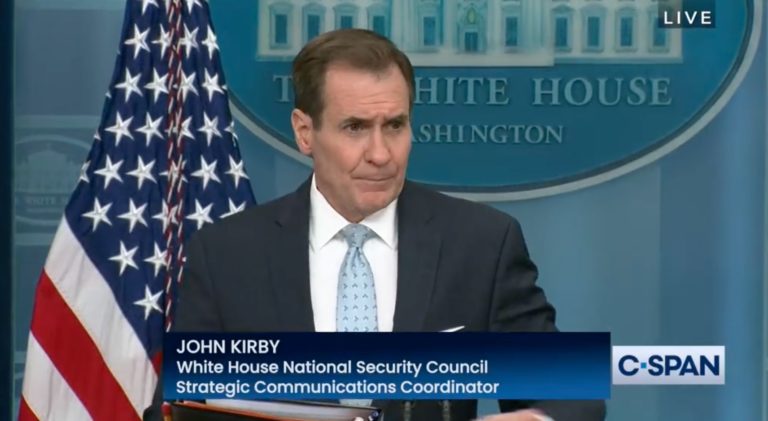
National Security Council’s John Kirby said today that the three most recent unidentified flying objects shot down over the weekend by the U.S. military were flying at a much lower altitude than the China spy balloon, and posed an actual risk to aircraft. The reason the military detected them is that the Pentagon and North American Aerospace Defense Command (NORAD) has changed the parameters of what they are looking for since the shooting down of the large spy balloon on Feb. 4.
“One of the reasons we think we’re seeing them is because we’re looking for them. If you set the parameters to look for a certain something it’s more likely you’re going to find a certain something,” said Kirby, who is the strategic communications coordinator for the NSC.
The three objects — shot down over Alaska, The Yukon, and Lake Huron, Michigan — could simply be academic or research vessels, Kirby speculated. They were not propelled or remotely maneuvered, but were being carried along on the wind, which makes them different from the China balloon that was knocked from the sky over the coast of South Carolina nine days ago.
“A range of entities including countries, companies research and academic organizations operate objects at these altitudes for purposes that are not nefarious at all,” Kirby said. “That said, because we have not yet been able to definitively assess what these most recent objects are, we acted out of an abundance of caution.”
White House Press Secretary Karine Jean-Pierre said these items do not carry extra-terrestrial life.
“Again, there is no indication of aliens or [extra]terrestrial activity with these recent takedowns. Wanted to make sure that the American people knew that, all of you knew that. And it was important for us to say that from here because we’ve been hearing a lot about it,” Jean-Pierre said.
Kirby said recovery is underway for the items that were shot down above the Arctic Ocean, over The Yukon, and Lake Huron. The one shot down over Lake Huron is probably at the bottom of the lake by now, he said. Lake Huron averages about 200 feet in depth but is as deep at 750 feet. The item shot down was aloft near the U.S.-Canada border at about 20,000 feet, while the other two — over Yukon and Alaska — were at about 40,000 feet. For comparison, Mount Everest is about 29,000 feet high.
The China balloon was at about 60,000 feet. Kirby said the security agencies “were able to determine that China has a high-altitude balloon program for intelligence collection that’s connected to the People’s Liberation Army. It was operating during the previous administration, but they did not detect it. We detected it. We tracked it. And we have been carefully studying it to learn as much as we can.”
Kirby said the slow-moving objects at high altitude with a small radar cross section are difficult to detect on radar.
“Even objects the size of the Chinese spy balloon — which had a payload the size of, roughly, three school busses — were not picked up by previous administrations or other countries,” he said.
“In Saturday’s case, we acted in consultation with the Canadian government, the President speaking personally with the — with Prime Minister Trudeau. The spy balloon was, of course, different, because we knew precisely where that was,” he said.
The security agencies are intensively searching for debris from the three other objects, which he said had posed no known threat to people on the ground. The objects were not sending communication signals and were not manned. But NORAD could not confirm the objects were not conducting surveillance, and so the president ordered them shot down, Kirby said.
Kirby said there were no similar objects detected today.
“The president has directed the Secretary of State, the Secretary of Defense, and the Director of National Intelligence to engage with their relevant counterparts to share information and to try to gain their perspectives as well. Again, this is an issue that affects everybody around the world,” Kirby said, adding, “we will continue to brief members of Congress and relevant state leadership on what we are doing and what we learn. The president has made this a very top priority. We have, over the course of just the last few days — and certainly over the course of last week — reached out to inform and brief members of Congress and relevant state governors of the operations that we were conducting and of the recovery operations that are underway.
“We’ve also kept Congress briefed generally on this issue of Chinese surveillance balloons, including classified briefings last August. And last week, administration officials provided classified briefings for all senators and all members of the House of Representatives on the PRC surveillance balloon. We fully expect and anticipate and support the ability to continue these briefings in the days ahead,” he said.
Biden, through his National Security Advisor Jake Sullivan, today directed an interagency team to study the broader policy implications for detection, analysis, and disposition of unidentified aerial objects that pose either safety or security risks, Kirby said.
A District of Columbia law that is so radical that even Democrat Mayor Muriel Bowser tried to veto it came up for a vote before the House of Representatives last week. The Republican majority voted down the law, in support of the mayor and against the D.C. Council.
But Alaska’s Mary Peltola voted to retain the crooks-run-free ordinance.
Many law enforcement leaders are concerned because D.C., already a crime-ridden city, now has reduced maximum sentences for some crimes and allows nearly all misdemeanors to go to jury trials, rather than to judges.
The House, Senate, and President have the authority to override local legislation in D.C., but it takes both legislative branches and the executive branch to reverse a law.
Peltola was campaigning in Ketchikan Saturday, far from the problems of the nation’s capital, where violence is rampant. On Friday, she will be in Juneau, where she will give her first address to a joint session of the Legislature.
Peltola also voted to allow illegal aliens to vote in D.C., another measure passed by the local D.C. Council.
Both attempts to overturn the radical D.C. local laws were approved by the Republican-led House, but are not likely to pass the Senate, where Democrats have a slim majority. If the bills did make it to President Joe Biden’s desk, he would probably veto them.
On House Resolution 26, which would deny the D.C. Council the ability to reduce sentences for major crimes, the House voted 250-173, with Peltola voting “Nay” with Reps. Nancy Pelosi, Alexandria Ocasio-Cortez, and the Squad.
Rep. Mary Peltola almost always votes in lockstep with Rep. Nancy Pelosi and The Squad.
The D.C. Council, in passing the Revised Criminal Code Act in November, reduced the maximum penalties for offenses such as burglaries, carjackings and robberies. Law enforcement leaders had expressed concern that it could burden the court system and would send the wrong message to residents at a time when the city is struggling with gun violence. Mayor Bowser vetoed the act on Jan. 4, and the Council overrode the veto quickly.
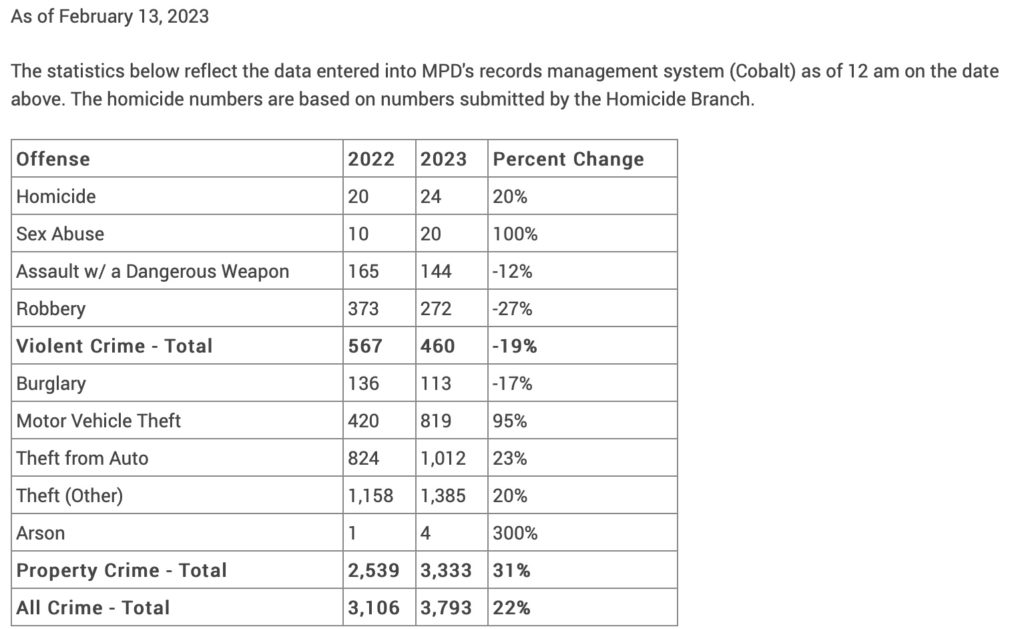
Already in 2023, homicide is up 20% over 2022, according to Metropolitan Police statistics. Sexual abuse is up 100% over last year, and motor vehicle theft is up 95%. All crime categories are now up 22% in Washington, D.C.
“This bill does not make us safer,” Bowser wrote to the D.C. Council, when she announced her veto. Mayor Bowser last week proposed some amendments to the act, in response to significant outcry from the public. Bowser’s statement is here.
Anchorage Mayor Dave Bronson on Monday announced he has named the chair of the Alaska Public Offices Commission, Attorney Anne Helzer to serve as Municipal Attorney.
Helzer has been an Anchorage resident for 15-1/2 years and has practiced law in Alaska for 13 1/2 years. Helzer will replace Blair Christensen who served the Municipality for nine years.
Helzer was appointed by Gov. Bill Walker to the Alaska Public Offices Commission, which serves as the state’s watchdog agency for campaign finance law compliance and public disclosure, where she served as a both a hearing officer and agency chair for five years.
Helzer was also appointed by Gov. Mike Dunleavy to the Alaska Violent Crimes Compensation Board, where she has served in the attorney seat since 2020. Her term will end in March 2023.
Helzer is an Alaska Court System certified mediator, a member of the Probate and Estates section of the Alaska Bar Association, and a volunteer attorney for law related projects including the United States Federal District Court Prisoner Civil Rights Pro-Bono Project (Alaska).
She is the past president of the Anchorage Bar Association and a graduate of the Anchorage Police Citizen’s Academy. She is admitted to practice law in all Alaska Courts including the United States Federal District Court (Alaska) and has represented hundreds of Alaskans statewide in a variety of business and personal legal matters since 2009.
“Serving as Anchorage’s Municipal Attorney is an extraordinary honor. Anchorage’s Department of Law has a long-standing reputation for excellence which I will preserve,” said Helzer. “I will confront the city’s current challenges head on. I am committed to lawfulness and integrity in our city government. I commend Blair, who led our Municipal Department of Law with strength and legal expertise.”
“I appreciate the hard work and commitment to excellence that Blair displayed in her role for the Municipality of Anchorage,” said Mayor Bronson. “I look forward to having Anne on board with her wealth of experience and her focus to serve every citizen of Anchorage as the Municipal Attorney.”
Anne Helzer’s name will be submitted to the Anchorage Assembly for confirmation.
U.S. Senator Dan Sullivan, a member of the Senate Armed Services Committee, called for greater transparency for the American people from President Joe Biden and senior Biden administration officials regarding the nature of the multiple unidentified aerial objects shot down over North America in recent days.
“I think the Biden administration needs to provide more transparency to the American public,” Sen. Sullivan said on “Fox and Friends.”
“Our military intel agencies, they’re normally secretive, but we live in a democracy. If you don’t start providing information, people can wildly speculate, and we don’t want that. What we need right now is more information on all of these kinds of incidents so the American people have full information. I think that’s going to be really important in the next few days,” Sullivan said.
Sullivan’s comments come as North Slope workers reported a possible C-130 military jet circling from 11 am until 3 pm on Sunday, a day after an Air Force fighter jet knocked an unidentified object out of the sky north of Deadhorse. The item landed on the ice-covered Arctic Ocean. As seen in the photo above, provided by an anonymous North Slope worker, Blackhawk helicopters were also in the area on Sunday.
Sen. Sullivan also said that Americans should assume the unidentified objects are adversarial aircraft probing for weaknesses in U.S. defense capabilities until that scenario can be ruled out.
“The one that was shot down over Alaska is different from the one that was shot down over Canada, according to the briefings that I’ve been given,” Sen. Sullivan said.“With regard to China, I think we need to assume [that these objects are] our adversary’s surveillance, assume that they’re objects that are probing for weakness in our defenses. And, if they’re more benign when we find that out later, okay. But at least we’re doing the number one thing that we’re supposed to be doing, [which] is protecting our nation.”
Sen. Lisa Murkowski and Rep. Mary Peltola took a less forceful approach to the need for transparency, using words like “encourage” and “expecting” transparency:
“For the third time in the past week, U.S. forces have brought down a high-altitude object that was violating sovereign airspace—this time, just across the border in theYukon, in direct cooperation with our Canadian allies and at the direction of Canada’s Prime Minister,” Murkowski’s statement said.
“I again commend the excellent mission execution by our military men and women from the 11th Air Force and the Alaska Air National Guard, as well as the leadership at Alaska NORAD and NORTHCOM, in taking this object down.
“As operations continue off of Alaska’s north coast to recover the debris from the object shot down yesterday, I also greatly appreciate all of the Air Guardsmen from the Rescue Triad who are engaged in those critical efforts, which are taking place in harsh conditions and terrain. It is those difficult operations that will allow us to determine what these objects are and who is violating our sovereignty.
“As we learn more about these objects, I will continue to encourage maximum transparency so that Alaskans have the greatest possible understanding of what they are and what we are doing, on the front line of our nation’s defense, to take them safely out of the sky.”
Rep. Peltola issued the following statement, also commending the military for its swift and skillful actions:
“My office was briefed by the Department of Defense regarding the unidentified object over Alaska this morning, February 10. I commend our military for their swift and skillful operation to track, study, and eliminate this object after confirming that it was a potential threat operating in civilian airspace,” she said.
“This incident reinforces Alaska’s strategic importance and the necessity of investing in our Arctic defenses. Our incredible pilots at Elmendorf and Eielson AFBs are vital links in the protection of Alaska and the United States, and they proved that today.
“I join my fellow delegation members in expecting answers from our military leaders for how unidentified objects have been able to infiltrate our airspace in recent weeks. We need to be aware of any other such objects over Alaska. The Defense Department must thoroughly investigate and close this gap in our domain awareness. Continued violations of sovereign American airspace cannot be allowed.”
The U.S. State Department has warned American citizens to depart Russia, and for those with planned travel to stay out of the country, which is at war with Ukraine and has increased tensions with other neighboring countries.
Americans who travel to Russia are risking arbitrary arrest or harassment.
“U.S. citizens residing or travelling in Russia should depart immediately,” the U.S. Embassy in Moscow wrote. “Exercise increased caution due to the risk of wrongful detentions. Do not travel to Russia.”
The French Ministry of Foreign Affairs told French citizens to depart Belarus, which has close ties with Russia. Moldovan president Maia Sandu just warned the world that she believes Russia is planning a coup d’état in Moldova, with Russian soldiers posing as “opposition protesters.” Moldova borders Ukraine and the government appears fragile.
State Department has put Russia in the Red Level — do not travel.
“Do not travel to Russia due to the unprovoked and unjustified invasion of Ukraine by Russian military forces, the potential for harassment against U.S. citizens by Russian government security officials, the singling out of U.S. citizens in Russia by Russian government security officials including for detention, the arbitrary enforcement of local law, limited flights into and out of Russia, the Embassy’s limited ability to assist U.S. citizens in Russia, COVID-19-related restrictions, and terrorism. U.S. citizens residing or travelling in Russia should depart Russia immediately. Exercise increased caution due to wrongful detentions,” the State Department advised Monday morning.
The U.S. government’s ability to provide routine or emergency services to U.S. citizens in Russia is severely limited, particularly in areas far from the U.S. Embassy in Moscow, due to Russian government limitations on travel for embassy personnel and staffing, and the ongoing suspension of operations, including consular services, at U.S. consulates.
U.S. credit and debit cards no longer work in Russia and there are reports of cash shortages in the country.
In September, the Russian government mobilized citizens to the armed forces in support of its invasion of Ukraine. Russia may refuse to acknowledge someone’s dual citizenship, deny their access to U.S. consular assistance, subject them to military service, prevent their departure from Russia, and/or conscript them to the front lines, the State Department said.
“Commercial flight options are extremely limited and are often unavailable on short notice. If you wish to depart Russia, you should make independent arrangements as soon as possible. The U.S. Embassy has severe limitations on its ability to assist U.S. citizens to depart the country and transportation options may suddenly become even more limited. Click here for Information for U.S. Citizens Seeking to Depart Russia,” according to the agency.
It’s unknown how many Americans are left in Russia. Last March, the State Department issued a similar warning to Americans to leave Russia immediately, after Russia had declared war on Ukraine the previous week.