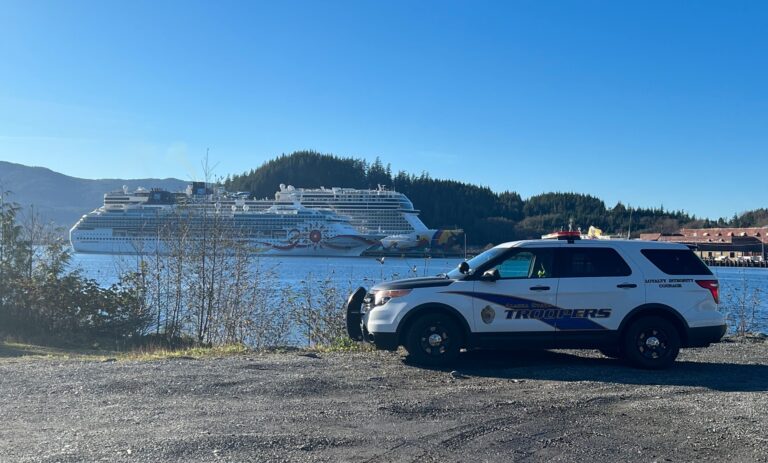
The Norwegian Sun and the Norwegian Encore were the last two cruise ships of the 2023 season for Alaska, leaving Ward Cove in Ketchikan on Friday, Oct. 27 on a beautiful, crisp fall day, heading south, where the Encore has reached Victoria and the Sun has docked in Elliott Bay.
More than half of Alaska’s summer visitors arrive via a cruise ship, with direct visitor spending at around $2.2 billion annually, excluding fares for air travel and cruise travel, according to the Cruise Lines International Association of Alaska.
The spending figure increases to $3.7 billion when labor income from visitor industry jobs is factored in, bringing the total economic output to $4.5 billion for Alaska.
While many appreciate the influx of activity and jobs, some in Southeast Alaska would prefer to return to a sleepier time. In Sitka, a petition is being circulated to limit the number of cruise ships that can come to that port. The petition sponsors say 500,000 visitors is too many, and that this year broke last year’s record, which was already too much for them.
“So what this initiative is about is giving citizens relief from the high numbers we’ve had and getting things back to the normal we had back in the period of 2001 to 2009, when we had a period of high tourism that was very controversial, but was stable. It was at a level that was good for business,” Larry Edwards told KCAW. “So I think that’s a good place to start for looking at what the right size for cruise tourism is in Sitka.”
It’s the second petition to be filed — the last one was denied because it would have established a port district, something that is not allowed to be created via petition.
Juneau had the most cruise visitors, at over 1.64 million (preliminary.
The annual Alaska Veterans and Military Spouses Job Fair will be held 10 a.m. to 2 p.m. on Tuesday, Nov. 7 at Hilton Anchorage Hotel, 500 W 3rd Ave.
“More than one in 10 Alaskans is a veteran – the greatest per capita population of veterans in the nation,” said Department of Labor Acting Commissioner Cathy Muñoz. “Alaska employers recognize the value veterans, transitioning service members, and military spouses bring to the workplace but often find it challenging to find this job seeking population. That is why bridging this gap by connecting veterans and military spouses with reputable employers is extremely important to the Department of Labor and Workforce Development.”
This annual hiring event will have more than 100 employers, education, training and apprenticeship providers and is one of the largest hiring fairs in Alaska, connecting veterans, military spouses, and Alaska residents with employment and occupational training opportunities.
Employers represented include federal, state, and municipal employers along with representatives from the construction, healthcare, oil & gas, financial, and transportation industries.
The job fair is open to the public and there is no fee to attend. Job seekers are encouraged to dress for potential interviews and bring copies of resumes and business cards, the Department of Labor advised.
Free parking is provided for the job fair courtesy of EasyPark, for the duration of the event at Chinook Parking Lot, 225 E St.
An adventure tour company in Alaska offers packages exclusively for “people of color” so that they can run on trails without being with white people.
This summer, an Alaska company out of Cordova called Run Alaska Trails hosted a multi-faceted trail running and adventure tour that was for BIPOCS only — that’s “Black, Indigenous, People of Color” in the parlance of the new American apartheid movement.
They ran trails on the Kenai Peninsula and they went whale watching as a group that was relieved of the burden of having white participants.
One woman who signed up for the run wrote about her experience in The Seattle Times.
“Before this trip, I had participated in various ‘outdoor adventure’ activities — like whitewater rafting, kayaking and hiking in the mountains. But I’ve often been the only person of color in these situations, or one of only a few. I’m half Filipina and half white, and I’m aware that I sometimes blend into all-white spaces, and I sometimes stick out,” wrote Allison Torres Burtka in a special to The Seattle Times.
In Outside Magazine, Burtka also described the exhilarating experience of white exclusion: “In my mind, Alaska was never a place where Black people go. It was like this beautiful opportunity to give us all permission to go someplace that we didn’t think was for us,” the trip’s organizer was quoted as saying.
It is happening on college campuses across America, where institutions are creating black-only spaces — dorms and clubs being the most well-known. At Western Washington University south of Seattle, there is segregated housing just for blacks. That follows the footsteps of Harvard, New York University, the University of Colorado, Stanford, and Cornell, which have all created black-only housing.
Jay McDonald, an Alaska-born activist who has a multi-race family, called the Alaska Human Rights Commission to discuss whether companies operating in Alaska can exclude whites from events in Alaska.
The Commission enforces the Alaska Human Rights statute which makes it unlawful to discriminate: in employment, places of public accommodation, housing, financing and credit, and practices by the State. The mission statement is simple: “To eliminate and prevent discrimination for all Alaskans.”
In Alaska it is illegal to discriminate in:
Employment
Places of Public Accommodation
Sale or Rental of Real Property
Financing and Credit
Practices by the State or its Political Subdivisions
Because of:
Race
Color
Religion
Sex
National Origin
Physical or Mental Disability
And in some instances because of:
Age
Marital Status
Changes in Marital Status
Pregnancy
Parenthood
Sexual Orientation / Gender Identity or “expression”
Can a tour company like Run Alaska Trails exclude participants and refuse the bookings of white people based on color?
When McDonald called the Human Rights Commission, the person responding to his complaint seemed to think it is fine to segregate for BIPOC, because the ad for the event says “people of color.”
“White is a color,” the Human Rights Commission employee responded to McDonald, adding that she herself did not feel excluded by the BIPOC promotion. She told McDonald that she didn’t understand what the concern is.
The next BIPOC-only trail running event ad for July of 2024 makes it clear that its “no whites allowed.”
The concern for some people is that private companies are now re-segregating America.
“So the idea of running and adventuring in Alaska with a group that was all people of color was enticing. If any of us got stares, our travel companions might be getting them, too — or at least they’d understand what it felt like,” Burtka wrote. It was pretty clear that white is not a color.
“THE PEOPLE IN my group have several ethnic backgrounds — Black, Latinx, Asian, Indigenous and biracial. We are all people of color, but we don’t have the same experiences navigating through the world,” she wrote.
“Out on the trails, the other people around were almost all white. I wondered what they thought of us, because groups as diverse as ours probably aren’t running through the woods in Alaska very often. Most of them returned our friendly waves and greetings,” the writer said.
The feature on the glories and benefits of race-based trail running is behind a paywall at the Seattle Times.But the article it makes it clear that keeping whites out of a group is a big benefit to the participants.
McDonald has another perspective: It is illegal, and the answer from the Human Rights Commission is inadequate.
“They are doing it in Chugach National Forest and their business is permitted inside the federal forest. They are violating Title 6 as well as the 14th Amendment,” McDonald said.
On the company’s own web page, it acknowledges it is an equal opportunity provider, but apparently that has a new definition.
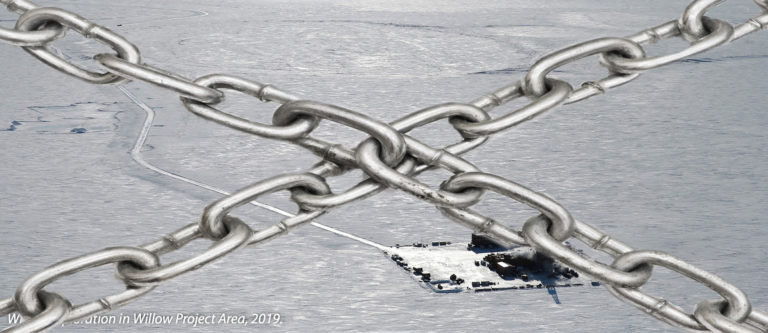
Federal District Court Judge Sharon Gleason is expected to rule sometime in the next 12 days on the merits of lawsuits filed against the U.S. Bureau of Land Management against the already-approved North Slope Willow Project, which has been held up for years by bureaucracy and lawsuits.
Gleason’s decision, whether it goes for or against the ConocoPhillips project, is due Nov. 10, at the start of the winter construction season in the Arctic.
After the Biden Administration approved the project in March, two environmental groups started litigating against the BLM, the authorizing agency.
The plaintiffs are Sovereign Inupiat for a Living Arctic, an Alaska tribal advocacy entity that strives for an end to fossil fuels, and the Center for Biological Diversity, which represents a consortium of national environmental groups, including the Natural Resources Defense Council and EarthJustice.
Sovereign Inupiat for a Living Arctic is a bit of a phantom club, which isn’t formal enough to be an actual organization.
In fact, the SILA group has no legal documentation on file with the Internal Revenue Service, and yet has been granted by the court a role as a legitimate plaintiff with standing in this case. Where it gets its funding from is a mystery — there are no IRS Form 990s on file, and although it supposedly has two staff members, it’s not operating as a normal group. It’s acting as a pop-up.
SILA, as it is also known, describes itself as being “housed” at the Northern Environmental Justice Center. Anyone who has a mind to donate to Sovereign Inupiat for a Living Arctic must actually donate to the Northern Environmental Justice Center, because the SILA group also appears to have no actual bank accounts of its own. Donors are instructed to write “SILA” on the memo line of their checks.
But here’s the problem: One of the requirements that courts have, in reference to Article III of the U.S. Constitution that establishes the judicial branch, is that a plaintiff must have “standing” to bring a case in federal court.
In 1992, the Court tightened the Article III standing test into what it is today, with more stringent requirements for what constitutes “injury in fact.” As the Court wrote in Lujan v. Defenders of Wildlife:
“First, the plaintiff must have suffered an ‘injury in fact — an invasion of a legally protected interest which is (a) concrete and particularized and (b) ‘actual or imminent, not ‘conjectural’ or ‘hypothetical[.]’’ Second, there must be a causal connection between the injury and the conduct complained of—the injury has to be ‘fairly … trace[able] to the challenged action of the defendant, and not … th[e] result [of] the independent action of some third party not before the court. Third, it must be ‘likely,’ as opposed to merely ‘speculative,’ that the injury will be ‘redressed by a favorable decision.'”
It’s not clear how a group that doesn’t actually exist, and cannot even reveal its funders or financials can make that case to have standing.
SILA is associated with the Build Back Fossil Free coalition of hard-left groups trying to push President Joe Biden into using his executive order powers to ban fossil fuels. But it’sAs far as its membership in Build Back Fossil Free, that coalition is a project of the Sustainable Markets Foundation, which is bankrolled by major leftists foundations such as the Rockefeller Family Fund, Tides Foundation, and TomKat Charitable Trust, the political foundation created by California Democrat mega-donor Tom Steyer and his wife.
Meanwhile, ConocoPhillips is said to have invested over $1 billion into the project, with another nearly $1 billion expected to be spent during this winter construction season — if it can go ahead.
Already, contractors across Alaska are in the fabrication stages of making equipment and culverts needed, and the company and its contractors intend to hire over 1,800 people this coming year. There is likely to be a mini-boom in the Alaska economy as a result, and first royalty oil flowing into the Trans Alaska Pipeline System by 2029.
But if Judge Gleason doesn’t meet her self-imposed decision date on Nov. 10, it’s possible the construction season will be lost this winter altogether. If Gleason rules in favor of the environmental groups, the team leaders of the ConocoPhillips Willow Project have said on the record it is unlikely that the project would ever move forward; the costs have been too great.
Earlier this year, Judge Gleason denied the plaintiffs an injunction that would stop ConocoPhillips from moving forward on preparations for construction, which may signal her doubts about the merits of the plaintiffs’ case. Either way, the decision will probably be appealed to the U.S. Ninth Circuit Court of Appeals.
But the question remains: How does a group like Sovereign Inupiat for a Living Arctic, which represents no more than a literal handful of fringe activists, get the nod for “standing” as a group if it cannot even register as a group?
“Giving an organization that exists in name only, official legal status makes no sense, but neither does their fight against Willow,” noted Rick Whitbeck, state director of Power the Future. “Willow has had robust environmental reviews under numerous administrations, has the support of our entire Congressional delegation, labor, trade associations and the full Alaska Legislative and Executive branches. SILA and the other “plaintiffs” should expect Judge Gleason to follow the law and end their fight against this amazing project.
The group describes itself as “an organization of Iñupiat Peoples and community members that believe in a balanced Earth for future generations. We are guided by our principles, elders, and advisory board for a movement towards a sustainable, equitable society. This work is done through an intersectional lens that is inclusive and safe.” But it’s out of step with the rest of Alaska.
“The vast majority of Iñupiat – those not bought and paid for by radical environmental ideologues to put up a false argument against Willow and other Alaska development projects – support the balance between environmental stewardship and jobs and economic opportunities for our state,” Whitbeck said. “SILA’s inability to even register as an official organization shows how Alaskans should view them: a fly-by-night organization with a misguided mission that would only harm our state’s bright economic future.”
The Alaska Permanent Fund Board of Trustees scheduled a special meeting on Monday.
Among items on the agenda are action items to vote to increase assets under management to $100 billion, achieve increased returns above Consumer Price Index + 5%, consideration of leverage, asset allocation adjustments, and execution within private markets. The board also plans to adopt a long-term strategic plan to better manage inflation pressures that are eating away at the real value of the fund, which is about $74 billion currently.
Changes proposed may be encouraging higher-risk investment and even taking out loans to invest. That could mean greater yields some years, and poorer yields in other years.
The board is also weighing proposed changes to how Permanent Fund dividends are distributed to Alaskans, through a possible constitutional amendment that would reduce the dividend. That is an item that probably won’t be voted on at this meeting, but may be discussed.
Ethan Schutt is the chair of the Alaska Permanent Fund Board of Trustees, and Gabrielle Rubenstein was recently elected vice chair.
The meeting takes place at 10:30 a.m. – 4:30 p.m., with a break for lunch, and will be held at the Permanent Fund office in Juneau, 801 W. 10th Street.
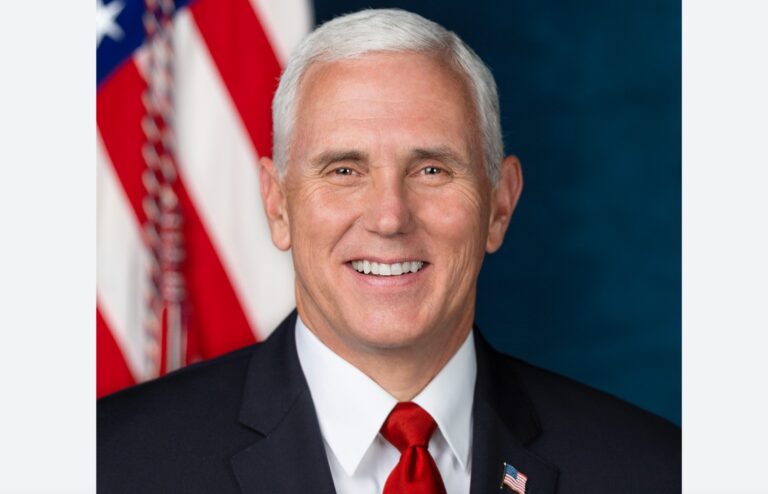
Former Vice President Mike Pence told a group in Las Vegas, Nevada on Saturday that he is suspending his presidential campaign.
Speaking to the Republican Jewish Coalition, Pence said, “I came here to say it’s become clear to me that it’s not my time. So after much prayer and deliberation, I have decided to suspend my campaign for president effective today.”
Pence has not yet qualified for the third presidential debate for Republican candidates, and has slipped steadily in the polls, at the same time former President Donald Trump has strengthened his position as the leading candidate for the Republican Party.
Last week, Pence had still fulfilled the polling criteria to be included on the debate stage, but he had not yet revealed if he had met the individual donor threshold required by the Republican National Committee.
The third Republican presidential debate will be held in Miami on Nov. 8. Trump is again not expected to attend, but Ron DeSantis, Nikki Haley, Vivek Ramaswamy, and Chris Christie have all met the criteria.
Doug Burgum, Asa Hutchinson, and Tim Scott, who qualified for the first two debates, have not yet qualified for the third.
Hess Corp., a family-owned company that drilled its first wildcat well in Prudhoe Bay at the advent of the Alaska oil boom in 1970, has been sold to Chevron for $53 billion. Chevron was active in developing Alaska’s Cook Inlet during early statehood and is part of joint ventures on the North Slope.
The 90-year-old Hess Corp. was founded by Leon Hess, who went from rags to riches, and had been continued under the leadership of his son John Hess. The company explored for oil across the world, from Africa to Alaska, and from the North Sea to the Caribbean. Hess was the last standing major oil company in America that was majority owned by a family.
“The dynasty has loomed large over the oil patch since 1933, when Leon Hess got tired of lugging bags of coal and started distributing heating oil. Walking in the footsteps of John D. Rockefeller’s Standard Oil, he built a fuel-marketing business that covered the East Coast with Hess-branded gas stations. He also ran what was once the world’s largest refinery,” wrote the Wall Street Journal. “In the following decades, the company dotted North Dakota with rigs during the shale boom, drilled in the Gulf of Mexico and helped uncover one of the biggest oil fields in South America.”
In an interview with Financial Times, John Hess said the time was right: “Our company is 90 years old — an anniversary we’re celebrating this year — and it all started with my father driving a second-hand truck delivering fuel oil during the Depression.”
During the time the company was prominent in Alaska, it was known as Amerada Hess, due to a merger with Amerada Petroleum Corp. in 1969. By May of 1970, Amerada Hess drilled the first successful wildcat well in Prudhoe Bay on Alaska’s North Slope.
The next year, Amerada Hess was one of several oil companies invited by the Canadian government to work on building pipelines from the North Slope through Canada to the United States. That never came to fruition due to the permitting of the Trans Alaska Pipeline System.
Hess continued working in Alaska and in 1974 was the first company to apply for permits to unload supertankers from the Trans-Alaska Pipeline.
In the 1980s, the State of Alaska sued 17 oil companies for underpayment of oil production royalties. The case was named after Amerada Hess, because it was the first company in the alphabetical list of all the defendants. The oil companies eventually settled in 1997 in Alaska v. Amerada Hess et al. after 15 years of court proceedings; the settlement was about $600 million out of the $902 million that the State of Alaska said was due.
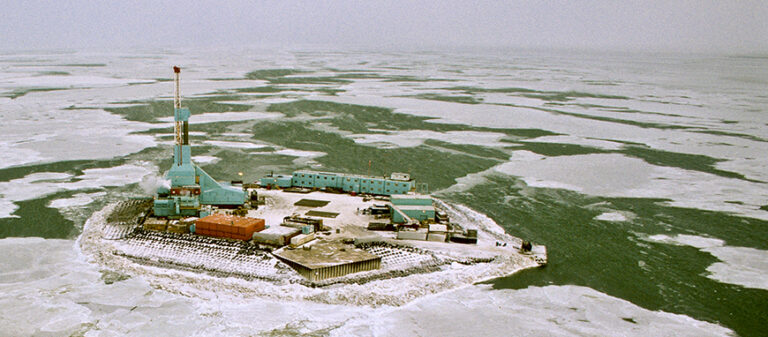
By 1986, Amerada Hess reported it had discovered oil about five miles west of Seal Island in the Beaufort Sea, in a joint venture with Shell Western Exploration Production Inc., Amoco, Texas Eastern, and Murphy. The Seal Island project was the world’s first artificial manmade island in the Arctic to yield commercial quantities of oil and gas.
Mergers and acquisitions typical of the industry also mark the history of Hess, which acquired Monsanto Oil Company and Triton.
The company began focusing elsewhere and its business model changed over time. It sold off its retail locations, and spun off some of its operations around the globe. In 2003, Hess sold its 1.5 percent stake in the trans-Alaska pipeline system to ConocoPhillips.
Currently, Hess is focused on oil in North Dakota, the Gulf of Mexico, and overseas, including Guyana and Malaysia.
The sale of Hess to Chevron is on the heels of another big consolidation — Exxon just acquired Pioneer Natural Resources for roughly $60 billion. Pioneer had made discoveries in the offshore Oooguruk field, west of Prudhoe Bay and in 2008, became the first independent operator to produce oil on the North Slope. It divested its Alaska operations to Caelus Energy in 2013 and exited Alaska for better prospects in the Permian Basin.
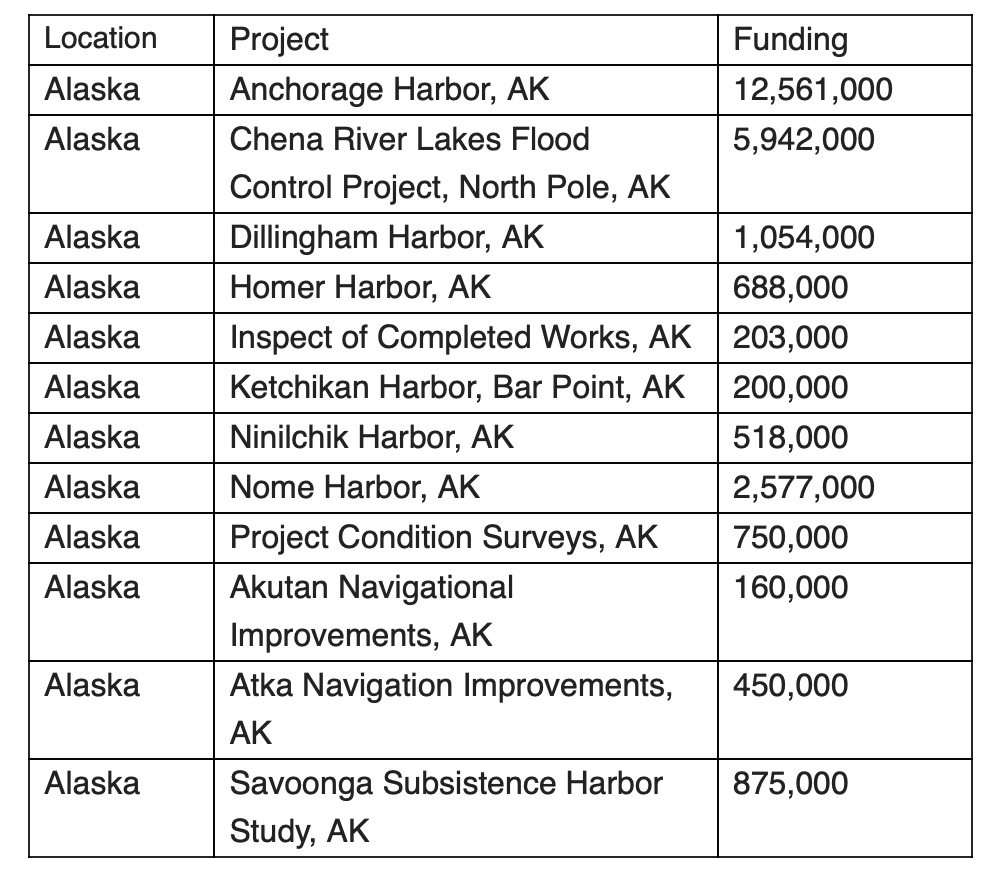
Rep. Mary Peltola attempted to walk back statements she made this week when she said the reason why she voted against an energy appropriation important to Alaska is that it didn’t have enough funding for the Denali Commission, a federal agency important to rural Alaska.
That reason turned out to be false, as the amendments that contained that Denali Commission provision failed by a wide margin, due to the votes of Republicans.
Peltola voted against the amendments, but apparently she didn’t know they failed, or perhaps she forgot when on Friday, she typed, “Thanks to hard work from the Alaska delegation, the amendment to defund the Denali Commission was voted down! I’ll continue to work with our Senators to protect Don and Ted’s legacy and make sure that this year’s budget bills work for Alaska instead of taking us backwards.”
Peltola on Friday was crediting herself for the hard work that she did, although she apparently didn’t know that the amendments failed when she had earlier told Alaskans that she voted against the bill because of the amendments because it “targets rural Alaska by eliminating the Denali Commission.”
There were numerous projects for Alaska ports that Peltola voted against, when she followed Democrat marching orders to vote against the appropriations bill:
The final version of the billdid not eliminate or reduce funding to the commission, as she claimed was her reason for opposing it.
Peltola has the worst voting record in Congress, due to the number of times she has been a no-show this year. She may still be learning the ropes, since she’s missed over one-third of all votes.
“Rep. Peltola has missed 33.6% of votes in the 118th Congress (2023-24). This makes her the 1st most absent member of the House,” according to ProPublica.
How many Alaskans support Hamas terrorists? In a state with the highest percentage of military veterans in the nation, and third in the nation for the percentage of active duty military members, not many in Alaska are terrorist sympathizers.
But Alaska’s Democrat Rep. Mary Peltola finds herself straddling yet another issue, with one foot in each camp on the question of Hamas terrorists and Israel.
Although she voted yes on Wednesday to a resolution support Israel against Hamas and all terrorist attacks, Peltola also has accepted the maximum allowed in campaign funds from fellow Democrat Pramila Jayapal, an anti-Israel hardliner.
Peltola took $6,000 in two payments from Democrat Rep. Pramila Jayapal who didn’t vote for the anti-Hamas resolution. Jayapal, the socialist from Seattle, voted “present” on the question of standing with Israel against terrorists.
Jayapal said she believes “that Netanyahu’s extreme right-wing government has engaged in discriminatory and outright racist policies and that there are extreme racists driving that policy within the leadership of the current government. I believe it is incumbent on all of us who are striving to make our world a more just and equitable place to call out and condemn these policies and this current Netanyahu government’s role in furthering them.”
Peltola is also conflicted in another realm. She came out in support of the union that is organizing Starbucks workers. After Palestinian Hamas terrorists killed over 1,400 Israelis in a surprise attack on Oct. 7, the union planted its flag solidly with Hamas on more than one occasion, including this statement on Oct. 20, in which the union said it stood by Palestine against Israel — and attacked the Starbucks company at the same time: