Home Blog Page 608

Hiland prisoner at center of drug trafficking group once shot kneecaps of Sitka woman over a drug debt

A federal grand jury returned a 16-count indictment charging 10 defendants with running a large-scale drug trafficking ring in Alaska.

Christina Reyna Quintana, 38, Angela Marie Jasper, 39, Amber Young, 28, Rochelle Monique Wood, 37, James Anthony Schwarz, 41, Elroy Daniel Bouchard, 58, Khamthene Thongdy, 45, Colleen McDaniel, 68, Tamberlyn Solomon, 25, and Lois Jean Frank, 63, engaged in a conspiracy to traffic at least 12 kilograms of fentanyl into Alaska.

The indictment also charges Jasper, Wood, Schwarz, Bouchard, Thongdy, McDaniel and Solomon with laundering money to promote drug trafficking and concealing the source of the funds.

Court documents identify 37 separate money laundering transactions, including some made internationally to Mexico, between August 2022 and July 2023.

During the entirety of the conspiracy, Quintana has been an inmate at Hiland Mountain Correctional Facility in Eagle River, Alaska.

She is serving a 22-and-a-half-year prison sentence following a federal conviction for traveling from California to Sitka, Alaska, in 2018 and shooting a woman in both kneecaps over drug debt.

The indictment charges Quintana with engaging in a continuing criminal enterprise, which carries a mandatory life sentence, alleging that Quintana was a principal administrator, organizer, supervisor and leader of a criminal enterprise. The other defendants also face a maximum possible penalty of life imprisonment.

U.S. Attorney S. Lane Tucker for the District of Alaska and Special Agent in Charge David F. Reames of the Drug Enforcement Administration Seattle Division made the announcement.

The indictment is the result of an investigation by the FBI Anchorage Field Office, Drug Enforcement Administration Seattle Division, IRS Criminal Investigation Seattle Field Office, U.S Postal Inspection Service Seattle Division, Alaska State Troopers and Anchorage Police Department.

This investigation and prosecution were part of the Organized Crime Drug Enforcement Task Force (“OCDETF”), which identifies, disrupts, and dismantles the highest-level drug traffickers, money launderers, gangs, and transnational criminal organizations that threaten the United States by using a prosecutor-led, intelligence-driven, multi-agency approach that leverages the strengths of federal, state, and local law enforcement agencies against criminal networks.

Brian Lee Crowley: Biden chose Venezuela over Canada and the USA

19

By BRIAN LEE CROWLEY

The United States needs more heavy oil for a whole series of reasons. President Joe Biden could have chosen to have that oil come from a close friend and ally, environmentally-conscious Canada, or from one of the world’s nastiest regimes, Nicolas Maduro’s Venezuela, which doesn’t give a toss about the environment. Which did he choose?

Venezuela, of course.

In exchange for modest concessions on electoral reform, the Biden administration just lifted sanctions on Venezuela, allowing them to export hundreds of thousands of barrels a day of vital heavy oil to the United States.

The shale oil revolution has not and cannot change the fact that the US produces virtually no heavy oil, yet many of this country’s refineries, especially on the Gulf Coast, were set up to refine that kind of oil. Most of their heavy oil is from Canada, which is why that country is far and away the largest exporter of oil to America— more than twice as much as Saudi Arabia, Mexico, Russia, and Colombia combined. If America is now a net exporter of oil, it can thank Canada.

The war in Ukraine caused unpopular price hikes at the gas pump. In response, the Biden administration has drawn down the Strategic Petroleum Reserve (SPR). That drawdown focused on medium and heavy crudes. OPEC responded with supply cuts aimed at throttling the supply of these strategically important crudes.

The drawdown of the SPR is reaching its limits but the risk of higher gas prices in an election year is rising. To OPEC and Ukraine, we must now add the heightened risk of conflict spreading in the Middle East.

In this context, recall that one of the very first acts President Biden took on reaching office was to cancel the permit for the Keystone XL (KXL) pipeline, a permit issued by his predecessor. Keystone XL was intended to provide 830,000 barrels a day of Canadian heavy crude to those Gulf Coast refineries. Pipe was already being laid.

Had President Biden allowed KXL to proceed, the supply of heavy oil to the US industry would have been secure, risky drawdowns of the SPR unnecessary and America would have been much less vulnerable to global supply disruptions and OPEC’s manipulations. 

Instead, the President colluded with a campaign to vilify oil from Alberta’s oilsands as “dirty oil.” Yes, producing Canada’s heavy oil emits greenhouse gases. But then all heavy oil is GHG intensive, and Venezuela is the highest emitting in the world. 

The Canadian oil & gas sector has invested heavily and successfully in emissions reductions. The industry has a $75 billion plan to decarbonize and achieve net zero by 2050, focused on carbon capture and storage and small modular nuclear reactors.

Venezuela has done nada in terms of real improvement in the environmental footprint of its heavy oil production. What it does have is a regime that is world-leading in terms of its human rights abuses and the damage it has inflicted on a once-prosperous economy.

Every dollar America spends on Venezuelan oil will prop up one of the most violent and repressive regimes in the Americas, where Amnesty International says in 2022:

The security forces responded with excessive force and other repressive measures to protests…to demand economic and social rights, including the right to water. Impunity for ongoing extrajudicial executions by the security forces persisted. Intelligence services and other security forces, with the acquiescence of the judicial system, continued to arbitrarily detain, torture, and otherwise ill-treat those perceived to be opponents of the government of Nicolas Maduro.

A recent UN Fact Finding Mission to Venezuela talked about the “unremitting human rights crisis” and patterns of crimes against humanity in that country. Nearly 8 million Venezuelans are estimated to have fled the economic and humanitarian crisis there.

Meanwhile, Canada, while not perfect, has robust human rights protections and high environmental standards. It is also a magnet for immigrants (including tens of thousands of Venezuelans), having one of the highest shares of its population born elsewhere in any country in the world.

In 2021 President Biden was happy to offend one of America’s closest allies by blocking KXL because it was inconsistent “with my administration’s economic and climate imperatives.”  Three short years later, behind the fig leaf of Venezuelan electoral reform, he is welcoming much more environmentally damaging oil from one of Latin America’s most odious regimes, all to try and keep the price down at the pump. That’s a big win for Nicolas Maduro, but a bad deal for America and Canada.

Brian Lee Crowley is the Managing Director of the Center for North American Prosperity and Security (www.cnaps.org).

Keeping the story straight: Peltola votes against energy bill, then praises its passage, then says it’s bad

Rep. Mary Peltola stuck with the Democrats on Thursday and voted against an appropriation bill for energy and water development, and related agencies, for the fiscal year that ends next Sept. 30, 2024.

Congress is back to business now that Speaker Mike Johnson of Louisiana was approved on the House floor to lead the Republican-led body. The appropriations bills were front and center on Thursday to avoid further government shutdowns.

The bill passed along party lines after a series of amendments and now goes to the Senate.

Peltola offered no amendments during the lengthy amendment process, and in the end voted no on the bill because her Democrat caucus demanded its members vote no.

“Today’s Energy & Water budget bill includes a formal recommendation to the Department of Energy to provide loan guarantees to AK LNG, which would create Alaskan jobs and reduce demand for Chinese coal. That’s a great step forward!,” Peltola explained on X/Twitter,

But Peltola said the bill targeted the Denali Commission, and that’s why she couldn’t vote for it.

“This bill has some good ideas, but I can’t support making life in rural Alaska harder and more expensive. I’m focused on working with our Senators to fix this bill—to restore the Denali Commission and support Alaskan natural gas. Working together, I know we can do both,” she wrote.

Peltola may have not understood it, or may simply be lying. Why? She voted no twice against the very amendments that reduced the funding for the Denali Commission, so she’s aware that the two amendments failed by a large margin.

The original $17 million in funding for the Denali Commission was included in the bill Peltola voted against.

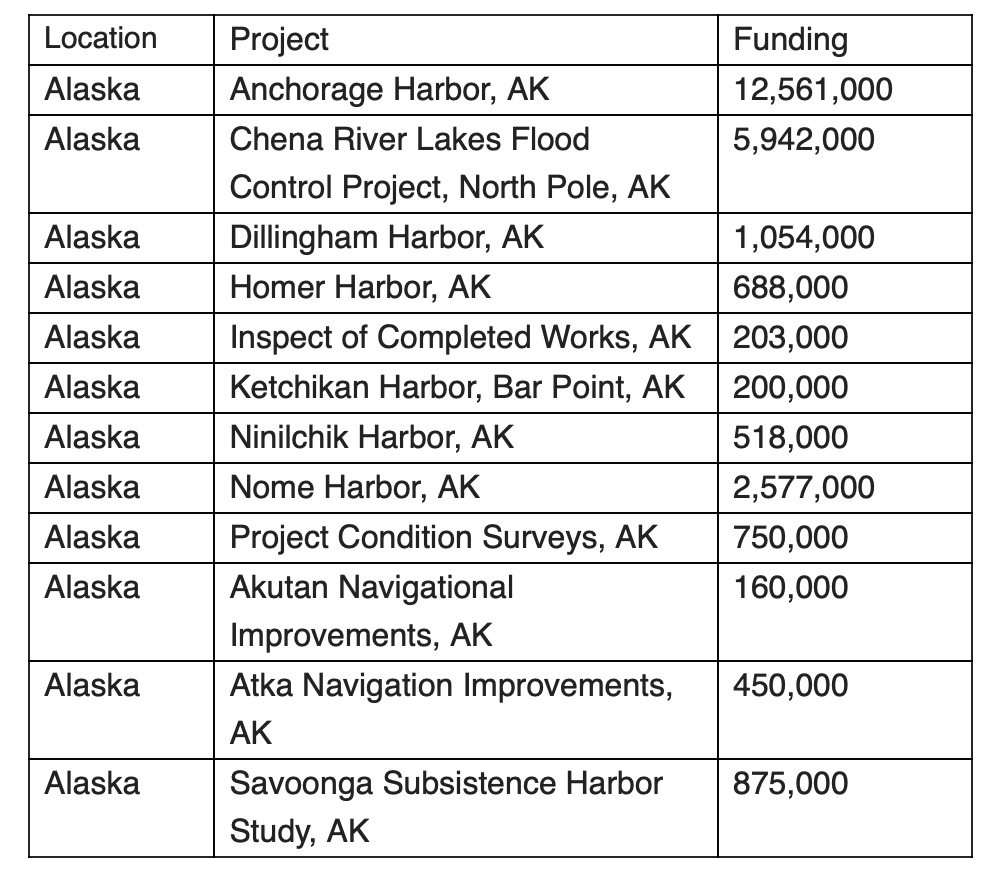
The projects she voted against funding included:

Only Republicans in the House supported the Denali Commission funding on the final vote, because Peltola actually voted against the Denali Commission on final passage.

Dunleavy proposes state royalty revision to incentivize Cook Inlet gas investment

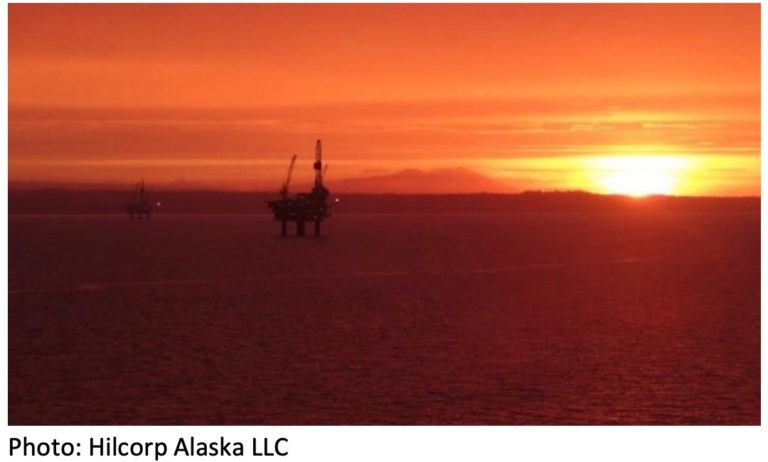
Could a lower royalty structure attract more private investment back to Cook Inlet for gas production?

Today, Alaska Gov. Mike Dunleavy proposed to find that out, with the announcement of legislation that would make investment more attractive to a gas field that is proven, and has been productive since just after Statehood.

“Royalty is the main economic lever DNR can adjust in the Cook Inlet Basin to incentivize new activity and increase energy security. Royalty drives economics, and economics drive projects,” explained Department of Natural Resources Commissioner John Boyle.

Cook Inlet gas royalties averaged just 3.6% of state royalty income from FY13-22. In FY22, that amounted to $45.2 million, the governor’s office said. Royalties from this existing production will not be reduced by the proposal, and it will only apply to new pools and fields that are brought online and are not currently generating royalties for the State.

“Given the looming energy supply gap for Railbelt utilities and the level of production under the current regulatory environment, the Governor’s proposal is squarely aligned with the Alaska Constitution’s mandate to develop state resources for maximum use consistent with the public interest,” Commissioner of Revenue Adam Crum said.

The bill will be introduced at the beginning of the 2024 legislative session. If passed, new drilling and development activities would be incentivized immediately and new production from onshore could be realized shortly thereafter. Offshore developments may take several years to come online with the new terms. With the potential to unlock hundreds of additional billions of cubic feet of gas, these new supplies alone could meet our Railbelt’s annual demand of approximately 70 billion cubic feet for several years. 

These volumes will supplement the significant volumes of gas that are already under contract for the next decade. 

The Dunleavy Administration will also be rolling out other energy related initiatives across the state that will lower the cost and increase the stability of energy for Alaskans for both the short term and for years to come, his office said.

Anchorage murder suspect arrested in Wasilla

Alaska State Troopers responded to the area of Joes Drive for a verbal disturbance after 1 am on Thursday. Upon arrival, troopers identified one of the involved individuals as Jesse Lee Jones, who was a wanted man in the killing of Josiah Goecker in Anchorage.

Jones had been on the lam for two days after reportedly killing Goecker, who was reportedly trying to protect a woman who was under assault.

Jones was arrested without incident and handed over to APD. On his voter registration, Jones lists a motel at 3rd and Concrete Street in Anchorage as his home address.

Anchorage police transported Jones to the Anchorage Police Department for questioning by detectives. Once that process has been completed, Jones will be remanded at the Anchorage Jail on his warrant, the department reported on Thursday morning.

The Orwellian use of ‘geofencing’ by government snoopers

By MAGGIE MCFARLAND PHILLIPS

As worshippers gathered at the Calvary Chapel in 2020, they were being watched from above.  

Satellites were locking in on cell phones owned by members of the nondenominational Protestant church in San Jose, Calif. Their location eventually worked its way to a private company, which then sold the information to the government of Santa Clara County.

This data, along with observations from enforcement officers on the ground, was used to levy heavy fines against the church for violating Covid-19 restrictions regarding public gatherings.            

“Every Sunday,” Calvary’s assistant pastor, Carson Atherly, would later testify, the officers “would serve me a notice of violation during or after church service.”

Calvary is suing the county for its use of location data, a controversial tool increasingly deployed by governments at all levels – notably in relation to the U.S. Capitol riot on Jan. 6, 2021.

While enabling law enforcement to more easily identify potential offenders, the practice, called “geofencing,” has also emerged as a cutting-edge privacy issue, raising constitutional issues involving warrantless searches and, with Calvary Chapel, religious liberty.

“We are in the space between the emergence of this technological practice and courts having ruled on its constitutionality,” said Alex Marthews, national chair for Restore the 4th, a nonprofit organization dedicated to the protection of the Fourth Amendment, which protects Americans’ rights against “unreasonable search and seizure.” 

“Geofencing” often begins with an innocent click. Smartphone apps ask if they can access location to improve service. When users say they yes, they often don’t realize that the apps that help them drive, cook, or pray are likely reselling their information to far-flung for-profit entities. This and other information detailing people’s behaviors and preferences is valuable for businesses trying to target customers. The global location intelligence market was estimated at $16 billion last year, according to Grand View Research.

While it is legal for private companies to broker this information, constitutional questions arise when government accesses data from a third party that it would be prohibited from collecting on its own. The lawsuit filed by Calvary Chapel argues that Santa Clara County carried out a warrantless surveillance of the church when it acquired information in 2020 on the church’s foot-traffic patterns for analysis by a research team from Stanford University. Court documents show the researchers acquired the information, which originated with Google Maps, from the location data company SafeGraph, which Calvary is also suing. 

Geofencing allows users to build a fence around certain areas or points-of-interest such as Calvary Chapel or the area near the Capitol on Jan. 6 and see when people entered that space.

It is becoming routine for law enforcement agencies to use warrants to require companies like Google to hand over location data that may be connected to criminal activity. 

Rep. Jim Jordan recently wrote a letter to Attorney General Merrick Garland saying, “The use of geofence warrants raises serious Constitutional concerns.” Privacy advocates and a bipartisan group of legislators say that acquisition of such information without a warrant presents a troubling and relatively new constitutional dilemma.

Data brokers, including SafeGraph, insist that their information is anonymized. But it is precisely the lack of specificity that worries critics. “There’s no particular individual who the government is suspicious of,” Adam Schwartz of the Electronic Frontier Foundation, told RealClearInvestigations. “It’s a dragnet.”

Moreover, there is no guarantee that the data collected through geofencing stays anonymous. “It is often very easy to take supposedly de-identified data and re-identify a person,” said Schwartz, “And it’s very, very easy to do that with location data.”

At Calvary Chapel, for example, in-person surveillance conducted by the county, as well as numerous in-person depositions of Chapel members and employees during the previous legal contretemps between the county and the church that began in 2020, would have provided local officials with detailed knowledge of who was on the premises, and when.

In any event, critics say, law enforcement’s use of geofencing – even when it is backed by a warrant – violates the Fourth Amendment.

Geofencing proponents argue that it falls under the “administrative search” exception to the Fourth Amendment, which lets regulatory enforcement personnel conduct warrantless searches when the greater good is at issue (i.e., police sobriety checkpoints, airport TSA scans).

In their complaint, Calvary Chapel attorneys assert that the county is arguing in effect “that, as long as they call it research, any level of government can target and spy on any individual or group at any time for any duration and, if they so choose, they can wield the collected data against said individuals or groups who oppose their orders.”

Pushback is mounting against the sharing of location data. In a 2022 letter to Congress, numerous privacy and civil liberties groups petitioned for committee hearings on a bill called the Fourth Amendment is Not For Sale Act. The bill, which has a companion in the Senate introduced in 2021, would prohibit warrantless government purchases of cell phone location data from third party brokers. It passed unanimously through the House Judiciary Committee, 30-0, this past July, and awaits full review by the House. 

This article was adapted from a RealClearInvestigations article published Sept. 26.

Facts on ‘Geofencing’

Linda Boyle: Miss the Alaska Covid Alliance event? Videos are now posted

By LINDA BOYLE

When we held the Alaska Covid Alliance event on Oct. 13-14, many who were unable to attend asked if videos would be available.  

The answer is “Yes”, they are now available on our website, www.AlaskaCovidAlliance.com.  Here is the link to the videos.   

The even better news is they are available to you for free, because we believe this information is so important for all to be able to see and read.  

There is a wealth of information about the “vaccine,” the things the government kept from you, how to treat long Covid and vax Covid, what to do about blood clots caused by both Covid and the vaccines.

Additionally, there is lots of information on how to protect you and your family in the future as government agencies push more propaganda concerning the importance of an ineffective “vaccine” to save grandma.  

Even more importantly is the information about the World Health Organization, what it wants to do, and what other elitists are up to that will dramatically affect your way of life, your personal freedom, and your government’s sovereignty.    

Our Founding Fathers were not perfect. They had their prejudices, their own opinions, there own desires for what should be included or not included in the Constitution. But they found a way to write something that still has the guiding principles for us today. 

Ben Franklin was asked by some citizens after the signing of the constitution what kind of government was created. Franklin responded that it was, “A republic, if you can keep it.” 

That seems to be the struggle still today.  We need to remind our politicians and our elected officials that this form of government isn’t just created or founded by consent of the people—it is dependent on active and “informed involvement of the people for their continued good health”. 

This reality weighs heavily today.  Many at the highest levels of our government and their wealthy donors wish to create their version of utopia.  

So, stay informed on your healthcare and listen to medical experts on the Covid experience.  Hear both sides of the argument and make the best decision for you and your family.  

Be informed concerning the World Health Organization (WHO) and what the elitists have planned for your future.

Linda Boyle, RN, MSN, DM, was formerly the chief nurse for the 3rd Medical Group, JBER, and was the interim director of the Alaska VA. Most recently, she served as Director for Central Alabama VA Healthcare System. She is the director of the Alaska Covid Alliance.

Alaska Airlines had lowest percentage of flight cancellations in August

Alaska Airlines was the best among all lUS airlines for flight completions in August. According to the Department of Transportation, just 0.4% of Alaska Airlines’ flights were canceled. For on-time arrivals, Alaska Airlines had an impressive 80.6% on-time arrival rate, rating third after Hawaiian and Delta.

For all airlines, the first eight months of the year was good for low numbers of canceled flights: From January through August, 1.7% of flights had been canceled, far below the 3.0% cancellation rate for the first eight months of last year and the 2.3% cancellation rate for first eight months of pre-pandemic 2019.

Highest Marketing Carrier On-Time Arrival Rates August 2023

  1. Hawaiian Airlines – 82.1%
  2. Delta Air Lines Network – 81.3%
  3. Alaska Airlines Network – 80.6% 

Lowest Marketing Carrier On-Time Arrival Rates August 2023

  1. JetBlue Airways – 61.6%
  2. Frontier Airlines – 62.1%
  3. Spirit Airlines – 65.6%

August 2023 Flight Cancellations

In August 2023, reporting marketing carriers canceled 1.5% of their scheduled domestic flights, lower than the rate 2.5% in both July 2023 and in 2.5% in August 2022. The year-to-date cancellation rate for 2023 is 1.7%.

Lowest Marketing Carrier Rates of Canceled Flights August 2023

  1. Alaska Airlines Network – 0.4%  
  2. Allegiant Air – 1.0%   
  3. United Airlines Network – 1.1%    

Highest Marketing Carrier Rates of Canceled Flights August 2023

  1. Frontier Airlines – 5.0%    
  2. JetBlue Airways – 2.9%    
  3. Southwest Airlines – 1.6%    

Downing: Generation Blubber — good times create weak men

By SUZANNE DOWNING

As the remnants of the Greatest Generation fade into the annals of history and Baby Boomers grapple with a transforming economy sucking their fixed incomes dry, the fate of America lies in the hands of the younger generations — the Gen Xers and Millennials who will lead, and the younger generations behind them who we would hope will be patriotic enough to deter the enemies of freedom.

The state of the nation, and indeed our world, is fraught with uncertainty as geopolitical tensions rise in Ukraine, Russia, Israel, and the Middle East in general, and as internal challenges grow.

While the external threats are well-documented, an internal crisis is taking hold: the poor physical and mental health of our youth.

Enter “Generation Blubber” – a label that may sound mocking, but the reality it describes is far from a jest. It’s epidemic.

Fat is so fashionable that we celebrate Fat Bear Week, and fat models who cannot see their toes. Commercials celebrate this epidemic in America by pretending that folds upon folds of adipose tissue is normal and even desirable.

The CDC paints a startling picture: One in three young Americans, between the ages of 17 and 24, are too obese to serve in the military. Some 20% of all children are categorized as obese by the Centers for Disease Control. Never before in documented history have we witnessed a generation so physically compromised by their own excesses.

But the challenges are not solely physical. The mental health crisis gripping this generation is perhaps even more concerning. Data from the Department of Health and Human Services suggests that nearly 50% of our nation’s adolescents have had a mental health disorder at some point in their lives.

The mental disorders are evident in the rising number of youths who believe they were born in the wrong body or assigned the wrong gender. These figures don’t merely indicate personal struggles; they highlight a broader societal shift backward in the acceptance of actual science.

The concern is twofold: Not only are the youth facing internal battles with physical and mental health, they are set against an external backdrop of a world in chaos. From ongoing wars to the unmet recruiting goals of our military, it’s a combination that might render America vulnerable in the eyes of our adversaries.

Historically, this isn’t the first time alarm bells have been sounded over the physical condition of American youth. Following WWII, the advent of mechanization and automation prompted a decrease in physically intensive work. This shift was so pronounced that President Dwight D. Eisenhower felt compelled to establish the President’s Council on Youth Fitness in 1956.

President Kennedy continued this push, noting in his article, “The Soft American,” the comparative physical decline of American youth against their European counterparts. 

“The first indication of a decline in the physical strength and ability of young Americans became apparent among United States soldiers in the early stages of the Korean War,” Kennedy wrote. “The second came when figures were released showing that almost one out of every two young Americans was being rejected by Selective Service as mentally, morally or physically unfit.”

But the most startling demonstration of the general physical decline of American youth, Kennedy wrote, came with a 15-year study at the Posture Clinic of New York’s Columbia-Presbyterian Hospital. 

“The findings showed that despite our unparalleled standard of living, despite our good food and our many playgrounds, despite our emphasis on school athletics, American youth lagged far behind Europeans in physical fitness. Six tests for muscular strength and flexibility were given; 57.9% of the American children failed one or more of these tests, while only 8.7% of the European youngsters failed,” Kennedy wrote.

The digital age has further exacerbated it. The combination of an automated workforce and the seductive pull of screen-based entertainment means today’s youth lead increasingly sedentary lives.

Yet, the military’s response has been puzzling. Instead of emphasizing the need for fitness, the standards have been lowered and waivers introduced. This isn’t just a concern for the military; it’s a concern for the nation’s overall health and resilience.

The cyclical nature of societal strength, as outlined by G. Michael Hopf, is particularly apt: “Hard times create strong men. Strong men create good times. Good times create weak men. And, weak men create hard times.” 

As we enter the “weak men create hard times” phase, it’s crucial to reflect on how we reached here and how we can pivot for the better.

Our nation’s leaders must recognize and address the intertwined challenges of physical and mental health and make a hard turn before hard times set in. While we cannot halt the march of progress and automation, we can invest and ensure our youth are equipped – mentally, physically, and emotionally – to lead, to defend, to protect, and to restore our nation as a mighty beacon of freedom. 

Suzanne Downing is publisher of Must Read Alaska.