Thursday, January 1, 2026
Home Blog Page 1129

Rest in peace, Anchorage tax cap

28

By BOB MAIER

Standing true to their mantra of “housing first” for the homeless, Anchorage municipal government is also providing permanent housing for Anchorage Assembly Members.

Construction has begun on a remodel of City Hall downtown, located at 6th and G.  The purpose is to provide Anchorage Assembly members individual offices.

The original $350,000 price tag for the project was first approved February 11, 2020 by the Assembly via Assembly Resolution 2020-10 and Assembly Memorandum 24-2020.  

At their January 12, 2021 meeting the Assembly increased the original $350,000 price tag by $122,500 for a new total of $472,500, via Assembly Resolution 2021-12 and Assembly Memorandum 32-2021.

Read the resolution from Jan. 12 increasing the price tag for City Hall office remodels:

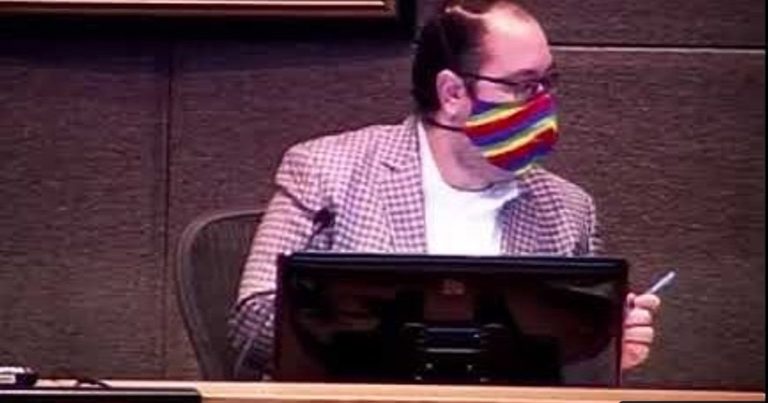
When he was questioned during debate about the increase in funding for the project at the Jan. 12, 2021 meeting, Assembly Chairman Felix Rivera stated that the purpose was for “furnishings.”

So where is all of this money coming from?  Is it ‘Covid-19 Cares Act’ money?  Will the remodel be paid for with the 5% alcohol tax from the restaurant / hospitality industry which began the first day of February?  Will the source be proceeds from the sale of Municipal Light and Power to Chugach Electric?

Perhaps it is just coming from good old Anchorage property taxpayer dollars.

Does it really matter anymore?  It will certainly take beyond a “forensic audit” to determine the source.  But ultimately, the true victim in all of this is the Anchorage tax cap and what it has historically stood for.

Rest in peace, dear Anchorage tax cap.

With the construction project at City Hall proceeding, perhaps even a closer look is necessary at the business being conducted by Anchorage municipal government.

The Anchorage Salaries and Emoluments Commission, over a series of meetings, have voted the Anchorage Mayor, Assembly members and School Board members pay raises.  

These raises are scheduled to be phased in as members are newly elected or re-elected.  The question we should ask of all those running for elected office on this April’s Municipal Election Ballot, along with those already seated is … with the economy suffering will you or have you accepted the increase in salary?

Read the resolution increasing the salaries for elected officials:

Anchorage Assembly members will receive a base salary increase between April 2019 and April 2021 from $31,096 to $60,008, a pay raise of $28,912 or 93% over a two period, excluding medical allowances.

Financially, it has been a very good year for Anchorage municipal government as a whole.  I just wish that I could make that same claim for the rest of us in private industry.

Bob Maier is a Resident of Anchorage who has been paying property taxes to the Municipality every year since 1978.

Schroder, US Attorney investigating Pebble, may keep job under Biden

11

It’s unclear if Bryan Schroder, the U.S. Attorney for the District of Alaska, is among the 55 U.S. Attorneys who will be dismissed by President Joe Biden. Schroder was appointed by former President Donald Trump four years ago.

Last week, Schroder’s office issued a grand jury subpoena to the developer of the proposed Pebble mine.

Pebble is one of the main targets of Democrats, and it’s the kind of investigation that probe could indemnify him with the anti-Pebble forces now in control of the government..

Pebble Limited Partnership, a subsidiary of Northern Dynasty Minerals, and former Pebble CEO Tom Collier were served with the subpoenas relating to recorded phone conversations that were made public by environmental operatives known as the Environmental Investigation Agency. The conversations were damning of Pebble’s publicly stated intentions for the proposed mining project in Western Alaska.

Read the statement from Northern Dynasty Minerals.

Schroder, who is a veteran federal prosecutor in Alaska, replaced Karen Loeffler, who was removed by Trump in 2017.

Based on Department of Justice leaks, news organizations are reporting that nearly all U.S. Attorneys are being replaced. However, two are known to be staying for now; they are the ones overseeing tax probes involving Joe Biden’s son Hunter Biden.

Mandatory vaccines are here

94

Southeast Alaska Regional Health Consortium is making it mandatory for all new employees to get the COVID-19 vaccination series. That includes new hires, contractors on location, and students/learners, such as those completing internships or practicums.

Also, those existing SEARHC workers who refuse the vaccine will lose access to break rooms, fitness centers, or gymnasiums at SEARHC locations. They will be required to wear N95 face masks at work, and will be required to participate in all meetings via phone or teleconference.

Those who are vaccinated for COVID-19 and who travel may return to work immediately upon receiving a negative COVID-19 test, while those who are unvaccinated will be required to quarantine for seven days and provide a negative test result. They will also need to use their own leave account of paid time off to complete their quarantine.

The new order was issued by SEARHC administration and is effective immediately. SEARHC has over 1,000 employees and serves 28 communities in Southeast Alaska, where it primarily serves the Alaska Natives living in the region.

Medical exemptions are being allowed on a case-by-case basis.

Robbins, Dunbar raised over $200,000 each in campaigns for Anchorage mayor

17

Two of the leading campaigns for Anchorage mayor have raised over $200,000 apiece in the last year, according to their most recent reports.

Mike Robbins filed his report with the Alaska Public Offices Commission on Feb. 3, showing that he raised $210,000 for the reporting period from Feb. 2, 2020 through Feb. 1, 2021. He has spent $103,193.

Nearly all of Robbins’ donors live in Anchorage, with others coming primarily from Palmer and then a small number of donations from around the map, such as Arizona. Robbins invested more than $30,000 of his own money in his campaign.

Forrest Dunbar also filed early for the report that is not due until Feb. 18. He has raised $203,890, much of it is coming from outside Alaska. Dunbar has received more than 275 donations from people in other states, as well as several thousand dollars from labor unions. He also had money left over from previous races.

Dunbar has spent $94,545.18. He has $117,000 left to spend and as of January had significant debt from his previous race, including $10,000 to the Ship Creek Group, which is managing his campaign; more than $12,000 to Paula DeLaiarro, who manages his campaign finances; and $2,500 to the Alaska Democratic Party.

Other candidates believed to have strong financial positions are Bill Evans and Dave Bronson, neither of which have yet filed their reports with Alaska Public Offices Commission. The reporting deadline is Feb. 18.

In addition to the campaigns themselves, there are several political action committees or independent expenditure groups that have popped up to support candidates or to prevent other candidates from getting traction. They include:

  • Building Alaska, supporting the Robbins campaign
  • March on Alaska, supporting unnamed progressive candidates in the municipal race
  • Putting Alaskans First Committee, an AFL-CIO-affiliated group
  • NEA-Alaska, educators PAC
  • Working Families of Alaska, associated with Laborers union
  • Associated Builders and Contractors PAC

Disaster declared for Tuluksak

11

Gov. Mike Dunleavy authorized a disaster declaration for the Tuluksak water system fire that occurred on Jan. 16, 2021, when someone in the village apparently torched the laundromat, where the water system was located that serves the 320 people in the community.

The Disaster Declaration activates the State of Alaska Public Assistance program which is designed to help communities, government organizations, and certain non-profits make repairs to utilities, public buildings, and other critical infrastructure damaged by the declared event. In addition, the public assistance disaster declaration will reimburse communities and agencies for eligible response costs associated with the disaster event.

The authorization of the disaster declaration follows weeks of discussion by a multiagency group including the State of Alaska, the Tuluksak Native Community, federal and local partners to ensure the village had no shortage of drinking water following the destruction of the water treatment plant and washeteria.

The declaration provides short term and immediate measures establishing temporary watering facilities and other processes to provide the community with potable water.

“Since the loss of the Tuluksak water system, my administration has worked with local partners, including the Yukon-Kuskokwim Health Corporation and many others, to ensure the people of Tuluksak have constant access to drinking water and that the ice road is maintained,” Dunleavy said.

“The health and safety of Alaskans is a priority. We will continue to provide support to the people of Tuluksak,” said Major General Torrence Saxe, commissioner of the Alaska Department of Military and Veterans Affairs.

Currently, residents of Tuluksak have access to bottled water, which was donated to the community and is available for purchase in the community store. Air service is operational, and the ice road to Bethel and other communities provides access to potable water.

“I would like to thank all of the agencies and individuals who donated water to the community of Tuluksak,” said Dunleavy. “It never ceases to amaze me the generosity that Alaskans show when their neighbors are in need. Often, these individuals are the unsung heroes of the disaster response and recovery effort.”

A multi-agency group continues to meet and develop short and long-term solutions to the community’s water issues, such as providing a supply of filtered, but non-drinkable water, to support a temporary bathing and laundry facility; moving and setting up a mobile water treatment system from Bethel to Tuluksak to establish a temporary watering point; or to purchase a prefabricated treatment building and ship it to the community. 

I’m voting for Bill Evans

47

I am a life-long Anchorage resident, husband, father of four, former candidate for Assembly, former chair of the municipal budget advisory commission, and former Republican Party district chair.

As a conservative both fiscally and socially, I want to tell you why I am supporting Bill Evans for mayor of Anchorage.

Bill Evans is the right choice at the right time.  He is smart, sensible and experienced.  He is the one candidate who can lead Anchorage to a brighter future. 

As I look around our city, I am shocked and saddened by the state of affairs, it is nearly unrecognizable from six years ago.  Homelessness, crime, job losses, businesses shuttered, national chains vacating – these are serious problems that require strong leadership – the kind of leadership that Bill Evans will provide.

Conservatives, I want to speak directly to you.  I know you are fired up due to the actions of current local leadership and the destructive policies that have followed.  I am pleading with you to direct that energy toward supporting a candidate who can win.

With 14 candidates in the race, this election is going to a runoff between the top two contenders. One of those will be the leading liberal and the other will be one of the three conservatives.

I know the other two conservative candidates personally and consider them friends.  But Anchorage has changed. We are now a purple city, a city that voted for Biden over Trump.

The fact of the matter is, a far-right conservative candidate is no longer electable.

So what will it be? Will you cling to candidates you may align with ideologically but are not electable, resulting in more of the same policies we’ve seen for the last six years? 

Or, will you join me in supporting Bill Evans, the most experienced candidate and the one who can win, so we can bring back the leadership Anchorage so desperately needs.

Andy Clary is a resident of Anchorage.

Wyoming Republicans censure Liz Cheney for her vote on impeachment

26

On Saturday, the Wyoming Republican Party censured Republican Rep. Liz Cheney for voting to impeach former President Donald Trump. The 74-member state central committee only saw eight of the 74 members opposing the motion.

Cheney is the third-ranking Republican in the minority caucus behind Minority Leader Kevin McCarthy and Minority Whip Steve Scalise. She is also the highest-ranking Republican woman in Congress. Like Alaska, Wyoming has just one representative in the U.S. House, which makes a state party censure more impactful.

Anthony Bouchard, who is running against Cheney for the 2022 election, said in a statement, “Today’s vote to censure illustrates that Liz Cheney is hopelessly out of touch with Wyoming, Trump’s best state TWICE. Maybe Liz should run inside the DC Beltway in VA where she lives fulltime, because she’s never here and has no clue how we think. And doesn’t care.”

Ten Republican members of the U.S. House voted to impeach Trump based on the charge of his inciting an” insurrection.” They are:

  1. Rep. Adam Kinzinger of Illinois
  2. Rep. Liz Cheney of Wyoming
  3. Rep. John Katko of New York
  4. Rep. Fred Upton of Michigan
  5. Rep. Jaime Herrera Beutler of Washington
  6. Rep. Dan Newhouse of Washington
  7. Rep. Peter Meijer of Michigan
  8. Rep. Anthony Gonzalez of Ohio
  9. Rep. Tom Rice of South Carolina
  10. Rep. David Valadao of California

Six of these Republicans have been censured, although none has reached the state party-level censure of Wyoming’s GOP against Cheney.

In Michigan, the Allegan County Republican Party chapter voted to censure Congressman Fred Upton, and Cass County has followed suit. Upton represents the Sixth Congressional District.

Michigan’s Third Congressional District Republicans are planning vote of censure for freshman Rep. Peter Meijer; that vote appears to be underway.

Washington State’s Republican Party passed a resolution publicly rebuking Republican Rep. Herrera Beutler. She represents the Third Congressional District, which is considered marginal for Republicans.

Also in Washington, Rep. Dan Newhouse has faced calls for his resignation by the three GOP leaders in his Central Washington district, who condemned him for his Jan. 13 vote to impeach.

In a letter, the GOP chairs in six of the eight counties in the 4th Congressional District condemned Newhouse for promoting his “own personal agenda, with complete disregard to the citizens who elected you.”

“It is your sworn duty as an elected official to represent the people accordingly,” they wrote. “When a representative fails to represent the people, the people must respond.”

Newhouse has refused their demands to resign.

The South Carolina Republican Party voted last month to formally censure Rep. Tom Rice for his vote to impeach Trump.

 Illinois Rep. Adam Kinzinger has been issued a formal rebuke by Republicans in his district. He has been censured by the party.

The impeachment is now in front of the Senate, which must vote. The Constitution requires a two-thirds vote of the Senate to convict, and the penalty for an impeached official upon conviction is removal from office. Trump, however, is no longer in office, and the constitutionality of this action is in question. There is no appeal process.

George P. Shultz, a Nixon and Reagan top gun, also helped build Alaska pipeline

5

George Shultz, a leading policy figure in both the Nixon and Reagan administrations, died at age 100 on Saturday, at his home on the Stanford University campus in Palo Alto, Calif.

Shultz was a businessman and household-name government figure, who was Secretary of State, Treasury Secretary, Labor Secretary, and who was credited with ending the Cold War.

But he also had a tie to the Alaska economy and building the state.

After decades in government and in academia with The Hoover Institution, Shultz was president of Bechtel Corporation between 1974 and 1982, running the company’s global and domestic construction projects that included the Trans Alaska Pipeline System, also known as TAPS.

The pipeline project saw first pipe laid in 1975 and was completed in 1977, with Bechtel as the management contractor.

Approval for the project came under President Richard Nixon. After the U.S. Senate was tied on the Trans-Alaska Pipeline Authorization Act, Vice President Spiro Agnew cast the tie-breaking vote in 1973. Nixon signed the bill.

Shultz had been Labor secretary for Nixon and also was director of the  Office of Management and Budget. In 1972 he was appointed Secretary of the Treasury Department, and was influential in shaping the Nixon Administration’s economic policies, including attempts to control runaway inflation with wage and price freezes. He negotiated trade agreements with the Soviet Union in 1973, and the next year joined Bechtel, basing himself in Palo Alto, where he was also a fellow with the Stanford Hoover Institution.

He later joined the Reagan Administration and was Secretary of State in the 1982-1989, helping Reagan bring an end to the Cold War, one of his most storied achievements.

Born Dec. 13, 1920, two years after the end of World War 1, he was 100 years old when he died.

Read more about his biography at Britannica.com or at The Hoover Institution’s tribute page.

Zaletel on attack: Eagle River’s Allard tied to proverbial stake

28

Shades of 2016, when the alt-left in Anchorage declared political holy war on Chugiak-Eagle River Assemblywoman Amy Demboski for a comment she had made on her radio talk show.

Back then, the mainstream media and leftwing bloggers explained to the public that Demboski, a conservative, had linked a Muslim family to a terrorist group.

Nothing of the sort had happened, but then-Assembly Chair Elvi Gray-Jackson publicly and tearfully apologized to the family anyway. The narrative had left the barn before the truth ever found its shoes.

Now, it’s Eagle River Assemblywoman Jamie Allard’s turn at the liberal’s burning stake. Allard, who is Hispanic, is the subject of a “whereas” complaint by fellow Assemblywoman Meg Zaletel, who doesn’t like the way Allard conducts her social media page on Facebook. The “Cancel Culture” war on Allard has begun in earnest.

Zaletel, who is an attorney, has a resolution drafted that lists a litany of grievances that Zaletel has against Allard, and then concludes by saying there is nothing the Assembly can do about it.

Meg Zaletel

Zaletel posted screenshots of Allard’s comments on her own Facebook page, taking the war on Allard to her social media accounts.

Read the Zalatel resolution at this link:

In the complaint, Zaletel says Allard defended Nazis, when she pondered whether license plates with the words FUHRER and 3REICH could have alternate meanings.

Zaletel says that Allard deleted people from her Facebook page, and that her page was so offensive that Facebook took it down altogether, and the governor himself removed her from the Human Rights Commission.

(Leftist writers say that Allard deleted her own page, and no one seems to have the definitive answer on what happened to Allard’s Facebook page — did she accidentally delete it herself? The only evidence of that is an anonymous note attributed to Facebook but unverifiable. Did Facebook take action? A request to Facebook from this author went unanswered.)

Zaletel has served on the Assembly since 2019, representing District 4 Seat F. Her term ends in 2022.

Allard was elected in 2020 and came in like a lion last spring when she took office on April 21. Her term ends in 2023.

Jamie Allard

Both Assemblywomen, who in some ways represent opposite political viewpoints, are now under pressure by opposing forces who want them to be recalled.

The recall effort against Zaletel failed after the municipal clerk refused to issue a petition booklet and the recall proponents didn’t pursue the case in court. Whether they will pursue Zaletel’s recall just one year before the election for that seat is unclear.

Also now subject to recall on the Assembly is Chairman Felix Rivera, who will stand for recall on the April 6 ballot, and Forrest Dunbar, who had an “application for recall petition” filed against him last week.

Dunbar is running for mayor but will also face a motivated recall movement in his East Anchorage district. They have an uphill battle, however: Dunbar was unopposed during his last election for Assembly. Some 8,780 votes were cast in that district, so 2,195 valid signatures are needed to place Dunbar’s name on a recall ballot.

The Tuesday Assembly meeting begins at 5 pm. The agenda and particulars are at this link.