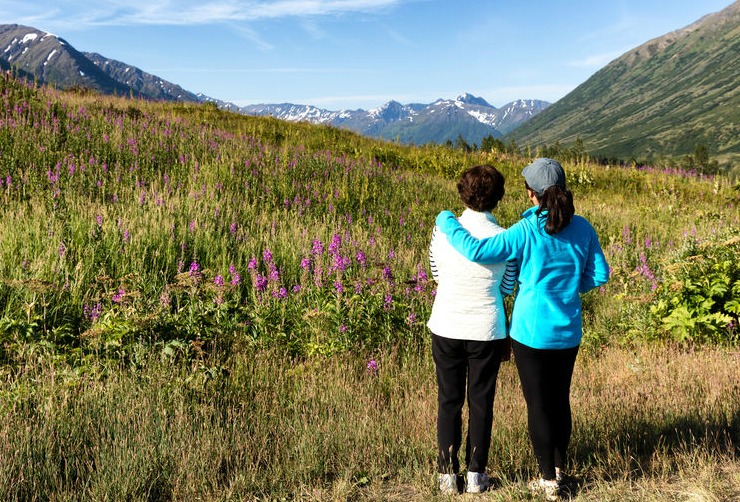
VICTORY IS SWEET PARTY: About 50 happy folks gathered at the home of Cherie and Scott Curry of Anchorage to celebrate the Nov. 8 conservative victories and raise some funds to recharge the Alaska Republican Party. (Photo credit: Yolanda Clary, ARP photographer)
ANCHORAGE ASSEMBLY AND SCHOOL BOARD RACES: Craig Johnson may file for Bill Evans’ South Anchorage seat, John Brassell is running for Bill Starr’s vacant seat in Eagle River /Chugiak. Other names being floated for Assembly seats include Liz Vazquez, Adam Trombley, Terre Gales, Kevin Smestad, and Kevin Kastner. And everyone wants most-likely-to-succeed Marilyn Stewart to run for something. Anything. Just so we can see that smile.
Meanwhile, Dave Donley has announced he is running for one school board seat and Kay Schuster may run for the other one.
WHEN REPORTERS GET PHILANTHROPIC: Juneau Empire reporter James Brooks made a small contribution to the Juneau-Douglas City Museum — the first gram of marijuana purchased from the first marijuana store to open in the capital. That donation may be tax-deductible, James. Good luck explaining it to the IRS, however.
INTERIOR SECRETARY MIGHT BE A FRIENDLY: Cathy McMorris-Rodgers is the opposite of incumbent Interior Secretary Sally Jewell. McMorris-Rodgers favors drilling. She wants to lift the Obama ban on coal leases, and she’s fought federal overreach.
McMorris-Rodgers is from Eastern Washington. In the U.S. House she serves on the Natural Resources Committee and chairs the National Task Force on Improving the National Environmental Policy Act (NEPA). NEPA, as it is administered by the Obama administration, has far ranging and debilitating economic impacts throughout Alaska.
McMorris-Rodgers has benefited from Rep. Don Young’s support during her rise as a leader. The two are allies on the Natural Resources Committee. This looks promising for Alaska.
ExxonMobil, if measured as a country, would rank 30th in gross domestic product.
Rex Tillerson is in charge of all-things Exxon. That makes the Eagle Scout son of Patty Sue and Bobby Joe Tillerson of Wichita Falls, Texas operating a company on par with Chile or Pakistan, whose GDPs range between $240-265 billion.
To compare, Exxon’s revenue last year was $246 billion.
Tillerson, retiring from Exxon due to its mandatory retirement age of 65, is also President-elect Donald Trump’s probable Secretary of State. If confirmed by the Senate, he’ll become America’s 69th top diplomat.
Let the environmentalists’ chest beating begin.
“This is unfathomable. We can’t let Trump put the world’s biggest oil company in charge of our international climate policy,” said May Boeve, executive director of 350.org, which has been active in such causes as stopping the Dakota Access Pipeline.”Exxon is still the leading funder of climate denial and is pursuing a business plan that will destroy our future.”
Not finished, she swung for the fences: “Tillerson deserves a federal investigation, not public office.” She also said Tillerson is a friend of Russia President Vladimir Putin, because that might be a bad thing, she inferred.
The talking points for the opposition have been set, complete with an #ExxonKnew hashtag. The Left will turn the confirmation hearings into an indictment of Exxon.
WHO DOES TILLERSON THINK HE IS?
Tillerson, who has never held elected office before, is no mild-mannered John Kerry. He’s not a “reset-button” Hillary Clinton.
As a CEO, Tillerson is a hired hand, albeit a well-heeled, jet-setting, pro-resource development hired hand who knows his way around the geopolitical dynamics of the most treacherous parts of the world — energy producing states.
Trump might have gone with a safer pick, such as Ambassador John Bolton or Gov. Mitt Romney. But Bolton and Romney were not the tone for Trump, who is out to freshen the blood in the swamp, if not drain it entirely.
Tillerson, on the other hand, has worked in the private sector in Yemen, a country so trigger-happy that, although it’s the poorest nation in the Middle East, it started a war with Saudi Arabia, Jordan, Egypt, Morocco and Sudan.
Among a lifetime of other accomplishments, Tillerson forged major deals with Russia, deals that neither BP nor Shell could manage.
Alone among the majors, he did not allow Exxon to be bullied by Putin nor have its Russian investments diluted or confiscated, as happened with BP. His success in Russia has been a marvel to his competitors.
A guy like Tillerson, who rose through the ranks, has a particular white-knuckle gravitas that a guy like President-elect Donald Trump definitely “gets.” They both wear the same brand of cufflinks, if you will, although their backgrounds are as different as a New York night and a Texas day.
If leaders around the world don’t fear Tillerson, they at least respect him. They’ll return his call.
As for Tillerson’s view on global climate change, he’s been encouraging policymakers to focus on lifting people out of poverty before robbing them of their energy, without saying the two are mutually exclusive goals.
In response to last December’s Paris Climate Agreement, to which President Obama made the United States a signatory, Exxon calmly stated the obvious: “As policymakers develop mechanisms to meet the Paris goals, ExxonMobil encourages them to focus on reducing emissions at the lowest cost to society, keeping in mind that access to affordable and reliable energy is critical to economic growth and improved standards of living worldwide.” Hardly the words of an extremist.
TILLERSON AND PUTIN
Tillerson’s ties to Russian President Vladimir Putin will provide fodder for the bruising Senate hearings ahead.
How close is the relationship? Do they golf? Shoot skeet together? No, they just cut deals that have created massive energy projects in Arctic Russia, at a scale that makes Alaska’s Point Thomson look like a Lego set.
One thing is obvious: Tillerson and Putin’s mannerisms toward each other is more at-ease than the Obama-Putin relationship, which is a study in hostile body language. They just seem to click better.
In 2013, Putin awarded Tillerson Russia’s Order of Friendship, a bauble given to Russian and foreign nationals for their work in “strengthening peace, friendship, cooperation and understanding between nations, for fruitful work on the convergence and mutual enrichment of cultures of nations and peoples,” and some additional complimentary blah-blah-blah.
Jean Chrétien, former prime minister of Canada, was a previous recipient of the medal.
Lest we forget, there’s another well-known American diplomat who has close ties with Putin: Secretary of State Henry Kissinger, who earlier this year spoke with concern about the U.S.-Russia relationship:
I do not need to tell you that our relations today are much worse than they were a decade ago. Indeed, they are probably the worst they have been since before the end of the Cold War. Mutual trust has been dissipated on both sides. Confrontation has replaced cooperation. – Henry Kissinger
In a speech at the Gorchakov Foundation for Public Diplomacy in Moscow, Kissinger relayed that during the Cold War he viewed the relationship between the United States and the Soviet Union as strictly adversarial, but times have changed.
Russia, he said, is an essential element of the global equilibrium, and should not be viewed primarily as a threat to the United States. Kissinger called for a more durable prospect:
“I have spent the greater part of the past seventy years engaged in one way or another in U.S.-Russian relations. I have been at decision centers when alert levels have been raised, and at joint celebrations of diplomatic achievement.
“I am here to argue for the possibility of a dialogue that seeks to merge our futures rather than elaborate our conflicts. This requires respect by both sides of the vital values and interest of the other. These goals cannot be completed in what remains of the current administration. But neither should their pursuits be postponed for American domestic politics. It will only come with a willingness in both Washington and Moscow, in the White House and the Kremlin, to move beyond the grievances and sense of victimization to confront the larger challenges that face both of our countries in the years ahead.
Exxon has lived those words, moving past the grievances and forging a big stake in Russian oil and gas plays.
EXXON AND ALASKA
Over the past two years, Exxon has weathered the crash in oil and gas prices better than most companies, due to its “vertically-integrated business model.” It hasn’t laid off workers. It still offers a pension to employees. It’s a smartly run energy business.
So smart that it’s the Alaska Permanent Fund Corporation’s 16th largest holding. Alaskans, through APFC, own $74 million in Exxon Mobil shares.
But there are tensions. Contrast Tillerson’s ability to work with Putin, or Kissinger’s sage assessment of Russia, with Alaska’s Gov. Bill Walker’s rash approach to the world’s largest oil and gas investor.
Indeed, Walker has seethed against Exxon for much of his adult life. He has established a cottage industry in filing lawsuits against the company.
To a hammer, everything looks like a nail. Walker has taken the hammer approach.
Tillerson, on the other hand, has been circumspect, famously saying last year that Alaska is “its own worst enemy” because of its shifting tax policies and mercurial leadership.
It was sage advice that Alaska lawmakers needed to hear.
People in the energy sector might agree with Tillerson’s assessment of Alaska. But Gov. Walker doubled down. On Oct. 14, Walker sent a nastygram to Jim Flood, ExxonMobil Development Company’s Arctic vice president, in which he argued against several points Exxon had made in a written AK-LNG project update earlier in the month.
Walker got to his point quickly:
“While some of your statements are accurate, it is necessary to point out areas in the letter that are inconsistent with your prior statements. You say you were ‘directed’ to progressing handover to a State-led Alaska LNG project. I would note that it was ExxonMobil that presented the proposal to transition the project to the State.”
The governor scolded:
“I have been highly complimentary of ExxonMobil while in the market. I would ask ExxonMobil to do the same about the Alaska Project. Please do not take steps to thwart Alaska’s ability to monetize our gas.”
These are skirmishes the governor has engaged in for years with Exxon, but it’s doubtful that Tillerson spends a lot of time thinking about Gov. Walker and his demands. As with many energy companies, Exxon has projects going on simultaneously around the world and, when things get unstable in one region, the company simply focuses elsewhere, as the company has now done to Alaska’s detriment.
It didn’t have to be that way. Gov. Frank Murkowski negotiated with Exxon for four years over the continental gasline option. Although frustrated, Murkowski never hurt the Exxon-Alaska relationship. It was a business deal. He never took a cheap shot. The two could have gone quail hunting together the next day, in fact. They could have smacked some balls at Augusta National.
Walker, on the other hand, seems to revel in the antagonism, making it personal and not realizing that if Putin can’t push around Tillerson and Exxon, then an Alaska governor can’t either.
Where does all this leave Alaskans and their relationship with one of the most important business partners and the largest oil and gas investor in the world?
Hoping Walker will hit the reset button with Exxon? Hoping that the governor stops chasing off investment? Hoping he has a change of heart and becomes pro-business?
Maybe simply hoping that the first Alaska governor to pick a fight with an incoming secretary of State does not create yet more troubles for a state that needs friends in powerful places.
Alaska Republican Party Vice Chair Rick Whitbeck explains procedures to Reps. Paul Seaton, Gabrielle LeDoux and Louise Stutes, who faced sanctions today during the State Central Committee meeting.
During its winter meeting in Anchorage today, Alaska Republican Party officers from around the state publicly rebuked three sitting legislators for having broken away from the House majority in order to form a majority with Democrats.
Gabrielle LeDoux of District 15-Anchorage, Paul Seaton of District 31-Homer, and Louise Stutes of District 32-Kodiak, defected from the Republican-led majority to accept powerful committee positions with a Democratic Party organization. LeDoux was able to capture the Rules chairmanship, controlling what gets to the House floor. Seaton is co-chair of House Finance while Stutes is majority whip.
Although Republicans had won the majority of seats in both houses of the Alaska Legislature, the defection of the three caused the Alaska House to be controlled by Democrats for the first time in 22 years.
“These legislators snatched defeat out of the jaws of victory,” said Party Chairman Tuckerman Babcock. “It’s as if they put on a team shirt for the opposing team. We have every right to try to replace the vacancies they’ve left on our team.”
The three were given an opportunity to defend their actions before a vote was taken.
Stutes said that when Chairman Babock asked her to return the $1,000 contribution that Alaska Republicans had made to her campaign, she was happy to give the money to the Salvation Army instead.
“My number one priority is to my constituents. My number two is to the state of Alaska. Three and four is to the party and the caucus. I’m going to be caucusing with whomever is going to be moving the state forward in a positive manner,” Stutes said, indicating that she feels the Democrats will do that.
Rep. LeDoux blamed the Republican majority for her defection and said she was only following in the tradition of Sen. Lyda Green, who led a bipartisan coalition several years prior.
“We have a hell of a fiscal problem brought to us by the majority I served with,” LeDoux said. “I make no apologies. I think what are are doing is best for the state. We are going to do that we’re going to do and you’re going to do what you’re going to do.”
And so the party did.
After a brief discussion, by a vote of 56 to 4 the central committee voted to enforce its rules against the three. They will receive no financial support from the party, any district committee or Republican club. Babcock said the party will certainly look to find challengers for the three during the next election cycle in two years.
LeDoux, Seaton, and Stutes make up what is left of the Musk Ox Coalition (MOC), which last year sided with Democrats on important fiscal issues.
In August, Must Read Alaskapointed outthe extraordinary number of voters in the village of Buckland, Alaska who were too sick, too old, or too disabled to get to the voting booth during the long summer days, so they voted using a personal representative.
Who is this personal representative? The personal representative picks up a ballot for this voter, brings the ballot to the voter so they can mark it and seal it in its envelope. The personal representative then returns the ballot to the election clerk before the polls close at 8 pm.
While 69 people voted normally by going to the polling place, 11 did not. Fully 14 percent of the voters voted via a proxy this way, presumably because they were seriously ill, quite aged, or in traction, as the law requires.
This trend of personal representative voting appeared to indicate a severe health crisis had occurred in the small village of Buckland. After all, six special needs ballots were cast in 2012, and eight in 2014.
But not to worry. Come the general election on Nov. 8, not a single voter in Buckland cast their ballot via a personal representative. What happened to those sick, disabled or old people?
HOTLY CONTESTED RACE
The Buckland controversy matters greatly, as the race between challenger Dean Westlake and incumbent Ben Nageak was one of those Alaska nail-biters, with Westlake ultimately declared the winner.
Westlake’s district-wide total was 825 to Nageak’s 817. If those Buckland ballots were illegal — and we are suggesting they were — then Buckland stole the election for Westlake. Kicking those illegal ballots out of the count would have given Nageak the win by three votes.
But the fix was in. Whether through double voting in Shungnak and other locales, or phony personal representative ballots in Buckland, the Democratic machine wanted Nageak gone. As did Governor Walker and his surrogate, Robin Brenna, who bankrolled the Westlake effort.
No one has ever alleged that elections in rural Alaska are always clean. But this is among the most egregious and widespread cases of voter fraud that we have seen in a long time.
Gov. Walker and Lt. Gov. Byron Mallott, who is in charge of the Division of Elections, must now live with the knowledge that in order to achieve a small political victory in Northwest Alaska, they sacrificed the integrity of Alaska’s Division of Elections.
We look forward to legislative hearings on this subject, at a minimum. A more transparent and diligent investigation is clearly called for.
In Alaska, we’re now nearly surrounded by Barack Obama’s Arctic shutdown. Our northern waters are completely off-limit, he has mandated, for Outer Continental Shelf development.
In a detailed executive order, Obama has closed the Arctic waters to all but scientists and what whale hunters can still afford to remain. It’s a no-enterprise zone.
Greenpeace has won.
Today, in the twilight of his presidency, he invented a new, and never-before-heard-of designation: the Northern Bering Sea Climate Resilience Area.
This fall alone, Obama Administration shut down activity in nearly all of the seas surrounding Alaska: The Chukchi, the Beaufort, and now Northern Bering. Marine monument status for other areas is still under consideration by the outgoing president.
Sen. Lisa Murkowski harshly called out Obama on his 11th hour, Friday afternoon “news dump,” issued when the House had adjourned for the month and senators were also trying to get back home to their districts:
“This is the first time we have ever seen the term ‘climate resilience area’ in Alaska or anywhere else,” said Sen. Lisa Murkowski. “We have no idea what that designation is supposed to mean, what legal authority it is supposed to rest on, what the limitations for it will be, or what it will mean for subsistence, shipping, fishing, and other activities in western and northern Alaska. To me, this sure sounds like a euphemism for a marine monument, because it locks up over 112,000 square miles of Alaska waters and seems destined to impact a wide range of communities, tribes, and industries in our state. While I strongly support meaningful consultation with tribes, this opens the door to a whole host of unknowns, and could easily be misapplied to block even the most responsible Arctic subsistence, activities, and development.”
In his surprise announcement the president also ordered all agencies to consult with local tribes to gather what he calls traditional knowledge before making any decisions on traditional development or traditional shipping activity. His actions may be in response to the Dakota Access Pipeline protests that have brought a sanctioned project to its knees.
Obama withdrew Alaska’s Norton Basin and portions of the St. Matthew-Hall area from all future oil and gas leasing, for a total area of 40,300 square miles.
“Once again, the Obama administration has used unilateral action to hurt Alaskans. This executive order, drafted behind closed doors, unilaterally closes fishing grounds, removes oil and gas leasing, and creates hurdles to shipping, all with the stroke of a pen—without any consultation with the State, Alaska’s Congressional delegation, or public notice, consultation, or comment,” said Sen. Dan Sullivan, adding he will work with Murkowski and Congressman Don Young, as well as the Trump Administration to “repair the damage done by eight years of the Obama Administration and to restore the ability of Alaskans to determine their economic future and the ways their lands and water will be managed.”
Congressman Young said he had heard from Native leaders who had not been consulted.
“[This] came as a complete surprise – a total contradiction to the President’s own policy on consultation,” Young said.
“Thank God the Obama Administration only has 42 days left in office; we will be working to undo this action come January 20th,” Young said. “Not only does this leave me extremely worried about future economic activity in the region, including fisheries, I see it as a backdoor attempt to limit certain activities north of the Bering Strait – like future resource development. We’ve already seen a costly and overly prescriptive regulatory regime for the Arctic, and this action leaves the door wide open for even more roadblocks and hurdles.”
The response from Gov. Bill Walker was, in contrast, tepid: “We support Tribal leaders in the Bering Straits region who worked diligently to provide economic opportunities for their community while protecting valuable resources. However, the State of Alaska is concerned about any further erosion of our ability to support much needed resource development at a time when the state is grappling with declining oil prices and production. We are concerned about the timing and lack of clarity on how this executive order will be implemented in the coming years.”
State Sen. Mike Dunleavy wasted no time in drawing a contrast between himself and Gov. Walker:
“This decision by President Obama is yet another attempt to put his no development, no jobs, agenda ahead of Alaska and its people,” he said in a statement.”
“Alaska was granted statehood under the premise that we would be allowed to develop our resources for the maximum benefit of our people. Yet, this act hamstrings our state by walling off potential oil and gas exploration.
“More lease sales means more jobs and economic activity for Alaska, which is currently in a recession and has the highest rate of unemployment in the country. This action only worsens that situation.
“I call upon President-elect Trump to do everything in his power to reverse this executive order and open more offshore basins for development. Alaska has the potential to be the natural resource engine for this country if simply allowed the opportunity to develop its resources.
“This was a bad decision made by a President on his way out the door, a decision that hurts Alaskans. We need more activity, not less. We need jobs, not bad decisions by a President in the waning days of his administration.”
Obama’s move, while not completely unexpected, came just a day after Alaska’s congressional delegation sent the president a strongly worded letter objecting to the president’s shutting down of oil and gas leasing in Alaska’s offshore.
With 24 months to go in the Bill Walker Administration, Alaskans are already looking for an alternative. Mark Begich and Sen. Bill Wielechowski are said to be interested Democrats, but who among Republicans is queueing up to make a run for governor?
The list we posted earlier this week was by no means complete. Since then, readers have pointed out that there are a few other politicos and some business leaders who might challenge Walker, who is not a member of a political party and whose approval rating has slipped into the 30s, according to pollster Ivan Moore.
Our list continues, starting with those now holding public office:
Mike Chenault: Elected to the House in 2000, Speaker Mike Chenault of Nikiski is on everyone’s list as a possible contender for governor. He knows state government inside and out, has a political resume a mile long, projects an easy manner, is knowledgeable about the workings of government and is handing over the speaker’s gavel to Rep. Charisse Millett. He was on the Kenai Peninsula Borough School Board, the Kenai Fire Service Board, and was president of the North Peninsula Chamber of Commerce.
Strengths: Impressive political resume. Successful House speaker (most years). Some statewide name recognition. Respectable fundraising ability. Strong political base on the Kenai. Aw-shucks, down to earth style will appeal to many voters.
Weaknesses: Maybe tied to the fiscal crisis, as leader of the House during the big spending years. 2018 will not be a good year for former legislators. Kenai political base would be split if Sen. Peter Micciche runs.
Peter Micciche: Senator Micciche is a centrist from the Kenai who served as the mayor of Soldotna as well as on the Soldotna City Council. He was elected to the Legislature in 2013. His management experience is impressive, having been the superintendent of the ConocoPhillips liquefied natural gas plant in Kenai for several years. He started his career with Phillips Petroleum in 1986 as a roustabout, working his way up. He also has a commercial salmon gillnetting permit.
Strengths: Moderate politics, which may appeal to general election voters. Good grasp of private sector principles. Articulate. Intelligent. Kenai Peninsula base.
Weaknesses: Statewide name recognition. Fundraising might be a challenge. Primary voters may be less drawn to his moderate place on the spectrum. Sometimes can be thin-skinned with the media.
Click Bishop: Senator Bishop of Fairbanks has a lot of experience in government, having been commissioner of Labor under Gov. Sean Parnell and having been a senator since 2013. He has strong ties in the labor arena as the administrator for Alaska Operating Engineers and Employers Training Trust, 1991-2006 and he’s from the Interior, an important part of the state. Plus, he is a heck of a nice guy.
Strengths: Hails from Interior Alaska, which is often a battleground region in statewide races. Government experience. Would draw labor support, which would be helpful after the primary.
Weaknesses: Little statewide name recognition. Strong labor ties may be a problem in the primary. Fundraising may be a challenge.
Business Leaders. The year 2018 could be a good year for political outsiders not tied to the fiscal crisis and unpopular decisions that are likely to be required:
Doug Smith: The former president of Little Red Services, an oil field services company, Smith sold the company to Arctic Slope Regional Corporation and is now president and CEO of AES, a subsidiary of ASRC. He’s taken public stances favoring SB 21, the More Alaska Production Act, as well as the need for state budget cuts.
Strengths: Strong business credibility and management skills, having built a successful company. Would likely be in a position to dedicate some personal funds. Would draw support from the oil and gas service sector.
Weaknesses: No name recognition outside of the oil and gas community. No political experience. Has never held office.
Scott Hawkins: Founder and CEO of Advanced Supply Chain International, co-founder of HAI Shirokuma tours, both successful companies, Hawkins also was founding president of the Anchorage Economic Development Corporation. He founded the nonprofit Prosperity Alaska and his independent expenditure group, The Accountability Project, was instrumental in defeating Vince Beltrami, Harry Crawford (twice), Jim Colver, Luke Hopkins and others, preserving a Republican Senate and House.
Strengths: Business credibility and management skills, successful businesses and nonprofits. Political fundraising ability and campaign experience. An economist who gets things done. Numerous sitting legislators are aware of what he has done for them.
Weaknesses: Little name recognition outside of Anchorage. Has never held office. His independent expenditure work on legislative races would draw brickbats from the left.
Ralph Samuels: Once a candidate for governor, and a state representative from 2002-2008, Ralph Samuels is happy these days as the VP of government affairs for Holland America Princess Lines. A former airline executive for Penair, former chair of the Anchorage Chamber of Commerce, and former board member of the State Chamber of Commerce, as a legislator, he was the only one who voted against Sarah Palin’s Alaska Gasline Inducement Act (AGIA) to build a natural gas pipeline from the North Slope, with $500 million in state funds.
Strengths: Good name recognition, strong people skills, a natural in front of a crowd, he understands both state government and has strong chops when it comes to economic development. Has experience running statewide campaign. Can raise money. Demonstrates ability to take tough stances.
Weaknesses: Doesn’t seem to want to run again. Would have to be drafted. Wife is an oil company lobbyist, which would draw brickbats from the left.
Armed with Outside money from unknown organizations, Anchorage-based Ship Creek Group is leading an effort today to try to get U.S. Sens. Lisa Murkowski and Dan Sullivan to back down on their opposition to Obamacare.
With a Republican president set to take control of the West Wing, and with Republican majorities in the U.S. House and Senate, the signature legislation of President Barack Obama is heading into heavy seas.
It will change, but no one knows by how much.”Repeal and replace” is the mantra.
At 1:30 pm, an orchestrated press conference presenting itself as a grassroots cause springing forth from the masses — will hold a press event at The Boardroom, an office space in downtown Anchorage where the left-leaning political consultancy Ship Creek Group has its suites.
John-Henry Heckendorn is Ship Creek Group’s founder and owner, and Andre Horton is the event coordinator. Horton works for Lottseldt Strategies, which also owns Casey Reynolds’political blog MidnightSunAK. These entities have worked tirelessly to elect Democrats in Alaska.
The idea, Must Read Alaska has learned, is to especially hold Murkowski’s feet to the fire by telling stories of real Alaskans who have real health concerns that have been helped by their access to subsidized insurance.
What they won’t tell you during the press conference is that Obamacare is collapsing all around real Alaskans.
In fact, earlier this year, the Republican-led Alaska Legislature had to bail out Obamacare with a $55 million infusion of cash at the request of Gov. Bill Walker, an unaligned politician who sides with Democrats in most cases.
“What I’m getting — and I guarantee what the Alaska Legislature’s getting — is constituents pleading with them for help,” Sen. Dan Sullivan told Politico earlier this year. “There’s been no state in the union more negatively impacted by Obamacare than Alaska.”
That’s true, according to every analyst, and the stories that Sen. Murkowski’s staff hears every day are horrific: Real Alaskans with real health concerns are paying more for their health care coverage now than they pay for their mortgages.
And the choice that was promised by Barack Obama and the Democrats? That’s one of the biggest rackets of the century, critics say.
In May, Moda Health announced its long-anticipated withdrawal from the market next month, which leaves Alaskans with only one option for health insurance in the individual market. Some 14,000 Alaskans will be forced to change insurers next year, and they are down to one company.
Monthly premiums of $3,000 per person is not unlikely in the near future, as Alaskans have seen increases of more than 30 percent per year each year in Alaska since the Affordable Care Act was implemented.
Sen. Murkowski is not impressed with Obamacare and has shared stories on the floor of the Senate about:
Alaskans paying more than $2,000 per month for the cheapest bronze plan available on the “marketplace.” For $24,000 a year, a bronze plan pays for only 60 percent of health care bills, with a $6,000 deductible.
In Anchorage, a couple with Moda had been paying $2,500 a month with a $10,000 deductible, an increase of $1,000 a month over their premiums for 2015. Now that they must switch to Premera for 2017 and will see yet another increase.
A woman in Anchorage has watched year after year as her rates increased from $500 a month to nearly $2,000 a month and fears for what the 2017 premium rates hold.
A married couple in Wasilla was paying $850 per month prior to Obamacare, but that plan was not acceptable under the new regulations, despite the President’s promise that “if you like your plan, you can keep it.” They had to find another insurer. Next year, they will be paying over $2,300 per month. That means they will be paying over $17,000 more per year for the same coverage, a 268 percent increase in just one calendar year.
A family of three in Ketchikan will pay almost $2,000 per month next year, for one of the cheapest bronze plans available. This plan comes with a $10,500 deductible. So despite paying almost $24,000, nearly all medical bills will still be paid out-of-pocket by this family.
“I am hearing from more and more Alaskans that they feel it is cheaper to simply not buy insurance, pay the tax penalty, and hope no one in the family becomes sick. Hoping to not get sick is not a health plan,” Murkowski said. “And as more and more Alaskans drop out of the market, costs for those that remain go up, driving more to drop out, and the system overall tumbles into a death spiral.”
The picture for Obamacare in Alaska is grim. State officials have said that the last company standing — Moda — can’t raise its rates high enough to cover the bills.
Here’s what today’s Obamacare-support event promises:
ALASKANS ANNOUNCE PRESS EVENT ON ACA REPEAL
Alaskans come together tomorrow to share stories about their experience with Obamacare and advocate for a clear plan that protects vulnerable citizens.
ANCHORAGE, ALASKA –
Alaskans are rallying together against the proposal to repeal the Affordable Care Act (ACA) without a plan to protect the provisions that Alaskans have come to depend on.
At 1:30 pmtomorrow, Thursday, December 8th, a multi-generational, multi-community group of Alaskans are holding a press event to share their stories about the impact of the ACA in their lives and express their concerns about the proposed repeal.
The event is hosted by the Boardroom, an Anchorage co-working space that houses more than fifty young professionals, free lancers, investors and local small business owners. The Boardroom is located on the second floor of the Key Bank Plaza building downtown, at 601 w 5th Ave, Anchorage. A conference call-in line will be sent around tomorrow. Contact Andre Horton with any problems calling in.
Concerned citizens and advocates in Alaska are determined to defend the ACA’s key provisions which have expanded heath care coverage to Americans with pre-existing conditions, allowed those under the age of 26 to stay on their parents’ plan, eliminated lifetime and yearly coverage caps, and has covered millions of working families and children in states that have expanded Medicaid.
At tomorrow’s press conference, advocates will outline what’s at stake for Alaskan’s families if Congress repeals the ACA without a plan for replacement. For millions of Americans there is much uncertainty in a world without the Affordable Care Act, and there is even more uncertainty if the ACA is repealed without a plan to replace the law with something else.
SCHEDULE:
1:30 – Attendees arrive, distribute informational materials, open conference line
1:35 – Open with welcome and introduction from Facilitator
1:40 – 1st speaker: Rev. Matt Schulz, Pastor at First Presbyterian Church, Anchorage
MAKING THE ROUNDS: DC is an absolute beehive of activity this week. Spotted at the Alaska State Society’s Dec. 5 holiday party, was Trump Campaign’s Alaska Director Jerry Ward, flanked by Alaska Public Media’s Liz Ruskin and Sen. Dan Sullivan Senior Advisor Amanda Coyne, photographed above.
Also partying with fellow Alaskans were Kaleb Froehlich, Will Treadwell, Hannah Beckett, Parker Haymans, Ayla O’Scannell, Kathy Mayo (does it get more stylish?), Breg Bringhurst (rural adviser for Lisa Murkowski) with wife Charlene and their new baby, while normally reserved Sullivan staffer Liz Banicki could not get enough of that baby. Jack Ferguson (with fellow lobbyist and wife Veronica Slajer) was busy being the insider that he is. Everyone seemed to be holding a stuffed teddy bear, which were the party favors.
In DC this week is House Minority Leader Rep. Charisse Millett, outgoing Finance member Rep. Lynn Gattis, and House Minority Floor Leader Rep. Dan Saddler, there for the National Conference of State Legislatures. Sen. Bill Stolze attended and was also making the rounds of the Capitol, where he was seen at Sen. Dan Sullivan’s office on the 7th floor of the Hart Building.
Meanwhile, Millett, Saddler and Gattis were spotted having lunch with Sen. Dan Sullivan in the Senate Dining Room.
Others in DC include Sen. Lyman Hoffman and Rep. Geran Tarr .
Staffers Kim Skipper (Rep. Saddler) and Rex Shattuck (Rep. Mark Neuman) are attending NCSL, where they serve on key committees.
Could Sen. Stoltze be in line for a position with the Trump team, possibly something to do with Agriculture? It’s the speculation. He does, after all, love to push Mat-Su carrots wherever he goes.
Others making the rounds include Mat-Su Borough Manager John Lucy, who along with the Mat-Su Borough delegation was meeting with Sen. Sullivan and taking in the DC Christmas sights.
TRANSITION/INAUGURAL NEWS: The Alaska State Society has set Jan. 21 as the date for its inaugural ball joining with Montana, Washington, Oregon, and Colorado State Societies. “The Best of the West” Inaugural Ball will take place in the Old Ebbitt Grill Atrium, steps from the White House. It’s a non-partisan event with an open bar and heavy hors d’oeuvres. Cocktail or “Black Tie Lite” attire is encouraged. Tickets.
Jerry Ward, who is all of a sudden on the “Trump Everything A-list,” has been named Native American affairs liaison for the Trump Presidential Inaugural Committee. He’s got the inside track for a Trump permanent position, most likely with Native issues. He’ll meet with Lt. Gov. Byron Mallott on Friday.
Ward is on the 58th Presidential Inaugural Committee and is working on details for how Alaskans can get tickets to the various parties and parades. Stay tuned.
“I’m amazed. It’s exciting times,” Ward said. “Standing here at the window looking out over Washington, D.C. — it’s quite a ways from the convention in Fairbanks. I’ve never done anything like this before.”
Among events he is trying to get Trump to attend on Jan. 20 is an inaugural ball at the National Museum for American Indians, where a Native American-themed event will be honoring Native American veterans. He’s on that A-list, too.
SALES TAX FOR ANCHORAGE? Anchorage Assembly member Bill Evans on Tuesday introduced a four percent sales tax on goods and services, exempting things already taxed, such as cigarettes and hotel rooms, and exempting food, medicine, child care, legal, doctor education, utilities.
Evans says it will add $100 million to the city, offset by a greater property tax exemption. It’s also a defensive measure in case the state imposes a sales tax. The sales tax proposal has a cap of $200.
They were such a nice young couple. But in 2010, the FBI busted the two, who had been quietly living in King Salmon with one child and one one the way.
They had made their way to Anchorage with an assassination list when they were apprehended.
Agents arrested Paul and Nadia Rockwood for activities related to terrorism. Basically, they lied about a list they had given to someone — a list with more than a dozen names of people they considered enemies of Islam.
Paul Rockwood Jr. was a red-bearded weather forecaster from Virginia who now is serving time in federal prison, while Nadia, a pregnant, apple-cheeked Brit, was exiled to England to serve her sentence of probation.
The two had drafted a list of targets in the Lower 48 that were prime for terrorist attacks. They did this while in King Salmon, Alaska. No one in the small town of 440 people suspected a thing.
FAST FORWARD TO 2016: THE LEFT WANTS YOU TO SHUT UP
When Anchorage Assembly Member Amy Demboski asked a question on her radio talk show about whether a Muslim organization possibly in Alaska has terrorist ties, as is alleged by some credible sources, the alt-left media came loaded for bear.
Demboski is no stranger to controversy. During her run for Anchorage mayor, an accusation was made — not by her, mind you — that her Democratic opponent supported incest. Demboski was pushed by then-radio host Casey Reynolds to deny it, but in fact she had not made the charge in the first place.
Later, the tape was produced that revealed that now-Mayor Ethan Berkowitz had (jokingly) said he didn’t care one bit about who had sex with whom. Father-son, no problem, he jousted on the show he shared with his conservative co-host Bernadette Wilson.
But the calling out of Demboski for not distancing herself from that accusation was like a dog whistle to the Democrats. An election tempest ensued with the Left losing its collective head because Demboski would not condemn those making the accusation. As she said at the time, she had no knowledge of the incident. It was not enough.
This past week, Demboski riled the Left again.
Greg “Shoaib” Jones shakes hands with the Rev. Jesse Jackson during the National Democratic Convention this summer. Jones was a delegate from Alaska and a Bernie Sanders supporter.
She had had Democrat Greg ‘Shoaib’ Jones on her show recently. He is a member of the Muslim faith and he ran for Rep. Mark Neuman’s District 8 seat, losing badly to the incumbent in one of the most conservative areas of the state.
Demboski asked Jones about his ties to a group called Muslims of America, which is a legitimate line of questioning, considering that the group has had some controversy swirling around it — it used to go by another name: Jamaat ul-Fuqra.
And considering that Jones had said he was a member of the group.
While Muslims of America may or may not be made up of the same folks who identify with terrorism, it’s easy enough to find the links online that would lead a reporter to ask the same questions. A government-funded report on the link between white collar crime and terrorism uses Jamaat ul-Fuqra as a poster child. The Anti-Defamation League has its antenna up for the group, which it ties to Muslims of America.
Muslims of America’s leader, Pakistani Sheikh Muburak Gilani, was linked to the kidnap and murder of Wall Street Journal reporter Daniel Pearl in 2002. Pearl was working on a story about Richard Reid, the “shoe bomber.” Gilani was interviewed extensively by authorities, but was cleared. CBS’ 60 Minutes has a report on the Gilani-Daniel Pearl connection.
Jones attended Tuesday’s meeting of the Anchorage Assembly and, at the invitation of Democrat Assemblyman Eric Croft, took after Demboski, saying her show spews hate.
She was undaunted: “They are saying I’m spewing hate speech, simply because I shared an article that was featured on Fox News nationally. This is a witch hunt. No wrong was committed until Alaska Commons lied and stoked a fake fire,” Demboski said.
THE OFFICIAL WORD IS…
Last year, FBI Director James Comey said the agency is investigating suspects linked to the Islamic State in Iraq and Syria (ISIS) in every state.
“We have investigations of people in various stages of radicalizing in all 50 states,” Comey told the National Association of Attorneys General, as reported by The Hill. He went on to explain that law enforcement is not likely to be the first to notice “someone acting in strange ways.”
The crush of political correctness in the liberal media has had a chilling affect on free speech. And yet the media has also not yet caught up with the fact that Americans are tired of having to edit themselves to fit an ever-changing standard of accepted speech. It’s why Donald Trump is the president-elect and more governors than ever are Republican.
As Demboski navigates the bullies who disagree with her and her line of questioning of those who seek public office, she’s also become subject of threats. Two weeks ago she received a disturbing text message that reminds her that the arena of public opinion can be filled with violent people.
Which is why she protects her First Amendment rights with the Second Amendment pistol at her waist.