Sunday, October 18, 2026
Home Blog Page 1016

Fairbanks woman finds newborn baby abandoned in cold on New Years Eve

A prematurely born newborn baby was abandoned in a cardboard box along a Fairbanks street on New Year’s Eve, according to Alaska State Troopers and the woman who found the child early Friday afternoon.

The baby, who was alive, was wrapped in baby blankets and left at the corner of Dolphin Way and Chena Point Avenue, not far from Chena Pump Road, according to Alaska State Troopers, who were notified at about 2 pm on Friday. The outside temperature was 1 degree with wind chill of -12.

A woman who said she found the baby, Roxy Lane, wrote on Facebook on Friday night that the child had been left near mailboxes near her home. She posted a short video of the child, and showed the note that was apparently written by the child’s mother, who said neither she nor her family have the resources to care for the baby.

“Today I found an abondaned newborn in a cardboard at the row of mailboxes by my house. I’ve been processing my feelings all day and running through all the different scenarios and reasons, with my bf and family, as to why something like this could have happened.I wanted to share some thoughts. First, the safe haven law is relatively new in Alaska (adopted in 2008) and it’s possible that many people, particularly young people, might not know what it is. There is always a safer, humane choice to surrender a baby and you will not get in trouble or even have to answer any difficult questions. Take the baby to a fire station, or church, or hospital and they will take care of them. I hope the mother gets the help she might need. I doubt they could have afforded to take her to the hospital and she may be in need of medical attention. Please, someone knows this new mom, check on her! She might be in a desperate situation, feeling abandoned herself. We don’t know, there could be a whole backstory here behind closed doors. Our community has been having an incredibly difficult time this year. I’ve been listening to sad story after sad story this week at work as I’ve been trying to do my part to provide our community with power and access to water or groceries. I’ve worked 9-11 hour days to provide good samaritans the ability to dig their neighbors out or pull out stranded strangers. I’ve been thanked and called an angel more times this week than ever before at my job. So let’s keep this feeling of community going into this new year. Clearly, someone in our community felt so lost and hopeless that they made probably the hardest choice of their lives to leave that innocent life on the side of the road with nothing but some blankets and a name. But she named him! There’s some love there, even if she made a terrible decision. I know we’re all struggling, I see it. I see you. I love you all and I’m here. Today I saved a baby and I’ll probably think about Teshawn for the rest of my life,” Lane wrote on Facebook.

The note from the apparent mom, who says she lived on Cormorant Street, a sparsely populated five-block street, described her anguished decision:

Troopers said that emergency medical workers took the child to the hospital where he was found to be in good health and is being cared for.

Matanuska delayed in Ketchikan Shipyard, will be out of service until Jan. 31

Unfortunately, due to the extent of additional repairs and vendor delays on the Alaska state ferry M/V Matanuska, the ship’s expected returned to service is now Monday, Jan. 31.

Welders in the Ketchikan Shipyard worked extended hours to replace and repair damaged steel on the M/V Matanuska, a critical component in the Alaska Marine Highway System. The ship serves Bellingham, Juneau, Haines and Skagway, among other communities.

The delay means that Skagway will not have ferry service from Jan. 8 through about Feb. 5. Haines is served by the Kennicott on Jan. 12, but the ship is not scheduled to call on Skagway at this time.

The delay has caused a Jan. 24 cancellation to the Matanuska sailing to Bellingham, as well. Passengers may rebook on a later sailing or seek alternative arrangements to reach their destination. AMHS reservation staff is reaching out to affected passengers to provide assistance.

AMHS is seeking alternatives for the missed sailings, including crewing the Tazlina to provide service to Northern Lynn Canal and other communities. The department will share more information on these alternative sailings as soon as possible, it said in a press release.

The M/V Matanuska is 58 years old, among the oldest vessels in the marine highway system. Steel damage is not uncommon on older ships, and must be repaired, the Alaska Marine Highway System said. Additional repairs of control systems, the waste heat boiler system, and a generator repair are needed, and vendor delays are impacting the ship’s schedule.

Yes, December was cold in Southeast, even while it was warm in Western Alaska

In Ketchikan, December 2021 was especially cold — a full 10.5 degrees colder than normal. The First City had an average temperature of 25.7F, the coldest month in the calendar year since January of 1972, which averaged 25F.

On Christmas, Ketchikan set a record low temperature of zero. The old record was 6 degrees in 1964 on Christmas Day. Ketchikan is the largest city in southern Southeast Alaska, at about the same latitude as Copenhagen, Denmark.

Juneau also had a bitter cold December, and is starting 2022 with a blizzard, with snow and a high wind warning for Downtown Juneau, Douglas, Thane, Skagway, and the Klondike Highway beginning midnight Saturday and going through 6 am Monday, the National Weather Service said.

Other parts of the state had weather events in December. Fairbanks had the fourth snowiest month in a century, with nearly 50 inches of snow, as measured by the National Weather Service Fairbanks.

In Cordova, snow was scarce in December, tying a record with 1965 for having the lowest amount of snow — 1.87 inches, which is about 24 percent of of the normal snowfall for the month in the past two decades.

In Bethel, December was markedly warmer, with temperatures nearly 18 degrees higher than they were in November. Aniak was nearly 20 degrees higher in December than November. Rain and ice made conditions difficult for Western Alaska all month.

Unalaska’s average December temperature was 41.5F, about 6.5 degrees above normal and setting a high for the month. The Aleutian Chain city had 11 days in December when temperatures reached at least 50 degrees.

December in Nome set records for the greatest amount of precipitation. The Norton Sound city ended December with gale force winds on Dec. 28, which took out the power for most of the city overnight. Earlier rain had caused icing on the power lines, and the wind actually broke some of the crossbars on the poles. Crews worked throughout the night to restore power.

Fairbanks is starting the New Year with snow and wind, with wind chill temperatures as low as -45.

In Whitehorse, Yukon Territory, it was the snowiest December since 1980, according to Environment Canada.

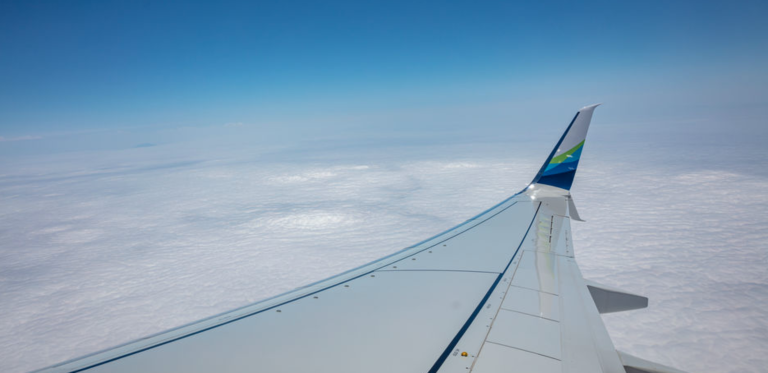
Sea-Tac still beset with delays, and Alaska Airlines fraught with canceled flights

Seattle-Tacoma International Airport, where Alaskans often fly en route to somewhere, is still suffering from extremely high flight delays and cancelations.

According to FlightAware.com, Seat-Tac was second only to Denver in the number of delays and cancelations of any major airport in the world on New Year’s Eve. 148 flights in and out of Sea-Tac were canceled as of 5 p.m. on Friday, and another 179 were delayed.

Alaska Airlines had the highest number of flights that were delayed or canceled. Eighty six flights — about one in five of all of the airline’s Sea-Tac flights — were pre-canceled on Friday and at least 16 flights in and out of Seattle were canceled on Saturday.

“We sincerely apologize for the considerable inconvenience and understandable frustration that our guests have experienced this week,” the Seattle-based airline said on its blog. “We’re using all our resources to get our guests to their destination as soon as possible, while operating safely.”

Weather and a large number of crew members infected with Covid have contributed. In addition, airline bookings over the holidays were up to nearly pre-pandemic levels.

If your flight is affected, you will be notified via email, Alaska Airlines said, and can check or change your flight online.   

“We automatically reschedule canceled flights on the next best available flight(s) to your final destination. If you are unable to reschedule your flight at this time, rest assured that we will hold the value of your ticket until you are ready to travel again,” Alaska Airlines stated. It recommended that if people don’t need to travel before Jan. 2, they adjust their flights now. Even non-refundable tickets are being allowed changes through Jan. 16.

In addition, the company is not able to fly animals in the cargo holds at this time, and is not accepting unaccompanied minors, teen “no-assists” and teen “assists” into and out of Seattle through Jan. 3.

One mother wrote of her frustration on Twitter: “My 11 year old is stuck in Seattle x1 week because #alaskaairlines #seatac won’t let her on her flight today with clear skies 3rd flight she’s been denied this week after they left her plane on the tarmac for 5 hours Sunday and telling her dad she took off.”

Others reported being on hold for hours as they tried to rearrange their travel.

Daniel Smith: Predictions for 2022

By DANIEL SMITH

This is the time of year when one is inclined to reflect on the events of the past 12 months or more. From those reflections, it is possible to learn from our mistakes and the mistakes of others. If accomplishments and victories appear in your reflecting pool, by all means, take a moment to enjoy those memories as well.

The other exciting opportunity we have is the conversion of both recent and distant past experiences, milestones and events into predictions of what may be in our future. With that in mind, I offer the following predictions for 2022 for your consideration.

  1. Current and soon-to-be former Anchorage School District Superintendent Deena Bishop will occupy the lieutenant governor’s seat and will probably do a good job working with Gov. Mike Dunleavy in his second term. Bishop submitted her resignation as ASD Superintendent and served under the employ of the Anchorage School Board, the majority being undeniably ignorant, afraid, and Marxist. She came face to face with leftist ideology and tyranny and did not like it. Bishop will now be free to unleash her repressed conservative principles and make the State of Alaska voting system the cleanest and most transparent system we have ever seen. Unsolicited mail-in ballots may even be outlawed statewide.  
  2. Chief Medical Officer for Alaska Anne Zink will resign. Confidence in many federal agencies and others such as the CDC, FDA, NIH, WHO has been undermined by their unconstitutional assertions of authority. The heads of these agencies will continue to resign in disgrace and the agencies themselves will crumble. This will occur just as soon as the American taxpayer stops funding these entities or allowing Big Pharma companies to fund the agencies that are charged with overseeing their products and operations. But before that happens, those medical institutions, professionals, and bureaucracies that have embraced medical tyranny and mandates will be publicly shamed.  Increasing evidence of injuries and death caused by so called Covid vaccines will be revealed by even the mainstream media. The medical profession will begin the long journey back to healing patients, as its top priority.  Real vaccines will continue to be OK.
  3. The Green New Deal will be commonly recognized as the Communist proliferation tool that it is. We only need look as far as our own backyard to see how these types of misguided central planning attempts have failed.  While not directly energy related, reflect for a moment back upon the Point Mackenzie farms, the Delta Barley project, the abandoned grain silos in Valdez, the failed fish processing plant in Anchorage (sold and converted into a church), Matanuska Maid Dairy and the Palmer Meat Plant, just to name a few.  Whether they are created by or “nationalized” by State funding, they are destined to fail. Centrally planned redistribution of wealth either through taxes, carbon credits, simple seizure of assets or the Green New Deal is a recipe for a totalitarian-style disaster. Reflecting on other government “deals,” Franklin Roosevelt’s New Deal and government regulated economy of the 1930’s was on the verge of failure only to be saved by the rapid industrialization and events of World War II.  

Wind and solar power are the center piece manifestations of Green theory.  They falsely promise the elimination of fossil fuels as if oil and gas are a bad thing. Realization that these alternative sources of energy are entirely weather dependent and at best are a science project, will take a few more years. Do they produce electricity? Yes. Are they available when you need them in the dark of an Alaskan winter or a crippling ice storm on Fire Island? No. Storage of alternatively generated energy is a necessary missing link that has yet to be resolved in commercial quantities so that alternate energy might make a meaningful contribution to the power grid. In Alaska we will see more public utility-sponsored and rate-payer-funded wind farms and solar arrays brought on line. They will predictably fail to live up to their promise as a replacement for fossil fuels. They will bring with them the baggage of central planning bureaucracy and at great expense.      

  • The State legislature will finally realize that they too must follow the statutes and pay out Permanent Fund dividends as required by law. Enough State representatives and senators are guilty of thinking they know better how to spend their constituent’s money. They allow the Bill Walker-organized crime theft of our money to continue. I’m not sure if any State legislators will be arrested, but those who do not allow the legally required PFD disbursement to occur will be voted out of office. A constitutional convention will force their hand and not-so-gently persuade them toward a large-scale cut in wasteful State spending. Ultimately, the State will be forced to live within its means and without the theft of the people’s Permanent Fund dividend.  
  • Manmade global warming will finally be exposed as a farce. Carbon Dioxide (CO2) is not poison. If I remember correctly from high school biology, plants need CO2 to grow. More CO2 equates to more trees, more rain forest, more crops, and less famine. Trees and plants produce oxygen. Most humans enjoy oxygen when it comes to things like breathing and such. CO2 will be declared a miracle element and advocates of reforestation will rejoice in its abundance. The sun and its cycles will be acknowledged as the driving force behind longterm climate and temperature fluctuations on the planet.    
  • The Anchorage Assembly will turn over and the people of Anchorage will vote out the Marxists’ everywhere we can.  New to the Assembly will be Stephanie Taylor, Kathy Henslee, Randy Sulte, and Liz Vazquez. Balance will be restored to the currently tyrannical political situation in Anchorage. The actions of the current leftist assembly have left a rancid path of destruction in their wake. House cleaning will not be limited to elected officials. Those appointed by Marxists will be asked to box up their personal effects and thanked for their service as they are shown to the door. This is the part where we learn from our mistakes and never let our guard down again. 

I think we have a lot to look forward to in 2022!

Dan Smith is a lifelong Alaskan and Anchorage resident who writes for Must Read Alaska.

Actress Betty White, known for comedic roles, also served war effort in WWII

7

Actress Betty White, a beloved comedian who began acting at the age of eight, died on Dec. 31, 2021 at the age of 99.

Although best known for her role in the “Golden Girls” sitcom, she also served during World War II in the American Women’s Voluntary Services.

The organization was the largest American women’s service organization during the war. American Women’s Voluntary Services had about 18,000 members when the Japanese attacked Pearl Harbor on Dec. 7, 1941. As the war continued, more than 325,000 women were trained by AWVS. The women sold war bonds, delivered messages, drove ambulances, trucks, cycle corps, and were dog-sled teamsters. They worked in navigation, aerial photography, aircraft spotting, sewing, fire safety, as mechanics, in cryptography, switchboard operation, and brought food services to armed forces posts, disaster workers, and wounded servicemen.

“AWVS workshops turned out more than one million new or reconditioned articles of clothing for servicemen, hospitals, and other users while also publishing booklets and conducting public classes for housewives about preserving and repairing clothing,” according to Britannica. “AWVS members sold more than $1 billion worth of war bonds and stamps during the war.”

“We are saddened by the passing of Betty White,” the U.S. Army tweeted on Friday. “Not only was she an amazing actress, she also served during World War II as a member of the American Women’s Voluntary Services.”

Betty White / Photo courtesy of U.S. Marine Corp

White’s 70+ year career in Hollywood included a role on the “The Mary Tyler Moore Show,” and being the host of “Saturday Night Live.”

Her career got its second wind when she was in her 80s, as she appeared in a Super Bowl commercial.

She was looking forward to her 100th birthday on Jan. 17, 2022, but died overnight at her home in Brentwood, Calif., according to the Los Angeles Times, which noted she was the last surviving star of “The Golden Girls.”

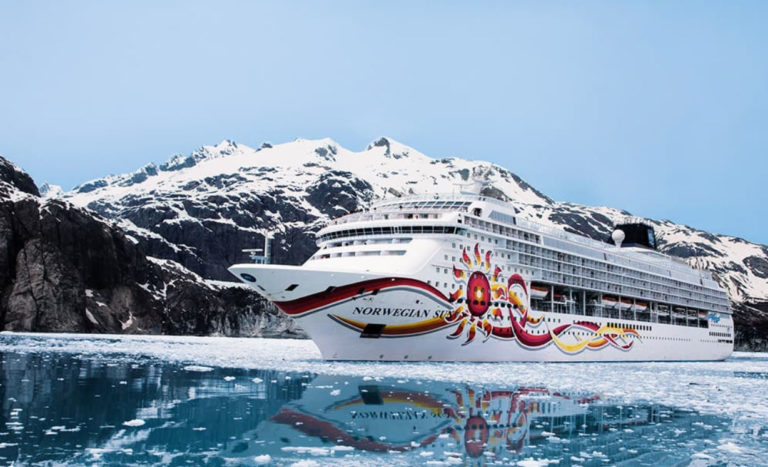
CDC says don’t cruise due to Omicron

42

On New Year’s Eve, hundreds of thousands of people crowded together in stadiums to watch football games, as they have all season. They yelled, they chanted, and they were inches from each other.

But the day before, the Centers for Disease Control and Prevention warned Americans to postpone cruise ship travel in 2022, due to the spread of the omicron variant of Covid-19. The most vaccinated and tested people in the world — American cruise travelers — are being told to stay away.

The latest version of CDC advice singling out the cruise industry says that even fully vaccinated passengers can catch and spread the newest version of Covid.

The CDC raised the risk level for cruise travel to its highest level. Previously, the agency said only unvaccinated people should avoid cruises.

The new CDC advisory says:

  • Avoid cruise travel, regardless of vaccination status.
  • Even fully vaccinated travelers may be at risk for getting and spreading COVID-19 variants.
  • The virus that causes COVID-19 spreads easily between people in close quarters on board ships, and the chance of getting COVID-19 on cruise ships is very high, even if you are fully vaccinated and have received a COVID-19 vaccine booster dose.
  • Outbreaks of COVID-19 have been reported on cruise ships.
  • If you travel on a cruise ship, make sure you are fully vaccinated before travel and get a COVID-19 vaccine booster dose if you are eligible.
  • People who go on a cruise should get tested 1–3 days before their trip and 3–5 days after their trip, regardless of vaccination status or symptoms.
  • Along with testing, passengers who are not fully vaccinated should self-quarantine for a full 5 days after cruise travel.  
  • People on cruise ships should wear a mask to keep their nose and mouth covered when in shared spaces. While CDC is exercising its enforcement discretion under CDC’s Mask Order to not require that persons wear a mask under certain circumstances on board foreign-flagged cruise ships subject to the Temporary Extension & Modification of the Framework for Conditional Sailing Order (CSO), including onboard cruise ships choosing to follow the requirements of the CSO on a voluntary basis, individual cruise lines may require travelers (passengers and crew) to wear masks on board the ship.

Cruise ships already have rules that say all people onboard must be vaccinated and tested before they board.

The 2022 Alaska cruise season officially begins on Saturday, April 23, 2022, according to Cruise Critic, when Regent’s Seven Seas Mariner makes a call on remote Dutch Harbor in the Aleutian Islands. On April 25, the Norwegian Bliss arrives in Juneau.

There’s no word yet from the major cruise lines as to whether they will cancel, as they did for the entire 2020 season. But likely not.

Bookings for Alaska begin in early January, so the news casts uncertainty for businesses across Alaska, which have suffered greatly from pandemic policies over the past two years. The 2021 cruise season was limited in Alaska, but considered successful because there were no great Covid outbreaks.

For 2022, one of the biggest challenges for Alaska businesses is going to be labor — tour guides, coach drivers, and small boat captains, for instance. Businesses will have to pay a lot more for those workers, and they may have fewer customers to support the businesses, so prices will be driven higher for tours. But if the cruise ships are booking people at cheaper cruise prices, those types of passengers won’t go on shore excursions in the numbers needed to support a business.

In Juneau, companies are so desperate for workers that $1,000 signing bonuses are being offered to seasonal bus drivers.

“A lot of tour operators decided not to open this season, mostly because they couldn’t get staff,” Skagway Borough mayor Andrew Cremata told Cruise Critic in September. “I think one of the biggest challenges for business owners next year is going to be getting people to come up here and work. The price of the tours is going to go up. The cost of doing business is going to go up. If you can work at McDonalds in Seattle for fifteen bucks an hour, and someone is telling you, ‘Hey, come work in Alaska, live in dorm-style housing for $12 an hour’…it’s a tough sell.”

At midnight on Friday, you can file for your 2022 Permanent Fund dividend

When the clock strikes midnight, one of the first thing many Alaskans do is have a glass of champagne — and then file for their share of the oil wealth in Alaska — their Alaska Permanent Fund dividend.

The link the PFD application is here. Or go to your MyAlaska.gov page, if you have an existing account with the State. The dividend is generally issued each October for qualified applications, which must be received by the Alaska Permanent Fund Division no later than March 31, 2022.

The Permanent Fund dividend was created by statute in 1980, as a way to share the royalties of the oil with Alaskans, none of whom has the ability to own subsurface rights. After a court delay regarding the residency formula for the dividend, the first dividend was issued on June 14, 1982 to all Alaskans who had been residents for six months or more. Later, by statute, the residency was changed to one year.

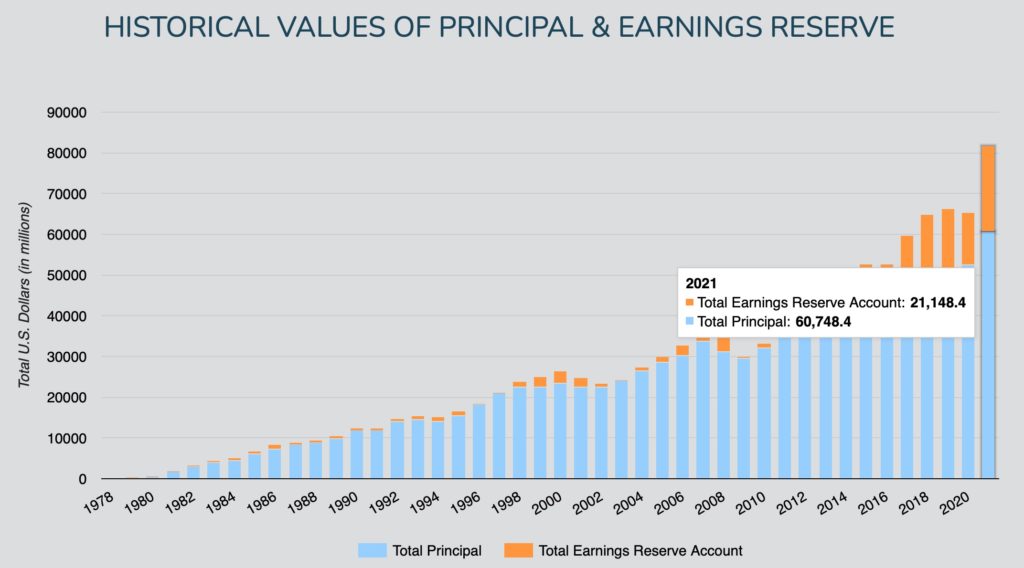
The statutory formula for the fund worked for decades until in 2017, when former Gov. Bill Walker vetoed half of the people’s PFD, preserving it in the Earnings Reserve Account of the Permanent Fund. He said the money was needed to pay for government but, in fact, it was not spent on government. It was simply retained in the fund. He issued a dividend that year, using political calculations rather than statutory calculations, and Alaskans got $1,000, half of the 2015 payout.

To understand the loss of value of that $1,000 through time and inflation, Alaskans would need to receive about $2,881 in their dividends today to equal what that $1,000 was to them in 1982.

Every year since the Walker half-dividend, the Alaska Legislature has followed his path, taking over half of the people’s money for government or to just leave in the Earnings Reserve Account, which currently has more than $15.7 billion, with $8.9 billion of it uncommitted. The fund itself has over $83 billion in it.

In 2017, the Legislature and Gov. Walker also passed Senate Bill 26, and created a new way to draw down funds from the ERA to pay for state government. The Legislature has never fixed the remaining problem, which is that the previous statutory formula is a state law that the Legislature has broken every year since Walker’s fateful move to take the funds from Alaskans’ wallets as what is arguably the most regressive tax in America.

Gov. Mike Dunleavy has tried to restore the full statutory dividend to Alaskans but has run into headwinds with the Alaska Legislature every year of his governorship. Again in 2022, he will attempt to restore the other half of this year’s dividend to Alaskans, through a supplemental budget request he will make to the Legislature.

What are your thoughts on the Alaska Permanent Fund dividend? Leave them in the comment section below.

Start your engines: ATVs to be allowed on many state roads on Jan. 1

50

At midnight on Jan. 1, 2022, Alaskans will be able to legally drive their all-terrain vehicles on many of the state’s roads, as a new regulation, signed by Lt. Gov. Kevin Meyer, goes into effect.

Roads with speed limits of 45 mph or less, and in areas where ATVs are not otherwise banned by municipal governments, will be shared by standard vehicles, commercial vehicles, bicycles, and now ATVs.

ATVs must have certain safety features to be road-worthy, including a headlight, rear-facing red taillight, and a rear-facing red brake light. ATVs must have brakes, a muffler, carburetor and throttle. Drivers must have drivers licenses and insurance. Passengers must wear helmets. Young children must be in carseats and helmeted. If seatbelts are installed, they must be used. Snow machines are not included in the new regulations for on-road travel.

Anchorage is one location where ATVs are not permitted on the roads, because municipal rules apply, and prohibit them. In places like Bethel, however, several roads will be open to ATVs, including Chief Eddie Hoffman Highway, which stretches from the airport to downtown, First Avenue, BIA Road, Standard Oil Road, Front Street, and Hangar Lake Road.

Craig Compeau, of Compeau’s Inc. in Fairbanks said it has been a record year in both snowmachine and ATV sales. People are spending more time outdoors because of Covid-19, he said.

“There are 11 other states that have ATV on-road laws,” said Compeau Most of them are western states, but Louisiana is one as well. “We’ve talked to law enforcement elsewhere and they are not seeing the problems that some people are worried about. You still have to be a licensed driver. Some of the states are making revenue by selling permits, so there’s a revenue source for the state, if you want.”

Compeau added, “If there is only one state out of the 50 that allows four-wheelers on the roads, it should be Alaska. It saves on wear-and-tear on gas on your main vehicle. These are all four-strokes and are clean driving, and they burn a teaspoon of gas compared with your regular vehicle.”