Tuesday, May 5, 2026
Home Blog Page 1008

IBEW 1547 says it will bargain any Covid vaccine mandate applying to members

The International Brotherhood of Electrical Workers Local 1547 says it’s aware that some employers are going to demand its members be vaccinated for Covid-19, because of anticipated rules from the Biden Administration, which are not yet fully published.

“Simply put, we will continue to insist that employers bargain with us regarding rules that affect you, our members,” the union wrote in a press release. “We are prepared to utilize all legal methods to bargain over the impact of such orders. We have been and will continue to distribute Request to Bargain letters to employers that are impacted by these regulations.”

A petition was circulated in Anchorage this week titled “Local 1547 Members for Medical Freedom,” and directed at IBEW Local 1547 leadership.

“The petition referenced the anticipated OSHA regulation for a vaccine mandate for employers of over 100+ employees. This OSHA regulation has not been released yet. The petition also references the perceived actions of five other IBEW locals and their alleged ‘stand against a vaccine mandate,” the union said.

The local unions in the five other jurisdictions have filed unfair labor practice charges with the National Labor Relations Board.

“This is a legal process by which the Local union requests to bargain after employers in their state implemented changes to terms and conditions of employment without bargaining with the union. If this happens here in Alaska. IBEW Local 1547 will do the same.” the union said.

“We have not and will not approach an employer asking them to adopt a vaccine mandate. However, when an employer approaches us with a vaccine mandate, we will continue to insist that they bargain over the policy. Our bargaining options are more limited when the employer is acting pursuant to a customer requirement or a federal law. But even in those cases, we have and will continue to demand that the employer bargain with us over the policy and will seek to limit the impact on employees to the greatest degree possible,” the union said.

Did hospital weaponize medical information about Covid patient in email leak to blogger?

Medical information about a patient under the care of Providence Alaska Medical Center was released to an Anchorage blogger, with the apparent intention of damaging the reputation of the patient’s legal medical power of attorney.

That medical power of attorney was Anchorage Assemblywoman Jamie Allard, who was trying to help conservative activist Bill Topel, who was then in grave condition due to Covid-19. Topel died two days later on Oct. 13.

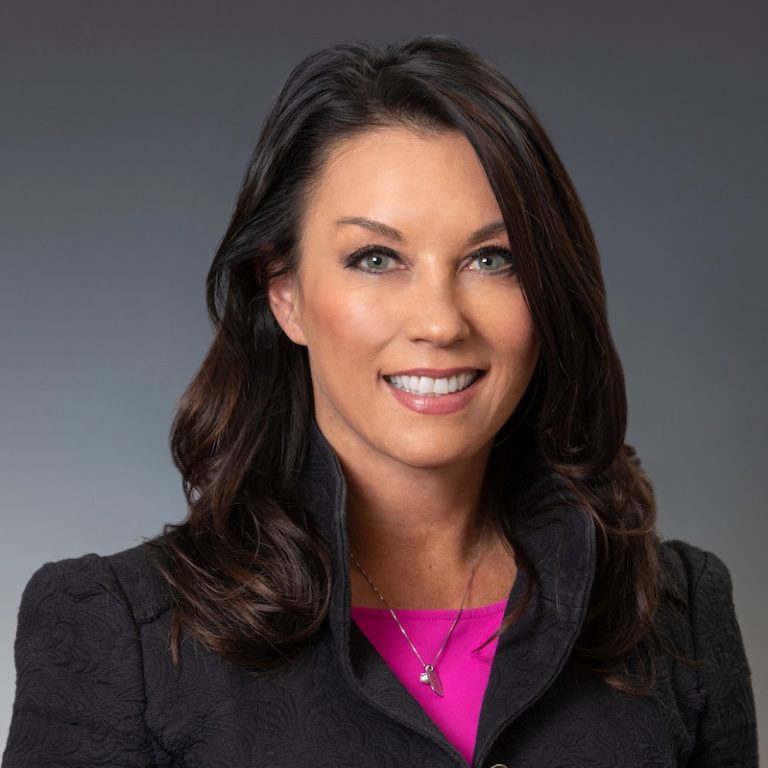
Allard, in a note to Ella Goss, the CEO of Providence on Oct. 11 pictured above, said that Topel wanted to try Ivermectin and an infusion of vitamins and minerals.

Allard said his condition was too fragile at that point for him to take the medicine orally, and she was asking for his right to try the infusion method.

That note to Goss contained medical details about a patient. When Goss leaked it to the blogger, she violated that patient’s rights under the HIPAA law, which protects patients’ medical information.

Providence had weaponized personal medical information about one of its patients in order to stop what it perceived as harassment from Topel’s friends and to push back on the strong advocacy by Allard.

HIPAA, the Health Insurance Portability and Accountability Act of 1996, is a federal law that prohibits sensitive patient health information from being disclosed without the patient’s consent or knowledge.

The blog, armed with that letter from Allard to Goss, wrote the story about how Allard had relayed to Goss that Topel’s family would take legal action if the hospital didn’t respond. The story characterized Allard as threatening a lawsuit, and that characterization was repeated in a national blog, The Daily Beast, which headlined its story, “GOP Pol Waged Insane Battle to Treat Dying COVID Patient With Ivermectin.”

Only three people had that email — Allard, attorney Stacey Stone, and Providence CEO Goss. Only Goss had the motive to send it to a hostile blog, but that may have been done through an intermediary. Stone ultimately was not Allard’s attorney on this matter; her attorney is Mario Bird.

From appearances, the act falls into a criminal category.

“The minimum fine for willful violations of HIPAA Rules is $50,000. The maximum criminal penalty for a HIPAA violation by an individual is $250,000. Restitution may also need to be paid to the victims. In addition to the financial penalty, a jail term is likely for a criminal violation of HIPAA Rules,” according to the HIPAAJournal.com.

“Civil penalties for HIPAA violations start at $100 per violation by any individual who violates HIPAA Rules. The fine can rise to $25,000 if there have been multiple violations of the same type. These penalties are applied when the individual was aware that HIPAA Rules were being violated or should have been aware had due diligence been exercised. If there was no willful neglect of HIPAA Rules and the violation was corrected within 30 days from when the employee knew that HIPAA Rules had been violated, civil penalties will not apply,” the journal explains.

“Criminal violations that occur as a result of negligence can result in a prison term of up to 1 year. Obtaining protected health information under false pretenses carries a maximum prison term of 5 years. Knowingly violating HIPAA Rules with malicious intent or for personal gain can result in a prison term of up to 10 years in jail. There is also a mandatory two-year jail term for aggravated identity theft,” according to the journal.

National School Board Association apologizes for treating parent protesters as terrorists in last month’s letter to Biden

The National School Board Association’s board of directors has apologized for a letter it sent to President Joe Biden on Sept. 29, which called for immediate federal law enforcement action against unruly parents who attend school board meetings and protest the policies being passed.

The apology is meant to calm a growing movement by local and state school boards to disconnect from the national organization, which has pushed many of the radical theories that parents increasingly are concerned about, such as Critical Race Theory. In the letter, the NSBA said school boards were under “immediate threat” by parents that required the Department of Justice to deal with the “growing number of threats of violence and acts of intimidation occurring across the nation.”

 The letter referred to “acts of malice, violence, and threats against public school officials” and “…the classification of these heinous actions could be the equivalent to a form of domestic terrorism and hate crimes,” read the letter. The NSBA asked the Biden Administration to “examine appropriate enforceable actions” including the Patriot Act, which is used to track down terrorists.

The governing board of the Pennsylvania School Boards Association left NSBA after the letter; and soon it became clear the NSBA was facing a mass exodus from its conservative members.

“To be clear, the safety of school board members, other public school officials and educators, and students is our top priority, and there remains important work to be done on the issue. However, there was no justification for some of the language included in the letter. We should have a better process in place to allow for consultation on a communication of this significance. We apologize also for the strain and stress this situation has caused you and your organization,” the board wrote in its Oct. 22 apology to members.

Across the country, parents have objected to things like the rise of the use of Critical Race Theory in classrooms. CRT is a belief system that categorizes white people as inherently racist, and it is a theory promoted by NSBA. Other parents have objected to the masking of their children day after day in school or other Covid-19 related policies.

U.S. Attorney General Merrick Garland had responded to the Sept. 29 letter with his own threat against parents and community members who take part in the public process. On Oct. 4 he said he had ordered the FBI to investigate “a disturbing spike in harassment, intimidation, and threats of violence against school administrators, board members, teachers, and staff.”

In Anchorage, the only conservative on the Anchorage School Board proposed a resolution last Tuesday that condemned the National School Board Association for apparently coordinating with the White House and Department of Justice to send federal investigators to intimidate, or arrest angry parents.

Anchorage School Board member Dave Donley didn’t seek to go so far as some school boards around the country, which have left the national organization.

He only wanted the Anchorage School Board to make a statement that said it honors parents’ input, condemns the NSBA characterization of parents and the suggested use of force by federal agents, and does not believe using the FBI as a tool against local protesters is appropriate. He believes local school boards can provide their own security at their meetings.

Donley’s resolution to condemn the actions of the national school board group was buried in a committee by Anchorage School Board Chair Margo Bellamy.

Read: Anchorage School Board passes ‘Critical Race Theory Lite’

Tim Barto: a 10-year-old boy’s greatest day

By TIM BARTO

It’s mid-October and I should be watching postseason baseball, and I would be if Major League Baseball had not aligned itself with protesters and All-Star Game boycotts, and ruined my 50-year obsession. 

But I still have wonderful memories of the early 1970s, a time just before I discovered girls, when innocence ruled my life and baseball was about base hits, batting averages, and double plays. In those days, many big league ballplayers still worked odd jobs during the Winter months, and baseball cards were ten cents a pack and came with a stick of pink bubble gum that was full of sugar and so hard it sometimes cracked our sugar-laden teeth when we bit into it.

At 10 years old in 1972, I — as a good, red-blooded American boy — followed baseball religiously. Only two years prior, my big brother, Rick, taught me how to read box scores and The Standings, and I was astonished to learn that big league ballplayers actually got paid real money to play the game.

The September 1970 edition of Sport magazine had Johnny Bench on the cover, asking if he would be baseball’s first $200,000 player. For perspective: the minimum Major League salary in 2021 is $570,000, and the average salary is over $4 million.

But enough about the money part of the game. It’s the romance of it all that takes me back – back to Oct. 18, 1972.

My Ol’ Man had an accounts receivables business in San Jose, California, the heart of what is now Silicon Valley. As a business investment, he purchased two World Series tickets for each of the three home games in Oakland, as the A’s – that “other team” across the bay from San Francisco – had won the American League championship. The tickets were in the third deck, but they were smack dab behind home plate, and they made pretty nice perks for his business clients.

My Dad was going to take my brother Rick to Game Three, the first game in Oakland after the first two games were played in the National League city . . . which happened to be Cincinnati. 

Yep, my beloved Reds won the National League championship that year behind the leadership of Johnny Bench, who’d won his second MVP award in two years. There are few things in the world I would have gladly given to attend that game, including various limbs, organs, and appendages.  

But I was only 10. Rick was 17 and a senior in high school. The tickets for the other two games would be used for business clients. I would have to be content with telling my friends that my Dad and brother went to the World Series. All in all, pretty good bragging rights, but it wasn’t an invitation to the big dance.

On Oct. 17, Rick and Dad drove up to Oakland to watch Game Three in person, and I would scan the TV screen to see if I could spot them in the crowd. Unfortunately, it rained that day, rained so hard that the game was postponed. Rick and Dad would have to drive back up to Oakland the next night to see the re-scheduled game.

There I was, sitting in my fifth grade classroom on Oct. 18 when my teacher received a message that I was to go to the office. My face flushed and my innards turned to ice as I scanned my memory banks for something I’d done that would get me sent to the office. Having been pretty well behaved of late, I was unable to come up with anything, so I was fully prepared to mount a defense of false incrimination against whatever crime I was being accused of.

As I walked into the office, I saw my Dad standing there. Oh, no, they called in the Ol’ Man. This was serious. 

Sensing my dread, the school secretary smiled at me as my Dad was saying goodbye to the Principal. What was going on? A sense of confusion overcame my sense of dread. 

Dad turned towards me. “How would you like to go to the World Series, Tim?” he asked.

My mouth opened but I had trouble finding my voice. Was that a serious question? “Really? Where’s Rick?” I finally managed to ask.

“He has a varsity basketball game tonight, so he can’t go the game,” Dad said with a smile. He had my tattered PROPERTY OF CINCINNATI REDS T-shirt, my red satin jacket with the white C on the chest, and my plastic Reds batting helmet with him. This was real. “Come one, we gotta’ get going. Game starts at five and traffic will be horrible.”

As we left the office, the always stoic secretary smiled for a second time in two minutes, the first such smiles any student at John Muir Elementary School had ever witnessed.  

I was going to the World Series. With my Dad. To see my favorite team. 

Inside the car, my Dad handed me a ticket, an actual World Series ticket: Section 318, Row 7, Seat 10. Price? Ten bucks. I taped it to my wall when I got home, and I have it to this day.

Game Three is best known for MVP Bench taking a called third strike after the A’s catcher initially called for a pitchout, but what I remembered most was watching Tony Perez rounding third with what would be the only run of the game, and slipping on the rain-soaked grass.

He got up and made it home, but that scenario a recurrent nightmare for many of us who follow the game: falling down while headed towards home and struggling to get up and make it to the plate. But Tony did make it home and the Reds won, salvaging the Series after losing the first two games in Cincy. 

Dad is 93 years old now and his mind is wandering. Two months ago I visited him and Mom in California. Memories come and go with him, and he often asks what day it is or how it’s going in the Marines (I honorably discharged in 1990), but when I mentioned baseball and going to the World Series with him, he perked up, smiled, nodded, and remembered.

And that, my friends, is part of the reason that baseball is so dear to me. It’s full of great memories and bonding, and no matter what MLB does I will always have that part of the game.

Tim Barto is Vice President of Alaska Policy Forum, President of the Chugiak-Eagle River Chinooks Boosters, and late at night often recalls the greatest day of a ten-year-old boy’s life.

Nick Begich III, grandson of Rep. Nick Begich, files paperwork with FEC to challenge Young

Nick Begich III, the grandson of former Alaska Rep. Nicholas Begich, has filed the legal paperwork as a first step to challenging Congressman Don Young.

Begich is the nephew of former Alaska Sen, Mark Begich and current State Sen. Tom Begich, both Democrats of Anchorage. But Nick is the new generation of Begich, and is a staunch Republican, and he comes from Chugiak. He is the son of Dr. Nicholas Begich, the libertarian.

Last week, Must Read Alaska reported that this move toward establishing himself as a candidate appeared to be imminent: Congressman Young’s former campaign manager, Truman Reed, had just left the congressman’s payroll and signed up to work for Nick. Candidates must file paperwork with the Federal Election Commission once they start campaign activity.

Begich and Reed have been seen together in Anchorage, fueling speculation that Nick was preparing to run.

This summer at a presentation in the Mat-Su Valley, Begich was asked if he planned to run for Young’s seat and said that, if he did, he would make the announcement in the Mat-Su. Today’s filing makes it more likely that he will be making that announcement soon.

Nick Begich is friendly with Young and was Young’s co-chair of his campaign in 2020, along with former Fairbanks Mayor Rhonda Boyles. He has not announced he is running, but has completed the first step, and it’s no secret to the congressman, as the two have had many discussions on the topic, Must Read Alaska sources say.

Nick is a business investor with international companies, and is also a husband and father living in the conservative district of Chugiak. He serves on the board of the conservative think tank Alaska Policy Forum.

Rep. Nicholas Begich, the grandfather of Nick, and and then-House Majority Leader Hale Boggs, of Louisiana, were two of the four men on board a twin engine Cessna 310 heading from Anchorage to Juneau when the plane disappeared. All were lost, including Begich’s aide, Russell Brown, and the pilot, Don Jonz.

Rep. Young became congressman in a special election the following March.

37 years later, a victim of serial killer Robert Hansen identified through DNA match

The Alaska Bureau of Investigation Cold Case Investigation Unit recently launched another attempt to identify the remains of one of serial killer Robert Hanson’s victims, a young woman who has been called Horseshoe Harriet for 37 years. Her name is Robin Pelkey.

In August 2021, a new DNA profile for the victim was generated and uploaded into a public access genealogy database. Utilizing several close matches, a family tree for the victim was constructed.  Genealogy research by Parabon Nanolabs and ABI indicated that the victim might be Pelkey. 

Pelkey had been born in 1963 in Colorado. Additional research identified a few potential relatives of Pelkey’s that reside in Alaska and Arkansas. Records indicated that she had been living in Anchorage in the early 1980s when Hansen was active as a killer of young women. Pelkey would have been 19 at the time of her murder and no record was found reporting her missing.

The Alaska Bureau of Investigation contacted the Arkansas State Police and requested their assistance. They contacted a very close relative of Pelkey’s and obtained a DNA sample. The sample was sent to the State of Alaska Scientific Crime Detection Laboratory in Anchorage.  Kinship DNA analysis completed in September 2021, confirmed that “Horseshoe Harriet” is in fact Robin Pelkey. 

In October 1983, Alaska State Troopers arrested suspected serial killer Robert Hansen, who became known as the Butcher Baker.  At the time, he was suspected of murdering four women, whose bodies had been discovered in Southcentral Alaska between 1980 and 1983. In February 1984, Hansen agreed to plead guilty to the four murders and several other felony crimes.  Hansen eventually admitted to murdering a total of 17 women and accompanied investigators on a helicopter flight where he pointed out the grave sites.

He had hunted down his victims and killed them with a high-powered rifle. Some of the women were exotic dancers and sex workers who came to Alaska during the boom era of the building of the Trans Alaska Pipeline, when Anchorage was attracting oil workers, construction workers, and a big vice industry.

“I would like to thank all of the troopers, investigators, and analysts that have diligently worked on this case over the last 37 years. Without their hard work and tenacity, the identity of Ms. Pelkey may have never been known,” said Alaska Department of Public Safety Commissioner James Cockrell. “The Alaska Department of Public Safety will leave no stone unturned in our efforts to solve major crimes in our state, hold anyone that violates our laws accountable, and bring closure to a victims’ family.” 

In the past few years, genetic genealogy has developed into a powerful forensic tool for identifying both the perpetrators of unsolved homicides and, as shown in this case, their unidentified victims. The Alaska Department of Public Safety has used genetic genealogy in the 1978 Shelley Connolly homicide1993 Sophie Sergie homicide, and 1996 Jessica Baggen homicide.   

The surviving next of kin of Pelkey has requested that they not be contacted directly while they come to grips with this heartbreaking news, DPS said. The department has purchased a new grave marker identifying the final resting place of Pelkey at the Anchorage Memorial Park Cemetery.

Craig Campbell returning to space program, resulting in shuffle in mayor’s office staff

Anchorage Mayor Dave Bronson today accepted the resignation of Craig Campbell, who is a senior advisor to the mayor after starting with Bronson as chief of staff.

Campbell will be returning to Alaska Aerospace, where he served as the President and CEO from 2012 until 2019, to assist in the transition of senior leadership at the company, with the goal of diversifying Alaska’s economy by increasing aerospace investments and operations in the state.

“Craig Campbell is the definition of what service and commitment to Alaska is,” said Mayor Bronson. “As the former Lt. Governor, Lt. General for the Alaska National Guard, Assembly Member, and a valued member of my team, I appreciate his dedication in working for the Municipality of Anchorage and the State of Alaska to make our state successful.” 

Campbell’s resignation is effective Oct. 24, and he will start at Alaska Aerospace the next day. OMB Director Karl Raskiewicz will be moving into the Mayor’s Office and Marilyn Banzhaf will be the Acting OMB Director.

Alaska Archbishop to rescind Holy Rosary Academy’s status as affiliated Catholic school

In a letter to Holy Rosary Academy earlier this month, the Archdiocese said that unless Holy Rosary Academy agrees to nine new points of business and legal procedures, it will be decertified as a Catholic school.

A town hall meeting on Thursday will be followed by a second town hall meeting Friday, Oct. 22 at 5 pm to answer parents’ questions and discuss the implications of the situation for the school.

Holy Rosary Academy, a K-12 school in Anchorage, was founded in 1987. It is an independent catholic school that operates as a “lay apostolate.” On Monday, the archbishop plans to remove its Catholic designation.

According to the Holy Rosary Academy Board of Trustees and headmaster Dr. Mark Newcomb, in April of 2021, Father Patrick Travers, vicar general for the Archdiocese of Anchorage-Juneau, sent a letter to the Holy Rosary Academy Board, signed by Archbishop Andrew Bellisario. The letter specified that the school would have to agree in writing to nine new points of “business and legal procedures” in order to maintain the recognition the academy has previously enjoyed.

“The letter also stated that our compliance with these points would be proof of our being sufficiently Catholic to be so designated within our archdiocese. None of these matters involved visiting the campus or meeting with any faculty, staff, alumni, benefactors, students, or families to assess how deep our Catholic identity runs at HRA,” the board wrote to parents.

“However, one of the required stipulations would have granted complete control over the curriculum of Holy Rosary Academy to the Archdiocese. Other points would necessitate strict conformity with all health and safety protocols promulgated by the Archdiocese, require approval of presentations and speakers on our campus, and involve creation of a hold-harmless indemnification between HRA and the Archdiocese,” the board explained.

The school acknowledged that the Archbishop is the undisputed head of the Church in the archdiocese, and has the authority to determine which institutions are officially considered Catholic.

“Since, in the past, HRA has been considered not only Catholic, but exemplary in the education and formation that we offer our students, we are mystified that the current Archbishop and Father Travers appear totally unwilling to recognize HRA’s existence as an independent and Catholic school. We do not understand why they would suddenly require complete compliance in academic, legal, and business matters that would necessitate altering the identity, mission, curriculum, and charter of the school. Holy Rosary Academy is doing everything it always has while not asking anything more than it ever did in the way of recognition. This sudden change on the part of the Archdiocese is therefore as disappointing as it is puzzling,” the group wrote.

The board says it requested a meeting with Bellisario in August to discuss how Holy Rosary Academy could maintain its status as an independent and Catholic school while also demonstrating its Catholic orthodoxy to the Chancery.

“We sought to collaborate with the Archbishop in honoring the spirit of the requirements sent to us under his signature. Alarmingly, one of the assertions of the Archbishop in that conversation was that all but day-to-day operations at Holy Rosary Academy would be under archdiocesan control–including personnel, curriculum, and business matters. Nevertheless, out of a desire to demonstrate obedience in all areas of legitimate archdiocesan authority and out of courtesy to the office, we made another attempt to stand with the Archbishop on our historic common ground. Following the meeting, we indicated in writing our concessions to many of the Chancery’s specifications and highlighted areas for further cooperation in an additional effort to bring mutual harmony,” the board wrote.

It was to no avail. In a letter of Oct. 4, 2021, the Archdiocese said the school must acquiesce in full or will no longer be officially designated a “Catholic school.”

This would mean, for example, that the school would be prohibited from having the sacraments celebrated on campus for any non-emergency circumstance, along with the removal of the reserved Real Presence of Jesus from the tabernacle in the chapel. Real Presence of Jesus in the tabernacle is, as a practical matter, consecrated host that is seen as bread and wine, and the Catholic understanding is that it contains body and soul of Jesus the Christ. When the students go into the chapel every day, they are in the presence of Christ in a real way. This would be removed by the Archdiocese.

“This is a bewildering and disheartening situation for all of us. As you are well aware, the Catholic identity of Holy Rosary Academy has been assessed and endorsed by the Cardinal Newman Society since 2004; by our accrediting body, the National Association of Private Catholic and Independent Schools, for over 15 years; and the Institute for Catholic Liberal Education. After long and prayerful consideration, the Board of Trustees is now seeking further understanding and clarification from the Archbishop,” the board wrote.

If the school is no longer recognized by the Catholic Church, the accreditation, curriculum, or the regular academic operations of the school will, however, be unchanged.

“Our mission, identity, and commitment to serving Catholic families and forming Catholic students will remain unchanged. We did not seek this conflict and are unsure why the current Archbishop would contemplate not extending the same privileges HRA has enjoyed under three previous Ordinaries while permitting us to continue to have control over our own hiring, curricular, legal, and business affairs,” the school wrote.

“Rest assured that the Board and leadership team of the school will work to preserve HRA’s distinct mission and identity every way that we can, including appeals under Canon Law, if necessary. We will have more information to share with the community as the situation unfolds, but wanted to ensure that all of you knew the essentials of this most unfortunate turn of events. We invite you to join us for regular Friday rosary devotions where we will be asking Our Lady to preserve the sacramental presence of Her Son, Our Lord Jesus Christ, on the campus of Holy Rosary Academy and to give us the continued grace of having Mass celebrated here,” the school wrote.

The timeline of the impending separation, according to the school:

1. March 24, 2021, meeting with Father Patrick Travers, Vicar General of the Archdiocese, who demands to have control of HRA’s self-governance, pursuant to his understanding of canon law. Board Members’ concerns over self- governance were dismissed by Father Travers, on his assertion that Board Members are not canonists like himself.

2. April 20, 2021, Archbishop Bellisario sends a letter to HRA, demanding control over HRA’s self-governance and accusing HRA of incomplete Safe Environment audit demands.

3. April – June 2021, HRA consults with canonists, all of whom affirm that a local ordinary’s jurisdiction does not extend to health, hygiene, staffing, and curriculum in a lay-run, self-governing association.

4. June 30, 2021: HRA sends Archbishop Bellisario a letter, with opinions from canonists and requesting a meeting with his Excellency.

5. After several actions by the HRA Board and staff that moved us towards the Archbishop’s position, on July 1st, we were granted the temporary right to continue the public use of the term ‘Catholic’ in our presentations with the proviso that we agree to the remainder of the terms.

6. July 16, 2021: Archbishop Bellisario demands compliance with Safe Environment directives before “scheduling a meeting concerning” self- governance issues; HRA readily does so.

7. August 6, 2021, HRA schedules a meeting with the Archbishop for August 16, 2021. HRA tells Kim Bakic, Executive Assistant to the Archbishop, that it will have a canonist present.

8. August 15, 2021, HRA’s canonist flies to Anchorage.

9. August 16, 2021, Father Travers emails HRA six hours before the meeting, refusing to allow our canonist to be present, but making it clear that he, Father Travers, will be present. HRA responds, stating that 1) the canonist is here; 2) the request for a canonist was timely (10 days prior); 3) Father Travers is a canonist; 4) all the issues of Archbishop Bellisario’s authority stem from Father Travers’ interpretation of canon law. Father Travers emails three hours before the meeting, stating now that he will not be present at it. HRA Board meets with Archbishop Bellisario for 90 minutes, and our canonist is forced to wait outside. Archbishop Bellisario makes it clear that he believes he can and should control health, hygiene, curriculum, and hiring at Holy Rosary Academy.

10. September 20, 2021, HRA sends letter to Archbishop Bellisario, thanking him for meeting and offering him a memorandum of understanding that clearly defines, per canon law, the scope of Archbishop Bellisario’s authority, and HRA’s willingness—historically and in the future—to cooperate within the scope of the applicable canons.

11. October 4, 2021, Archbishop Bellisario sends a letter, demanding compliance with his April 20, 2021 letter or he will revoke the name “Catholic,” remove the Holy Eucharist, and forbid the celebration of the Sacraments on campus for any non-emergency circumstance if we had not returned the signed letter by Oct. 25th.

National Association of Private Catholic Independent Schools is the accrediting body for Holy Rosary Academy.

Covid daily count: 1,001 new positive cases

The number of Alaskans who tested positive for Covid-19 jumped to 1,001 on Oct. 20, more than double the number on Monday (507). Some 242 people are in an Alaska hospital with the illness, with 30 of them on ventilators. Nearly 22 percent of those in hospitals in Alaska have Covid.

The overall Covid-19 rate is still lower than last week by 10 percent, due to lower counts earlier this week.

A total of 668 Alaskans have died with Covid since the beginning of the pandemic in March of 2020.

Hospitals currently have more capacity now than they did two weeks ago, according to the hospital capacity dashboard: