Three seats were on the ballot for the Haines Borough Assembly on Oct. 4. There were two three-year terms and one one-year seat.
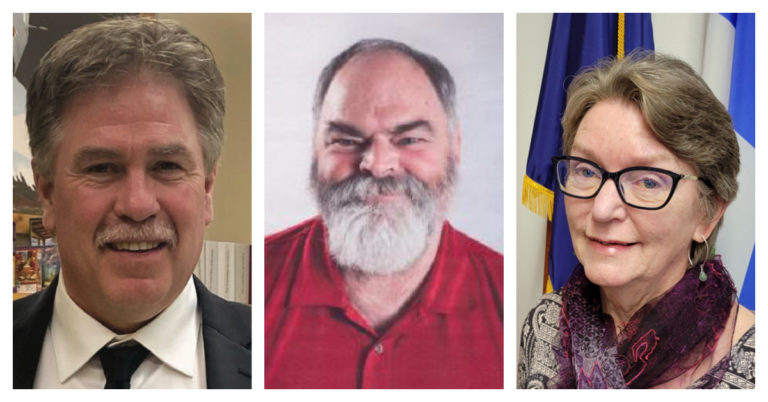
In unofficial results, Gabe Thomas has been reelected to the borough Assembly. Also winning a three-year seat was Ben Aultman-Moore, who is a member of the Lynn Canal Conservation. Winning a one-year seat was Jerry Lapp.
The results keep a business-friendly mindset on the Assembly, not swinging it too far to the left or right.
Gabe Thomas – 547
Ben Aultman-Moore – 495
Jerry Lapp – 482 Margarette Jones – 464 Bill Jurewitz – 462 Eric Holle – 439
For school board, the race is a bit closer, but initially it appears Keely Baumgartner will be seated. She is a Haines High School graduate and first ran for school board as a write-in in 2021.
Keely Baumgartner – 709
Michelle (Shelly) Sloper, incumbent – 693
SKAGWAY RESULTS
In Skagway, Orion Hanson was reelected to the Skagway Borough Assembly and former Assemblyman Dan Henry was elected to a seat. Hanson is a builder and Henry owns Skagway Fish Company, a restaurant. Luke Rauscher, head mechanic at Alaska Excursions, was elected to the school board; he was unopposed.
Bond Proposition One passed, 278 to 200, authorizing borrowing up to $65 million to replace the ore dock through the Ore Peninsula Redevelopment Base Project.
Correction: An earlier version of this story showed a turnout rate for Skagway of 83%. That was due to the way the votes were shown on the official tally, which was misleading; the actual turnout is over 40%.
Kenai City Mayor Brian Gabriel has been reelected to another term. He was first elected mayor in 2016, and served on the Kenai City Council from 2010 to 2016. He has been a member of the Alaska Bycatch Review Task Force since being appointed by Gov. Mike Dunleavy early this year.
Brian Gabriel – 645
Teea Winger – 295
Kenai City Council Seat B
Alex Douthit – 558
Victoria Askin – 454
Glenese Pettey, incumbent – 394
KENAI BOROUGH RESULTS
Assembly District 3 – Nikiski
Jesse Bjorkman, incumbent – 409
Dil Uhlin – 200
Chase Griffith – 78
Assembly District 4 – Soldotna
Tyson Cox, incumbent – 592
Donald Boston – 369
Assembly District 7 – Central
Brent Johnson, incumbent, unopposed – 577
HOMER CITY RESULTS
Homer Mayor Ken Castner, unopposed, won reelection with 720 votes.
Kastner was first elected in 2018 and served on the city council before that. He has lived in Homer since 1973.
Homer City Council
Jason Davis and Storm Hansen have won reelection to the Homer City Council, with 498 and 473 votes respectively.
SEWARD CITY RESULTS
Sue McClure has been elected mayor of Seward, having run unopposed.
McClure has served on the city council and as vice mayor. Her term on the city council ends next October and will need to be filled by special election. Current Mayor Christy Terry’s term ends this month, and she did not run for reelection due to relocating to Anchorage, where she was named director of external affairs for the Alaska Railroad.
Randy Wells and Kevin Finch were both elected to the Seward City Council, unopposed.
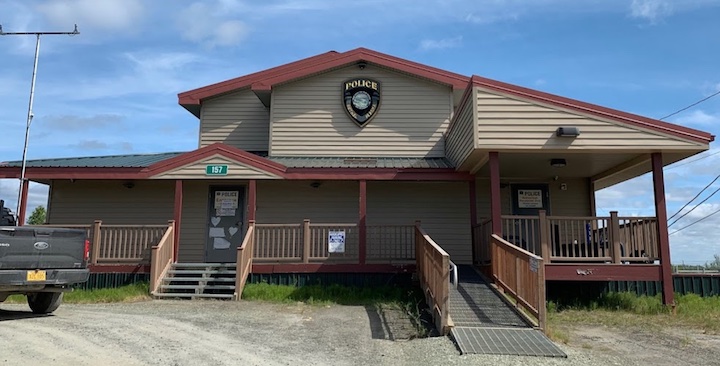
Voters in Bethel, Alaska have had enough of mask mandates. On Oct. 4, 2022, they passed a ballot proposition banning city officials from enacting a mask mandate in the community.
By a vote of 323 to 297, voters approved a proposition on the Oct. 4 ballot that amended municipal code with one simple sentence: “The City of Bethel shall not enact any mandates requiring masks or face coverings.”
The City of Bethel, population 6,548 in the last U.S. Census, has a mask mandate for all City of Bethel-owned buildings during “high community burden levels, according to its most recent Covid-19 policy, which was updated in April. The community burden level is established by the Yukon Kuskokwim Health Corporation for the City of Bethel.
The most recent community-wide mask mandate was passed by the Bethel City Council last December, and was in effect for 60 days for people:
Inside of, or in line to enter, any indoor public space;
Obtaining services from a healthcare facility;
Waiting for or riding on public transportation or while in a taxi or bus;
Engaged in work, whether at the workplace or performing work off-site, when: Interacting in-person with any member of the public; Working in any space visited by members of the public, regardless of whether anyonefrom the public is present at the time;
Working in any space where food is prepared or packaged for sale or distribution to others;
Working in or walking through public common areas, such as hallways, stairways, elevators,and parking facilities;
In any room or enclosed area where other people (except for members of the person’s ownhousehold or residence) are present when unable to physically distance;
Driving or operating any public transportation or taxi service or ride-sharing vehicle;
While outdoors in public spaces when maintaining a physical distance of six feet frompersons who are not members of the same household or residence is not feasible.
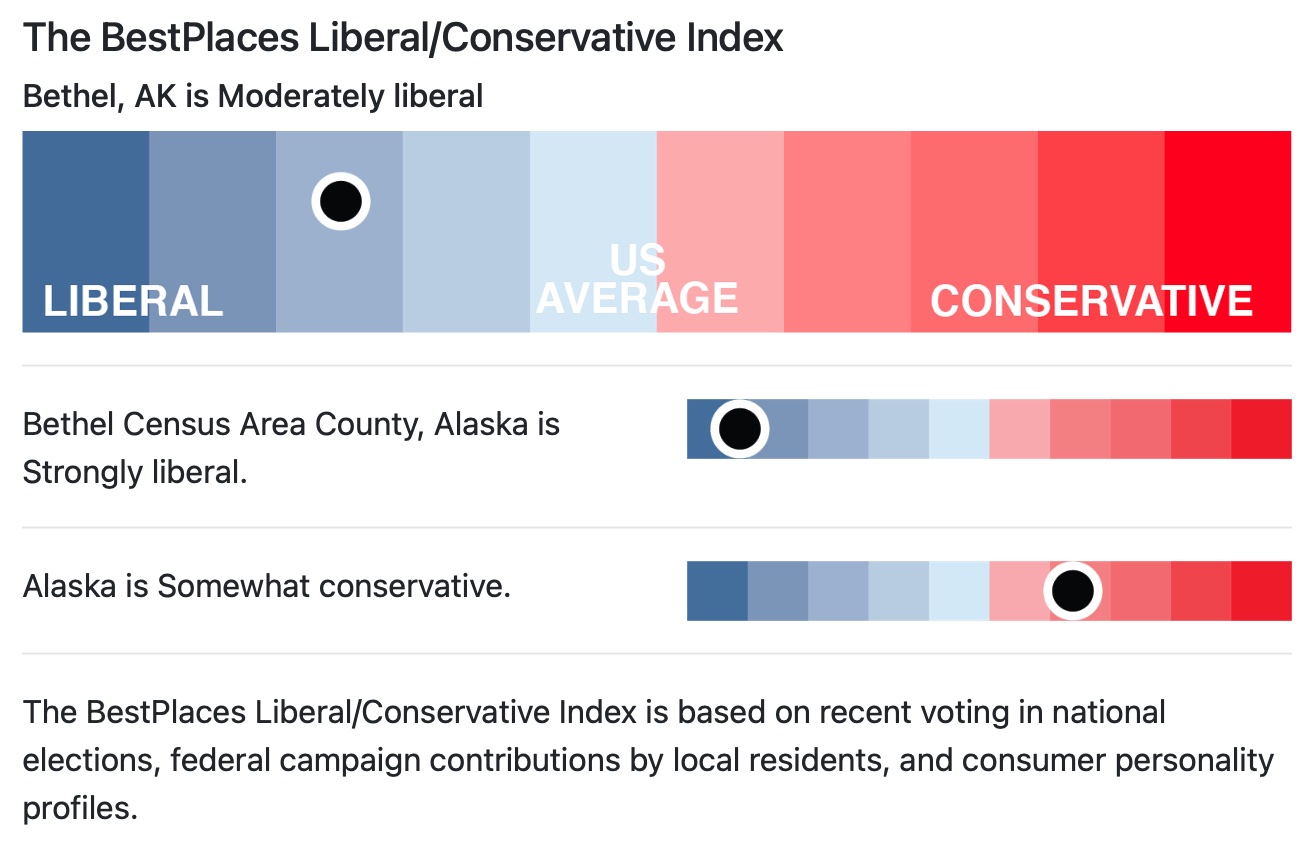
Bethel is considered a Democrat stronghold. Voting in a ban on masks is an unusual move for a liberal community. Turnout in this election was about 15.5% of registered voters.
Bethel voters on Tuesday also voted down a ballot proposition that would prohibit the sale of alcoholic beverages except through a “Restaurant or eating place license, which authorizes the restaurant or eating place to sell beer and wine for consumption only on the licensed premises; AND Package store license, limited to selling only beer and wine to a person present on licensed premises.”
Preliminary results for the candidates for Bethel City Council:
Early results are promising for conservative candidates in the local elections in Fairbanks, where conservatives won handily on Tuesday, and where missing precincts favor conservatives. Unofficial results:
Fairbanks City Mayor
David Pruhs – 56.59%
Valerie Therrien – 42.77%
City Council Seat C
Sue Sprinkle – 43%
Richard Croteau – 38.30%
Sean MacDonald – 17.90%
City Council Seat D
Aaron Gibson – 49.87%
Crystal Tidwell – 49.40%
Borough Assembly Seat B
Brett Rotermund – 52.64%
Kuba Grzeda – 46.87%
Borough Assembly Seat C
Mindy L. O’Neall – 84.93%
Borough Assembly Seat I
Barbara Haney – 51.03%
Liz Reeves-Ramos – 48.40%
School Board Seat C
Brandy Harty – 49.64%
Les Nichols – 49.49%\
School Board Seat D
Melissa Burnett – 53.49%
Kaneisha Radgosky – 45.93%
The results of the Fairbanks election so far match the efforts of Interior Republicans, an independent group that handed out hundreds of cards listing their preferred candidates for the election.
The airwaves are full of the latest “kill shot” on Senate candidate Kelly Tshibaka.
In this ad, the Senate Majority Leadership Fund, run by Senate Minority Leader Sen. Mitch McConnell, makes it appear that Tshibaka actually confesses to committing fraud when she was employed by the federal government. It’s a lie, but this is McConnell’s attempt to prop up Sen. Lisa Murkowski, and this is after all, October, the witching month when the worst of the political ads hit the airwaves.
McConnell has gone against the Alaska Republican Party, which endorsed Thsibaka over 18 months ago, censured Murkowski, and asked Murkowski to leave the party.
“Mitch McConnell has obviously decided he prefers a senator who is a more dependable vote for Joe Biden than anything else. In doing that, he’s ignoring the official position of the Alaska Republican Party, which is that Lisa Murkowski has to go. These ads attacking Kelly Tshibaka are an attempt to override the views of tens of thousands of Alaska Republicans,” said Mary Ann Pruitt, consultant to the campaign.
“This is a dark money ad full of lies. Kelly Tshibaka’s job was to keep federal employees honest, and some of them filed complaints against her in retaliation. Following a full investigation, she was exonerated and was, in fact, subsequently promoted, proving how ridiculous this ad is,” Pruitt said.
“After 21 years in the Senate, Lisa Murkowski knows Alaskans can see that she’s become too liberal and sides with the D.C. insiders over Alaska residents. And her D.C. pals are coming to her defense with smear tactics like this dishonest, negative attack ad. Murkowski always tells us that she’s against dark money — except when it’s being spent to benefit her,” Pruitt said.
McConnell has attacked Tshibaka on her pro-child stance, and blamed her for the state’s high moving expenses. Now, McConnell is accusing an Alaskan of fraud — a claim that is not supported by facts and which is likely something Tshibaka could sue McConnell for.
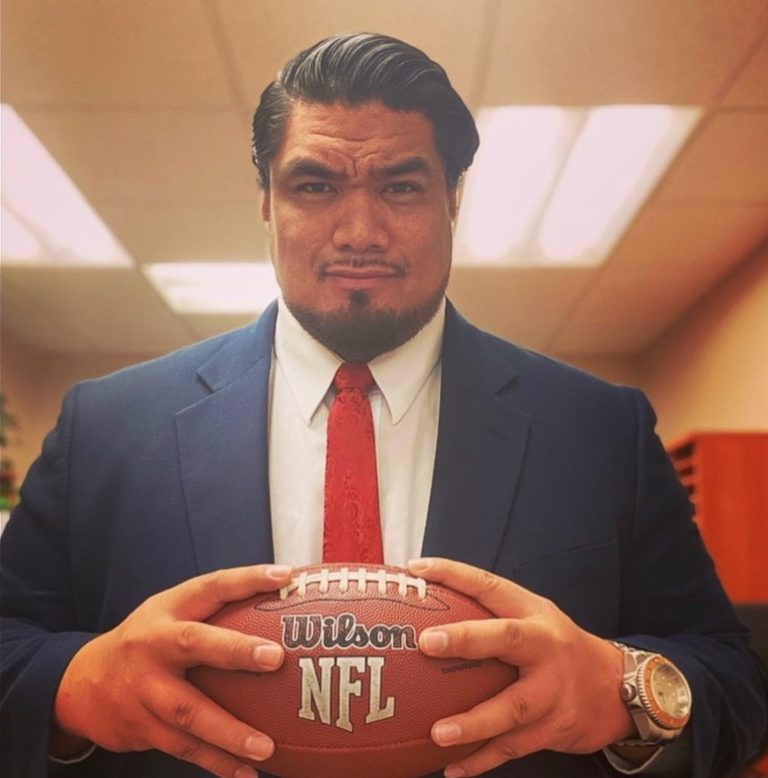
Junior Aumavae’s journey took him from the National Football League back to his home state of Alaska to light the beacon of hope for students. Aumavae created a road map for what all professional athletes could do after being in the pros.
Picture this: You are a kid, sitting in your bedroom looking at a wall filled with posters of people who inspire you to be something that changes the world, as you look out the window of your small Alaska town; you hope to be one of those people, some day. That was a journey similar to Uluao “Junior” Aumavae, who went from being that small-town kid in Palmer, with big dreams about being a starter the NFL, to becoming that pro player, to being named vice president for the Indianapolis chapter of the NFL Player’s Association, to working for the Drug Enforcement Agency in community outreach, to now being the chief equity officer for the Municipality of Anchorage.
Aumavae had far from an easy upbringing. He admits that he struggled in school and often got into trouble to the point of being expelled. That was when his life changed; Aumavae found refuge in his football coaches and teachers, who saw potential in him as a student and an athlete. He eventually received an offer to play football at Western Washington University after pushing himself to succeed and having a positive attitude about life.
While Aumavae had achieved a significant milestone by playing football at Western Washington University, he faced another challenge, when he had trouble balancing his studies and football practice. After being put on academic probation, Aumavae managed to find a mentor to help guide him to success — Dr. Kunle Ojikutu, who worked in the university’s Equity Department. Through Ojikutu’s guidance, Aumavae was able to get his grades up and eventually transfer to Minnesota State University. After college, he played for the Dallas Cowboys and the New York Jets, before turning his journey back to his hometown to take on a new mission: Help create a support system for students throughout Anchorage.
Upon returning to his home state, Junior began searching for ways to help improve and build a stronger community. He saw an opportunity to do that by signing on with Mayor Dave Bronson’s Administration in Anchorage as chief equity officer to ensure the city offers fair opportunities for minority communities. Thrilled by the chance to use his position in the biggest city in Alaska, Aumave also took this as a way to get himself into the schools of Anchorage and speak to the future generations about the importance of trying to be the best version of yourself every day.
Recently, he spoke to a group of students at Northwood Elementary School about having an education to achieve any dream that they have for themselves in the future. He spoke about the importance of focusing with your eyes and ears to learn and observe everything around you.
Aumavae emphasized how each teacher, principal, coach, mentor, and pastor was vital for him and is just as crucial for the students because of the infinite wisdom they have to offer them. He didn’t avoid talking about the mistakes he made along the way, openly sharing with the students that he would get in trouble and was suspended many times until he was kicked out of school.
“The one thing that I learned when I was young is that I not only had to be a good student, but I also had to be a good family member, a good brother, and now a good uncle and good father,” he said.
At the closing of the school event, Aumavae left the students with glimmers of hope for the future and unveiled his plan to help improve the school system. In his closing statements, he mentions how everyday community members have bits of their own wisdom to offer to a young, hungry mind. Through this, they can become whatever they set their minds to and give back in ways similar to himself. Junior didn’t leave his students hanging as he did a classic NFL team break for the kids as they looked forward to the future and gave everyone a “high five” as class began for the youngsters.
His plans for schools throughout the area have involved locals, ranging from students’ uncles and aunts to pastors they would see on Sundays to help in the hallways and ensure students stay on task and out of trouble. Aumavae sees it as an opportunity for the children to vocalize when they are struggling mentally, socially, or academically and speak with familiar faces.
Here is an example of one school where Aumavae’s impact has been felt: A dangerous environment developed in a school after a large fight among students. After Aumavae and his friends started walking the hallways, violence disappeared, and students’ grades and mental health improved dramatically. The principal of the school went on to get the principal of the year award after turning that school around.
Community is a major factor that Aumavae attributes to his own success and wishes to pass down to future generations in Alaska. By having a solid support system for his educational career, he achieved his lifelong goals of getting a college degree, playing for the NFL, becoming a father, and now being a significant contributor to Anchorage.
What if every NFL player returned to their hometown and did this? For the ones that do, thank you!
John Quick of Nikiski is vice president of Must Read Alaska and primary host of theMust Read Alaska Show.
They’re both registered Republicans, and they both are running to represent a deeply Republican area of the state, District 23 – Chugiak and Eagle River.
But one of the candidates is a member of the Anchorage Assembly, a military veteran, and a first-generation American of Chilean descent.
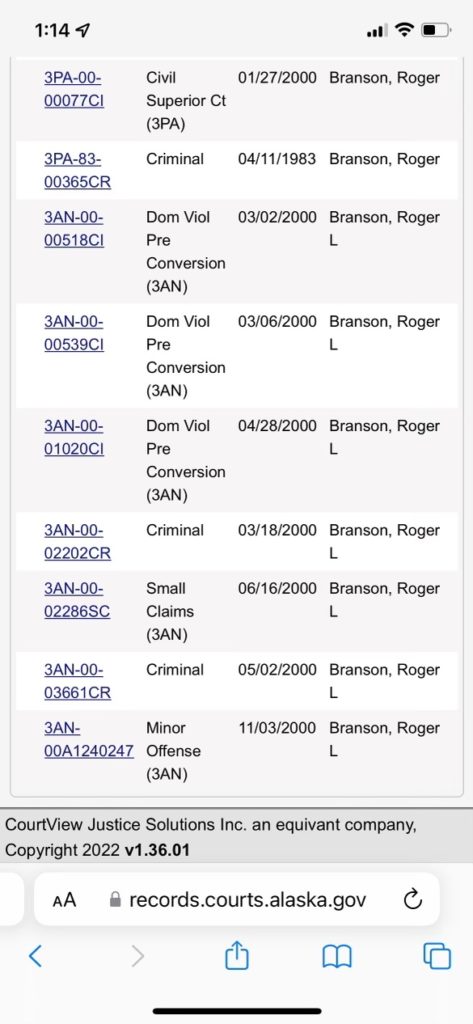
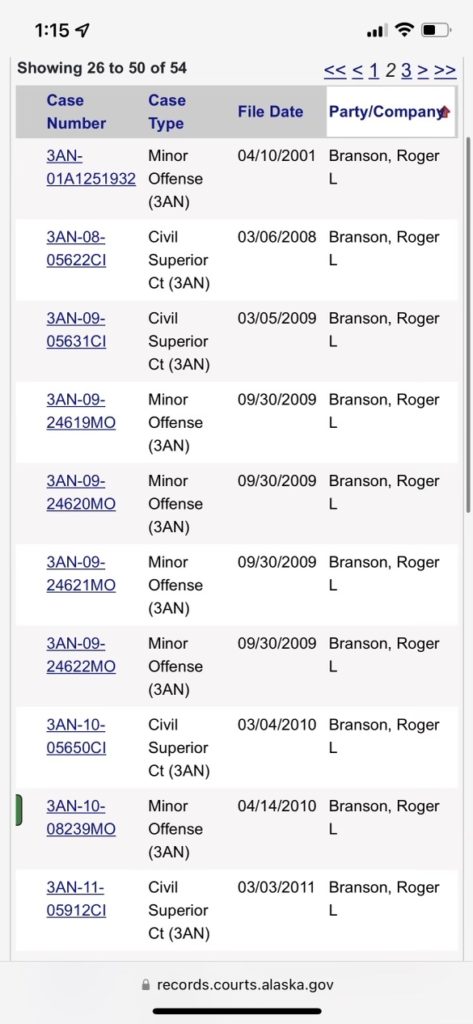
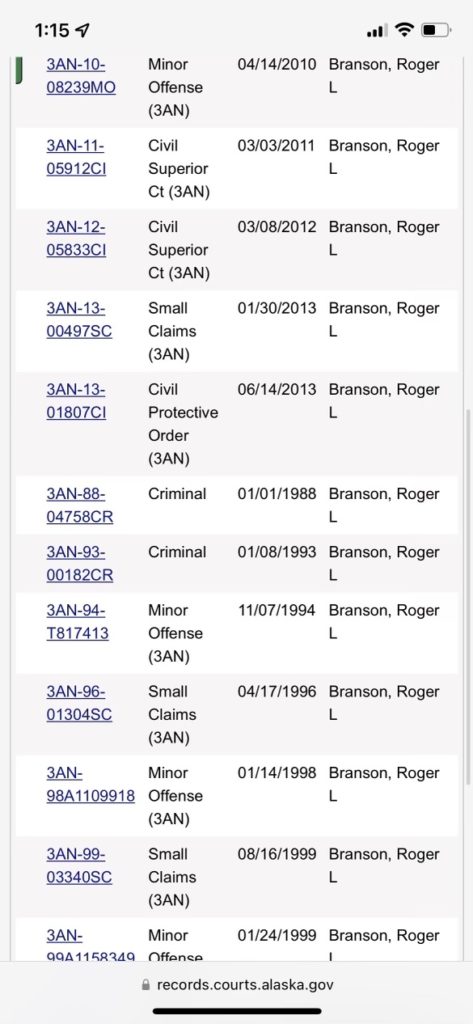
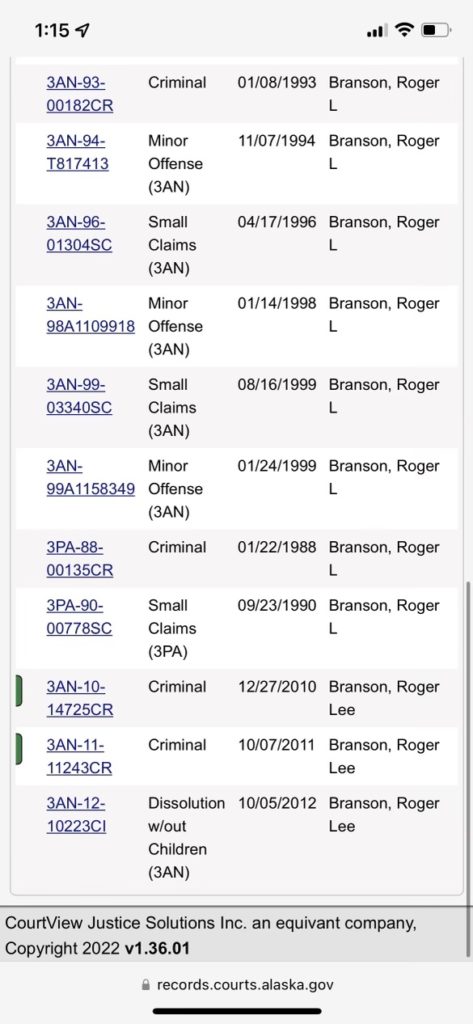
The other candidate has documented his decades-long struggles with mental illness, identifies with the struggles of the homeless in Anchorage, and has a long criminal record with the Alaska Court System.
Jamie Allard, who is on the Assembly, is the likely candidate to win the seat. She is well-respected in the conservative electorate and has a wide circle of people who have endorsed her, including Mayor Dave Bronson, Kenai Republican Women, Valley Republican Women, Alaska Republican Party, and Anchorage Republican Women’s Club, and District 23 Eagle River Republican Committee. She may be the only House candidate statewide that has been endorsed by all of those entities.
Roger Branson’s criminal recored cites numerous instances of violence, including domestic violence, in his Alaska Court System history:
Branson is open about his mental health challenges and has a web page dedicated to his mental journey, in which he revealed that a few years ago the people of Chugiak were worried that he could become a mass murderer.
“Eight years ago a series of events began unfolding which led to the good people of a couple churches near Chugiak to believe I was capable of becoming a mass murderer with (apparently) their selves as my imminent target,” hewrote on his web site.
Others have concerns about safety around Branson. At a recent Anchorage Chamber of Commerce forum, one of the organizers had to tell Branson to pipe down after a member of the audience from Chugiak-Eagle River had asked Branson questions regarding his lack of alignment with Republican principals. Branson visibly lost his temper, demanded that woman give him her name, which she would not do. A chamber of commerce representative told him to settle down, but he then demanded that the woman leave the room. The chamber — or someone in the building — brought in a security officer because of Branson’s behavior.
It’s unclear if ConocoPhillips will provide similar security during this Thursday’s candidate forum for its employees. Branson and Allard are both invited to give presentations to employees who live in District 23.
This summer, Branson set up his own camp at the homeless camp at Centennial Campground, where he said he provided services to homeless people at the camp. Sources say he had difficulty following the campground rules and that he was very selective about who he helped.
A few years ago Branson was removed from the board of the Chugiak Eagle River Senior Center and trespassed from the property. Branson, although registered as a Republican, always supports the most liberal candidates, and signed the recall petition against Gov. Mike Dunleavy in 2019.
The election is Nov. 8, with early voting starting two weeks prior to Election Day.
According to the Anchorage School District, there are still not enough school bus drivers to provide transportation for half of the students in the district.
As of Friday 172 out of 228 routes are in full service, said Superintendent Jharrett Bryantt on Friday. This week, the district expects nine new routes to be added, and 30 drivers are in training.
That’s not the focus of the Anchorage School Board, which tonight will take up the proposed rule mandating a “land acknowledgement” at certain official events. Already, the school board recites a land acknowledgement at every meeting.
The superintendent said in his weekly memo that attendance is now at 91%, up from 87% last year.
The percentage of students who attend 90% of the time has increased from last year’s 54% to this school year’s 68%.
“On Monday, when we switch to cohort three, drivers should expect heavier traffic around Begich, Wendler, Goldenview, Romig, and Hanshew middle schools, along with Bartlett, Service, East, West, and South high schools. If possible, community members at large should avoid these areas during drop-off and pick-up times (7:30 a.m. to 8:15 a.m. and 2:30 p.m. to 2:45 p.m.),” Bryantt wrote on Friday.
“We were hopeful to be within arm’s reach of an end to the cohort system by October. There will unfortunately be a setback in this trajectory. This is a delay but not a defeat. We have a large training pool, we are still accepting applications for bus drivers, and hiring incentives are in place,” he wrote.
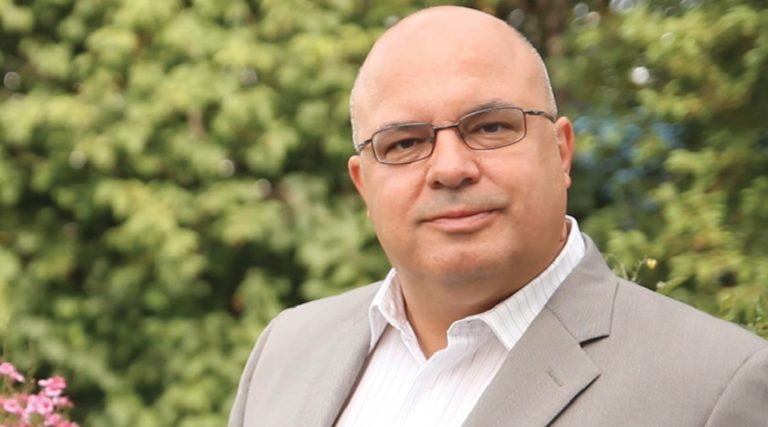
The Alaska Permanent Fund Board of Trustees has chosen longtime Alaskan Deven Mitchell to lead the corporation as the new president. The Alaska Permanent Fund Corporation has been without a president since the trustees fired Angela Rodell last December.
With Mitchell, the trustees have found someone who has a remarkable record of good relationships throughout government, including the Alaska Legislature, where he has testified many times on the state’s various financial portfolios.
In September, Mitchell was named by Gov. Mike Dunleavy as the acting commissioner for the Department of Revenue, to fill in for Lucinda Mahoney, who retired for health reasons.
Mitchell brings a wealth of knowledge and experience to APFC, the trustees said. He has extensive experience with financial securities and working for the Alaska Department of Revenue since 1992. His service as Alaska’s debt manager as well as executive director and treasurer of the Alaska Municipal Bond Bank Authority, a public corporation of the State, provides a solid foundation of fiduciary duty.
As acting commissioner of Revenue and a serving trustee of the corporation, Deven declared his candidacy during the annual meeting and was excused from the board’s selection process. It is also important to note that he applied for this position in late July, well before being appointed the Acting Commissioner of Revenue.
The APFC Board of Trustees made the selection at a public meeting on Oct. 3 in Juneau and via teleconference. The selection is contingent on the successful negotiation of a salary and benefits package, and a start date is yet to be determined. Mitchell resides in Juneau, where he and his wife Erin raised their two sons.