Monday, August 17, 2026
Home Blog Page 659

Supreme Court to hear case involving Second Amendment, domestic violence, and a punk with a past

The Supreme Court on Friday agreed to hear a gun-rights case involving a Texas man who is challenging a federal ban on the possession of firearms by those who are subject to domestic violence restraining orders.

The Biden Administration appealed the case, called United States v. Rahimi, after a federal appeals court invalidated the ban earlier this year.

Zackey Rahimi assaulted his ex-girlfriend in a Texas parking lot in 2019 and warned her that he would shoot her if she said anything about it to anyone. She did say something.

In February of 2020 a Texas state court issued a domestic violence restraining order against Rahimi, which by default prevented him from possessing firearms. He was warned by the judge that violating the order would be a federal felony.

Rahimi is not a sympathetic plaintiff in this constitutional case and was not exactly a responsible gun owner. He was a danger to the public and those closest to him. After the restraining order in February of 2020, he was involved in five known shootings. He also violated the restraint order by going to his ex-girlfriend’s house in the middle of the night.

“Zackey Rahimi was involved in five shootings in and around Arlington, Texas, between December 2020 and January 2021, including shooting into the residence of an individual to whom he had sold narcotics; shooting at another driver after a wreck, fleeing, returning in a different vehicle, and shooting again at the other driver’s car; shooting at a constable’s car; and shooting into the air after his friend’s credit card was declined at Whataburger (I am not making that last one up). Arlington police identified Rahimi as a suspect in the shootings and executed a warrant on his home, where they found a rifle and a pistol. Rahimi was at that time under a Texas state court civil protective order for an allegation of assault family violence, the terms of which expressly prohibited him from the possession of a firearm, which is (or was) a federal crime,” writes the Texas District and County Attorneys Association.
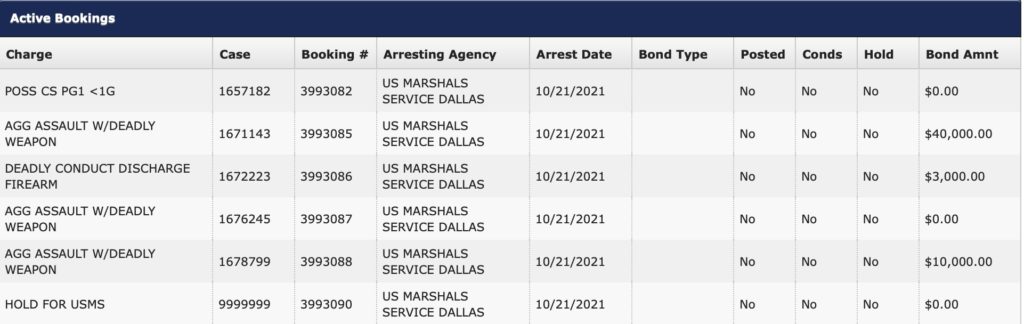
When the police executed a search warrant at his home, they found a handgun, a rifle, ammunition, and a copy of the restraining order. Rahimi, who was also a known drug dealer, peddling marijuna and occasionally cocaine. He was subsequently charged with violating the federal ban on firearm possession by individuals subject to domestic violence restraining orders.

He pleaded guilty and was sentenced to over six years in prison, and three years of supervised parole. Then he challenged the constitutionality of the ban on his ability to own or possess a firearm.

At first, the 5th Circuit Court of Appeals upheld Rahimi’s conviction. But in 2022, the Supreme Court struck down a decision in New York State relating to the state’s handgun-licensing laws. That is when the 5th Circuit decided Rahimi retained his Second Amendment right to bear arms, because federal government did not demonstrate that the ban aligned with the historical tradition of firearm regulation decided in the New York case.

“The Government fails to demonstrate that § 922(g)(8) ‘s restriction of the Second Amendment right fits within our Nation’s historical tradition of firearm regulation. The Government’s proffered analogues falter under one or both of the metrics the Supreme Court articulated in Bruen as the baseline for measuring ‘relevantly similar’ analogues: ‘how and why the regulations burden a law-abiding citizen’s right to armed self-defense,’” Judge Cory T. Wilson wrote in United States v. Rahimi. “As a result, § 922(g)(8) falls outside the class of firearm regulations countenanced by the Second Amendment.”

“…the early ‘going armed’ laws that led to weapons forfeiture are not relevantly similar to § 922(g)(8). First, those laws only disarmed an offender after criminal proceedings and conviction. By contrast, § 922(g)(8) disarms people who have merely been civilly adjudicated to be a threat to another person. Moreover, the ‘going armed’ laws, like the ‘dangerousness’ laws discussed above, appear to have been aimed at curbing terroristic or riotous behavior, i.e., disarming those who had been adjudicated to be a threat to society generally, rather than to identified individuals,” Wilson wrote.

Even surety laws, requiring the posting of a bond by the offender, did not quite fit the case, the court said.

“The surety laws required only a civil proceeding, not a criminal conviction. The ‘credible threat’ finding required to trigger § 922(g)(8) ‘s prohibition on possession of weapons echoes the showing that was required to justify posting of surety to avoid forfeiture. But that is where the analogy breaks down: As the Government acknowledges, historical surety laws did not prohibit public carry, much less possession of weapons, so long as the offender posted surety.”

The 5th Circuit said that the prohibition against gun possession, simply because of a domestic violence restraining order, is inconsistent with the New York case (Heller, Bruen) and the Second Amendment; and that it treats the Second Amendment differently than other individual rights that are guarantees. In addition, the federal law has no limiting principles.

The Biden administration petitioned the Supreme Court for a review. U.S. Solicitor General Elizabeth Prelogar noted that disarming individuals who pose a threat to others has long been a government practice and that that allowing the 5th Circuit’s decision to stand will have severe consequences for domestic violence victims.

Meanwhile, Rahimi is in jail on other charges relating to his instances of bad behavior with a gun.

Juneau to host transgender town hall this fall and is developing LGBTQ laws for businesses

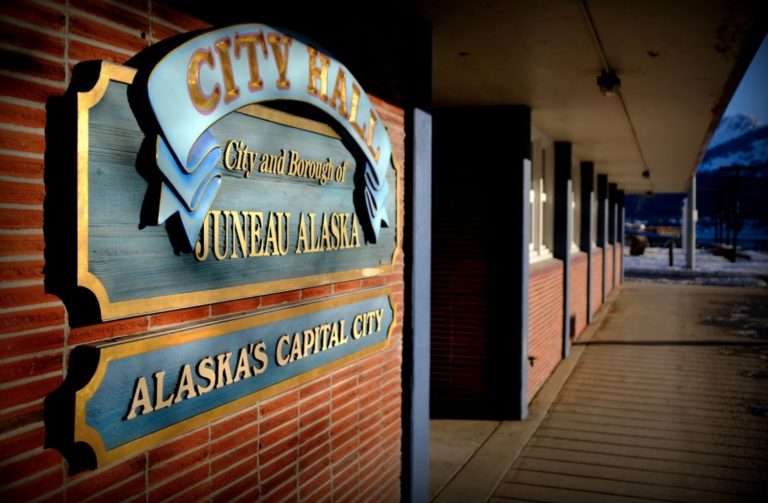
Juneau is embracing transgenderism at a whole new level. In September, the capital city will host a town hall on transgenderism.

The item was on the May 16 agenda of the Juneau Human Rights Commission. It’s not clear where the town hall will be held.

“Our Transgender Town Hall will be held on September 28, 2023 from 6:30-8:00 pm. The Mendenhall Valley Public Library only books 8-weeks ahead. Mary found out that the Egan Library is an option but we need to submit a request and they approve based on alignment with the UAS mission” say the minutes from that meeting.

The Juneau Human Rights Commission had cancelled the transgender town hall that it planned for January of 2022, without explanation. The matter was put on hold last year and brought up again in January with renewed vigor.

In addition, the Juneau Human Rights Commission is asking the Assembly to pass a resolution it has drafted requiring the city to only sign contracts with businesses that have a non-discrimination policy expressly covering sexual orientation and gender identity.

The resolution also states that Juneau will be required to recruit LBGTQ workers for city employment.

Bidenomics: Global Federal Credit Union is among many financial institutions laying off lending staff

Global Federal Credit Union has laid off 78 Alaska workers, a result of economic policies from Washington that has created higher interest rates and slowed down borrowing. It’s not because customers quit the credit union after it went “global.” It’s because of trickle down economics and because elections have consequences.

Luckily for those workers, the job availability rate in Alaska is still high. There were over  27,000 job openings in March, the U.S. Bureau of Labor Statistics reports.

The credit union, a member-owned cooperative with more than 5,500 sites available to members in the shared-branch network in all 50 states, has laid off 187 people companywide in Alaska, Arizona, California, Idaho, and Washington. The jobs were primarily in the lending departments.

Headquartered in Anchorage, Global changed its name from Alaska USA Federal Credit Union this year. It is the 17th in the country for asset size, and among the largest credit unions by membership. Global Credit Union has nearly $12 billion in assets.

The credit union system remains well-capitalized and on a solid footing, according to the National Credit Union Administration, created by Congress to monitor, regulate, charter, and supervise federal credit unions. Deposits are insured, just as they are at banks.

But the banking and financial sector in general is suffering from Bidemonics — the policies of the Biden Administration that have driven borrowing rates higher and caused consumers to react by not taking out loans.

A few of the other institutions that have laid off workers this year:

Goldman Sachs Group, headquartered in New York, cut 125 jobs. Announced in February, the layoffs took place in June around the globe, including some in investment banking.

JPMorgan Chase & Co. Asia cut 20 investment-banking jobs in Asia as deals fell through, according to Bloomberg.

First Republic Bank, which collapsed earlier this year, was bought by JPMorgan Chase, which notified about 1,000 of the employees that they were being let go.

Bank of America, headquartered in Charlotte, N.C., cut 1,000 jobs in April and plans more this year, to control costs. Bank of America will also cut less than 200 jobs in its investment bank, according to American Banker.

PacWest Bancorp laid off around 200 employees at subsidiary Civic Financial Services, a residential real estate company it bought during the house-buying boom of 2021.

PenFed Credit Union, the third-largest credit union, cut 569 jobs earlier this year. That was 14% of its workforce, a result of the falling loan business coming from high interest rates.

Alaska and 10 other states tells EPA ‘see you in court’ over wood stoves

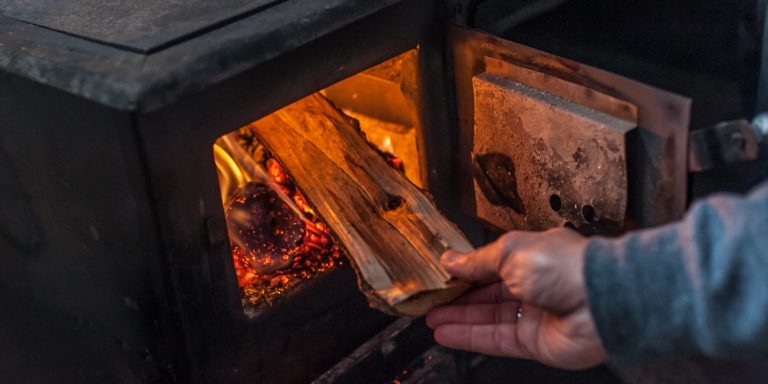
The State of Alaska and 10 other states and the Puget Sound Clean Air Agency on Friday delivered a notice of intent to sue the U.S. Environmental Protection Agency because of its failure to enforce wood stove emission standards.

The federal agency is, through its own reckless actions, creating a danger to communities heavily reliant on wood for warmth, the states argue. They want the federal government to live up to the standards it sets for communities.

The communities of Fairbanks and North Pole experience some of the coldest winters in the United States. Many residents heavily depend on wood stoves to keep their homes warm. Atmospheric inversions in the winter cause smoke to settle and the air quality to become severe at times.

The EPA programs that try to get people to trade in older stoves and other wood-burning appliances haven’t necessarily improved air quality, the states argue, because the new stoves don’t meet EPA standards either. Thus, states wonder what the point is in changing out old stoves for new ones.

“If newer wood heaters do not meet cleaner standards, then programs to change out old wood heaters may provide little health benefits at significant public cost,” the states said.

The notice of intent warns the EPA to either address the issues with its nonsensical wood stove certification program or face litigation.

Alaska Attorney General Treg Taylor highlighted the need to protect people in the Interior.

“On the one hand, the EPA is threatening to disapprove the State’s air quality plan for Fairbanks, yet on the other, EPA ignores its own rules that directly impact air emissions by wood stoves,” Taylor said.

The EPA’s own Office of Inspector General previously released a report that exposed systemic failures in the agency’s administration of its wood stove rules.

“The State’s plan, which the EPA proposes to disapprove, incorporates numerous efforts to decrease the impact of wood smoke on air quality,” explained Department of Environmental Conservation Commissioner Jason Brune.

He criticized the EPA’s obsession with elements of the State Implementation Plan that the federal government wants changed, but in such a way that it would offer minimal environmental benefit or impose excessive financial burdens on utility ratepayers. Brune sees the lawsuit as a means for Alaska to ensure that the EPA adheres to the same standards it expects from the state.

The University of Alaska Fairbanks has been conducting a study of Fairbanks’ winter air over the past four years. The study found that during inversions, smoke is trapped at an altitude of 100 feet. When the inversions occur, an air alert is called, and people living in the “non-attainment area” who do not have a “No Other Adequate Source of Heat (NOASH)” permit must stop using wood-burning or pellet stoves and shift to their other forms of heat that emit less particulates than wood heat.

“These alerts, along with burning dry wood, replacement with better stoves or conversion to less-polluting oil or gas, are probably the reason we have cut peak pollution PM2.5 concentrations in half in the last decade,” the university study reported.

Read more about the Fairbanks Winter Air Study at UAF at this link.

Chugach Electric asks for 6% rate hike

Chugach Electric Association, the newly formed monopoly resulting from the merger of the two Anchorage electric utilities, is seeking approval from the Regulatory Commission of Alaska to raise its base rates.

The electric utility has proposed an increase of nearly 6% for the majority of its customers, encompassing areas that includes more than 40% of the state’s population: Anchorage, Girdwood, Whittier, Hope, and Tyonek on the western shore of Cook Inlet.

The rate hike would be implemented in two steps. Starting from Sept. 1 of this year, customers would see a 3.6% increase, followed by the remaining 2.3% increase in September 2024.

This move may disappoint voters who voted for the purchase of Municipal Light & Power by Chugach in 2018, and who were promised stable power bills after the merger on Oct. 30, 2020.

Chugach Electric, which paid $1 billion for ML&P, has cited several cost drivers, including inflation, supply chain disruptions, declining electricity sales, and increased investment by consumers in energy-saving devices, as reasons for the rate increase. It has also said this rate increase is just a normal result of the merger.

For an average monthly bill of $100, this would result in an additional cost of about $6. Chugach Electric last raised its base rates in May 2020, when it implemented a 1.1% increase, blaming the Covid pandemic for the need for revenue.

The new proposal, just 36 months from the last increase, comes as a blow to customers who were led to believe that the merger would bring about efficiencies that would keep costs stable.

The increase in power bills by 6% adds to the also quickly rising price of rentals in Anchorage. As of June 2023, the average rent for a 1-bedroom apartment in Anchorageis $1,350, 35% increase over the previous year. Rent.com says a 2-bedroom apartment in Anchorage averages over $1,900, a 54% increase over the year before.

The decision to increase rates will trigger a 30-day comment period, providing an opportunity for the public to voice their opinions to the Regulatory Commission of Alaska.

Appeals Court rules ‘Indian Country’ in Oklahoma means Tulsa can’t enforce laws on Native Americans

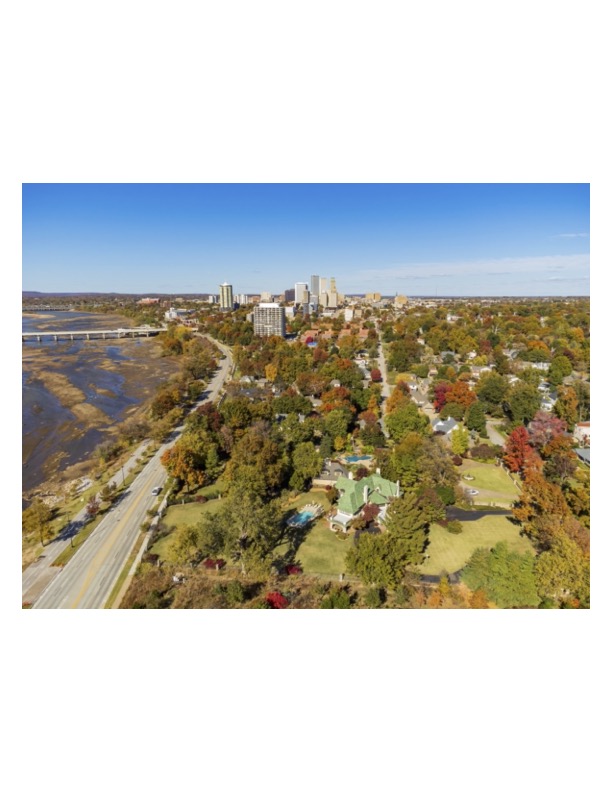
A recent ruling by the U.S. Court of Appeals for the 10th Circuit means that if a member of any American Indian tribe in Tulsa, Oklahoma wishes to drive 100 miles-per-hour inside a 20-mph school zone, they can do so without worrying about getting a ticket. In fact, American Indians apparently are not subject to any municipal law within some parts of the city.

The 10th U.S. Circuit Court of Appeals ruled last week that the City of Tulsa lacks the jurisdiction to prosecute a Native American man who was cited for speeding on a Tulsa street.

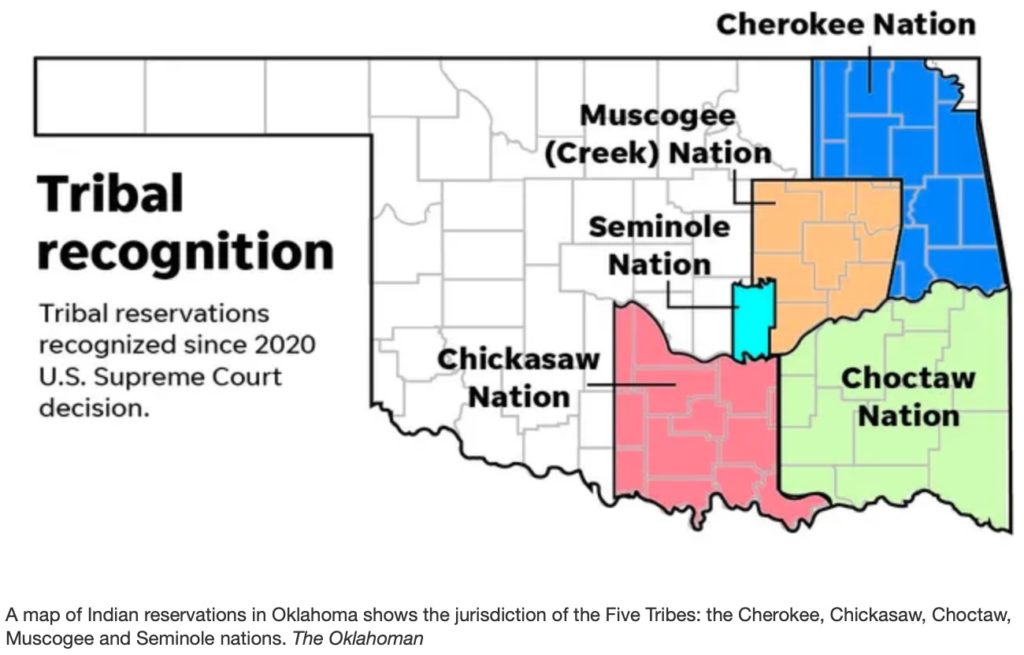
The court’s ruling stems from a Supreme Court decision in 2020 that determined that parts of Tulsa are located within the boundaries of an Indian reservation that had never been disestablished, thus falling under the jurisdiction of tribal law for tribal members rather than municipal law for everyone in the city.

It’s a case that could have legal implications inside the City of Juneau, where there is one parcel of land that Tlingit-Haida has deeded to the federal government as “Indian Country,” and another in Craig, also in Southeast Alaska.

The Oklahoma case involves Justin Hooper, a member of the Choctaw Nation, who was cited for speeding by Tulsa police in 2018. Although Hooper paid the $150 ticket at the time, he later filed a lawsuit challenging the city’s jurisdiction over the offense. Hooper’s attorneys argued that the speeding violation occurred within the historic boundaries of the Muscogee (Creek) Nation, rendering it Indian Country and placing it under tribal jurisdiction. Several other tribes filed amicus briefs on Hooper’s behalf, including the Cherokee, Chickasaw, Quapaw, and Seminole nations.

Even though Hooper is Choctaw, he is covered by Muscogee Nation law, the ruling says.

The City of Tulsa contended that the Curtis Act, a federal law passed in 1898, granted the city jurisdiction over municipal violations committed by anyone in its city limits.

However, the appeals court rejected this argument, citing the U.S. Supreme Court’s 2020 decision in McGirt v. Oklahoma. The Supreme Court ,in that case, had ruled that approximately 40% of Oklahoma remains an Indian reservation because it was never formally disestablished by Congress. The McGirt v. Oklahoma ruling essentially shrank the State of Oklahoma’s boundaries by 40%.

The Muscogee Nation, in its brief supporting Native Americans being not subject to municipal or state law in Indian Country, said that without congressional approval, “neither states nor their political subdivisions have jurisdiction over crimes involving Indian defendants committed within the boundaries of an Indian reservation.”

Tulsa officials argued that that the result of a ruling in Hooper’s favor is “a system where municipal laws would only apply to some inhabitants, but not others, depending on a complex algorithm with variables based on tribal membership of a defendant as well as discrete geographies within the City limits. Such a system is clearly more ‘unworkable’ and ‘counterintuitive’ than a clear system where all inhabitants of the City are treated equally for municipal violations.”

The 10th Circuit judges said they could not take the practicality of such an unworkable patchwork of laws into account “even if Tulsa proves correct that reversing the district court’s decision will lead to disruption.”

Tulsa and other municipal courts within the boundaries of Indian reservations must now defer to tribal law when it comes to prosecuting Native Americans for offenses, the ruling says.

Gov. Kevin Stitt spoke about the case last week while addressing his veto of certain Tribal Compacts.

“We want everybody to be successful. I just don’t believe in saying, ‘This group doesn’t have to play by the same set of rules as everybody else. It has nothing against sovereignty. We’ve all been working together since 1907. Let’s keep working together, but let’s not have one set of rules that favors one group over another.”

Stitt’s office also released a statement indicating that this case will now be appealed to the U.S. Supreme Court: “I am extremely disappointed and disheartened by the decision made by the Tenth Circuit to undermine the City of Tulsa and the impact it would have on their ability to enforce laws within their municipality. However, I am not surprised as this is exactly what I have been warning Oklahomans about for the past three years. Citizens of Tulsa, if your city government cannot enforce something as simple as a traffic violation, there will be no rule of law in eastern Oklahoma. This is just the beginning. It is plain and simple, there cannot be a different set of rules for people solely based on race. I am hopeful that the United States Supreme Court will rectify this injustice, and the City of Tulsa can rest assured my office will continue to support them as we fight for equality for all Oklahomans, regardless of race or heritage.”

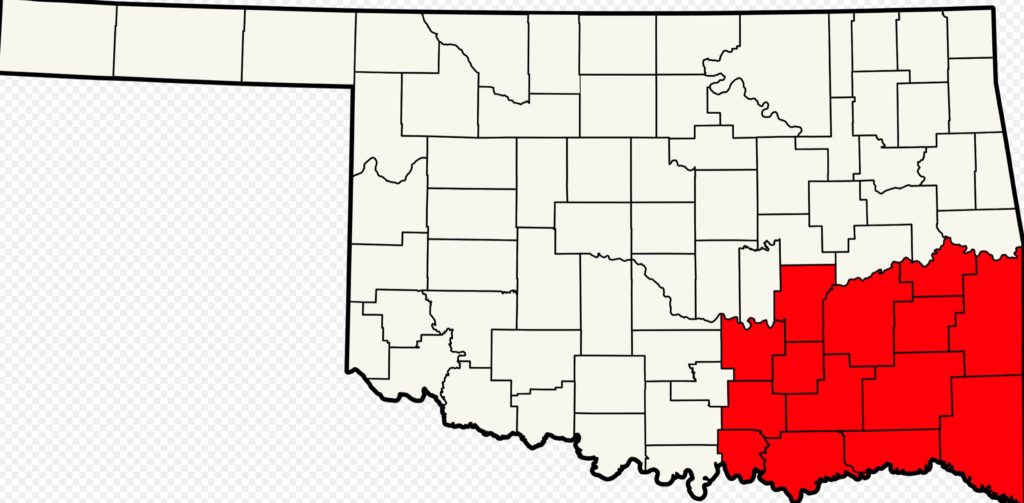
Traditional Choctaw boundaries before McGirt v. Oklahoma, vs. Indian Country established by the 2020 decision.

The Choctaw Nation is the third-largest Native American nation in the United States, with more than 212,000 tribal members and 12,000-plus associates, according to the tribe. Its historic boundaries are in the southeast corner of Oklahoma.

The legal difficulties of the 2020 decision were predicted by many. In 2021, Congress set aside $70 million in additional funding for the U.S. Justice Department to specifically take on the load of justice in 40% of Oklahoma, although at the time Congress did not consider the need for federal law enforcement within Tulsa. The prediction was that the FBI would have to investigate another 7,500 Indian-related cases in the state after McGirt v Oklahoma. Another $10 million was appropriated to the Bureau of Indian Affairs.

Sullivan reacts to court decision on student loan relief

A day after President Joe Biden’s student loan forgiveness program was declared unconstitutional by the Supreme Court, Alaska Sen. Dan Sullivan applauded the decision, emphasizing that the ruling underscored the lack of legal authority to arbitrarily cancel student loan debt from the Oval Office.

Sullivan, who has been a critic of the $400 billion scheme that transferred student debt to taxpayers, highlighted the doubts expressed at the time by President Biden and former Speaker Nancy Pelosi about their legal authority to implement such a measure, even while Biden was taking liberties with the HEROES Act and applying to liberally — and unconstitutionally.

“The Supreme Court made it clear today that they don’t have that authority. It is neither fair nor legally sound to force Americans to shoulder the burden of others’ student loan debt,” Sullivan say, adding that the ruling was a victory for hardworking parents and students who had diligently paid for their higher education.

While acknowledging the heavy burden of student loan debt faced by many Americans and Alaskans, Sullivan stressed the need to address the root causes.

“I also recognize that many Americans and Alaskans are faced with crushing student loan debt. We must work together to get skyrocketing university tuition under control and work to make sure that good paying jobs await graduates,” he said.

Earlier this year, Senator Sullivan joined with 43 Republican senators in filing an amicus brief calling on the Supreme Court to strike down President Biden’s student loan cancellation program, because of its constitutional problems.

Sullivan was a cosponsor of a Congressional Review Act resolution seeking to overturn the student loan cancellation program. On June 1, the Senate passed the resolution with a vote of 52-46, further demonstrating the opposition to the program among Republican lawmakers, as well as several Democrats.

Rep. Mary Peltola, a Democrat, had favored the transfer to taxpayers of the debt owed by millions of American students. The measure passed the House without her vote, but is no longer necessary, as the Biden activity has now been struck down by the Supreme Court.

Peltola and AK Democrats have new fundraising scheme that will track your purchases, round up to them

Rep. Mary Peltola has partnered with a company that will track her supporters’ purchases, and round-up to the next dollar, an amount that will be donated to her reelection campaign.

By using Good Change, Peltola allows her supporters to have all their commercial transactions captured in what is promised by the company to be a secure system.

That means purchases made with credit cards for flights, books, food, booze, dating, toys, and porn will be sieved through the company’s database, which will automatically round up the purchase amount, and put it into a digital wallet for Peltola.

The Alaska Democratic Party has also partnered with Good Change to raise party funds.

The company describes the process this way:

1. Your donors will open a GoodChange account, then connect a credit card or bank account with GoodChange.
2. Each time they make a purchase, we will round up their spare change to the nearest dollar.
3. At the end of the round up cycle, GoodChange will transfer your donors’ total spare change into your GoodChange account.

There is a fee for the service, so not every penny will go to candidates. There’s a 10% fee captured by Good Change, plus a $3 charge for every new donor. If you return an item and get a refund, you won’t get the round-up portion back.

This is new territory for campaign fundraising. It’s not associated with ActBlue, which is the very successful crowdfunding application founded in 2004 and used by Democrats, which quickly transformed campaign fundraising, raising millions for Democrats quickly, and causing a competing firm, WinRed, to launch in 2019 to support Republican candidates.

Good Change, which appears to cater to Democrats, was started by a couple of millennial-age women in Arkansas, and is also being used by Rep. Adam Schiff, who is running for Senate to replace retiring Democrat Sen. Dianne Feinstein.

The Democratic Party of Arkansas is another client, as is the Arkansas Black Caucus. Adam Frisch, a Democrat challenging Rep. Laurent Boebert of Colorado, also is signed up to use the system.

15-year-old female sues Premera Blue Cross for not paying for transgender breast mutilation surgery

Lambda Legal and other LGBTQ advocacy lawyers have filed a federal class action lawsuit in Washington state against Premera Blue Cross, challenging the insurance company’s policy of denying coverage for gender-affirming chest surgery, also known as breast mutilation surgery, for patients under 18.

The lawsuit was filed on behalf of a 15-year-old girl who has her parents’ permission to do whatever it takes to live as transgender male adolescent.

A.B.’s medical providers recommended the breast removal as part of the child’s treatment for gender dysphoria. However, Premera Blue Cross, which also serves Alaska businesses and residents, has refused to authorize coverage for the surgery, despite the agreement of A.B., his parents, and his medical providers’ insistence that it’s needed.

Lambda Legal Counsel and Health Care Strategist Omar Gonzalez-Pagan said the surgery is evidence-based, safe, and effective. He criticized Premera’s denial of coverage, citing an arbitrary age cutoff policy that Lambda says is discriminatory and not in line with clinical practice guidelines.

A.B. has experienced negative effects on her health due to wearing a chest binder, hindering her ability to live a happy, healthy, and physically active life, according to the lawyers, who say that Premera’s policy violates the Affordable Care Act by unlawfully discriminating based on sex and age. Premera does covering similar necessary surgeries for insured individuals under 18 who are not transgender, the lawyers allege.

The child’s parents appealed the Premera denial decision but were denied again on Dec. 30. As a result, the parents had to pay out-of-pocket for the expensive procedure.

Premera filed documents showing that the prefrontal cortex–the area of the brain that regulates planning, memory, and impulse control doesn’t develop fully until people are in their mid-20s. Thus, 15-year-olds are not seen as mature enough to take such risks as surgery.

The insurance company covers other forms of gender-affirming care for minors, including prescriptions for puberty blockers hormones and mental health care.