By Glen Biegel
Tomorrow is the August 18 primary, and the race to lead Alaska has become exactly what a field of seventeen candidates guarantees: a true toss-up for four spots on the November ballot. In these closing hours, voters deserve less theater and more honesty about what the job actually is.
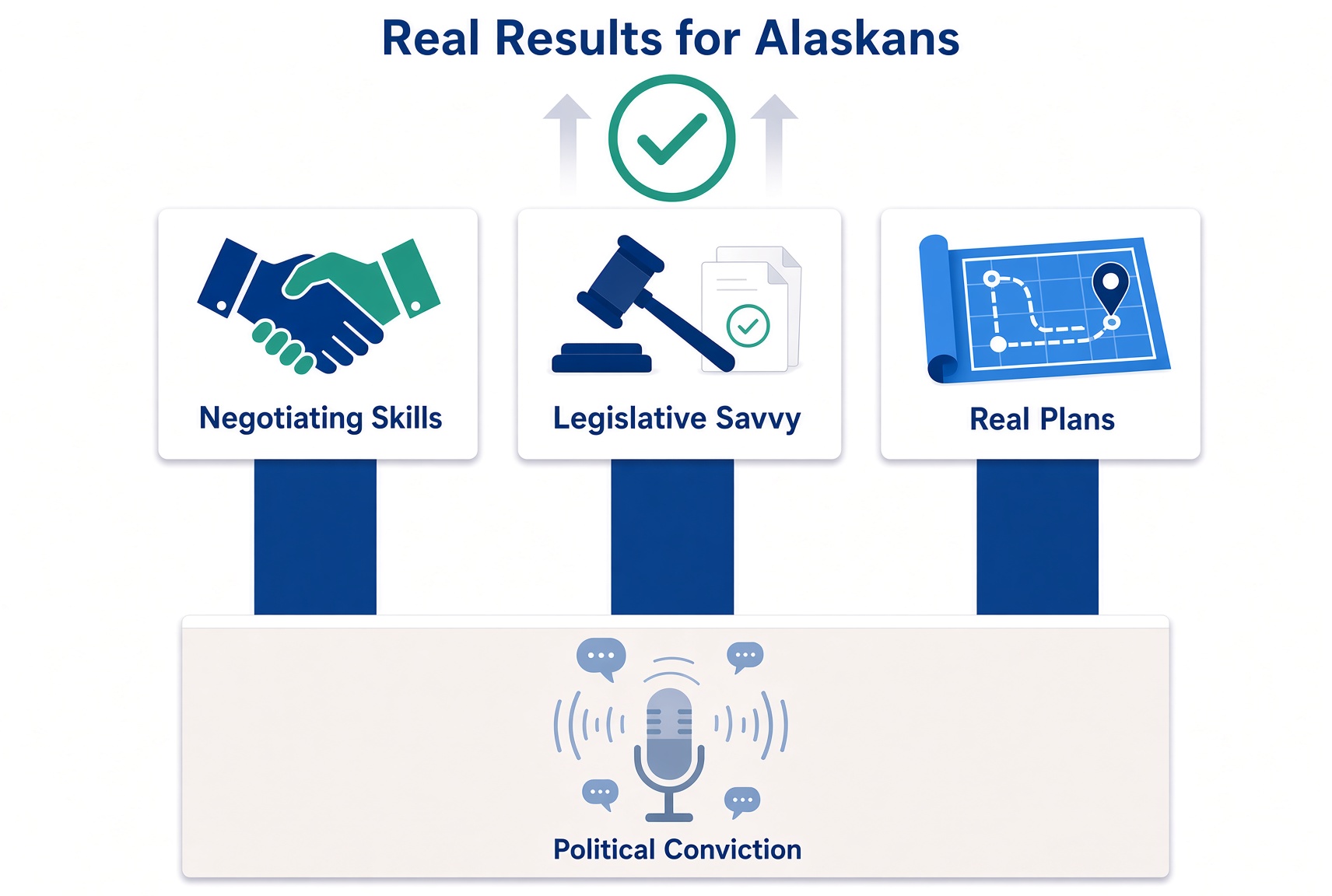
Here is the honest part. In government, it does not matter what you want. It matters what you can negotiate. Alaska’s governor does not rule by decree. The constitution splits power on purpose, between an executive who proposes and a legislature that disposes, and the candidate who does not understand that distinction in their bones will spend four years frustrated, not effective. This job rewards subtlety and skill, not volume.
Take the “full PFD” fever dream some candidates are still selling. It sounds wonderful on a bumper sticker. It ignores that the money has to come from somewhere, and that a legislature built from both parties and every region of this state has never handed a governor a blank check to pay for it. The same goes for the promise to veto every budget that does not hand you the number you want. The other side is praying for exactly that fight. Total gridlock reads as principle for about one news cycle. Then it reads as irrelevance. Then it reads as an invitation for a swift, well-funded recall. Then it reads as the end of the Republican brand in this state for a generation. The Hughes-Gettys approach is the sound one: propose a full PFD as the law already requires, then fight for the largest one Alaska can actually afford by running government well enough to afford it.
Governor Dunleavy is a good man, with real character and real conviction. He also spent most of his political capital chasing goals he could not close, and voters know it. So the fair question for every remaining candidate is simple: why will you be different? Not what do you want. Every Republican in this race wants the same things: a full PFD, cheap energy, smaller government, better schools. The question that separates them is what they have planned for, in detail, before they ever raise their right hand.
That is the part too many campaigns skip. Jeff Landfield needled Shelley on exactly that point, and he was right to. So here is our answer: we have a plan, down to the department level, including a 66-page framework for reforming the Department of Fish and Game alone. It does not matter what you say in a debate. It matters what you have actually planned for. It does not matter what you want as governor. It matters which bureaucrat, which committee chair, which coalition can stop you, and whether you have already built the relationships to keep that from happening, or a plan to overcome it when you cannot. Subtlety and skill. Not volume.
It does not matter what you promised on the trail if you cannot build a working legislative majority once you hold the office. Alaska does not need a leader who merely wins an election. It needs the leader of a movement, energized, empowered, and focused enough to form a majority caucus, and then hold it together through the hard votes that follow. That means being trusted, wise, and principled. It does not mean promising to kick down doors. It means your promises have to mean something, and there have to be real consequences for anyone, including your own allies, who stops the plan you were elected to pursue.
The big change after Dunleavy is this: Alaska is a show-me state now. If a candidate cannot show a real plan, pick someone else.
Glen Biegel has spent over 1,000 hours this year working on policy, strategy, speeches, and anything else the Hughes-Gettys campaign needed.