Wednesday, August 19, 2026
Home Blog Page 593

AFN’s missing speakers and sponsors

The governor of Alaska is sending a welcome video. The mayor of Anchorage is sending a welcome video. Sen. Lisa Murkowski is attending via Zoom, and it’s not clear that Sen. Dan Sullivan, a Marine reservist, will fly back from Washington, D.C. in time for the Alaska Federation of Natives convention in Anchorage that starts Thursday. After all, there is a war developing in the Middle East over ethnic and religious differences and land issues that divide Israelis and Palestinians, Jews and Hamas.

Even Rep. Mary Peltola, who is scheduled to speak to the AFN main body on Saturday, may be detained in Washington for the Speaker of the House vote. She is on the agenda for AFN’s Saturday afternoon lineup.

The reality is that AFN has become thought of as a radicalized organization, and some leaders in Alaska are actually relieved to be too busy to attend. After all, some leaders still remember when a few at AFN turned their backs on Gov. Mike Dunleavy and his wife Rose and raised their fists in the air while Alaska’s First Lady, who is Native, was on the stage in 2019.

The top sponsor for AFN’s convention this year is the group that brought open primaries and ranked choice voting to Alaska: Alaskans for Better Elections. AFN has a resolution supporting that new voting system that went into effect in 2022, which catapulted Mary Peltola into office.

Other top-level sponsors are GCI and Visit Anchorage. Missing from the sponsorship list are several Native corporations and groups. For instance, Arctic Slope Regional Corporation is missing, having separated from AFN. Doyon Ltd. also withdrew its membership in 2019 over disagreements with the direction of the organization. Sealaska, Aleut Corp. and Calista are missing as sponsors. These are some of the biggest companies in Alaska, created by the Alaska Native Claims Settlement Act, and are Native corporations that have vast resources, contracts, and sub-enterprises. Tanana Chiefs Conference is not a sponsor of the convention, nor is Tlingit-Haida Central Council, both powerful regional groups.

AFN still has other sponsors, but there appears to be strong differences between factions of Native leaders when it comes to the more controversial issues that have become front and center at the organization, whose leaders are President Julie Kitka, and co-chairs Ana Hoffman, and Joe Nelson, former husband of Rep. Peltola and father of two of her children.

An unspoken topic and one that isn’t being reported by mainstream media is the missing and indigenous leaders not playing a lead role at AFN in this era.

AFN to vote on resolution to force subsistence to mean ‘Native only’

Among the dozens of resolutions to be considered at this week’s Alaska Federation of Natives annual convention in Anchorage, one stands out as particularly divisive in Alaska: The Native group wants Natives in rural Alaska to have subsistence rights that no one else can have.

The issue is complicated but the resolution is clear in its implications: Whites, Filipinos, Blacks, or Hispanics living in rural Alaska would not be entitled to subsistence priority, as they are now under law. A white man married to a Native woman would not be able to subsistence hunt, but his wife could. Essentially, hunting rights would become race-based in Alaska. An Alaska Native living in a Seattle high-rise would have subsistence rights, while a Latino living in a cabin in Chefonak would not be able to hunt subsistence.

The resolution asks Alaska’s congressional delegation to push for a revisit of Title VII of the Alaska National Interest Lands Conservation Act (ANILCA) to permanently protect Natives as priority users. It’s unclear where the delegation stands on a matter that would create race-based hunting and fishing laws.

The AFN’s 57th convention starts Thursday at the Dena’ina Convention Center, with thousands of Natives attending from around the state. The vote on the proposals is expected on Saturday, the same day Rep. Mary Peltola has been allotted 20 minutes on the agenda to give an address to the crowd.

The resolution brings up an old subject of much contention: the Katie John decision, a much-litigated court case that pits the rights of Natives against all other users of fish and game resources in Alaska. Alaska law has a rural preference for subsistence, not exclusively a Native preference.

According to the resolution, AFN thinks that the State’s management system is an attack on Natives:

“The State of Alaska has nonetheless chosen, for decades, to continue to attack the federal subsistence fisheries protections enshrined in Title VIII of ANILCA and the Katie John cases despite the fact that commercial fisheries harvest over 95% of fish stocks, subsistence and sports fishing is less than 5%.; and The State of Alaska has escalated its attacks in recent years and has undertaken a series of new, aggressive litigation aimed at actively undermining Alaska Natives’ right to subsistence; and In one of those cases, United States v. Alaska, the State of Alaska now attempts to rewrite longstanding law and erase the Katie John decisions; andA decision from the United States Supreme Court could mean the elimination of all remaining federally-protected subsistence fishing rights for Alaska Native people at a time of immediate critical need for the rural subsistence priority in times of shortage…”

The Federal government transferred the authority to manage fish and wildlife in Alaska to the new State government in 1960, and the State law has a rural preference. State subsistence law has a priority for rural subsistence use over all other uses of fish and wildlife, but does not define subsistence users as specifically Native.

The resolution is supported by the AFN board and the Association of Village Council Presidents.

All the resolutions to be voted on at AFN can be found at this link.

Girdwood paraglider’s last flight

A paraglider known well in the adventure skiing and gliding community in Girdwood died Sunday afternoon in a paragliding accident.

Alaska State Troopers received a report at 1:42 pm of a paragliding crash near Magnificent Peak in Eagle River Valley area. The caller said he and others were photographing the paraglider when they lost sight of him. The group went to locate the paraglider and initiated CPR.

Joshua Randich, 33, of Girdwood, was transported by Alaska Air National Guard Pave Hawk helicopter to an Anchorage hospital where he was pronounced deceased.

On Instagram, his friends posted how much they admired him for living life to the fullest, and how much Randich will be missed.

“Thank you for everything! For being a friend, brother, teacher, captain, and legend. Your embodiment of leadership is unmatched and I will forever look up to you and your lessons. Nothing but love and appreciation for you brother.”

“Truly one of the greatest humans I’ve had the pleasure of knowing. Thanks for the inspiration and friendship. Fly in peace!!!”

“RIP bud. I’ll always cherish the turns we made together. You welcomed me into the community and taught me to do a 360. Thanks for being a friend.”

“Complete loss of words. The world lost a true legend. You inspired everyone who met you to live a fulfilling life chasing their passion. What a sad day.”

Randich is the second Alaskan to lose his life paragliding in recent days. Dr. Russell Biggs, another adventurer who loved wilderness experiences, died while paragliding in Turkey in early October. Biggs was an Anchorage anesthesiologist and community activist.

Sullivan asks Alaskans to pray for safety of Jewish community globally

U.S. Sen. Dan Sullivan asked Alaskans to recommit themselves to ending anti-Semitism and to pray for the safety of the Jewish community in Alaska and around the globe during virtual remarks in Anchorage last week.

Hundreds of Alaskans gathered last Wednesday in Anchorage to show solidarity with Alaska’s Jewish community and to mourn the victims of the recent deadly terrorist attacks in Israel.

The event was hosted by the Alaska Jewish Campus at the the Dena’ina Civic and Convention Centers. During his remarks, Sullivan pledged to continue to work in the United States Senate to “ensure that Israel has whatever assistance it needs to defend itself and its people and to defeat Hamas.”

“We are here tonight to unequivocally stand with the citizens of Israel and Alaska’s Jewish community,” Sullivan said. “We must be steadfast in fully supporting Israel’s right to defend itself, and to defeat and crush the Hamas terrorists who do not want peace, who only want the destruction of Israel, which they say all the time, and the death of more innocent civilians. That is the reality facing Israel right now. And we must stand with them. 

“We must also send an unmistakable message to the terrorists in Iran not to try to widen this conflict through other proxies like Hezbollah. America will be watching Iran’s every move. I want to conclude by thanking you again, Rabbi Greenberg and everybody in attendance tonight. This is such a testament to our state that so many are out to support our Jewish community, but also our critical alliance with Israel. 

“We mourn together the more than a thousand innocent lives we’ve lost. We pray for the safety of those who’ve been taken hostage and those recovering from injuries. We recommit ourselves to ending anti-Semitism in all its forms, and to defeating terrorists who have no regard for innocent human life. And, we pray for the safety of our Jewish community in Alaska and around the world.”

To listen to Senator Sullivan’s full remarks, click here

Biden loosens more sanctions on Venezuelan oil, but there’s a catch

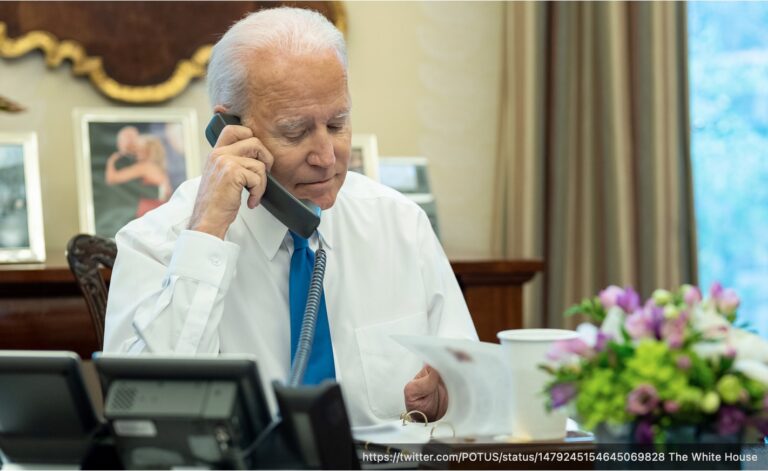
President Joe Biden and Venezuelan President Nicolás Maduro have agreed to a deal that eases the remaining U.S. sanctions on Venezuelan oil industry, according to reports. As part of the deal, Maduro will allow a competitive and internationally monitored presidential election in 2024.

The deal will be finalized during a meeting in Barbados on Tuesday, sources said.

Maduro won in a 2018 election that were criticized as fraudulent. He runs a repressive regime that is also on the international watchlist for harboring and financing terrorists.

“Venezuela remained a permissive environment for known terrorist groups, including dissidents of the Revolutionary Armed Forces of Colombia (FARC), the Colombian-origin ELN, and Hizballah sympathizers,” according to the U.S. State Department in 2020.

Venezuela is also still under a presidential Executive Order 13692, which declared a national emergency with respect to human rights violations, persecution of political opponents, suppression of press freedoms, use of violence and intimidation, and other abuses of power by the Venezuelan government. The order was put in place by President Barack Obama in 2015, kept in place by Presidents Donald Trump and Biden, and continued in a declaration by Biden in March of 2023.

“The situation in Venezuela continues to pose an unusual and extraordinary threat to the national security and foreign policy of the United States.  For this reason, I have determined that it is necessary to continue the national emergency declared in Executive Order 13692 with respect to the situation in Venezuela,” Biden said on March 1.

In 2022, Biden conducted a prisoner swap with Venezuela. In order to get back several wrongfully detained Americans, Biden exchanged two drug dealers who were referred to as the Maduro “narco nephews,” because of their blood relations with President Madura’s wife.

Efrain Antonio Campo Flores and Francisco Flores de Freitas, the narcotics traffickers who had been arrested in Haiti by U.S. drug enforcement agents for trafficking of 800 kilograms of cocaine they were planning to bring to New York City, were sent back to Venezuela in exchange for seven Americans, five of them business executives of Citgo Petroleum Corporation, and one who was a Marine Corps veteran, Matthew Heath, who had been held captive for two years.

Heath, who had been traveling in South America, was lured into Venezuela by its intelligence forces, and he was immediately arrested as soon as he set foot in the country. His dramatic story was told in the Miami Herald when he returned.

Then, in November of 2022, Chevron received permission from the Biden Administration to expand production in Venezuela to import to America, despite the existing sanctions and executive orders pertaining to the Maduro regime.

The lifting of oil sanctions by Biden administration reversed sanctions put in place by Trump

“The license to Chevron was issued the same day that the regime and the democratic opposition forces began a dialogue in Mexico City that was supposed to lead to less repression and some kind of political opening that would culminate in free elections in 2024. Moreover, the negotiations were supposed to produce a deal that would create a fund, overseen by the UN, to help ameliorate Venezuela’s horrendous humanitarian situation,” according to the Council on Foreign Relations.

Recently, Biden also did a prisoner swap with Iran. On the anniversary of 9-11, Biden offered to swap five Iranians for five Americans, and sweetened the pot by unfreezing $6 billion in Iranian funds for the country, with which United States severed diplomatic relations in 1980. Iran is considered a terrorist state.

After Israel was attacked by Iran-backed Hamas at the end of September, the Biden Administration worked to refreeze the $6 billion, evidently stopping the transfer of the funds from banks in South Korea and Qatar.

U.S. Sen. Dan Sullivan, hearing the news about the new lifting of sanctions on Venezuela, issued a statement:


Defense picks 2,000 troops to prepare for deployment to support Israel

U.S. defense officials reportedly selected roughly 2,000 troops to prepare for potential deployment to support Israel in the war against Hamas terrorists, according to the Wall Street Journal. The Defense Department did not say exactly where the troops would be deployed from, but some are already in the Middle East, while others are in Europe. The newspaper reports officials saying that they are not planning to have these troops serve in combat or as ground troops. They are tasked with being advisers, planners, and to provide medical support to Israel.

Secretary of Defense Lloyd Austin said on Friday from Israel that the U.S. would continue to coordinate with Israel as it works to secure the release of hostages taken by Hamas amid the attacks, but made no mention of assigning specific troops. 

Aircraft have been heading to U.S. military bases around the Middle East and special operations forces are now assisting Israel’s military .

For example, the USS Dwight D. Eisenhower Carrier Strike Group moved to the Eastern Mediterranean.

“As part of our effort to deter hostile actions against Israel or any efforts toward widening this war following Hamas’s attack on Israel, the Strike Group includes the guided-missile cruiser USS Philippine Sea (CG 58), guided-missile destroyers USS Gravely (DDG 107) and USS Mason (DDG 87), and Carrier Air Wing 3, with nine aircraft squadrons, and embarked headquarters staffs,” Austin said.

The Eisenhower CSG will join the USS Gerald R. Ford Carrier Strike Group, which arrived earlier last week. The Ford CSG includes the USS Normandy, USS Thomas Hudner, USS Ramage, USS Carney, and USS Roosevelt.  Earlier in the week, the U.S. Air Force announced deployment to the region of squadrons of F-15, F-16 and A-10 fighter aircraft.

The first shipment of additional munitions has also already arrived.

Curtis Schube: Time to overhaul Freedom of Information Act

By CURTIS SCHUBE | REAL CLEAR WIRE

When it comes to the federal government and responding to Freedom of Information Act (FOIA) requests, it is so commonplace for federal agencies to drag their feet and not provide fully responsive documentation that it is not even newsworthy when those agencies do not comply with the law.

Instead, they miss deadlines and redact perfectly responsive and unprivileged information. This runs contrary to the purpose of FOIA, which is to allow citizens access to the activities of their government.

Numerous examples abound, as evidenced by the fact that the number of FOIA cases being taken to court has ballooned over the past decade. Perhaps this is because, in this era of mistrust in our government, the number of requests has also increased dramatically. Agencies have responded in kind by demanding more from requesters. They are expected to know, and say, the correct combination of buzzwords (even officials’ email addresses at times!). This requires fluency with the agency’s inner workings, which all but the most sophisticated requesters do not have.

While FOIA has seen several reform efforts over the years, and several agencies have made small regulatory changes, few if any of these changes tend to make a dent. For instance, in 2016 Congress amended FOIA to establish an enhanced harm standard for agency redactions that was intended to limit abuse of the nine exemptions available to protect particularly sensitive, private, or deliberative information.

The amendment required agencies to conduct the harm analysis down to the sentence and even further. A few agencies took the reforms to heart, but for the stat, requesters still overwhelmingly receive large swaths of documents completely blacked out with conclusory statements citing one of the nine exemptions (i.e., virtually no attempt to segregate and produce all responsive parts of records).

From an agency’s perspective, the increased FOIA burden is often seen as a pointless distraction that devours scarce resources and whose noncompliance presents little to no consequences. The 2016 amendment – hailed as one of the most robust in the law’s history – bears this out. Reforms that don’t recognize and address agency incentives are doomed to fail. While requesters want greater transparency, federal bureaucrats typically just desire less work.

To this effect, we have identified a series of reforms that attempt to change agency incentives at the individual level, reduce backlogs for the most frequently requested records, and impose uniformity where there is arbitrary decision-making.       

One such mechanism is a dramatic expansion of proactive disclosure obligations to include the administrative record (which provides the rationale for government decisions), senior officials’ calendars and external communications (which shows outside influences on their actions), ethics records (which show potential conflicts of interest), and settlement agreements (which show the details of settlements between government and public interest groups).

All of these records are vital to transparency and are a source of burden for the agencies (both in the search and production phases, as well as in the often unavoidable litigation phase). To be successful, agency compliance must be automatic and not subject to record custodians’ whims or bureaucrats’ prioritization with other incoming requests or duties.

Forcing agencies to take ownership over FOIA request backlogs, including consequences for noncompliance, would incentivize compliance. Reform could include limiting non-essential travel, such as conference attendance, unless FOIA request backlogs are caught up. Also, forcing the agencies to participate more actively in FOIA noncompliance litigation, rather than passing off the litigation to the Department of Justice, would force the agencies to take ownership of FOIA compliance.

Another problem is inconsistency among agencies, which lends credence to concerns of arbitrary hurdles being erected that reduce transparency. The same request can be sent to two different agencies. One response may be forthcoming, while the other restricts access to the same types of records.

A simple solution could be an estoppel system whereby when one agency responds to a particular record, precedent is set for that type of record for all federal agencies. Finally, several categories of records unique to certain agencies, such as immigration or social security records, constitute a disproportionate amount of FOIA requests and could benefit from a separate process.

These changes are both significant and common sense. They would both reduce the workload of federal agencies and increase access to government records for the people. They are neither ideological nor controversial. Liberals and conservatives alike would benefit from these policies.

In an environment where the need for transparency is at an all-time high, now is the time to fundamentally reform FOIA and restore the law’s original intention: transparency.

Curtis Schube is the executive director for the Council to Modernize Governance, a think tank committed to making the administration of government more efficient, representative, and restrained. He is formerly a constitutional and administrative law attorney.

This article was originally published by RealClearPolitics and made available via RealClearWire.

Rep. Peltola raises $827,000 in quarter, but spends it just as fast

Rep. Mary Peltola has been spending her campaign cash fast. She raised $827,000 in the last reporting cycle, which was due Oct. 15, but spent over $555,000 of it, leaving her with little cash on hand. She spent 67% of everything she raised last quarter.

Since January, Peltola’s campaign for reelection, which started before she was sworn in, has raised $1.7 million, yet she has increased her campaign cash by just $360,000 for the entire year. She has five salaried campaign staff, including at least two who are also paid from her taxpayer-funded official account — her chief of staff Anton McParland and Shannon Mason, her deputy communications person.

Many of Peltola’s larger donors are Democrat political action committees from Outside the state, such as Emily’s List, and some large companies that may be hoping for a meeting or favorable actions from Peltola.

Over $200,000 of Peltola’s donors were not disclosed because Peltola has made the decision to not report those who donate less than $200. The source of nearly half a million dollars this year hasn’t been disclosed by Peltola’s campaign.

Nick Begich, the Republican running against her, raised $265,000 in the quarter and has $228,000 cash on hand for his campaign. He entered the race in July, so didn’t raise funds for a complete quarter. More than 80% of his funds raised appear to be from Alaskans and he has itemized donors under $200.

In the presidential race, Joe Biden and Donald Trump were the big fundraisers for the quarter.

Biden raised $24.8 million, but had raised $71 million with the Democratic National Committee during the past three months. Biden has $91 million cash on hand. He doesn’t have to save any cash for the primaries, since he is the Democrat incumbent.

Trump raised $25.5 million during the quarter. Trump’s campaign has $37.5 million cash on hand, with $36 million designated for the Republican primaries.

Republican Ron DeSantis $11.2 million for the quarter, and has $5 million cash on hand for the primaries, and $12 million total in the campaign account.

Coming in third place for fundraising is independent Robert F. Kennedy, who reported $8.7 million raised in the quarter with $6.2 million cash on hand. Kennedy, who is a Democrat, is running as an independent after getting no traction with the Democratic National Committee. Because Secretary of Homeland Security Alejandro Mayorkas has not declared him a legitimate major candidate, the Secret Service will not provide Robert F. Kennedy security, as it has given to the other major candidates.

Republican Nikki Haley raised $8 million in the quarter, has $9 million reserved for the primaries, and a total of $11.6 million cash on hand. Vivek Ramaswamy raised $6.4 million, followed by Tim Scott, $4.6 million, and Chris Christie, $3.8 million. Mike Pence raised $3.2 million.

At the tail end of the major Republican candidates is Asa Hutchinson, who raised $700,000.

Being able to raise funds is a sign of strength for candidates, because it costs enormously to be able to compete with ads, mailers, appearances, and to pay for all the reporting costs of a campaign.

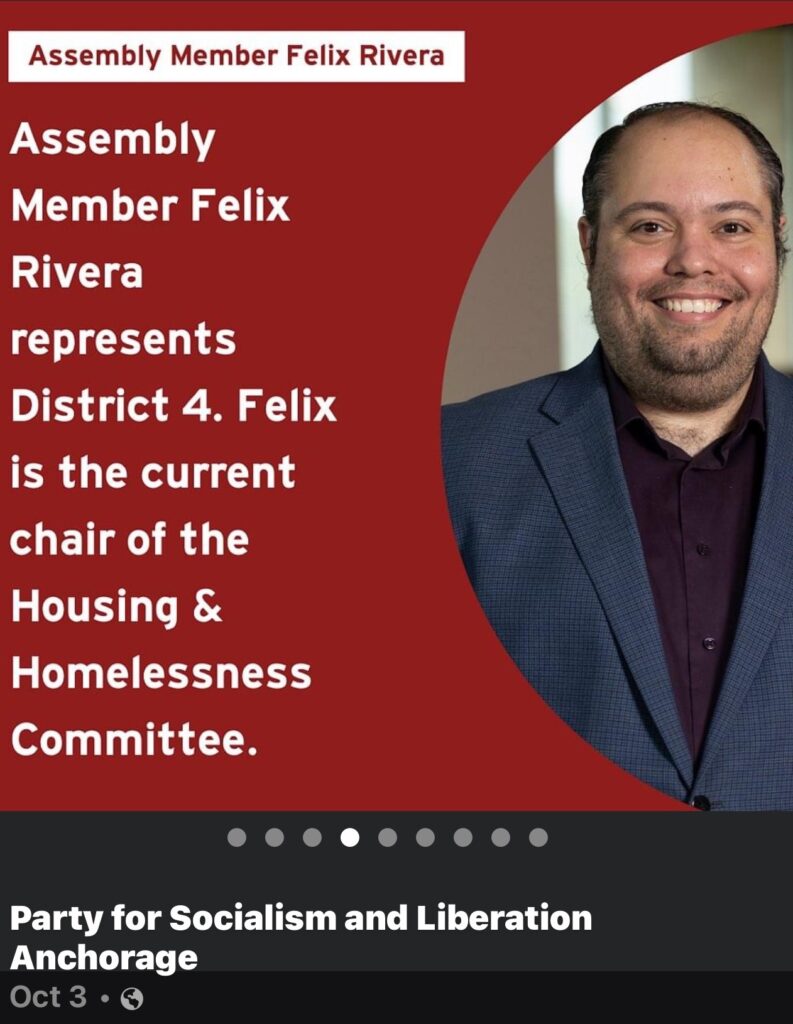
Party for Socialism and Liberation highlights Assemblyman Felix Rivera

A hardline socialist housing forum on Sunday highlighted Anchorage Assemblyman Felix Rivera among its panelists. The conference was called a “Liberation Forum,” and also featured Jasmin Smith, Roger Branson, and others.

The host of the event was the Party for Socialism and Liberation Anchorage, which also supports Palestinian terrorists who have committed war and atrocities on the sovereign nation of Israel.

Rivera has been featured at this group’s events in the past. In September, he spoke at a pro-transgender sports rally hosted by the Party for Socialism and Liberation.

The forum on housing on Sunday was held at the Umoja CoWorking Space, which was a building purchased by taxpayers for Jasmin Smith, with the approval of the Assembly.

It’s the type of project the Anchorage Assembly has funded to build a stronger leftwing community in Anchorage. Nationally, the Party for Socialism and Liberation has recently been focused on support for terrorists.

“Jasmin Smith, the owner of the 3001 Porcupine building, found the building space through connections with community leaders and the Municipality of Anchorage to start the purchasing process. Jasmin presented her vision and purpose for the building to the Anchorage Assembly. Jasmin Smith’s vision was and continues to be to set up a coworking center for the diverse unprivileged community of Mountain View. As the logo states, it collides with business and culture,” her website states.

In short, taxpayers paid for a building that is now the center of activity for the Party for Socialism and Liberation.