Gov. Mike Dunleavy and First Lady Rose Dunleavy invite Alaskans to attend the 2023 Holiday Open House at the Governor’s Residence in downtown Juneau on Tuesday, Dec. 12 from 3-6 p.m. Lt. Gov. Nancy Dahlstrom and Second Gentleman Kit Dahlstrom will also be there to greet Alaskans.
The United States Forest Service contributed a 15-foot lodgepole pine tree harvested from the Silvis Lake area in the Tongass National Forest for this year’s open house. Ornaments for the tree were created by 5th grade students at the Pioneer Home Indian Education Pre-School and Houghtaling Elementary school in Ketchikan.
This year’s event will include 21,350 cookies, 79 pounds of toffee and brittle, 57 pounds of chocolate and 50 pounds of fudge. Alaska’s state commissioners will be there to serve hot cider to all visitors.
Holiday music will be performed by students from Floyd Dryden Middle School, Juneau-Douglas High School, and Thunder Mountain High School.
The first open house was held by Territorial Governor Walter Eli Clark and his family on New Year’s Day 1913. The annual tradition has been held every year since, apart from two years during World War II and in 2020 due to COVID-19.
Because of the party’s strong opposition to resource development, there would be no way to get anything to the villages because there would be no transportation.
Yet the party’s Climate Caucus, which is a standing subdivision of the party organization, like the Black Caucus and the Native Caucus, wants to go even further. It wants to go full Deb Haaland.
The Climate Caucus, which met via Zoom on Monday, is making edits to the party platform that eliminate all support for even the most regulated form of oil and natural gas extraction in Alaska.
The platform edits, for example, remove a section that has in the past offered cautious support for natural gas. The caucus simply wants the entire section gone:
“We support the monetizing of Alaska’s North Slope natural gasresources in a safe and environmentally responsible manner as soon as it is economicallyfeasible to do so. Offshore drilling in the Arctic should take place only when there isdemonstrated capability to clean up oil in broken ice, and when research and scienceprove it can be conducted without adversely impacting water resources, air quality,ecosystems, sensitive species, and public health. With respect to fracking, we support apriority for domestic and agricultural uses of water, and when faced with scientificuncertainty, we urge resource agencies to use the “precautionary principle,” to err onthe side of risking no harm, when dealing with conflicts. We support research into theimpacts of fracking on ground and surface water.“
In the party’s platform section relating to oil, the edits being made show that there is no support for any oil energy industry in Alaska, per the strikethrough of specific words in the draft platform:
“We support balanced,rigorous public dialogue about activities that impact Alaska’s environment. We support the protection of Bristol Bay watersheds with vibrant active participation from the Indigenous peoples and other people of the region and oppose the proposed Pebble mine given the danger it poses to the world’s greatest wild salmon fishery. We supportresponsible oil development performed in a manner that protects our fish, game, andwildlife resources. We support protection of the Arctic National Wildlife Refuge coastal plain and oppose unsafe oil and gas exploration, leasing, and development when it jeopardizes the human rights of the Gwich’in Nation who depend on the health of the Porcupine caribou herd and its habitats for their subsistence and cultural survival.”
The strikethrough of the word “balanced” tells much about the direction of the Alaska Democratic Party.
The officers of the Alaska Democratic Party haven’t yet voted on the changes being offered, but the debate over climate change positions will continue inside the party through the winter, spring, and summer, as the move to take Alaska’s economy into the dark ages continues. The party has its convention in Juneau on May 18, at which point it will vote on the revisions to the party platform.
If the party proceeds with the Climate Caucus changes, then some of its elected leaders may find themselves out of step with the party. Some oil and gas companies have supported Rep. Mary Peltola, who is the Democrats’ only statewide elected leader, and she has been sometimes supportive of oil, but cautiously.
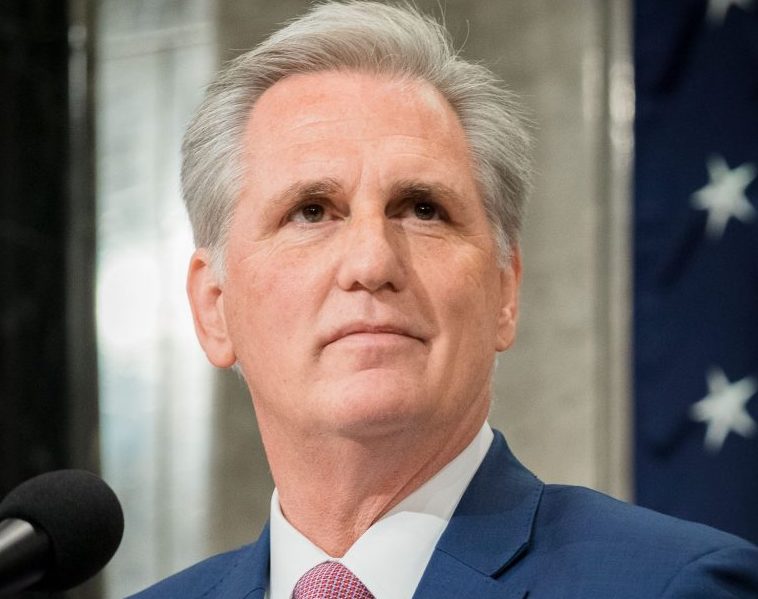
The rumors were true: California Republican Rep. Kevin McCarthy, ousted earlier this year as House Speaker, will resign from Congress at the end of the year. He wrote his resignation in a column for the Wall Street Journal, but his decision has been rumored since the end of November.
McCarthy has been in the House for nine terms, finally reaching the top and winning the speaker’s gavel, but unable to hold onto it after conservatives in the House combined with Democrats to unseat him after just nine months. Rep. Mary Peltola of Alaska joined every other Democrat and voted to unseat him.
“I have decided to depart the House at the end of this year to serve America in new ways. I know my work is only getting started,” he wrote in The Wall Street Journal. “I will continue to recruit our country’s best and brightest to run for elected office. The Republican Party is expanding every day, and I am committed to lending my experience to support the next generation of leaders.”
McCarthy, who was an owner of a sandwich shop in Bakersfield, Calif. before being elected to the House in 2006, is known as one of the Republican Party’s most successful fundraisers.
As of Dec. 5 2023, 38 members of Congress, including seven in the Senate and 31 in the U.S. House have announced they will not seek re-election in 2024. In the House 20 Democrats and 11 Republicans (including McCarthy) will not be running for reelection next year.
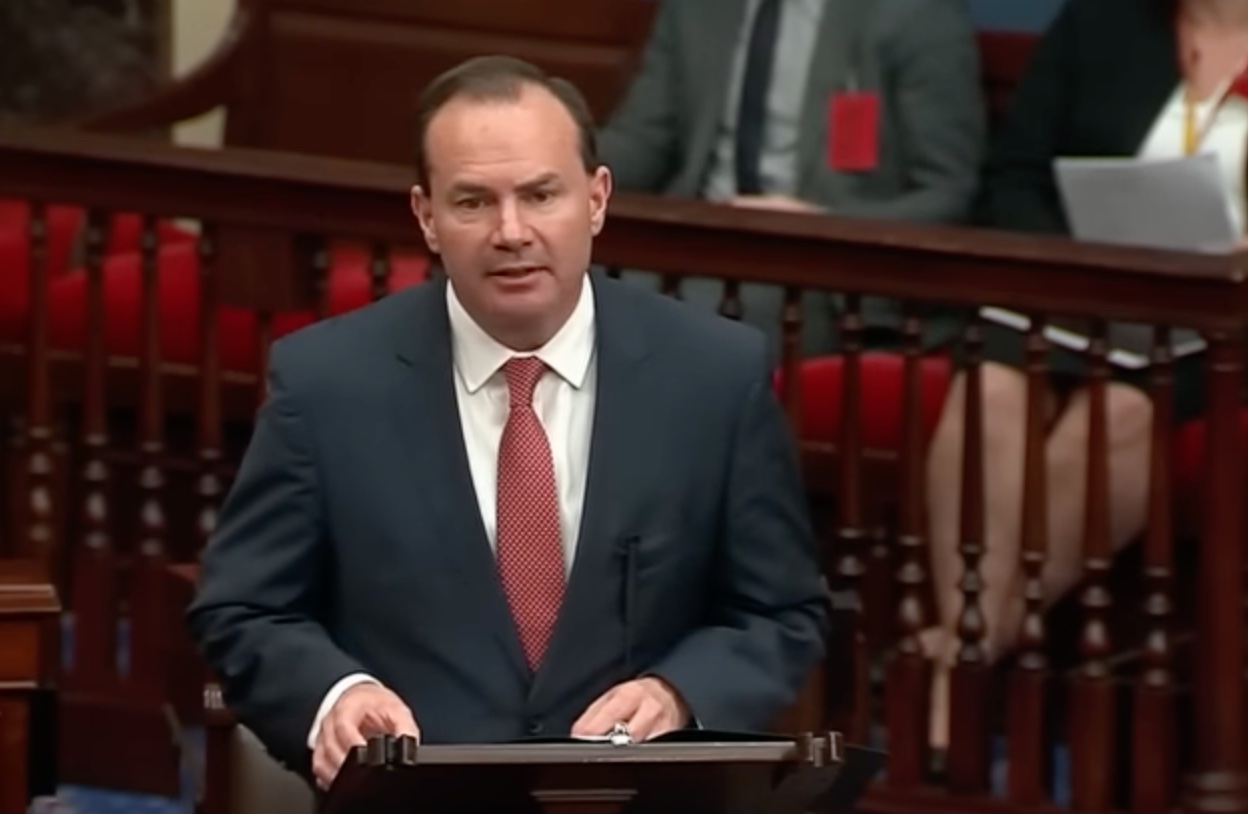
U.S. Sen. Mike Lee, R-Utah, blasted FBI Director Christopher Wray during a Senate Judiciary Committee hearing Tuesday over the agency’s spying on Americans without a warrant.
The agency has been under fire since news broke that the FBI used the Foreign Intelligence Surveillance Act (FISA) Section 702 to spy on hundreds of thousands of American citizens without a warrant.
The FISA law was intended to allow federal surveillance to monitor foreign residents’ communications within the U.S. but has since been expanded much more.
“You have a lot of gall sir,” Lee told Wray at the hearing. “This is disgraceful. The Fourth Amendment requires more than that and you know it.”
Lee’s comments come after Wray admitted during the hearing that the FBI had also ignored the requirement to obtain court orders to monitor Americans even though they are legally obligated to do so in some circumstances.
The Office of the Director of National Intelligence declassified FISA Court opinions in 2021 showing a pattern of the FBI monitoring American citizens without the proper legal authority. ODNI reported there were hundreds of thousands of improper searches of the FBI database, which includes Americans’ communications, in recent years by the FBI with no reasonable expectation of a crime committed or real intelligence to gather.
“Would abuse of Section 702 by an FBI employee, would that be something that would warrant the revocation of security clearance?” Lee asked Wray at the hearing, referring to FBI employees who used the agency’s search for personal reasons.
Wray agreed that abuse could possibly qualify for discipline but that he may not agree what constitutes an abuse of the program.
Lee also asked Wray about searches conducted by the agency on political figures and even a judge who had complained about the FBI. Wray pointed to new measures the agency has put in place to prevent abuses, but Lee pushed back, pointing out that lawmakers have not been able to see the details of those changes.
“I’ve been on this committee for 13 years,” Lee said. “During the entirety of those 13 years I’ve expressed concerns to FBI Directors appointed by presidents of both political parties and three different presidential administrations. Every darn one of them has told me the same thing: ‘Don’t worry about it. We’ve got new procedures. It’s going to be different now.’
“It’s never different,” Lee added. “You haven’t changed, and you keep referring to these policies, these new procedures. We haven’t seen that. We’re not even allowed to have access to it, and we have absolutely no reason to trust you because you haven’t behaved in a manner that’s trustworthy.”
Sen. Rick Scott, R-Fla., sent a letter to the FBI in August on this issue blasting the agency and calling for accountability.
Notably, the 702 provision expires at the end of this year unless Congress reauthorizes it. Wray has offered options to make changes to improve the program, but Scott shared Lee’s sentiment, saying those changes were broad and lacked details or a sense of substantial reform.
“In the face of these rampant abuses, it was disappointing that you are lobbying Congress to renew the Section 702 authorities without substantial reforms, and without public disclosure of accountability,” the letter said. “If you agree with me that the hundreds of thousands of unlawful, warrantless searches of U.S. citizen information your agency has conducted under Section 702 are entirely unacceptable, to attempt to regain the American public’s trust, please explain the accountability for those rogue agents who conducted those illegal queries.”
Governor Mike Dunleavy appointed Emma Pokon as commissioner-designee for the Alaska Department of Environmental Conservation. Pokon was named acting commissioner in August.
“I have full confidence in Acting Commissioner Pokon and her ability to lead the department,” said Governor Mike Dunleavy. “She has shown an immense amount of knowledge and prioritizes common-sense solutions that balance environmental protection with economic considerations.”
Emma Pokon joined DEC in February 2020 from the Alaska Department of Law where she most recently served as a Senior Assistant Attorney General assigned to support DEC.
Previously, Pokon represented the North Slope Borough in natural resource and environmental matters and was a law clerk for the Fairbanks Superior Court. She earned a bachelor’s degree in history with a minor in chemistry from Hamilton College. She also achieved a JD and a Master of Studies in Environmental Law from Vermont Law School.
“In my almost four years with the agency, I’ve witnessed the value of DEC’s work to our state and residents,” said Commissioner-designee Pokon. “I’m honored to continue working with the many dedicated public servants at DEC to protect human health and the wellbeing of Alaskans.”
Commissioner-designee Pokon’s name will be forwarded to the Alaska Legislature for confirmation.
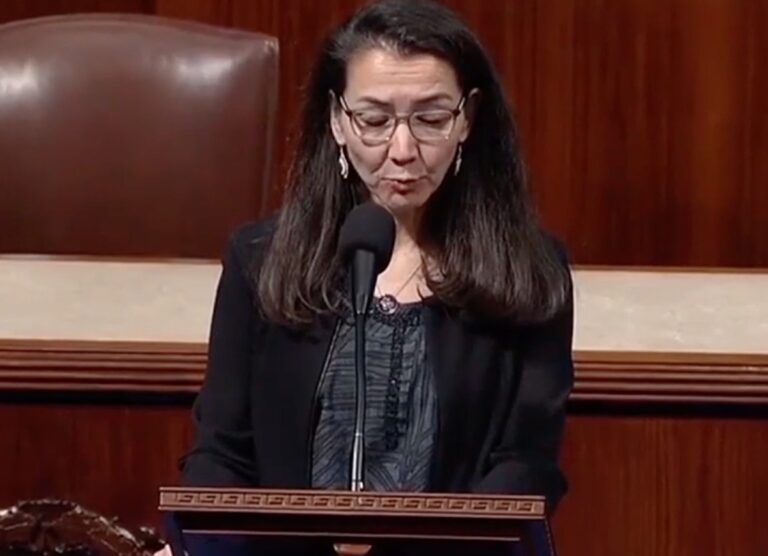
Rep. Mary Peltola has legislation to use taxpayer funds to build bison herds on reservation and tribal land in the Lower 48.
H.R. 6368 funds a program within the Department of the Interior to assist tribes and tribal organizations with protecting, conserving, and fostering buffalo herds.
The federal government already has already dedicated over $25 million in taxpayer funds for such efforts. The funding was contained in last year’s climate bill, also called the infrastructure bill, in which the federal government will also transfer bison from federal land to tribal lands. An order from Interior Sec. Deb Haaland, in addition, has ordered the government to use indigenous knowledge in an effort to conserve bison.
Currently, there are approximately 440,500 Plains bison in conservation and commercial herds, according to U.S. Fish and Wildlife. Before the West was settled by those of European descent, bison numbered 50 to 60 million. They were hunted to about 1,500, but have since recovered.
“Tribes deserve to steward their own lands and manage their own resources. I’m proud to join a group of bipartisan legislators to reintroduce the Indian Buffalo Management Act–a bipartisan bill my predecessor supported–to restore Indigenous conservation and protection of buffalo,” Peltola said.
The Indian Buffalo Management Act provides taxpayer money for tribes and tribal organizations that have an established buffalo herd, as well as provides taxpayer money for tribes that would like to establish new herds.
“This holistic effort will ensure that this powerful sacred animal is reconnected to its natural habitat and the original stewards who know best how to care for it,” Sec Haaland said this year during a World Wildlife Day event in Washington, D.C.
“The American buffalo, a North American species of bison, once roamed freely across the United States and served an essential role for Native communities throughout North America. Historically, bison were a reliable source of food, shelter, and clothing for Indigenous peoples across the American West,” Peltola said in a statement. “The decimation of the American buffalo that began in the mid-19th century significantly harmed the Native communities that depended on these majestic creatures. Recognizing what buffalo mean to these communities, H.R.6368 establishes a program within the Department of the Interior to assist tribes and tribal organizations with protecting, conserving, and fostering buffalo herds.
The bill will help bolster tribal sovereignty, create economic opportunities, and ensure a stable supply of nutritious, locally sourced protein, she said. She did not say whether the bison would be available as protein to non-tribal members.
The bill was referred to the House Natural Resources Committee, on which Peltola is a member.
Bison, like other grazing animals, trample fragile vegetation that anchors soil and helps prevent erosion in the dry Southwest. Bison also produce greenhouse gases. According Chris Helzer, the prairieecologist.com author, bison are just as hard on the environment as cattle.
“Plains bison nearly disappeared completely from the grasslands of North America as European settlement spread across the continent. The ongoing recovery of bison is an important indicator of prairie conservation success, and I hope that upward trend continues. At the same time, I worry about the tendency of some to heap accolades upon bison while dismissing cattle as inherently destructive. The differences between them simply don’t warrant that kind of broad categorization. If grassland conservation is our goal, we should be sure we’re open to using whatever strategies (or animals) can help achieve that. In very large prairies, bison may be the best fit – assuming the logistics and costs of owning bison make sense. In other situations, however, deciding whether bison or cattle are most appropriate is not a simple matter. It’s a decision that should be based on facts and management objectives – not on aesthetics or mythology,” Helzer writes.
An 11-year-old girl who was on a school field trip from Colorado to Washington, D.C. was assigned to bunk with a transgender male student last summer.
On Monday, the fifth-grade girl’s parents sent a letter to Jefferson County Public Schools demanding action on what they see as a break of their promise to keep boys and girls separate in sleeping quarters on field trips. Serena Wailes said her daughter was assigned a hotel room with three other girls, with two assigned to each bed.
“Her bedmate informed her that he was a boy who identifies as transgender,” Wailes said. Her daughter called her from the bathroom, and she was able to take action because she was along on the trip. After mom Serena spoke at length with the chaperone, the transgender student was moved to another room.
“And even then, chaperones told the girl to lie about the reason for her move because of the district’s overnight rooming policy—a policy that violates parental rights and student privacy by rooming students based on gender identity while hiding that information from other parents and students,” writes Alliance Defending Freedom, which has taken up the cause on behalf of the girls of Jefferson County, Colorado.
“The Wailes family was told at multiple parent meetings prior to the trip that female and male students would be roomed on different hotel floors, and on the trip the students were told by JCPS chaperones that boys were not even allowed to visit the girls’ floor and vice versa without permission. D.W. was assigned to a room with three other students, two from her school and one from a different school, K.E.M., whom D.W. did not know prior to the trip. D.W. and K.E.M. were supposed to share a bed. Because she did not want K.E.M. to feel left out, D.W. made a point to be friendly throughout the first day of the trip,” Alliance for Defending Freedom writes.
“The first evening, after the four students were in their room, K.E.M. revealed that K.E.M. was a male with a transgender gender identity. D.W. was immediately uncomfortable with the prospect of sharing a room and a bed with a male, regardless of the student’s gender identity. D.W. snuck into the bathroom, which did not lock, and quietly called her mother, Serena. D.W. then met her mother in the lobby to share her concerns. Prior to the trip, no one at JCPS informed the Waileses or D.W. that her room would include a male who identified as transgender. In fact, JCPS told them just the opposite: that male and female students would stay on separate floors,” the group explains in its letter.
Rep. Mary Peltola was the featured guest at the Jefferson County Democratic Party’s summer fundraiser during the summer just a eight weeks after the school field trip in which the boy was paired with a girl in a hotel bed.
It’s the kind of thing that is not specifically addressed in Anchorage, and thus could happen to any Anchorage student on an overnight field trip, because Anchorage School Districthas a written policy that only protects the privacy of students who believe themselves to be transgender, and even has explicit instructions to teachers and administrators to keep that information secret from the transgender-identifying student’s parents.
“The principal or administrator will schedule a meeting to discuss the student’s/employee’s needs and to develop a plan to address these needs. The plan should address, as appropriate, the name and pronoun desired by the student/employee, restroom and locker room use, participation in athletics, dress code, student/employee transition plans, if any, and other needs or requests of the student/employee. Parents and others (counselor, nurse, teachers who have a need to know) may be included in this meeting depending on what is needed to develop a plan for the individual. ‘Need to know’ staff includes those individuals who provide a direct service, activity or program to the transgender individual,” the Anchorage School District policy states.
Parents “may be included,” in this transgender policy, and “need to know” does not necessarily apply to parents, guardians, chaperones, or even other children who may be asked to sleep in the same bed as a person of the opposite sex, or who are encouraged by schools to “not tell” about what happened on a field trip.
Alliance Defending Freedom says in its letter to the superintendent of the Jefferson County School District that parents are not being given the information they need to be able to make informed decisions about whether to permit their children to go on field trips.
The rapidly growing debt of the U.S. federal government has hit another milestone, topping more than $100,000 per person.
While the U.S. population and the U.S. national debt are large numbers that are difficult to calculate, the rough debt estimate and rough population estimate end up at about $100,000 of federal debt per person in the U.S.
The U.S. Census population clock estimates the U.S. population at nearly 336 million. Meanwhile, the U.S. Treasury Department estimates the national debt is nearly $34 trillion.
“The national debt just exceeded $100,000 per citizen,” Rep. John James, R-Mich., wrote on X, formerly known as Twitter. “This should send a message to the White House that this reckless federal spending is at a breaking point.”
The U.S. Treasury confirmed in the middle of last month that in the first month of this fiscal year, the federal government had a deficit of $67 billion.
Concern about rising debt has grown along with the debt and recent international credit downgrades for the U.S.
The federal government received a credit downgrade from Fitch Ratings, one of the top international credit rating agencies in the world. The rating went from AAA to AA+.
Moody’s, one of the other top three credit rating groups, announced last week that it was lowering its evaluation of the U.S. credit from “stable” to “negative.”
The trust funds for Medicare, Social Security and highways are facing insolvency within a decade as the federal government borrows billions of dollars per day.
Despite these red flags, federal deficit spending, which has been elevated since the COVID-19 pandemic, Congressional spending shows little sign of slowing down. Deficits spiked during the pandemic, and while they have decreased from their COVID-era peaks, they still remain higher than before the pandemic.
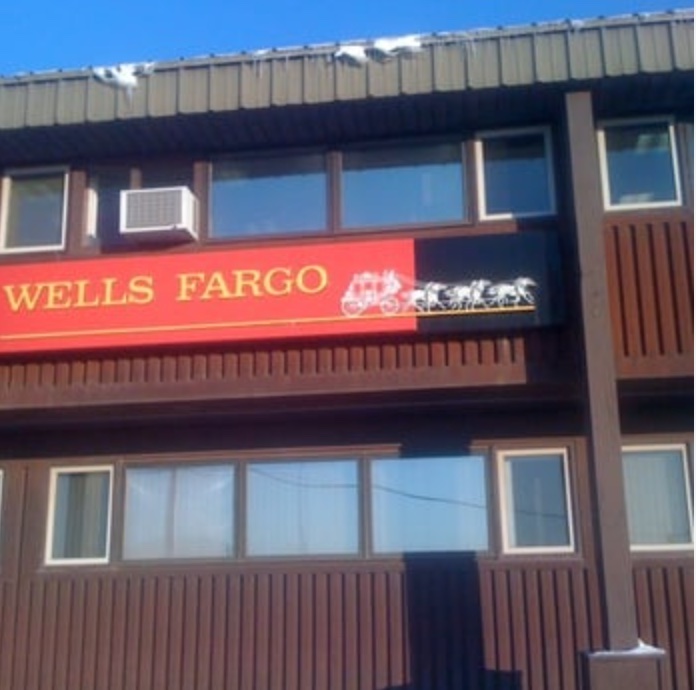
Bankers’ hours are not short enough for some, including Alaska’s only member of the House of Representatives. Rep. Mary Peltola came out in favor of a bankers’ union, in support of workers in the Wells Fargo branch in Bethel Alaska who have voted to join a union.
The average Wells Fargo worker in America makes $85,000 a year, with a $7,000 bonus.
But for Peltola, who has worked to organize everyone from baristas to Barbie, organizing white collar workers is the next thing: “Worker power doesn’t stop where the road system ends. I’m excited to see workers standing together in my hometown of Bethel,” Peltola said on X/Twitter.
In the past year, she has called non-union workers “scabs.”
The demand driving the unionization of the Bethel Wells Fargo workers appears to be all about money in the pocket, not in the bank vault. A teller in Bethel makes between $32,000 and $41,000 a year, and a new account representative makes as much as $44,000 a year. Nationwide, banks are starting to close branches, as more people do banking online.
In 2023, Wells Fargo shut over 300 bank branches, more than double the number closed by Chase and Bank of America. If the bank decides to close the Bethel branch, Bethel is also served by First National Bank of Alaska.
Peltola is supported by Big Labor and embedded her campaign headquarters in Juneau inside the public employee union offices.