Monday, August 17, 2026
Home Blog Page 559

Man indicted for three counts of murder of unborn child

Anchorage District Attorney Brittany Dunlop announced Thursday that an Anchorage Grand Jury indicted Iohani Wilhem Dean, 21, on three counts of Murder of an Unborn Child, Manslaughter of an Unborn Child and three counts of Assault for the domestic violence assault of Chloe Fuimaono, 21, which led to the death of her unborn child. 

The charges are interesting, since abortion is legal in Alaska, with no limit on abortion based on how far along in pregnancy a mother is. An abortion can be performed at any stage and not be considered murder.

Although it’s a felony to “murder an unborn child” if it’s intentional, Alaska law carves out an exception for abortion: The law does “not apply to acts that cause the death of an unborn child if those acts were committed during a legal abortion to which the pregnant woman consented.”

The child who was killed was more than 36 weeks old at the time of death.

Dean has a history of violent incidents throughout this year, as seen in his Alaska Court system file. Dean will be arraigned in Anchorage Superior Court on Friday, Dec. 8. If convicted, Dean faces a sentence of up to 99 years of imprisonment, a fine of $500,000, or both. 

Disrespect: Peltola calls Pearl Harbor attack a ‘tragedy’ that ‘struck our nation’s shores’

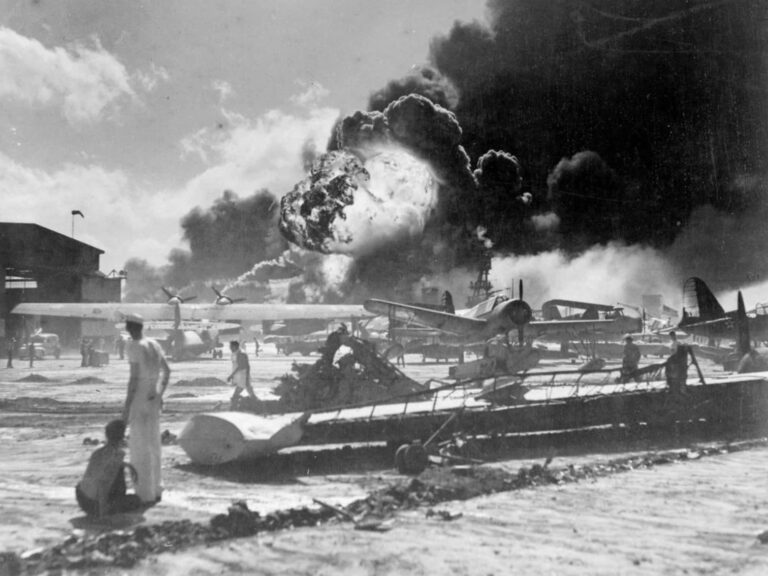
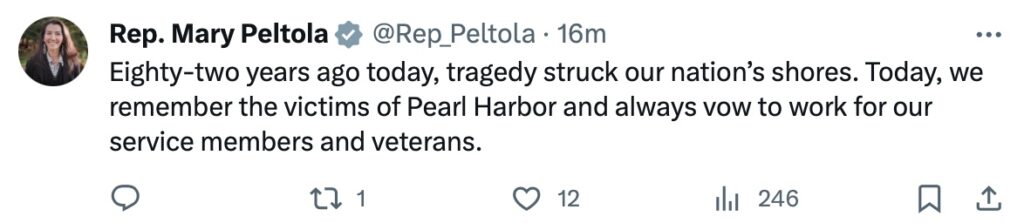
Alaska Rep. Mary Peltola on Thursday called the 1941 attack on Pearl Harbor, Hawaii, a “tragedy,” that “struck our nation’s shores.”

National Pearl Harbor Remembrance Day is observed every Dec. 7, as Pearl Harbor survivors, veterans, and others the world over remember the 2,403 service members and civilians who were killed, and 1,178 people injured during the Japanese surprise attack on Pearl Harbor on Dec. 7, 1941.

The attack by Imperial Japanese Navy Air Service sank the USS Arizona and the USS Utah and destroyed 188 aircraft. Not long after the attack on Hawaii, the Japanese would attack Alaska and occupy Kiska and Attu in the Aleutians.

“Just before 8 am on Sunday morning, December 7, 1941, many of the sailors aboard naval vessels moored in Pearl Harbor were getting ready for leave and preparing for church services. In a few minutes, the colors would be raised on more than 185 naval vessels throughout the harbor. On Ford Island and around O’ahu, soldiers, Marines, and sailors at Army and Marine airfields and naval air stations were going through similar military routines,” reads the account from the Pearl Harbor National Memorial.

“The attack came with no warning, as aircraft emblazoned with red disks bore down on the moored ships from all directions. Torpedo planes struck first, flying low over the water and launching torpedoes toward Ford Island’s Battleship Row, the primary target. They struck West Virginia, Oklahoma, California, and Nevada, along with vessels berthed in the navy yard. Dive-bombers destroyed hangers and other buildings and parked aircraft at Hickam Field and on Ford Island. Bombs dropped from aircraft high above the harbor tore through Arizona and other battleships. Fighter planes wheeled and dived, strafing aircraft and military personnel.”

It was that day, which President Roosevelt said would “live in infamy,” that the United States joined allies to battle fascists and Nazis who were spreading their hate and oppression across the world.

The wreckage of the USS Arizona is now a national monument and memorial to those who sacrificed their lives to liberate the oppressed and preserve freedom for people they would never meet.

Visit the website for the 2023 Pearl Harbor Remembrance observances in Pearl Harbor, where you can watch video from the memorial service.

Peltola votes against censuring her Democrat colleague who pulled fire alarm at the Capitol

Alaska Rep. Mary Peltola joined her Democrat colleagues on Thursday to try to prevent the formal censure of Rep. Jamaal Bowman, who in September pulled a fire alarm to prevent a vote on the budget.

The Democrats did not succeed in blocking the censure.

Bowman pleaded guilty to pulling the fire alarm in the U.S. Capitol, delaying a vote and creating an emergency in the building. His actions were recorded by cameras inside the building.

The vote to censure the New York Democrat was 214 to 191, with three Democrats voting with Republicans: New Hampshire Rep. Chris Pappas, Connecticut Rep. Jahana Hayes, and Washington Rep. Gluensenkamp Perez.

Bowman is considered one of the most radical leftists in the House, even by leftists such as the Progressive Punch, which rates Bowman 13 out of 435 House members; he has a score of voting 98.44% of the time for the “progressive” position on any question. Peltola votes that position 80% of the time.

Anchorage hearing on Ambler Road will bring out the anti-roaders, but will pro-mine folks show up?

A public hearing in Anchorage on the Ambler Road draft supplemental environmental impact statement will take place at the Wilda Marston Theatre in the Loussac Library at 5 pm Wednesday, sponsored by the Bureau of Land Management.

There are many conflicting public events on Wednesday night, but the anti-road coalition, with major outside funding, will be bringing out dozens of people to hold signs and to testify against the road. It looks like it’s shaping up to be a hearing that will strongly favor the viewpoint of the no-roaders.

Click here to reach the Ambler Road Public Comment Link at BLM

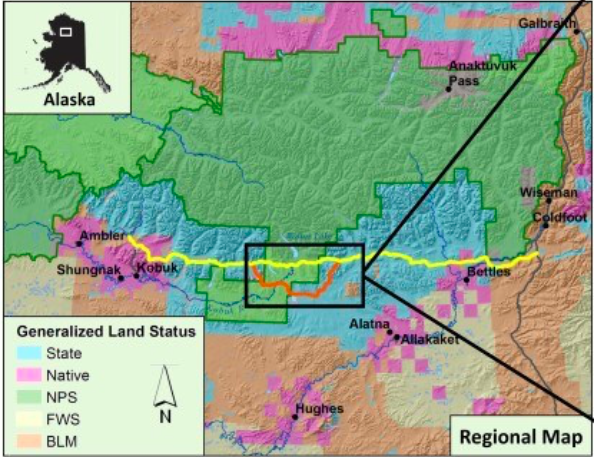
The proposed road is an industrial-only access road that would stretch 211 west from the turnoff at the Dalton Highway. The road would traverse 26 miles of Gates of the Arctic National Park, as well as land owned by Doyon and NANA Native corporations.

Three different routes are proposed to access the mining district, and there is also a “No Action Alternative,” which would deny all road permits associated with the project.

After a lengthy permitting process, the Ambler Access Project was awarded a positive “record of decision” in 2020. Then, under the Biden Administration, the Department of Interior decided it needed a do-over to address cultural resources and subsistence issues. Now, the entire project is in peril because President Joe Biden is in his reelection cycle and may not want to upset his base.

The Supplemental Environmental Impact Statement is 1,200 pages long and now includes cautions about caribou migration, salmon spawning, sheefish habitat and other issues that were bought to the department’s attention under the Biden regime. 

The road to the state mining district is, however, guaranteed under federal law. The area has supplies of critical minerals that the nation currently is exporting from places like China and through slave labor in parts of the African continent.

Both Sen. Lisa Murkowski and Sen. Dan Sullivan favor the Ambler project.

“This is particularly important as China cuts off exports of gallium and germanium, cobalt is produced through modern-day slavery in the DRC, and some of our best analysts are forecasting shortages of copper within a decade,” said Sen. Lisa Murkowski in October. “Given the clear terms of the law and the strategic importance of this project, you would expect the Biden administration to prioritize its approval with reasonable mitigation measures for subsistence. You would also expect them to recognize that Alaska has repeatedly demonstrated that subsistence rights can safely co-exist with road infrastructure. My team and I will review this document closely, but based on what Interior released today, it does not appear they have undertaken the serious, credible analysis that we expected and deserved.”

“Our country is in the midst of one of the most dangerous periods since World War II. One of America’s greatest strengths over our adversaries is our energy and critical minerals. Remarkably, the Biden administration has sought to unilaterally disarm these strengths, including with today’s Ambler Road supplemental EIS, which sets up more hurdles to access one the biggest deposits of much-needed critical minerals in our country,” said Sen. Dan Sullivan in October.

The supplemental EIS is located at this federal government link.

With the supplemental EIS done, it sets the basis for the Biden Administration to move forward or deny Alaska access to its minerals. Some of the decisions include these alternatives:

No Action Alternative. The No Action Alternative evaluates what would occur if the BLM does not grant a road ROW to AIDEA and no road is built. Federal agencies are required to evaluate taking no action as an alternative in an EIS. The No Action Alternative provides a baseline for comparison to the other alternatives, and it is a potential outcome of the EIS.

Alternative A: Alternative A is AIDEA’s proposed route, beginning at Milepost (MP) 161 of the Dalton Highway and extending west along the southern flanks of the Brooks Range to the Ambler River within the District. It crosses GAAR. It would be 211 miles long, with 25 miles crossing BLM-managed land. The trip distance—Fairbanks to the western road terminus—would be 456 miles.

Alternative B: Alternative B is AIDEA’s proposed alternative route to the Dalton Highway based on input from the NPS to minimize the amount of NPS land crossed and to avoid large waterbodies. It is a variation on Alternative A, with the same termini. It dips southward near GAAR to cross the National Preserve farther south than Alternative A. It would be 228 miles long, with 25 miles crossing BLM- managed land. The trip distance—Fairbanks to the western road terminus—would be 473 miles.

Alternative C: Alternative C grew out of scoping comments on the original EIS that suggested a route in the Tanana, Hughes, Hogatza, and Kobuk area, and is being carried forward in this Supplemental EIS. The route begins at MP 59.5 of the Dalton Highway, passes through the Ray Mountains, and proceeds generally to the northwest to pass just north of Hughes and just west of Kobuk. It terminates at the Ambler River within the District. It would be 332 miles long, with 274 miles crossing BLM-managed land. The trip distance—Fairbanks to the western road terminus—would be 476 miles.

Combined Phasing Option for all Action Alternatives: The combined phasing option applies to all of the action alternatives (Alternatives A, B, and C) and would require construction to occur in a 2-phased approach, as opposed to the 3-phase approach proposed by AIDEA. This option would eliminate Phase 1 and would initially build the entire road to Phase 2 standards. Under this option, the first road constructed would be 4 feet wider than Phase 1, as described under the action alternatives. Additionally, it would have a thicker road embankment that would provide more insulation to mitigate potential impacts to permafrost, water quality, and fish as compared to the roadbed associated with Phase 1 of the action alternatives. Much of the infrastructure required for Phase 2 standards of construction is the same as Phase 1, so infrastructure requirements for culverts and bridges for this option would be the same as the action alternatives.

Ambler Metals is an independently operated company located in Alaska between South32 and Trilogy Metals in 2020, including a partnership with NANA Regional Corporation for exploring and developing sate land in the Ambler Mining District.

The comment period closes on Dec. 22.

Click here to learn how to participate in the process.

Downing: Olympic Committee should think long and hard before approving ‘nations within nations’

By SUZANNE DOWNING

In the realm of international sports, the Olympics have long been a symbol of unity, bringing athletes from diverse backgrounds and cultures together to represent the best of the best of their countries.

However, President Joe Biden’s endorsement on Wednesday of the Haudenosaunee Confederacy’s request to compete in lacrosse under its own sovereign flag at the 2028 Olympics represents a dangerous shift in American policy and establishes a path toward further balkanization.

Biden’s tacit support for a breakaway sovereignty inside the United States was the boldest land acknowledgement ever at a time when land acknowledgements are all the rage in liberal politics.

While the Haudenosaunee Confederacy sees itself as a separate league of tribal nations, this presidential move could set a troublesome precedent for the future of the Olympic Games themselves.

Some background is in order: The Haudenosaunee Confederacy has asked the International Olympics Committee if its lacrosse team can compete as its own country during the 2028 Olympics. 

The Haudenosaunee Confederacy were originally Iroquoian-speaking tribes in a peace-pact league across an eastern portion of North America, including Mohawk, Oneida, Onondaga, Cayuga, Seneca, and Tuscarora. 

Few speak the ancestral languages today, but the confederacy maintains itself as a separatist organization and says that treaties from early days of the United States are valid.

In 2021, the confederacy went so far as to block access to polling stations that it said were located on land belonging to the confederacy in Canada. The Canadian government backed down and moved the polling station somewhere else, so that tribal members could, ironically, vote in Canadian elections.

Other race-and tribe-based groups in America have sought to compete in the Olympics under separate flags, most notably Hawaiian surfers who want to compete under the Hawaiian flag, rather than the American flag, because they claim Hawaii is the birthplace of surfing (although some Polynesian Islanders may disagree). 

Hawaiians will surely now revive their request to compete under a non-USA flag. If it’s good enough for the Haudenosaunee lacrosse players, it’s good enough for Hawaiian surfers to compete for the Hawaiian Kingdom, right?

Although the International Olympic Committee has earlier recognized some U.S. territories, such as American Samoa, Guam, and Puerto Rico, as “Olympic nations,” Hawaii’s application to form a separate Hawaiian Kingdom team from the U.S. surfing team was correctly denied by the IOC. 

Then there’s Quebec, where winter athletes have sought to field their own hockey teams under a separate flag. But the way the Canadian federation is organized, Quebec does not have constitutional powers that would allow it to act as a true national government. 

The same is true for tribal groups across America, which have certain aspects of sovereignty but that are ultimately governed by the U.S. Constitution.

There is no doubt that in the world of lacrosse, the Haudenosaunee Nationals team is revered. The men’s team ranks third in the world, and the women’s team ranks eighth. The World Lacrosse organization recognizes the teams as separate from the U.S. teams.

But since the 1990s, the Olympic charter has made it clear that nation states must be independent and recognized by the international community in order to have standing at the Olympic games.

There’s more to unpack in this part of the country about the land-based disputes that go back centuries than can be done in this column, but this is not just about stickball.

Will the IOC recognize the Haudenosaunee Confederacy as its own sovereign country? If so, what will this mean for tribal groups in other countries, which may want to follow suit?

What exceptions the committee makes for U.S. tribes it will be asked to make for Māori of New Zealand, Aboriginals of Australia, Aztecs and Mayans of Mexico and Central America, or people “who got there first” in any country.

The International Olympics Committee should not simply take advice from President Biden, who has a history of scoring on his own goal. If the IOC starts recognizing countries within countries, it will inject politics into what is supposed to be a nonpolitical activity at a time when world peace is in a most fragile state.

Suzanne Downing is founder and managing editor of Must Read Alaska.

Win Gruening: Juneau Assembly decision to reduce cruise ships risks sending taxes higher

By WIN GRUENING

During a Nov. 6 Committee of the Whole meeting, Juneau Assembly members voted informally on whether the city should pursue cruise passenger reductions. The resulting 6-3 vote favoring cutbacks was unofficial and formal action has yet to materialize, but it’s an indication of the Assembly’s direction.

Paradoxically, the Dec. 4 Juneau Empire story reporting on a recent statistically valid community survey showed that 48% of Juneau residents say overall impacts remain positive (with 22% reporting negative) even after a record-high passenger season.

Considering the responses in the City-sponsored survey, the Assembly’s action seems misguided.

Demographic changes in Juneau’s population reflect that younger residents and their family members now number fewer than those over age 60. Student populations have declined precipitously. Housing and food prices remain among the highest of any urban center in Alaska. Property taxes have risen dramatically over the last several years. It’s clearly becoming more and more expensive to live in Juneau, so why would city leaders lean toward stifling economic growth and its benefits?

Juneau needs working families and young people to stay or relocate here so our schools will be full, our employers can rely less on non-resident labor, and Juneau’s tax burden will be spread more broadly among residents. 

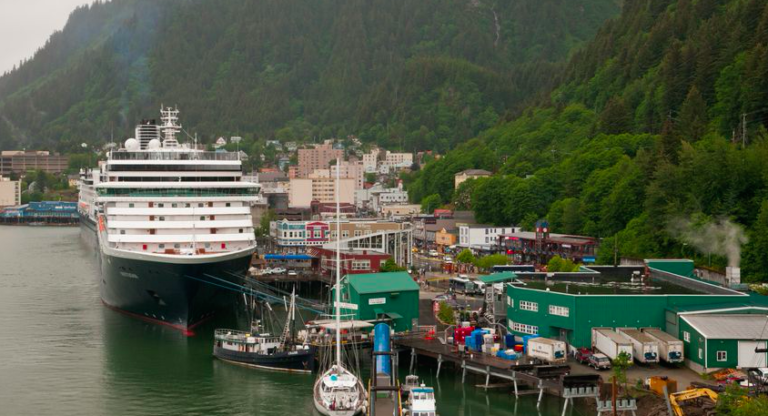
Which brings me back to the cruise industry that last year generated over $34 million in sales tax and passenger fee revenue that flowed directly into Juneau city coffers. That doesn’t count the average $232  each cruise passenger spends in shops, restaurants, bars and on tours, meaning one cruise ship can translate into as much as $1 million in local sales on the day it spends in port.

If cruise ships are curtailed, do Assembly members have a plan to replace that lost revenue? 

It also seems apparent that the majority of Assembly members are willing to abandon their own collaborative process. After spending months working in concert with a citizen task force to formulate visitor impact mitigation measures, why throw in the towel before any of the changes are fully implemented?

Further, why continue the Assembly’s foot-dragging on Huna Totem Corporation’s Aak’w Landing dock project which promises to inject $150 million in private investment into the community? Has the Assembly identified another entity willing to invest that much in Juneau?

Yes, cruise passenger numbers increased this year, but the Assembly’s knee-jerk reaction ignores the financial context that taxpayers should understand. The taxes and passenger fee revenue we collect each year support the hospital, our fire and police department, city administration, streets, parks, and a variety of core municipal services.

Losing a portion of that revenue inevitably means that the Assembly will be forced to trim programs, or taxpayers will have to make up the difference. Even with higher revenues from visitors last season, the Assembly is facing a $1 million deficit in their draft FY 2025 budget, requiring an increase in the property tax millage rate. How is that possible given the city’s record tax receipts this year? The Assembly’s appetite for spending seems insatiable and if cruise passenger numbers decline, they’ll have no compunction making local taxpayers pony up.

The anti-cruise crusaders say that cruise passenger numbers will continue unchecked. That simply isn’t possible. The five-ship limit and rule against “hot-berthing” recently imposed will limit passenger volumes. Furthermore, Juneau’s dock infrastructure and Gastineau Channel’s restricted maneuvering room cannot support the larger ships now being built. 

Ironically, Huna Totem Corporation’s dock project would have a negligible effect on passenger numbers but would help ease congestion by removing substantial passenger traffic from the downtown core outbound past the Willoughby district. Furthermore, project upland improvements would add park space, underground parking, and community meeting and cultural amenities to supplement our convention and cultural venues.

It’s been over four years since the dock project was announced and today there is no end in sight to the delays and stall tactics. Predictably, appeals and lawsuits will run their course. The temptation to cave to anti-cruise demands will be intense.

Now, more than ever, Juneau’s city leaders need to acknowledge the risk in promoting actions that will result in municipal revenue reductions. Juneau’s long-term economic health is too important not to be working together with the industry to meaningfully address community concerns.

After retiring as the senior vice president in charge of business banking for Key Bank in Alaska, Win Gruening became a regular opinion page columnist for the Juneau Empire. He was born and raised in Juneau and graduated from the U.S. Air Force Academy in 1970. He is involved in various local and statewide organizations.

Jamie Allard: Do we have what it takes to become the next Greatest Generation?

By REP. JAMIE ALLARD

Dec. 7, 1941, a date that will live in infamy, the United States of America was thrust into World War II following the attack at Pearl Harbor.

Read President Franklin D. Roosevelt’s Address to Congress and Declaration of War at this National Archives link.

Our young men answered the call to arms with a resounding and courageous “hooah!” An astounding 16.1 million Americans defended not only our nation but all the world from the evils of a totalitarian dictatorship.

The future hung in the balance while genocidal ideologies ravaged the globe. History witnessed humble Americans bravely sacrificing themselves not just in service to our country but in service to humanity itself. The Greatest Generation saved the world!

Each day we are losing the last of our precious World War II veterans. Only 119,550 remain living today. Most are now centenarians. Ask them and they would say they aren’t heroes. The heroes died. They are just the lucky ones. But it is the survivors, with their harrowing stories of great loss, who compel us to remember the high cost of war and the sanctity of laying one’s life down for a friend.

My grandparents were the Greatest Generation, born between 1919-1927. My grandfather fought in World War II. I am proud of the legacy they left me. I wonder if they would recognize America as she is today. Would our young men and women flock to defend our nation from such a threat as they faced? Is patriotism dead? Do we have something worth fighting for? Or would they weep to see what we have become? Are we proud of the legacy we are leaving for our grandchildren?

Back then, 18-year-old boys stormed the beaches of Normandy to stop the slaughter of innocent babies at the hands of the Nazis. Today, they whine about pronouns on TikTok.

We must reclaim our values that built this nation. Someday, the world will once again face a great evil, and it’s up to us to prepare our children to answer the call.

The Greatest Generation taught us the importance of self-sacrifice, responsibility, integrity, and work ethic. Born on the heels of the first world war, they suffered through the Great Depression, persevered through extreme hardships, defeated an evil superpower, and built a better future for their children.

We must honor them and hold their love close to our hearts. We must share all the history of their lives and service with our children, our grandchildren, and future generations. We honor their desire to do the right thing, and to willingly give their lives for a righteous cause. In remembrance and sharing their stories, we affirm those values in our culture, and commit ourselves to preserving them.

On Dec. 7, we remember the fragility of peace and the price of war. “Thank you” seems woefully small. We will remember the courage and bravery with which they fought, the sacrifices they made, and the values on which they built a stronger nation. Our children will know the stories of how the Greatest Generation saved us all.

Rep. Jamie Allard serves in the Alaska Legislature on behalf of the Alaskans of Eagle River, House District 23.

How they roll: Two men take gold and silver medals in Chicago women’s cyclocross

Two biological men won have gold and silver in a cyclocross race in Chicago. It was the second time that the trans cyclists, Every Williamson and Tessa Johnson, have taken women’s medals in two months.

Although there were other categories in the Illinois State Cyclocross Championships, such as men’s, women’s and juniors, the two men, who believe themselves to be women trapped in men’s bodies, put their pedals to the metal. The third place finisher was a biological woman, Kristin Chalmers, who stood and bravely smiled on the winners’ podium.

“The exact same disgraceful finish unfolded back in October with Johnson winning gold and Williamson taking silver in the women’s Cyclocross Cup in Chicago,” wrote Outkick writer Mark Harris.

Chicago CrossCup’s website website notes that it will disqualify anyone who practices “discrimination or harassment of any kind on the basis of race, color, religion, age, gender, sexual orientation, gender identification, national origin, or any other stupid idea someone comes up with to belittle another racer.” Therefore, there was no challenge by the third-, fourth-, or fifth-place finishers who were robbed.

Riley Gaines, who was forced to compete against transgender collegiate swimmer Lia Thomas, posted on X/Twitter that she would pay for the missed prize money of any woman who simply concedes rather than competes against biological men they are being forced into competing against. Gaines was in Anchorage, Alaska, this fall to continue her campaign for protecting women and girl athletes.

Earlier this year, a woman who had won 34 medals in cyclocross retired due to men taking over the women’s division and taking away medals. Hannah Arensman has filed a legal brief at the U.S. Supreme Court in the case of West Virginia, et al., Applicants v.  B.P.J., By Her Next Friend and Mother, Heather Jackson. The Biden Justice Department has taken up on behalf of the men and boys in this case, which is awaits a hearing at the high court.

Biden to allow one American tribe to compete under its own flag at the Olympics in 2028

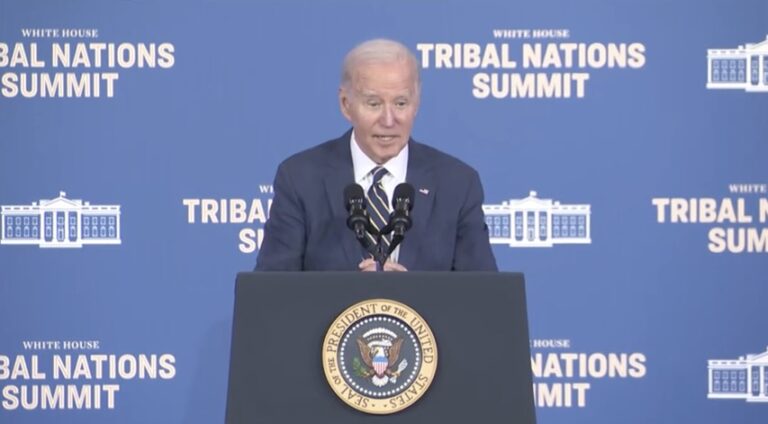
President Joe Biden told Native tribes at a summit on Wednesday that he is going to allow Iroquois tribal members, also known as the Haudenosaunee Confederacy, to compete under their tribal flag, rather than the American flag, in the 2028 Olympics games in the lacrosse competition.

LaCrosse is a type of stickball played by various American Indian tribes, and sometimes credited specifically to Iroquois. The International Olympic Committee must approve the tribes’ application but with the president’s endorsement, it is all but certain that the request will be granted. It will be the first time the sport will be featured in the Olympics.

The U.S. taxpayers will pay for the tribes competing under their own flag.

Biden said he would sign also an executive order to allow tribes more access to taxpayer money and will be given permission to spend that money without a lot of oversight.

At the 11th White House Tribal Nations Summit Washington, D.C., the president said federal agencies would be mandated to purchase more from Native-owned businesses.

“Folks, separately, we’re also streamlining [strengthening] the Buy Indian Act, so federal agencies get more goals and services — goods and services from Native-owned businesses. Native-owned businesses.”

This year, for example, the Indian Affairs Bureau awarded 75 percent of its budget to Native-owned enterprises, up from about half that in 2021, he said.

“Together, these steps are going to help grow tribal economies and reduce the hoops they have to jump through to get the funding they deserve. It’s all a part of my vision for a new era of respect. Respect for you as leaders, respect for Tribal sovereignty, respect for the Nations’ fundamental right to build a future and own — on your own terms, not anyone else’s terms, not anyone else’s terms,” Biden said.

“It’s hard work to heal the wrongs of the past and change the course and move forward. But the actions we’re taking today are key steps into that new era of Tribal sovereignty and self-determination — a new era, grounded in dignity and respect, that recognizes your fundamental right to govern and grow on your own terms,” he said.

The president’s complete remarks are at this link.