Friday, August 14, 2026
Home Blog Page 511

Ice floe or health care? Peltola votes against a bill that calls for end of government’s eugenics formula

The U.S. House passed H.R. 485, the Protecting Care for All Patients Act,  which would prohibit federal health programs from using discriminatory measures known as Quality-Adjusted Life Years (QALYs.) The bill passed by a vote of 211 to 208, with Democrats voting against it.

QALYs let the federal government reduce or end care for people with various disabilities, which can be seen as a form of eugenics — withdrawing medicines, for example, for people the government doesn’t believe have enough value. The term QALY glosses over a policy that can be traced to Nazi Germany. It’s the Death Panel that former Gov. Sarah Palin warned of.

Alaska’s Rep. Mary Peltola was a “no” vote, indicating support for the continued reduction of care for disabled people, per a government formula.

The last known case of “senilicide,” — the Alaska Native practice of putting an occasional elder on an ice floe — was recorded in 1939. It was a QALY way of rationing resources for some Arctic groups during times of tribal hardship.

The House legislation that is how heading to the Senate is led by  Rep. Cathy McMorris Rodgers of Eastern Washington and three others —  House Ways and Means Committee Chair Jason Smith (R-MO), Rep. Michael Burgess, M.D. (R-TX), and Rep. Brad Wenstrup, D.P.M. (R-OH).

“Every human life has value. The government should not be mercilessly placing a dollar value on someone’s life and denying care just because they have a disability or chronic illness. Patients, and those who are fighting for their loved ones’ lives, have pleaded with Congress to fix a system that actively prevents them from getting the care they need. I’m proud to champion this important legislation that will give patients with disabilities and chronic or rare illness hope,” said Rep. Rodgers, who chairs the Energy and Commerce Committee. 

“Bureaucrats in Washington and across the country are trying to put a price tag on life. The Protecting Health Care for All Patients Act, reaffirms that every life has value and stops individual Americans from being reduced to mere dollars and cents on a spreadsheet. An individual has worth, regardless of someone’s age or whether they have a disability or other chronic ailment,” said Rep. Smith of Missouri.

Rep. Rogers is the parent of a son with Down syndrome — he has an extra chromosome: “And like so many in the disability community, I was told by the doctors not to expect too much. As his mom, I’m glad to say they couldn’t have been more wrong. When we put limits on people and instead of setting them up for success, we all lose something, and Cole helps remind me every day that the disability community is full of potential just waiting to be unleashed.”

H.R. 485 would prohibit all federally funded healthcare programs, including the Veterans Administration, Federal Employees Health Benefits Program, and federally funded state health care programs from using Quality-Adjusted Life Years and other eugenics formulas.

The use of QALYs may affect Alaska Native children who have fetal alcohol spectrum disorders, the condition that results from alcohol use during pregnancy.

“The use of QALYs sends the message that the life of someone living with a disability doesn’t matter as much as a “healthy” person’s life. That’s why I led the Protecting Health Care For All Patients Act (H.R. 485) to ban federal health care bureaucracies like Medicaid and the VA from devaluing the lives of people living with disabilities,” Rep. Rogers said.

Medical professionals are increasingly uncomfortable having the government determine whether a person’s quality of life is worth the expense.

“The prospect of the denial of health care, for those deemed ‘unworthy’ has a long history in the eugenics movement,” wrote Paul Langley, a professor in the College of Pharmacy at the University of Minnesota. “If we are to finally rid ourselves of a ‘eugenic’ approach to health care resource allocation, then we must abandon preferences and the QALY calculus.”

In a paper available at the National Institutes for Health, Langley wrote, “There are different types of problems with the use of QALYs and DALYs for measuring health benefits. Some of these problems have to do with measurement, for example, the weights they ascribe to health states might fail to reflect with exact accuracy the actual well-being or health levels of individuals. But even if these weights represent accurately the well-being levels of individuals, there is room for questioning whether these measures capture everything that we care about in these cases, or whether there are important issues that they leave out, including considerations of fairness or equality.”

Langley wrote of how QALYs are a one-size-fits all approach, without regard to individuals’ prospects.

“In this regard, the measures have been criticized for treating the aggregation of small benefits as greater than the aggregation of fewer but bigger benefits, for disregarding fair chances in favor of utility maximization, and for raising problems when applied in the context of variable population size,” Langley explained.

“Perhaps one of the most pervasive ethical issues that has been associated with the use of these measures is the fact that they seem to discriminate against disabled people. Since the measures assume that disabled people have lower well-being and a shorter life span, treating a disabled person’s medical condition contributes less to the maximization of years of life with good health than treating a non-disabled patient’s medical condition,” he wrote.

In another paper published by the National Institutes of Health, a health professor says the QALY formula doesn’t even add up.

“Furthermore, our review of the mathematical properties of QALYs, including an analysis of quality-of-life utility (QOL utility) data recently collected from patients with inflammatory bowel disease (IBD), has led us to conclude that QALYs are an inappropriate metric of drug and treatment cost-effectiveness for all people, both disabled and nondisabled, and should not be the basis for US healthcare policy decisions,” wrote Tia G. Sawhney, a professor at New York University.

“QALYs are time-based, health-related QOL utility measures. Health-related QOL utility measures purport to express the quality of a person’s life on a 0 to 1.00 scale, where 0 is death and 1.00 is perfect health. A QOL utility is converted to a QALY by multiplying the QOL utility by the number of years a person experiences that QOL,” Sawhney explained.

Health is a multidimensional, highly personal experience, she said. “If we ask relatives, friends, and strangers how they measure their health and quality of life, their responses are likely to be as complex and unique as snowflakes. Yet, QOL measurement developers reduce quality-of-life measurements to a handful of simplistic questions. Furthermore, their question sets are inconsistent with each other and with common perceptions of health.”

The Alliance for Aging Research supports the bill, and said it was disappointed there was not bipartisan support.

“Preventing discrimination in healthcare should not be a partisan issue. We encourage the Senate to take up this important issue and reach bipartisan consensus to ban the use of the QALY and similar metrics,” the alliance said in a statement.
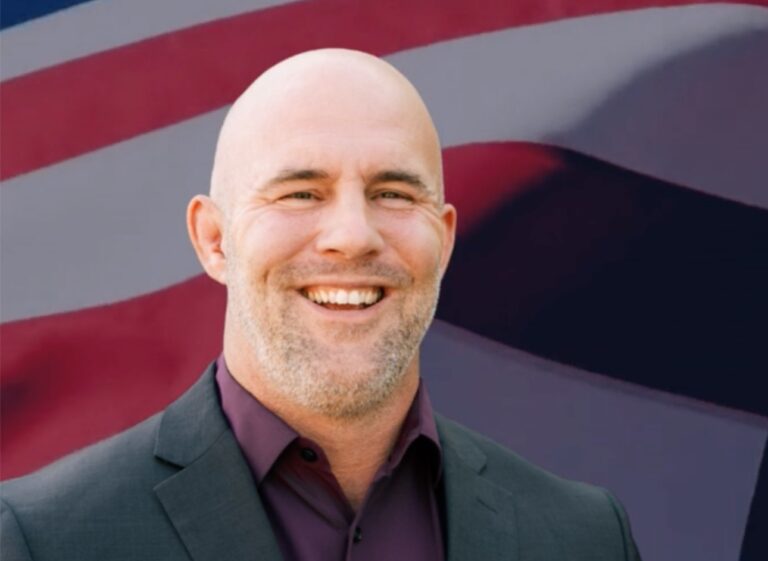

Rob Yundt files for Senate, Wasilla Seat N

Rob Yundt, a Republican who serves on the Mat-Su Borough Assembly, has filed for Senate Seat N, which is now occupied by Sen. David Wilson. The Wasilla seat will be on the August primary ballot and the November general election ballot.

A third-generation Alaskan and a homebuilder, Yundt has been active in state politics for several years. He served on the board of directors for Alaska Housing Finance Corporation and was the past president Alaska State Homebuilders. Among the policy achievements he is most proud of are:

  • – Sponsored lifetime term limit legislation for mayor.
  • – Lowered mill rate every year since being elected. It’s now the lowest in over 30 years.
  • – Sponsored legislation to increase the senior citizen and disabled veteran property tax exemptions from 218,000 to 264,000 per year and tied it to inflation so it will adjust annually.
  • – Helped repeal a previously adopted anti Second Amendment gun range ordinance, then sponsored legislation to change borough code and require any future Assembly ordinance pertaining to guns to require voter approval.
  • – Worked to bring the 2024 Arctic Winter Games to the Mat-Su Valley.
  • – Critical 4th vote to donate land to a local non profit youth shooting organization to be a world-class shooting range for Mat-Su Borough students.
  • – Created a new two-year fire science program for juniors and seniors so they can earn certifications that are nationally recognized.
  • – The borough paid off over $60 million in debt during his three years and he has not approved any borrowing.
  • – Sponsored multiple community wide clean-up events.
  • – Fought for trades-based training and opportunities for our high school students so they graduate ready for the workforce.

Yundt’s website is at this link.

The incumbent, Sen. David Wilson, is also a Republican, but has joined the Democrat-dominated Senate majority, which has opened him up to some criticism in this deeply conservative area of Alaska.

Vivek Ramaswamy endorses Nick Begich for Congress

It’s one of the most valuable endorsements on the conservative side of politics: Vivek Ramaswamy, a former Republican candidate for president, has endorsed Nick Begich for Alaska’s congressional seat.

It’s the first endorsement Ramaswamy has made in the 2024 election cycle, after he dropped from the race and endorsed Donald Trump for president in January.

Ramaswamy announced his endorsement on X/Twitter:

Before he endorsed Begich, Ramaswamy said that he had been receiving a lot of requests for endorsements, and he was screening them carefully with a set of America First principles. Begich was the first.

“You know who loves the environment more than most people? Alaskans. You know who advocates for unleashing American energy more than most people? Alaskans. @nickforalaska is America-First & Alaska-Proud. He signed the American Truth Pledge & I’m proud to endorse him,” Ramaswamy said in his video.

Begich is running for the second time for Congress, after making the top three during the 2022 election, which was the first time Alaskans had used the ranked-choice voting method to select a person to represent them in Congress. Begich is a Republican and has been since high school, when he was a member of his high school’s Republican club.

Ramaswamy is an American businessman and author of the book “Woke, Inc.: Inside Corporate America’s Social Justice Scam,” which was a New York Times bestseller. His other books are “Nation of Victims: Identity Politics, the Death of Merit, and the Path Back to Excellence,” and “Capitalist Punishment: How Wall Street is Using Your Money to Create a Country You Didn’t Vote For.”

Mainstream media calls him one of the “intellectual godfathers of the anti-woke movement” and the “right’s leading anti-ESG crusader” The New Yorker called him the “C.E.O. of Anti-Woke.”

Born and raised in Cincinnati, Ohio, Ramaswamy often recounts the sage advice from his father: “If you’re going to stand out, then you might as well be outstanding.”

Begich is a businessman, as well. Like Ramaswamy, he has not served in elected office before, but has been in the private sector since college and has deeply held conservative values, which is what won him an endorsement from Rep. Byron Donalds last month, as well as endorsements from a long list of Alaskans.

Begich said on X/Twitter, “Thank you @VivekGRamaswamy for your strong support! By putting the people of America FIRST, our great nation will be more prosperous and free. Alaska has an important role to play in our national resurgence, and I’ll be proud to fight every day for Alaska in DC!”

Recently, Lt. Gov. Nancy Dahlstrom, also a Republican, joined the race to beat Rep. Mary Peltola, a Democrat. Dahlstrom, who ran with Gov. Mike Dunleavy in 2022, has the endorsement of Dunleavy.

World’s toughest snowmobile race: Iron Dog set for 40th year of squeezing the throttle to Nome

By MUST READ ALASKA

The world’s longest, toughest snowmobile race starts Saturday, Feb. 17. It’s the 40th running of the Iron Dog Race, with as many as 60 teams of two riding their snow machines from Big Lake to Nome and back.

This year the race is 2,503 miles long, following the northern route of the traditional Iditarod trail through Kotzebue to Nome and back to Big Lake.

“The Pro Class racers travel over the Alaska Range to the Yukon River, then cut overland toward the Bering Sea coast. Once on the coast, they travel to Koyuk then to Kotzebue via the ‘Red Dog Loop.’ From Kotzebue, racers head south, reaching the halfway point in Nome. After leaving Nome, Pro Class Racers will reverse course to finish back in Big Lake,” according to the race website. The Pro Class has 24 teams, including six past champions: Nick Olstad (six- time champion), Chirs Olds, Todd Palin, Marc McKenna, Tyler Aklestad (four-time champions) and Mike Morgan (two-time champion).  See the full roster at this link.

The Pro Class, which starts at 10 am, is followed by the noncompetitive Expedition Class. The Expedition Class travels 1,049 miles on the northern route of the Iditarod Trail to Nome. There are 38 riders in the 2024 Expedition Class field.  See the full roster at this link.

On Thursday, the Iron Dog Ambassador Team will leave Big Lake and travel the trail to Nome. Riders in the 2024 Team include:

Scott Davis, seven-time Iron Dog Race champion.  Scott raced the inaugural event in 1984, finishing second before capturing his first Iron Dog Race title in the second race in 1985 From 1984 through 2015, Scott missed just two races, both due to injury. With various partners, he started 29 races and finished 25 of them. In addition to those seven wins, he collected even more Top-10 finishes: eight second place, five third place, two fourth place and a handful of fifth places. Scott retired from Iron Dog Race in 2015, finishing in second place and was inducted into the Iron Dog Race Hall of Fame in 2017.

Cory Davis, 2017 Iron Dog Race champion. Cory is the son of Scott Davis; the two have raced in the Iron Dog only once together, in 2011, and finished in third place. Cory was instrumental in the Flying Iron “Freestyle Show,” which took place before the start of the Iron Dog Race in 2016 and 2017 in Anchorage, and in 2018 during the start on Big Lake. Davis, who is known for his wicked “whip,” is a six-time X-Games medalist.

DeeDee Jonrowe, who is a two-time runner-up in the Iditarod Trail Sled Dog Race. Jonrowe has competed in the Iditarod 36 times, finishing on 32 occasions. In addition to two second-place finishes, she collected 16 Top-10 and nine Top-5 finishes. She was presented with the Leonhard Seppala Humanitarian Award twice and earned the Sportsmanship Award once during her professional career. She was voted twice by her peers as the Most Inspirational Musher, including in 2003 after crossing the finish line just three weeks after completing chemotherapy for breast cancer. DeeDee is a member of the Alaska Mushing Hall of Fame, the Anchorage Daily News Iditarod Hall of Fame, and the Alaska Women’s Hall of Fame.

Mike Jonrowe, a longtime supporter of trail maintenance and grooming for dog sled teams and snowmachiners, has traveled to Nome casually four times. A certified drone pilot, he will be capturing images of the group to share with fans. 

Robby Schachle, 2021 Iron Dog Race champion. Robby has raced in the Iron Dog Race seven times, finishing first, second, third, fourth and three DNFs. Robby comes from a family steeped in racing tradition. In his spare time Robby, along with family, put on the “Big Rob Schachle Memorial Fun Run,” in honor of his late father, to support the Big Lake Aurora Lions Club. 

Pat Reilly, who participated in the early days of Iron Dog Race, starting in the second-ever race in 1985.  With two Iron Dog Race runner-up trophies to his name, Reilly has been instrumental with the foundation of the Iron Dog Race. Reilly organized racers’ pilots who flew air support for teams for many years after racing, flying many races himself — most often with his wife, April. April was inducted into the Iron Dog Race Hall of Fame in 2009. The two of them owned and operated Rain Proof Roofing for more than 40 years.  

Ashley Wood, who in 2023 with partner Hillarie Gosset became the second all-woman team to ever finish the Iron Dog Pro-Class race, and the first to do so with the inclusion of the Red Dog Loop. Not since 2001 has another all-woman team completed the Iron Dog Race. Ashley participated in the 2015 and 2018 Pro Class fields, scratching due to mechanical issues, and in 2017 flew in support of teams. Ashley has a long history of racing wins, including multiple first-place finishes in the Valdez Mayor’s Cup, Big Lake 150 and Skwentna 200. 

Kristina Woolston, external affairs manager with Donlin Gold, a longtime sponsor of the Iron Dog and other iconic Alaskan traditions and events. Kristina also served for more than 10 years as vice president of government relations for Chenega Corp., and five years as vice president of external affairs for Quintillion. An Alaska Native, Kristina was raised in Naknek and earned a degree from Dartmouth College, putting herself though university by commercial fishing in Bristol Bay.

To support Team 99 during the 2024 race, or to sponsor this iconic Alaskan event and ensure the tradition continues, contact Iron Dog Executive Director Mike Vasser at [email protected], or call 907-563-4414.

All participants in the 2024 Iron Dog are expected to arrive into Nome, Alaska, on Tuesday, Feb. 20.

In January, the Iron Dog organization presented three Alaskans with membership in the Iron Dog Hall of Fame: Wilson Bourdon, Pat Reilly, and Bill “Fish” Fischer, who volunteer their services and time to the race.

More information about the race is at this link.

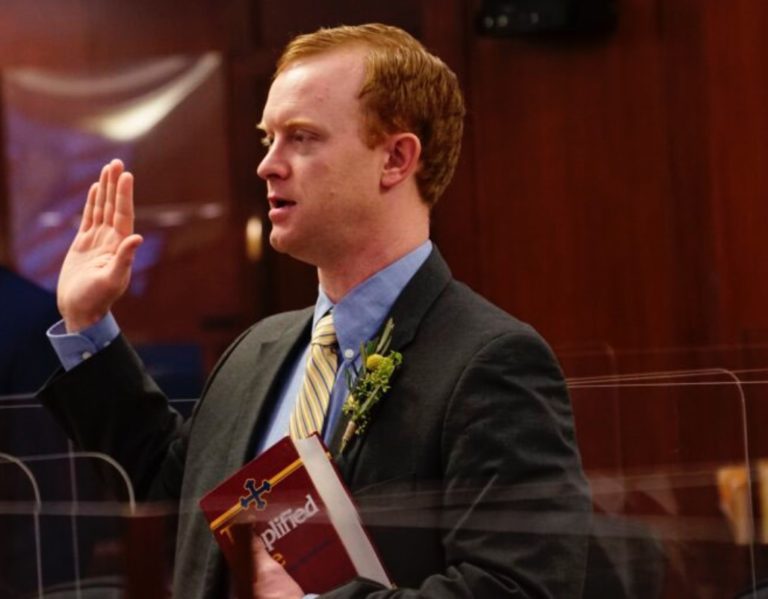
David Eastman: Malicious prosecution and persecution of conservatives

By REP. DAVID EASTMAN

Many Alaskans are blissfully unaware of how intolerant the State Capitol building has grown toward conservatives in recent years. To be known as a conservative legislator or a conservative activist in Juneau is to have a target on your back. Sooner or later, that means being subjected to a politically motivated prosecution from the misnamed Legislative Ethics Committee. 

Rep. Tammie Wilson of North Pole was targeted by the Ethics Committee when she served in the Legislature. Sen. Lora Reinbold of Eagle River was targeted. Rep. Christopher Kurka of Wasilla was targeted. And my staff and I were targeted as well. It wasn’t any better when I was a member of the Ethics Committee several years ago.

Setting aside its original purpose, the function of the Ethics Committee today is to censor what legislators can say, especially conservative legislators. In addition to policing more traditional forms of communication, the committee has lately decided that it should also be able to police what legislators say on social media as well.

Of the five permanent members of the committee, all of whom are appointed by the chief justice of the Alaska Supreme Court, there is not a single Republican. Four are non-partisan, one is Democrat, and three of the five signed a petition to recall Gov. Mike Dunleavy in 2019.

Often, just the threat of being hauled before the committee, even on the most dubious of accusations, is enough to convince legislators to steer clear of things they would otherwise say and do. Over time, policing what legislators are permitted to say results in a huge power disparity between legislators who have the option to simply let the liberal media or unions do their talking for them, and conservative legislators who usually do not have that option. But that is a topic for another day.

It was April 14. I led the House in the Pledge of Allegiance that day, and I introduced two guests who were visiting Juneau from the Mat-Su. All told, the introductions lasted less than twenty seconds

When I was first elected, it was not uncommon for legislators to extend the courtesy of an introduction to anyone visiting the legislature from out of town, even candidates who had run against them in the last election. But that has begun to change. All guests are equal, but some conservatives are less equal than others.

I was told afterward that, during this briefest of introductions, I had crossed a line. A fellow legislator, Rep. Kevin McCabe, told me that I shouldn’t have done that. The guest I introduced was a political enemy of his. The message was clear: I should have joined others in cancelling him, not welcomed him to the Capitol.

Who was the guest? The oft reviled Pat Martin of Alaska Right to Life, who was in Juneau that day to deliver 5,000 signatures on a petition asking legislators to halt the state taxpayer funding of abortion. There are at least two things that today’s legislators are disinclined to do: Moving the capital and ending state funding of abortion both make the list.

Even so, both are popular issues that a majority of Alaskans have supported in the past and continue to support today. I suspect an activist roaming the halls of Juneau advocating to move the capitol would have been treated similarly. To be clear, I would have welcomed such a person to Juneau as well. But some legislators would prefer to make the capitol building a safe space, insulated from such dangerous ideas and those who advocate for them.

On April 14, one legislator’s office flat out refused to accept the 5,000 signatures. One responded by calling security and saying that Martin had been seen with a firearm in the capitol building.

Security responded. There was no firearm. It was a “swatting” incident, the first I am aware of in the state Capitol. All Alaskans are welcome to come to the capitol building, but some are more welcome than others.

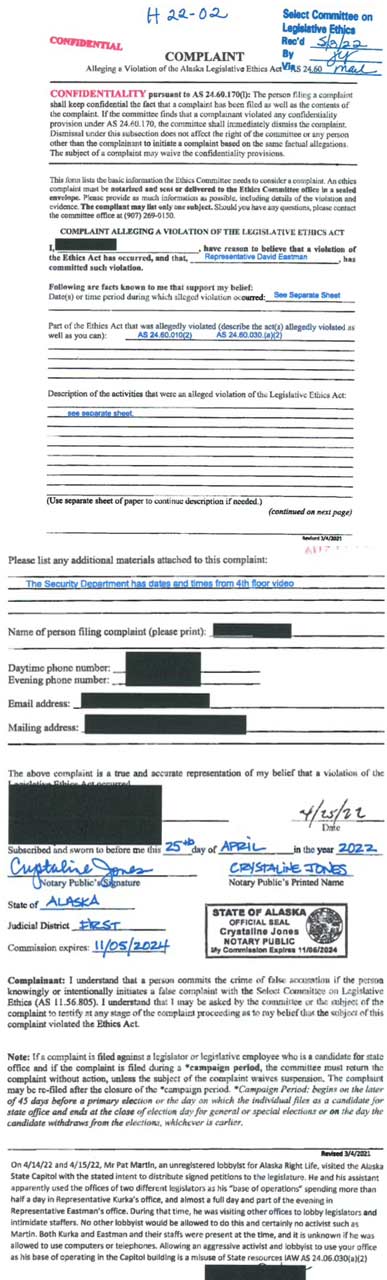
Three weeks later, Rep. Christopher Kurka awoke to the news that an ethics complaint had been filed against him by Rep. McCabe for the political crime of welcoming Kevin’s political enemy, Pat Martin, into his office at the State Capitol Building. Seven minutes later, I received, word for word, the exact same complaint.

Until April 14, it was unheard of that someone would file an ethics complaint against you because they were offended at who you chose to meet with in your office at the capitol building. It was also unheard of that the ethics committee would ever allow themselves to be used to prosecute such a complaint. Not anymore.

Picture, for a moment, yourself as a legislator in Juneau. It’s April 14, you just spent your day debating and voting on eight different bills, ranging from bills to unionize childcare providers to bills dealing with various oil royalties. Immediately afterwards, you move to a committee hearing where you consider further bills, including a potential salary increase for state employees and a bill requiring legislative confirmation hearings for members of the Alaska Permanent Fund Board.

At 5:23 pm, the committee finally adjourns and you get to begin preparing for the next day, where you will take up a bill redefining the definition of rape in state law. As part of that bill, you will be hearing public testimony from rape victims whose assailants were never prosecuted because of the way the legislature defined rape in state law decades ago. That evening, you and your staff finally part ways to get some rest and begin the process anew the following day.

Three weeks later, you are informed by authorities that a fellow legislator has charged you with violating state ethics laws for your work that day. Instead of spending your day in committee and voting on bills, the legislator accuses you of spending most of the day in your office, with a political enemy of his no less. The kicker — and this is where the story takes a turn towards the incredible — the legislator who filed the charges wasn’t even in the capitol building that day. In fact, he missed the entire voting session that day because he was over a thousand miles away when it happened.

It seems like an open and shut case, right? Someone accuses you of spending most of the day in your office with someone they are publicly at odds with, and video from the day’s events shows that you were present for the entirety of that day’s protracted house floor session and the committee meeting that immediately followed it. Further, the written record shows that you were present for every vote taken that day, and it also shows that the person filing the charges was not.

But we don’t need to imagine this. This happened to two Mat-Su legislators. I was one of them.

These two complaints triggered an investigation and legal proceedings that lasted more than 18 months—all at state expense of course. I and the other legislator were of course obliged to hire attorneys to defend ourselves against the charges. The subsequent legal proceedings involved no less than four hearings and committee meetings, as well as numerous interviews over the 20-month period, between the legislator initiating the charges in April 2022 and the case finally being dismissed in December 2023.

Even after Rep. Kurka left office in January, rather than dismiss the complaint against him, the committee chose to continue the charade for another 11 months. 

When Rep. Kurka and I were finally told that we were free to go in December, we had been obliged to spend more than $6,000 dollars in legal fees, and had invested hundreds of hours of time over the nearly two-year episode. Even in the very moment of dismissing the cases against us, the committee insisted on  publicly criticizing both Rep. Kurka and I for the fact that we had each been unavailable during the height of our election campaigns. To add still further injury, we were told that the Ethics Committee considers legal representation a luxury. Accordingly, even after we were found innocent, we were told that the committee would not aid us in recovering any of our costs.

Alaskans are not able to recover any of their costs from these two cases either; the costs associated with the numerous committee hearings spanning nearly two years, the cost of the state hiring an investigator, the travel and per diem costs for each of the five public members of the committee, the time spent by at least six legislators who were involved in the case, and the time that our respective staff spent on these two cases instead of being able to engage with constituents. All told, it is quite the bill—and to think it was all triggered by a guest introduction lasting less than 20 seconds.

Rep. David Eastman is a Republican House member from Wasilla, House District 27.

National debt: $34.2 trillion and counting

Worried about government spending? The debt that the nation owes due to government borrowing and spending reached over $34 trillion on Jan. 2, according to the U.S. National Debt Clock.

Six weeks later, it has reached $34.2 trillion. On this trajectory, the national debt will reach about $35 trillion before the end of summer and $36 trillion when the next president is sworn in in January of 2025, some 343 days from this report.

Debt is different from deficit spending. Last year, the Biden Administration ran a spending deficit of about $2 trillion. Compare that to the end of 2020, when the government’s budget deficit was $3.1 trillion, due in part to the Covid pandemic response. Prior to the pandemic, in 2019, the budget deficit under the Trump Administration was $1 trillion.

Driving the deficit higher was $659 billion in interest payments on borrowing, which has blasted through the Congressional Budget Office’s forecast by 137%.

Treasury notes are now 4%, rather than the 1.6% estimated by the CBO, and the federal debt is $2.5 trillion higher than CBO projections before Biden took office and Congress started passing big spending packages, like the Inflation Reduction Act, about $515 billion in borrowed money, referred to as the largest piece of federal legislation ever to address climate change.

The debt that the federal government has incurred on behalf of citizens now amounts to $265,000 per taxpayer. That’s about $19,000 more per taxpayer than one year ago.

The nation’s fiscal and economic outlook has deteriorated substantially since the last Congressional Budget Office (CBO) baseline in May, when CBO projected debt would reach a record 110 percent of Gross Domestic Product (GDP) by 2032. Under an updated current law baseline, we now project debt in 2032 will reach 116 percent of GDP, deficits will reach 6.6 percent of GDP, and interest will reach a record 3.4 percent of GDP. Under a more pessimistic (and in many ways realistic) scenario, debt in 2032 would reach 138 percent of GDP, deficits would reach 10.1 percent, and interest would total 4.4 percent of GDP. These projections suggest an unsustainable fiscal trajectory,” wrote the Committee for a Responsible Federal Budget in 2022.

The CBO was off by a few years. It only took two years for the debt-to-GDP ratio to reach 122.7% and for the Treasury notes to reach 4%.

View the U.S. Debt Clock at this website.

“A study by the World Bank found that countries whose debt-to-GDP ratios exceed 77% for prolonged periods experience significant slowdowns in economic growth. Pointedly, every percentage point of debt above this level costs countries 0.017 percentage points in economic growth,” according to Investopedia.

The U.S. has scored over 77 since 2009, but recently exploded into the “fiscal cliff” category. Only Japan, Greece, Singapore, and Italy are higher in the world’s advanced economics, according to Visual Capitalist.

The Biden White House predicted that in 2024, the national debt would be $28 trillion, and would reach $33 trillion in 2027.

Here’s what the U.S. debt clock looked like one year ago, on Feb. 9, 2023, when the debt was $31.5 trillion:

U.S. Debt Clock in February, 2023

What would it take to get the federal debt back into its box?

According to the Committee for a Responsible Federal Budget, it would take about $8 trillion of 10-year savings to stabilize debt as a share of the economy and about $15 trillion to balance the budget under the Congressional Budget Office’s February 2024 baseline.

“Under current law, CBO projects that federal debt held by the public will rise from roughly 97 percent of Gross Domestic Product (GDP) today to a record 106.3 percent by the end of Fiscal Year (FY) 2028 and grow further to 116 percent of GDP by the end of FY 2034. With this in mind, policymakers should set a fiscal goal to stabilize or reduce the debt and prevent substantial risks and threats to the budget and economy,” the watchdog group says.

“While there isn’t one ideal fiscal goal, there are several that represent a significant improvement to the current fiscal outlook. For example, policymakers could aim to stabilize debt or reduce debt to a target level of GDP over five or ten years. Stabilizing debt at its current level of roughly 97 percent of GDP would require $3.6 trillion of deficit reduction (including interest) over five years or $7.9 trillion of savings over ten years. Reducing debt to 80 percent of GDP, which would be in line with the pre-pandemic level, would require $9.4 trillion of five-year savings or $15.0 trillion of ten-year savings,” the group says. Read more here.

For consumer borrowers, on Feb. 14, 2024, the current average 30-year fixed mortgage interest rate is 7.25%, according to Bankrate.com. The rate has risen 15 basis points over the last seven days.

Some are predicting a fiscal crisis in 2025, with the expiration of the 2017 Tax Cuts and Jobs Act coming at the same time the national debt continues to soar.

Here are some of the effects of the sunsetting of the TCJA, according to Howard Gleckman of the Brookings Institute, who writes that all of the individual tax provisions of the 2017 legislation expire at the end of 2025. Among the changes:

Gleckman says taxes will likely increase for most US households. Read his report at this link.

Alaska Airlines flight attendants authorize strike: ‘Pay us, or CHAOS!’

47

Alaska Airlines flight attendants have authorized a strike, if their union, the Association of Flight Attendants-CWA, fail to reach an agreement with the company.

“Alaska Flight Attendants today backed up our fight for an industry-leading contract with a 99.48% strike vote. And we’re out on the picket line demonstrating that we’re ready to do whatever it takes to get the contract we deserve. There’s no excuse: Alaska management has the money to buy another airline, they certainly have the money to invest in Flight Attendants. We have a simple message for management: Pay us, or CHAOS!” said AFA Alaska President Jeffrey Peterson.

The last time Alaska Airlines flight attendants went on strike was in 1993, when the Alaska flight attendants adopted the CHAOS slogan. A CHAOS strike is an intermittent strike strategy, where attendants could strike any flight at any time without notice to management or passengers.

The group has even trademarked the CHAOS strategy, which is intended to do maximum damage to the company.

“This trademarked strike strategy has the power to disrupt operations system-wide by striking just a few flights at a time, one hub location, or the entire system. In 1993’s strike, Alaska saw dramatic reductions in ticket bookings as passengers never knew whether Alaska flights might take off until they had already arrived at the airport,” the union said.

“You can’t fly without Flight Attendants. If Alaska management doesn’t remember what happens when you disrespect Flight Attendants, we are ready to show them. It’s past time for a fair deal,” said AFA International President Sara Nelson. 

Now that members have authorized a strike, the union can request a release from the National Mediation Board leading to a 30-day “cooling off” period and strike deadline.

Peltola votes against impeachment of Mayorkas, but this time Republicans had the votes

Alaska Rep. Mary Peltola chose to let Joe Biden and his border crisis off the hook, sticking with Democrats in voting against impeachment on Tuesday of Alejandro Mayorkas.

But the historic impeachment vote succeeded anyway, by one vote — 214-213 — making Secretary Mayorkas the first cabinet member to be impeached since Secretary of War William Belknap was impeached in 1876.

Since Biden took office and appointed Mayorkas, more than 8.3 million illegal crossings have occurred at the southern border.

“As Joe Biden’s enabler in Congress, Mary Peltola is choosing to let Biden’s Secretary of Open Borders off the hook for the disaster they have caused for every community. Peltola is not serious about securing our border,” said National Republican Congressional Committee Spokesperson Ben Petersen.

The two articles of impeachment are “willful and systemic refusal to comply with the law” and “breach of public trust.”

“Alejandro Mayorkas deserves to be impeached, and Congress has a constitutional obligation to do so,” said House Speaker Mike Johnson.

It was the second impeachment vote. The first one failed last week because Rep. Steve Scalise was undergoing treatment for blood cancer. He was present for the vote today.

The impeachment is expected to die in the Democrat-majority Senate.

A tradition continues: Juneau Republican women deliver treats to legislators on Lincoln’s birthday

Every year, the Republican Women of Juneau bake birthday cakes to deliver to Republican legislators in Juneau, in honor of Abraham Lincoln’s birthday. He was the first Republican president and ushered in the era of the Republican Party.

This year, they tried something different — gingerbread cookies, which known to be one of the 16th president’s favorite sweets.

During one 1858 debate with Stephen Douglas on the campaign trail, Lincoln told some personal details, which have endured through time: “When we lived in Indiana, once in a while my mother used to get some sorghum and ginger and make some gingerbread. It wasn’t often and it was our biggest treat.”

He continued, “There was a family near us poorer than we were, and their boy came along as I sat down. ‘Abe,’ he said, “gimme a man.’ I gave him one. He crammed it into his mouth in two bits and looked at me while I was biting the legs off my first one. ‘Abe, gimme that other’n.’ I wanted it myself, but I gave it to him and as it followed the first, I said to him, ’You seem to like gingerbread.’ ‘Abe,’ he said, ‘I don’t s’pose anybody on earth likes gingerbread better’n I do- and gets less’n I do ….”

Inside each package of cookies delivered on Monday, the Republican women slipped in a note explaining the history of the gingerbread cookie and President Lincoln, compliments of the Blue and Gray Education Society, a non-profit that is dedicated to the preservation of Civil War history.

“February 12, 2024, is our first Republican president’s (215th) birthday. In honor of Lincoln’s birthday, Capital City Republican Women have baked each of our Republican legislators a batch of Taku Glacier Lodge spicy ginger cookies. It may be too cold to go outside and sit under a tree, but we hope you find a comfy spot and someone to share them with. Thank you for serving Alaska!,” the women wrote in a note to GOP House and Senate members. In all, over 1,110 cookies were delivered to legislators, the Governor’s Office, and the Lieutenant Governor’s Office.

The Republican Women of Juneau have carried on this welcoming tradition for Republican legislators for over a decade. New residents of Juneau may think of the Capital City as a Democrat stronghold, which it is. But the Republican women’s club is a storied, organized, and enduring group that provides a balance to the tax-and-spend perspectives of the Democrats who dominate the political landscape.

The Capital City Republicans are hosting a Lincoln Day Dinner on Feb. 21, with keynote speaker U.S. Sen. Dan Sullivan: