A new medical journal report says that over 134,000 U.S. cancer cases went undiagnosed during the peak of the Covid-19 pandemic. Further, the authors warn that there may be a lot more cancers diagnosed in coming years that will be at an advanced stage, due to missed screenings.
In Alaska, there were 414 lung cancer cases diagnosed in 2019, dropping to 372 cases diagnosed in 2020, the year that Covid shutdowns started.
For all types of cancers diagnosed in Alaska, the total was 3,131 cases in 2018, 3,379 cases in 2019, dropping to 3,110 in 2020, according to this Department of Health chart.
In the journal JAMA Oncology, the authors say cancers of the prostate led the pack among the missed diagnoses at 17%, followed by female breast cancer at 13%, and lung at 12%.
“Overall, screenable cancers saw a total rate reduction of nearly 14% during the time span between March and December 2020, compared to expected diagnosis rates,” the article states.
“The U.S. experienced significant differences between observed and expected cancer incidence rates during the COVID-19 pandemic in 2020, with an associated and substantial deficit in diagnosed cases,” said Todd Burus, of the Markey Cancer Center in Kentucky. “The extent of differences varied based on cancer site, stage at diagnosis, and patient age and sex. These findings offer crucial information for current cancer prevention and control initiatives.”
University of Kentucky researchers said they believe there may be more advanced cancers that radiology diagnosticians will encounter in coming years, as one of the unintended consequences of fewer screenings during the Covid shutdowns.
For the study, the researchers analyzed CDC cancer incidence data from 2018 to 2020. They used information from the time leading up to March 2020, when the pandemic first was declared in the U.S., to forecast how many cases could reasonably been expected the rest of the year.
The study included nearly 1.3 million cancer cases reported in the U.S. between March and December 2020.
“Observed rates of all-site cancer incidence were about 29% lower than expected during the height of the COVID-19 response,” the authors of the study note. This included a roughly 6% shortfall between June and December or 13% lower during the first 10 months of the pandemic.
“These percentages produced an overall estimate of 134,395 potentially undiagnosed occurrences of the disease. This included 22,950 instances of prostate cancer, 16,870 breast diagnoses, and 16,333 relating to the lung. Breast cancer diagnoses showed evidence of returning to pre-COVID levels after the first three months of the pandemic. But colorectal, cervical and lung cancers still lagged historic levels,” the report says.
“Evidence of rate recovery for female breast cancer after the most restrictive pandemic response period suggests a resilience in mammography screening habits, likely borne from years of investment in public health messaging,” the authors noted. They urged the medical community to reengage with patients to get them back in the clinics to do screenings and follow-ups.
Sen. Lisa Murkowski, one of the most middle-of-the-road senators in Washington, has endorsed Nikki Haley for president. She made the announced Friday in a statement.
“I’m proud to endorse Gov. Nikki Haley,” Murkowski said in her statement. “America needs someone with the right values, vigor, and judgment to serve as our next President—and in this race, there is no one better than her. Nikki will be a strong leader and uphold the ideals of the Republican Party while serving as a President for all Americans.”
Murkowski was one of seven Republicans who voted in favor of impeachment of Trump, after he was no longer president. Trump was not convicted for the allegations against him, made by Democrats in the House, led by then-Speaker Nancy Pelosi and Rep. Adam Schiff, both of California. She said Trump has poisoned the country.
Unlike Murkowski, Alaska Sen. Dan Sullivan has endorsed Donald Trump, while Rep. Mary Peltola has endorsed President Joe Biden.
Haley wrote a statement thanking Murkowski: “Sen. Murkowski represents the best of Alaska … she is a trailblazer and a strong, independent voice who doesn’t bow down to the powers that be in Washington.”
Murkowski has been out of favor with the Alaska Republican Party for years. Her last dust-up with the party was when the party censured her in 2021 for voting to convict Trump. In 2022, she won reelection with the help of Democrats using the open primary system her surrogates worked to have passed in 2020 (with ranked choice voting), which helped her avoid a Republican primary.
A poll run in the Must Read Alaskanewsletter shows that 73% of readers think Haley should drop out now. She has not won any state in the primary and caucuses so far this year. Another 6% of participants said she should drop out after Super Tuesday, and 21% think she should not drop out. The poll was self-selecting and 330 readers of 34,000 subscribers took part.
Trump is still surging in national polls, in spite of his legal troubles and social media habits. Of the 1,215 delegates needed to become the GOP nominee, Trump has 122 delegates, or 10% and Haley has 24 delegates, or about 2%. Another 874 delegates will be decided by March 5. The Alaska Republican Party will have 29 delegates.
Before Super Tuesday, the Idaho Republican Presidential Preference Caucus and the Michigan Republican State Convention take place on Saturday, March 2, and on Monday, March 4, the North Dakota Republican Presidential Preference Caucus is scheduled.
Then on Tuesday, March 5, in addition to Alaska, the Alabama Republican Primary, Arkansas Republican Primary, California Republican Primary, Colorado Republican Primary, Massachusetts Republican Primary, Maine Republican Primary, Minnesota Republican Primary, North Carolina Republican Primary, Oklahoma Republican Primary, Tennessee Republican Primary, Texas Republican Primary, Utah Republican Precinct Caucuses, Virginia Republican Primary, and Vermont Republican Primary will be held, and it will largely end the primary contest between Haley and Trump.
Under President Joe Biden, the U.S. has spent more money than ever before in fighting so-called “climate change.” But climate activists continueto call for more. One wonders if it is ever possible to satisfy their demands.
The climate agenda is flush with incongruities and inconsistencies, a nicer way of saying “lies.” Decades of unrealized doomsday predictions do not prevent more doomsday predictions. Manipulated data uncovered by leaked Climategate emails and NASA whistleblowers do not stop climate activists from pointing to their fabricated “science.”
But perhaps the greatest falsehood of the climate agenda is a failure in simple logical deduction. Climate activists’ entire raison d’etre is ending fossil fuels. They claim fossil fuels are driving climate change; ergo, we must eliminate them. Strangely, though, to reinforce that position, anti-fossil fuel hypocrites use more fossil fuels than your average person.
Use more fossil fuels while forcing others to use none. It’s a central tenant of the climate agenda.
Last November, 80,000 people gathered at the anti-fossil fuel U.N. Climate Conference “COP28” in Dubai. The 28th of such conferences, which grows in size and scope each year, lasted more than two weeks. That’s airfare, hotels, cars, wining, and dining, all for a reduced footprint. Two weeks’ worth of meetings and not a single panel to admit the hypocrisy of the anti-fossil fuel crowd as they use the very fuels they bemoan.
There are dozens, if not hundreds, of global climate conferences, and you can guarantee the anti-fossil fuel elite will attend as many as possible. If you make a career trying to ban fossil fuels, you’re never more than a couple of weeks away from the next elitist party.
This month alone, the “Second Nature Higher Education Climate Leadership Summit” is in Long Beach, California; the “Climate and Clean Air Conference” is in Nairobi, Kenya; and the “International Financial Reporting Center Sustainability Conference” is in New York City.
The Aspen Ideas Institute has a climate conference in March, but not in chilly Aspen. No, everyone will be traveling to Miami Beach because why not? And while we’re traveling to Florida, the “European Conference on Renewable Energy” is holding its March conference in Orlando. If the New York Jets and Giants can play in New Jersey, then Europeans can have a conference in Florida. Ponce de Leon was European, after all.
March will bring some of our fearless climate change activists to the “World Impact Summit” in Bordeaux, France, while others will attend the completely different but similarly titled “Climate Chance World Impact Summit” in Bogota, Colombia. If you’ve lost track of all the parties, you’re not alone. Yet there’s much more.
Many milestones in climate conferences are forthcoming: The “8th International Conference on Climate Change” is in Sri Lanka and then the “16th International Conference on Climate Change” in Pau, France, in April. The “World Conference on Climate Change and Global Warming” in Madrid in April is only in its fourth year, and a similarly named “Fourth International Conference on Climate Change and Sustainability” will be in Paris this July. Let us not confuse that July climate conference with another July one, the “Conference on Global Climate Change and Sustainable Development,” in London. Would you like to bet several hundred climate activists will attend both and take a plane between Paris and London rather than the train?
I’d bet the farm, and I literally have a farm to bet.
While the “World Conference on Climate Change and Sustainability” will be held in Barcelona this October, the “Global Summit on Climate Change and Environmental Sustainability” will be in Rome, also in October. Paella and carbonara in the same week!
There are summits in every nation every month from now until the end of time, which the climate activists tell us, thanks to fossil fuels, is pretty close. Imminent, but not before I get global status on United Airlines, not for the champagne at take-off, but for the Earth.
Not one of these is virtual. Not one of these conferences is a Zoom call. No one will be at their boring desks in their boring homes. Exotic, international travel is essential to the anti-fossil fuel mission. The planet depends on it.
During the Covid pandemic, people stayed home, houses of worship and workplaces were closed, and our children took classes remotely because “science” told us human contact and proximity was a risk we could not take. Climate science tells us human use of fossil fuels is driving the crisis and end of the world, yet climate science enthusiasts refuse to wear the metaphorical mask.
That should not surprise you. Anger you? Yes. Surprise you? No.
Remember how our elite were exempt from Covid lockdowns? Whether it was then-Speaker of the House Nancy Pelosi getting her hair done, California Gov. Gavin Newsom dining at the French Laundry, New Mexico Gov. Michelle Lujan Grisham having jewelry stores open for her Christmas shopping, or former President Obama throwing a lavish birthday party, the ruling class did not have to follow the rules. Covid protocols are for the unwashed masses, as are gas stove bans and EV mandates.
“For someone like me, it is the only option,” said International Climate Envoy John Kerry when asked about his private jet travel to Reykjavik. Kerry could have easily flown commercial on one of the more than a dozen daily East Coast commercial flights to Reykjavik, but in his mind, Kerry is truly greater than the rules. So the protocols do not apply.
Manmade climate change is an unproven theory, a hypothesis that merits scrutiny and rigorous academic investigation. We get hysteria and profiteering, a maddening display of deeply unscientific activism that cheapens science and sews tremendous doubt into the public discourse. These very same hysterics led to people no longer believing the government on Covid, and the manipulation of science for political and economic gain explains why few believe “climate change” is even real.
Tens of thousands of lucky climate activists will attend these events, almost all of whom are in luxury hotels in glamorous cities. Would an “International Climate Conference” ever be held in Juba, South Sudan, or Port-au-Prince, Haiti? Of course not. There is no Mandarin Oriental, and the wine is terrible.
So long as the climate crew jet set around the world to listen to Al Gore tell stories, we can all rest assured that, as a planet, we are doing just fine. The green movement has plenty of green to make, and the cynic in me knows that is the actual purpose.
Daniel Turner is the founder and executive director of Power The Future, a national nonprofit organization that advocates for American energy jobs. Contact him at [email protected] and follow him on Twitter @DanielTurnerPTF.This column first appeared at The Federalist.
President Joe Biden is now referring to illegal immigrants as “newcomers.”
In a White House memo to Congress in which the president urged passage of a border bill that has, so far, been unacceptable to many border hawks in the U.S. House of Representatives, the White House said the bill “includes $1.4 billion for cities and states who are providing critical services to newcomers, and would expedite work permits for people who are in the country and qualify.”
Biden scheduled a visit to the border the same day that former president Donald Trump was at the border, where Biden trumpeted his border security accomplishments on Thursday.
His accomplishments are many, according to House GOP Chairwoman Elise Stefanik:
Since Joe Biden took office, 8.7 million illegal crossings have occurred nationwide, with over 7.2 million known illegal crossings at the southern border.
The total number of illegal immigrants who came through the border with Mexico is greater than the population of 36 states, including; Alabama, Alaska, Arkansas, Colorado, Connecticut, Delaware, Hawaii, Idaho, Indiana, Iowa, Kansas, Kentucky, Louisiana, Maine, Maryland, Massachusetts, Minnesota, Mississippi, Missouri, Montana, Nebraska, Nevada, New Hampshire, New Mexico, North Dakota, Oklahoma, Oregon, Rhode Island, South Carolina, South Dakota, Tennessee, Utah, Vermont, West Virginia, Wisconsin and Wyoming.
Under Biden’s border policies, there have also been 1.8 million known gotaways — those who evaded U.S. Border Patrol.
Since the start of Fiscal Year 2024 in October of 2023, there have been over one million illegal immigrant encounters.
In January of 2024, there were 176,205 illegal immigrants encountered at the Southern Border. January was also the 35th straight month where monthly illegal immigrant encounters have been higher than even the highest month seen under President Trump.
Under Biden, over 340 of these illegal immigrants whose names appear on the terrorist watchlist were stopped trying to penetrate the Southern Border, exceeding all the encounters for fiscal years 2017 through 2022 combined.
The White House claimed that the Southern Border was “secure” just days after the Venezuelan man charged with the murder of 22-year-old Laken Riley, had entered the United States illegally. But in 2022, Biden went on the record saying it was “not rational” to deport illegal immigrants from Venezuela.
Over 20,000 illegals from the People’s Republic of China have crossed the Southern Border since October.
“Communist Chinese nationals are exploiting Joe Biden’s failed Far Left open border policies at “record-breaking figures,” becoming “the fastest-growing demographic entering the country illegally,” according to the House Republicans. “The surge in Communist Chinese nationals encountered at our Southern Border has raised serious concerns that the Chinese Communist Party (CCP) is exploiting the Biden border crisis for nefarious reasons.”
In August of 2022, Biden ended former President Donald Trump’s successful “Remain in Mexico” program.
And on May 10, 2023, Biden announced he would allow for the release of some migrants into the U.S. with no way to track them.
Biden’s Department of Homeland Security has now admitted that 40% of catch-and-release migrants have disappeared into American communities, completely unaccounted for.
The Alaska education industry influenced the Alaska State Legislature to increase the Base Student Allocation by $680 per student. Fortunately they couldn’t influence Gov. Michael J. Dunleavy. The education industry used its own definition of education to work its magic on legislators.
Are we really going kick this can down the same road for Alaska education? Lift profit over humanity? Debt and decline over productivity and progress? Present over future?
This writer reminds the reader when he was a young whippersnapper in grammar school hearing for the first time that in the South during the days of slavery it was illegal to teach a slave to read; I was astonished.
That memory stuck with me as an ingenious evil designed to proffer the results of instruction and trample the potential for education. The comparison of instruction and education are the seminal differences between mediocrity and enlightenment as well as bondage and liberty.
It wasn’t hard to instruct a slave how to work in the fields or maintain livestock or even to keep up a household.
It was a practiced exercise. Once learned and embraced with body memory, it did not have to be re-instructed unless there was a technological change. Remember Ely Whitney. The introduction of this new technology in the South was responsible for the increase in slave population from 700,000 to over 3.2 million.
This ensured the least amount of thought and intellect as possible and provoked the maximum amount of exhaustion to produce a near zero amount of creativity. The brain is a muscle. Once exercised and stretched it does not return to its original size, however, instruction does not exercise the mind when compared to education.
The practice of instilling and maintaining illiteracy amongst slaves was the linchpin in keeping power and control. It was and still is the critical and integral component in establishing the sociological road map to curtail all other avenues of human endeavor other than obedience and monotony.
As of 2019, PEAKS (Performance Evaluation for Alaska’s Schools) was administered to students in Grades 3-9 (English language arts and mathematics) and grades 4, 8 and 10 (science) each spring during the state designated testing window. This state-required assessment provided students the opportunity to show their understanding of important skills in these content areas at their grade level.
It was designed to measure performance, productivity and outcome.
In 2020, I analyzed Alaska education performance through PEAKS analysis in both English Language Arts (ELA) and Math.
In the Anchorage School District, I found a lack of proficiency in ELA and math to be 41.79% and 40.30% respectively. The average math proficiency in the Organized Borough was 39.45 percent and in the Unorganized Borough it is 25.17 percent and an average English language arts (ELA) proficiency in the Organized Borough was 44.30 percent and in the Unorganized Borough it is 28.85 percent.
This proved disturbing and tragic. The Last Frontier’s overly abundant financial capacity to build well educated men and women from scratch had produced no remarkable results outside a dismal low ranking when compared nationally to other states in performance per student and a very high ranking in cost per student.
My conclusion to these findings brings me full circle back to considering how our current government education industry must define education to remain profitable. And that definition is simple: The state shall not let education funding follow the student.
It is time Alaska embraced the direction Espinoza V Montana Dept. of Revenue’s decision. It is time to end the mini-Blaine amendment in our state constitution. It fails to serve the state’s future and in fact results in the mediocrity and bondage of our progeny.
Michael Tavoliero is a writer at Must Read Alaska.
The Wall Street Journal‘s editorial board says that while other states are being crushed by unfunded pensions for public workers, smart states like Florida are de-risking by moving to defined-contribution plans. Alaska is going the other direction, however, in large part due to the efforts of Sen. Cathy Giessel.
“That makes it all the more strange that Alaska may risk its future by returning to defined-benefit pensions,” the board wrote in an editorial on Thursday, weighing in on Senate Bill 88, which would return the state to a pension system for state employees and teachers.
Instead of an individual retirement account, the idea is to return to the pension system, in which the state becomes obligated to pay retirees a fixed amount annually. The pension checks would be inflation-proofed, which means they’d continue to go up each year. Retirees with 30 years of service would be paid about 63% of their final three years of salary, for the rest of their lives.
The editorial board singled out Alaska state Sen. Giessel of Anchorage, saying, “Why go back to this dismal future? Supporters hope the lure of an old-style pension will attract more public workers, especially teachers who are in short supply in the state. Fixed pensions would ‘put efficiency back into state government’ by ‘reducing the constant churn of employees,’ says state Sen. Cathy Giessel.”
Giessel, who was once thought to be a conservative, has embraced most, if not all, of the Democrats’ platform, including the return to the pension plan, as desired by union officials who have great influence over her.
“Give credit to Ms. Giessel for daring to use efficiency and government in the same sentence with a straight face. But if she wants to attract and retain more teachers, the better and more transparent way is to raise their salary. At least politicians and taxpayers would be able to see how much this costs today rather than disguising the fiscal burden in the form of future liabilities,” the editorial board argued.
In 2006, the Alaska Legislature ended the pension program because the costs were outstripping the fund balance, and the actuary tables showed that Alaska could default on the pension payments. Even after 18 years, the fund today is $3 billion short of being able to meet its obligations to those who retired years ago, even without new members, the editorial board pointed out. Newer state employees have 401(k)-type retirement plans that are very generous.
Regarding that $3 billion shortfall, the newspaper reminded readers that the Reason Foundation studied the Alaska pension system and discovered it would add $200 million in unfunded liabilities in 2022, “as potential returns were smothered by a stock-market downturn. The same study projects a $9 billion liability over the long run.”
Alaska already has a historically poor pension-funding gap, and restoring the old plan could move it below even union havens like New Jersey and Connecticut, the newspaper said.
Giving credit where credit is due, the Wall Street Journal noted that the Alaska branch of the National Education Association is one of the big drivers for Giessel’s efforts to restore defined benefits.
“After Juneau reformed its pension plan, the union chose not to join a program that supplements the new 401(k)s with payroll-tax funding. The state teachers union held out instead for fully restored pension benefits, betting its persistent political pressure would eventually prevail. Ms. Giessel’s bill would reward that union bet at great taxpayer expense,” the editorial board wrote.
In Alaska, that tax is in the way of the Legislature stripping out most of Alaskans’ statutory Permanent Fund dividends in order to pay for services the Legislature to which appropriates money.
“The state Senate approved the defined-benefit plans last month, but the House is more skeptical and Republican Gov. Mike Dunleavy hasn’t taken a definite position. It should be an easy choice. Public-worker pensions create incentives for ever-higher taxes as current politicians seek near-term political support by adding to taxpayer liabilities that have to be paid on some future Governor’s watch. Down that road lies New Jersey or Illinois,” the editorial concluded.
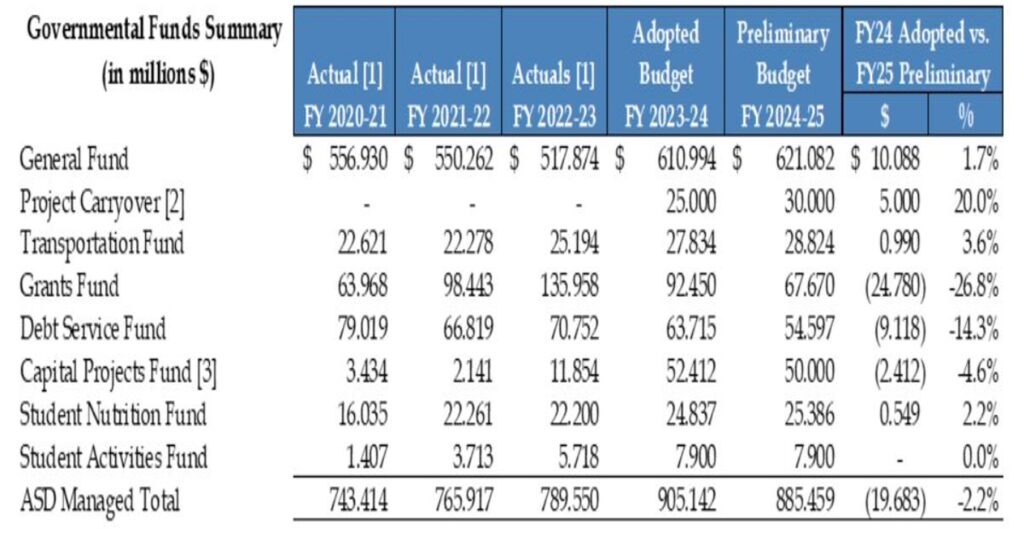
The Anchorage School Board admitted this week that it can get through the next school year with a very small increase in the Base Student Allocation, also known as the BSA.
This runs counter to the education industry’s cries to the Alaska Legislature that it needs a BSA increase of $1,413 just to keep its doors open.
The board figured out how much it would cost to keep all the previous programs it was going to do away with to balance the budget.
This discussion was neither on the record in the board meeting nor in the budget documents.
The amount the board arrived at was a minimal $110 BSA increase from the Legislature.
The board then discussed adding programs and teachers back into the previous budget.
During the discussion, Board Vice Chairman Carl Jacobs offered an amendment to next school year’s budget that added $8,781,000 for a total of $894,240,584. This would be a net decrease of $10,901,416 from last year’s budget.
Even though this is a decrease of about 1.2%, the district has lost 894 students since last school year — a more than 2% loss in students.
The vote was 7-0 in favor of the amendment to increase spending.
Here are the details for the increased spending:
• Reverse the proposed elimination of 10 holdback teacher full-time equivalent (FTE) at a cost of $1,237,737; • Reverse the proposed elimination of 36.30 teacher FTE across the district at a cost of $4,548,839; • Reverse the proposed elimination of 5 language immersion FTE, at a cost of $604,399; • Reverse the proposed elimination of 18 IGNITE FTE, at a cost of $2,204,016; • Ensure that the Pupil: Counselor metric is 300:1 or less at all eight comprehensive high schools by allocating an additional 1.5 net Counselor FTE across Chugiak, Service and South high schools, so that each would receive an additional 0.5 Counselor FTE, at a cost of $186,000.
Community members showed up in force to complain about the elimination of the gifted-student IGNITE program’s teachers. Their shouts were heard, and the program was restored in the budget.
Sixty-nine teacher FTEs were not eliminated. These positions were budgeted at a total of $8,594,991. Note that these may be vacant, funded teacher positions that are never actually filled.
Only member Dave Donley offered to cut extraneous expenses that add nothing to classroom instruction. His amendments would have reduced the budget by about $10 million but the board would have nothing to do with that.
Donley offered an amendment that would decrease the funding of the Coalition for Education Equity, a nonprofit that lobbies for more money for rural schools. The Anchorage taxpayer pays $30,000 per year to this nonprofit. According to Donley, “The CEE does not support the best interests of the Anchorage taxpayer.” Anchorage is the only one of the Big 5 school districts that funds the CEE.
The CEE opposes the formation of local governments in rural Alaska that would be required to levy local taxes to support their schools, opposes the number of students needed to qualify for a school, opposes the need for parental consent for getting personal information of students, and opposes ASD’s efforts to get a new district cost study that would benefit the ASD. Donley’s motion got no second, so it died.
Donley also offered an amendment to cut the $44,000 that the district pays to the Council of Great City Schools. That group represents very large urban school districts whose values do not represent our school district. Member Pat Higgins seconded the motion. It failed 5-2.
Member Donley offered an amendment to reduce non-classroom administrative costs by $2.245 million. Member Kelly Lessens seconded the motion for discussion. The board refused to reduce these expenses by a vote of 6-1.
Donley also moved to defund the Alaska Association of School Boards because Anchorage is severely underrepresented. The AASB opposes the formation of local governments so they can tax and fund their schools. Board president Margo Bellamy is on the AASB board. This amendment also failed, due to no second.
Member Donley moved to cut the Office of Equity and Compliance, now called the Office of Community Engagement but there was no second to his motion, so it died.
So, the board says it is heading to a fiscal cliff while adding nearly $9 million of non-classroom spending to next year’s budget.
To balance the budget, the district is using $71.2 million from its piggy bank savings account.
The budget reveals that the district only needs a very minimal increase in the BSA so that it doesn’t have to cut its dues and fees to marginally helpful organizations. This is interesting because Anchorage has about 33% of the state’s student population.
The board will present its budget to the Anchorage Assembly, but it is, for now, an unbalanced budget.
It is betting on a “wing and a prayer” that the Legislature will at least increase the BSA by a minimum of $110, thus balancing its budget.
The final vote on the amended budget for next school year was 6-1, with Dave Donley voting “no.”
Alaska Republicans are going into their local convention season, with the “organized” House district subdivisions of the party holding meetings to choose delegates to the Republican state convention. Some of the House districts are so heavily democrat-dominated or so spread out that they don’t have local Republican committees or officers (Districts 37-40).
The district convention is the process politically active Alaskans go through in order to be considered delegates to the Republican National Nominating Convention, which will be held in Milwaukee, Wisconsin from July 15-18.
It’s grassroots in action: The district conventions elect delegates to the state convention, which is April 19-21 in Anchorage. That’s where the party members vote on who will be among the 26 of 29 delegates to Wisconsin. Three of the other delegate positions are reserved for the party chair, national committeewoman, and national committeeman, for a total of 29.
All delegates (and alternates) chosen go to Milwaukee must pay their own way to convention and cover all of their own hotel and most of their transportation, food, and other associated costs. Therefore, those who want to be delegates to the state convention need to be prepared to pay their own way, should they be chosen by their peers to go to the national convention.
Homer is the first to hold a district convention, on March 2. Not only will locals attend, but other Republicans may drop in — they just can’t vote unless they are in the district. Homer can expect to see Carmela Warfield in attendance; she is running for party chair and is heading to Homer for the district meeting.
After Homer comes Eagle River on March 4. The entire list is below:
Meanwhile, for all Republicans, even those not engaged in district grassroots meetings, the Republican Presidential Preference Poll is on March 5. Again, in those districts that have enough volunteers to run a caucus-by-ballot event, the day gives Alaska Republicans the opportunity to tell the party who they prefer for president among the three that are on the caucus ballot (having paid a fee to the party and being a registered federal candidate): Donald Trump, Nikki Haley, and Vivek Ramaswamy (who has dropped and endorsed Trump).
More about the Presidential Preference Poll and how to take part in these stories:
In the logic of some, a developing infant in the womb is only a baby if the mom wants it to be. Otherwise, it’s extraneous tissue.
The debate over when a living organism in the womb actually has any rights at all has been debated for decades in America. A bill by Alaska House Rep. Kevin McCabe of Big Lake is proposing to give greater clarity to the definition, and that has abortion-promoters up in arms, fearing that it will lead to a limit on abortions in Alaska.
House Bill 107 has been discussed and debated in House Judiciary Committee this week, where Democrats argue that a fetus having personhood has too many ramifications for abortion.
But McCabe says Alaska has better laws defining death than defining life, and it’s fair to give the Alaska Supreme Court some direction.
The bill was filed over a year ago but has been sitting in the queue in House Judiciary. This week, the debate started, although it’s unclear that the bill would ever pass the liberal majority running the Senate.
“Person” means a natural person or entity that has the moral right of self-determination, McCabe said.
“Life” is defined as the property or quality that distinguishes a living organism from a dead organism or inanimate matter and that is manifested in the function of a metabolism, growth, reproduction, a response to stimuli, or adaption to the environment, each of which originates within the organism, he said.
The Alaska Constitution, in Article I, Section 1, grants all humans the natural right to life.
“Thus, every person’s right to life must be protected by the State. Article 1, section 3, further states that no person is to be denied the enjoyment of any civil or political right because of race, color, creed, sex, or national origin. This is true regardless of age, level of dependency, citizenship, or viability. And this protection must not be denied to any human — even the pre-born. Further, a viability test to determine whether a person’s life is worthy of protection would also be unlawful,” McCabe said in his sponsor statement.
In fact, if a pregnant woman is intentionally injured and loses her child as a result of that injury, the State of Alaska considers that a murder — at any stage of the unborn child’s life. If the mother and unborn child both die, it’s double-homicide, at any stage of the child’s development.
McCabe cites court cases that concur with the establishment of a fetus as a distinct person:
In Gonzales v. Carhart, the Supreme Court wrote that the unborn child is a living individual, separate and distinct from the mother. In this 2007 decision, the Court did not consider the preborn child as merely a part of the mother’s body.
In Bonbrest v. Kotz, Justice McGuire stated: “From the viewpoint of the civil law and the law of property, a child en ventre sa mere is not only regarded as human being, but as such from the moment of conception—which it is in fact.
In Marbury vs. Madison, the court wrote: “The very essence of civil liberty certainly consists in the right of every individual to claim the protection of the laws, whenever he receives an injury… The government of the United States has been emphatically termed a government of laws, and not of men. It will certainly cease to deserve this high appellation, if the laws furnish no remedy for the violation of a vested legal right.” That decision cemented the individuality of the pre-born child and guarantees him or her a civil right to claim protection under the law; this includes the right to privacy found in the Alaska Constitution, McCabe argues.
He also cited work by Dr. Horatio R. Storer, who, in the 1800’s wrote:
“Allowing, then, as must be done, that the ovum does not originate in the uterus; that for a time, however slight, during its passage through the Fallopian tube, its connection with the mother is wholly broken; that its subsequent history after impregnation is one merely of development, its attachment merely for nutrition and shelter – it is not rational to suppose that its total independence, thus once established, becomes again merged into total identity, however temporary.”
Storer led the Physicians’ Crusade Against Abortion, and his scientific approach has still not been refuted: The life of the unborn human begins independent of the mother’s body.
“Following the science then, it is illogical to conclude that the life of the pre-born human being (which was previously independent of the mother) ceases to exist during the time that he/she is in the womb. In other words, the egg, and the sperm, which are now subdividing are an independent life and do not terminate just because they have attached to the mother for nurturing and support. When a male sperm meets a female egg, both cease to exist independently, replaced by a living human in the earliest stage of development: conception. This life has separate DNA and is separate from the mother. Every major medical textbook on the subject teaches this,” McCabe writes.
It’s time Alaska defines “person” and “life” for the purpose of the Alaska Constitution, McCabe says: “It’s time to follow science, open our eyes and ears and recognize the personhood of the pre-born. It’s time to fix our Constitution and statutes, and this bill does that.”
Other states have laws that define fetuses as humans, notably Alabama, South Carolina, and Georgia.
McCabe has an uphill battle in Alaska, where much of the population is pro-choice. In a 2014 small survey by Pew Research Center, over 60% said abortion should be legal in all cases.
According to the Guttmacher Institute, which promotes abortion, in Alaska, 15,700 of the 146,228 women of reproductive age became pregnant in 2011. 73% of these pregnancies resulted in live births and 12% in induced abortions.
During the Judiciary Committee hearing, Anchorage Democrat Rep. Cliff Groh, D-Anchorage asked McCabe if the law would lead to abortionists being prosecuted for homicide. McCabe said that it was not the intent of HB 107, and Alaska Supreme Court has ruled abortion to be covered by the privacy clause of the Alaska Constitution.
“It’s not the intent of this bill to send the stormtroopers into an abortionist’s office or a doctor that had to perform an abortion for one reason or another,” McCabe said.
Read Alaska’s 2022 abortion report at this State of Alaska Department of Health link. Since 2003, the number of abortions being performed in Alaska has been steadily declining, according to the report. In 2003, there were 1,787 abortions, but by 2022, the number had dropped to 1,238. There is no credible polling that shows if this is because of attitudinal changes toward the procedure or if there are other factors, such as women of child-bearing age moving away; Alaska has been seeing outmigration from the child-bearing age demographic.
Planned Parenthood of Alaska has sent a call for action out to oppose the bill, calling HB 107 “an extremist bill that attempts to assert personhood and legal rights beginning at conception — which could have staggering impacts on the right to abortion, IVF, and some forms of contraception.” In other words, it would cut into the group’s profit margin.