Thursday, June 18, 2026
Home Blog Page 495

Secretary of Defense Austin back in hospital

Update: Late Sunday night, the Pentagon updated its report on Secretary of Defense Lloyd Austin. He is in the critical care unit of Walter Reed after having undergone a series of tests. The Defense Department said it is unclear how long he will be hospitalized.

On Sunday afternoon, Secretary of Defense Lloyd J. Austin III was transported by his security detail to Walter Reed National Military Medical Center to be seen for symptoms suggesting an emergent bladder issue, the Pentagon said in a statement. He was admitted overnight.

The Deputy Secretary of Defense and the Chairman of the Joint Chiefs of Staff have been notified. Additionally, White House and Congressional notifications have occurred, unlike his previous hospitalizations, which he kept secret.
 
“At this time, the Secretary is retaining the functions and duties of his office. The Deputy Secretary is prepared to assume the functions and duties of the Secretary of Defense, if required. Secretary Austin traveled to the hospital with the unclassified and classified communications systems necessary to perform his duties,” the Pentagon said.

In a later press statement, the Pentagon said all of Austin’s duties and functions were transferred to Deputy Defense Secretary Kathleen Hicks at about 4:55 p.m. Sunday.

Austin spent two weeks in the hospital after a medical crisis that occurred after prostate cancer surgery in December. While the president was on vacation and the deputy secretary of defense was also out of the country on vacation, Austin didn’t initially inform them of his condition or the fact he was in the intensive care unit.

But Biden has appeared to forgive Austin for the poor judgment. On Feb. 29, Austin is expected to testify to the House Armed Services Committee about his previous hospitalizations and the secrecy surrounding them.

Hawaii Supreme Court cites HBO movie as it upholds conviction for unregistered firearm

The Hawaii Supreme Court says that “spirit of Aloha” overrides the U.S. Constitution. The court upheld a lower court conviction of a man who had carried a gun in public without having a permit.

In its ruling, the court cited the “spirit of Aloha” and referred to an HBO crime series, “The Wire.”

The ruling is seen by many as a defiance of the U.S. Supreme Court decision in 2022 that upheld the Second Amendment.

“The thing about the old days, they the old days,” the Hawaii Supreme Court ruled.

For those who didn’t have HBO, that is a quote from season four, episode three of “The Wire,” and it was intended to convey that the founding of the country and the culture of the past doesn’t direct current times or current interpretation of constitutional law.

Justice Todd Eddins wrote that the “spirit of Aloha clashes with a federally-mandated lifestyle that lets citizens walk around with deadly weapons during day-to-day activities.”

The ruling says “there is no state constitutional right to carry a firearm in public.”

The case involves Christopher Wilson, who was charged in 2017 on various counts for carrying an unregistered gun, which he said was for self defense after he saw a group of men on his Maui property at night. He was arrested for trespass while he was hiking “and gazing at the moon,”  police arrested Christopher L. Wilson, who was “hiking and gazing at the moon,” near Maalaea, while he carried a load .22 pistol in his waistband.

Wilson’s attorneys argued that a 2022 U.S. Supreme Court ruling, New York State Rifle & Pistol Association v. Bruen, reaffirmed that carrying a firearm in public is a constitutionally protected right.

The ruling ruling says Hawai’i’s history “does not include a society where armed people move about the community to possibly combat the deadly aims of others.” It makes Hawaii into a separate sovereign state, not subject to the U.S. Supreme Court.

“We reject Wilson’s constitutional challenges. Conventional interpretive modalities and Hawaiʻi’s historical tradition of firearm regulation rule out an individual right to keep and bear arms under the Hawaiʻi Constitution. In Hawaiʻi, there is no state constitutional right to carry a firearm in public,” the ruling said.

“The court found that the text, purpose, and historical tradition of the Hawaii Constitution do not support an individual right to carry firearms in public. The court reasoned that the language of article I, section 17, which mirrors the Second Amendment, ties the right to bear arms to the context of a well-regulated militia. It does not extend this right to non-militia purposes. The court also considered Hawaii’s history of strict weapons regulation and the intent of Hawaii’s framers,” explains law.justia.com.

The full ruling can be read at this link.

Niki Tshibaka: Frederick Douglass, America’s Moses

By NIKI TSHIBAKA

In the early 1800s, a modern-day Moses was born to Antebellum America. Like Moses, he was born into slavery and would find freedom by way of a river; like Moses, this child, delivered on the Eastern Shore of the Chesapeake Bay, would become a deliverer for his people; and, like Moses, his would be a simple message for our nation’s pharaohs: “Let my people go.” 

His name was Frederick Douglass.

By all appearances, Douglass was destined for a life of servitude and suffering. But he resolved that the institution of slavery would not determine his destiny. As a young man, he escaped to freedom by taking a steamboat up the Delaware River to Philadelphia. In time, he rose to heights most African Americans of his generation thought impossible. A self-educated man, he became a prolific writer and published his own antislavery newspaper, The North Star.

He also became an advisor to President Abraham Lincoln and the first African American confirmed by the U.S. Senate for a presidential appointment. Most importantly, Douglass became one of the greatest abolitionist voices in American history, convicting America’s conscience with his blistering rebukes of its hypocrisy in tolerating slavery.

“The existence of slavery in this country brands your republicanism as a sham, your humanity as a base pretense, and your Christianity as a lie,” he roared.

Douglass’ advocacy was grounded in propositional truths, imbuing his arguments with an enduring relevance that speaks powerfully to our ongoing national dialogue on race, justice and equality. For example, while he fervently opposed racism, Douglass also decried what he perceived as the benevolent bigotry of White abolitionists. Racism was dehumanizing, an assault on the inherent dignity of Black Americans. The recurrent, overweening generosity of his abolitionist allies and the employment of their power and privilege to artificially uplift Black people, however, also were demeaning and destructive to Black Americans.

Douglass was a principled purist in his pursuit of equality. He believed a sincere commitment to righting the wrongs of slavery required equal treatment, not special treatment, for Black people. Equality, in any meaningful and lasting sense, would be achieved only through justice, not generosity.

Our Declaration of Independence had masterfully established the propositional truth that justice was rooted in the unchanging laws of nature and nature’s God. Conversely, White America’s generosity, and its episodic abdications of privilege, were subject to the ever-fickle vicissitudes of human will. White paternalism would not carve a path to racial equality. Instead, it would calcify existing societal structures of racial inequality, resulting in slavery by another name and further entrenching Black dependence on White America. 

If Black Americans wanted to stand beside White Americans as true equals, it had to be on their own feet and by their own merit; as Douglass put it, without “prop[ping] up the Negro.” Anything less would create only a chimera of equality:

What I ask for the Negro is not benevolence, not pity, not sympathy, but simply justice. The American people have always been anxious to know what they shall do with us. . . . Do nothing with us! Your doing with us has already played the mischief with us. . . . If the apples will not remain on the tree of their own strength, . . . let them fall! I am not for tying or fastening them on the tree in any way, except by nature’s plan, and if they will not stay there, let them fall. And if the Negro cannot stand on his own legs, let him fall also. All I ask is, give him a chance to stand on his own legs! Let him alone! . . . Let him fall if he cannot stand alone! 

Despite his criticisms of America, Douglass labored to reform our nation, not remake it – to incarnate its founding ideals, not uproot them. He advocated for the guarantee of certain inalienable rights, not for the promise of certain inalienable outcomes. He had great faith our nation one day would make the full measure of freedom’s blessings the birthright of every American.

Like Moses, Douglass would not live to see the fulfillment of his vision for our nation. But he would help lead us to the river’s edge of that Promised Land, believing his life and hopes were a prophetic glimpse of what was to come. 

As I write this article, I am particularly inspired by the words Douglass spoke in a lecture to some Black students: “What was possible for me is possible for you.” Today, it is a message of encouragement for Americans of every race, color, and creed. Douglass stands astride history with that stirring reminder for us all:

What was possible for me is possible for you.

There is reason for hope.

Niki Tshibaka is a former federal civil rights attorney and government executive. 

Rep. Andrew Gray on Must Read Alaska Show: Alaska’s poor need full PFD

By JOHN QUICK

State Rep. Andrew Gray says Alaskans who are poor need the full Permanent Fund dividend, and that’s a big reason why he supports it, rather than the annually negotiated PFD checks that have short-changed recipients.

In this episode of The Must Read Alaska Show, host John Quick is joined by Rep. Gray. Gray of Anchorage. He says he is invested in Alaska’s future, advocating for the full funding of the Permanent Fund dividend to ensure Alaskans continue to benefit from this state program.

As a veteran and physician assistant, Rep. Gray, a Democrat, provides insights into the House Veterans’ Affairs Committee work and discusses House bills and resolutions of interest to Alaskans.

Gray, a Democrat, also shares his legislative goals, emphasizing the need for long-term fiscal plans to secure Alaska’s prosperity.

Beyond politics, Andrew connects with his community through his own popular podcasts, “East Anchorage Book Club” and “East Anchorage Matters,” where he explores diverse perspectives and matters close to the heart of East Anchorage residents and beyond.

Check out Gray’s personal and political podcasts here: https://podcasts.apple.com/us/podcast/east-anchorage-matters-with-rep-andrew-gray/id1667318355

Diesel tank spill at Kwigillingok is over 6,000 gallons

12

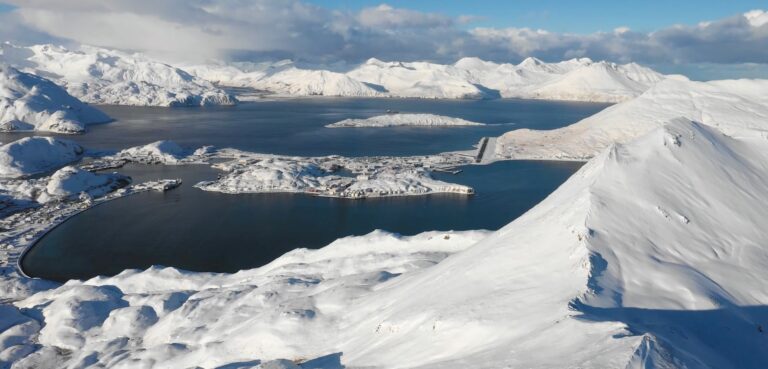
The southwest Alaska community of Kwigillingok reported a sizable oil spill from its bulk fuel tank farm, which is about 500 feet from the Kwigillingok River.

The spill was discovered after the Kwik Inc. staff returned to work on Feb. 8. The diesel fuel came from a 10,000-gallon tank that overflowed. The spill was about 6,467 gallons at the latest estimate of oil that has escaped the secondary containment system. Oil was pilling at a rate of about 20 gallons a minute out of the transfer pump, which was shut off immediately upon the discovery of the spill. At this point, it appears that human error was the cause of the spill.

Kwik Inc., the village corporation, reported about 95 gallons have been recovered.

Fuel is brought into the villages before freeze-up in the fall and Kwik Inc. stores the fuel that heats the homes, school, and other buildings all winter, and powers the generators for the village’s electricity.

The Alaska Department of Environmenta lConservation, U.S. Coast Guard, and other state and federal agencies have been coordinating response efforts and staff from the agencies are on their way to Kwigillingok.

At this time, there are no reports of wildlife in the area, but this is an area that has numerous salmon streams. The spill area is frozen tundra and a small pond, but no discharge has occurred into the river. There’s very little snow on the tundra this winter.

Kwigillingok is located in a low-lying area on the Bering Sea and has been affected by coastal flooding in recent years.

Alexander Dolitsky: Economic development, traditional uses can coexist in Alaska

By ALEXANDER DOLITSKY

In the mid-1980s, I was employed as a social scientist by the Forestry Sciences Laboratory, a research division of the United States Forest Service in Juneau.

My job assignment was to research subsistence activities in Southeast Alaska. As a result of my research, two major reports were produced and subsequently published by the Alaska-Siberia Research Center, titled: “Harvest, Distribution and Exchange of Subsistence Resources in Southeast Alaska” (1992) and “Politics and Environment in Alaska” (1994).

Certainly, the dilemma of economic development and traditional use of renewable resources is still current and complex in Alaska. These complexities arise due to differences in socio-economic objectives and procedures for industrial development and traditional use of renewable resources.

Economic development tends to place stronger emphasis on quantitative increase of production and utilization of natural resources—resources aimed at enhancing the material well-being of people.

Subsistence, or traditional use of renewable resources, on the other hand, emphasizes management of more qualitative aspects of the human environment and preservation of natural resources, which can add moral quality to human. 

Historically, subsistence had been the domain of economists and nutritionists. Currently, however, subsistence is considered to be a subject for ecologists, biologists, geographers, anthropologists, psychologists, and social scientists. Thus, subsistence became a multidisciplinary field where human-environment relationships are the main focus of study. 

Increasing interest in human-environment interactions is a matter of deep concern to the citizenry, government, and scholars. These concerns are confined primarily to two general areas: (1) economic development and its impact on the natural environment; (2) management programs and/or interrelationships among human activities, public policy alternatives and environmental systems, i.e. how particular commonly owned natural resources are to be utilized. 

These institutional and public concerns are oriented toward subsistence issues which make this field intellectually complex, scientifically debatable, sometimes controversial, and often politically irreconcilable with these various viewpoints. Taking these factors into account, it seems that in order to resolve differences of opinion, which appear to be counterproductive, and to address the research and management problems effectively, it is important at the outset to determine the central characteristics of subsistence. 

I am not attempting to suggest a ‘magic’ concept that should please everyone. My research and intentions, however, had been pertained to society’s decision-making systems and institutions, yet be useful vis-a-vis natural resources problems where private property rights should be in harmony with the determinations of prevailing social institutions.

Indeed, subsistence issues are particularly important in Alaska because the economy of rural communities is largely subsistence-based or mixed. To many residents in Alaska, subsistence also means a lifestyle, a set of sociocultural values, and self-respect for formerly totally independent people. Subsistence activities in rural Alaska not only strengthen the family unit, but also provide traditional foods necessary for an adequate diet and meaningful work for rural populations. It fills the human needs for self-reliance, self-realization and self-fulfillment.

Internationally, subsistence refers to those economic activities (e.g., hunting, fishing, gathering, farming, herding, crafting, trading, tool-making, transportation, skill training, storage, energy development, and so on) which are relatively self-contained within a community or region and are not conducted for profit-maximization, but aim primarily for present consumption, and are governed by traditional patterns rather than market conditions or immediate needs. 

Taking these social and economic factors into consideration, in 1978, the State of Alaska’s subsistence law was passed, which essentially defined subsistence uses for all Alaskan residents as: “The customary and traditional uses of wild, renewable resources for direct personal or family consumption, such as food, shelter, fuel, clothing, tools, or transportation; for the making and selling of handicraft articles out of nonedible by-products of fish and wildlife taken for personal or family consumption; and for the customary trade, barter, or sharing for personal or family consumption” [AS 16.05.940 (30)]. 

Then, in 1980, Congress passed the Alaska National Interest Lands Conservation Act (ANILCA), which provided for “… the customary and traditional uses by rural Alaska residents of wild, renewable resources for direct personal or family consumption such as food, shelter, fuel, clothing, tools, or transportation … “ (Title VIII: Sec. 803). In 1986, the Alaska Legislature amended its 1978 law to provide for a rural resident subsistence preference in order to comply with ANILCA. 

Unfortunately, ANILCA does not provide a clear, unambiguous definition of subsistence users or subsistence uses. ANILCA requires a priority for subsistence uses on federal lands, which comprise about 60% of Alaska’s land. Under section 805(d) of ANILCA, however, the State of Alaska retains management authority over the fish and wildlife on ‘public’ (federally managed) lands in Alaska as long as it has programs which comply with Title VIII. Otherwise, fish and wildlife management on public lands reverts to federal agencies. 

In December 1989, the Alaska Supreme Court found that the rural subsistence preference violated the clause of the Alaska constitution which reserves fish and wildlife resources for ‘the common use’ of all residents of the state. The court declared the state’s law unconstitutional, a ruling which placed Alaska out of compliance with ANILCA. As a result of the Supreme Court ruling, the federal government took over the management of subsistence on federal lands in Alaska. More importantly, protection of rural communities’ traditional fish and wildlife resources may be threatened because now all Alaskans qualify as subsistence user on state lands. 

It is obvious that subsistence hunting and fishing, which is legally defined as traditional and customary use of resources, is often conflicting with the reality of subsistence practices in Alaska. There is nothing traditional, for example, in using rifles and powerboats. Wildlife and water resources are often also abused under the “umbrella” of the subsistence uses or users for whom subsistence mode of life is definitely not a matter of physical survival but rather recreational and/or commercial activities.

In spite of irreconcilable philosophical differences, our effort should be directed towards a common goal, i.e., the optimal and sensible utilization of the earth’s resources to achieve the highest quality of spiritual and economic life. Indeed, differences between traditionalism and development are irreconcilable in principle; for example, wilderness preservation and timber cutting, subsistence way of life and the modern mode of production.

These differences, however, can be minimized if there is a clear understanding and cooperation among those whose main interests lie on either side. Developers must consider rights and requirements for environmental values, the conservation of which is important for scientific, recreational and historical reasons. On the other side, those concerned with conservation must be equally ready to recognize the political, social and economic forces behind the development and be prepared to compromise and give necessary assistance when it is needed.

Traditionalists should realize that the process of economic development is a part of social evolution and cultural change through which nations seek to improve their well-being. The process of exploration of natural resources cannot be overlooked or stopped and, therefore, it should be rationally developed and efficiently utilized, bearing moral responsibility for the preservation of its own natural resources.

In short, if the population of Alaska would grow and prosper, then economic development in Alaska must grow and prosper as well.

Alexander B. Dolitsky was born and raised in Kiev in the former Soviet Union. He received an M.A. in history from Kiev Pedagogical Institute, Ukraine, in 1976; an M.A. in anthropology and archaeology from Brown University in 1983; and was enroled in the Ph.D. program in Anthropology at Bryn Mawr College from 1983 to 1985, where he was also a lecturer in the Russian Center. In the U.S.S.R., he was a social studies teacher for three years, and an archaeologist for five years for the Ukranian Academy of Sciences. In 1978, he settled in the United States. Dolitsky visited Alaska for the first time in 1981, while conducting field research for graduate school at Brown. He lived first in Sitka in 1985 and then settled in Juneau in 1986. From 1985 to 1987, he was a U.S. Forest Service archaeologist and social scientist. He was an Adjunct Assistant Professor of Russian Studies at the University of Alaska Southeast from 1985 to 1999; Social Studies Instructor at the Alyeska Central School, Alaska Department of Education from 1988 to 2006; and has been the Director of the Alaska-Siberia Research Center (see www.aksrc.homestead.com) from 1990 to present. He has conducted about 30 field studies in various areas of the former Soviet Union (including Siberia), Central Asia, South America, Eastern Europe and the United States (including Alaska). Dolitsky has been a lecturer on the World Discoverer, Spirit of Oceanus, andClipper Odyssey vessels in the Arctic and sub-Arctic regions. He was the Project Manager for the WWII Alaska-Siberia Lend Lease Memorial, which was erected in Fairbanks in 2006. He has published extensively in the fields of anthropology, history, archaeology, and ethnography. His more recent publications include Fairy Tales and Myths of the Bering Strait Chukchi, Ancient Tales of Kamchatka; Tales and Legends of the Yupik Eskimos of Siberia; Old Russia in Modern America: Russian Old Believers in Alaska; Allies in Wartime: The Alaska-Siberia Airway During WWII; Spirit of the Siberian Tiger: Folktales of the Russian Far East; Living Wisdom of the Far North: Tales and Legends from Chukotka and Alaska; Pipeline to Russia; The Alaska-Siberia Air Route in WWII; and Old Russia in Modern America: Living Traditions of the Russian Old Believers; Ancient Tales of Chukotka, and Ancient Tales of Kamchatka.

A few more of Dolitsky’s past MRAK columns:

Read: Russian Old Believers in Alaska live lives reflecting bygone centuries

Read: Russian saying: Beat your friends so your enemies fear you

Read: Neo-Marxism and utopian Socialism in America

Read: Old believers preserving faith in the New World

Read: Duke Ellington and the effects of Cold War in Soviet Union on intellectual curiosity

Read: United we stand, divided we fall with race, ethnicity in America

Read: For American schools to succeed, they need this ingredient

Read: Nationalism in America, Alaska, around the world

Read: The case of the ‘delicious salad’

Read: White privilege is a troubling perspective

Read: Beware of activists who manipulate history for their own agenda

Read: Alaska Day remembrance of Russian transfer

Read: American leftism is true picture of true hypocrisy

Read: History does not repeat itself

Read: The only Ford Mustang in Kiev

Read: What is greed? Depends on the generation

Passing: Former Rep. Tom Anderson

34

Tom Anderson, a lifelong Alaskan and managing partner at Optima Public Relations, passed on Feb. 10 after a long illness.

Anderson had hosted a political talk radio show on KVNT in the Anchorage/Mat-Su since 2011. He had served on the Anchorage School Board, the Zoning Board of Examiners and Appeals, the Municipal Light & Power Commission, and the Anchorage Parking Authority. He was elected to the Alaska House of Representatives for two terms.

Although when he was younger and in the Legislature he became embroiled in a corruption scandal and was convicted in 2007 of corruption, he maintained that the courts had simply criminalized being a legislator.

He served a little more than three years in an Oregon prison, but he didn’t let that define his life. Upon his release, he became a partner with his father, Tom Anderson, Sr., at Optima Public Relations, and rehabilitated his career.

Anderson attended Muldoon Elementary School and Clark Junior High, and graduated from Bartlett High School in 1985. He earned a bachelor’s degree in political science and a master’s degree in public administration at University of Alaska Anchorage. He obtained his juris doctorate from Hamline University School of Law in Minnesota in his early 30s. He served as a legislative aide for six years for Rep. Terry Martin and as a House representative for East Anchorage for two terms. In 2000 he was on the transition team for Anchorage Mayor George Wuerch.

Anderson managed political campaigns for Republicans and was a political consultant as well as a writer, having had articles published in The Hill, Alaska Business Monthly, and other publications.

In his younger years, he was married to former Sen. Lesil McGuire. At the time of his death, he was married to Lailanie Garcia Anderson, whom he adored; he was deeply devoted to her and his children.

Because he was a former legislator, the Alaska flag will be flown at half staff at a day coordinated with the family through the Office of the Governor.

Linda Boyle: Are mask mandates a First Amendment issue?

30

By LINDA BOYLE

Recently, a federal appeals court in New Jersey shot down plaintiffs’ refusal to wear a mask during a school board meeting in 2022.  New Jersey still had mandatory mask wearing in effect due to the “public health emergency” related to Covid-19. The plaintiffs’ position was they had a protected First Amendment right to decide whether to mask or not mask. 

The suit involved two ordinary citizens attending a school board meeting, who stated they had been retaliated against by their school boards for refusing to wear the mandated face covering. Because they refused to mask, both were arrested for trespassing.  

Was the court’s decision based on the fear of a non-masked person more than six feet away or made because it could—a power play to demonstrate you must comply.  

The court’s decision stated, “A question shadowing suits such as these is whether there is a First Amendment right to refuse to wear a protective mask as required by valid health and safety orders put in place during a recognized public health emergency.  Like all courts to address this issue, we conclude there is not.”

The gist of this is that a school board can mandate that people wear any FDA Class II medical device, which is what these surgical masks are, in order to attend its meetings.

Both plaintiffs are appealing the decision to the U.S. Supreme Court.

I am not a lawyer. What I wonder about, however, was what scientific data were used to push the coercive and mandatory use of masks? 

What scientific data were used to abridge the plaintiff’s First Amendment rights?

Let’s take a trip down memory lane. Remember how at the beginning of this “pandemic,” Dr. Anthony Fauci, aka Dr. Science, said masks were not recommended? 

Then Dr. Fauci reversed himself and believed masks were needed to help “flatten the curve.”

He said he changed his recommendation when he thought there was a sufficient supply for both the medical personnel and the public. 

Then there was the debate over the N95 masks. As a nurse, I was amazed at how people with beards were running around with these type masks. I know N95 masks needed special fitting and if you have a beard, a different respirator is needed,  (per Journal of the American Medical Association (JAMA); April 21, 2020 Volume 323, Number 15)

If masks were the “be all and end all,” why is it we are always running around without them (save some diehards) during all seasons when other respiratory diseases could easily infect us?   

How effective was this “you must mask strategy” in the U.S?  

Why, with all the mask mandates and social distancing, not visiting family at holidays, not being able to visit dying family members in hospitals, and running away from the unvaxxed, did the U.S. have one of the highest percentages of Covid deaths in the world?

Statistics from April of 2023 showed more than 1.13 million people in the U.S. died from/with Covid-19 over a three-year period, and during much of that time, masks were required in many public places.

There have been all types of studies on both sides as to why masks are either important or not needed. Many of these studies showed the negative effects of masking — social awkwardness for kids who couldn’t see the facial expressions of teachers and fellow students, and decreased oxygen levels, to name a few. I cannot find any compelling data to show that this was an absolute necessity to save the world during this Covid-19 experience.  

What I can find is a country divided. The masks wearers and non-mask wearers. I still see people wearing a mask while driving alone in their vehicle.

A mask should be your decision, especially since there is no solid data that state the efficacy of masks. And even the Centers for Disease Control and Prevention, in retrospect, said they weren’t effective at stopping the spread of Covid-19. 

With that said, I will tell you I did wear one on airplane travel because the mask Nazis were everywhere. My mask was plain cloth that was too big so I was able to breathe easily. And I always made sure to eat my meals on the planes so I could ‘legally’ take it off.  

That mask did absolutely nothing to protect me. But it made all the crazies happy.   

I’m dusting it off for the next round that I know is coming. Will the next “pandemic“ also require us to wear gloves because it the contaminant is caused through contact? Maybe we need a full biohazard suit.   

They are looking for just how far they can push us with their fear agenda. 

Linda Boyle, RN, MSN, DM, was formerly the chief nurse for the 3rd Medical Group, JBER, and was the interim director of the Alaska VA. Most recently, she served as Director for Central Alabama VA Healthcare System. She is the director of the Alaska Covid Alliance.

Chugach Electric board has special meeting Monday to confer secretly on Eklutna dam issues, and talk about nominating committee procedures

17

The board of Chugach Electric Association, the leading electric utility serving the Anchorage area, has called for a special meeting of its board members on Monday, Feb. 12, starting at 4 p.m. The meeting will be in the boardroom at the Association’s headquarters, 5601 Electron Drive in Anchorage. 

The primary focus of the meeting was initially about the future of the Eklutna Dam, a vital energy source contributing 6% of Southcentral’s power supply as well 90% of Anchorage’s drinking water, a hydro project that has garnered attention from environmental activists and the liberal majority of the Anchorage Assembly, which advocates for its removal and the restoration of salmon runs to Eklutna Lake.

Chugach Electric Association is a major shareholder in the Eklutna Hydropower Project along with Matanuska Electric Association, having bought out the Municipality’s shares during the sale of Municipal Light & Power to Chugach Electric in 2019. The sale was approved by voters in Anchorage in 2018.

The Eklutna Hydroelectric Project is the lowest cost power in Southcentral Alaska and is about approximately 25% of Chugach’s renewable generation portfolio. It helps establish reliability in the electric grid in Anchorage and supplies 90% of the domestic water supply for Anchorage.

However, the agenda has expanded to include discussions regarding the Nominating Committee, with additional items concerning interviews, deliberations, and voting procedures.

Last week, nominating committee member Leslie Ridle resigned from the committee because it was conducting interviews for potential board of director candidates in closed session.

According to sources familiar with the situation, the inclusion of the Nominating Committee topic on the agenda could signal a debate about the Chugach Electric board’s internal decision-making processes.

“Given the significance of both the Eklutna Dam and the nominating committee’s role in ensuring that the co-op is run by solid, qualified individuals, this special meeting holds substantial importance for Chugach Electric and the broader Anchorage community,” said a source close to the organization.

The Nominating Committee’s proceedings, specifically regarding interviews, deliberations, and voting, are done privately for several reasons:

  • Historically, interviews have been conducted behind closed doors to prevent unfair advantages for candidates who might tailor their responses based on preceding interviews.
  • Concerns have been raised about the potential for Chugach members, media representatives, or special interest groups to report on candidate responses, compromising the integrity of the selection process.
  • Maintaining confidentiality during interviews safeguards candidates from potential embarrassment or reputational harm.
  • Committee members seek the freedom to engage in candid discussions without fear of reprisal from external stakeholders, including the media, the board, employers, and Chugach staff.
  • Previous incidents of candidate volatility have underscored the importance of ensuring the safety of committee members.
  • Allowing candidate supporters to observe deliberations might unduly influence the decision-making process.
  • While voting is slated to occur in an open session, the decision to conduct it via secret ballot aims to shield committee members from external pressures and potential repercussions.

Those interested in observing or participating in the special meeting can attend in person. If they wish to speak, they must fill out a participation form: https://www.chugachelectric.com/meeting-participation-form 

The agenda for the meeting is at this link. 

The organization does not post its meetings on its Facebook page but the meetings are open to the public.