Thursday, May 14, 2026
Home Blog Page 410

National Libertarian Party picks Chase Oliver for its presidential nominee

Chase Oliver is the national Libertarian Party’s nominee for president. His running mate is Mike ter Maat. The two emerged victorious from the 2024 nominating convention in Washington, D.C., held this past weekend.

Oliver is a 37-year-old Libertarian activist who currently in Atlanta and has a career in business, with an emphasis in human resource management. “

He began his political activism opposing the War in Iraq under George Bush, aligning with the Libertarian Party after an encounter with a Libertarian during the Atlanta Pride Festival in 2010, his web page says.

Oliver ran for Congress for Georgia’s 5th district in 2020, and for Senate in 2022. In the 2022 race, he was credited with forcing a runoff between Raphael Warnock and Herschel Walker; Warnock won that runoff.

“He advocates the adoption of Ranked Choice Voting to avoid future runoffs,” his web page says.

Oliver has described himself as described himself as “armed and gay.” He is pro-choice on abortion, pro-gun rights, and adamantly anti-war. He’s against the death penalty, and also against prosecution of “victimless crimes,” which is a common phrase for prostitution. His platform is at this link.

Oliver has visited all 50 states, coming to Alaska in April to meet with the Alaska Libertarian Party officers in April.

His running mate, ter Maat, was born in Portland, Ore., and is a retired Florida police officer and economics instructor. He ran for the top of the Libertarian ticket, but after being eliminated for president, ter Maat endorsed Oliver and accepted Oliver’s offer to run as his vice presidential nominee.

Alaska’s Libertarian Party was once a stronghold in the country with the most Libertarians per capita and some of the only Libertarians holding public office. Rep. Dick Randolph, for example, was elected to the Alaska House in 1978 and again in 1980, under the Libertarian banner. He had previously served in the House as a Republican.

The Alaska Libertarian Party, however, has lost some of its momentum over the past 20 years. In 2004, when the population of Alaska was 659,000, there were 6,929 registered Libertarians in Alaska. That grew to 7,179 registered members of the party in 2014, but by 2024, with an overall Alaska population of 733,000, the party is back down to 6,659.

Rep. Comer report: Biden Green New Deal policies have resulted in higher gas and electric prices

The House Committee on Oversight and Accountability, led by Chairman James Comer (R-Ky.), released a scathing report late last week that reveals the consumer cost of the Biden Administration’s Green New Deal energy policies.

The report, titled “The Biden Administration’s Green New Deal: Paying More for a Dimmer Future,” asserts that these policies have resulted in higher gas prices, increased electricity costs, market confusion, and a host of regulatory challenges that collectively burden American consumers and businesses.

The Kobeissi Letter, a financial newsletter, confirms the claim that since Biden took office, prices have skyrocketed.

Chairman Comer did not mince words: “The Biden Administration weaponized the power of the executive branch to wage a war against American-made energy production and cement in place radical, far-left energy policies that jeopardize domestic energy development, overload America’s power grid, and raise costs on all American consumers and businesses,” he stated. “From day one, the House Oversight Committee has worked to expose the Biden Administration’s radical climate agenda. The Committee will continue to fulfill its responsibility to hold this Administration accountable for its detrimental Green New Deal policies that are impacting Americans across the country.”

Key Findings of the Report

Surging Gas Prices: The report highlights a sharp increase in gas prices since President Biden took office. On January 20, 2021, the day after Biden’s inauguration, gas prices averaged $2.39 per gallon. By February 25, 2022, the day following Russia’s invasion of Ukraine, prices had already climbed to $3.57 per gallon, suggesting that domestic factors, not just international events, were driving the increase. By June 14, 2022, the average national gas price had reached a record high of $5.016 per gallon.

Regulatory Burden: According to the report, the Biden Administration’s aggressive regulatory agenda has imposed over $1 trillion in additional costs on American businesses and consumers. This “whole-of-government” approach has resulted in millions of hours of new annual paperwork demands, stifling economic growth and innovation.

Electricity Prices: The report notes that electricity prices have surged faster than inflation over the past year, exacerbated by the administration’s push for electrification, including the promotion of electric vehicles (EVs) and expansion of data centers. The Bureau of Labor Statistics reported that electricity prices have risen more than any other commodity.

EPA Emissions Rule: The Environmental Protection Agency’s (EPA) new emissions rule for fossil fuel-fired power plants has been criticized for being neither feasible nor cost-effective. The report claims the EPA disregarded scientific and policy recommendations, as well as stakeholder feedback, which could jeopardize the stability of America’s power grid and elevate long-term energy costs.

Inflation Reduction Act (IRA) Costs: Federal subsidies under the Democrats’ Inflation Reduction Act are projected to distort markets and potentially cost taxpayers up to $3 trillion by 2050. Testimony from an expert witness during a recent subcommittee hearing highlighted these concerns, suggesting that the IRA’s production tax credits will have significant financial implications.

The release of this report underscores the deep partisan divide over the nation’s energy policies. While Democrats argue that the transition to green energy is essential for combating climate change and ensuring long-term sustainability, Republicans contend that the current approach is economically damaging and overly burdensome.

The findings in the report are likely to fuel ongoing debates about the future of American energy policy, particularly as the country grapples with balancing environmental goals against economic realities. With electricity prices and regulatory costs continuing to rise, the impact of these policies on the average American consumer remains a critical point of contention.

As the 2024 elections approach, energy policy is poised to remain a pivotal issue, with both parties seeking to sway voters by presenting their vision for the nation’s energy future. The House Committee on Oversight and Accountability’s report serves as a potent reminder of the significant economic stakes involved in this debate.

Watch video of ice breaking away from shore in Nome

Has summer arrived at Latitude 64.5006° N, just an ice floe south of the Arctic Circle?

Early in the morning on May 28, the landfast ice finally broke away from the shore and the Port in Nome, as can be seen in the radar imagery from the Sea Ice Group at the Geophysical Institute at University of Alaska Fairbanks. The Port of Nome usually plans on its ice-free season around the end of May or June 1; this opening up of the water in Norton Sound and the Bering Sea is right on schedule.

The image in the video is acquired by an 25 kW X-band marine radar mounted on a power pole on the Port of Nome causeway. Images are updated every 4 minutes. The video shows a 24-hour cycle of data and is updated hourly. You can view the updated video at this link.

Past imagery and animations can be found in at this (big files) UAF Google drive archive at this link.

In 2020, the ice went out by May 20, as shown in this photo by an MRAK reader:

On May 20, 2020, the ice had just left the shore, as shown in this photo by a MRAK reader.

The first cruise ship to arrive in Nome in 2024 is Holland America’s Westerdam, arriving on June 21 with up to 1,900 passengers and 800 crew.

Memorial Day in Anchorage and Wasilla with Gov. Dunleavy, Sen. Sullivan, Mayor Bronson, veterans, and patriots

Dignitaries and political figures were out and about in Alaska on Memorial Day, honoring fallen soldiers, sailors, airmen, and other military heroes who died in battle.

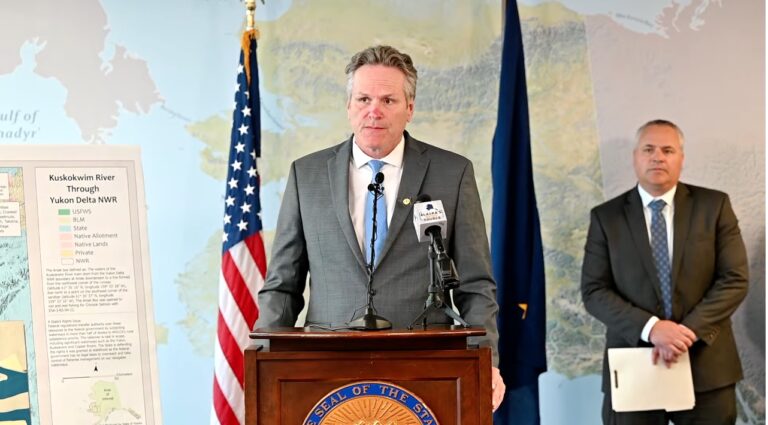
Sen. Dan Sullivan and his wife Julie attended both Memorial Day ceremonies in downtown Anchorage at the Alaska Veterans Memorial, and in Wasilla at the Veterans Wall. Gov. Mike Dunleavy attended Anchorage and Wasilla events as well.

Also in Anchorage at the Delaney Park Strip memorial service was Mayor Dave and Deb Bronson and Rep. Tom McKay.

Attending in Wasilla was Mayor Edna DeVries, Wasilla Mayor Glenda Ledford, House Speaker Cathy Tilton, and legislators, including Rep. Kevin McCabe.

Sen. Lisa Murkowski had a representative at the service on Joint Base Elmendorf-Richardson read her remarks but did not attend in person. Noted at the JBER event, the Memorial Day address sent by President Joe Biden was read aloud by someone, but no one at the event applauded afterward, leaving an awkward silence.

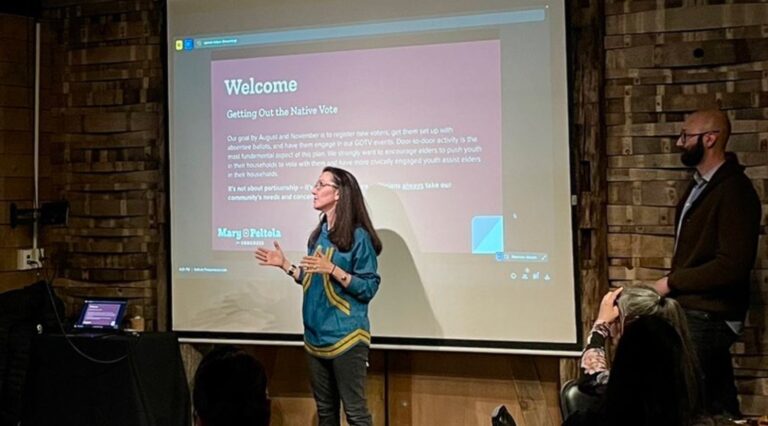
There was no sighting of Rep. Mary Peltola at any of the major events, nor did she appear to have sent a representative or a memorial wreath. Also missing from the Anchorage Memorial Day service was Anchorage mayor-elect Suzanne LaFrance, who reportedly declined the invitation from the mayor.

Congressional candidate Nick Begich attended both the Anchorage and Wasilla ceremonies.

STAND podcast: Let the boycotts begin, and the Veebs app developed by Chris Rhodes is here to help

By KELLY TSHIBAKA | STAND PODCAST

We’ve watched the Left grow exponentially in its use of modern day warfare to achieve its goals. It frequently uses the law, social pressure, and the education system to silence Americans and achieve their radical goals. However, Americans have discovered a way to effectively fight back – the free market system. 

We’ve recently seen a growing trend by Americans who use their money to support or oppose the values of certain companies. We saw it when Bud Light’s stock crashed after they profiled a trans activist promoting their product, and when Planet Fitness took a hit after the woman in Fairbanks, Alaska exposed them for tolerating a man shaving in the women’s locker room, in full view of an underage girl. We also saw it when consumers negatively responded to Ben & Jerry’s refusing to sell its products in parts of Israel, contributing to the decision for Ben & Jerry’s parent company to sell them. 

But without companies being publicly exposed about where they stand on social issues and political agendas, how can Americans know what their money is supporting? Extensive internet research on multiple products, stores, and businesses is hardly a feasible option for most, so what option does that leave us?

The solution lies in an app called “Veebs.” This week on STAND, with Kelly and Niki Tshibaka, one of the creators of Veebs, Chris Rhodes, explained the goals of the innovative technology.

“We make it easy for the customers to know what they’re spending their money on and that it’s going to pass through. It’s not reclusive billionaires and dark money that are funding all this,” Rhodes explained. “It’s you as a consumer buying from companies, who then use their profits in different ways that you may not agree with.” 

I think we can agree that nobody likes their money funding a cause or movement they disagree with. But what does this have to do with Veebs?

When asked about what purpose Veebs serves for the American consumer, Rhodes explained,  “All we’re doing is shining a light on what the companies are doing, and so if they want to continue to do those things, that’s fine. That’s up to them. It’s a business decision on their part, but we don’t want them to do it in a way that people can’t see, and we want people to be knowledgeable and empowered in how they make their purchasing decisions.”

You can use Veebs to quickly find out which companies are supporting your interests, and which ones are working against them. From there, you can make a decision about what products to buy or boycott. But what happens if the ice cream product you want to buy doesn’t align with your values? Do you have to find a different flavor altogether? Rhodes assuages those fears during the interview.

“Our alternatives are that they match what you’re actually looking for,” he said. “So, if you want French onion soup, you’re going to get another French onion soup, not a tomato soup. So, it makes it super easy to go into the store and find the companies and the products that match your values.”

Veebs is a simple way of using your dollars to take a stand and make a difference. Let the consumer boycotts begin!

To hear more about Veebs, your power as a consumer, and the connection between spending and freedom, check out the latest episode of STAND. You can also view the episode on YouTube, Rumble, and your podcast streaming platform.

Kelly Tshibaka is the host of the podcast, TV, and radio show STAND, and the 2022 Alaska Republican candidate for U.S. Senate. She co-hosts the show with her husband, Niki Tshibaka.

Sixteen-year-old boy, running in girls division, takes Washington state track title in 400-meter

Veronica Garcia, a 16-year-old transgender high school runner from Spokane, Washington, won the 400-meter girls’ state championship title a full second ahead of the first actual girl to cross the finish line.

Garcia won by with a time of 55.75, followed by Lauren Matthew of the West Valley School District, Washington State Track & Field Meet, held in Tacoma last week.

If Garcia had run in the boys’ division, he would have placed no better than 16th.

According to the Independent Council on Women’s Sports ICON), Garcia was previously known both as Davina Brown and Donovan Brown, and came to attention earlier this season for being ranked No. 1 in the league and No. 4 in the state.

To compare, in Alaska’s state track championships in 2023, Ourea Busk from Unalakleet won the girls’ 400-meter, with a time of 1:01.22.

In the Alaska boys division in 2023, Niko Alvarado of Eielson High School in North Pole was the 400-meter winner with a time of 51.78, four seconds faster than Washington’s trans-runner Veronica Garcia.

In Washington’s boys’ division this year, the 400-meter winner ran it in 48.47 seconds, and the last-place runner came in with 50.73 seconds.

The Alaska School Activities Association passed a rule that prohibits transgender athletes from competing in the girls’ divisions, and the State Board of Education has passed a similar rule.

The Alaska House passed House Bill 183, sponsored by Rep. Jamie Allard of Eagle River, a measure meant to head off the unfair competition from boys competing as girls on a regular basis across the country, but the measure died in the Senate, which is controlled by Democrats.

Who were the 58 Alaska men who died in Vietnam? Norman Ridley of Metlakatla was one

The Virtual Vietnam Wall lists the men from Alaska who died in the Vietnam War. They are listed by community below this story about one man from the Native village of Metlakatla who died. These names are also on the Vietnam Memorial in Washington, D.C.

Click on the names below to find out more about the branch of service, when they served, and how they died. You can also search for other names by visiting the Virtual Vietnam Wall at this link.

One such fallen hero was Norman Ridley of Metlakatla. He was an airman apprentice and a member of the aviation fuels division aboard the USS Coral Sea, an aircraft carrier. He was struck by an aircraft during launch, while carrying out his duties.

The flight deck of an aircraft carrier conducting flight operations is a notoriously hazardous place to be … rarely is a cruise completed without casualties among the flight deck personnel. Norman Ridley was one such casualty – struck by an aircraft during launch.

Aviation Ordnanceman Michael L. Murphy of Attack Squadron 153 was within a few feet of Ridley when Ridley was struck and killed. 

Murphy wrote this tribute to his fallen comrade, whom he never knew:

I never knew you in life.

We may have passed each other at sometime on the ship or in port and never knew it. We met on the flight deck the day you died.

We had just armed the plane on the catapult and were waiting to launch it. For some reason they kept it on the cat for a long time and we started to recover the aircraft from the earlier flight and they started to bunch up on the deck. I kept thinking, “just scrub the damn flight, what the hell different will one more plane make.” Then the plane was launched just as you were pulling the fuel hose across the deck. My back was to you and I saw part of your ear protectors and goggles blow down the deck, I knew that something terrible had happened. You were lying on the deck about 20 feet from me. The wing had hit you in the head as the plane was launched. I looked down at you as I walked by. I did not stop, I had planes to de-arm, I just walked by.

When I finished my job I went below deck to the ordnance shop and thought about your death. Where was God this day, why did this happen, what purpose did your death accomplish. It happened it was over. Another sacrifice had been made to the “Prince of Death” and it wasn’t me. That may sound crass to those who weren’t there but I know that you understand. I went down to dinner and on with my life, but I never prayed again.

You have never been far from me, sometimes I wonder about what your hopes and dreams were, what you wanted to do in life. At 18 we think we will live forever. In 1979 I cried for you for the first time, I cried again when I went to the Wall in 1987, I was back on the flight deck I could hear the Jets and the Helos, I could smell it, feel it and I could see it. You will be in my memory till the day I die.

I only knew you in death.

Michael L. Murphy
Attack Squadron 153, Ordnance
U.S.S. Coral Sea
Vietnam 1967, 68, 69

From Five Stories by Mike Murphy. You can read this and all five stories by Murphy at this website.

The 58 men from Alaska who died in Vietnam are listed below. (Names are live links to the VirtualWall.org site to learn more about each one:

ANCHORAGE:
SP5 THOMAS M BARR
SP5 RICHARD GENE BAUER
SP4 GARY EDWIN BULLOCK
WO WILLIAM BRADLEY DUNCAN
1LT ROBERT THOMAS ELLIOTT III
LCPL DALE ANTHONY GRIFFIN
SP5 WILLIAM EARL HIBPSHMAN
AN HOWARD MARK KOSLOSKY
PFC MICKEY DANIEL LANG
SP4 WILLIAM FRANCIS PIASKOWSKI
PFC LARRY JOE PLETT
GYSGT DAVID SHELTON PRENTICE
CWO LLOYD STEVEN RAINEY
COL FLOYD WHITLEY RICHARDSON
PFC JOE WAYNE VANDERPOOL
CWO WILLIAM FRANCIS WALTERS
BETHEL:
PFC GEORGE GREGORY KILBUCK
BREVIG MISSION:
SN EDWARD NASUESAK BARR
CHUGIAK:
SSG DONALD GEORGE CHMIEL
COLLEGE:
CPT DONALD ROBERT ROBISON
CORDOVA:
PFC MICHAEL DEAN BANTA
SGT DAVID HENRY ELISOVSKY
WO DAVID ALEN LAPE
DOUGLAS:
PFC NORMAN LEWIS LINGLEY
EAGLE RIVER:
2LT LARRY LE ROY BETTS
ELMENDORF AFB:
SP5 DANIEL FRANKLIN COX
PFC MICHAEL THOMAS HOKE
PFC DONALD RAY SANDERS
FAIRBANKS:
WO WILLIAM STEVEN CHILDERS
SP5 DAVID LYNN FERRY
CWO WAYNE ELMER JONES
PFC GILBERT KETZLER Jr
PFC KERMIT HAROLD LA BELLE Jr
SP4 ROBERT EDWARD LEE
PFC PATRICK M Mc INERNEY
2LT DAVID REESE YOUNG Jr
FORT RICHARDSON:
PO3 ANDREW WILLIAM RICE Jr
HYDABURG:
SGT CLINTON ARTHUR COOK
JUNEAU:
SP4 CHARLES F GAMBLE Jr
CPL DONALD WALTER SPERL
KETCHIKAN:
CPL WILLIAM ARTHUR THOMPSON
PFC ARTHUR JOSEPH WHITNEY Jr
KODIAK:
SP4 DANIEL LEE HARMON
SP4 KURT INT-HOUT
MC GRATH:
PFC SAM IVEY
METLAKATLA:
AA NORMAN FRANKLIN RIDLEY
PETERSBURG:
LCPL DONALD HARRY KITO
SEWARD:
SSG HOWARD WAYNE GULLIKSEN
SOLDOTNA:
PFC WILLIAM ALBERT EATON
SP4 JERRY VERNE HORN
SPENARD:
CPL THOMAS EDWARD ANDERSON
SP5 NICK ULYSSES FLEENER
SP4 KENNETH BRUCE MILLHOUSE
WO FREDERICK M SIMEONOFF
THORNE BAY:
PFC CHARLES EDWARD BROWN
VALDEZ:
PO3 WARREN ALAN PAULSEN
WILLOW:
SGT JAMES PERRY DELANEY
WRANGELL:
PFC DAVID DEE BROWN Jr

Battle of Attu: Retaking the Aleutians in May, 1943

Editor’s note: 549 American fighters were killed in battle, some of it hand-to-hand combat. Another 1,148 were wounded, and 1,200 suffered severe injuries from cold weather during the retaking of Attu in the Western Aleutians. Another 614 American soldiers died from disease and 318 from Japanese booby traps, friendly fire, or accidents. In 1943, the US Army’s 7th Infantry Division recaptured Attu as a part of removing Japanese occupiers of American soil, the second-deadliest battle for Americans in the Pacific after the Battle of Iwo Jima.

The loyal courage, vigorous energy and determined fortitude of our armed forces in Alaska—on land, in the air and on the water—have turned back the tide of Japanese invasion, ejected the enemy from our shores and made a fortress of our last frontier. But this is only the beginning. We have opened the road to Tokyo; the shortest, most direct and most devastating to our enemies. May we soon travel that road to victory.–  Lieutenant General Simon Bolivar Buckner Jr., after the Aleutian Islands campaign

“It was rugged…the whole damned deal was rugged, like attacking a pillbox by way of a tightrope…in winter.”  – Lt. Donald E. Dwinnell

“The ones who suffered were the ones who didn’t keep moving…. They stayed in their holes with wet feet. They didn’t rub their feet or change socks….” Captain William H. Willoughby

By JOEY BALFOUR | NATIONAL WORLD WAR II MUSEUM

After occupying the Western Aleutian Islands of Attu and Kiska in June 1942, the Japanese forces on those islands were supplied by convoys from bases in the Japanese Home Islands and on the island of Paramushiro. To stem the flow of supplies to the enemy garrisons the US Navy set up a blockade. On March 26, 1943, one of those supply convoys was intercepted by a task force under the command of Rear Admiral Charles “Soc” McMorris.

The warships escorting the Japanese convoy outnumbered the American task force by two to one in heavy ships, but that did not stop McMorris from engaging them. At 8:42 a.m., the heavy cruiser USS Salt Lake City (CA-25) fired a salvo of 8” armor piercing shells at the Nachi, the flagship of the Japanese convoy. Almost simultaneously, the Nachi replied with a salvo of her own. The Battle of the Komandorski Islands had begun.

The battle lasted nearly three and a half hours. During the melee, the Salt Lake City was hit several times by 8” shells. Sea water pouring in through holes in her hull polluted the ship’s fuel and extinguished her boilers, causing the ship to go dead in the water. With fuel oil spilling out of a ruptured bunker, Machinist’s Mate 2nd Class James F. “Fran” McCorriston, at his general quarters station in one of the ship’s engine rooms, thought: “if the Salt Lake City took another hit she would have become the first cruiser on the moon.”

The U.S. Navy heavy cruiser USS Salt Lake City (CA-25) in action during the Battle of the Komandorski Islands on 26 March 1943,
with an enemy salvo landing astern. Photo credit: U.S. Navy

Destroyers quickly laid a smoke screen to shield the Salt Lake City, then turned on the Japanese ships which had continued to close the distance between them. The American destroyers launched a valiant, but ineffective, torpedo attack. The Japanese warships continued to close on the American task force which they now had on the ropes.

The American ships were in trouble. The Salt Lake City was dead in the water and only able to fire guns in one of her main battery turrets. McMorris’s other cruiser, the light cruiser USS Richmond (CL-9), was 30 years old and her 12 6”/53 caliber main battery guns were no match for Japanese Admiral Hosogaya’s two heavy and two light cruisers barreling down on the American task force.

Then, in a move that stunned McMorris and every American sailor with him, the Japanese warships broke contact shortly after noon and retreated from the battle area. Many theories abound as to why the Japanese broke contact, but whatever the reason, the March 26, 1943 Battle of the Komandorski Islands marked the last attempt by the Japanese to resupply Kiska and Attu by convoy for the remainder of the war. It was also the longest naval gun battle of the war and the last pure ship-to-ship battle in modern naval history.

By May 1943 the US Army Air Forces, along with elements of the Royal Canadian Air Force, had been bombing and strafing Japanese positions and facilities on Kiska and Attu on a somewhat regular basis. In addition to these aerial attacks, American naval vessels, ranging in size from submarines to battleships, had been bombarding the enemy held islands for months. Now, it was the Army’s turn.

On the morning of May 11, 1943, the US 7th Infantry Division landed on Attu and began driving inland from the invasion beaches. Over the next 19 days, the American troops ashore would fight for every inch of ground gained against a determined enemy, through some of the harshest combat conditions of the entire war.

The 7th Infantry Division had been shipped to the Aleutians soon after completing desert training. In order to conceal their destination, which was assumed to be North Africa, no specialized cold weather gear was loaded aboard the transports. When the GIs went ashore on Attu they were wearing the same uniforms and carrying the same equipment they had trained with in the California desert. During the three weeks of fighting on Attu the temperature rarely went above 40° Fahrenheit.

Those combat and support troops who went ashore after the initial invasion were better equipped to handle the cold, but frontline infantrymen like Lieutenant Stanley Wolczyk—the commander of 1st Platoon, Company G, 32nd Infantry Regiment—were forced to strip the cold weather gear off of the dead.

Even though taking gear from a dead soldier somewhat repulsed Wolczyk, he and his men were forced to do it anyway. Referring to the act, Wolczyk said, “if they happen to die, our fellows would steal their jackets, their parkas, and their boots. Can you imagine stealing? Not stealing but the poor soldier couldn’t use it anymore, and we could have some benefit from these people bringing it in.”

Continue reading how the battle unfolded at the National World War II Museum website, where there are many more stories of the war, at this link.

Denali National Park gets peaceful procession of patriots bearing flags, smiles, and water bottles

A good time was had by all on Sunday at Denali National Park, which some Alaskans are now jokingly referring to as “Denial National Park,” after the National Park Service denied ordering construction workers to remove American flags from their vehicles as they transit the park to and from the Pretty Rocks Landslide bridge project.

The workers stand by their statements that they were ordered to remove their American flags. The order came by a message relayed through the Federal Highway Administration project manager at the bridge construction site but was from Park Superintendent Brooke Merrell, who said there had been a complaint about a truck flying the American flag as it transited the Park Road.

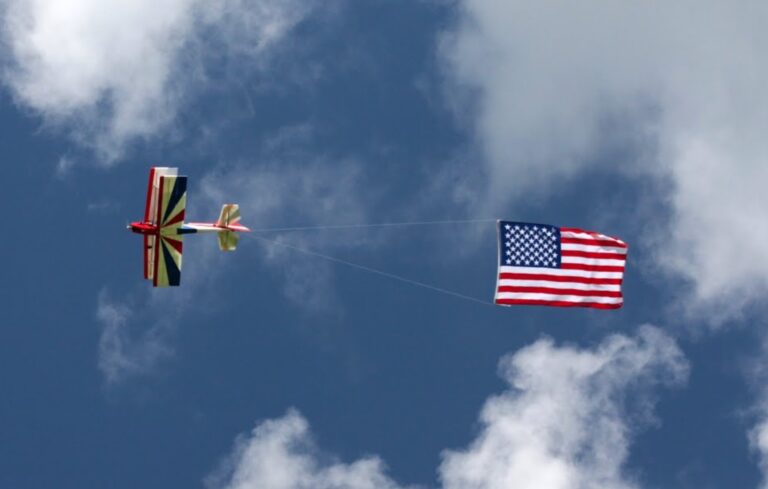
About 100 Alaska cars and trucks, decorated with American flags, converged on Denali National Park on Sunday to complete their mission of sending a community message to the National Park Service: An American flag mounted on a truck does not detract from the park experience.

The hastily organized convoy left Fairbanks at about 1 p.m., made a couple of stops along the way, and met up with about 20 cars and trucks that had arrived from Wasilla, Palmer, and Anchorage. The vehicles entered the park and spent a couple of hours driving the Park Road with their American flags aloft in different groups, not as one long caravan.

Spirits were good and the mood was festive, said Keith Fons of North Pole, organizer of the event. He only had 24 hours to publicize it and yet the news about the opportunity for patriotic fellowship went viral on his Facebook page. Fons was pleased with the turnout.

Fons said they encountered several Alaska State Troopers, starting with the gathering location at the Walmart parking lot in Fairbanks, where two Troopers stopped by to wish everyone well. There were no incidents, other than one driver being scolded by a park ranger when one of the convoy trucks went into the parking area near the park employee housing.

One member of the convoy reported, “When they got down to the administrative building the flagpole that always has the U.S. flag on it had no flag on it. Apparently the maintenance crew takes it down every night and put it up every morning. Our team leaders asked them to put the flag back up. They went to the box that it’s always in and the flag was not there. They were very embarrassed and apologetic. They said they couldn’t believe this was happening. They had no idea what happened to the flag that goes up every morning.”

The flagpole at the administrative offices at Denali National Park was not flying the American flag on Sunday in the afternoon.

The convoy participants brought water bottles with a patriotic message to hand to park employees: “Our flag does not fly because the wind moves it. It flies with the last breath of each soldier who died protecting it.”

Water bottles with a patriotic message were bought along to hand out on Sunday to park staff.