Friday, August 7, 2026
Home Blog Page 411

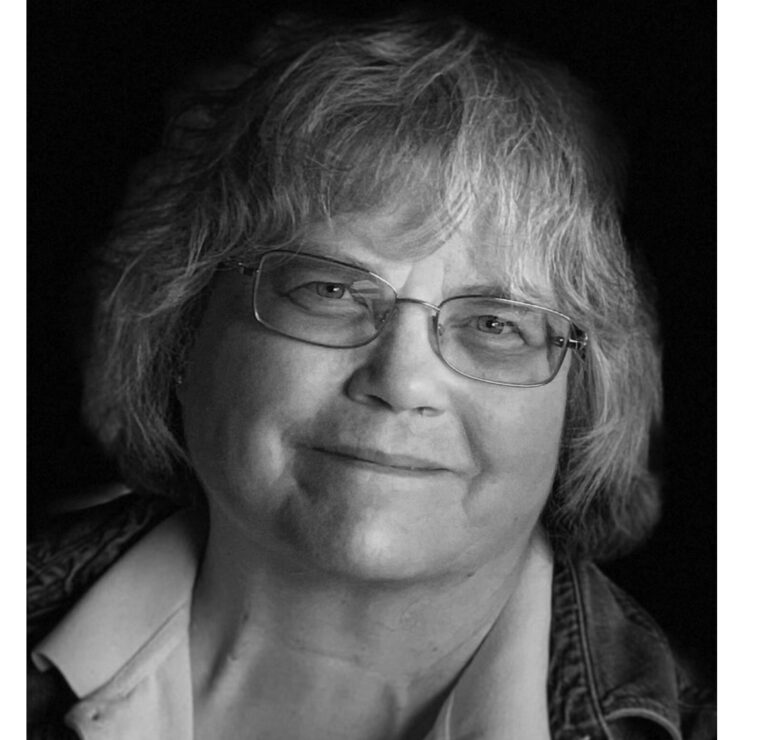
Susan Stone’s life to be celebrated July 6 in Ketchikan

Susan Ann Stone of Ketchikan passed away on June 22, 2024, after a courageous battle with cancer.

She was born Susan Bullock on July 12th, 1954, in Seattle, Wash. Susan spent her early childhood years in Fairbanks, Juneau, and Concord, Calif. before her parents settled in Kodiak, where her father, Don, was the pastor at St. James the Fisherman Episcopal Church.

She cherished her memories of the years her family spent in Kodiak. They truly lived out the Alaska pioneer experience, starting the church there, and experiencing the 1964 Alaska earthquake and tsunami. In 1969, her family relocated to Ketchikan where Susan graduated from Ketchikan High School in 1971.

Susan then attended the University of Idaho where she earned a degree in Political Science and a teaching certificate, was a member of the Alpha Gamma Delta Sorority, and was inducted into the Phi Beta Kappa Honor Society. While at the University of Idaho she met Roger, and they were married at St John’s Episcopal Church in Ketchikan on June 25, 1974. Susan and Roger settled in Lewiston, ID where they both worked at First Security Bank. Her first job with the bank was filing checks, and she held additional clerical positions until being one of the few women accepted into the Management Training Program.

In 1978 Susan and Roger let their sense of adventure bring them back to Ketchikan. Shortly after returning to Alaska, Susan and Roger welcomed their first daughter Tiffany, who was followed later by Stacey and then Kimberly.

Susan spent the next years of her life raising her children, volunteering her time with Parent Teacher Associations, Girl Scouts, St John’s Episcopal Church, First Lutheran Church, Long Term Care, the Pioneer Home, Ketchikan Theatre Ballet, and the Alaska Republican Party. Susan was a member of PEO Chapter A. She also spent time as a cruise lecturer on Alaskan cruises, sharing stories and knowledge about the state she loved so much.

In 1997 Susan accepted a position teaching 7th grade geography at Schoenbar Middle School. This began a 27-year teaching career in which Susan taught geography, Alaska studies, U.S. history, world history, AP U.S. history, American government, AP American government, and street law at both Schoenbar and Kayhi. Susan loved sharing her love of history with her students and was always urging her students to be involved in their communities, engage in acts of service, vote, and find support systems that would allow them to succeed. Susan retired at the end of the 2023-2024 school year.

Susan was recognized for her service to her community in a number of ways over the years. She received the First Lady’s Volunteer Award from First Lady Emmalee Hickel. She was honored by the Ketchikan Chamber of Commerce as the outstanding youth leader in 1992. She was recognized for her service as president of the Tongass Alaska Girl Scout Council by the Alaska State Legislature and honored with a lifetime membership in Girl Scouts of the USA.

Susan was a beloved wife and sister, talented educator, and dedicated volunteer, but above all she was a mom. She always referred to her daughters as “my girls,” and her students were always “my kids.” In the years her girls were growing up her home was always open as a gathering place, and she was a second mom to many.

During her years as a teacher, she was always concerned about her kids, and gave them her best every day. She quietly assisted many students to ensure they received their diplomas, and she was an outspoken champion of doing what is right for the kids of Kayhi. She also gave them an incredible example of perseverance as she continued to teach while she waged her mighty battle against cancer.

Susan was preceded in death by her parents Father Don & Evelyn Bullock. She is survived by her husband of 50 years Roger, daughters Tiffany (Tim) Cook, Stacey (Kiel) Stone, and Kimberly (Frank) Divelbiss, and grandchildren Timothy II, Sophia, Torin, Olin, June, and Gustaf. She is also survived by her siblings Don (Brita), Bob, Jennifer, and Geoff (Ruth) Bullock, Laird (Vicky) Stone, and a wonderful abundance of nieces and nephews.

A memorial service for Susan will be held at First Lutheran Church on July 6 at 11 a.m., followed by a reception in the Kayhi Commons at 1:30 p.m. Susan would especially want her students to know that they are welcome to come and celebrate her wonderful life.

In lieu of flowers, the family requests donations be made to the Susan Stone Memorial Fund to continue Susan’s mission of supporting the youth of Ketchikan. Donations can be mailed to P.O. Box 5911, Ketchikan, AK 99901, or sent by Venmo to @MrsStoneMemorial .

Mount Marathon nonbinary division has three racers

In March, the Mount Marathon Race board of directors decided to make a molehill out of what is becoming a growing mountain of gender controversy: They voted to establish a nonbinary category of racers for the 96th running of Mount Marathon in Seward, an event that happens every Fourth of July.

Since there is a growing sense of nonbinary-ism among younger generations, the race board could avoid a lawsuit or public embarrassment by simply having a category so that men would — possibly — not compete in the women’s division. There’s still no “test” for gender, but having a separate category might make the race more fair for women racers.

Thus, this year for the first time, there are three nonbinary runners signed up for the race to the top of Mount Marathon, which sits over Seward line a hen guarding her chicks. This will be a first for the famous run that is the toughest 5-K in the country.

Nonbinary refers to people who have not settled in their minds that they are male or female. It’s not the same as transgender, although the category may attract such a competitor.

In all, this year’s race has 956 runners signed up. They get to be in the race through a variety of paths: Some win by lottery, others through being veterans of the race and still others get a one-time petition, or through a sponsor slot. There’s a 375-racer per adult division cap.

Zoe Dohring, who teaches gender studies at the University of Alaska Anchorage, was the first to sign up as a nonbinary racer for the race that dashes out of downtown Seward and up the slippery, shale mountain. In Dohring’s bio, he says he is white, trans femme, non-binary, temporarily able-bodied, queer, and that he has the best time in the country for running a marathon in high heels.

“I’ve dreamed of running in Mount Marathon for all the 10 years that I’ve lived in Alaska, but I’ve chosen to not join the lottery in recent years, knowing that I no longer fit in the category devoted to my sex assigned at birth,” Dohring said in March, when the change was announced.

In addition to Dohring, a runner from Salt Lake City, Utah, and another from Tyler, Texas have signed up, all but assuring that there will be a first, second, and third place prize winner in the new gender-ish category.

The nonbinary division will have its own results and nonbinary participants will receive the same overall and age-group awards as participants in the men’s, women’s, boys’ and girls’ divisions, the race website says.

Because the event has separate gendered races, adult nonbinary entrants must choose to participate in the men’s or women race and will be placed in a start wave that corresponds with their ability, the race explains on its website.

Nonbinary juniors will run with others the juniors’ race, as boys and girls run together in a single wave.

The three nonbinary entrants may seem like a drop in the bucket out of 956 racers, but considering that the Chicago Marathon has 50,000 runners, and had 70 nonbinary entrants in 2022, which grew to 242 by the next year, Seward’s Mount Marathon race appears to be off to a running start. According to the Non-Binary Racing Database, Alaska now is home to 2% of the all the races in the country with nonbinary divisions.

The race is among the oldest footraces in America and is considered the oldest mountain footrace in the country. It started as a bet between two miners as to whether someone could reach the top of the mountain and return within one hour. The race was officially organized in 1915.

Thousands head to Seward for the Fourth of July, and line the street to cheer on the racers, who scramble up and back from the slope of Mount Marathon, a rocky, ankle-turning mountain of shale and loose rock.

Cyberstalker found guilty in Anchorage

7

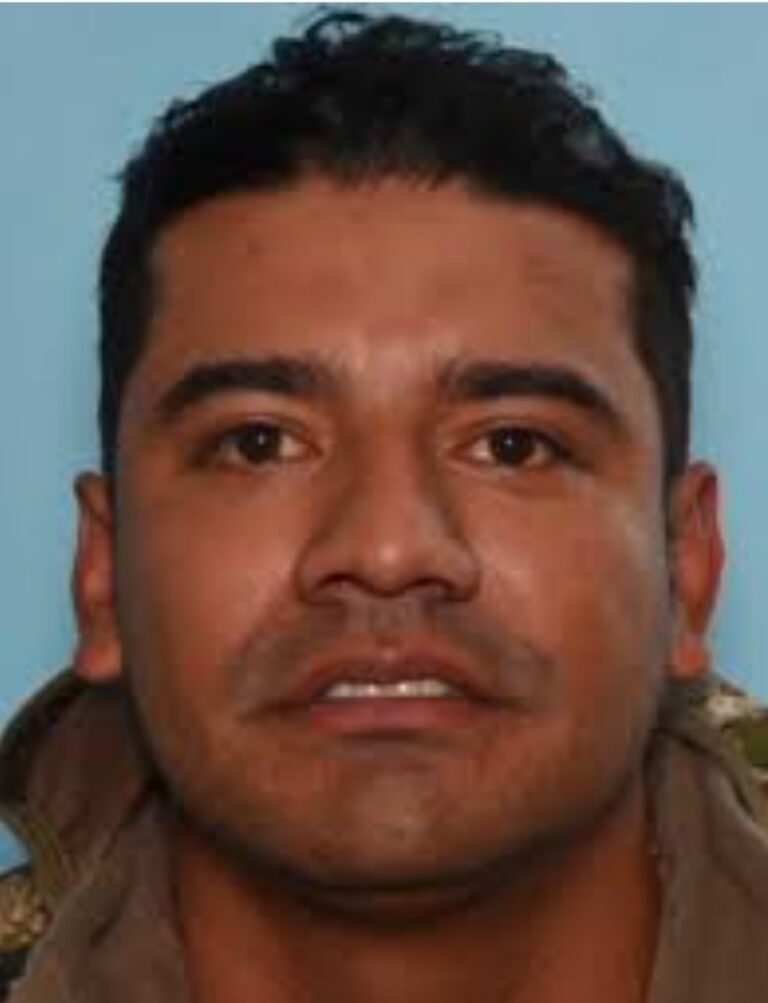
Rolando Hernandez-Zemora was found guilty by a jury on Friday for cyberstalking a woman over the course of four years.

According to court documents and the evidence presented at trial, between 2016 and 2020, Hernandez-Zemora, now age 40, stalked the victim using location-tracking applications, text messages, and video calls, and other means in order to try to control her life.

In 2020, the harassment extended to some of the victim’s work colleagues and family members and included threats of violence.

Hernandez-Zemora’s harassment of the victim continued even after she obtained a protective order. As a result of his threats, the victim’s workplace went into lockdown for multiple days from late April to early May 2020. Hernandez-Zemora was arrested at the end of May 2020 after he evaded the police for two days.

“I want to commend the victim for her bravery in coming forward, and we hope this conviction is the first step in closure and justice for those impacted by this case,” said U.S. Attorney S. Lane Tucker. “Mr. Hernandez-Zemora is a serious danger to the community, demonstrated by his desire to harm the victim, her colleagues and her family. My office will continue to seek justice against perpetrators who choose to threaten violence.”

“The defendant’s disturbing pattern of conduct involved threats of violence and cyberstalking harassment, which caused substantial fear of harm and emotional distress,” said Special Agent in Charge Rebecca Day of the FBI Anchorage Field Office. “This type of conduct will not be tolerated. Today’s verdict underscores our commitment to hold accountable those who commit such crimes.”

The FBI Anchorage Field Office and Anchorage Police Department investigated the case.

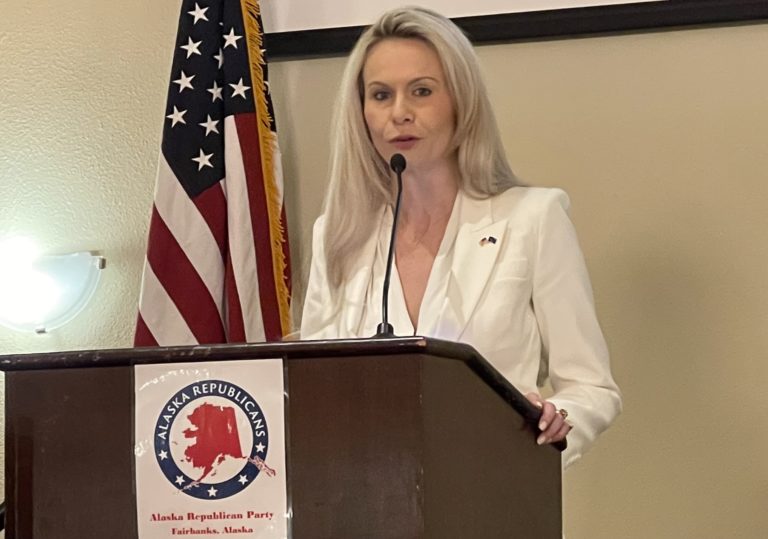
Alaska Trump Chair Kelly Tshibaka analyzes Supreme Court decision favoring presidential immunity

Alaska political leader and conservative champion Kelly Tshibaka, who chairs the Trump campaign for the 49th state, said the Supreme Court opinion in Trump vs. United States is well written, based on precedent, and follows the rule of law.

Must Read Alaska asked Tshibaka to give us her views on the ruling that upheld his presidential immunity, a decision that was issued on Monday by the Court.

“It took courage for the Court to issue an opinion that absolutely protects presidential immunity rather than capitulates to the political pressures of current events,” Tshibaka said.

The Supreme Court found Trump is immune from Jan. 6 statements he made to Vice President Mike Pence, the Department of Justice, and likely to the public via social media.

He is also immune from prosecution for his speech the day of the protest on Jan. 6, 2021, when dozens of protesters entered the U.S. Capitol after door guards opened up the entries.

“The President possesses ‘extraordinary power to speak to his fellow citizens and on their behalf,” the ruling said.

Now, the lower court in D.C. will be forced to decide which alleged acts in his indictment were “official,” and which ones were “unofficial.” It will only be able to prosecute “unofficial” acts and Special Counsel Jack Smith will have to a high hill to climb in proving what constitutes “unofficial.”

Read the ruling for yourself at this link.

The Court also held presidential immunity is extended to not only his official duties, but also to conduct “within the outer perimeter of his official duties.”

The justices determined it was necessary to go far in protecting the immunity of the president because otherwise it would result in “hesitation to execute the duties of his office fearlessly and fairly.”

“This Presidential immunity decision may affect the other lawfare cases against Trump, as well,” said Tshibaka, who is a Harvard-trained lawyer. “After defining the vast extent of presidential immunity, the Court did not determine whether it would apply to specific conversations Trump had with state officials and remanded that to the District Court to decide.”

Tshibaka continued, “I’m intrigued that, while the Court knew it was issuing an expansive decision protecting presidential immunity, it also denied a request from Trump’s advisor, Steve Bannon, just one business day before this Trump vs. United States opinion, to delay his prison sentence. Bannon argued that his actions and conversations were covered by Trump’s executive privilege. While executive privilege is different in law than presidential immunity, they flow from the same principle.”

She observed that much of the hyper-partisan rhetoric on either side of this issue reveals a lack of knowledge about the actual case.

“We must be advocates for due process based in the rule of law, not political outcomes that we want to achieve for partisan objectives,” Tshibaka said. “True advocates for the Constitution would celebrate this decision not only as applied to President Trump, but also as it will be applied to President Biden. When Biden is not prosecuted for acts because of Trump v. United States, that also will be a victory for the rule of law and the country.”

This case “protects the official acts of President Trump as much as it does President Biden, other presidents, and the future of America,” Tshibaka said. “Critics are focused on the potential outcome of election, not on the continued integrity of the Constitution and balance of power of our co-equal branches of government.”

Among official duties might be the video that Trump posted on Jan. 6 on Twitter, telling protesters to go home in peace. It’s a video that the prior Jack Dorsey Twitter management removed just five minutes after Trump posted it on Jan. 6, 2021, and subsequently shut down his Twitter account, so the public could never see what he actually said:

Kelly Tshibaka, former candidate for U.S. Senate and now host of the podcast, TV, and radio show STAND, was named the chairwoman for the Alaska Trump organization in February.

Denali National Park fires prompt closures

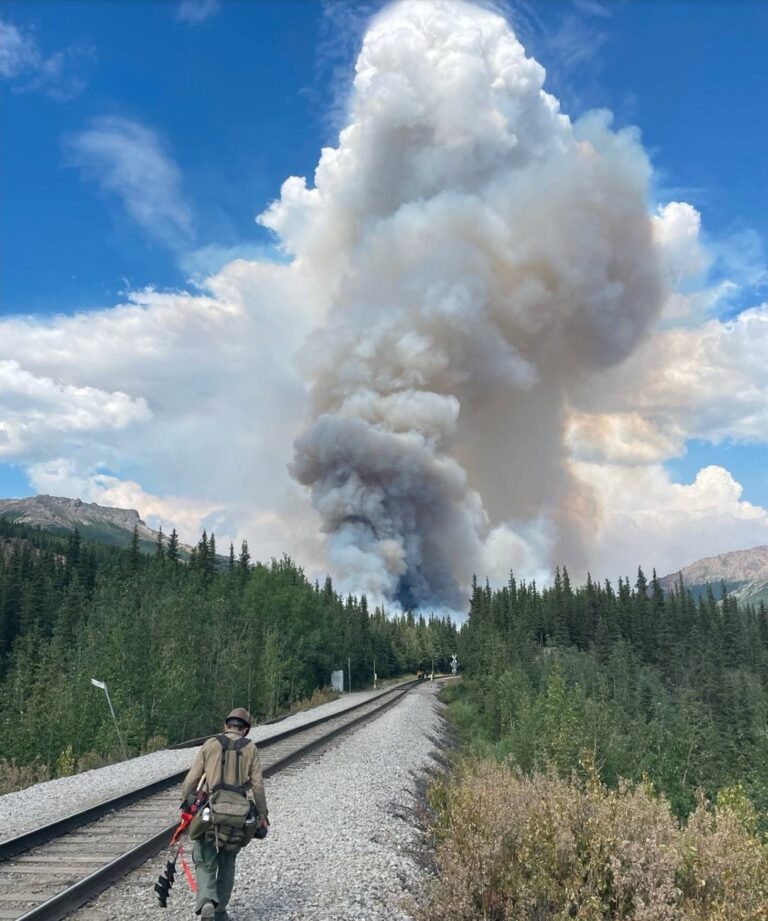
Aircraft and firefighters have been working the Riley Fire west of the railroad and north of the Denali National Park entrance since Sunday. The fire, located across from Glitter Gulch, blew up on Sunday afternoon. Aircraft have made numerous water and retardant drops. About 50 firefighters are working directly on the fire’s edge and using a ridge line to prevent the fire from spreading south.

The Park Road into Denali National Park is currently closed and the situation remains dynamic. Vehicles are being turned around at the park entrance. All tour and transit buses scheduled to run on Monday have been cancelled with the exception of camper buses, which will on run on their scheduled pickup routes for eastbound campers who are leaving.

The Denali Visitor Center and all other public facilities, trails, campgrounds and other areas will remain closed Monday, the National Park service said.

The State of Alaska has moved to the highest Preparedness Level 5. Power remains out for most customers in the Nenana Canyon area due to fire activity and response. Cooler temperatures are expected today and that will help with fire containment activities, the state fire website says.

“Campground reservations that haven’t already made it to their campsite will not be allowed entrance into the park.*  The decision on whether new campground reservations for 7/1 will be honored will be made on 7/1 after assessing current fire conditions. If you have not checked into your campsite and your reservation is cancelled due to the fire, you should get an automatic refund,” the Park Service wrote.

A federal Temporary Flight Restriction is also in place to provide safety for firefighting aircraft working on the Riley Fire. The Tri-Valley Community Center is the Evacuation Information Center at Mile 0.5 Healy Spur Road in Healy.

Monday has temperatures in the mid-60s and a chance of isolated thunderstorms in the afternoon. By Tuesday afternoon, a strong low pressure system is expected to bring westerly winds, followed by wetter, cooler weather.

Go to the Denali National Park and Preserve website for closure information.

Fairbanks Sen. Kawasaki puts a crown on Pride Month by promoting ‘BE GAY DO CRIME’ anarchy

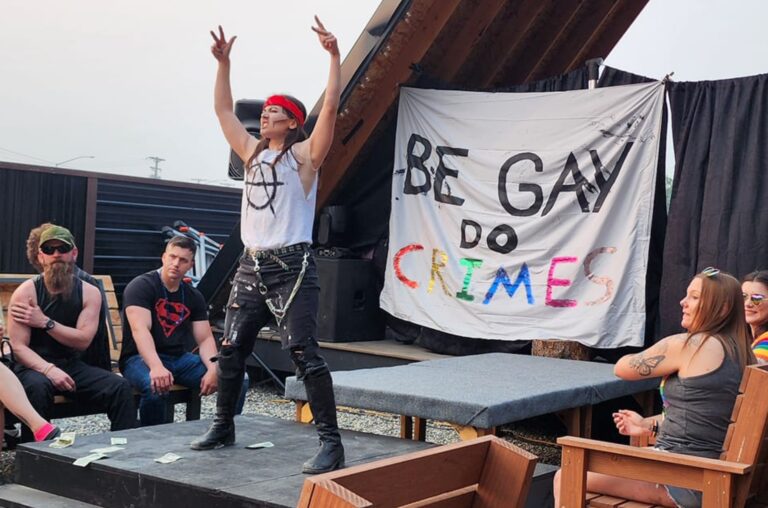
Fairbanks state Sen. Scott Kawasaki polished off Pride Month celebrations with one final campaign message on June 30:

“Be Gay Do Crimes” and an image of a man wearing the “A” anarchy symbol on his wife-beater shirt.

Kawasaki, a Democrat who represents urban Fairbanks, mixed in the messages of abortion and sex education in his mishmash of leftist thoughts on Sunday, writing:

?️‍? Happy Pride Month Alaska!?️‍? As Alaska ends pride month, I wanted to remind friends and allies this year was challenging because of the anti-choice/abortion bans, legislative attacks on transgender neighbors and bills to allow discrimination in housing and employment. I am running against a well-funded, extremely conservative Republican who will upend the Senate Bipartisan Majority. My campaign needs your support and contributions today and your vote in the future! Please check out www.AlaskaScott.com or contact me directly at 907.590.0315 today! #akleg”

Kawasaki, after stringing together the phrases that identify him as part of the far left, thanked the Klondike Drag, which describes itself as “Fairbanks’ Queer Performers Group.”

The “Be Gay Do Crimes” meme, as described by a Reddit contributor named “Queer Satanic,” means “When your very existence is a crime, everything else about society and the so-called ‘social contract’ ought to be called into question, too, especially when the things society calls law are at odds with your literal survival.”

Crime in Kawasaki’s district is a growing concern, as this photo of lawlessness on Lackloy Drive in his district shows:

Junk piles up in Sen. Scott Kawasaki’s “Do Crime” Senate District P, along Lackloy Drive.

Running to replace Kawasaki is Leslie Wien Hadjukovich, a former aide to U.S. Sen. Dan Sullivan, former school board member, and a commonsense Republican who may not join the bipartisan caucus that put nine Democrats in power in the Alaska Senate, even though the Senate has a majority of Republican members.

Celebration: Anniversary of Wien’s historic flight from Anchorage to Fairbanks

One hundred years after Noel Wien and Bill Yunker flew an open-cockpit Hisso Standard J1 biplane from Anchorage to Fairbanks, aviation enthusiasts, family, and friends will mark that historic flight with a celebration in Fairbanks sure to attract plenty of political and civic figures.

It was in July 15, 1924 that Wien made history. At the time, there were no navigational aids or airstrips along the way and few roads to land on, if an emergency arose. A train track would guide the way; the Parks Highway wasn’t completed until 1971. It was wilderness, and the crude airstrip at Cantwell was not clear enough to land on.

Wien made a few aviation excursions with the biplane before the historic flight Wien’s first Alaska flight left the Delaney airstrip on June 4, 1924. Then he flew Anchorage’s first passenger flight and performed the state’s first aviation aerobatic show for the Fourth of July. On July 15, after several delays due to heavy forest fire smoke on the route, Wien and Yunker, who was the passenger and mechanic, departed the Delaney airstrip heading to Weeks Field in Fairbanks, making the trip in three hours and 45 minutes.

Wien, grandfather of Senate candidate Leslie Hajdukovich, had many other “firsts in flight” in Alaska, including the first bush flight to Livengood in support of mining operations, the first flight to Nome, and the first flight over the Arctic Circle. On that trip, he ran out of fuel and was forced to land on a gravel bar on his return flight. He walked 70 miles over three days, crossing rivers and tundra, with only three dry biscuits.

Wien is known as the “Father of Alaska Bush Flying.” His pilot certificate was No. 39, and wa signed by Orville Wright. He founded Wien Air Alaska in 1927, the first airline in Alaska and one of the first airlines in the United States. Among things he is known for is pioneering the use of jets for gravel runways, and innovating ways to carry both cargo and passengers in Boeing 737 jets.

Born in 1899, Wien died in 1977. His legendary status as an aviator was enshrined in the National Aviation Hall of Fame in 2010.

At the anniversary celebration on Tuesday in Fairbanks, hosted by former Rep. Jay Ramras, Gov. Mike Dunleavy will make remarks, followed by Lt. Gov. Nancy Dahlstrom, Sen. Lisa Murkowski, Sen. Dan Sullivan, and Richard Wien. The celebration starts at 5:30 p.m. at Pike’s Landing.

Steve Bannon reports to prison for contempt of House J-6 committee

On the same day that President Donald Trump won his presidential immunity case at the Supreme Court, his former advisor Steve Bannon became federal inmate No. 05635-509 in a Danbury, Connecticut prison.

Bannon was convicted of two counts of contempt of Congress in July of 2022, and sentenced to four months in prison. He gave no defense during the trial, which had testimony from two government employees, one of whom was the staff director to the House Select Committee.

The conviction was based on the fact that Bannon had refused to show up to take questions from the House Democrats’ Jan. 6 Committee, an inquisition that demanded he testify about Trump’s alleged attempts to overturn the result of the 2020 election and any involvement Trump had in the Jan. 6 protest at the Capitol.

“The defendant chose allegiance to Donald Trump over compliance with the law,” Assistant U.S. Attorney Molly Gaston told jurors during the trial.

The former strategist for Donald Trump asked the Supreme Court on Friday to pause his prison sentence while he appeals it, but the court denied his request.

Bannon’s lawyer had told the Supreme Court that Bannon was waiting for issues of executive privilege to be settled, and thus asked for an extended delay for the prison sentence. The court ruled that he had not been part of the executive branch on Jan. 6, and therefore was not subject to the executive privilege claim.

Bannon, age 70, spoke to reporters and a cheering crowd of supporters, calling himself “political prisoner,” as he entered the prison. By taking him out of the public square for four months, the Biden Justice Department ensures he will not be able to influence public opinion between now and the general election. Bannon has a popular podcast, and he recorded his last episode just hours before reporting to the prison gate.

The House Select Committee was retired when Republicans took over the House in January. It had been viewed by conservatives as a partisan witch-hunt, and was chaired by Democrat Rep. Bennie Thompson and Republican Rep. Liz Cheney, who closely aligns with the Democrats.

Former Trump adviser Peter Navarro was also sentenced to four months in federal prison and is finishing up that sentence, which began March 19. He was the first of the Trump White House to be convicted for contempt of Congress subsequent to the 2020 election in a case he said was the “partisan weaponization of the judicial system.” 

Unlike Bannon, Navarro did mount a defense and pled not guilty, saying he couldn’t cooperate with the committee because Trump had invoked executive privilege. The lower courts rejected his argument and said Navarro couldn’t prove Trump had invoked it.

It’s unclear what Monday’s Supreme Court ruling on executive privilege and absolute immunity of the president will have on Navarro and Bannon, but it appears that the legal system had been weaponized against them. If Trump is elected in November, however, he may have the power to pardon them both.

The House, now controlled by Republicans, has now voted to hold Attorney General Merrick Garland in contempt of Congress. The Justice Department, however, says it will not bring charges against the man who runs the Justice Department.

“We’re going to be as aggressive as we can and use every tool in our arsenal,” said House Speaker Mike Johnson last week, referring to pursuing criminal charges against Garland for contempt of Congress.

Steve Bannon’s podcast channel is at this link.

Breaking: Trump wins at Supreme Court on question of absolute immunity in Jan. 6 actions

The U.S. Supreme Court gave former President Donald Trump a win in Trump v. United States, in which the majority ruled that a former president has absolute immunity for his core constitutional powers, and could not be prosecuted for his official acts while in office. The case was remanded back to the lower court that had ruled against Trump in a matter involving whether he tried to stop the 2020 presidential election results from being certified.

The indictment brought by special counsel Jack Smith alleged that after losing the election, Trump conspired to overturn it by spreading knowingly false claims of election fraud to obstruct the collecting, counting, and certifying of the election results. Trump moved to dismiss the indictment based on Presidential immunity, arguing that a President has absolute immunity from criminal prosecution for actions performed within the outer perimeter of his official responsibilities, and that the indictment’s allegations fell within the core of his official duties.

The District Court had denied Trump’s motion to dismiss, holding that former presidents do not possess federal criminal immunity for any acts. The D. C. Circuit affirmed that ruling. Both the District Court and the D. C. Circuit declined to decide whether the indicted conduct involved official acts.

“The President enjoys no immunity for his unofficial acts, and not everything the President does is official,” Chief Justice John Roberts wrote in the majority opinion. “The President is not above the law. But Congress may not criminalize the President’s conduct in carrying out the responsibilities of the Executive Branch under the Constitution. And the system of separated powers designed by the Framers has always demanded an energetic, independent Executive.”

The ruling may delay the Jan. 6 case against the former president, who is charged by the Department of Justice for trying to subvert the election.

The vote was 6 to 3, with the three liberal women of the court voting against Trump, who had argued he was acting in his official capacity as the controversial 2020 election results were being finalized.

Special counsel Jack Smith was appointed by Attorney General Merrick Garland in November, 2022 to investigate whether “any person or entity unlawfully interfered with the transfer of power following the 2020 presidential election or the certification of the Electoral College vote held on or about January 6, 2021.” Smith is also in charge of the investigation involving classified documents and other presidential records at Mar-a-Lago, as well as the possible obstruction of that investigation.

A federal judge in May officially and indefinitely delayed Smith’s classified documents case against Trump.

This story will be updated as I read through the ruling.