Major corporations are reacting to the U.S. Supreme Court decision that reversed Roe v. Wade last week and sent the laws about abortion back to the states.
Alaska Airlines issued a memo to employees saying it will continue to reimburse employee travel expenses for some medical procedures if they are not available where employees live.
Alaska Airlines said, “Today’s Supreme Court decision does not change that.” Employees and their family members already fly for free on Alaska Airlines, so it’s unclear what the purpose of the statement is. The airline is best known for its woke policies, including pushing Black Lives Matter and transgender pronouns.
Dick’s Sporting Goods announced the company will give employees as much as $4,000 in abortion-related travel reimbursements if they live in a state that restricts access to the procedure. In 2020, Dick’s Sporting Goods stopped selling many types of guns, including pistols, at most of its stores, as the company gets out of the gun business due to gun-related violence. It now sells just certain long guns in limited locations and online. Its handguns are BB guns.
Disney, Netflix, Comcast, and JP Morgan also issued statements saying they will pay for abortion-related travel.
Disney said a “family planning” benefit will be granted to any worker who cannot access care where they live, to cover “pregnancy-related decisions.” Disney employs 195,000 people worldwide.
The memo from Disney said:
Teams,
We recognize the impact that today’s Supreme Court ruling could have on many Americans and understand that some of you may have concerns about what that might mean for you and your families, as medical and family planning decisions are deeply personal.
Please know that our company remains committed to removing barriers and providing comprehensive access to quality and affordable care for all of our employees, cast members and their families, including family planning and reproductive care, no matter where they live. In fact, we have processes in place so that an employee who may be unable to access care in one location has affordable coverage for receiving similar levels of care in another location. This travel benefit covers medical situations related to cancer treatments, transplants, rare disease treatment and family planning (including pregnancy-related decisions).
Lastly, we would like to remind you of the range of medical coverage options you have as an eligible employee of The Walt Disney Company, as well as the options for your covered dependents. As medical coverage needs are unique to each of us, we encourage you to contact your medical carrier should you have specific questions about your coverage. You can also learn more about the company’s benefit offerings at Benefits.Disney.com, consult the Contacts | Disney Benefits Portal (fidelity.com) or reach out to your HR representative.
Disney will continue to prioritize the health, safety and well-being of our team members and their families.
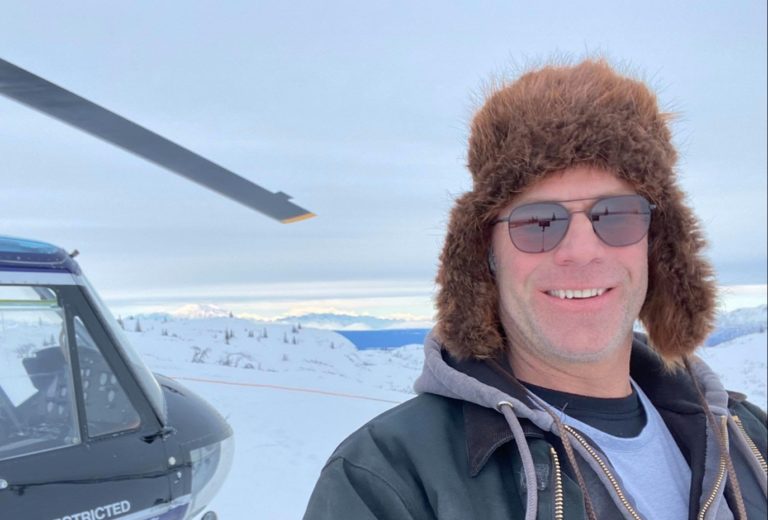
A helicopter crashed at the Anderson Airport near Mile 280 of the Parks Highway on Sunday. The 1960 Bell 204B “Huey” was operated by Northern Pioneer Helicopters and on contract with the Department of Natural Resources when it crashed while landing at the airstrip’s helipad.
The pilot and helicopter were assisting with fire fighting operations on the Clear Fire (Forest Fire 346).
The pilot and sole occupant was 56-year-old Douglas Ritchie of Wasilla. Ritchie’s remains were sent to the state medical examiner for autopsy. No foul play is suspected and family was notified. The National Transportation and Safety Board was notified and are responding to conduct an investigation.
“Wildland firefighters and aviators are a close community and are in support of the family, friends, and co-workers during this tragic time,” the AKFireInfo website reported.
“We cannot overstate the danger of fire season in Alaska. Tragically, over the weekend, we lost a brave Alaskan who was part of our state’s effort to combat the Clear fire in the interior. We thank Douglas Ritchie for his service, and pray for his family,” said Gov. Mike Dunleavy on Monday.
There are 26 staffed fires across Alaska and close to 700 firefighters assigned to fight them. A high pressure system has settled over the state, bringing with it hot, dry and windy conditions. This weather pattern is forecast to continue through the week and be followed by a series of thunderstorms.
Employees at a Fairbanks power tool store chased down a man who had stolen a bandsaw kit from their store.
By the time employees caught up with the man, he was already on his bicycle fleeing the scene. Employees chased him down and while attempting to recover the merchandise, the suspect grabbed a holstered firearm from his backpack and tried removing the gun from the holster, according to the report by the Alaska Department of Public Safety.
One of the store employees was conceal-carrying his own firearm, drew it, and pointed it at the suspect.
“The suspect considered his decision, then put the firearm in his backpack and ran away on foot. Investigation on-going,” the Troopers reported. The suspect has not yet been arrested.
The U.S. Supreme Court upheld the First Amendment rights of a Bremerton, Wash. coach who prayed at the 50-yard line of the football field after football games.
Joseph Kennedy was a high school football coach in Bremerton, Wash. who routinely prayed after games by briefly kneeling on the field.
The 18-year Marine veteran was an assistant coach for the Bremerton High School varsity football team. He made a commitment to God that he would give thanks at the conclusion of each game for what the players had accomplished and for being part of their lives.
From his first game in 2008, Kennedy took a knee and quietly prayed for about 15-30 seconds. He continued to pray after every game for seven years. Students took notice and some started to join him.
In 2015, the school board received a complaint from someone on an opposing team and ordered Kennedy not to pray with students. But Kennedy continued. He asked for a religious accommodation, and against the orders of the school board, prayed after a game that year. The school district banned Kennedy from doing any “demonstrative religious activity” that is “readily observable to … students and the attending public.” His contract was recommended for non-renewal.
Kennedy wrote on Facebook, “I think I just might have been fired for praying.” Kennedy filed a lawsuit contending his First Amendment right were being curtailed.
“Here, a government entity sought to punish an individual for engaging in a brief, quiet, personal religious observance doubly protected by the Free Exercise and Free Speech Clauses of the First Amendment,” Justice Neil Gorsuch wrote for the majority decision. “And the only meaningful justification the government offered for its reprisal rested on a mistaken view that it had a duty to ferret out and suppress.”
The decision said, “The Court holds that both the free exercise and free speech clauses protect Kennedy’s right to pray at midfield following high school football games.”
The decision was 6-3, with the court’s three Leftist members dissenting. It is seen as a victory for the rights of government workers to exercise their right of free speech.
The case was argued by First Liberty Institute, which filed the lawsuit against the school district, arguing that banning coaches from quietly praying, just because they can be seen by the public, is wrong and violates the Constitution.
The U.S. District Court for the Western District of Washington, and then the U.S. Court of Appeals for the Ninth Circuit, sided with the school district. First Liberty Institute appealed the case to the U.S. Supreme Court. In January 2022, the Supreme Court agreed to hear the case.
Just 50 days until Aug. 16, and the candidates’ date with destiny.
Aug. 16 is the special general election date for the interim congressional seat, and also the day of the regular primary for all seats up for election this year, including state House, Senate, governor, U.S. House, and U.S. Senate. Only one seat in the Legislature — Sen. Donny Olson of Golovin — is not on a ballot somewhere. And Sen. Dan Sullivan gets a bye this year.
Monday, June 27 is the Division of Elections’ target date to post sample ballot for the Aug. 16 primary and general on its website.
In the Anchorage election for the 12th seat on the assembly, the latest unofficial results keep Daniel Volland in the lead and Stephanie Taylor close behind. See results here. The position will be a second vote on the Assembly for the very, very left-of-center downtown Anchorage.
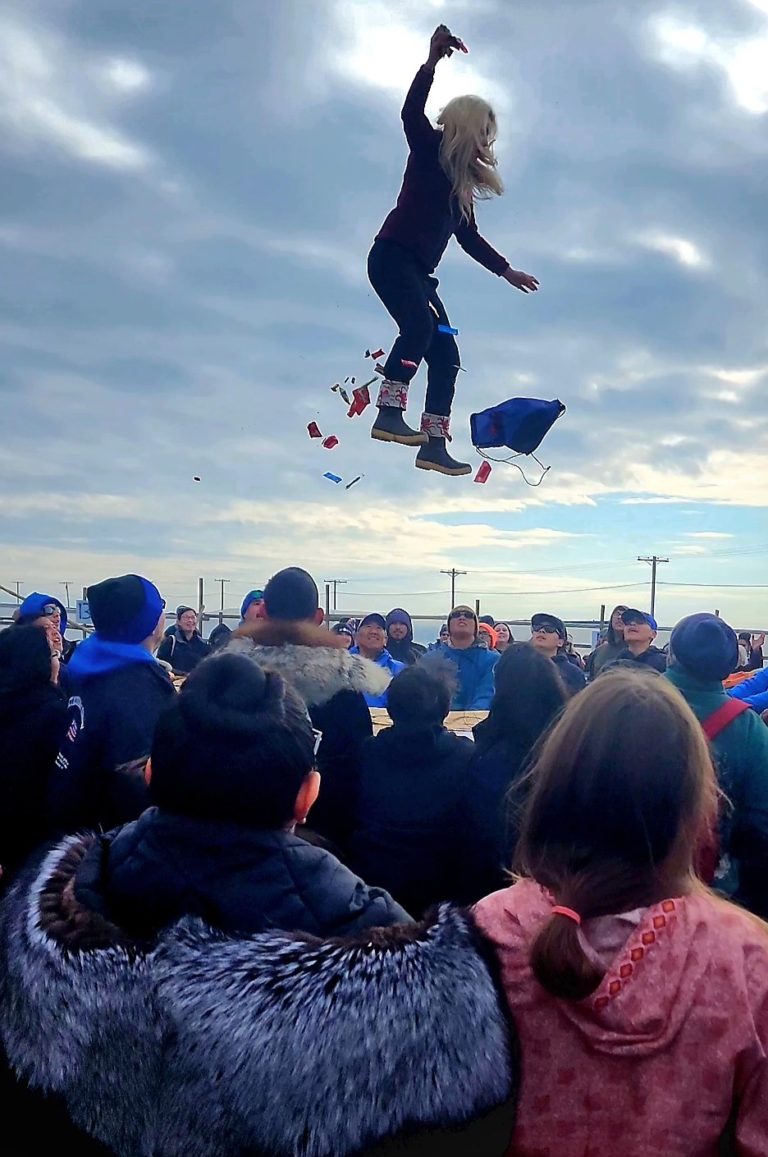
Tshibaka: In this edition of “Notes from the trail,” we ran across a photo of Senate candidate Kelly Tshibaka, above, showing she has bounce in her step at the blanket toss in Utqiagvik. She can bounce and throw candy at the same time. We don’t know if there’s another candidate for Senate who would have the moxie to do the blanket toss — it’s a fairly athletic feat.
Also from the Tshibaka campaign, they’ve opened offices in Soldotna and Fairbanks, both key parts of the state for the campaign against Sen. Lisa Murkowski. Their Anchorage office is on Northern Lights, just a few blocks from the Nick Begich for Congress office.
Oddly, nobody has spotted any signs around the state for Sen. Lisa Murkowski, but there are a lot of signs for Tshibaka on the Kenai, in Anchorage, and in the Mat-Su.
Babcock for Senate: The Kenai Peninsula is blanketed with 4×8 signs for Tuckerman Babcock for Congress, with a smattering of Jesse Bjorkman signs. MRAK counted 26 Babcock signs in Soldotna alone. Bjorkman is the teacher’s union rep and assemblyman who is running against Babcock, who is a longtime conservative activist.
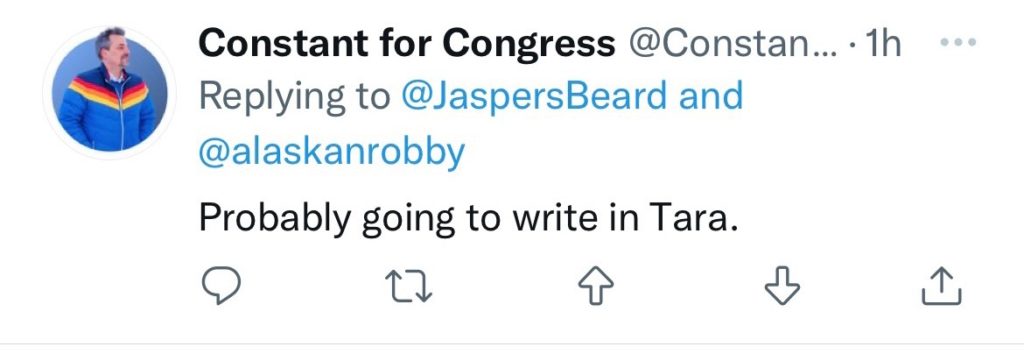
Constant gift: In the race for U.S. House, former candidate Chris Constant said he would “probably” write in the name of Tara Sweeney, who did not make the final four for the House seat. That should tick off Mary Peltola, who did make the final four and, like Constant, is a Democrat.
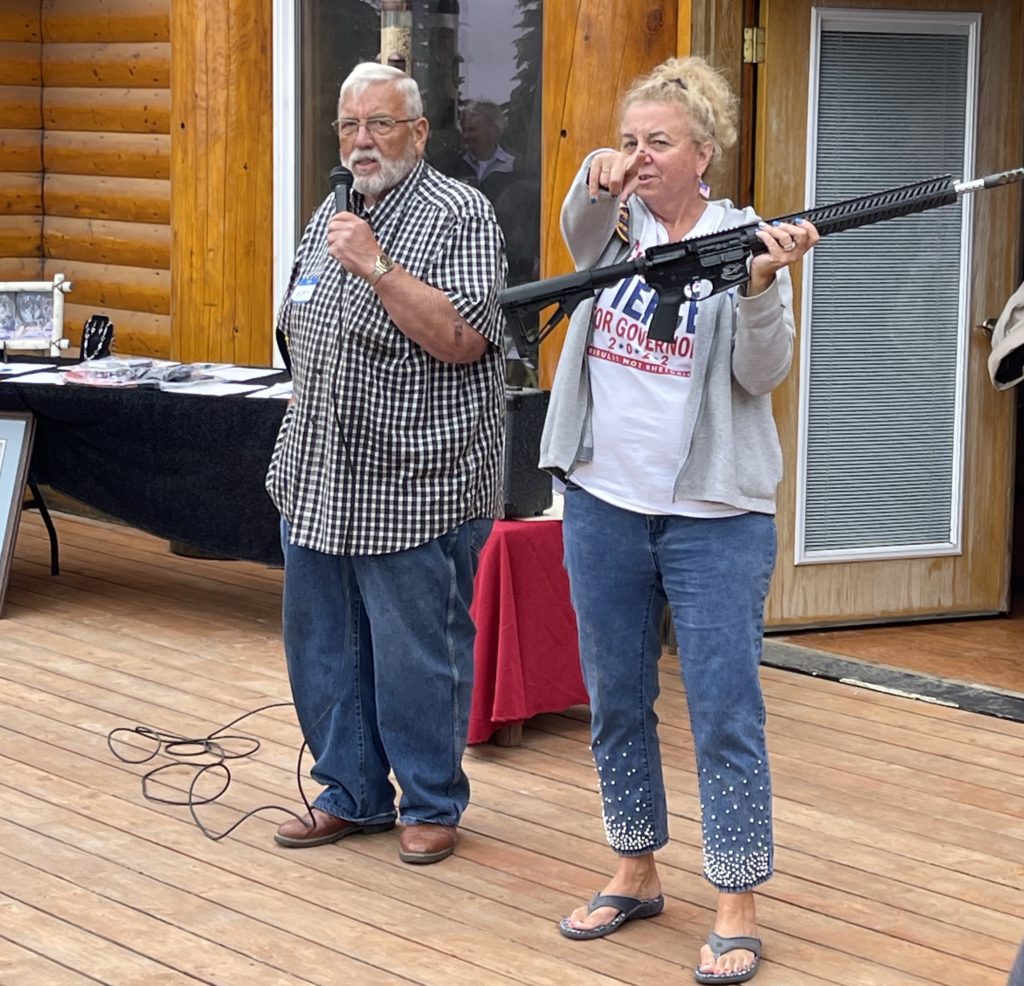
Vonnie Pierce holds the AR-15, while Norm Blakely auctions it off.
Charlie Pierce fundraiser: About 100 people and 40 classic cars gathered on the bluff in Nikiski to raise funds for Charlie Pierce for governor. The deep-fried halibut was a hit. The big-ticket item in the auction was an AR-15. Watch as the AR-15 gets auctioned off here.
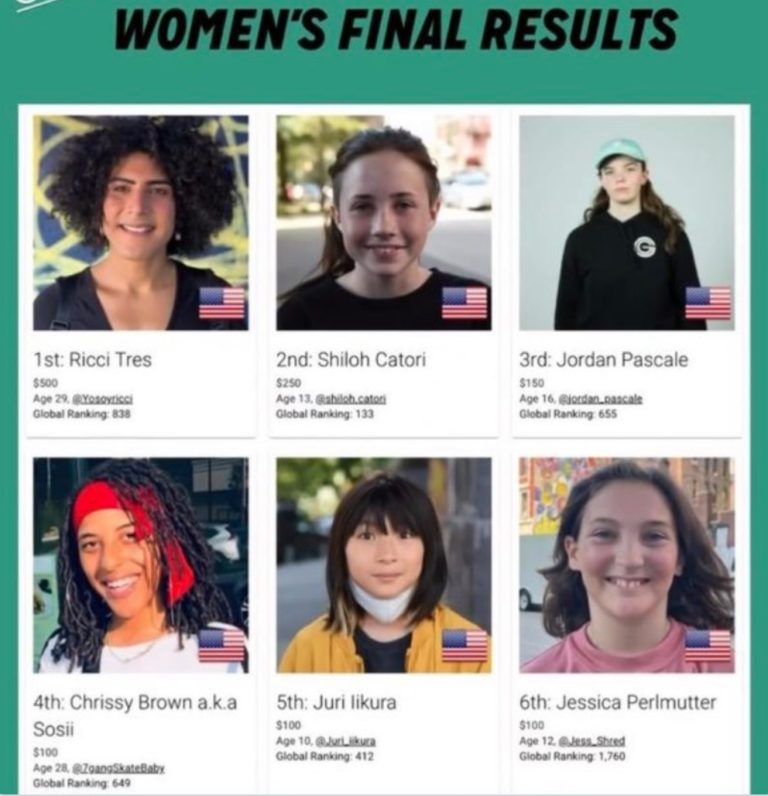
Ricci Tres, 29, an adult biological male who identifies as a woman, beat a 13-year-old girl for first place in a women’s skateboarding contest held in New York on Saturday, June 25, according to Reduxx. The Boardr Open is a street skateboarding contest that is open to all participants at all skill levels, but divided into female and male divisions.
Tres, of Los Angeles, won the women’s division of the Boardr Open and 13-year-old Shiloh Catori of Tampa, Fla. took second. Of the six competitors, four were under the age of 17, including one 10-year-old girl.
“This comes just weeks after Silverman, a professional skateboarder, posted a statement to her Instagram in which she called out the Redbull Cornerstone skate event she took part in for allowing a biological male athlete to compete against women, and take the top spot, wrote Reddux.
“In her statement, Silverman wrote that she placed second in two previous competitions in which biological males were allowed to compete against female skateboarders, and noted that at the last Redbull-sponsored skate event, the female athletes lost out on financial awards because a transgender competitor took first place,” the website wrote.
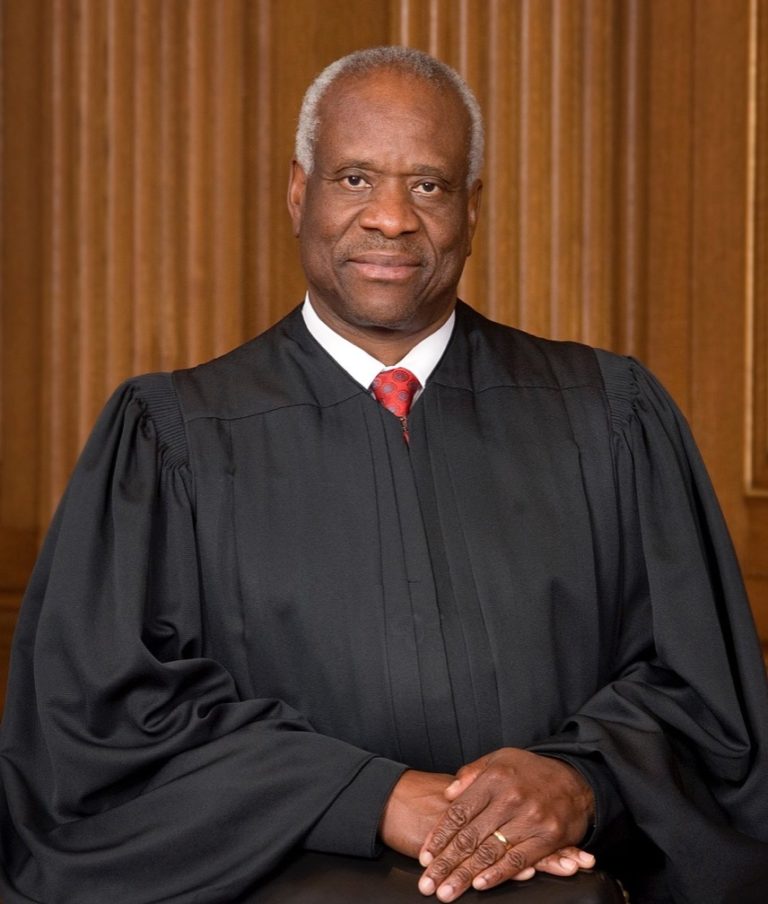
Individuals have been calling on social media for the assassination of U.S. Supreme Court Justice Clarence Thomas, shown above, after he issued a separate concurring opinion on Friday in a ruling that struck down Roe v. Wade. Abortion activists have also published his home address, and others have called to burn down the Supreme Court.
The Supreme Court members who voted to overturn Roe v. Wade has their home addresses splashed across social media, such as with postings like this one targeting Justice Brett Kavanaugh.
The U.S. Supreme Court overturned two landmark abortion cases, Roe v. Wade and Planned Parenthood v. Casey, returning the legality of abortion to the states. Justice Samuel Alito wrote for the majority and Justice Thomas wrote a solo concurring opinion in which he argued that the Supreme Court should also reconsider rulings on contraception, same-sex relationships and marriage.
Since then, individuals on social media have called for Thomas to be assassinated. This comes after one California man who attempted to kill Justice Brett Kavanaugh was arrested and has been charged with attempted assassination.
It also comes as other groups have called for violence to be committed against pro-life groups, individuals and churches. In response, the FBI is investigating such threats and Congress passed a bill that President Joe Biden signed into law extending protections to members of the justices families.
On Friday, Thomas wrote the court “correctly holds that there is no constitutional right to abortion. Respondents invoke one source for that right: the Fourteenth Amendment’s guarantee that no State shall ‘deprive any person of life, liberty, or property without due process of law.”
He issued a separate opinion, explaining, “to emphasize a second, more fundamental reason why there is no abortion guarantee lurking in the Due Process Clause. … Considerable historical evidence indicates that ‘due process of law’ merely required executive and judicial actors to comply with legislative enactments and the common law when depriving a person of life, liberty, or property.”
He also argued that “‘substantive due process’ is an oxymoron that ‘lacks[s] any basis in the Constitution.’” For this and other reasons, he argued, the court should “reconsider all of this Court’s substantive due process precedents, including Griswold, Lawrence, and Obergefell.
Because “any substantiative due process decision is ‘demonstrably erroneous,” he argued.
In Griswold v. Connecticut, 381 U.S. 479 (1965), the court ruled in favor of married persons having the right to obtain contraceptives. In Lawrence v. Texas, 539 U.S. 558 (2003), it ruled that same-sex individuals could engage in private, consensual sexual acts, and in Obergefell v. Hodges, 576 U.S. (2015) that same-sex individuals could marry.
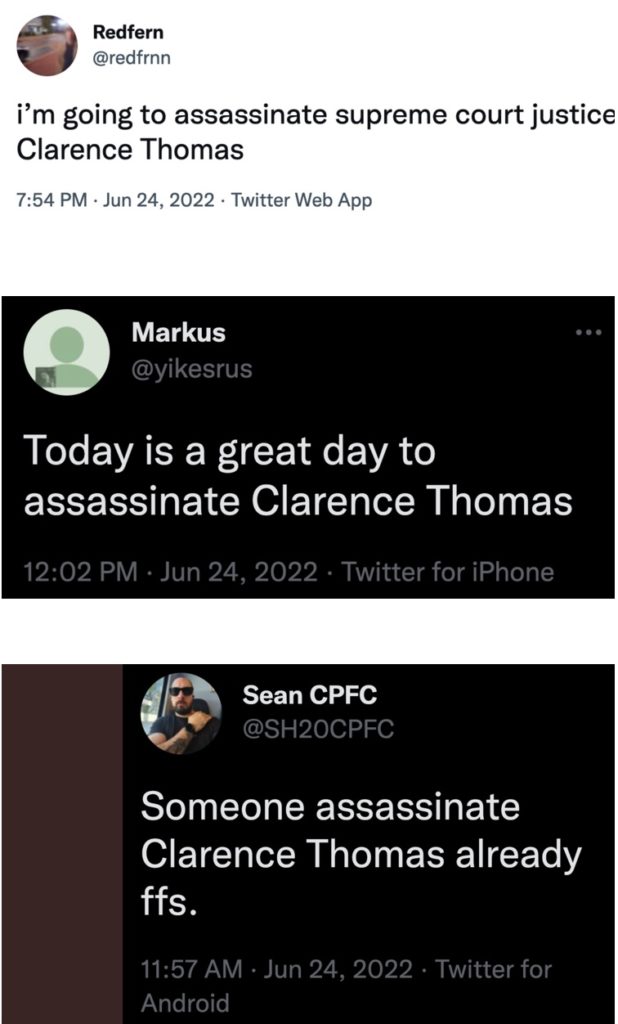
Several of the threats posted on Twitter have been taken down; some have not. The Center Square obtained screen shots of the ones listed below; there are others.
On June 24, @redfrnn (Redfern), tweeted, “I’m going to assassinate supreme court justice Clarence Thomas.”
Another, Markus @yikesrus, tweeted, “Today is a great day to assassinate Clarence Thomas.”
Another, Sean CPFC @SH20CPFC, wrote, “Someone assassinate Clarence Thomas already ffs.”
Glasgow writer, Neil Mackay, with a blue check mark, tweeted, “If I was a woman in America I’d burn the Supreme Court to the ground.”
Andrew Tarantola, a senior reporter for Endgadget, also called for violence, writing, “Burn down the Supreme Court.”
As did writer Brandon Taylor with a blue check mark.
Author Lauren Hough, also with a blue check mark, tweeted, “I’m just a lesbian on twitter but I’ve seen a lot of protest photos and I’d like to ask you to please be sure to wear sunscreen and stay hydrated while you burn the [expletive] down,” referring to the Supreme Court building.
In reply, Susie Scott @soozscott said, “Thanks for this-love it. My sunscreen is SPF 50 btw. McChelleBelle @mcpeaches7 replied, “Check and check! And I wore comfortable shoes!”
R King @rking7066 said, “I am a lesbian on twitter and while you are burning it down, join me in using Banana Boat for all of your sunscreen needs.”
Shannon D @AttyshannonD replied, “Very solid points. Always stay hydrated when dismantling the patriarch!)
Meg C @LadyMegSoprano said, “Burn the patriarchy, not your skin!”
Wendy Byrde @MaryMarky wrote, “They want to play? Let’s play. We can cripple this country, bring it to its knees.”
Jonathan D. Lovitz, with the National Gay & Lesbian Chamber of Commerce, tweeted, “Burn @LogCabinGOP down.”
Chairman of Maricopa County Young Republicans Luke Mosiman posted video of abortion activists handing out the personal address of Justice Thomas in Washington, D.C., with the intent to threaten him. In response, Mosiman said, “I hope you all get arrested tonight.”
Those making threats of violence against anyone, including a sitting Supreme Court justice, using a range of media, can face felony charges.
“Individuals who communicate a threat to injure another can face federal felony charges if they use a form of interstate commerce, such as email, mail, phone calls, texts, or online messaging, to send the threat,” Criminal Defense Lawyer explains. “This federal offense carries up to 5 years in federal prison. (18 U.S.C. § 875.) Sending such threats repeatedly can lead to federal criminal stalking charges and up to 10 years in prison. (18 U.S.C. §§ 2261, 2261A.) Depending on the circumstances of the threats or the intended recipient, other federal penalties may apply.”
Threatening judges is illegal, law scholar James Hirsen explains, “interference with the administration of justice in the manner in which it has recently been occurring is illegal,” pointing to federal statute 18 U.S.C. 1507. Penalty for violating the law results in a fine and/or a prison sentence of up to one year.
Last month, 25 state attorneys general called on U.S. Attorney General Merrick Garland to enforce federal law prohibiting anyone from targeting judges’ homes.
The U.S. Supreme Court overturned Roe v. Wade last Friday afternoon, giving back to the individual states, the origins of our constitutional republic, the power and control to allow, limit, or ban the practice of abortion as they see fit.
This removes the federal ruling class’s collective hegemony and restores such behavioral controls closer to the people through the states for regulation.
And, predictably, here comes one of Alaska’s most obtuse panderers in recent times, second only to Ethan Berkowitz: Sen. Lisa Murkowski.
After reading her statement on the Supreme Court ruling, I couldn’t help but ask, “Are we in Bizzarro world?”
Did Murkowski take the time to read Roe v Wade? She’s had almost 50 years.
Did Murkowski take the time to read Dobbs v. Jackson? It’s a true eye opener for anyone wanting to leave Bizzarro world and return to a constitutional republic.
Has she recently studied the development of a human being? An embryo? A fetus?
Does she know life begins at conception? Hey, don’t go after me … follow the science, Senator.
Does she know that every bit of who she is today was contained in her father’s sperm and her mother’s egg joining together at conception, just like the millions and millions of unborn human beings she caused to be killed because of this “right to choose”?
Or has the blood money of the Left soaked through her greed-filled pores, metastasized its way into her blood stream, and corrupted her frontal lobes?
Sen. Lisa Murkowski this week stated the “Supreme Court went against 50 years of precedent in choosing to overturn Roe v. Wade. The rights under Roe that many women have relied on for decades—most notably a woman’s right to choose—are now gone or threatened in many states.”
The drama of fear mongering, knee jerk reactions and political expediency is great in Murkowski. Will Alaska fall for it in the November election?
Why not start a riot? Oh, I’m sorry riots already have started fostered by sensationalists like Murkowski pleading to the unlawful Left to violently pervert the lawfulness of the U.S. Constitution and the separation of powers and violate public safety.
Her statement went further, “Given the Supreme Court’s ruling overturning Roe v. Wade, Sen. Murkowski’s leadership on this issue is now more important than ever.” It continued, “Alaska voters should all see the clear and undeniable fact that Lisa Murkowski is working hard to protect women’s health care.”
This statement is from a woman who took the Alaska bar exam five times before passing. A statist, posing as a professional politician, insists, during her campaign financed by outside special interests and dark money, that she is the leadership Alaska needs.
What leadership? For the past 20 years, Lisa Murkowski pushes against doors clearly marked “PULL” for Alaska. Her sole purpose in Washington, D.C. is to be controlled by her handlers and continue the Alaskan colony and not the State of Alaska. I know the political elite want this, but Alaskans look around…our state has failed.
What about the unborn? Is she really posturing political expediency to gain votes from people who think this is about “women’s health care” and silently advocating the murder of the defenseless innocent unborn human beings in the name of the abrogation of states’ rights?
I could go out on the limb: I believe that during her Willamette College of Law attendance, she somehow missed the entire three years of constitutional law. Roe was a direct attack on Article I, Section 8, of the U.S. Constitution and the 9th and 10th amendments in the Bill of Rights, not to mention other constitutional parts. Roe v Wade was terrible legislation by judicial activism masked as even worse case law.
We should applaud her for her persistence and give her a participation medal, but not membership in the most exclusive club in the world, the United State Senate.
Roe v. Wade and Planned Parenthood of Southeastern Pa. v. Casey were about the issue of abortion to some, but many saw these two cases as another oppressive step to cultivate a nonexistent constitutional right to minimize states’ sovereignty.
Roe and Casey were never about a woman’s right to choose. It has always been about the Left finding a reason to limit states’ sovereignty, which has been its modus operandi for over a century and a half.
“’Preserving the right to choose will take bipartisan action and leadership. Senator Murkowski has a proven track record of effectiveness and the seniority to work with her colleagues to reverse today’s dangerous precedent,”said Murkowsi’s campaign spokesperson Shea Siegert.
Alaska’s senior Republican senator, rebuked and censured by her own Alaska Republican Party, enlists the Left to assist her to stay in office through this political backlash of SCOTUS and keep Shea employed.
Again, she can coat it with honey, sugar, Splenda, and indignation, but there is no such constitutional right.
“Alaskan courts have interpreted abortion rights as protected under our State Constitution, but with this decision, women in other parts of the country will face a different reality that limits their health decisions, even in extreme circumstances,” Murkowski said.
Yes, Alaska has stood in the forefront a few years before Roe and kills the unborn human being in the name of privacy. Again, for those who insist “my body, my choice”, what about the defenseless innocent unborn human being’s right to privacy?
“In the wake of this ruling, it is up to Congress to respond. I introduced legislation in February to protect women’s reproductive rights as provided in Roe, and I am continuing to work with a broader group to restore women’s freedom to control their own health decisions wherever they live. Legislation to accomplish that must be a priority,” she said.
Rally the pitchforks and torches of the righteously indignant useful idiots who for whatever reason have failed to study either biology or the U.S, Constitution.
Read Dobbs v. Jackson. All 50 states prior to Roe had laws regarding abortion. Roe and Casey did very little in preserving “the right to choose.” Frankly all they did was take the states out of discussing and regulating the issue.
I would like to take a moment to condemn Lisa Murkowski, who expounds her ignorance to compel falsehoods and breeds division in Alaska and America.
This is not the senator for Alaska.
Michael Tavoliero is a realtor in Eagle River, is active in the Alaska Republican Party and chaired Eaglexit.
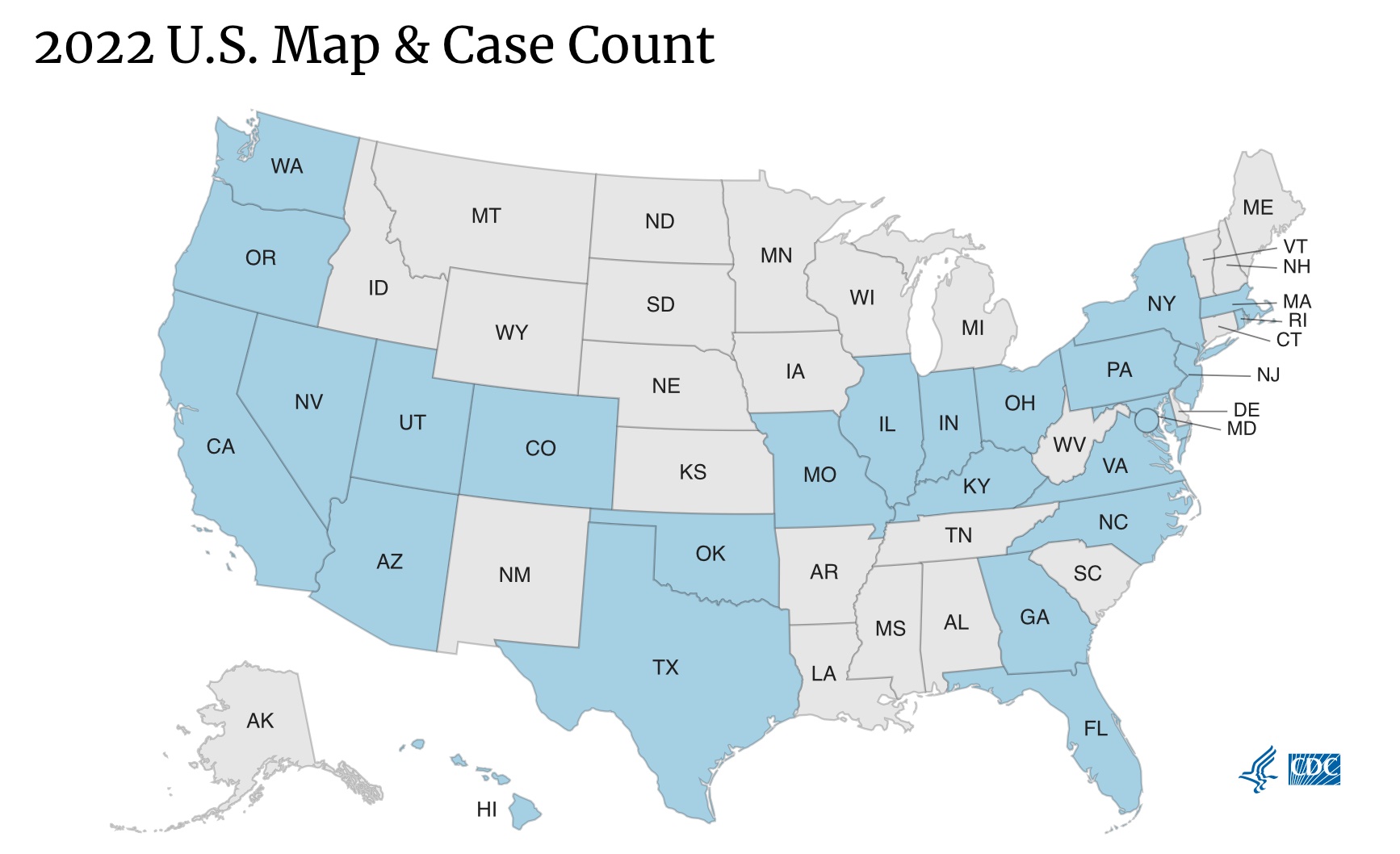
In just a few short weeks, the monkeypox virus has spread to more than half of the states in the U.S., according to the Centers for Disease Control and Prevention. Alaska has not had any reports of the illness. The major outbreaks are found in California and Illinois, with 51 and 26 cases respectively.
One month ago, the CDC reported nine cases in seven states.
Now, the number has risen to 201, according to the data released Friday.
On Saturday, the World Health Organization decided to not declare it a global health emergency, but rather, labeled it an “evolving health threat.” Over 3,000 cases have been diagnosed worldwide since early May, when there were just 550 cases. The disease, once mostly confined to continental Africa, has spread to over 50 countries.
The CDC still says it’s not clear how the people are coming in contact with monkeypox, but the agency advises that gay, bisexual, and other men who have sex with men make up a high number of cases. However, anyone who has been in close physical contact with someone who has monkeypox is at risk, the CDC advises.
CDC is urging healthcare providers in the U.S. to be alert for patients who have rash illnesses consistent with monkeypox.
It’s a disease that is not unusually contagious unless there has been close contact with an infected person. The illness is rarely fatal in countries where health care is available.
According to the CDC, after infection, the virus has an incubation period of roughly 1-2 weeks. The development of initial symptoms include fever, malaise, headache, and weakness.
A feature that distinguishes infection with monkeypox from that of smallpox is the development of swollen lymph nodes. Swelling of the lymph nodes may be generalized (involving many different locations on the body) or localized to several areas, such as the neck and armpit.
Shortly after the early symptoms, a rash appears. Lesions typically begin to develop simultaneously and evolve together on any given part of the body. The evolution of lesions progresses through four stages—macular, papular, vesicular, to pustular—before scabbing over and resolving.
The illness typically lasts 2-4 weeks. The severity of illness can depend upon the initial health of the individual, the route of exposure, and the strain of the infecting virus (West African vs. Central African virus genetic groups, or clades). West African monkeypox is associated with milder disease, fewer deaths, and limited human-to-human transmission. Human infections with the Central African monkeypox virus clade are typically more severe compared to those with the West African virus clade and have a higher mortality. Person-to-person spread is well-documented for Central African monkeypox virus, the CDC says.