Wednesday, October 21, 2026
Home Blog Page 909

10 states make abortion illegal, with exceptions

By BETHANY BLANKLEY | THE CENTER SQUARE

So far, 10 state attorneys general have announced that abortion is now effectively illegal in their states after the Supreme Court overturned two landmark abortion cases, Roe v Wade and Planned Parenthood v. Casey.

In Dobbs v. Jackson Women’s Health Organization, the Supreme Court ruled, “The Constitution does not prohibit the citizens of each State from regulating or prohibiting abortion. Roe and Casey arrogated that authority. We now overrule those decisions and return that authority to the people and their elected representatives.”

Thirteen states have trigger laws that enable the states to enforce laws already on the books banning abortion. On Friday, nine of them announced abortions were banned effective immediately. By Monday, a tenth state joined them. Texas’ ban, for example, doesn’t go into effect immediately.

Missouri was the first to announce its trigger law was in effect; Mississippi, the tenth. An estimated 23 states are expected to ban abortion in some capacity after the Supreme Court ruling. So far, 24 states have enacted abortion restictions through laws, statutes, or state supreme court rulings, according to recent reports.

Within minutes of the ruling, Missouri Attorney General Eric Schmitt issued an opinion stating that “abortion, except in cases of medical emergency, is now outlawed in the State of Missouri.”

South Dakota Gov. Kristi Noem and leaders of the South Dakota state legislature issued a joint statement calling for a special legislative session to be held later this year “to save lives and help mothers impacted by the decision.”

South Dakota’s trigger law immediately banned abortion after the ruling “unless there is appropriate and reasonable medical judgment that performance of an abortion is necessary to preserve the life of the pregnant female.”

Arkansas Attorney General Leslie Rutledge certified a state trigger law allowing a 2019 ban on abortion to go into effect immediately. It bans abortion with an exception to save the life of a mother in a medical emergency.

Gov. Asa Hutchinson, standing next to her, said the Supreme Court “returned the issue of abortion to the states. Since Roe vs Wade was decided, the states that desired to protect unborn life had been prohibited from doing so.”

Kentucky Attorney General Daniel Cameron issued an opinion stating Kentucky’s Human Life Protection Act, codified in March 2019, was effective immediately. The law bans abortion with the exception to protect the life of a mother in certain medical situations.

Prior to the ruling, Louisiana Gov. John Bel Edwards signed a bill into law banning abortion. After the ruling, it went into effect immediately. The state Health Department sent letters to abortion providers stating that the state law was in effect.

Attorney General Jeff Landry issued a statement saying, “Louisiana’s trigger law banning abortion is now in effect” and his office would “do everything in our power to ensure the laws of Louisiana that have been passed to protect the unborn are enforceable, even if we have to go back to court.”

Ohio Governor Mike DeWine issued an executive order directing the Ohio Department of Health to adopt emergency rules implementing Ohio’s 2019 Heartbeat Law. U.S. District Judge Michael Barrett lifted a preliminary injunction, which had prevented the state from enforcing or complying with the law, allowing it to go into effect.

In Utah, general counsel for the Utah Legislature, John Fellows, issued a statement saying a trigger law allowed a 2020 law to go into effect immediately banning abortion with the exception of rape, incest, to save the life of the mother or in the cases of serious medical complications. Attorney General Sean Reyes said his office “will do its duty to defend the state law against any and all potential legal challenges.”

Oklahoma Attorney General John O’Connor sent a letter to the governor, secretary of state, and leaders of the state house and senate certifying the Supreme Court ruling. State statute banning abortion must be enforced, he said, adding that he’d notified “all state and county officials, attorneys, investigators, officers, boards, commissions, and agents” to enforce the law.

In Alabama, a federal judge granted the state’s request to lift an injunction allowing it to enforce a 2019 abortion ban signed into law by Gov. Kay Ivey.

Attorney General Steve Marshall issued a statement saying, “elective abortions are illegal in Alabama” after the judge lifted the injunction. “Alabama’s law making elective abortions a felony is now enforceable. Anyone who takes an unborn life in violation of the law will be prosecuted, with penalties ranging from 10 to 99 years for abortion providers,” he said.

Mississippi became the 10th state to ban abortion after Attorney General Lynn Fitch certified its trigger law.

“The Supreme Court very clearly held in Dobbs that the appropriate standard for courts to use for challenges to state abortion laws is rational-basis review,” she said. “And under that standard, Mississippi’s regulations for the protection of life would be upheld. We argued before the Court in December that it was time to end special rules for abortion cases, and we are pleased that the Court did just that, returning this important issue to the people to decide through the political process.”

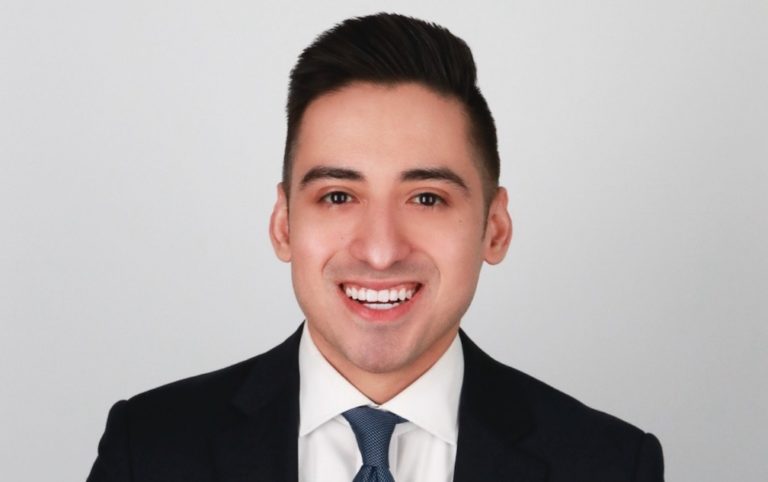
Passing: Dennis Egan, former Juneau mayor, senator

Lifelong Juneau Democrat Dennis Egan has passed. He was a mayor of Juneau, a senator for a decade, and well-loved by the Juneau community on all sides of the political spectrum. He had been ill for many years, which led to him retiring from the Alaska Senate after serving from 2009 to 2019.

Egan was born in Juneau, when Alaska was still a territory, on March 3, 1947. He was the son of Gov. Bill and First Lady Neva Egan. Bill Egan was politically active and become the state’s first and fourth governor.

Dennis Egan lived in Washington, D.C. during the time his father was in the nation’s capital working to get statehood for Alaska. During high school and after broadcast engineer training, he worked at KINY. He graduated from Juneau-Douglas High School in 1965, and graduated from radio operation engineering school in 1967. He served in the Alaska Army National Guard’s 910th Engineer Company between 1967-1974, was an employee of Caterpillar, working on the construction of the Trans-Alaska Pipeline System. He also worked in state government.

In 1980, Egan started hosting Problem Corner, the well-known Juneau call-in show on KINY, one of the AM radio stations in Juneau. He hosted that show until 2010. He was manager of Alaska-Juneau Communications, Inc., which owns KINY and KSUP and was the Alaska Broadcaster Association’s Broadcaster of the Year in 1990. He was named to the Alaska Broadcast Hall of Fame in 2001.

Egan ran for the Assembly of the City and Borough of Juneau in 1989. He served nearly two terms and was deputy mayor, then was appointed mayor when then-Mayor Byron Mallott resigned to become executive director of the Alaska Permanent Fund Corp. Egan won reelection as mayor in 1995 and 1997. Egan declined to run for re-election for a third term in 2000.

In 2009, Egan was appointed to the Alaska Senate by Gov. Sarah Palin to replace Sen. Kim Elton, who resigned to join the Obama Administration’s Department of Interior. 

After leaving the Senate in 2019, he moved south for medical care. He was married to Linda Egan and was the father of Jill and Leslie.

Photo credit: Will Fischer, Juneau, through Wikimedia Commons.

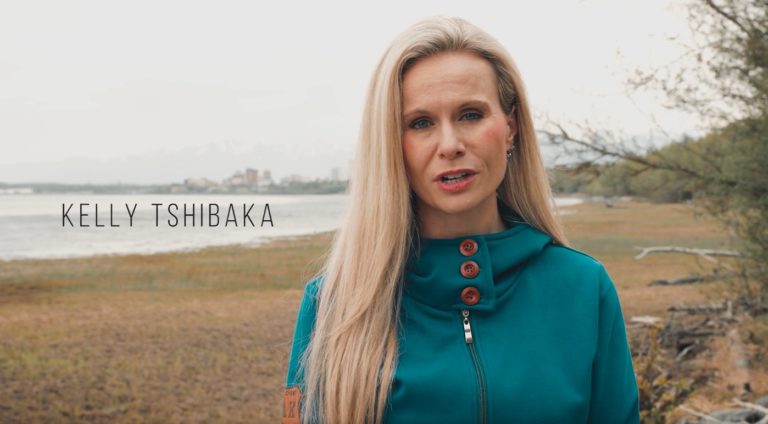
Kelly Tshibaka: Lower 48 and DC elites are funding Murkowski’s campaign

By KELLY TSHIBAKA

As Alaskans, we are keenly aware of the condescension shown to us by the Lower 48, mostly from those who have never even visited our amazing state. It’s a common theme used by politicians who want to sound Alaskan, even though their actions sometimes do not match up with their words. 

It’s especially jarring to see our senior senator, Lisa Murkowski, employ the same rhetorical trick, talking tough about defending us from outsiders while simultaneously depending heavily on their campaign contributions. She has also failed miserably in protecting us from the radical leftist agenda of the Biden administration. 

In a video announcing her intent to seek re-election, Murkowski warned of outside political interests invading Alaska via their checkbooks. 

“In this election, Lower 48 outsiders are going to try to grab Alaska’s Senate seat for their partisan agendas,” Murkowski said in the video. “They don’t understand our state, and frankly, they couldn’t care less about your future.” 

This is quite a statement from a 21-year incumbent senator who is almost entirely reliant on campaign contributions from non-Alaskans. 

To this point, using the most recent federal campaign filings available, 85 percent of the campaign funds raised by Murkowski in her 2022 re-election bid have come from outside Alaska. When looking at smaller contributions, which usually indicates the measure of local grassroots support, Murkowski’s numbers are even more dismal. A mere 4 percent of her fundraising is from small individual contributions of less than $200 each.  

If you include the super PAC that’s supporting Murkowski, the picture is even worse. The group “Alaskans for LISA” has raised nearly $1.3 million, and all of it came from the Lower 48. The donors to that PAC are not “Alaskans” at all.  

Looking strictly at the money, it’s clear that Murkowski has lost the support of Alaskans and is filling her coffers from the very Lower 48 special interests she cynically warned us all about. 

Further, she has gladly accepted massive funding from the biggest Washington, D.C. insider of them all, Sen. Mitch McConnell of Kentucky. This is the same Mitch McConnell who demanded Sen. Ted Stevens resign and threatened to remove Stevens from the Senate (Sen. Stevens was later acquitted on all charges). McConnell wrongly interfered with Alaska’s senate race before, and now he’s doing it again. 

McConnell has pledged $7.4 million from his political action committee, funds that are solely dedicated to boosting Murkowski’s campaign, despite the Alaska Republican Party censuring her. This is an enormous amount of money, given the relatively low cost of advertising in Alaska, and represents significantly more than Murkowski has raised for herself so far in this election.  

In effect, Murkowski has outsourced her campaign funding to the Lower 48 and the D.C. elites, exactly as she warned us that “others” would try to do. 

Back in her announcement video, Murkowski also tried to prove her Alaska bona fides by saying, “I will always stand up to any politician or special interest that threatens our way of life.”  

This will come as a surprise to anyone who is aware of her tie-breaking vote in committee to advance the nomination of Interior Secretary Deb Haaland, who has led the anti-Alaska, energy-annihilating agenda of President Joe Biden. Haaland has killed ANWR, NPR-A, the road to Ambler Mine, and the Cook Inlet oil and gas lease sales.  

This kind of boast also runs counter to her vote for Agriculture Secretary Tom Vilsack, who completely cut off access to the Tongass National Forest for timber production and tourism, and her vote to confirm radical leftist Judge Ketanji Brown Jackson to the U.S. Supreme Court. 

Voting for the confirmation of radical Biden nominees who are obviously hostile to Alaska’s interests does not meet any definition of “standing up” to them. 

This is where the differences between Murkowski and my campaign come into sharp contrast. 

We have raised twice as much money from inside Alaska as Murkowski has, and most of my campaign has been funded by Alaskans. I also have publicly stated numerous times that, as senator, I will not support Mitch McConnell if he runs for Republican Senate Leader again. So, it’s little wonder why he has put so much capital into Murkowski’s survival. 

When I am the next senator from Alaska, I will always oppose radical leftist nominees whose agendas run contrary to our interests. Instead of fretting about the damage they will cause, and then voting for them anyway like Murkowski has, I will work to block their attack on our resource industries and protect our State. 

When I’m senator, Alaska will have someone who defends our resource industries and the workers who depend on those jobs to feed their families, and blocks an administration that wants to turn us into a giant national park. We will have someone who won’t be bought and paid for by D.C. insiders, Big Tech, leftist organizations, and radical environmentalists. 

When I was young, it was Alaskans who gave me the opportunities to succeed in life, and when I’m senator, I will always remember that they were the ones who hired me to represent them. I will fight for the Alaskans who fought for me. Our future is bright, and it’s time for a change.  

Kelly Tshibaka is a born-and-raised Alaskan, and a candidate for the U.S. Senate in Alaska who is endorsed by former President Donald Trump and the Alaska Republican Party. 

Republicans in Ketchikan vote to censure Sarah Palin

The Alaska Republican Party officers in Ketchikan have long memories.

They have not forgotten that Sarah Palin, when she was governor of Alaska, axed funding to the bridge to their airport, calling it a “bridge to nowhere.” The townspeople and visitors still have to take a ferry to and from the airport of the state’s sixth-largest community, while their bridge funds were redirected to Palin’s pet projects.

They also haven’t forgotten that Palin endorsed the Democrat-backed ticket of Bill Walker and Byron Mallott for governor and lieutenant governor in 2014, rather than endorsing the Republican incumbent Gov. Sean Parnell.

And they haven’t forgotten that the charismatic congressional hopeful quit her job as governor, while blaming “mounting legal bills.” And then went on to have a money-making career as a celebrity.

All that and more is in a resolution censuring Palin, a resolution that passed Ketchikan District 1 Republicans on Monday night.

Ketchikan is a strong Republican town of about 8,230 people, where 54.47% of voters picked President Donald Trump in 2020. Trump has endorsed Palin, but the Alaska Republican Party had endorsed Nick Begich before Palin decided to run. It now appears unlikely that Palin can win favor with the party, which she has said publicly is rift with “good old boys.”

The vote was nearly unanimous, with one person dissenting, while at the same time agreeing with the concerns detailed in the resolution. By censuring Palin, the Alaska District 1 Republican Committee is also pledging to withhold support from her in their district, as Palin makes a run for U.S. Congress this year to fill the shoes left behind by the 49-year Congressman Don Young, who died on March 18.

During the special primary election that ended June 11, Palin won 32% of the vote in Ketchikan, while Nick Begich, her leading opponent, won 18%. Mary Peltola, the Democrat, won 7.5% of votes cast. Statewide, Palin comes into the special general election in the lead with 43,601, or 27% of the vote. Begich was second with 30,861 or 19% and Peltola has 16,265, or 10%. But she evidently didn’t win the votes of Republicans in Ketchikan and now appears to be heading for the center to pick up votes from moderates.

The Ketchikan resolution follows:

FCC nominee Sohn threatens conservative media

A few months ago, Must Read Alaska highlighted the confirmation hearings of Gigi Sohn, President Joe Biden’s nominee to serve on the Federal Communications Commission.  Sohn faced intense grilling from Senate Republicans, led by Alaska’s Dan Sullivan, over her long history of inflammatory, divisive, over-the-top attacks on conservatives.

Particularly alarming from a candidate for the FCC, who would be the nation’s top regulator of broadcast, cable, and broadband internet services, were Sohn’s repeated attacks on conservative media. Also concerning is her open encouragement of using the power of the federal government to bully, silence, or simply shut down outlets like Fox News and Sinclair Broadcasting, whose political views she doesn’t agree with.

Now, Sohn is back in the news and reminding First Amendment advocates why she has no business within 1,000 miles of an FCC seat.

Axios recently reported that Sohn’s nomination appears in deep trouble as several moderate Democrats seem unwilling to blindly follow Biden’s lead on such a radical nominee.  Everyone from the Fraternal Order of Police to former Democratic Sen. Heidi Heitkamp have strongly condemned Sohn as unfit for the position.

But in Washington, nothing’s ever over until it’s over.  As Sohn’s nomination continues to hang by a thread, she’s reminding conservatives all over again why she represents perhaps the single most pernicious threat to the First Amendment out of any federal nominee.

Breitbart reported earlier on Sohn’s recent headlining of a virtual event organized by supporters of her nomination, who openly bragged in their invitation that confirming Sohn would empower her to “break up Sinclair Broadcasting’s right wing propaganda machine” and target Rupert Murdoch’s media companies, including Fox News.  The Columbia Bugle, a conservative Twitter news account, posted a screenshot of the group’s invitation.

Alaska Sen. Dan Sullivan called Sohn out months ago for suggesting the FCC should use its authority to shut down conservative news outlets, and at the time Sohn dissembled, pretending she had no idea what he was talking about. But behind closed doors, when they think no one else is around, she and her supporters appear to be much less shy about hiding her real agenda.

Sohn’s nomination appears likely to collapse under its own weight.  Vulnerable Democratic senators are clearly hoping to avoid having to go on the record voting for such an extreme, out-of-touch nominee.

Here in Alaska, Sen. Sullivan is already on record as a staunch opponent of Sohn’s nomination.  Sen. Lisa Murkowski hasn’t had to weigh in yet either way, but even on her most “moderate” day it should be a bridge too far for her to support an FCC nominee with such clear contempt for the First Amendment – particularly when several of her Democratic colleagues aren’t even willing to back Sohn.

Suzanne Downing is publisher of Must Read Alaska.

Mayor Bronson defends youth, vetoes authoritarian Assembly takeover of Youth Advisory Commission

Anchorage Mayor Dave Bronson today announced his veto of AO 2022-69, the ordinance passed by the Anchorage Assembly to take over the supervision and appointment process to the Youth Advisory Commission.

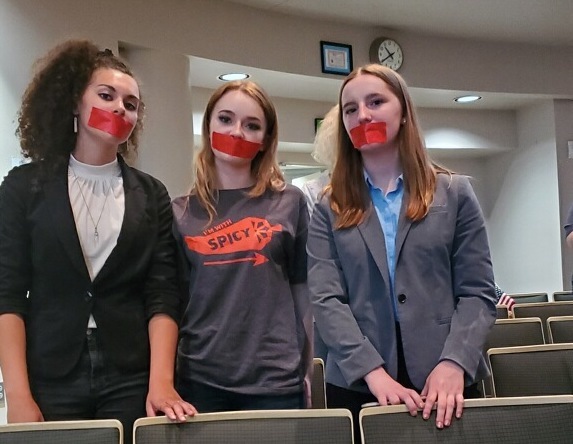
“It has become apparent that this ordinance that passed has become a vehicle for attempting to silence the voice of youth in our community. The primary effect of this ordinance is to enable the Assembly to bypass the Youth Advisory Commission and select a Youth Representative who has not been selected by the youth of Anchorage,” Bronson said in his statement. “It is sad, that the ordinance was introduced to the Assembly without the Assembly first consulting the Youth Advisory Commission or even advising them that it was coming. Democracy is government by the people, and in this great nation, the people are able to act through representatives elected by them. Our youth, however can’t vote and so they have limited opportunities to participate in our democratic institutions. Anchorage’s Youth Advisory Commission serves this problem by giving the youth in Anchorage a meaningful voice and opportunity to participate in government. Diminishing the role of youth and stripping them of the few powers that they have is simply unacceptable. The Alaska Supreme Court has instructed that government should guard against tyranny in the form of unchecked aggrandizement of power and preserve our constitutional framework enabling citizen participation. Accordingly, I am compelled to veto AO No. 2022-69.”

The Assembly Leftist majority passed the ordinance last week over the objections of the youth and the mayor. They Assembly has the votes needed to override the veto, and it’s unclear if the mayor has an argument to make to the courts about separation of powers.

Anchorage School District skips rules in superintendent choice, ignoring required certification

By DAVID BOYLE

Most large organizations have basic requirements for positions within that organization. When you apply for a position, you must meet those minimum requirements. 

The Anchorage School District School Board hired a contractor, Ray & Associates, to adequately screen the superintendent candidates for further evaluation based on the board’s requirements.  It doesn’t appear the minimum State-mandated requirements even mattered. 

As noted in a previous article, the selection of the new Anchorage School District superintendent, Dr. Jarrett Bryantt, was faulty. The selected person did not meet the minimum requirements — at least three years of classroom teaching. 

Yet somehow his application was accepted by both Ray & Associates for consideration.  

The ASD superintendent application form was problematic. It was very general and did not reference Alaska law or regulation regarding qualifications. However, most of us when we apply for a position look up the qualifications ourselves to ensure we meet them.  

The application form asks the following questions of candidates regarding superintendent qualifications: 

These are open-ended questions that have no references to Alaska State requirements.  These minimum requirements are spelled out in Alaska Administrative Code 4 AAC 12.345. 

The selected candidate, Dr. Bryantt, answered “YES” to all three questions.  Here are his answers:

By his own admission, Dr. Bryantt states he has verified his eligibility for the position. How can that be when the regulation requires three years of classroom experience?  

Likewise, the remaining two questions should also refer directly to the requirements for the position.

Dr. Frank Hauser, one of the non-selected candidates, answered the questions as follows:

Note that Hauser answered the first question as a “NO.” He then fully explained why he did not hold a superintendent license further down in the application. He stated that his “Superintendent endorsement was in progress, with June 2022 completion date.”  He is completing his superintendent endorsement at the University of Alaska Southeast.  

By the time Dr. Hauser would have filled the superintendent position he would have held a superintendent license and have been fully qualified.

The third non-selected candidate, Dr. Mathew Neal, answered the questions as follows:

Dr. Neal received a superintendent’s certificate from Harvard University in 2014.  

Both of those non-selected candidates appear to meet the qualifications and one even explained when he would have fulfilled the requirement. 

The question is, did Dr. Bryantt, a human resource officer, verify he met that requirement?  Or did he falsify his application?  Did the contractor, Ray & Associates, adequately vet the candidates regarding there three-year classroom mandate?

Even Andy Holleman, ASD board member, commented publicly on Nextdoor, “I can’t say for certain he (Dr. Bryantt) qualifies, but I think he will, but only DEED can answer that question” (May 8, 2022). Here is a screenshot of Andy Holleman’s comment:

Once Dr. Bryantt was selected as the best-qualified for ASD superintendent, his information was sent to the State’s Department of Education & Early Development. The certificate details are listed below :

Note that Bryantt was not given a provisional endorsement by DEED.  He was only given a temporary “limited” endorsement and granted only a limited administrative license at the request of the ASD. And it is only good in the Anchorage School District.  

The regulation, 4AAC 12.346 is very clear concerning the issuance of a “limited” superintendent certificate.

The department will issue a limited administrative certificate (Type B limited) with a superintendent endorsement, valid for one year if: “The school board for the district in which the applicant will be employed, through its school board president, has requested issuance of a limited administrative certificate for the applicant…”.

How many other “highly qualified” candidates like Dr. Bryantt did not apply because they did not know ASD would ignore state regulations?  ASD could just have asked for this special limited certification for anyone.  

The regulation goes on to state, “The school board for the district in which the applicant will be employed has to provide an experienced mentor for at least the first two years of the applicant’s employment with the school district as the superintendent; the mentor must hold or have held the position at superintendent in a school district in this state under a valid certificate.”

So, the ASD must employ a mentor for two years to get Dr. Bryantt qualified as a superintendent. And this mentor must also have a valid superintendent certificate issued by the State of Alaska.

One of these possible mentors could be Dr. Bishop, the current ASD superintendent. What will be the cost to the district of hiring a mentor? 

In the end, it appears that the process was flawed, prejudiced, and not thorough.  The board did not show due diligence in ensuring that candidates met the basic requirements and may have changed the requirements as the process went forward to meet its goals.

Transparency and equity are values of the ASD, and it should be held accountable for all decisions. Taxpayers and parents are the stockholders, the ASD Board is supposed to represent them.   

Was Dr Bryantt the ‘best qualified’ to lead our largest school district?  Or was he the candidate the school board wanted regardless of qualifications/state regulations to meet the board’s number one priority of equity and inclusion? 

We deserve the best to lead this district out of the educational hole it is currently in. It doesn’t appear that was the School Board’s priority.  

David Boye is former executive director of Alaska Policy Forum and is Must Read Alaska’s education writer. 

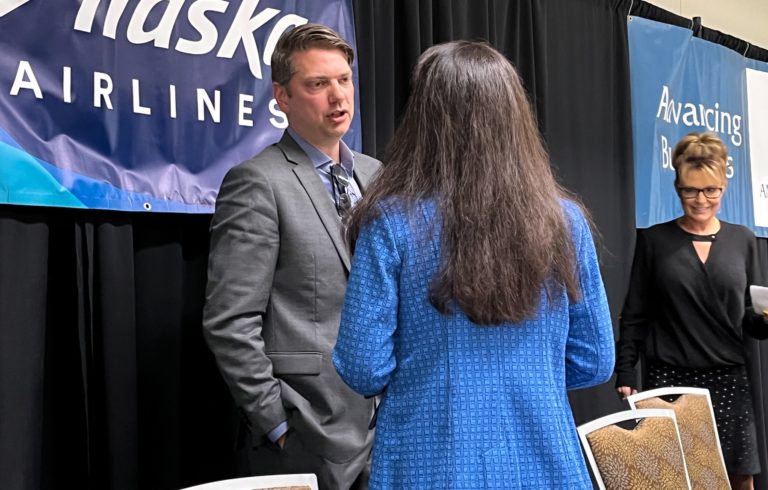
Nick says he’ll ‘rank the red,’ while Sarah and Mary dodge question at Anchorage Chamber of Commerce

At a candidate forum for the Anchorage Chamber of Commerce on Monday, a question was posed by the moderator: Who would be your second choice on the ranked-choice ballot?

Neither Sarah Palin or Mary Peltola would answer the question and moderator Julie Hasquet was willing to let the candidates skate on it altogether.

But then, congressional candidate Nick Begich grabbed the microphone and said he will vote for Sarah Palin second on the ranked-choice ballot. Presumably that means he’s voting for himself first, then Palin.

On the Aug. 16 ballot, the Republican candidates for the interim seat in Congress are Begich and Palin; Peltola is endorsed by the Alaska Democratic Party, while Begich is endorsed by the Alaska Republican Party and 60 Republican elected leaders around the state; Palin is endorsed by Donald Trump, Donald Trump Jr., and Ted Nugent.

Republicans have been advised by some party leaders to “rank the red” on the general election ballot; in other words, they should remember to rank the Republicans first, second, and third (if there is a third Republican.)

On the lightning-round question about the Pebble Mine, Palin was a thumb up, Begich was thumb sideways (he said it was to represent the need for seeing a responsible development plan), and Peltola showed her thumb down.

Surprisingly, Tara Sweeney attended the forum and sat in the back of the room at the Dena’ina Center. With getting less than 6% of the special primary election vote, she did not make the cut for the special general election ballot for Congress but will be on the regular primary ballot for the seat and intends to be a come-back candidate.

On Sunday, the three special general election candidates were at a forum with the Alaska Black Caucus. When asked if they support teaching Critical Race Theory in schools, Peltola said yes, Begich said no, and Palin said that it’s not clear what Critical Race Theory is.

On another question, Palin said she would not know how she would vote on the Democrats’ HR 1 bill, as she was unfamiliar with the bill. HR 1, offered by Speaker Nancy Pelosi, would federalize election law and take power away from states to run their own elections. Begich was a no on HR 1, and Peltola was a yes.

Rare find: Private island off Seldovia listed for $20 million

Passage Island, 22 nautical miles southwest of the Homer Spit, is for sale by its Washington state owner. The site of a former fox farm for the fur trade, and later a mink ranch in the early 1900s, the island is about 44 acres with nearly 7,000 feet of water frontage. It is sometimes 56 acres, when the tide is out, and is accessible by floatplane, boat, or helicopter at low tide.

The island was so named in 1786 by Captain Nathaniel Portlock, who was aboard the HMS Discovery on the third pacific voyage of Captain James Cook. Passage Island, in the inlet of Port Graham, was at the entrance of what was mistakenly thought to be a passage leading to the ocean.

The property is listed by Fay Ranches, a real estate company that specializes in ranch properties, which writes “this private island offers a one-of-a-kind Alaska landowner experience.” It is co-listed with Yvan Corbin, owner and broker Alaska Top Shelf Realty. The asking price is $20 million, but act fast — it’s already been featured in the Wall Street Journal.

Passage Island offers “scenic hiking, pebble beaches, 360 panoramic views, world-class fishing, beachcombing, rock climbing, and caves to explore. This private island is suitable for a deep-water dock or moorage. If you are an angler, fish off the island for salmon, halibut, rockfish, and lingcod, or head out to sea and experience the thrill of deep-water offshore fishing,” the listing says. “Build an off-grid home, lodge, or family retreat and wake up to the picturesque mountain views while whales, otters, and eagles visit you at your doorstep.”

There’s one unusual benefit that the broker notes: “Free energy from coal washing ashore.”