Facebook appears to agree with some parents in Soldotna that the drag queens who performed for children in a public park designed for kids were providing adult entertainment.
The drag queen show occurred during a LGBTQ celebration and featured erotic dancing by adult drag queen performers in front of young children.
Our story, featured on Facebook and other social media outlets, was illustrated with a photo of a male twerking his buttocks to the audience of children. The man, a drag queen from Anchorage hired for the occasion, was wearing flesh-colored tights and a thong, with the 12-inch miniskirt that barely covered his implied-nude groin.
Must Read Alaska’s use of that illustration was rejected by Facebook’s ad team for “adult content,” when we attempted to get the story to a wider audience.
“Rejected. That image does not comply with our adult content policy,” Facebook noted in its explanation to Must Read Alaska.
The policy says, “Ads must not contain adult content. This includes nudity, depictions of people in explicit or suggestive positions, or activities that are overly suggestive or sexually provocative.”
Facebook (Meta) gives examples of what that includes:
Nudity or implied nudity
Excessive visible skin or cleavage, even if not explicitly sexual in nature
Images focused on individual body parts, such as abs, buttocks or chest, even if not explicitly sexual in nature
Dating ads where the focus of the ad is on a partly clothed model
This story has been edited to reflect that there are now just nine states with no reported cases, while when it was originally written, there were 10 states. The case count is now over 1,000 nationwide.
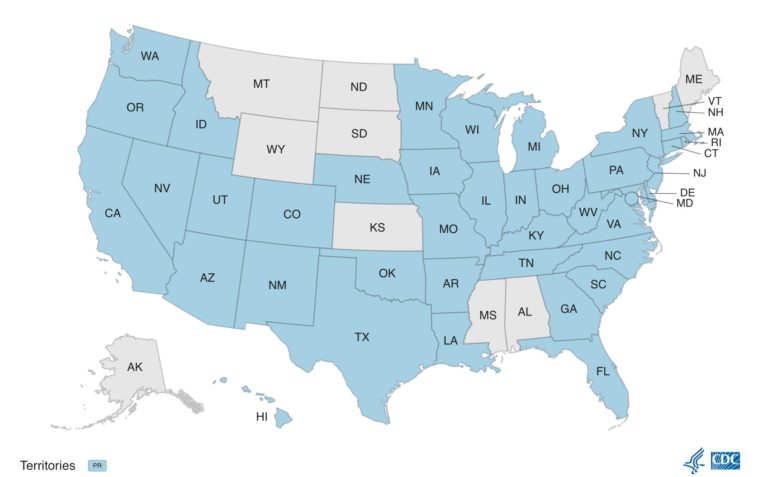
On the eve of a super moon, also known as the “buck moon,” or “thunder moon,” the United States is now close to reporting 1,053 cases of monkeypox virus. The disease has afflicted people in all but 9 states: Alaska, Wyoming, Montana, North Dakota, Kansas, Alabama, Mississippi, Vermont and Maine are the remaining states that have yet to report a case of the disease that is mainly spreading among men having sex with men.
Some early symptoms of monkeypox include swollen lymph notes and increasing pain in the rectum. Pustules may begin to form on other parts of the body.
Monkeypox pustules.
The disease is spreading rapidly but is contained to certain populations with certain behaviors. On June 25, there were only 200 cases in the U.S. The states of New York, California, and Illinois have the most cases.
Monkeypox vaccine continues to be in short supply.
Starting Wednesday, Quest Diagnostics will begin testing for monkeypox, based on a medical provider referral. The company said the test is now available to healthcare providers nationwide, except in New York, where it will be available soon. Anchorage has a Quest Diagnostics center.
Quest will do the monkeypox virus specimen testing at the company’s laboratory in San Juan Capistrano, Calif. and can accept specimens from anywhere in the country, the CDC said.
Quest’s testing is in addition to the CDC’s Laboratory Response Network (LRN), Labcorp, and Mayo Clinic Laboratories partnerships, along with five other commercial laboratories, which gives the network an ability to test up to 60,000 specimens per week by the end of July.
Anyone with a rash should talk to their healthcare provider about whether they need to get tested, even if they don’t think they had contact with someone who has monkeypox, the CDC said.
The State of Alaska is also gearing up for the outbreak to reach Alaska. On Wednesday, the Section of Epidemiology today advised medical practitioners to:
Test any patient with a rash illness consistent with monkeypox, regardless of epidemiologic risk factors.
Obtain testing through either commercial laboratories or the Alaska State Public Health Laboratory.
Report all suspected cases to the Section of Epidemiology. To report, call 907-269-8000, or 1-800-478-0084 after hours.
Post-exposure vaccination should be prioritized for close contacts to cases. As supplies allow, vaccine might also be available for persons with certain high-risk exposures, such those who have had multiple sexual partners during the past 14 days in a community where monkeypox transmission is occurring or while attending an event associated with a monkeypox outbreak.
CDC anticipates additional commercial laboratories will come online in the coming days, and monkeypox testing capacity will continue to increase throughout the rest of July and August, the agency said.
This voter education series will answer your questions about ranked choice voting. The subject expert is Bernadette Wilson, state director for Americans for Prosperity Alaska, who will answer questions about how to understand the new voting system that is in effect due to Ballot Measure 2. This series will continue until Aug. 16, the final date for the regular primary election and the special general election for the temporary placeholder for Alaska’s congressional seat.
Reader Question: The special general election on Aug. 16 has three names for the congressional seat that we are supposed to rank. What if I only want to rank one candidate and not all three? Will my ballot be spoiled?
Bernadette Wilson’s Answer: First of all, you can vote for one person, and if you choose to only vote for one candidate, your ballot is not automatically spoiled or discounted.
If you decide to rank only one person, your one vote will stay in the counting process as long as your candidate stays in the ballot counting process. For example, if you vote for one, and your chosen candidate gets the least amount of votes in the first round, they get eliminated and your ballot gets eliminated. But if your candidate gets the most amount of votes, then your ballot continues to stay in the running, and continues to count toward that candidate because they are still in the running.
When people go to vote, they will notice their ballot — on the ranked choice voting side only — will state they can vote for as many or as few candidates as they would like.
This series will continue. Put your questions in the comments section below.
Watch Bernadette Wilson explain how ranked choice voting works at this link:
Mat-Su voters approved four propositions in a special election on Tuesday. The turnout was 7,226 voters, or 7.95%.
Voters approved the reappointment plan, which created new political boundaries for the borough assembly after the 2020 U.S. Census was completed. The vote was 5,797-1,313 in favor of approving the new assembly districts.
Voters also approved creating lifetime time limits for the mayor and the assembly members for the borough. The vote was 4961-2222 for the limits on the mayor’s terms, and 4,948-2,215 for the limits on the assembly.
Currently, mayors and assembly members can serve two consecutive terms. The new ordinance limits them to two terms for life.
Proposition 4 increases the Mat-Su Borough’s senior/disabled veteran residential property tax exemption from $68,000 to $114,000 of assessed value, for an exemption of $264,000.
The exemption will be adjusted annually based upon the percentage change in the federal Housing Price Index. The vote was 6,406-792.
The estimated cost to the borough of this change in property tax for veterans in the first year exceeds $2.9 million.
The results are unofficial until certified by the Mat-Su Borough Assembly.
Americans trust news organizations less than ever. That’s the conclusion of the most recent Gallup survey on trust in the major news providers.
Both newspapers and television news lost an average of 5% of those who say they have a “great deal” of trust in them.
Television news is the second least-trusted institution in America, after Congress, with only 11% of survey respondents saying they have “quite a lot” of trust in television news. Only 16 percent of those surveyed have “quite a lot” of trust in newspapers.
The survey shows significant declines for 11 of the 16 institutions tested, and no improvements for any major institution, Gallup said.
Republicans went from 8% confidence in newspapers in 2020 to 5% confidence in 2022. Democrats went from 38% confidence in newspapers to 35%.
Republicans went from 6% confidence in television news in 2020 to 8% confidence in 2022. But Democrats went from 26% confidence in television news to 20% during the same period.
Small business and the military were most positively rated by each of the three party groups (Republican, Democrat, Independent), while Congress tied for the lowest.
Democrats are more confident than Republicans in most of the major institutions, with notable exceptions being the low confidence Democrats have in the police, the U.S. Supreme Court, and organized religion, all of which Democrats rate low.
Gallup said Americans’ confidence in institutions has been lacking for the past 15 years, but trust in key institutions has hit a new low this year.
“Most of the institutions Gallup tracks are at historic lows, and average confidence across all institutions is now four points lower than the prior low,” the survey company said. “Notably, confidence in the major institutions of the federal government is at a low point, at a time when the president and Congress are struggling to address high inflation, record gas prices, increased crime and gun violence, continued illegal immigration, and significant foreign policy challenges from Russia and China. Confidence in the Supreme Court had already dropped even before it overturned Roe v. Wade, though that ruling was expected after a draft opinion was leaked in May.”
Gallup said that a near-record low of 13% of Americans are satisfied with the way things are going in the U.S.
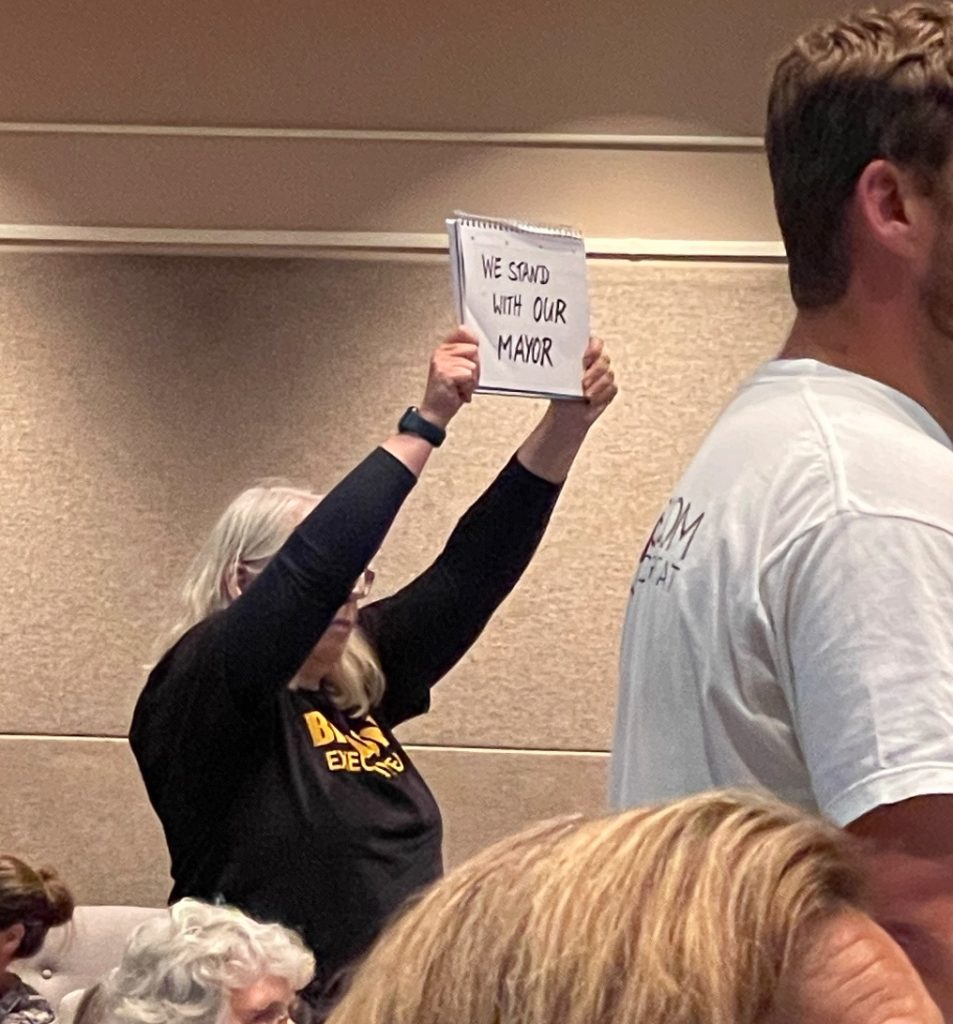
In an often raucous and unruly meeting on Tuesday night, the leftist majority of the Anchorage Assembly passed a controversial ordinance that will allow it to remove the mayor for nearly any reason it believes is a breach of public trust. The measure passed 9-3, with the three conservatives voting against it.
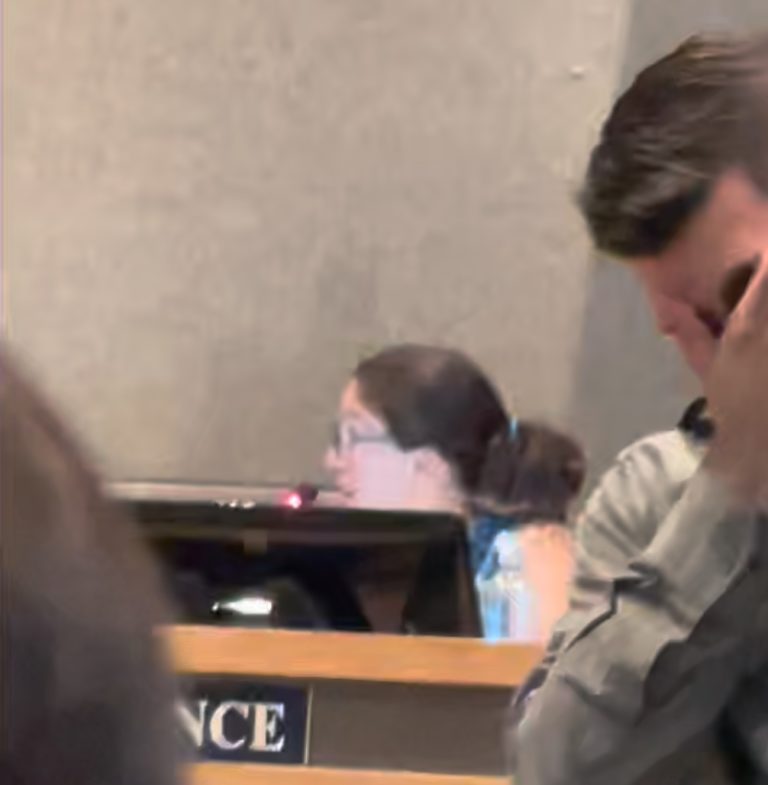
Assembly Chair Suzanne LaFrance was unable to control the audience after she cut off public testimony and the public reacted negatively, jeering at the Assembly and chanting “Cowards!” Pounding her gavel and demanding order, LaFrance worked with Assemblyman Chris Constant to identify offenders and had the security guards remove the most vocal people.
“You are out of order and creating an actual disruption of this meeting! It is disrespectful to the democratic process to shout. You are out of order,” LaFrance scolded the public, banging her gavel hard on her desk.
LaFrance also cut the microphone of Assemblywoman Jamie Allard, who was defending the public’s right to give testimony. She ruled the mayor out of order at one point. It seemed that everyone but the nine leftist members of the Assembly were “out of order” on Tuesday.
LaFrance said that the Congress has the power to impeach a president, and so should the Assembly have the power to remove the mayor. She did not mention that there are two legislative bodies in Congress — the House, which can impeach, and the Senate, which must hold a trial and has the power to convict.
The Assembly has no due process in place for removing the mayor; it can act with impunity by hiring its own hearing officer and then accepting the hearing officer’s findings. Then it can pick who it wants to replace the mayor.
Under the new ordinance, an undefined “breach of the public trust” is enough to begin proceedings, and it appears the Assembly intends to follow through with its coup against Mayor Bronson, who voters elected after two chaotic terms of Mayor Ethan Berkowitz and an eight-month reign of a temporary mayor chosen by the Assembly, Austin Quinn-Davidson, after the abrupt resignation of Berkowitz, who had, in fact, breached the public trust by having an inappropriate relationship with a member of the news media.
At one point in the amendment process, Assemblywoman Meg Zaletel moved to adjourn the meeting, using the phrase “I don’t fucking care” and “I’m done. Call the fucking question.” She said she didn’t have to sit there and listen to the public: “I’m not going to sit here and be heckled as an elected official.”
Two security guards were posted between the Assembly and the audience on Tuesday night, emphasizing the fear the Assembly has, knowing their actions are unpopular.
During a break in the meeting, Assemblyman Chris Constant made his way back to the sound booth, which the Assembly has also made into a room for the news media, where he had a long conversation to shape the narrative with the Anchorage Daily News reporter.
Also after the meeting, two people walked to the front and tried to serve the Clerk of the Assembly with referendum language that would undo the ordinance. But Clerk Barbara Jones had left.
It appears the mayor will veto the ordinance but the Assembly now has the votes to override the veto, with the newest member Daniel Volland now seated as the 12th member of the Assembly.
Anchorage resident Jay McDonald has filed a human rights complaint against the Alaska Humanities Forum over its advertised conference for August that excludes white people from half of the conference.
McDonald, who is also a candidate for House, said that the Aug. 6-7 conference excludes his children, who do not identify as “BIPOC,” as the conference has labeled people of color.
“No family in Anchorage should have to fear that they will be forced to leave a public space based on the color of their skin,” McDonald said.
“Bad faith actors have been exploiting loopholes in Alaskan laws regarding 501c3 corporations to engage in prejudicial and discriminatory conduct against protected identity groups. I hope to work with the Alaskan Human Rights Commission and the House Majority in the coming legislative session to strengthen anti-discrimination law and close these loopholes. I have asked the AHRC to open an investigation into this event.”
The Alaska Humanities Forum’s president and CEO is Anchorage Assemblyman Kameron Perez-Verdia.
A two-day conference on the relationship between “race and land in Alaska” is being sponsored by the Alaska Humanities Forum on Aug. 6 and 7.
The first day of the conference is limited to “BIPOC (Black, Indigenous, and People of Color) folks,” according to the Alaska Humanities Forum.
The nonprofit, which receives government and private funding, says that both days will “include elements of storytelling, art, conversation, and connection to land and place. This will take place in the Mountain View neighborhood of Anchorage.”
Mistinguette Smith from the Black/Land Project, will be the facilitator of the two day “conversation experience.” Last year, Smith wrote that she was erasing the term “BIPOC.” This year, the conference is dedicated to BIPOC on the first day; this means anyone who is not white.
“After a year of chafing and muttering about it to myself, I am ready to say this out loud. I am refusing the acronym BIPOC. I am taking it out of my mouth. I’m laying it down. I am recommitting to the much maligned term “people of color.” I’m not doing this because I’m old-fashioned or politically retrograde. As a Black woman who loves Black people, I am acutely aware of the unique and specific ways that racism harms Black people. I’m refusing BIPOC to reclaim a strength: the political power of solidarity,” Smith wrote in USA Today one year ago.
“BIPOC – an acronym for Black, Indigenous and other people of color – was part of how we talked about race during the COVID-19 spring of 2020. The term was useful to bring focus to the deadly experiences of oppression faced by Black and Indigenous people. Although some people didn’t like it or didn’t understand it, the term BIPOC filled the streets with multiracial rage about the murder of George Floyd and anti-Black policing. BIPOC reminded us to open our Zoom with acknowledgements that wherever we are, we are on Indigenous land.”
Smith wrote, “People of color is not a racial identity, but a political one.” Yet the conference is racially segregated according to the term BIPOC.
Those Alaskans who feel discriminated against by the conference may file a complaint with the Alaska Human Rights Commission at this link.
“This program is still being developed, however, we wanted to give participants the opportunity to save the date on their calendars as soon as possible,” says the humanities forum website.
Partnering in the racially sensitive and segregated event are: Grow North Farm, The Alaska Center, NeighborWorks Alaska, Native Movement, Intertribal Agriculture Council, Alaska Master Gardeners Anchorage, and the Alaska Botanical Garden.
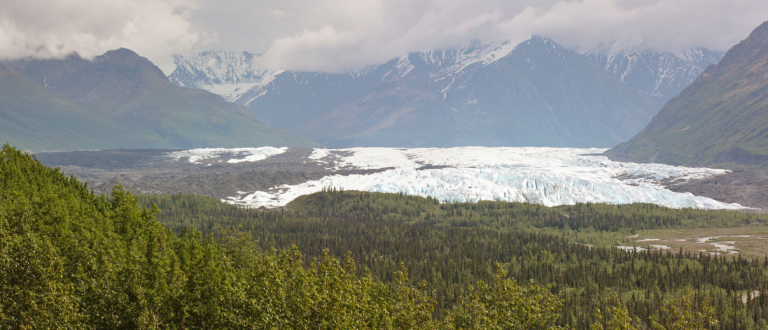
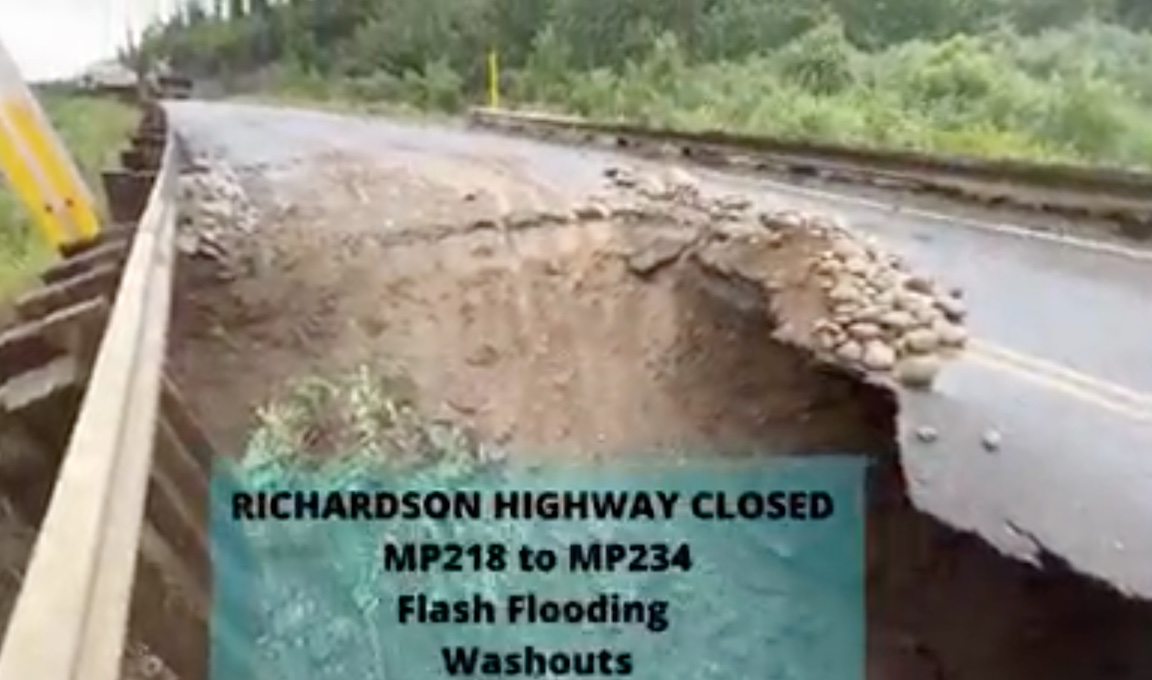
The Richardson Highway is closed from Milepost 218 to 234 due to flash flooding at Ruby Creek and One Mile Creek.
This is a new closure since the washout at Bear Creak occurred earlier this week. Repair times are unknown due to weather conditions, but more details will be available after Department of Transportation crews have assessed the area.
For Valdez travel, detour around this closure by using the Tok Cutoff and the Alaska Highway. Visit 511.alaska.gov for the latest road updates.
Meanwhile, the highway is opened at Bear Creek, which washed out earlier this week. There is a pilot car helping drivers manage the detour around the washout.
DOT update, 10:45 a.m. Tuesday: Richardson Highway remains closed from MP 218 to MP 234 due to road washouts from flash flooding. We anticipate this closure to continue for another 24 hours, but we will know more soon.
Damage: Crews are currently establishing a list of the multiple damage areas in need of repairs, but for now we know is there is damage at Boulder Creek, Lower Suzy Q Creek, Upper Suzy Q, Falls Creek, Gunnysack Creek, and Darling Creek. Bear Creek, Ruby Creek and One Mile Creek are experiencing very high waters with a forecast of 80% showers over the next few days. There are a few areas where mudslides are also a concern.
Fiber optics have been damaged in the area due to the washouts.
DOT has crews on the north and south ends of the closure assessing damaged and washed out areas. DOT is planning to bring additional support to make repairs once crews have established all the damage and identified the resources needed.
DOT will continue to update 511 and local message boards in the areas and also share on social media Tuesday.
For Valdez travel, detour around this closure by using the Tok Cutoff and the Alaska Highway. Visit 511.alaska.gov for the latest road updates and watch for message boards in the area.