Home Blog Page 800

Breaking: Judge says Eastman can serve in Legislature

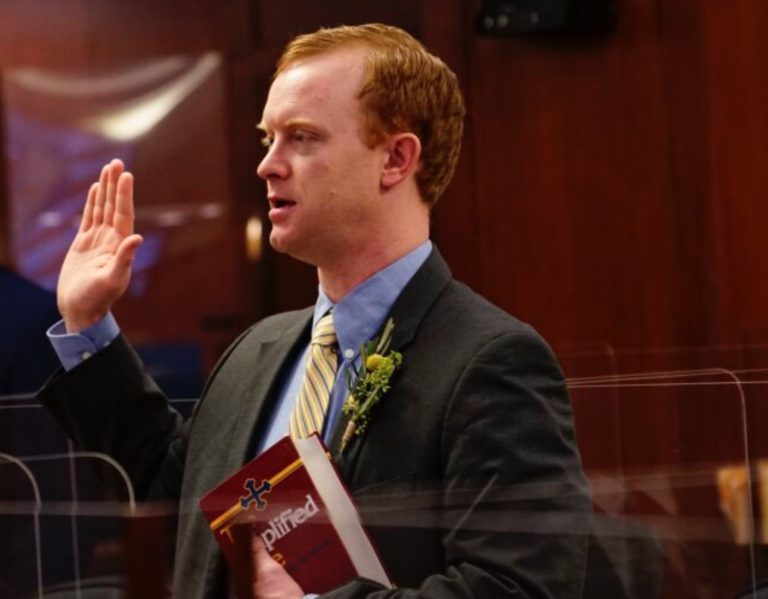
Judge Jack McKenna, in an order released on Friday, says that while the Oath Keepers are an organization the judge believes took concrete action to overthrow by violence the United States government, Rep. David Eastman has taken no such action and “does not and did not possess a specific intent to further the Oath Keeper’s [sic] words or actions aimed at overthrowing the United States government. The court therefore finds that he is not disqualified from holding public office…”

The lawsuit brought by Wasilla partisan activist Randall Kowalke was asking that the court force the Division of Elections to make Eastman ineligible to serve because of his membership in an association that has up to 38,000 members, mostly former military and police officers. The Oath Keepers leadership was involved in events on Jan. 6, 2021 at the U.S. Capitol, when a few hundred citizens disrupted the certification of the Electoral College vote that made Joe Biden president. The group’s founder, Stewart Rhodes, has been convicted of seditious conspiracy.

Eastman, a Republican who just won his fourth term to represent Wasilla, was accused of violating the Alaska Constitution’s “disloyalty clause” for his membership in Oath Keepers. He once sent in dues that gave him a lifetime membership in the group. According to the Alaska Constitution, anyone advocating for the overthrow of the U.S. government cannot hold a public office.

Kowalke and the Northern Justice Project are not the first who have tried to prevent Eastman from serving. Democrats in the Alaska House tried to have him removed from office due to his attendance at a speech by President Donald Trump on Jan. 6, 2021, in Washington, D.C.

The matter may be appealed to the Alaska Supreme Court.

Polar Express: Home-alone polar bear cub settles in for the holidays at the Alaska Zoo

3

One little polar bear that weighs the equivalent of two bags of dog food will be spending Christmas at the Alaska Zoo after losing track of his mom. And that also looks like the cub’s semi-permanent address, after the bear was found roaming alone in Prudhoe Bay in November.

The U.S. Fish and Wildlife Service was notified on Nov. 24 of the lonely bear and sent a team of biologists to check it out. They determined the male bear, about 10- to 11-months old and 103 pounds, needed to come in from the cold. Usually cubs stay with their mothers for up to 2.5 years.

The decision was made because the orphan was a little too comfortable around people, raising concerns for potential human-bear conflicts in its future, the USFW said. Those encounters never end well for the bears.

(In the words of Kevin from “Home Alone,” the Christmas movie, “This house is so full of people it makes me sick. When I grow up and get married, I’m living alone.”)

Once the cub was captured and determined to be stable through visual and physical inspection, it was polar-expressed to the Alaska Zoo in Anchorage, which has the facilities and experience to provide for the animal’s immediate needs. The bear appears to be in fair to good condition, although it arrived with a few small cuts on its lip.

“At this time, the cub will not be on public display at the Alaska Zoo. Public opportunities to view the cub would be provided only with the Service’s approval and if zoo staff deems the bear to be completely healthy and the opportunity appropriate to the cub’s development,” the service reported.

(In the words of Harry the wet bandit in “Home Alone,” the Christmas movie, “”All kids, no parents. Probably a fancy orphanage.”)

“The decision to remove this bear from the wild was not made lightly,” said Service Polar Bear Program Lead David Gustine. “Removing a bear is not a good outcome for the individual or the wild population, but we felt it was the best course of action in this situation.” 

Alaska has about 4,700 wild polar bears, and one adult female polar bear that lives at the Alaska Zoo. You can watch “Cranbeary,” the female bear, on the Alaska Zoo’s live web cam:

“Our primary concern is for the wellbeing of the cub,” said Alaska Zoo Executive Director Patrick Lampi. “It had been observed eating a fox, lacerations on its upper lip are likely from that activity. With rabies in fox prevalent in the Prudhoe Bay area, we have special extended quarantine procedures in place for this cub.”  

A future determination on the long-term care of this animal will be made by the Service after considering all options. Given the bear’s behavior around humans and its young age, it will not be returned to the wild, the Service said.

(In the words of Kevin from “Home Alone,” the Christmas movie, “Guys! I’m eating junk and watching rubbish. You better come out and stop me!”)

The last time an orphan polar bear was brought in from the wild was in 2013, when a male cub — Kali — was found alone at Point Lay. Kali was taken to the Alaska Zoo and now lives at the Saint Louis Zoo in Missouri.

The Service has been responsible for the management of polar bear populations in the United States since 1972 under the Marine Mammal Protection Act and under the Endangered Species Act since 2008, when it was listed as a threatened species due to the loss of its sea-ice habitat. 

The Fish and Wildlife Service said that it appreciated the help of Hilcorp, which reported the animal and assisted in assessing the situation, Alaska Clean Seas, which provided logistical and field support, and the Alaska Zoo.

(In the “Home Alone” words of Gangster Johnny, “Keep the change, ya filthy animal!”)

Icy in Seattle creates Christmas travel tangle

15

It’s not a Hallmark Christmas movie at Sea-Tac International Airport today. Travelers trying to get south from Alaska for the holidays are encountering over one hundred canceled Alaska Airlines flights to Seattle after an ice storm hit western Washington overnight. At 4 a.m., all runways were closed at Seattle-Tacoma, with one runway opening at 6 a.m.

“SEA runways are currently closed indefinitely as we continue to work to de-ice the surfaces. Safety is our priority before we can reopen the runways. Check with your airline for further updates on your specific flight,” the airport posted on Twitter just after 5:10 a.m. One runway out of three opened just before 7 a.m.

“Limited operations will continue to be weather dependent as safety is always our main priority,” the airport said.

FightAware.com, a real-time flight tracker, showed that as of 9:45 am, 477 domestic flights were canceled and another 124 flights were delayed at Sea-Tac. By the time this story was finished three minutes later, the website showed that 480 flights were cancelled, and by the time it was proofread at 9:53 a.m. Pacific time, the cancelled flights were up to 488.

Those hoping to reach Seattle and drive somewhere will encounter roads that are coated with at least one quarter inch of ice, making ice skates a more viable transportation method in Puget Sound. It’s unlikely that drivers will be able to safely navigate the roads to and from the airport, as many roads are blocked by cars that are simply unable to move. Power outages have begun and are expected to continue as the ice brings down trees and limbs over power lines.

Win Gruening: Juneau Christmas, past and present

By WIN GRUENING

Growing up in Juneau in the 50’s and 60’s was a real treat, especially around Christmas. The weather seemed more predictable (even if mail delivery was not) and fun activities were the order of the day.  

I hope weather records don’t make me a liar but it seemed like most of our winters were blessed with lots of deep snow.  That meant skiing in the Douglas Ski Bowl, sledding down Starr Hill or the Evergreen Cemetery, ice skating on Auke Lake, and hooky-bobbing downtown after school and on the weekends. As a family,  we also attended high school basketball tournaments and, like many still do, went Christmas tree hunting. Afterwards, we’d inevitably spend time surgically adding branches to our tree before decorating it.  

There were many neighborhood holiday get-togethers with gift and cookie exchanges where Santa arrived unannounced and a number of New Year’s Eve parties where, as a child, I played the Baby New Year and my dad played Father Time. Meals were memorable. It was a grand time.

In the past, Juneau was a wonderful place to celebrate the Christmas holidays and it remains so to this time – even more so.

Today, in addition to the varied and numerous religious services available, Juneau’s December events calendar shows how culturally rich our town can be. There is literally something for everyone to enjoy. The following is just a sample of 2022 holiday offerings and activities.

  • The Filipino Community annual Christmas party invites everyone in Juneau to a mixture of American and Filipino holiday food with Christmas carols followed by games and presents for kids
  • Celebration of the Feast Day of Our Lady of Guadalupe featuring tamales and Mexican chocolate hosted by the Juneau Hispanic Ministry at St. Paul’s Catholic Church
  • Family events celebrating Hanukkah sponsored by Congregation Sukkat  Shalom
  • Governor Mike Dunleavy and First Lady Rose Dunleavy invitation to Alaskans to the Governor’s Annual Holiday Open House at the Governor’s Residence
  • Eventide Carols at the Shrine of St. Therese sponsored by the Juneau Lyric Opera
  • Juneau Skating Club Holiday Show featuring Alaska’s only competitive synchronized skating team at Treadwell Arena
  • Chapel-by-the-Lake sponsored Christmas Party for kids featuring craft activities and a  ”A Charlie Brown Christmas” movie
  • Twelve days of entertainment leading up to Christmas at the Crystal Saloon featuring the original 1935 Scrooge movie, Victorian caroling, winter formal dance, and more
  • Juneau Holiday Village, a month-long holiday celebration featuring performances by Juneau Alaska Music Matters (JAMM) elementary school musicians
  • Christmas Tree Lighting by the Douglas Community and skate with Santa at Treadwell Ice Arena
  • Juneau Symphony’s Holiday Cheer Concert at Thunder Mountain High School
  • Christmas Eve Celebration at Eaglecrest Ski Area filled with music, cookies, Christmas stories and Torchlight Parade with Santa
  • Holiday performance of the JDHS Concert Band, Jazz Band, and Wind Ensemble
  • Helicopter flights over twinkling night lights of Juneau sponsored by Juneau Lions Club and Coastal Helicopters with proceeds benefiting non-profits
  • The Nutcracker ballet performed by the Juneau Dance Theater at JDHS Auditorium
  • Juneau firefighters bringing extra holiday cheer to Juneau and their families with decorated fire trucks as they parade the streets of Juneau together with Santa
  • Candy Cane Hunt sponsored by Juneau Parks and Recreation
  • Adopt-A-Family Christmas Gift Program sponsored by St. Vincent de Paul
  • Racheal MacLeod Christmas Box Dinner sponsored by Salvation Army and other community organizations for families in need

Christmas is, first and foremost, a sacred religious holiday celebrating the birth of Jesus Christ. But it’s also a world-wide cultural and commercial phenomenon. Although Juneau is not a large city, it has a huge heart and generous spirit. It has always amazed me how holiday activities in Juneau are supported year-in and year-out through the creativity and kindness of so many.  

Hats off to our religious organizations, schools, private businesses, non-profits, fire department, Parks and Recreation Department, and of course, Juneau’s arts and culture community that delivers wholesome, entertaining, and diverse performances, without all the fancy facilities and venues found in big cities. 

This is how we teach our kids that Christmas isn’t just about getting gifts, it’s about realizing the gifts you already have and sharing with others.

After retiring as the senior vice president in charge of business banking for Key Bank in Alaska, Win Gruening became a regular opinion page columnist for the Juneau Empire. He was born and raised in Juneau and graduated from the U.S. Air Force Academy in 1970. He is involved in various local and statewide organizations.

Reasons for ballot rejection: Signatures, postmarks

Listicle: What are the nation’s 2022 critical minerals?

5

Frankincense, gold, and myrrh are the season’s essentials for a king of king you might meet on your life’s journey.

As for those high-tech gadgets, wind turbines, electric cars, and national security hardware going under the tree this year, there’s a list from the U.S. Geological Survey of the top 50 most crucial minerals for the nation, some of which are found in Alaska.

The top three critical mineral producing states are Nevada, Arizona, and Texas. Alaska ranks No. 7 for production of critical minerals.

Click a mineral’s name on the USGS list of critical minerals to find relevant statistics and publications:

  • Aluminum, used in almost all sectors of the economy
  • Antimony, used in lead-acid batteries and flame retardants
  • Arsenic, used in semi-conductors
  • Barite, used in hydrocarbon production.
  • Beryllium, used as an alloying agent in aerospace and defense industries
  • Bismuth, used in medical and atomic research
  • Cerium, used in catalytic converters, ceramics, glass, metallurgy, and polishing compounds
  • Cesium, used in research and development
  • Chromium, used primarily in stainless steel and other alloys
  • Cobalt, used in rechargeable batteries and superalloys
  • Dysprosium, used in permanent magnets, data storage devices, and lasers
  • Erbium, used in fiber optics, optical amplifiers, lasers, and glass colorants
  • Europium, used in phosphors and nuclear control rods
  • Fluorspar, used in the manufacture of aluminum, cement, steel, gasoline, and fluorine chemicals
  • Gadolinium, used in medical imaging, permanent magnets, and steelmaking
  • Gallium, used for integrated circuits and optical devices like LEDs
  • Germanium, used for fiber optics and night vision applications
  • Graphite , used for lubricants, batteries, and fuel cells
  • Hafnium, used for nuclear control rods, alloys, and high-temperature ceramics
  • Holmium, used in permanent magnets, nuclear control rods, and lasers
  • Indium, used in liquid crystal display screens
  • Iridium, used as coating of anodes for electrochemical processes and as a chemical catalyst
  • Lanthanum, used to produce catalysts, ceramics, glass, polishing compounds, metallurgy, and batteries
  • Lithium, used for rechargeable batteries
  • Lutetium, used in scintillators for medical imaging, electronics, and some cancer therapies
  • Magnesium, used as an alloy and for reducing metals
  • Manganese, used in steelmaking and batteries
  • Neodymium, used in permanent magnets, rubber catalysts, and in medical and industrial lasers
  • Nickel, used to make stainless steel, superalloys, and rechargeable batteries
  • Niobium, used mostly in steel and superalloys
  • Palladium, used in catalytic converters and as a catalyst agent
  • Platinum, used in catalytic converters
  • Praseodymium, used in permanent magnets, batteries, aerospace alloys, ceramics, and colorants
  • Rhodium, used in catalytic converters, electrical components, and as a catalyst
  • Rubidium, used for research and development in electronics
  • Ruthenium, used as catalysts, as well as electrical contacts and chip resistors in computers
  • Samarium, used in permanent magnets, as an absorber in nuclear reactors, and in cancer treatments
  • Scandium, used for alloys, ceramics, and fuel cells
  • Tantalum, used in electronic components, mostly capacitors and in superalloys
  • Tellurium, used in solar cells, thermoelectric devices, and as alloying additive
  • Terbium, used in permanent magnets, fiber optics, lasers, and solid-state devices
  • Thulium, used in various metal alloys and in lasers
  • Tin, used as protective coatings and alloys for steel
  • Titanium, used as a white pigment or metal alloys
  • Tungsten, primarily used to make wear-resistant metals
  • Vanadium, primarily used as alloying agent for iron and steel
  • Ytterbium, used for catalysts, scintillometers, lasers, and metallurgy
  • Yttrium, used for ceramic, catalysts, lasers, metallurgy, and phosphors
  • Zinc, primarily used in metallurgy to produce galvanized steel
  • Zirconium, used in the high-temperature ceramics and corrosion-resistant alloys.

The 2022 list contains 15 more commodities compared to the nation’s first list of critical minerals created in 2018. Much of the increase in the new list is the result of splitting the rare earth elements and platinum group elements into individual entries rather than including them as “mineral groups,” the USGS explained. In addition, the 2022 list of critical minerals adds nickel and zinc to the list while removing helium, potash, rhenium and strontium.

Every three years, the Department of the Interior must review and update the list of critical minerals, per the Energy Act of 2020, and update the methodology used to identify potential critical minerals. The USGA must take interagency feedback and public comment through the Federal Register, and ultimately finalize the list of critical minerals.

The Energy Act of 2020 defines a “critical mineral” as a non-fuel mineral or mineral material essential to the economic or national security of the U.S. and which has a supply chain vulnerable to disruption. Critical minerals are also characterized as serving an essential function in the manufacturing of a product, the absence of which would have significant consequences for the economy or national security. 

Jan. 6 committee issues its final report, warns conservative media they may be investigated

The House Special Committee on the Jan. 6 Attack on the U.S. Capitol released its final report on Thursday. There are no surprises in the report that accuses former President Donald Trump of trying to overturn the results of the 2020 presidential election. The report says Trump and his inner circle “engaged in at least 200 apparent acts of public or private outreach, pressure, or condemnation, targeting either state legislators or State or local election administrators, to overturn State election results.”

The report comes after the committee formally accused Trump of inciting insurrection and other crimes and called for the Department of Justice to open a criminal investigation.

“Our country has come too far to allow a defeated President to turn himself into a successful tyrant by upending our democratic institutions, fomenting violence, and, as I saw it, opening the door to those in our country whose hatred and bigotry threaten equality and justice for all Americans,” wrote the panel’s Chair Bennie Thompson, a Mississippi Democrat. He was joined by Republican Liz Cheney and Adam Kinzinger, and Democrats Adam Schiff, Zoe Lofgren, Pete Aguilar, Stephanie Murphy, Jamie Raskin and Elaine Luria.

The report makes several recommendations, including reforming the Electoral College with the Electoral Reform Act. In fact, on Thursday the Senate did pass that act, which was tucked inside the massive spending package that will cost taxpayers $1.7 trillion.

The report also advises pursuing criminal and civil actions against those accused of misconduct by the report. It would ask Congress to create a process to bar people from future office, using the 14th Amendment. It recommends more severe punishment for those attempting to impeded the transfer of presidential power and stronger sanctions for those making threats against election workers.

The report also goes after certain unnamed media, saying that Congress “should continue to evaluate policies of media companies that have had the effect of radicalizing their customers, including by provoking people to attack their own country.”

To read the report, click this link that takes you to the House Committee’s PDF.

Last-minute gift: Bear viewing raffle tickets for McNeil River State Game Sanctuary

6

Alaska Department of Fish and Game has a novel idea for a gift for that someone who seems to have everything. You can enter to win a trip to the world-famous McNeil River State Game Sanctuary. The package includes permits for four days of bear viewing and funds towards your transportation, lodging, and gear. But the drawing for the winner doesn’t take place until April 2.

The official official non-profit partner, the Outdoor Heritage Foundation of Alaska, is holding the third McNeil River State Game Sanctuary permit raffle. This fundraiser supports the conservation and management of non-game species in Alaska.

Learn more about the McNeil River State Game Sanctuary here.

The winner is entitled to a package of two guided viewing permits for McNeil River State Game Sanctuary June 15-18, 2023. The two permits enable access to the remote wilderness camp at McNeil River and award the winner two of the 10 highly coveted slots in the daily guided bear viewing group for all four days.

The raffle prize also includes $8,000 towards transportation to the sanctuary, lodging, and necessary supplies to make the trip to McNeil as memorable as possible.  During this permit window at the sanctuary, bears will be observed feeding on vegetation on the sedge flats in front of camp, fishing for sockeye salmon in Mikfik Creek, and pairing up for mating season. June is an exciting time to be at McNeil!. This is a perfect opportunity for photographers, adventurers, or anyone who appreciates wild Alaskan Brown Bears.

Every ticket purchased helps fund conservation and management of Alaska’s non-game species. Even if you don’t win a permit, we’re all winners when we contribute to conservation.

Cost: Raffle tickets cost $20 each, 6 for $100, 40 for $500, or 100 for $1000. An unlimited number will be sold.

Dates: Raffle tickets will be sold online until 11:59pm on April 2, 2023.

Drawing: One winner will be selected by random drawing and notified at noon on April 7, 2023.

Notification: The winner need not be present and will be notified by phone, email and published on the OHFA website: www.OHFAK.org

Who: open to all; void where prohibited.

Permits: Winner will receive two Guided Viewing Permits from the Alaska Department of Fish and Game, valid for viewing bears at the McNeil River State Game Sanctuary on June 15 to June 18, 2023.  The winner may assign these permits through the ADF&G to anyone they choose.

Proceeds: The Outdoor Heritage Foundation of Alaska is a 501c3 charitable educational organization and the official foundation of the Alaska Department of Fish and Game.  OHFA is offering this opportunity though ADF&G’s Special Access Permit program.  All net revenue generated from this raffle will be deposited in the ADF&G non-game conservation account.

Note: A person who won a McNeil River sanctuary lottery-issued permit from the ADF&G for the 2022 season is not eligible to visit the sanctuary in 2023; however, they may still purchase raffle tickets as a gift for someone else.   

Visit the McNeil River State Game Sanctuary website for more information on visiting the sanctuary: www.mcneilriver.adfg.alaska.gov

For more information on ADF&G’s Lands and Refuges Program, visit www.refuges.adfg.alaska.gov

Rick Whitbeck: AIDEA needs your vocal support

17

By RICK WHITBECK | POWER THE FUTURE

This state agency is self-sufficient and profitable, returning nearly half a billion dollars in dividends to the State of Alaska throughout its history.

This year’s dividend was announced this week at $17.046 million, a nearly 18% year-over-year increase.

The same state agency has provided hundreds of loans for micro-economic and entrepreneurial ventures across the state, leading to employment for thousands of Alaskans, who may not have had the chance otherwise.

And yet, this agency – misunderstood by most Alaskans – receives regular criticism for secrecy, working against Alaskans’ interests, bad investment decisions, and wasting money.

As I’ve gotten to know The Alaska Industrial Development and Export Authority (AIDEA) over the past few years, I’ve seen with my own eyes that these allegations are misguided and false.  It is long past time to give credit to AIDEA for its wise business practices over the years, and its leadership in helping to secure jobs for generations to come.

Let’s start with the elephant in the room: While any investment firm will tell you that a perfect track record is unrealistic, AIDEA has made some poor investments over the years.  The Alaska Seafood International plant in Anchorage – now ChangePoint Church – was notable for its size and amount (a $20 million loss) in the early 2000s, and there have been other investment losses detractors could take exception with. However, AIDEA’s overall performance is significantly net-positive to the state and economy, with many more “hits” than “misses.” 

AIDEA was involved in the early stages of the Red Dog Mine in the Northwest Arctic Borough, the nation’s largest zinc producer, and a job-creating giant for Borough residents. They invested in the Ketchikan Shipyard, which has been a boon for the Southeast community and helped launch industrial opportunities throughout the region. 

Its investment in the Bonanza fuel farm in Nome, the More dock in Homer, a FedEx hangar at Ted Stevens Anchorage International Airport and the Skagway Ore Terminal are all examples of AIDEA making wise decisions with its investment dollars. These projects are paying back, not only with monthly and annual payments, but with increased jobs and opportunities across the state. Plus, the total income generated from these family-supporting and long-term jobs far outweighs the amount of dollars from investments that haven’t had a positive return.  

AIDEA’s Board of Directors is tasked with overseeing the mission and overall scope of the agency.  It includes some of Alaska’s most successful business leaders, as well as the Commissioners of Commerce and Community and Economic Development, and Revenue.  Having attended the majority of AIDEA board meetings the past two years, I’ve heard the discussions and have seen the thoughtful deliberations. AIDEA takes its charge seriously.

This week, they announced a new Executive Director in Randy Ruaro, formerly Governor Dunleavy’s Chief of Staff, and an accomplished attorney and businessman. I’m excited to see AIDEA’s future with Ruaro at the helm, especially as it continues down the path with three investments that could pay huge dividends for the state. 

AIDEA is the only current leaseholder in the Coastal Plain of the Arctic National Wildlife Refuge (ANWR), having bid on and contracted for seven tracts, totaling just over 365 thousand acres, from the December 2020 initial lease sale. Although the area has been ruled off-limits by the Biden administration – in stark contrast to the Congressionally-approved development plan – the leases remain relevant to an overall energy plan for America, and AIDEA’s decision to plug ahead with plans to turn the leases into jobs and revenues down the road is commendable.

AIDEA is also leading the way for investment in two roads to resources – something Alaska desperately needs – as both the Ambler mining district and West Susitna development areas hold tremendous promise for strategic and critical minerals, copper and other deposits necessary for the U.S.’s plans to transform our nation’s energy mix. The two projects would allow world-class environmental stewardship to work hand-in-hand with world-class mining technologies and strategies; bringing jobs to rural Alaska, revenues to the state and establish a domestic supply-chain for what industry and eco groups alike are clamoring for.

Alaska, I hope you’re more aware of the positive impact AIDEA has had on our economy with this article. Now, it’s time for you to get involved. The Board and staff need Alaskans to stand up and provide support for AIDEA’s ongoing efforts, as its enemies in the environmental and ‘let’s shut down Alaska’ movements are regularly lambasting the agency. Their Board meets every month, with a public comment opportunity as the place for you to have your say. The 2023 schedule can be found here.

Join me in supporting an agency that has been – and will be – a job and revenue creator for Alaska’s bright energy future.

Rick Whitbeck is the Alaska State Director for Power The Future, a national nonprofit organization that advocates for American energy jobs. Contact him at [email protected] and follow him on Twitter @PTFAlaska.

Sullivan votes no on $1.7 trillion omnibus spending monster, while Murkowski votes yes

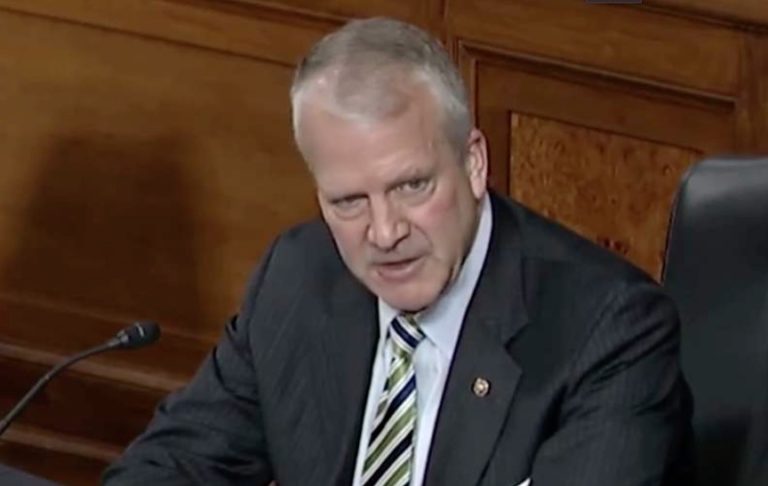
Alaska U.S. Sen. Dan Sullivan voted against the $1.7 trillion omnibus spending bill today, filled with controversial earmarks and gun control measures. Sen. Lisa Murkowski voted in favor of it, and it passed on a vote of 68-29 for the 4,155-page appropriation package.

Sullivan released the following statement:

“End of year omnibus votes are always difficult because of the looming threat of a government shutdown and the fact that some of the provisions in these bills inevitably are ones that benefit Alaska. However, these massive spending bills are usually crafted through backroom deals with no debate and no time for Senators to do their appropriate due diligence on what is actually in them. This dysfunctional process is not worthy of the country and people we represent.

“There are a number of things in this bill that I support and strongly advocated for, such as robust funding for our military to counter the threats of this new era of authoritarian aggression led by Russia’s Vladimir Putin and China’s Xi Jinping. Specifically, this bill increases defense spending by $45 billion above the President’s anemic request, which is something I fought for as a member of the Senate Armed Services Committee, and will continue the significant buildup of the U.S. military in Alaska. This bill also addresses other important Alaska priorities, including items I authored and coauthored, like the Alaska Salmon Research Task Force Act, the Visit America Act, language granting the University of Alaska’s land transfer, and funding to provide disaster relief for Alaska fishermen.

“However, this is a more than $1.7 trillion dollar spending bill consisting of 4,155 pages, with thousands more in supporting documents, negotiated and agreed to only by House and Senate leadership, and their staff. We were given approximately 48 hours to read and analyze it. Decisions were made behind closed doors, many of which are clearly beyond the expertise of those making them, and the legislative process once again provided no meaningful opportunity for further input from Senators. 

“Case in point: The final package we’ve been asked to support undermines national security in the Arctic by cutting funding for the building of Polar Security icebreakers and striking funding for the purchase of an icebreaker that the Coast Guard is planning to home-port in Juneau. This was a priority for the Alaska delegation. We have worked hard to get both the Trump and Biden administrations to support these critical American Arctic assets, and we were able to get them included in President Biden’s budget request, as well as in appropriation and authorization bills. But in the final hours of this opaque omnibus process, these funds were removed. By whom and for what reason, is not clear. This decision could further set back our nation’s ability to provide persistent presence in the Arctic for years. This is a major disappointment for our state and country. 

“As I have repeatedly emphasized, we need to fix our broken budget process that is not serving our military, government or the American people well.” 

Sullivan has a reputation for wanting to read the bills he votes on. This bill was the equivalent of more than three of Tolstoy’s War and Peace.

In addition to Sen. Murkowski, 16 other Republicans voted for the passage of the bill, including: Blunt, Boozman, Capito, Collins, Cornyn, Cotton, Graham, Inhofe, McConnell, Moran, Portman, Romney, Rounds, Shelby, Wicker, and Young.