Friday, May 15, 2026
Home Blog Page 799

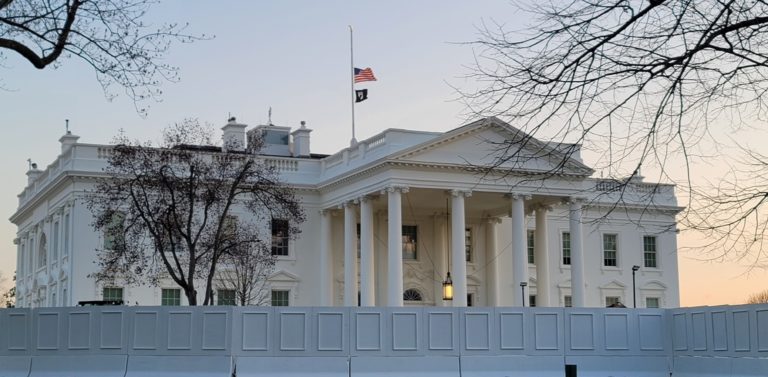
State Department plan: Taxpayers to pay for gender drugs and mutilation of U.S. diplomats’ children?

By CASEY HARPER | THE CENTER SQUARE

The U.S. State Department’s Diversity, Equity, Inclusion, and Accessibility (DEIA) Strategic Plan has sparked controversy for including taxpayer-funded “gender transition care” for employees and their children.

The policy comes as some states have begun banning those very same transgender surgeries and drugs from use on children, labeling them “child abuse.”

“The State Department might not just be paying for their employee’s kids to receive these damaging surgeries, they’re penalizing foreign service officers who disagree and pressuring countries to perform these procedures on children,” U.S. Rep. Jim Banks, R-Ind., told the Free Beacon. 

President Joe Biden signed an executive order in June specifically aimed at combating these state efforts.

“During my confirmation hearing, I said that I would judge the success of my tenure, in part, by how well I lead the Department to be more diverse, equitable, inclusive, and accessible,” Secretary of State Antony Blinken said after the plan was released. “Together, we will make the Department a more effective organization, better equipped to meet the challenges and opportunities of the 21st Century.

“Our country’s diversity is our greatest strength,” he added.

The policy lays out strategies to “increase support for Lesbian, Gay, Bisexual, Transgender, Queer, and Intersex (LGBTQI+) employees and family members.”

The plan commits that the State Department will “assess resources for gender dysphoria and gender transition care at posts for employees and their dependents.”

The agency will also “develop a Department-wide targeted plan to achieve equity in the advocacy plan to obtain the accreditation of same-sex spouses overseas” and “increase gender-neutral restrooms and locker rooms in overseas facilities.”

The plan says the agency will “evaluate and ensure inclusion and safety policies and procedures for LGBTQI+ children at overseas schools in collaboration with the educational accreditation agencies and provide mechanisms for social-emotional support.”

Last year, the Veterans Administration began offering surgeries for veterans seeking to alter their gender appearances. The VA said it would make the department more “more welcoming” to all veterans and the announcement included that the LGBT health program would become the LGBTQ+ health program, to “reflect new community standards of inclusiveness and anticipate future changes in terms.” The VA is not providing plastic surgery for vets who simply want a more youthful appearance, but will do surgery for those who want to mutilate their genitalia and be on hormone replacement therapy for the rest of their lives.

Republicans around the country have begun pushing policies to ban transgender surgeries and drugs from use on children.

Arkansas became the first state last year to ban transgender procedures and drugs for minors.

“They need to get to be 18 before they make those decisions,” Republican Rep. Robin Lundstrum said at the time.

In Texas, several legal battles are underway over Gov. Greg Abbott’s investigations into child transgender transitions as child abuse.

In August, the Florida Agency for Health Care Administration said the state’s Medicaid coverage would not pay for transgender drugs or surgeries. Florida’s medical board has begun reviewing transgender treatments for youth with the likely goal of banning them for those under 18 years old.

Tennessee is also foremost among the states after state Republican leadership said it is considering an outright ban on transition drugs and surgeries for minors.

Last month, allegations arose that Vanderbilt University was pushing the transition treatments to earn a profit and forcing out employees who disagreed after a video of the university’s medical center went viral. That video included a Vanderbilt University Medical Center doctor in 2018 touting that transgender surgeries “bring in a lot of money” and has further ratcheted up scrutiny on the issue in that state.

“We should not allow permanent, life-altering decisions that hurt children or policies that suppress religious liberties, all for the purpose of financial gain,” Tennessee Gov. Bill Lee, a Republican, said in a statement. 

J.H. Snider: Why is calling a constitutional convention on the ballot this November?

By J.H. SNIDER

Once per decade — next on Nov. 8 — Alaska’s constitution grants the people the right to call a constitutional convention via a statewide referendum. Alaska’s Framers placed this automatic referendum on the ballot to prevent the Legislature from having monopoly power over initiating constitutional amendment. The process they created grants the people three votes: First, whether to call a convention. Second, if called, to elect delegates to the convention. Third, whether to approve the convention’s proposals.

Alaska’s framers understood that the process of ordinary and higher lawmaking should be different. After all, if they were the same, there would be no point in having a written constitution. Higher lawmaking requires a different process because the legislature has a conflict of interest when initiating, proposing, and ratifying fundamental laws concerning its own powers. Just as foxes shouldn’t be placed in charge of guarding a henhouse, government officials created by a constitution shouldn’t be placed in charge of amending it. As the drafter of Alaska’s periodic convention referendum put it: “[T]he constitution should not be at the mercy of future state legislatures.”

Each vote was to prevent the foxes from controlling one of the three critical stages of the constitution-making process: the first where the people initiate the process via referendum, the second where the people elect a convention separate from the legislature to propose constitutional changes, and the third where the people ratify or reject each proposed change.

Convention opponents are correct that bypassing the Legislature in constitution-making costs a premium because a Legislature already exists whereas a convention must be created from scratch. But the framers believed that this additional expense could be an investment, not merely a cost, because of the valuable benefits empowering the people could bring to constitution making.

The framers also believed that a convention needed the same unlimited constitutional proposal power as the Legislature because allowing the Legislature to limit a convention’s proposals would be granting the fox control over the henhouse. In other words, unlimited agenda setting power for a convention wasn’t a Pandora’s Box; it was the prime benefit of the convention process.

Unlimited agenda setting power also didn’t mean unaccountable, as the framers granted the people ratification power over any constitutional amendment proposed by either legislature or convention.

New Hampshire illustrates the type of process the framers had in mind. New Hampshire, the “live free or die state,” has politically much in common with Alaska, including placing a convention referendum on the ballot every ten years. Unlike Alaska, it has held seventeen conventions, including 10 in the 20th century. Yet it has the second oldest constitution in the world because it has used the process to amend rather than rewrite its constitution.

Convention opponents are spending more than a million dollars making absurd claims that a convention “is a Pandora’s Box pure and simple” and that one would “cost at least $17 million dollars.” The Pandora’s Box claim is a direct attack on the framers’ wisdom in putting the periodic referendum in Alaska’s constitution to function as Alaska’s only constitutional legislative bypass mechanism.

Alaska’s last convention in 1955-6 spent less than $300,000, about $3 million in today’s dollars. And that was for a statehood convention designed to create a constitution from scratch, not merely to propose popular amendments the legislature won’t pass, such as codifying the Permanent Fund Dividend. Alaska’s government currently spends some $12.7 billion a year and $127 billion over a ten-year stretch. A convention’s cost is merely a rounding error on that amount. If Alaskans, like other Americans, believe their state government wastes at least 30% of every dollar spent, the economic return on a convention that reduces that waste by a mere 1% would be more than 100:1.

The convention process has three natural enemies. First, incumbent legislators because a convention takes power from them. Second, Alaska’s most powerful special interest groups because, by definition, they excel at influencing the Legislature and recognize that a convention could be a Pandora’s Box for their interests. Third, any group that prefers using the courts rather than the legislature or a convention, to pursue its agenda.

Alas, many secondary interest groups depend on these natural enemies for political support, which includes trading convention opposition for support of their organization’s core lobbying mission.

What these four bipartisan groups have in common is that they are political insiders who, in certain relatively rare circumstances, have perverse incentives to form a political cartel averse to the people’s interests.

The most famous such cartel in American politics concerns legislative gerrymandering. Alaska’s framers understood the risk of such a cartel regarding opposition to bypassing the legislature, which is why they created the automatic periodic convention referendum.

• J.H. Snider edits The Alaska State Constitutional Convention Clearinghouse and writes about democratic reform problems.

Notes from the trail: Palin brings in Sheriff David Clarke and boyfriend Ron Duguay for rally, but only 50 show up

At a get-out-the-vote rally at the Dena’ina Convention Center on Sunday, only about 50 people showed up to support congressional candidate Sarah Palin, even though she had brought in well-known conservative Sheriff David Clarke, and Palin also plugged in her also-famous Florida boyfriend Ron Duguay into the lineup, after Senate candidate Kelly Tshibaka demurred from being at the rally. (Photo credit: Twitter, “Makeadifferencewillya” account.)

Early versions of the flyers for the rally had Senate candidate Tshibaka on it, but she said weeks ago she could not be there due to a scheduling conflict. The final invitation did not have Tshibaka anywhere on it, but substituted in Duguay:

A mechanical bull was in the hallway. Just not many people to ride it. The room holds over 3,000, and felt absolutely empty, according to one attendee.

Chamber debate: For Monday’s Anchorage Chamber of Commerce debate for congressional candidates, only Nick Begich and Chris Bye have RSVP’d. Sarah Palin isn’t showing up and Mary Peltola is sending a tape.

HIPOW: At the 53rd HIPOW banquet and auction in Fairbanks, the fundraiser for Catholic schools, only Nick Begich showed up in the congressional field. Gov. Mike Dunleavy was also at the fundraiser, which is one of the major social events of the year in Fairbanks.

Kelly Tshibaka, running for Senate, was spotted in Bethel, the Kenai, and Fairbanks at HIPOW. Sen. Lisa Murkowski was also at HIPOW.

Save the date for the Debate for the State: This is “the big debate” with KTUU, on Wednesday Oct. 26, and there’s a debate watch party at 49th State Brewery, starting at 6:30 pm, with the debate starting at 7 pm. It’s a free event to the public sponsored by Americans for Prosperity. Analysis and live televised commentary by Matt Larkin and Ivan Moore. AFP will be providing one drink ticket per person and appetizers.

The Obama-Clinton-Biden link on independent expenditures: “Independent Alaska” filed its forms with the National Association of Broadcasters to show that they will have ads out soon for Mary Peltola for Congress, and those ads will also mention (read: hit hard at) Nick Begich and Sarah Palin. The ads are coming from GMMB.

Who is GMMB? They are the same group that brought us the Clinton White House, Obama White House, and Biden White House. Also, Kamala Harris. Also, Charlie Crist in Florida. And they did the campaign for former Gov. Bill Walker against Mike Dunleavy here in Alaska. Read more about that group here. Get ready for the October bloodbath sponsored by Mary Peltola.

Downing in Daily Caller: Suzanne Downing’s discussion of Sen. Mitch McConnell’s ad campaign against Kelly Tshibaka was in the Daily Caller all weekend as a front-page story. Read it here. The Daily Caller scored on the headline.

Shapeshifting: Congresswoman Peltola changes her official congressional website name to reflect her original ‘Sattler’

Congresswoman Mary Peltola has a last name history that can be confusing: She started life as a Sattler, then became a Kapsner, a Nelson, and finally Mary Peltola. It’s made it difficult for researchers to determine which name she used as a legislator when she voted for a state income tax.

Now, as of this week, Peltola is morphing her name again. Her official page at the U.S. Congress has gone back to her first name, Sattler, combining it with her most recent married name, Peltola, which has Finnish origin. Gene Peltola, Mary’s husband, claims Yupik and Tlingit heritage, rather than Finnish heritage, as the name suggests.

See the newly revamped Sattler-Peltola congressional website.

Sattler is a name that comes from Middle High German, and means “saddle.” The surname is also found in other European countries.

Mary Peltola’s father, Ward Sattler, was a white man from Nebraska who went to Colorado State University, graduating in 1963. He taught in rural Alaska, married a woman who was part-Native and they had 11 children. The Sattler name is politically advantageous to Mary Peltola because Sattler was a Republican who ran for the Alaska Legislature in 2004, 2006, and 2008. And because there are so many of them.

Mary Peltola never mentions her Caucasian heritage. She identifies as Yup’ik, from her mother’s side. Gene Peltola leans on his own Native, rather than Finnish connections, to advance his career as well. Most recently, he was with the Bureau of Indian Affairs.

Congresswoman Peltola is, by shapeshifting her name, angling for both the Democrat advantage and the Republican advantage of her non-Native father.

On her campaign, she hasn’t quite caught up with the changes. It’s still MaryPeltola.com.

Close race for mayor of Utqiagvik to be determined Monday when final few dozen votes are tallied

Elizabeth Asisaun Toovak leads the Utqiagvik mayor’s race by 29 votes. Tookvak has 184 votes, with Forrest Deano Olemaun in second place with 155 votes. Third vote-getter is Martin Qalgilan Edwardsen, with 98 votes. Seven people in all ran for the seat.

The final remaining votes, 63 questioned and absentee ballots in all, will be tallied on Monday, Oct. 10, when the election will be completed for America’s most northern city. The unofficial results for the Oct. 4 election also show Justina Wilhelm, who was unopposed, will remain on the City Council for Seat A, and Corrine Tuuq Gutierrez-Edward, also an incumbent, is leading for Seat B.

Pro-fish or primarily pro-tribe? Critics say Peltola shows true goal as congresswoman for some, not all Alaskans

Is Mary Peltola really the pro-fish candidate? What does pro-fish mean, when the ultimate intent is to not put salmon in a wildlife refuge, but conserve a resource so you can kill the fish, slice them up, and eat them?

According to some in the fishing crowd in Kodiak last week, Peltola misses the mark when it comes to fishing, as an economy and as a way of life for many Alaskans. Not al were impressed with her at the Kodiak candidate forum focused on fishing.

Before she left Washington, D.C. at the end of September, Peltola, the Democrat congresswoman finishing Congressman Don Young’s term, voted in the House Natural Resources Committee to authorize a rewrite of the Magnuson Stevens Act with an important added provision: Bycatch would be banned, so severely curtailed that critics claim a judge could rule that commercial fishing itself could be shut down, depending on what environmentalist litigants want.

Judges such as Alaska Federal District Judge Sharon Gleason do that all the time, these days: They shut down resource harvesting in obedience to the environmental litigation industry.

The rewrite of the act is called the Sustaining America’s Fisheries for the Future Act, and it has not yet passed Congress. If it does pass, it’s a gift wrapped in a bow to groups like the Natural Resources Defense Council, EarthJustice, and other litigious eco-extremists that have long fought to shut down commercial fishing in Alaska. Groups like PETA, which don’t want any fishing at all, would love this legislation.

At the Fish Debate in Kodiak last week, Congresswoman Peltola talked about the importance of her work to preserve fish and the fight against climate change. It’s on all of her campaign literature and it was the focus of her short few days in Washington, D.C. as Alaska’s temporary congresswoman.

During that time, she advanced legislation that adds two tribal members to an 11-member North Pacific Fisheries Management Council. Not Filipinos, nor African-American Alaskans. Just tribal members, in a return to race-based quotas. Not even tribal members from Washington state — just Alaska tribes.

She voted in favor of the draconian bycatch law that will not only ensnare the trawlers in the Bering Sea and Gulf of Alaska, but could be used against family-owned fishing businesses.

Sarah Palin, also a candidate for Congress, praised Peltola for her work in Congress, which Palin did not seem to realize has such a dire legal consequence for Alaska’s largest independent private business sector. Palin said that without having the bill before her, she couldn’t really speak to the specifics.

Candidate Nick Begich said that, with all due respect, he’s for fishermen and women, and he said that means protecting fisheries is ultimately about protecting Alaskans and their way of life.

“The fact that this [Magnuson rewrite] is being led by a California congressman, and this is his version of a vision for coastal Alaska does not sit well with me,” said Begich.

The rewrite of Magnuson-Stevens Act was authored by Democrat U.S. Reps. Jared Huffman and Ed Case, both adherents to the climate change religious order. Huffman has long been an advocate for locking up Alaska’s coastal plain of the Arctic National Wildlife Refuge, and ending oil and gas as an economic sector in Alaska. Now he’s attacking Alaska’s fishing economy, and Peltola appears ready to help him.

Federal judge rules against NY gun law on concealed carry that gives government access to social media accounts

A federal judge issued a temporary injunction on Thursday against a new New York law limiting concealed carry of firearms in the state. New York State Attorney General Letitia James said she will appeal.

U.S. District Judge Glenn T. Suddaby’s orders do not apply to all of the law, which went into effect in September after being passed by the Legislature in July.

Suddaby struct down parts that required applicants to prove they have “good moral character,” to submit to the government their list of social media accounts, and to provide the names of members of their family to the government in order to get a concealed carry permit. His order also allows citizens to carry guns in public places, such as Times Square or parks and on subways. He struck down the part of the law that required businesses to post a statement on their walls to clearly say whether they allow concealed firearms on their premises.

“Shouldering an applicant with the burden of showing that he or she is of such ‘good moral character’ (in the face of a de facto presumption that he or she is not) is akin to shouldering an applicant with the burden of showing that he or she has a special need for self-protection distinguishable from that of the general community, which is prohibited under (the recent Supreme Court ruling),” Suddaby wrote.

“In essence, New York State has replaced its requirement that an applicant show a special need for self-protection with its requirement that the applicant rebut the presumption that he or she is a danger to himself or herself, while retaining (and even expanding) the open-ended discretion afforded to its licensing officers,” the judge wrote.

Erich Pratt, senior vice president of Gun Owners of America, issued a statement: “Anti-gunners like Kathy Hochul and Eric Adams lied and misrepresented the Second Amendment to the courts, putting New Yorkers at a great disadvantage in the midst of rising crime. We are grateful to Judge Suddaby for his quick action to restore the right of the people to keep and bear arms. Once the TRO goes into effect, GOA encourages New Yorkers to exercise their rights and to defend themselves and the ones they love.”

For the expected appeal, there will be a hostile court. The Second Appeals Court was flipped conservative by former President Donald Trump. But since Joe Biden has become president, it has flipped back to becoming a liberal court.

Biden added Judge Sarah A.L. Merriam of Connecticut, with a confirmation vote that was a “yea” by Alaska Sen. Lisa Murkowski and other liberal Republicans, while Sen. Dan Sullivan of Alaska was a “nay” vote. Also added to a vacancy on the court was Judge Alison Nathan, who was confirmed by the Senate earlier this year, with no votes from both of Alaska’s senators. Nathan worked in the Obama White House.

Attorney General James said, “Common-sense gun control regulations help save lives. I will not back down from the fight to protect New Yorkers from repeated and baseless attacks on our state’s gun safety measures. I will continue to defend our responsible gun laws and fight for the safety of everyday New Yorkers.”

Jim Crawford: Sorting the good guys out from the bad guys and getting it right on the PFD this election

By JIM CRAWFORD

Let’s get it right this time in dealing with the Alaska Permanent Fund and its Dividend.

First, the calculation that worked for over 30 years was earnings-based. In other words, how much did the Fund earn over the last five years, less the inflation adjustment, divided by the number of qualified Alaskans? That amount was calculated in October of each year and paid shortly thereafter. Earnings-based dividends and averaging is the only calculation that is sustainable. You and I don’t get a dividend if we don’t have the earnings in the Fund. That’s good policy since we need to apply good investment decisions by our vendors. If the vendors don’t produce the earnings, we’ll get new vendors. Right?

Legislators began to tinker with the fund’s dividend almost immediately. They redefined the statutory income of the fund and said the dividend was not sustainable. Their solution was to create a new approach to calculating the dividend without the safeguards of earnings.  They called this, the “percentage of market value” and put in a 5% cap on the total value of fund that would be split between governmental expenses and the dividend.  

All this talk about overdrawing the Permanent Fund balance is garbage. If the Legislative Majorities set 5% of the Fund as the amount of transfer, then decide to use more than 50% of that amount for government services, they are cheating you and your family of your dividend. The Legislature, which created the problem, won’t solve it. Will voters trust those Legislators who stole from them previously?

As a banker for nearly 50 years in Alaska, I read financial statements. Let me quote you what the Legislative Auditor, Kris Curtis, had to say about how the Bill Walker Administration and the Legislative majorities dealt with responsibilities.  

Legislative Auditor Kris Curtis:

“State of Alaska’s General Fund rents and royalties are not reported in accordance with generally accepted accounting principles and management declined to correct the misstatements. Misstatements include an unreported General Fund prior period adjustment of $199.0 million for overstated General Fund royalty revenues of $99.8 million in (fiscal year 2018) and $99.2 million in (fiscal year 2019), and an understatement of $199.0 million due to other funds,” Curtis wrote in her Independent Auditor’s Report to committee members dated Feb. 22.

The root cause was the decision by Walker officials to transfer mineral royalty revenues owed to the Permanent Fund Corporation and the Constitutional Budget Reserve to the General Fund instead, according to the audit report.  Then they swiped the $1.4 billion from the Constitutional Budget Reserve.  Auditor Curtis advised investors not to trust the financial statements of the State of Alaska. 

Read: Audit: state books off by at least $1.6B

If we can take the audit language and translate it into English:

Former Gov. Bill Walker and his legislative cronies stole nearly $200 million from the Alaska Permanent Fund Corp and you, because they wanted to spend the money on government instead of paying the dividend. Then they did it again for $1.4 billion to the Constitutional Reserve’s funds.  

Since its silly season for campaigns, we have former and current bureaucrats on the radio attempting to guilt trip us into giving up a reasonable 50/50 dividend, one that’s based upon a five-year average of earnings of the fund. 

They tell you that a normal dividend is overdrawing the Alaska Permanent Fund.  Not true.

They tell you that a normal dividend is unsustainable.  Not true.

They tell you that a normal dividend is unaffordable.  Not true.

And who are these liars? In the Legislature, they are led by former senator Cathy Giessel. When I was president of Permanent Fund Defenders, I met with Giessel, and she told a powerful story of conversion. She acknowledged that she voted against the dividend and related that her door-to-door canvassing had resulted in her conversion to an 100% advocate of the full dividend. She said we could count on her.  

She was reelected with the support of permanent fund advocates.  

Then she flipped again and now is an advocate of the percent of market value, which dissolved the connection between the performance of the Fund and the people’s 50/50 dividend.

To make matters worse, she’s again running for the Senate as a Republican. She co-Chairs Bill Walker’s campaign for governor and just got a $25,000 donation from the Alaska AFL-CIO, the Democrats’ surrogate campaign operation.  

In the House, Rep. Andy Josephson, is an attorney, teacher and was the most vocal defender of former Permanent Fund President and CEO, Angela Rodell in the most recent meeting of the Legislative Budget and Audit Committee.  

Although twin reports were published that Rodell lost the confidence of the Board of Trustees and was terminated, Rep. Josephson defended her advocacy of the Percent of Market Value and policy of the House to reduce dividends rather than reconnect them to earnings.

In the last campaigns (2020) nine incumbents were removed by the voters. We’re not done yet. Those incumbents did not agree with the Constitution’s Section 2, that “All government originates with the people, is founded upon their will only, and is instituted solely for the good of the people as a whole.”  

Some incumbents have danced on the question of dividends saying they are preserving the Alaska Permanent Fund. Don’t be tricked as I was to support folks that tell us their story of conversion, while voting for the special interests. Can you decide how to spend your dividend or will Legislators?  

Let’s not forget that the Alaska Permanent Fund only receives 25% of the revenue. The Legislature already gets 75% but that’s not enough.  The only thing stopping the greedy blood suckers are the people who call their legislators and demand an answer to the simple question, “Have you voted for the full dividend or not?” If you have an open seat, call each legislator and ask them “Will you vote for a full dividend or not?”  

Once you’ve discovered the good guys from the bad guys, help the good guys in their campaigns and punish the bad guys by voting against them. The will of the people is scoffed at by the tricksters who tell you one thing then do another. They can’t get away with it if you pay attention.    

 Jim Crawford is the former President of Permanent Fund Defenders, pfdak.com, an Alaska-based educational nonprofit corporation.  Jim is a third generation, lifelong Alaskan who co-chaired the Alaskans Just Say No campaign to stop the raid on the Permanent Fund in 1999.  He also served Gov. Jay Hammond as a member of the Investment Advisory Committee, which formed the investment and corporate strategy of the Alaska Permanent Fund Corporation in 1975.   

Satire or serious? Democratic senators in Alaska demand Republican attorney general investigate high fuel prices

It reads like a story from the satirical news site Babylon Bee, with a headline that might say, “Democrats can’t figure out why shutting down oil production has led to high prices.

On Thursday, Anchorage Sen. Bill Wielechowski and Fairbanks Sen. Scott Kawasaki made public their latest demand letter to Alaska Attorney General Treg Taylor, in which they urge him to investigate what they have newly discovered — that gas prices are high again. They have a theory that gas sellers of Alaska are committing price gouging.

“Gasoline prices in Alaska have spiked by over 76 cents per gallon in the last month and are now $1.62 higher than the national average. The oil is from Alaska and is mostly refined in Alaska and there is no rational reason for this. That’s why yesterday I joined with Sen. Scott Kawasaki in asking the Attorney General to investigate this to protect Alaskans from getting gouged at the pump,” Wielechowski wrote.

In fact, Alaska’s refineries have the capacity to refine about 164,000 barrels of crude oil per calendar day, while the state is pumping about 475,000 barrels per day down the Trans Alaska Pipeline System, according to the Energy Information Agency.

Prices in Alaska for unleaded averaged $5.429 a gallon on Friday, according to AAA. But the price in California is much higher — $6.355, and drivers in Washington state are paying an average of $5.40 a gallon. Taxes on gas in those states are much higher than Alaska.

The two senators claim, without evidence, that prices in the Lower 48 have stabilized.

The head of petroleum analysis at GasBuddy.com said the dramatic increase on the West Coast is due to refinery maintenance issues.

“A string of planned and unplanned refinery maintenance issues has severely tightened fuel supply in California,” said Doug Shupe, the Automobile Club of Southern California’s corporate communications manager, as reported by the Times of San Diego. West Coast fuel inventories are also at the lowest level in about a decade according to Energy Information Administration.

Until the West Coast refineries are fully operational again, supply is going to be tight and will cause pump prices to be volatile,” he said.

In Alaska, oil production is near its lowest level in 40 years, as a result of progressive anti-oil federal policies that have made it difficult for companies to operate in the Arctic. But the two Democrats also appeared to be unaware that the Democratic Party and its environmentalist surrogates have a hand in lower production.

“Alaskans are getting gouged, and we need to find out why. Gasoline prices have gone up by over $1 in just the last week in Anchorage for no perceivable reason. It makes absolutely no sense – the oil comes from Alaska and is refined in Alaska,” said Sen. Wielechowski. “It’s our duty and the Administration’s duty to Alaskans to determine why this is the case, find solutions, and collaborate to reduce costs. Too much of Alaskans’ money is going to fuel instead of food on the table.”

“Alaskans have long seen high gasoline and heating fuel prices even with an oil pipeline in our backyard. We need answers, and we need them now to help lower the financial burden too many Alaskans are facing this upcoming winter. Knowledge is power and both branches of government need that information to make informed decisions on behalf of all Alaskans,” Sen. Kawasaki said.

“There are no apparent national or international market forces that would justify such disparate pricing in Alaska. While Russia’s invasion of Ukraine last February caused prices for crude oil and refined fuels to spike temporarily, prices have stabilized for most of the country—yet Alaska’s prices remain abnormally high. Given the severe financial burden that high fuel prices place on Alaskan families, it is important that we get to the bottom of this serious concern and identify any action that can be taken to address these excessive prices. With this investigation the Department should determine the cause of the exorbitant prices, whether any consumer protection laws have been violated, and what actions the state can take to address this crisis,” the two Democrats wrote.

Gas prices have been going up at an alarming rate all over the nation, partly because of the Biden Administration’s shutdown of domestic production as he tries to appease his eco-alarmist base, and partly because Russia President Vladimir Putin has taken advantage of a feeble American president and has destabilized Eastern Europe and the world while he has a chance. Last week, explosions took out a major gasline from Russia to Europe, in an act may believe was sabotage. This week, a bridge to Crimea was blown up. Power plants are threatened in Ukraine. Prices for gas in Europe will probably skyrocket this winter as a result of the war on Ukraine, and other fuels will follow. Worldwide, people are waking up to the reality of what a winter of high fuel prices might mean, and Democrats Wielechowski and Kawasaki seem to have just gotten the memo.

For the past six months, the Biden Administration has drained one million barrels of day of oil from the Strategic Petroleum Reserve in an effort to slow down price increases. That worked for a while, but world events have caught up with his strategy, and prices are now climbing quickly.

Also last week, OPEC and Russia agreed to cut production to drive up prices of oil.